Global markets freeze as Trump-Putin summit fails: What’s next?

Global markets freeze as Trump-Putin summit fails: What’s next?

The muted risk sentiment stems mainly from the fading prospects of a swift resolution to the Russia-Ukraine conflict, a situation exacerbated by President Donald Trump’s recent comments during a press briefing following his summit with Russian President Vladimir Putin.

Trump explicitly stated that a ceasefire remains out of reach for now, emphasising the complexities involved in negotiations. This remark came on the heels of their meeting in Anchorage, Alaska, last Friday, where discussions centred on the ongoing war but yielded no concrete agreements, leaving markets on edge as they anticipate potential ripple effects on energy prices and supply chains.

The summit itself unfolded at Joint Base Elmendorf-Richardson, with both leaders exchanging cordial greetings yet parting without breakthroughs on key issues like territorial concessions or security guarantees for Ukraine. Putin described the talks as productive, highlighting areas of mutual interest, while Trump later conveyed to Ukrainian President Volodymyr Zelenskyy that Putin seeks further gains, urging Kyiv to consider a deal.

Zelenskyy’s subsequent trip to Washington for direct talks with Trump underscores the urgency, but the absence of immediate progress has dampened hopes that had built up in recent weeks. This impasse reflects a broader pattern in international relations under Trump’s second term: a pragmatic, deal-oriented approach that prioritizes American interests but often prolongs uncertainty.

Investors respond to such developments with hesitation, as prolonged instability in Eastern Europe threatens to disrupt global trade routes and inflate commodity costs, particularly for energy-dependent economies. I believe this situation demands vigilance, as any escalation could trigger sharper market corrections than the sideways trading we witnessed yesterday.

Turning to the financial markets, US equities exhibited a lack of direction on Monday, with the S&P 500 edging down by a mere 0.01 per cent, the NASDAQ Composite inching up 0.03 per cent, and the Dow Jones Industrial Average slipping 0.08 per cent. Traders adopted a wait-and-see posture ahead of upcoming retail earnings from major players like Walmart and Home Depot, alongside Federal Reserve Chair Jerome Powell’s highly anticipated address at the Jackson Hole Economic Symposium later this week.

Powell’s remarks could provide clarity on interest rate trajectories, especially as inflation data continues to moderate. Treasury yields experienced modest increases in a subdued session, with the two-year note rising one basis point to 3.76 per cent and the ten-year benchmark climbing similarly to 4.339 per cent. These movements align with broader expectations of a steady Fed policy, though they also signal underlying concerns about fiscal deficits and potential policy shifts under the current administration.

The US dollar index strengthened by 0.3 per cent, benefiting from the uptick in yields and its safe-haven appeal amid geopolitical jitters. Gold prices held relatively firm, dipping just 0.1 per cent to settle at US$3,333 per ounce, as buyers balanced inflation hedging against the dollar’s gains.

Brent crude oil, however, advanced 1.1 per cent to US$66 per barrel, a rebound attributed directly to the unresolved tensions from the Alaska summit. The lack of progress on Ukraine has reignited fears of supply disruptions from Russian exports, even as OPEC maintains production discipline.

In Asia, contrasts emerged vividly: Chinese stocks surged, propelling the Shanghai Composite Index up 0.8 per cent to its highest close since August 2015, fueled by retail investors pivoting from bonds to equities amid improving domestic sentiment and policy support from Beijing. Early trading today showed mixed openings across Asian indices, mirroring the uncertainty, while US equity futures pointed to a similarly ambivalent start.

In my view, these dynamics illustrate a bifurcated global economy, where US caution stems from policy anticipation and external risks. At the same time, China’s gains highlight internal momentum that could buffer against broader slowdowns. I see potential for Asian markets to outperform if geopolitical pressures ease, but sustained dollar strength might cap gains in emerging economies.

Amid this backdrop, the cryptocurrency sector stands out as a beacon of optimism, with institutional adoption accelerating at a pace that defies the broader market’s tentativeness. Japanese investment firm Metaplanet made headlines by acquiring an additional 775 Bitcoin for US$93 million, elevating its total holdings to 18,888 Bitcoin valued at approximately US$2.17 billion.

This move cements Metaplanet’s status as the seventh-largest corporate Bitcoin holder worldwide and exemplifies its disciplined accumulation strategy initiated in 2024. Despite Bitcoin’s recent price dip below US$115,500, Metaplanet’s stock rose 4 per cent, reflecting investor confidence in its low-leverage approach, which boasts a 12 per cent unrealised gain and debt over-collateralised by a factor of 18.67.

Other corporations follow suit, such as Strategy, adding 430 Bitcoin worth US$51.4 million, treating the asset as a hedge against inflation and currency debasement. These actions signal a maturation in corporate treasury management, where Bitcoin transitions from a speculative bet to a core balance-sheet component. I argue that this trend bolsters financial stability for these firms, as diversified holdings mitigate risks from traditional assets vulnerable to interest rate fluctuations.

The influx of capital into digital asset investment vehicles further underscores this shift, with last week’s inflows reaching US$3.75 billion, the fourth-highest on record and a sharp recovery from prior weeks’ lull. Assets under management hit an all-time high of US$244 billion on August 13, driven predominantly by products from iShares and similar issuers. Ethereum captured the spotlight, drawing a record US$2.87 billion in inflows, comprising 77 per cent of the total and pushing its year-to-date figure to US$11 billion.

This dominance relative to assets under management, 29 per cent for Ethereum versus 11.6 per cent for Bitcoin, highlights shifting investor preferences toward Ethereum’s utility in decentralised finance and smart contracts. Bitcoin inflows, at US$552 million, paled in comparison, though short-Bitcoin products saw minor gains of US$4 million.

Other altcoins benefited too: Solana attracted US$176.5 million, XRP US$125.9 million, Sui US$11.3 million, Chainlink US$1.2 million, and Cardano US$0.8 million, while multi-asset funds added US$0.4 million. Litecoin and Ton faced outflows of US$0.4 million and US$1 million, respectively. Geographically, the US dominated with 99 per cent of inflows at US$3.73 billion, followed by Canada (US$33.7 million), Hong Kong (US$20.9 million), Australia (US$12.1 million), and Switzerland (US$4.2 million); Sweden and Brazil saw outflows of US$49.9 million and US$10.6 million.

This surge aligns with broader institutional momentum, as evidenced by recent ETF flows where Ethereum products outpaced Bitcoin on certain days, with BlackRock and Fidelity leading the charge. Public companies now hold over US$160 billion in crypto, doubling since April, with Bitcoin at US$147 billion, Ethereum at US$10 billion, and Solana at US$1 billion.

Firms like BitMine Immersion Technologies aim to raise billions more for Ethereum acquisitions, targeting significant portions of its supply. In my opinion, this institutional embrace validates cryptocurrencies as legitimate assets, fostering price stability through reduced volatility over time. However, the subsequent week’s market slide reminds us of inherent risks, where sharp corrections can erase gains swiftly.

A pivotal development amplifying this trend is President Trump’s impending executive order, set for signing this Thursday, which aims to integrate alternative assets like Bitcoin ETFs and private equity into 401(k) retirement accounts. The order directs Labor Secretary Lori Chavez-DeRemer to reassess guidance under the Employee Retirement Income Security Act of 1974 (ERISA), collaborating with the Treasury and Securities and Exchange Commission to facilitate access.

This reverses Biden-era restrictions and reinstates evaluations from Trump’s first term, potentially unlocking trillions in retirement savings for crypto and other alternatives. The crypto industry, a major donor to Trump’s reelection, stands to gain immensely, especially following his earlier orders establishing a Bitcoin reserve and easing enforcement.

I view this as a transformative step toward democratising wealth-building, allowing everyday Americans to participate in high-growth assets previously reserved for the elite. I caution that the volatility of cryptocurrencies poses risks to retirement security; regulators must implement safeguards like allocation caps to prevent overexposure.

All in all, these events paint a picture of a world where traditional and digital finance converge amid geopolitical headwinds. Geopolitical stalemates, such as the Russia-Ukraine conflict, inject uncertainty, tempering equity gains and boosting safe havens. However, the crypto sector’s resilience, bolstered by corporate buys, record inflows, and policy support, offers a counter-narrative of innovation and opportunity.

In my assessment, investors should diversify thoughtfully, embracing crypto’s potential while hedging against global risks. This moment could herald a new era of inclusive finance, but only if balanced with prudence to weather inevitable storms. As markets evolve, the interplay between politics and economics will define the path forward, and I remain cautiously optimistic that strategic adaptations will yield long-term prosperity.


Source: https://e27.co/global-markets-freeze-as-trump-putin-summit-fails-whats-next-20250819/

Anndy Lian is an early blockchain adopter and experienced serial entrepreneur who is known for his work in the government sector. He is a best selling book author- “NFT: From Zero to Hero” and “Blockchain Revolution 2030”.

Currently, he is appointed as the Chief Digital Advisor at Mongolia Productivity Organization, championing national digitization. Prior to his current appointments, he was the Chairman of BigONE Exchange, a global top 30 ranked crypto spot exchange and was also the Advisory Board Member for Hyundai DAC, the blockchain arm of South Korea’s largest car manufacturer Hyundai Motor Group. Lian played a pivotal role as the Blockchain Advisor for Asian Productivity Organisation (APO), an intergovernmental organization committed to improving productivity in the Asia-Pacific region.

An avid supporter of incubating start-ups, Anndy has also been a private investor for the past eight years. With a growth investment mindset, Anndy strategically demonstrates this in the companies he chooses to be involved with. He believes that what he is doing through blockchain technology currently will revolutionise and redefine traditional businesses. He also believes that the blockchain industry has to be “redecentralised”.

j j j

Exploring the Future of Privacy-Preserving DeFi: Insights from the DeCC Day X Shielding Summit

Exploring the Future of Privacy-Preserving DeFi: Insights from the DeCC Day X Shielding Summit

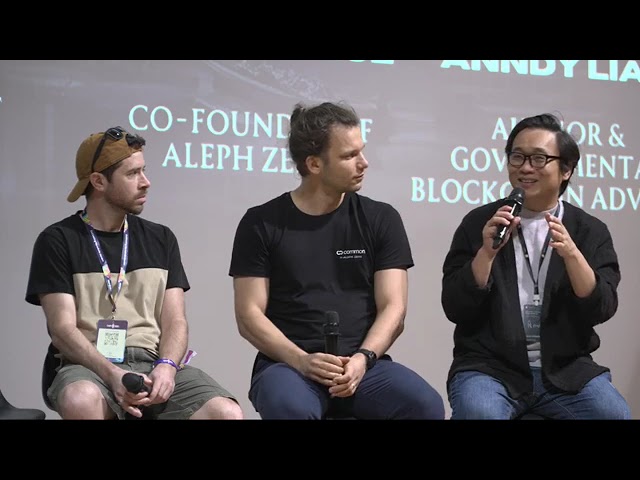
Privacy remains a critical yet challenging frontier. The DeCC Day X Shielding Summit brought together thought leaders and innovators to discuss the current state and future of privacy-preserving DeFi. Moderated by Carter Woetzel of Shade Protocol, the panel featured Supdoggie of SilentSwap, Adam Gagol of Aleph Zero, and intergovernmental expert Anndy Lian. The panel dives into their insights on the importance of privacy in DeFi, the hurdles faced by developers, and the potential pathways to broader adoption.

The Importance of Privacy in DeFi

Privacy in DeFi is not just a feature; it’s a necessity. As Carter Woetzel pointed out, “Privacy and the concept of shielding assets in DeFi have been around for a long time, yet adoption has lagged.” The panelists agreed that privacy is crucial for protecting user data and preventing malicious activities like front-running, where traders exploit transaction information for profit.

Anndy Lian, a governmental blockchain advisor, emphasized the significance of privacy from an investment perspective. “I realized that privacy is really important,” he said, drawing from his experience in the medical field where data breaches are a major concern. Lian’s journey into privacy began with creating a blockchain-based medical record system, highlighting the cross-industry relevance of privacy solutions.

Challenges in Privacy-Preserving DeFi

Despite its importance, privacy in DeFi faces significant challenges. Adam Gagol of Aleph Zero noted, “Right now, it has terrible user experience because the proof generation times are over 10 seconds for most products.” This technical hurdle, coupled with the complexity of privacy protocols, deters users who are accustomed to more straightforward financial interactions.

Regulatory barriers also play a significant role in stifling adoption. Supdoggie pointed out that “the biggest problem is regulation,” citing the example of Tornado Cash, a privacy tool classified as a mixer and banned in many jurisdictions. This regulatory uncertainty creates a hostile environment for privacy-focused projects, limiting their growth and accessibility.

Overcoming the Hurdles

To overcome these challenges, the panelists discussed several strategies. Improving user experience is paramount. As Adam Gagol mentioned, “We’re trying to build a wallet that looks like a regular wallet so that you don’t immediately even notice that this is a private wallet.” By simplifying the user interface and reducing the complexity of privacy features, developers can make privacy-preserving DeFi more accessible to the average user.

Another approach is to address liquidity issues. Supdoggie explained that SilentSwap is tackling this by “borrowing liquidity from public blockchains but transacting or swapping privately.” This innovative method allows users to benefit from the liquidity of public networks while maintaining privacy.

The Path to Adoption

The path to widespread adoption of privacy-preserving DeFi involves not only technical improvements but also strategic marketing and community building. Anndy Lian highlighted the importance of creating demand: “If you don’t have users, you don’t have liquidity. If you don’t have liquidity, you have nothing.” Building a strong community and generating excitement around privacy features are crucial steps toward achieving critical mass.

Carter Woetzel added that the race between privacy-first projects and traditional DeFi platforms integrating privacy features will be pivotal. “The Uniswaps of the world are going to start adding in privacy features,” he noted, suggesting that the first to successfully combine privacy with liquidity and user-friendliness will gain a significant advantage.

The Future of Privacy-Preserving DeFi

Looking ahead, the panelists were optimistic about the future of privacy-preserving DeFi. Adam Gagol predicted that “the proof generation time for the majority of use cases will stop being the topic of conversation because it’s going to be low enough to be actually useful.” As technical barriers diminish, the focus will shift to broader adoption and integration with existing financial systems.

Anndy Lian emphasized the need for collaboration and integration with larger platforms. “Instead of them creating that demand, the real true blue privacy guys should go there and say, ‘Hey, can we integrate? Can we do something together?'” By partnering with established players, privacy-focused projects can leverage existing networks to reach a wider audience.

Conclusion

The DeCC Day X Shielding Summit highlighted both the challenges and opportunities in the realm of privacy-preserving DeFi. As the panelists discussed, the road to adoption is fraught with technical, regulatory, and market challenges. However, with innovative solutions, strategic partnerships, and a focus on user experience, the future of privacy in DeFi looks promising. As Carter Woetzel aptly summarized, “Private DeFi is good. Can we find the demand and do it before someone else integrates privacy with large-scale distribution?” The race is on, and the stakes are high.

Anndy Lian is an early blockchain adopter and experienced serial entrepreneur who is known for his work in the government sector. He is a best selling book author- “NFT: From Zero to Hero” and “Blockchain Revolution 2030”.

Currently, he is appointed as the Chief Digital Advisor at Mongolia Productivity Organization, championing national digitization. Prior to his current appointments, he was the Chairman of BigONE Exchange, a global top 30 ranked crypto spot exchange and was also the Advisory Board Member for Hyundai DAC, the blockchain arm of South Korea’s largest car manufacturer Hyundai Motor Group. Lian played a pivotal role as the Blockchain Advisor for Asian Productivity Organisation (APO), an intergovernmental organization committed to improving productivity in the Asia-Pacific region.

An avid supporter of incubating start-ups, Anndy has also been a private investor for the past eight years. With a growth investment mindset, Anndy strategically demonstrates this in the companies he chooses to be involved with. He believes that what he is doing through blockchain technology currently will revolutionise and redefine traditional businesses. He also believes that the blockchain industry has to be “redecentralised”.

j j j

MemeCore Continues to Build its Footprint at the OKX MemeCoin Summit

MemeCore Continues to Build its Footprint at the OKX MemeCoin Summit

MemeCore, an innovative Layer-1 blockchain purpose-built for the meme coin space, is proud to announce its continued partnership with OKX at the recent MemeCoin Summit held on September 18, 2024. This event, an official side event of the renowned Token2049 conference in Singapore, saw MemeCore return as a sponsor, further solidifying its commitment to the burgeoning meme coin ecosystem.

MemeCore’s presence at the summit follows its successful collaboration with OKX at Korea Blockchain Week (KBW) 2024. The jointly hosted event at KBW drew an impressive 1,200 attendees and garnered significant social media exposure, reaching over 200,000 individuals. This continued partnership with OKX, a global leader in cryptocurrency exchange and Web3 technology, underscores MemeCore’s dedication to collaborating with industry leaders to drive innovation and growth within the meme coin sector.

The event was buzzing with activity, featuring a variety of engaging activities. Attendees tested their skills at game booths, with frisbee, shooting, and basketball challenges adding an element of fun competition to the event. The summit also provided a platform for thought leadership, with panel discussions delving into the future of meme coins, decentralized finance (DeFi), and the evolving landscape of the blockchain industry.

The event was further strengthened by the participation of major industry players. Gold sponsors included Polygon, a leading platform for building Ethereum-compatible blockchains; Aptos, a Layer-1 blockchain focused on scalability and security; and Ankaa, a Web3 accelerator supporting innovative projects. Other notable sponsors included 1Inch, Deeplink, Fractal, DappOS, Scallop, ME Foundation, Google, and JE Labs. Media partners such as Slow Mist, a blockchain security firm, and CoinTelegraph, a leading cryptocurrency news outlet, further amplified the summit’s reach and impact.

“The Memecoin Summit was an important event for MemeCore to showcase its vision to unite the meme coin community into one chain, as well as its commitment to shaping the future of meme coin through partnerships. MemeCore will provide the infrastructure and platform to ensure that Memecoin is not just a trend, but a cultural movement.,” said Anndy Lian, Managing Director for LIFT Ecofund at MemeCore. ” We will continue to grow with the community through creative collaboration.”

About OKX:

OKX is a leading global cryptocurrency exchange and Web3 technology company. Trusted by more than 50 million users worldwide, OKX offers a comprehensive suite of products and services, including spot and derivatives trading, NFTs, DeFi, and more. OKX Ventures, the investment arm of OKX, is committed to supporting entrepreneurs and projects that are building the future of the blockchain industry.

About MemeCore:

The MemeCore Foundation is a Meme-Chain designed to support the MemeCoin community through seamless interaction with Memes in other blockchain ecosystems. MemeCore’s priority is becoming a “memeable” space, building a community for memes, and fostering innovation to support the Meme coin community. MemeCore believes that memecoin is not just a trend but a cultural movement. Our mission is to let memecoin communities participate in a decentralized future with creativity and inclusiveness.


Source: https://apnews.com/press-release/marketersmedia/memecore-continues-to-build-its-footprint-at-the-okx-memecoin-summit-9a4d82d07cd123c80e49e6ae57c547d9


Anndy Lian is an early blockchain adopter and experienced serial entrepreneur who is known for his work in the government sector. He is a best selling book author- “NFT: From Zero to Hero” and “Blockchain Revolution 2030”.

Currently, he is appointed as the Chief Digital Advisor at Mongolia Productivity Organization, championing national digitization. Prior to his current appointments, he was the Chairman of BigONE Exchange, a global top 30 ranked crypto spot exchange and was also the Advisory Board Member for Hyundai DAC, the blockchain arm of South Korea’s largest car manufacturer Hyundai Motor Group. Lian played a pivotal role as the Blockchain Advisor for Asian Productivity Organisation (APO), an intergovernmental organization committed to improving productivity in the Asia-Pacific region.

An avid supporter of incubating start-ups, Anndy has also been a private investor for the past eight years. With a growth investment mindset, Anndy strategically demonstrates this in the companies he chooses to be involved with. He believes that what he is doing through blockchain technology currently will revolutionise and redefine traditional businesses. He also believes that the blockchain industry has to be “redecentralised”.

j j j