Creating and Managing Blockchain Databases in the Public Sector | Ministry of Industry and Technology of Turkiye

Creating and Managing Blockchain Databases in the Public Sector  | Ministry of Industry and Technology of Turkiye

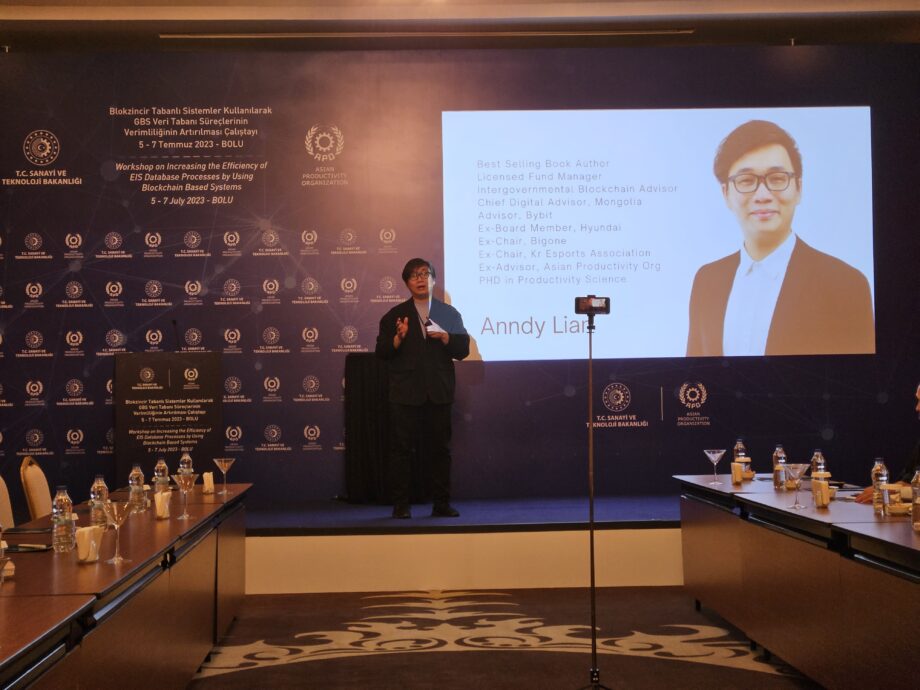
Blockchain technology has been creating significant impacts across industries, and the public sector is no exception. Its transformative potential to revolutionize data management and bolster security has attracted the attention of government agencies and organizations globally. In this presentation, Anndy Lian sheds light on the steps involved in creating and managing blockchain databases within the public sector, along with crucial factors to ensure successful implementation.

Empowering the Public Sector with Blockchain

Before delving into the technical aspects of blockchain databases, it’s essential to emphasize the goal of empowering the people on the ground with the right knowledge. By equipping individuals with the ability to understand blockchain technology, they can communicate effectively and ask relevant questions when engaging with experts or vendors for blockchain solutions. This understanding ensures that the right decisions are made and the system is structured efficiently.

Choosing the Right Blockchain Platform

When implementing a blockchain database, the first crucial decision is to choose the right blockchain platform. There are various options available, but two of the simplest and widely used ones are private and public blockchains.

Private Blockchain

Private blockchains are suitable for organizations seeking enhanced security for their data, ensuring only authorized participants have access to the network. IBM is a prominent example of using private blockchains to establish secure and efficient collaboration among trusted participants. By implementing strong identity verification measures, private blockchains maintain a certain level of transparency while streamlining processes.

Public Blockchain

Public blockchains, like Ethereum, offer an open and decentralized approach. They allow anyone to access and participate in the network. While this openness can lead to concerns about data privacy, it can be advantageous in certain scenarios, especially for public organizations seeking a higher level of transparency.

Essential Steps to Create a Blockchain Database

Whether you opt for a private or public blockchain, the process of creating a blockchain database involves fundamental steps. Here’s a concise guide to get you started:

1. Choose the Right Blockchain Platform

Select the blockchain platform that aligns with your organization’s goals and requirements. Determine if you need a private blockchain for heightened security or if a public blockchain’s transparency suits your needs better.

2. Decide on the Programming Language

The choice of programming language plays a significant role in developing blockchain-based applications. Depending on the blockchain platform, you can opt for languages such as Go, JavaScript, Python, Golang, C++, or Rust. Choose a language with an active developer community for ample support.

3. Define Data Structure

Once the programming language is chosen, define the data structure for your blockchain database. Consider what information you want to put on the chain and how you plan to verify and validate the data.

4. Establish Consensus Mechanism

Decide on the consensus mechanism that governs how data is added and validated on the blockchain. The consensus mechanism could be Proof-of-Work (PoW), Proof-of-Stake (PoS), or other variations. Each mechanism comes with its advantages and trade-offs, so choose wisely based on your specific needs.

5. Implement Security Measures

Security is paramount in any blockchain implementation. Implement robust identity verification, access control, and encryption measures to protect sensitive data and ensure the integrity of the system.

6. Test and Deploy

Thoroughly test your blockchain database before deployment. Identify and resolve any issues to ensure smooth functionality.

7. Governance and Consensus Upgrades

Set up governance rules and consensus mechanisms that allow the network to adapt to changing needs and upgrades. This flexibility ensures that the blockchain database can evolve with your organization’s requirements.

Considerations for Effective Management

Managing a blockchain database involves ongoing tasks and considerations to ensure its efficient operation:

Scalability and Performance

Address scalability and performance concerns by exploring solutions like hybrid blockchains or Layer Two solutions. These can enhance transaction speed and optimize the overall performance of the blockchain database.

Network Monitoring and Maintenance

Maintain a vigilant approach to network monitoring and regular maintenance. Ensure that all servers and nodes are functioning correctly to avoid downtime and potential security breaches.

Data Verification and Validation

Design a robust data verification and validation process to ensure data integrity and prevent fraudulent activities. This process is critical, especially in contexts like e-voting systems, where the accuracy of data is paramount.

Collaboration with External Experts

It is also important to engage with external experts who can offer valuable advice and insights. Collaborating with experienced blockchain consultants or seeking advice from other government organizations that have successfully implemented blockchain can be highly beneficial.

Implementing and managing blockchain databases in the public sector is a transformative endeavor with vast potential. The choice of the right blockchain platform, programming language, and consensus mechanism is crucial. While private blockchains offer enhanced security, public blockchains provide transparency and openness. The steps to create a blockchain database are not as complex as they may seem, and the benefits of proper implementation are substantial. By empowering the public sector with blockchain technology, governments can enhance data management, increase security, and improve efficiency for the betterment of society as a whole.

This video is part of a consultation session on “Technical Expert Service on Improvement of Public Sector Efficiency Using Blockchain-based Database”. The implementing organizations include the Ministry of Industry and Technology of Turkiye and the Asian Productivity Organization. The event was held in Ankara and Bolu, Turkiye, from 4–7 July 2023.

 

Anndy Lian is an early blockchain adopter and experienced serial entrepreneur who is known for his work in the government sector. He is a best selling book author- “NFT: From Zero to Hero” and “Blockchain Revolution 2030”.

Currently, he is appointed as the Chief Digital Advisor at Mongolia Productivity Organization, championing national digitization. Prior to his current appointments, he was the Chairman of BigONE Exchange, a global top 30 ranked crypto spot exchange and was also the Advisory Board Member for Hyundai DAC, the blockchain arm of South Korea’s largest car manufacturer Hyundai Motor Group. Lian played a pivotal role as the Blockchain Advisor for Asian Productivity Organisation (APO), an intergovernmental organization committed to improving productivity in the Asia-Pacific region.

An avid supporter of incubating start-ups, Anndy has also been a private investor for the past eight years. With a growth investment mindset, Anndy strategically demonstrates this in the companies he chooses to be involved with. He believes that what he is doing through blockchain technology currently will revolutionise and redefine traditional businesses. He also believes that the blockchain industry has to be “redecentralised”.

j j j

Overview and Importance of Blockchain Technology and Examining Blockchain Architecture | Ministry of Industry and Technology of Turkiye

Overview and Importance of Blockchain Technology and Examining Blockchain Architecture  | Ministry of Industry and Technology of Turkiye

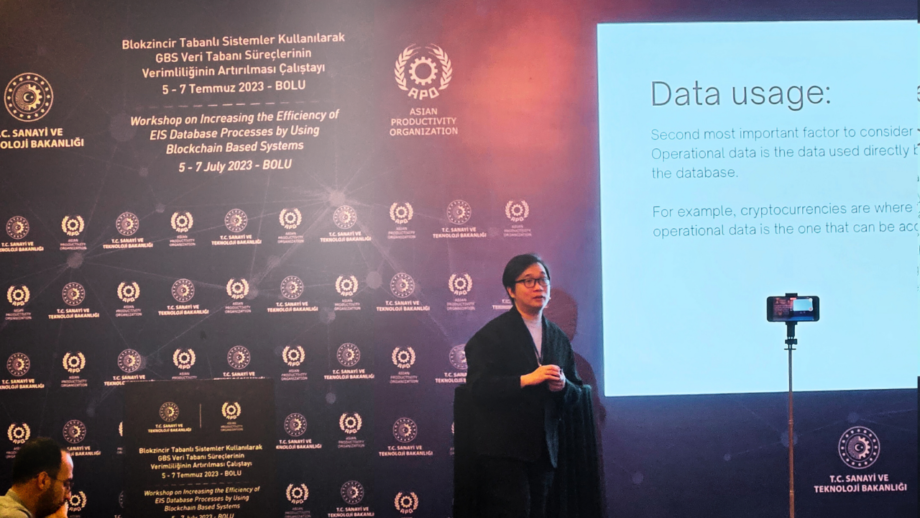
“Overview and Importance of Blockchain Technology and Examining Blockchain Architecture” is the first session.

Blockchain technology has gained significant attention in recent years due to its potential to revolutionize various industries. In this article, we will cover the fundamentals of blockchain technology, its importance in different sectors, and delve into the intricate details of blockchain architecture.

Introduction to Blockchain Technology
Blockchain technology can be defined as a decentralized, distributed ledger technology that securely records and verifies transactions across multiple participants. Unlike traditional centralized systems, blockchain operates on a peer-to-peer network, where participants, known as nodes, connect and collaborate to maintain the blockchain. Each node has a copy of the entire blockchain and participates in transaction validation and block creation.

The core principles of blockchain technology are decentralization, transparency, security, immutability, consensus, and smart contracts. These principles form the foundation of blockchain’s functionality and distinguish it from conventional systems.

Overview of Blockchain Architecture
Blockchain architecture is the underlying framework that enables the functioning of a blockchain system. Let’s explore the basic components and architecture of a blockchain system:

Network and Nodes:
A blockchain operates on a peer-to-peer network, where participants connect and collaborate to maintain the blockchain. Each node has a copy of the entire blockchain and participates in transaction validation and block creation. Nodes communicate and agree on the validity of transactions and blocks using the chosen consensus mechanism. Through consensus, a shared view of the blockchain is maintained, ensuring consistency and trust among participants.

Public vs. Private Blockchains:
Blockchain networks can be categorized as public or private, depending on their accessibility and permissioning.

Public Blockchains:
Public blockchains are open to anyone who wants to participate and contribute to the network. Examples of public blockchains include Bitcoin and Ethereum. They offer decentralization, transparency, and security. However, they face scalability challenges and have limited privacy features.

Private Blockchains:
Private blockchains are restricted to specific participants who have permission to join and validate transactions. Examples of private blockchains include Hyperledger Fabric and Corda. They offer efficiency, enhanced privacy, and selective access. However, they may be more centralized compared to public blockchains.

Importance of Blockchain Technology in Various Industries:
Blockchain technology has immense potential to transform various industries. Let’s explore some of its applications:

Finance:
Blockchain technology has disrupted the financial sector by enabling faster and more secure transactions. It facilitates peer-to-peer transfers of digital assets, eliminating the need for intermediaries like banks. Additionally, blockchain-powered cryptocurrencies provide decentralized and transparent alternatives to traditional fiat currencies. Blockchain also offers solutions for cross-border payments, remittances, and smart contract-based lending, making financial processes more efficient and inclusive.

Supply Chain:
Blockchain has transformed supply chain management by increasing transparency and traceability. It enables the creation of an immutable record of every step in the supply chain, reducing fraud, counterfeiting, and unauthorized products. By tracking and verifying the origin, quality, and movement of goods, blockchain technology improves efficiency, ensures ethical sourcing, and enhances consumer trust.

Healthcare:
Blockchain has the potential to revolutionize the healthcare industry by providing secure storage and sharing of patient data. It allows patients to have control over their medical records, granting access to healthcare providers as needed. This decentralized approach improves data security, interoperability, and privacy while reducing administrative costs. Additionally, blockchain can facilitate clinical trials, supply chain management for pharmaceuticals, and the tracking of medical devices.

Government:
Governments are exploring the use of blockchain technology to enhance transparency, security, and efficiency. Blockchain can facilitate secure voting systems, streamline administrative processes, and improve the distribution of welfare benefits and aid. It offers a decentralized and trustless approach, reducing the risk of corruption and improving public services.

As the technology continues to evolve, it is expected to drive further innovation and transformation, revolutionizing how industries operate in the digital age. The implementation of blockchain has shown tangible benefits in terms of cost savings, efficiency improvements, and enhanced trust and security. Understanding the differences and use cases of public and private blockchains is crucial in selecting the appropriate type based on the specific requirements of a given application or industry.

Blocks:
Data Structure: Data in a blockchain is structured into blocks, with each block containing a batch of transactions. Depending on the blockchain’s purpose, these transactions can include various types of information.

Unique Identifier: Each block in the blockchain is assigned a unique identifier called a hash. This hash is generated using cryptographic algorithms and serves as a digital fingerprint for the block.

Hashing:
Cryptographic Process: Hashing is a cryptographic process where data from a block is converted into a fixed-length string of characters, known as a hash. This process is one-way, meaning it is computationally infeasible to derive the original data from the hash.

Chain Structure:
The hash of each block is included in the subsequent block, creating a chain-like structure. This linkage ensures the integrity and immutability of the blockchain. Any alteration in one block would result in a change in subsequent block hashes, making it evident that tampering has occurred.

Consensus Mechanisms:
Consensus mechanisms are methods used to achieve agreement, trust, and security across a decentralized computer network. They play a vital role in maintaining the integrity and consensus of the blockchain. Two popular consensus mechanisms are proof-of-work (PoW) and proof-of-stake (PoS).

Proof of Work (PoW):
This consensus algorithm is famously used in the Bitcoin blockchain. Miners compete to solve complex mathematical puzzles, requiring significant computational power. The first miner to solve the puzzle and validate the block of transactions is rewarded with newly minted cryptocurrency. PoW ensures that the majority of participants agree on the state of the blockchain.

Proof of Stake (PoS):
In PoS, the right to validate blocks is determined by the participants’ stake or ownership of cryptocurrency. Validators, known as “stakers,” are chosen randomly or based on the amount of cryptocurrency they hold. PoS consumes less energy compared to PoW and aims to reduce the computational power required for consensus.

These are just a few examples of consensus algorithms used in blockchain networks. The choice of consensus mechanism depends on factors such as security, scalability, energy efficiency, and the specific requirements of the blockchain network.

In conclusion, blockchain technology holds immense potential to reshape industries by providing decentralized, transparent, and secure solutions. Its architecture, consensus mechanisms, and applications are paving the way for a future where trust and efficiency are paramount. Embracing blockchain technology can unlock new possibilities and create a more inclusive and trustworthy digital ecosystem.

This video is part of a consultation session on “Technical Expert Service on Improvement of Public Sector Efficiency Using Blockchain-based Database”. The implementing organizations include the Ministry of Industry and Technology of Turkiye and the Asian Productivity Organization. The event was held in Ankara and Bolu, Turkiye, from 4–7 July 2023.


Anndy Lian is an early blockchain adopter and experienced serial entrepreneur who is known for his work in the government sector. He is a best selling book author- “NFT: From Zero to Hero” and “Blockchain Revolution 2030”.

Currently, he is appointed as the Chief Digital Advisor at Mongolia Productivity Organization, championing national digitization. Prior to his current appointments, he was the Chairman of BigONE Exchange, a global top 30 ranked crypto spot exchange and was also the Advisory Board Member for Hyundai DAC, the blockchain arm of South Korea’s largest car manufacturer Hyundai Motor Group. Lian played a pivotal role as the Blockchain Advisor for Asian Productivity Organisation (APO), an intergovernmental organization committed to improving productivity in the Asia-Pacific region.

An avid supporter of incubating start-ups, Anndy has also been a private investor for the past eight years. With a growth investment mindset, Anndy strategically demonstrates this in the companies he chooses to be involved with. He believes that what he is doing through blockchain technology currently will revolutionise and redefine traditional businesses. He also believes that the blockchain industry has to be “redecentralised”.

j j j

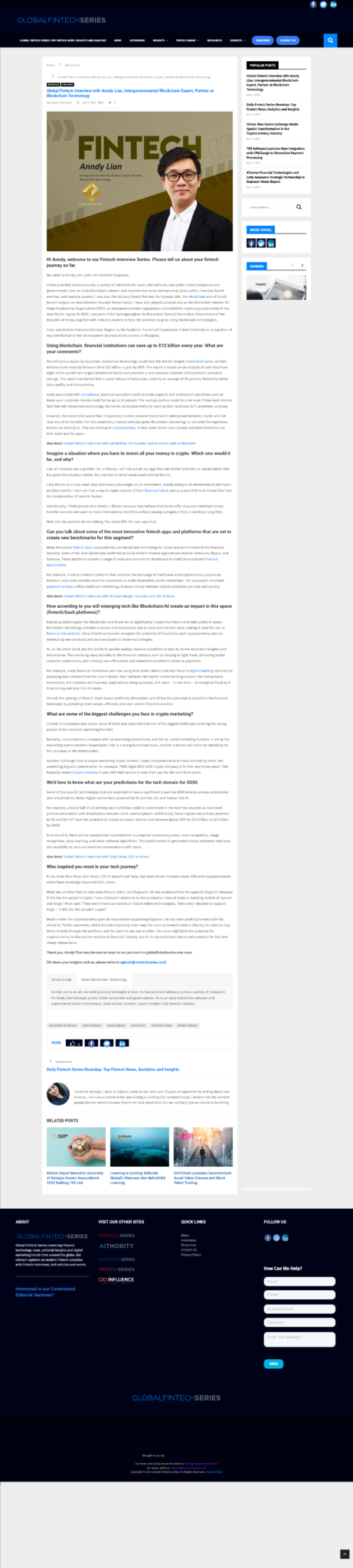
Global Fintech Interview with Anndy Lian, Intergovernmental Blockchain Expert, Partner at Blockchain Technology

Global Fintech Interview with Anndy Lian, Intergovernmental Blockchain Expert, Partner at Blockchain Technology

Hi Anndy, welcome to our Fintech Interview Series. Please tell us about your fintech journey so far.

My name is Anndy Lian, and I am based in Singapore.

I have provided advisory across a variety of industries for local, international, and public-listed companies and governments. I am an early blockchain adopter and experienced serial entrepreneur, book author, investor, board member, and keynote speaker. I was also the Advisory Board Member for Hyundai DAC, the blockchain arm of South Korea’s largest car manufacturer Hyundai Motor Group. I have also played a pivotal role as the Blockchain Advisor for Asian Productivity Organisation (APO), an intergovernmental organization committed to improving productivity in the Asia-Pacific region. In 2018, I was part of the Gyeongsangbuk-do Blockchain Special Committee, Government of the Republic of Korea, together with industry experts to help the province to grow using blockchain technologies.

I was awarded an Honorary Doctoral Degree by the Academic Council of Ulaanbaatar Erdem University in recognition of my contribution to the development of productivity science in Mongolia.

Using blockchain, financial institutions can save up to $12 billion every year. What are your comments?

According to a report by Accenture, blockchain technology could help the world’s largest investment banks cut their infrastructure costs by between $8 to $12 billion a year by 2025. The report is based on an analysis of cost data from eight of the world’s ten largest investment banks and provides a rare concrete estimate of blockchain’s potential savings. The report mentioned that it could reduce infrastructure costs by an average of 30 percent, helped by better data quality and transparency.

Costs associated with compliance, business operations such as trade support, and centralized operations such as know-your-customer checks could fall by up to 50 percent. The savings portion could be a lot more if they look into the fact that with blockchain technology, the banks could potentially be running their business 24/7, anywhere, anytime.

However, the report also warns that if regulatory hurdles prevent blockchain’s widespread adoption, banks will not reap any of its benefits. For this statement, I cannot entirely agree. Blockchain technology is not what the regulatory bodies are looking at. They are looking at cryptocurrency. In fact, some banks have already adopted blockchain on their back end for years.

Imagine a situation where you have to invest all your money in crypto. Which one would it be, and why?

I am an investor, not a gambler. So, in theory, I will not put all my eggs into one basket and take on uncalculated risks. But given the situation above, the only top-of-mind recall would still be Bitcoin.

I see Bitcoin as a new asset class with many advantages as an investment, mainly owing to its decentralized and hyper-portable profile. I also see it as a way to regain control of their financial future and as a sound form of money free from the manipulation of outside factors.

Additionally, I think people who invest in Bitcoin because they believe that banks offer slow and outdated money transfer services and want to make international transfers without paying outrageous fees or waiting a long time.

Well, lets the markets do the talking. The latest BRC-20 craze says it all.

Can you talk about some of the most innovative fintech apps and platforms that are set to create new benchmarks for this segment?

Many innovative fintech apps and platforms use blockchain technology to create new benchmarks in the financial industry. Some of the best blockchain platforms to build modern finance applications include Ethereum, Ripple, and Cardano. These platforms provide a range of tools and services for developers to build decentralized financial applications.

For example, Circle is a fintech platform that oversees the exchange of traditional and cryptocurrency payments between users and provides tools for businesses to build themselves on the blockchain. The company’s merchant payment services utilize stablecoin technology to move money between digital currencies securely and quickly.

How according to you will emerging tech like Blockchain/AI create an impact in this space (fintech/SaaS platforms)?

Emerging technologies like Blockchain and AI are set to significantly impact the fintech and SaaS platform space. Blockchain technology provides a secure and transparent way to store and transfer data, making it ideal for use in financial transactions. Many fintech companies recognize the potential of blockchain and cryptocurrency and are developing new products and services based on these technologies.

AI, on the other hand, has the ability to quickly analyze massive quantities of data to derive important insights and information. This can bring many benefits to the financial industry, such as helping to fight fraud, delivering better customer experiences, and creating new efficiencies and conveniences when it comes to payments.

For example, many financial institutions are now using AI to better detect and stop fraud in digital banking channels by analyzing data streams from the user’s device, their behavior during the online banking session, the transactions themselves, the channels and business applications being accessed, and more – in real-time – to recognize fraud as it is occurring and stop it in its tracks.

Overall, the synergy of fintech, SaaS-based platforms, blockchain, and AI has the potential to transform the financial landscape by providing more secure, efficient, and user-centric financial services.

What are some of the biggest challenges you face in crypto marketing?

I invest in companies and advise some of them and observed that one of the biggest challenges is hiring the wrong people in the incorrect marketing function.

Recently, I encountered a company with no marketing department, and the so-called marketing function is led by the marketing communication department. This is a wrong functional move, and the outcome will never be satisfying for the company or the stakeholders.

Another challenge I see in crypto marketing is bad content. Crypto companies tend to make something small into something big and unbelievable. For example, “AWS Signs MOU with Crypto Company A for the next three years”. This basically means Crypto Company A uses AWS Web service to host their app for the next three years.

We’d love to know what are your predictions for the tech domain for 2030.

Some of the specific technologies that are expected to have a significant impact by 2030 include process automation and virtualization, faster digital connections powered by 5G and the IoT, and human-like AI.

For example, around half of all existing work activities could be automated in the next few decades as next-level process automation and virtualization become more commonplace1. Additionally, faster digital connections powered by 5G and the IoT have the potential to unlock economic activity and increase global GDP by $1.2 trillion to $2 trillion by 20301.

In terms of AI, there will be exponential improvements in computer processing power, voice recognition, image recognition, deep learning, and other software algorithms. This could lead to AI-generated virtual assistants that have the capability to carry out nuanced conversations with users.

Who inspired you most in your tech journey?

It has to be Elon Musk. Elon Musk, CEO of SpaceX and Tesla, has been known to tweet about different cryptocurrencies which have seemingly impacted their prices.

Musk has clarified that he only owns Bitcoin, Ether, and Dogecoin. He has explained that he supports Dogecoin because it felt like the people’s crypto. “Lots of people I talked to on the production lines at Tesla or building rockets at SpaceX own Doge,” Musk said. “They aren’t financial experts or Silicon Valley technologists. That’s why I decided to support Doge — it felt like the people’s crypto”.

Musk’s vision for cryptocurrency goes far beyond just supporting Dogecoin. He has been pushing forward with his vision for Twitter payments, which includes exploring more ways for users to reward creators directly, for users to buy items directly through the platform, and for users to pay one another. His vision highlights the potential for cryptocurrency to disrupt the traditional financial industry due to its decentralized nature and potential for fast and cheap transactions.

Thank you, Anndy! That was fun and we hope to see you back on globalfintechseries.com soon.


Source: https://globalfintechseries.com/blockchain/global-fintech-interview-with-anndy-lian-intergovernmental-blockchain-expert-partner-at-blockchain-technology/


Anndy Lian is an early blockchain adopter and experienced serial entrepreneur who is known for his work in the government sector. He is a best selling book author- “NFT: From Zero to Hero” and “Blockchain Revolution 2030”.

Currently, he is appointed as the Chief Digital Advisor at Mongolia Productivity Organization, championing national digitization. Prior to his current appointments, he was the Chairman of BigONE Exchange, a global top 30 ranked crypto spot exchange and was also the Advisory Board Member for Hyundai DAC, the blockchain arm of South Korea’s largest car manufacturer Hyundai Motor Group. Lian played a pivotal role as the Blockchain Advisor for Asian Productivity Organisation (APO), an intergovernmental organization committed to improving productivity in the Asia-Pacific region.

An avid supporter of incubating start-ups, Anndy has also been a private investor for the past eight years. With a growth investment mindset, Anndy strategically demonstrates this in the companies he chooses to be involved with. He believes that what he is doing through blockchain technology currently will revolutionise and redefine traditional businesses. He also believes that the blockchain industry has to be “redecentralised”.

j j j