Linfinity: the Pioneer and Practitioner of Landing of Blockchain Technology Application

Linfinity: the Pioneer and Practitioner of Landing of Blockchain Technology Application

Since the first day of the birth of blockchain, the attention and discussion on it from all walks of life have never diminished. This is not only because it has created Bitcoin or encrypted currency, but also because it has the ability to transform traditional organizations and the huge business opportunities that come with it.

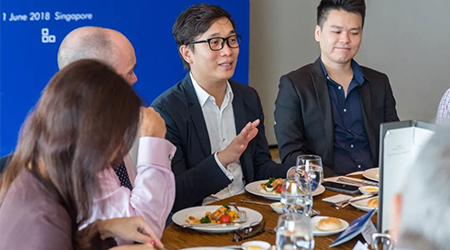
Linfinity is undoubtedly the pioneer and practitioner of landing of blockchain technology application. In different countries and regions, linfinity has held several round tables aimed at the development of blockchain industry, which not only attracted the participation of many blockchain enthusiasts, but also brought together many experts from finance, investment, hotels, real estate and other industries and put forward many insights of blockchain on the development of traditional industries.

How will blockchain change our lives? 

“Blockchain technology is undoubtedly a change for the whole industry. Blockchains and encrypted currencies are irresistible trends. For example, in terms of food safety issues, if the blockchain technology appears early and can be landed and applied for promotion, the problems of dairy products and mad cow disease beef may all be solved.”

                                                                                                 — Elaine Chia, Associate Director, Bank of Singapore

Distributed structure and traceability are the two biggest characteristics of blockchain. Linfinity achieves mutual authentication of information in each block through information onchain. This has the advantage that no matter where we are, we can view and trace the information we want to know, and this information is credible, open, transparent, secure and cannot be tampered with by human beings.

This technology is suitable for a variety of industries, especially for the food industry, fast-moving consumer goods industry, luxury industry, financial industry, pharmaceutical industry, etc. As long as the product information of these industries goes “onchain”, consumers can check and verify the authenticity of the information in all circulation links they exist. However, traditional industries cannot realize this in the anti-counterfeiting aspect.

Blockchain: bane or boon?

“Based on the special properties of the real estate industry, there are a lot of capital flows and transactions occurring every day. It is extremely urgent to introduce blockchain technology.”

                                                                                — Edward Tan, Real Estate Consultant, Seed Global Investment

Since the first day of its birth, blockchain has faced the dilemma of “mixed reception”. All this stems from people’s failure to have a clear understanding of the blockchain technology. The “boon” and “bane” of blockchain do not depend on the block chain itself, but lie in how ” we” correctly use this new technology to bring its due value into play.
The advantages of blockchain technology are not only reflected in the transparency and traceability of transactions, but also expected to simplify the management process and improve the management efficiency. For example, embedding a blockchain into a bank or financial system can make loan financing well documented and safe and efficient.

Regardless of whether blockchain is a boon or a bane, it is worth affirming that it has indeed accelerated the development process in some fields and industries, which is why Linfinity has begun to provide block chain solutions for the supply chain industry.

Ico: is it legal?

Recently, fraudulent companies have defrauded investors of millions of dollars through ICO, which has become a headline news. Fraudulent companies usually used various “ unwarranted” white papers or found so-called “celebrities” in the currency circle to endorse themselves and peddle air coin to illegally raise funds, thus seriously infringing on investors’ asset rights and interests. So people began to criticize block chain and even remained hesitant and skeptical about the application of the block chain.

“The number of digital token exchanges and ICOs continues to grow. If a one-size-fits-all approach is adopted, it is bound to hurt those block chain enterprises that abide by the law. However, she also pointed out that the introduction of policies and regulations on ICO projects should be expedited so as to promote the healthy development of the industry.”

— lLee Boon Ngiap, Deputy General Manager of Capital Markets, Monetary Authority of Singapore (MAS)

Linfinity only focuses on the popularization and landing of blockchain technology, so it does not intend to carry out ICO financing. We believe that all financial tokens should run according to all its own rules, only in this way can we truly benefit the entire industry by using the “token model”.

Practical Application of BlockChain Technology

To date, Linfinity has signed strategic cooperation agreements in Singapore with a number of international enterprises including Crossinvest, RHTLaw TaylorWessing LLP, RHT Holdings, RONGDE Logistics, Scientific Tradition and WealthBriefingAsia, and will reach more cooperation in the two regions.

These agreements mark that Linfinity has begun to build a reliable and traceable supply chain ecology based on the blockchain system, which will transform the blockchain technology from concept to reality. The scope of these cooperation agreements covers finance, law, logistics, fast moving consumer goods, etc. the companies that cooperate with us will use Linfinity’s block chain technology to improve the efficiency and transparency of their own enterprise supply chains.

In addition, Linfinity signed a strategic cooperation agreement with Alishan Group in Taiwan. According to the agreement, Linfinity will build a “bridge of integrity” with traceability & anti-counterfeiting between the enterprise and consumers.

“The blockchain will change people’s lifestyle and the future development of many industries just like paper making, printing and even internet technology.”

                                    — AnndyLian, CEO of Linfinity

Anndy Lian is an early blockchain adopter and experienced serial entrepreneur who is known for his work in the government sector. He is a best selling book author- “NFT: From Zero to Hero” and “Blockchain Revolution 2030”.

Currently, he is appointed as the Chief Digital Advisor at Mongolia Productivity Organization, championing national digitization. Prior to his current appointments, he was the Chairman of BigONE Exchange, a global top 30 ranked crypto spot exchange and was also the Advisory Board Member for Hyundai DAC, the blockchain arm of South Korea’s largest car manufacturer Hyundai Motor Group. Lian played a pivotal role as the Blockchain Advisor for Asian Productivity Organisation (APO), an intergovernmental organization committed to improving productivity in the Asia-Pacific region.

An avid supporter of incubating start-ups, Anndy has also been a private investor for the past eight years. With a growth investment mindset, Anndy strategically demonstrates this in the companies he chooses to be involved with. He believes that what he is doing through blockchain technology currently will revolutionise and redefine traditional businesses. He also believes that the blockchain industry has to be “redecentralised”.
j j j

Linfinity: Blockchain Technology Will Empower Supply Chain

Linfinity: Blockchain Technology Will Empower Supply Chain

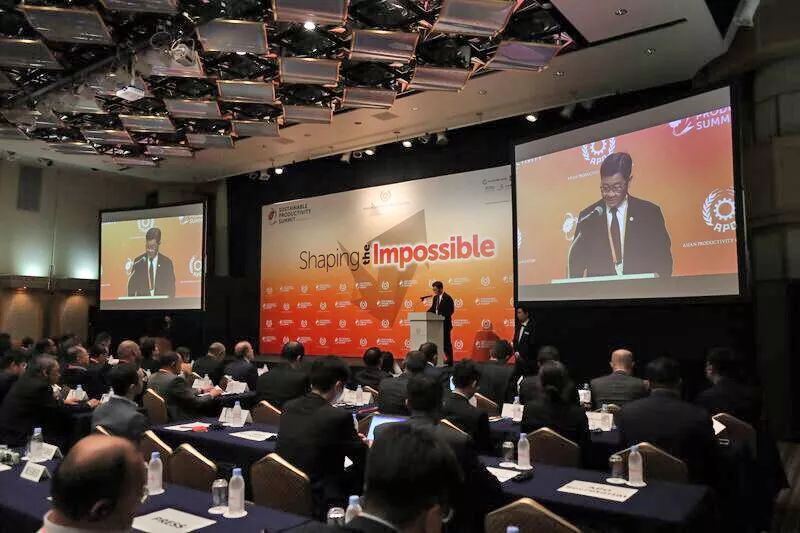
The summit focused on the topic of “Shaping the Impossible”. At the meeting, Andrew W Brentano, founder and CEO of Tiny Farm, gave a keynote speech on “Innovation and Productivity of New Food Types” saying that new food types(vegetarian meat or insect foods) must be technically processed in the process of production; considering different characteristics of ingredients, consumers often fail to identify the quality or safety of raw materials.

Within the structure of traditional supply chain, this kind of “trust crisis” is normal in the industry, yet the emergence of blockchain has made it possible for the problem to be cracked.

Anndy Lian, CEO of Linfinity, conducted an in-depth discussion with Dr. Santhi Kanoktanaporn, Secretary General of APO, on this point at the meeting. Anndy pointed out that the emergence of blockchain will bring the next industrial revolution sooner than expected. The decentralization and traceability of blockchain technology provide technical support for the construction of trusted supply chain ecosystem. From production to customers, the whole process is recorded on the chain, and each block of information is mutually authenticated, thus ensuring the authenticity of product, the transparency of information, the traceability of source and the non-tampering of information.

Dr. Santhi Kanoktanaporn agreed with Anndy’s comments, noting that the combination of blockchain with traditional supply chain will greatly improve the overall security and trust of the industry, and deliver quality services to more people.

Anndy Lian is an early blockchain adopter and experienced serial entrepreneur who is known for his work in the government sector. He is a best selling book author- “NFT: From Zero to Hero” and “Blockchain Revolution 2030”.

Currently, he is appointed as the Chief Digital Advisor at Mongolia Productivity Organization, championing national digitization. Prior to his current appointments, he was the Chairman of BigONE Exchange, a global top 30 ranked crypto spot exchange and was also the Advisory Board Member for Hyundai DAC, the blockchain arm of South Korea’s largest car manufacturer Hyundai Motor Group. Lian played a pivotal role as the Blockchain Advisor for Asian Productivity Organisation (APO), an intergovernmental organization committed to improving productivity in the Asia-Pacific region.

An avid supporter of incubating start-ups, Anndy has also been a private investor for the past eight years. With a growth investment mindset, Anndy strategically demonstrates this in the companies he chooses to be involved with. He believes that what he is doing through blockchain technology currently will revolutionise and redefine traditional businesses. He also believes that the blockchain industry has to be “redecentralised”.

j j j

Solving the Issues in the Supply Chain with Linfinity and Its Partners Using Blockchain Technology

Solving the Issues in the Supply Chain with Linfinity and Its Partners Using Blockchain Technology

Linfinity Talk just finished their roadshow in Tokyo on 1 July 2018, with the event attracting over 200 Japanese blockchain enthusiasts. Linfinity Talk worked with Befund and Qbao for the exhibition, and invited BCoin from Singapore and CoinOtaku from Japan for an in-depth discussion about blockchain development and its applications. Linfinity Talk is a roadshow brand under Linfinity, and its mission is to create a sharing platform for blockchain resources. Going forward, Linfinity Talk will continue to hold roadshows all over the world, the next of which will be in London in August 2018, to speak to blockchain fans in England.

The Linfinity Talk Tokyo Station Roadshow, hosted by Linfinity, ended in Tokyo on July 1st and attracted more than 200 Japanese blockchain enthusiasts. At the roadshow, Linfinity teamed up with Befund and Qbao to showcase an exhibition, and also invited BCoin and CoinOtaku to discuss blockchain development and its applications.

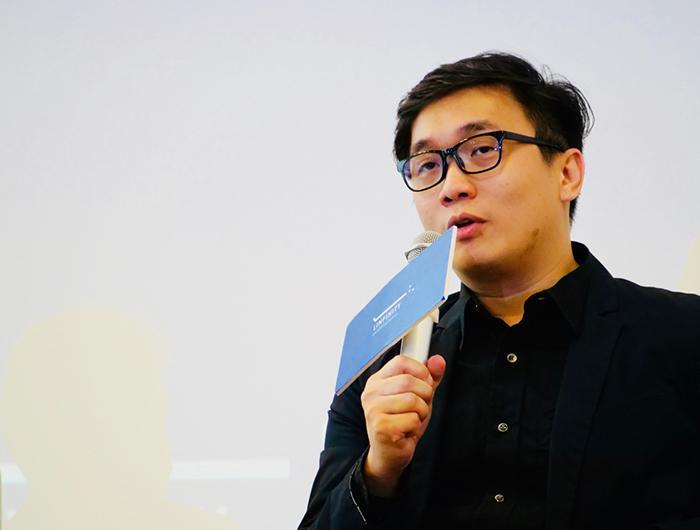
Linfinity CEO Anndy Lian gave a speech on the importance of building trust in the supply chain. He discussed two major blockchain topics – solving the issue of trust in the supply chain and solving shortcomings in current supply chains. These include communication between systems, the reliability of information, and reliability between different units in the supply chain.

Mr. Liu Yu, CSO of Befund, focused on the next wave of token economic trends. He also mentioned that Befund is the world’s first blockchain project to use securities tokens, which will lead the next token economy.

Qbao Network co-founder & COO Sun Ruoyu shared on digital currency wallets being the entrance to the blockchain world. He mentioned that the Qbao Network is a multi-functional digital currency wallet that provides digital asset management, currency transactions, online and offline payments and other digital financial services to users around the world. Its DApp Store brings together games, videos, malls and other applications developed based on blockchain technology to provide users with a one-stop service.

Regarding the development of decentralized wallets, Befund CSO Liu Yu believes that traditional centralized wallets do have certain advantages in terms of user experience, but with equally significant disadvantages such as security and cryptocurrency. Cryotocurrency will undoubtedly be an important part of the financial sector. If it still operates similarly to a traditional centralized wallet, its security will become a serious problem that can never be solved.

Qbao Network co-founder and COO Sun Ruoyi also pointed out that the decentralized wallet is a product that truly conforms to the spirit of the blockchain spirit. Users need only master their own private key and store assets in the chain. The problem of private assets potentially being damaged or encroached by third parties can be effectively avoided with blockchain distribution characteristics, and this is what is difficult for centralized wallets to achieve and match at the moment.

Linfinity CEO Anndy also contributed his own insights on the issue. He said that decentralized wallets have greatly compensated for the lack of authenticity, such as security, user privacy and transparency issues. It would be easy for users to get all the permissions of the “wallet” and get a clearer picture of any dynamics in the wallet. Of course, given that decentralization technology is still evolving, it currently is not a substitute for a centralized wallet. However, with future advances in technology, the problems with the digital wallet should be resolved soon.

When speaking on the issue of blockchain policy supervision, Mr. Ito, CEO of Japan’s CoinOtaku, and Davy Goh, CEO of Singapores’s BCoin, also expressed their own views on the traditional centralized structure. “The centralized structure is more suitable for beginners to learn and use, plus it is easy to manage. However, this management relies on the organization too. It is inevitable that blockchain will be decentralized, although it is not perfect yet in Japan, the possibility of realization in the future will be great.” Mr. Ito, CEO of CoinOtaku, Japan, said.

Singapore’s BCoin CEO Davy Goh added that better service and higher efficiency are undoubtedly the hallmarks of centralization, and that they will welcome new policies on blockchain. He added “Most digital assets market players are embracing forthcoming legislations, however maybe the best legislation is no legislation. Let the digital asset market develops on its own.”

Highlighting on this issue, Linfinity CEO Anndy Lian said, “Tokens are an integral part of blockchain technology and we’ll need to continue monitoring its development. I believe governments do welcome blockchain technology, and that they want to prevent financial fraud and crime rather than taking a negative stance on blockchain. 2018 has been year of crucial growth and demands upon the blockchain industry. Linfinity has been consistently combining leading blockchain technology and industries’ rich commercial resources and LFT, to promote the development of Linfinity in the supply chain industry.”

Linfinity Talk is the roadshow brand of Linfinity, which aims to construct a blockchain resource sharing platform. Next, “Linfinity Talk” will continue its global roadshow and will meet with UK blockchain enthusiasts in London this August.

Anndy Lian is an early blockchain adopter and experienced serial entrepreneur who is known for his work in the government sector. He is a best selling book author- “NFT: From Zero to Hero” and “Blockchain Revolution 2030”.

Currently, he is appointed as the Chief Digital Advisor at Mongolia Productivity Organization, championing national digitization. Prior to his current appointments, he was the Chairman of BigONE Exchange, a global top 30 ranked crypto spot exchange and was also the Advisory Board Member for Hyundai DAC, the blockchain arm of South Korea’s largest car manufacturer Hyundai Motor Group. Lian played a pivotal role as the Blockchain Advisor for Asian Productivity Organisation (APO), an intergovernmental organization committed to improving productivity in the Asia-Pacific region.

An avid supporter of incubating start-ups, Anndy has also been a private investor for the past eight years. With a growth investment mindset, Anndy strategically demonstrates this in the companies he chooses to be involved with. He believes that what he is doing through blockchain technology currently will revolutionise and redefine traditional businesses. He also believes that the blockchain industry has to be “redecentralised”.
j j j