Can You Really Earn Passive Income With Stablecoins? (Spoiler: It’s Not What You Think)

Can You Really Earn Passive Income With Stablecoins? (Spoiler: It’s Not What You Think)

Let’s talk about something that keeps popping up in crypto circles: “You can earn passive income with stablecoins.” It sounds almost too good to be true. Hold a digital dollar, sit back, and watch it grow. But before you rush to move your savings into USDC or DAI, it’s worth slowing down and asking: what’s really going on here?

First, let’s clear up a common misconception. Stablecoins themselves don’t magically generate yield. If you leave USDT sitting in your wallet, it will stay exactly the same amount for years, just like cash under a mattress. The yield doesn’t come from the token; it comes from what you do with it. In other words, “passive” is a bit of a misnomer. True passivity would mean doing nothing and still earning returns. But in practice, you have to actively deploy your stablecoins into systems that put them to work.

So where does this yield actually come from? And more importantly, is it safe?

One of the most straightforward ways to earn yield is through decentralized lending protocols like Aave or Compound. You deposit your stablecoins, they get lent out to borrowers, often traders using leverage, and part of the interest those borrowers pay flows back to you. Right now, typical annual yields on these platforms range from 3% to 9%. During promotional periods, when protocols are trying to attract liquidity, you might even see rates climb to 10% or 12%. These platforms are relatively user-friendly, your funds are usually accessible on demand, and within the DeFi world, they’re considered lower-risk options. That said, “lower risk” doesn’t mean “no risk.” More on that later.

Then there’s a newer category I like to think of as “stablecoins that lay eggs.” These aren’t just placeholders for dollars. They’re designed to automatically accrue yield. Take sDAI, for example, issued by MakerDAO. When you convert your DAI into sDAI, you’re essentially buying a share of Maker’s surplus buffer, which includes income from U.S. Treasury bills and other real-world assets. The current yield sits around 5% to 8% annually. Similarly, sUSDe from Ethena Labs offers yields between 8% and 15%, depending on market conditions. But here’s the twist: sUSDe doesn’t rely on lending. Instead, it uses a delta-neutral strategy, simultaneously holding long positions in Ethereum and short positions in perpetual futures, to capture funding rate spreads without betting on price direction. It’s clever, but it’s also more complex and tied to derivatives markets, which adds layers of risk that aren’t always obvious at first glance.

For those who prefer a more conservative approach, there are stablecoins backed directly by real-world assets, primarily short-term U.S. Treasury bills. Ondo Finance’s USDY and Mountain Protocol’s USDm fall into this bucket, offering steady yields of around 4% to 5%. BlackRock’s BUIDL token is perhaps the purest example: it represents direct fractional ownership of a fund holding actual Treasuries. The catch? It’s largely inaccessible to retail users due to regulatory restrictions. Still, these instruments represent a bridge between traditional finance and on-chain infrastructure. They require no active management, compound automatically, and feel closer to a savings account than a speculative DeFi play. If you’re looking for something truly hands-off and grounded in real economic activity, this is probably your best bet.

Now, if you’re comfortable with higher complexity and volatility, there’s liquidity mining. This involves providing stablecoins to trading pools on platforms like Curve or Uniswap. In return, you earn a cut of the trading fees plus bonus tokens issued by the protocol to incentivize participation. Yields here can look dazzling, often 8% to 30%, sometimes even higher. But remember: those eye-popping numbers usually include volatile incentive tokens whose value can plummet overnight. And because you’re supplying two assets, even if both are stablecoins like USDC and DAI, you’re exposed to impermanent loss if their pegs diverge, even slightly. More advanced strategies layer on additional tools. Pendle lets you split yield into principal and future income streams, while cross-chain bridges like Stargate or Scroll open up opportunities across ecosystems. Each step adds operational complexity and potential failure points.

So, where does all this yield actually originate? It boils down to five main sources: interest from borrowers, fees from traders, rewards from protocol tokens, returns from real-world assets like Treasuries, and profits from derivatives strategies like funding rate arbitrage. None of this is free money. It’s compensation for taking on some form of risk, whether credit, market, or technical.

And that brings us to the critical part: risk. Just because a coin is “stable” doesn’t mean your investment is safe. First, there’s smart contract risk. DeFi runs on code, and code can have bugs. Even audited protocols have been hacked, sometimes through flash loan attacks that exploit economic logic rather than coding errors. Then there’s de-pegging risk. Remember Terra’s UST? It promised stability and high yields, then collapsed in a matter of hours, wiping out tens of billions in value. While today’s major stablecoins like USDC and DAI are far more robust, no system is immune to black swan events.

Liquidity risk is another concern. If everyone tries to withdraw at once, say during a market crash, a protocol might freeze withdrawals or delay redemptions. Regulatory risk looms large, too. The SEC has already signaled skepticism toward many yield-bearing crypto products, and future rules could restrict access or force platforms to shut down certain features. And finally, there’s plain old human error: sending funds to the wrong address, mishandling private keys, or falling for phishing scams. In crypto, mistakes are permanent.

Given all this, how should a typical user approach stablecoin yield? Diversification isn’t just wise. It’s essential. I’d suggest thinking in tiers. For a conservative allocation, park about 40% of your stablecoins in yield-bearing tokens like sDAI or real-world asset-backed options like USDY. These offer modest but reliable returns with minimal ongoing effort. For a balanced approach, allocate another 40% to established DeFi lending protocols like Aave or Compound. Solid infrastructure, transparent reserves, and reasonable yields. Then, if you’re comfortable with volatility and understand the mechanics, you might dedicate the remaining 20% to more aggressive strategies like liquidity mining or cross-chain yield farming. But never go all-in on anything promising double-digit returns without understanding exactly how it works.

A few practical rules can help keep you grounded. Stick to protocols with at least 100 million dollars in total value locked. This isn’t a guarantee of safety, but it suggests a level of market trust and operational maturity. Always diversify across multiple platforms and strategies. Don’t put all your eggs in one basket, especially in a space where baskets can vanish overnight. And be deeply skeptical of any yield above 15%. If it sounds too good to be true, it probably is. High returns almost always reflect hidden risks, whether counterparty exposure, unsustainable tokenomics, or fragile economic assumptions.

At the end of the day, stablecoins are tools, not magic wands. They can be powerful vehicles for earning yield, but only if you treat them with respect and do your homework. The idea of “passive income” is seductive, but in crypto, true passivity is rare. What looks effortless often rests on layers of active market participants, complex financial engineering, and systemic risk. So before you chase the highest APY, ask yourself: Do I understand where this yield comes from? What could go wrong? And how much am I willing to lose?

Stablecoins may hold their value, but the promise of easy returns rarely does. Approach with curiosity, caution, and a healthy dose of skepticism, and you’ll be far better positioned to navigate this evolving landscape without getting burned.


Source: https://www.benzinga.com/Opinion/26/02/50897743/can-you-really-earn-passive-income-with-stablecoins-spoiler-its-not-what-you-think


Anndy Lian is an early blockchain adopter and experienced serial entrepreneur who is known for his work in the government sector. He is a best selling book author- “NFT: From Zero to Hero” and “Blockchain Revolution 2030”.

Currently, he is appointed as the Chief Digital Advisor at Mongolia Productivity Organization, championing national digitization. Prior to his current appointments, he was the Chairman of BigONE Exchange, a global top 30 ranked crypto spot exchange and was also the Advisory Board Member for Hyundai DAC, the blockchain arm of South Korea’s largest car manufacturer Hyundai Motor Group. Lian played a pivotal role as the Blockchain Advisor for Asian Productivity Organisation (APO), an intergovernmental organization committed to improving productivity in the Asia-Pacific region.

An avid supporter of incubating start-ups, Anndy has also been a private investor for the past eight years. With a growth investment mindset, Anndy strategically demonstrates this in the companies he chooses to be involved with. He believes that what he is doing through blockchain technology currently will revolutionise and redefine traditional businesses. He also believes that the blockchain industry has to be “redecentralised”.

j j j

Hong Kong isn’t the loophole Chinese crypto firms think it is

Hong Kong isn’t the loophole Chinese crypto firms think it is

China’s crypto ban has been in place since 2021, but that hasn’t stopped companies from chasing what they believe are ways to reenter.

Hyped-up stablecoin announcements in Hong Kong and overseas listings that hint at digital assets are just some of the ways companies are testing boundaries. Each time, Beijing responds with fresh warnings — a stark reminder that China’s crypto U-turn isn’t around the corner.

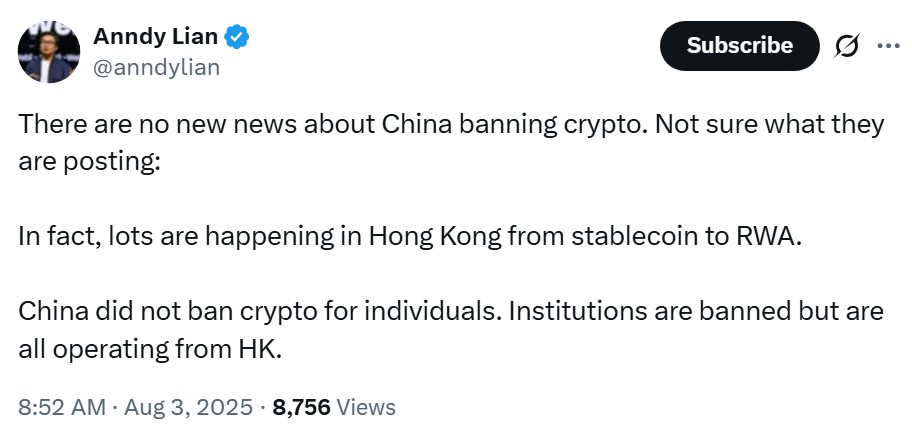
Crypto industry watcher observes RWA and stablecoin activity rising in Hong Kong
Hong Kong’s RWA and stablecoin activity picked up as new licensing rules took effect. (Anndy Lian)

The latest warning reportedly came from the China Securities Regulatory Commission, which advised companies to pause real-world asset ventures in Hong Kong. It followed a state-owned company scrubbing announcements about tokenizing bonds and other enterprises revealing RWA projects, piling on recent warnings against stablecoins after Hong Kong introduced its licensing framework.

To understand why these illusions of loopholes keep appearing — and why they collapse — Magazine spoke with Joshua Chu, co-chair of the Hong Kong Web3 association.

This conversation has been edited for clarity and length.

Magazine: Crypto has been banned for years in China, so why do regulators keep issuing fresh warnings?

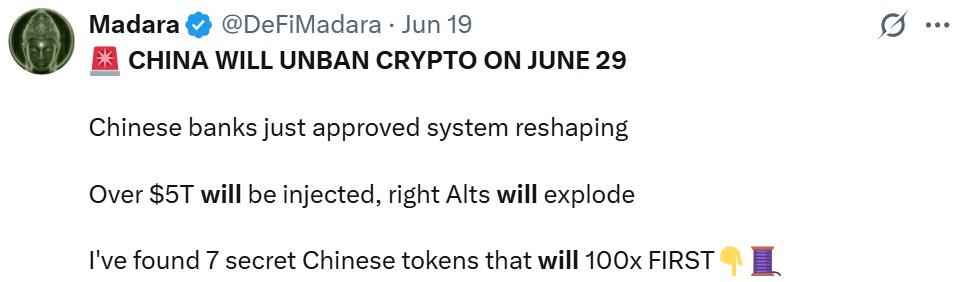
China crypto ban reversal rumor
Countless social media accounts predicted Beijing would reverse its crypto ban, but it hasn’t moved so far. (DeFiMadara)

Chu: The challenge is that many new lawyers in Hong Kong moving into Web3 don’t have much experience with cross-border issues. That’s created fragmentation and a lot of confusion. Some journalists and lawyers even claimed there was a 180-degree reversal on crypto policy. China doesn’t do 180-degree turns in policy. The only U-turn in recent memory was the rollback of COVID-19 mandates.

The crypto ban from 2021 is a good example: Speculative assets are not meant for the retail sector. The People’s Republic of China is still a communist country, and if an unsophisticated investor loses money gambling on crypto, in the government’s view, that’s losing money for the state. That’s why the only entities we’ve seen handling crypto assets are the government or state-owned enterprises.

Magazine: How do you explain this cycle where Chinese firms repeatedly attempt to enter a trendy crypto venture through Hong Kong, only for mainland regulators to push back?

Chu: The issue is how they’re doing it. Even big companies with money can act in a less-than-sophisticated way. There’s a difference between state-owned enterprises and private institutions. The government is comfortable with blockchain infrastructure and foreign direct investment. What it won’t tolerate is speculation because speculation equals bubbles.

That’s why regulators crack down on projects designed to hype markets or pull value from retail investors. It’s the same logic behind China’s real estate policy: Buying to live in is fine, but speculation isn’t. You can think of it as a parental style of governance: Just as parents wouldn’t let children gamble with family savings, the state won’t let retail investors gamble away wealth in crypto.

Crypto Is Alive and Well, Though Skeptics Say It’s ‘Not Money’

At the end of the day, companies see profit potential, which is why they want in. But regulators will only support ventures that are sophisticated, compliant and responsible. That’s also why Hong Kong can hold itself out as one of the world’s top three financial hubs — its reputation depends on keeping the system clean, and the same principle applies to virtual assets.

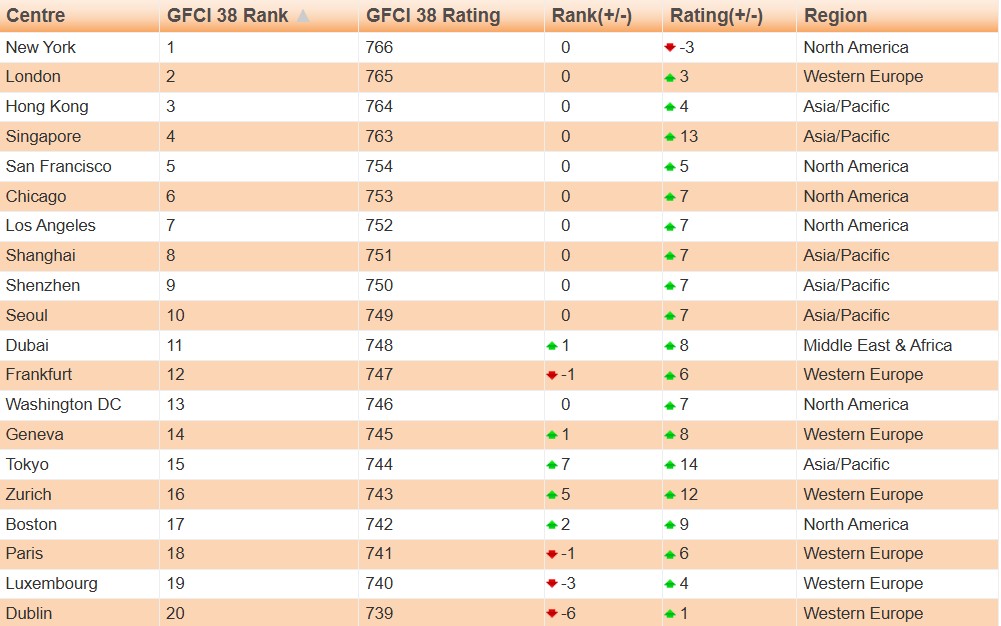
New York tops Long Finance's 2025 Global Financial Centres Index, followed by London, then Hong Kong
Hong Kong aims to strengthen its financial center rating through cryptocurrencies. (Long Finance)

Magazine: Isn’t the real problem that Chinese firms are hunting for loopholes and Hong Kong lawyers aren’t equipped to stop them?

Chu: Unfortunately, that happens a lot. If your whole business is founded on loopholes, you’re already on shaky ground. Regulators don’t create loopholes for you to exploit; they expect you to build something sustainable and compliant.

But because of the 2021 crypto ban, you have an entire market that’s been shut out. Human psychology kicks in, and people think: “Maybe this is my way back in.” That’s why you see companies making loud announcements before they’ve even filed an application. Take the stablecoin regime: Some firms were hyping plans to apply for licenses just to pump their stock price. Naturally, regulators step in.

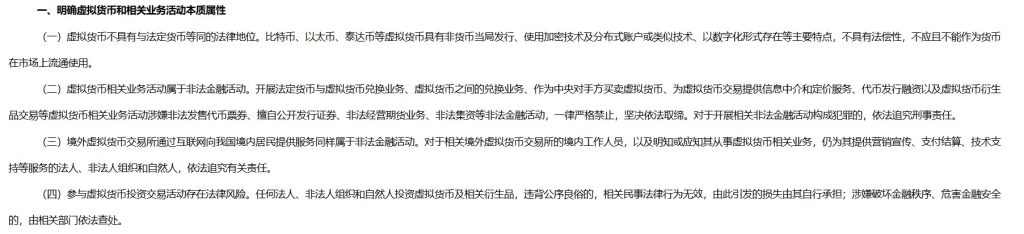
A screenshot of China's crypto ban statement in mandarin
China’s 2021 crypto ban defines crypto-related businesses as illegal financial activities. (China State Administration of Foreign Exchange)

We’ve seen this pattern before. When initial coin offerings were being sold as a cheaper alternative to initial public offerings, companies said you didn’t need a prospectus or compliance. But there’s a reason those safeguards exist: to protect investors. So, when players start cutting corners and shouting about it, it draws scrutiny. And that’s when clampdowns happen.

Magazine: When Chinese firms listed in Hong Kong or the US gain crypto exposure, is this regulatory arbitrage?

Chu: When a Chinese company lists on Nasdaq, it’s absorbing foreign investment, which triggers a different response than if it were raising funds domestically. The real question is how they structure these RWA or tokenization projects.

If they’re putting Chinese corporate data on a public blockchain, that creates cross-border data transfer issues. Remember, even listed companies have run into problems with US auditors because of China’s strict rules on what information can leave the country. Blockchain raises those concerns all over again.

There’s also the financial side. Many of these treasury strategies look risky, especially when driven by institutional FOMO at the peak of a bull cycle. Without strong internal risk controls, volatility can overwhelm the market cap of these firms. That’s exactly the kind of contagion risk regulators want to avoid.

If that happens, the scrutiny won’t just come from Beijing; it will come from the SEC as well.


Source: https://cointelegraph.com/magazine/hong-kong-isnt-loophole-chinese-crypto-firms-think/

Anndy Lian is an early blockchain adopter and experienced serial entrepreneur who is known for his work in the government sector. He is a best selling book author- “NFT: From Zero to Hero” and “Blockchain Revolution 2030”.

Currently, he is appointed as the Chief Digital Advisor at Mongolia Productivity Organization, championing national digitization. Prior to his current appointments, he was the Chairman of BigONE Exchange, a global top 30 ranked crypto spot exchange and was also the Advisory Board Member for Hyundai DAC, the blockchain arm of South Korea’s largest car manufacturer Hyundai Motor Group. Lian played a pivotal role as the Blockchain Advisor for Asian Productivity Organisation (APO), an intergovernmental organization committed to improving productivity in the Asia-Pacific region.

An avid supporter of incubating start-ups, Anndy has also been a private investor for the past eight years. With a growth investment mindset, Anndy strategically demonstrates this in the companies he chooses to be involved with. He believes that what he is doing through blockchain technology currently will revolutionise and redefine traditional businesses. He also believes that the blockchain industry has to be “redecentralised”.
j j j

Shaping the Future of DevPortals: A Think Tank on Decentralization, AI, and Beyond

Shaping the Future of DevPortals: A Think Tank on Decentralization, AI, and Beyond

The digital landscape is rapidly evolving, reshaping how we build, deploy, and interact with software. At the forefront of this revolution are DevPortals, the unsung heroes that empower developers to build the future.

But What Are Developer Portals?

Blockchain Developer Portals (DevPortals) are specialized platforms designed to provide developers with the necessary resources, documentation, and tools to interact with blockchain networks and build decentralized applications (dApps). These portals play a critical role in the blockchain ecosystem by enabling developers to integrate blockchain functionalities into their applications, deploy smart contracts, and interact with various blockchain networks.

Ethereum, Polkadot, Solana, Binance Smart Chain (BSC), and Cardano are just a few of the popular blockchain networks that had their own dedicated DevPortals. Ethereum, for example, had been a cornerstone for dApp developers, offering extensive resources on smart contract languages like Solidity and tools like Truffle. Solana, on the other hand, gained traction due to its emphasis on high-speed transactions and low fees, making it ideal for DeFi applications. Polkadot’s Developer Hub stood out for its focus on interoperability, providing guidance on building parachains and custom blockchains using Substrate.

And, very recently, Shiba Inu’s Layer 2 scalability solution Shibarium joined the ranks of these innovative platforms with the launch of the ShibDev portal.

To explore the future of these crucial platforms, we’ve assembled a panel of industry luminaries. Anndy Lian, a pioneer in intergovernmental blockchain, joins forces with the forward-thinking team at Unification, and Mikko Ohtamaa, co-founder of TradingProtocol. Together, they’ll delve into the transformative potential of decentralized technologies, AI, and the metaverse.

From secure and transparent collaboration to personalized AI assistance, these experts envision a future where DevPortals are more than just repositories of code. They’ll become dynamic ecosystems that empower developers to build faster, smarter, and more inclusively.

In this Alpha Insights, we look into the challenges, opportunities, and ethical considerations that lie ahead. By understanding the future of DevPortals, we can pave the way for a new era of innovation and accessibility for all.

Decentralization: Building Trust, One Block at a Time

Lian believes that blockchain technology holds the key to unlocking a new level of trust and transparency in developer portals. “Imagine a world where every contribution is immutably recorded, and ownership is clearly defined,” he said. By leveraging blockchain’s inherent security features, developer portals can become secure havens for valuable code and data.

However, Lian acknowledged that decentralization presents its own set of hurdles. Scalability – the ability to handle a growing number of users and projects – remains a key concern. Governance, too, requires careful consideration. Decentralized models, while empowering, must be designed to prevent malicious actors from hijacking the platform.

AI: The Personalized Tutor and the Ethical Tightrope

The Unification team envisioned a future where AI assistants become indispensable companions for developers. “AI can go far beyond code suggestions,” they explained. “Imagine an AI that predicts the environmental impact of your code and suggests optimizations.” This level of personalized assistance could significantly accelerate the development process.

But Lian cautioned that the integration of AI must be approached with ethical awareness. “AI algorithms can inherit and amplify existing biases,” he warned. He highlighted that transparency in how AI makes decisions and user consent in data collection are crucial to building trust.

Interoperability: Bridging the Islands of Code

Lian advocates for open standards and protocols to enable seamless integration between different developer portals. “Think of it like building bridges between islands,” he said. This interoperability would allow developers to move freely between platforms, accessing a wealth of resources and expertise.

However, challenges like vendor lock-in and differing technical architectures must be addressed. Lian believes that a commitment to open standards and the development of adapter layers can pave the way for a truly interconnected developer ecosystem.

The Metaverse: From Virtual Hangouts to Revenue Generators

Lian sees the metaverse as more than just a place for developers to socialize. He envisioned immersive environments where developers can collaborate on debugging in real-time, manipulating 3D data structures with their hands.

Furthermore, the metaverse could unlock new revenue streams for developer portals. Virtual marketplaces for code libraries and tools, and even virtual conferences and hackathons, could generate income for both the platform and its users.

Accessibility and Inclusivity: Building a Welcoming Space for All

Lian emphasized the importance of designing developer portals that are accessible to everyone, regardless of disability. Screen reader compatibility, keyboard navigation, and adjustable font sizes are just some of the features that can make a difference.

The Unification team stressed that accessibility should not be an afterthought. “It should be baked into the initial requirements from the very beginning,” they argue. They advocate for close collaboration with diverse communities to ensure that developer portals are truly inclusive.

Emerging Technologies: Adapting to Stay Ahead

Lian believes that emerging technologies like quantum computing and augmented reality will reshape the development landscape. Developer portals must adapt by providing educational resources, investing in robust infrastructure, and implementing strong security measures.

Ohtamaa, however, offers a reminder that human expertise remains paramount. “No technology can replace the need for high-quality senior developers to craft these portals,” he says.

A Collaborative Future

The future of DevPortals is bright, but it requires a concerted effort to address the challenges and seize the opportunities. By embracing decentralization, AI, and the metaverse, while prioritizing accessibility and inclusivity, DevPortals can become powerful engines of innovation and collaboration.

As the digital landscape continues to evolve, DevPortals will play a crucial role in empowering developers to build a better future. By providing the tools, resources, and community support they need, these platforms can foster creativity, collaboration, and the development of groundbreaking applications.

Want to dive deeper into the future of DevPortals? Read the full interviews at the links below.

Shaping the Future of DevPortals: An Exclusive Interview with Anndy Lian

The Future of DevPortals: An Exclusive Interview with Unification

About the Experts

Anndy Lian is a global blockchain strategist and thought leader. As an early adopter and investor, he has played pivotal roles in shaping the industry through advisory work with governments, corporations, and international organizations. His expertise is reflected in his books, Blockchain Revolution 2030 and NFT: From Zero to Hero. Currently leading digital transformation in Mongolia, Lian’s impact spans from cryptocurrency exchanges to automotive giants.

Unification (FUND) is a hybrid blockchain pioneering Web3 accessibility. It empowers both traditional enterprises and dApp developers by providing a user-friendly platform and open-source tools. It focuses on decentralization, rapid deployability, and multi-chain compatibility. We’re committed to bridging the gap between Web2 and Web3, making the decentralized world more accessible to everyone.

Mikko Ohtamaa is a seasoned blockchain expert with over 25 years of experience in software development. He has held CTO positions at numerous fintech companies and co-founded TokenMarket, a successful blockchain fundraising platform. As an early adopter of Ethereum, Mikko has deep expertise in Solidity development and auditing.

Mikko now leverages his experience to advise blockchain startups and conduct technical due diligence for DeFi projects. His extensive knowledge and hands-on experience make him a valuable asset to the industry.


Source: https://magazine.shib.io/article/66d86a7287c4c100015d5d7f

Anndy Lian is an early blockchain adopter and experienced serial entrepreneur who is known for his work in the government sector. He is a best selling book author- “NFT: From Zero to Hero” and “Blockchain Revolution 2030”.

Currently, he is appointed as the Chief Digital Advisor at Mongolia Productivity Organization, championing national digitization. Prior to his current appointments, he was the Chairman of BigONE Exchange, a global top 30 ranked crypto spot exchange and was also the Advisory Board Member for Hyundai DAC, the blockchain arm of South Korea’s largest car manufacturer Hyundai Motor Group. Lian played a pivotal role as the Blockchain Advisor for Asian Productivity Organisation (APO), an intergovernmental organization committed to improving productivity in the Asia-Pacific region.

An avid supporter of incubating start-ups, Anndy has also been a private investor for the past eight years. With a growth investment mindset, Anndy strategically demonstrates this in the companies he chooses to be involved with. He believes that what he is doing through blockchain technology currently will revolutionise and redefine traditional businesses. He also believes that the blockchain industry has to be “redecentralised”.
j j j