Binance Warns of New Scam Token Listings Using LinkedIn

Binance Warns of New Scam Token Listings Using LinkedIn
Exploiting the recent resurgence in crypto market activity, scammers are again preying on unsuspecting victims by impersonating prominent industry figures. Among those targeted are Yi He, the co-founder of Binance, and Anndy Lian, a distinguished blockchain author who has fallen victim to identity theft.

LinkedIn Impersonation: A Growing Threat

Yi He’s identity has been hijacked by fraudsters, who have crafted convincing LinkedIn profiles to trap their targets. These impostors promise potential victims token listings on Binance for hefty payments.

According to Coin Telegraph, Yi He has clarified her minimal involvement with LinkedIn and her complete detachment from listing negotiations. She urges caution and vigilance against individuals peddling false insider connections.

Anndy Lian’s Exposes WhatsApp Scams

Adding to the concern, Anndy Lian has shed light on a parallel scam operating through WhatsApp. Here, scammers masquerade as Binance personnel, enticing individuals to join cryptocurrency groups with promises of easy passive income.

In response, Binance has categorically stated that no such groups operate under its auspices. The exchange stresses the importance of verifying the legitimacy of any unsolicited offers.

Binance’s Commitment to Security and Vigilance

In light of these deceptive practices, Binance’s customer support has issued guidelines to safeguard users. They advise verifying the authenticity of any purported Binance-affiliated contact through official links provided on the exchange’s website.

According to Coin Gape, this verification protocol extends across all communication channels, including email, phone numbers, and social media profiles. Binance strongly advises against interacting with unofficial sources or divulging sensitive account information to them.

While exchange token listing scams are not novel, their resurgence amidst the recent crypto market upswing underscores the need for heightened vigilance. These scams often commence with polished LinkedIn profiles reaching out to project developers, dangling the allure of token listings in exchange for substantial deposits. However, these promises invariably lead to financial losses as the anticipated listings fail to materialize.

Binance’s alert serves as a crucial reminder to exercise caution and diligence in navigating the increasingly complex landscape of cryptocurrency.


Source: https://www.econotimes.com/Binance-Warns-of-New-Scam-Token-Listings-Using-LinkedIn-1670448

Anndy Lian is an early blockchain adopter and experienced serial entrepreneur who is known for his work in the government sector. He is a best selling book author- “NFT: From Zero to Hero” and “Blockchain Revolution 2030”.

Currently, he is appointed as the Chief Digital Advisor at Mongolia Productivity Organization, championing national digitization. Prior to his current appointments, he was the Chairman of BigONE Exchange, a global top 30 ranked crypto spot exchange and was also the Advisory Board Member for Hyundai DAC, the blockchain arm of South Korea’s largest car manufacturer Hyundai Motor Group. Lian played a pivotal role as the Blockchain Advisor for Asian Productivity Organisation (APO), an intergovernmental organization committed to improving productivity in the Asia-Pacific region.

An avid supporter of incubating start-ups, Anndy has also been a private investor for the past eight years. With a growth investment mindset, Anndy strategically demonstrates this in the companies he chooses to be involved with. He believes that what he is doing through blockchain technology currently will revolutionise and redefine traditional businesses. He also believes that the blockchain industry has to be “redecentralised”.

j j j

What is green satoshi token (GST)? What you need to know about Stepn’s in-game currency token

What is green satoshi token (GST)? What you need to know about Stepn’s in-game currency token

The green satoshi token (GST) is the native cryptocurrency of the first-of-its-kind Web3 lifestyle app STEPN, which encourages users to stay active by rewarding them in GST tokens.

The token started 2022 with a kick, seeing its value surge by more than 300% from its debut in late December 2021 at $1.8 to an all-time high of $7.8 on 29 April 2022. Since then, however, the token dipped, losing over 99.7% of its gains down to $0.0223 as of 25 November 2022.

So, what is green satoshi token (GST) and how does it work?

What is green satoshi token (GST)?

A pioneer in the move-to-earn (M2E) sphere, STEPN inspires crypto fans to exercise or “move around” while earning the platform’s native coin – the green satoshi token (GST).

According to the STEPN platform’s whitepaper: “With Game-Fi, STEPN aims to nudge millions toward a healthier lifestyle, combat climate change and connect the public to Web 3.0, all while simultaneously hinging on it’s Social-Fi aspect to build a long-lasting platform fostering user generated Web 3.0 content.”

STEPN announced its public beta release on 20 December 2021 and was launched by the Australia-based fintech studio, Find Satoshi Lab.

Users get to purchase and equip themselves with non-fungible tokens (NTFs) in the shape of sneakers that are used for jogging, walking or running outdoors.

The game has four types of NFT Sneakers designed to fit different fitness levels. In addition, STEPN Sneakers are ranked by five different qualities that are given to them at random, thus establishing their rarity.

Users can purchase new Sneakers through the in-game NFT marketplace or create their own by “breeding” two Sneakers they already own through what the platform calls a Shoe Minting Event (SME). Each Sneaker can be bred up to seven times. The more a Sneaker was bred, the more tokens it will cost.

STEPN has three game modes.

  • Solo Mode: Users are equipped with NFT Sneakers and can earn GST coins through either walking or running. Their progress is tracked via a GPS signal. Users are given a certain amount of energy which allows them to earn GST tokens. Once that energy runs out, tokens can no longer be earned.
  • Marathon Mode: Users can participate in a weekly or monthly marathon of their chosen distance. At the time of writing, the marathon mode was currently under development.
  • Background Mode: Users will be able to continue gaining GST tokens while the STEPN is running in the background. As long as a user owns an NFT Sneaker, the app will be able to collect the user’s step data from their mobile’s health app. At the time of writing, this mode was also under development.

How does green satoshi token work?

It is important to note that STEPN has a dual token system; the green satoshi token cryptocurrency and the green metaverse token (GMT).

The GST coin is the in-game token of the STEPN ecosystem, while GMT is its governance coin.

So, what is the green satoshi token used for?

GST has an unlimited supply and can be earned by users through moving. GST is paid out for every minute of movement. The amount of GST paid out to users depends on the type of Sneaker they own and its unique attributes.

Because STEPN was built on the Solana (SOL) ecosystem, the GST coin was introduced on the Solana blockchain and then in May 2022 also added to the BNB Chain (BNB), formerly called BNB Smart Chain (BSC).

“To ensure the stability of GST, STEPN is designed with plenty of burn mechanisms. These involve upgrading your in-game assets like shoes and gems, unlocking gem sockets, and repairs. GST is also used to mint new shoes,” STEPN said in a blog post.

GST can be notably considered one of the more successful cryptocurrencies of 2022, despite the overall bear market that followed most cryptocurrencies at the start of the year.

The coin surged by around 350% within four months from $1.7443 on 22 December 2021 to $7.8337 on 29 April 2022 – its all-time high – as the company pledged to combat climate change and achieve carbon neutrality through the purchase of $100,000 worth of Carbon Removal Tonnes and the GTS token was listed on the popular crypto exchange Coinbase.

The positive rally did not last long, however, and GST managed to lose over 45% of its gains overnight dropping to $4.121, ahead of the release of the platform’s Public Beta Phase IV. By 3 May 2022, the token managed to resurface, surging past $6.5.

As hype surrounding STEPN and its native cryptocurrency started to decline, and the economic situation worldwide deteriorated, GST embarked on a bear run, losing over 97% of its gains from its 3 May 2022 value, down to $0.1804 by 13 June 2022.

DappRadar’s third-quarter gaming report published in October 2022 noted that STEPN “has cooled down after a torrid Q2” and its monthly active users decreased by 67%, falling to 482,000. In comparison, during Q2, STEPN registered over 2 million monthly users and over 260,000 new wallets.

By 23 November 2022, GST lost an additional 87.6% of its price down to $0.0223.

Latest GST news and price drivers

STEPN was the first ever earn-to-move blockchain to be released and with no competition at the time managed to surge to certain heights. However, competition was inevitable with the release of Sweat Economy, another move-to-earn blockchain, which according to DappRadar minted a record-breaking 10,000 NFTs in September 2022.

Additionally, uncertainty surrounding the Solana blockchain has been on the rise since the FTX crypto exchange, which is closely tied to Solana, filed for bankruptcy on 11 November. Since STEPN was built on the Solana blockchain, the GST coin is also affected by either positive or negative movements in Solana’s native cryptocurrency SOL.

In other news, STEPN announced on 18 November that it has launched an in-app event to celebrate the FIFA World Cup, top international sporting events of 2022, and encourage users worldwide to move and participate.

Moreover, STEPN has also partnered with ASICS and Solana to “pave the way for the Web3 fitness industry” by launching a new UI sneakers Collection.

Risk and opportunities

Anndy Lian, the chief digital advisor at the Mongolian Productivity Organisation and author of ‘NFT: From Zero to Hero’ told Capital.com that GST being built on the Solana network is both a “risk and opportunity” for the token.

“More than $700m has exited Solana-based applications, a 70% drop from the $1bn in TVL on 2 November alone. And please be mindful that this is the beginning of the whole saga.

“If Solana can continue to function and ride through this massive blow, GST being one of the largest ecosystems on Solana would surely be the first few that will benefit from this; Proving to the world that decentralisation actually works this time.”

Crypto advisor Victoria Kennedy added that GST’s biggest pro is its current burn system, which sees more tokens being burned than released, thus keeping the green satoshi token cryptocurrency deflationary. However, she also noted that due to its massive use function within the STEPN ecosystem, the “selling pressure from the players is much bigger, thus pushing the price down”.

Dr Pooja Lekhi, the vice chair of the Department of Quantitative Studies at University Canada West said that the GST coin “is still very new in the crypto market and hence has a limited track record and has no traceable features on trading views”.

On the other hand, Dr. Lekhi noted that GST has certain unique features including “social and community aspects”.

“With Game-Fi, STEPN aims to encourage people toward a healthier lifestyle, combat climate change and connect the public to Web 3.0, which is the next version of the internet. The GST token can be used to purchase Carbon Removal Credits and has received support from top-notch crypto investors, crypto firms, and big businesses.”

Note that analyst views are not financial advice and shouldn’t be used as a substitute for your own research. Always conduct your own due diligence, and never invest or trade money you cannot afford to lose.


Source: https://capital.com/green-satoshi-token-gst-stepn-crypto-what-is-ultimate-guide

Anndy Lian is an early blockchain adopter and experienced serial entrepreneur who is known for his work in the government sector. He is a best selling book author- “NFT: From Zero to Hero” and “Blockchain Revolution 2030”.

Currently, he is appointed as the Chief Digital Advisor at Mongolia Productivity Organization, championing national digitization. Prior to his current appointments, he was the Chairman of BigONE Exchange, a global top 30 ranked crypto spot exchange and was also the Advisory Board Member for Hyundai DAC, the blockchain arm of South Korea’s largest car manufacturer Hyundai Motor Group. Lian played a pivotal role as the Blockchain Advisor for Asian Productivity Organisation (APO), an intergovernmental organization committed to improving productivity in the Asia-Pacific region.

An avid supporter of incubating start-ups, Anndy has also been a private investor for the past eight years. With a growth investment mindset, Anndy strategically demonstrates this in the companies he chooses to be involved with. He believes that what he is doing through blockchain technology currently will revolutionise and redefine traditional businesses. He also believes that the blockchain industry has to be “redecentralised”.

j j j

How many cronos tokens are there? CRO token circulation analysis

How many cronos tokens are there? CRO token circulation analysis

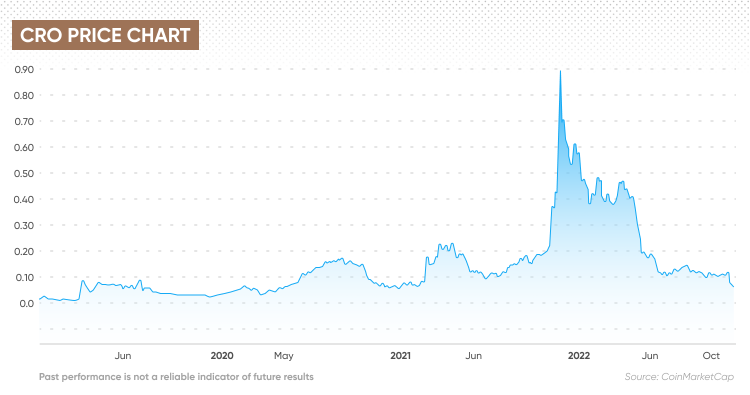
Crypto.com is one of the biggest crypto exchanges out there, however, recent negative sentiment and the collapse of the FTX crypto exchange have sent its native token, cronos (CRO), into a downwards spiral, forcing it to lose over 90% of its value from $0.8992 in November 2021 to $0.0698 a year later.

What are the latest token analytics suggesting, and how many cronos tokens are there?

What is CRO?

CRO is the native cryptocurrency of the Crypto.com chain and the Cronos EVM Chain. It was formerly known as the Crypto.org Coin before being renamed to CRO.

Crypto.com is a public, open-source and permissionless blockchain that aims to help drive the mass adoption of blockchain technology through decentralised finance (DeFi), payments and non-fungible tokens (NFTs). The platform has named itself as the “next generation public blockchain”.

The platform was co-founded in 2016 by Kris Marszalek, Rafael Melo, Bobby Bao and Gary Or and is now operated as a desktop and mobile application.

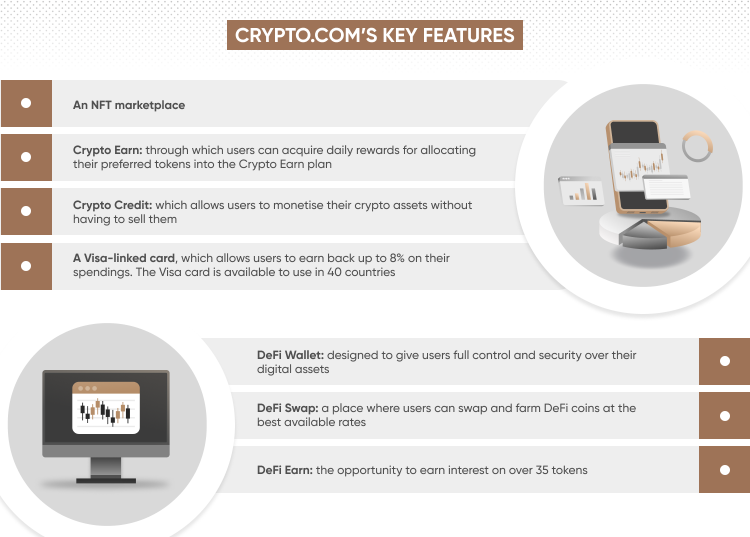
Crypto.com's key features

The Cronos EVM Chain is the first ever Ethereum-compatible blockchain that was built on Cosmos SDK technology. It is an open source, permissionless Layer 1 chain that aims to scale the DeFi, GameFi and overall Web3 communities by letting builders instantly port apps and crypto assets from other chains while benefiting from low transaction fees, high throughput and fast finality.

The CRO token powers the ecosystem and is used for staking, which grants users a number of rewards and helps maintain the platform’s security and decentralisation. The cronos cryptocurrency is also used to settle transaction fees on the Crypto.org Chain.

Latest CRO market news

2022 has not been the best year for CRO. The token has fallen by more than 87% from its all-time high of $0.8992 on 24 November 2021 to $0.1093 on 17 June 2022. The dip in the CRO price was heightened as Crypto.com announced on 1 May 2022 that it would be slashing staking rewards for all tiers of its VISA cards “to ensure long-term sustainability”, effective as of 1 June 2022.

CRO price chart

Between mid-July 2022 and end of September 2022, Crypto.com has received a number of licence updates worldwide, including Italy, Cyprus, South Korea, Australia, Canada, the UK and France. In addition, on 12 October 2022 the firm said that Paris was established as its European Regional Headquarters and invested €150m (around $155m, as of 18 November) in France to support market operations.

Between 25 October 2022 and 28 October 2022, Crypto.com had signed three MOUs: one with the game software developing studio ACT Games; one with the city of Busan in South Korea to advance the blockchain industry; and one more with global content studio A Story to develop NFT collaborations.

However, amid all the positive news, Crypto.com has also been caught in an array of negative news. An article published on 6 October 2022 by Ad Age tech claimed that the platform had cut off deals with a number of big sports organisations, including the Los Angeles’ Angels City Football Club, the 2022 FIFA World Cup in Qatar and the online sports tournament host Twitch Rivals. The article cited unanimous former and current Crypto.com employees.

In addition, according to a series of Tweets by the article’s journalist Asa Hiken, between “June and August, 30-40% of Crypto[dot]com’s entire workforce left the company, per former and current employees. That’s 2,000+ departures — the vast majority of which were layoffs.”

The company did not address the reports.

Now, let’s take a closer look at how many cronos tokens there are now.

How many cronos tokens are there?

So, let’s have a look at how many cronos tokens are available in circulation as of 18 November 2022.

According to data provided by CoinMarketCap, the maximum supply of the cronos tokens is 30.2 billion, meaning that once the total number of cronos tokens in circulation reaches that value, new tokens can no longer be mined. The current circulating supply of the CRO coin surpassed 25 billion.

However, this was not always the case for the cryptocurrency.

When the cryptocurrency was launched in 2018, its maximum supply was fixed at 100 billion coins. But, in order for the Crypto.com network to become fully decentralised at Mainnet Launch, Crypto.com decided to burn 70 billion CRO tokens in what it called “the largest token burn in history”. This was announced by the platform on 22 February 2021.

The platform released a schedule which shows that an initial batch of 59.6 billion CRO tokens was burned on 22 February 2021. Meanwhile, 10.4 billion coins were locked in a smart contract and would be burned every month as they get unlocked. This was aiming to increase the cryptocurrency circulating supply from 24% at the time to over 80%.

The remaining 5.9 billion CRO tokens were distributed in the following way:

  • 5 billion CRO were allocated to mainnet block rewards for Chain validators and delegators
  • 0.9 billion CRO were allocated to the development of the Chain ecosystem

Of that 70 billion burned:

  • 20 billion tokens came from the platform’s capital reserve
  • 5.5 billion coins came from the platform’s community development
  • 10.4 billion tokens came from secondary distribution and launch incentives
  • 20 billion tokens came from ecosystem grants
  • 20 billion tokens came from network long-term incentives

Who are the biggest CRO token holders?

Now that we have established how many cronos tokens are in circulation, let’s take a look at the biggest CRO token holders.

Data provided by etherscan.io showed that, as of 18 November, there were 281,902 CRO holders in total. The 10 biggest CRO holders collectively owned 92.54% of the total token supply in circulation, meanwhile the top 100 owned 95.93%.

The website noted that the top account holding the most CRO tokens in total was a Null Address owning over 77 billion coins, amounting to 77.89% of the total circulating supply. Crypto.com was also among the top CRO holders in the world, owning around 7 billion tokens or approximately 6.9% of the total supply.

Analyst thoughts

Anndy Lian, chief digital advisor at the Mongolian Productivity Organisation and author of ‘NFT: From Zero to Hero’ told Capital.com that while burning 70% of the then maximum CRO token supply was a good decision, doing so in 2021 was a “downside”.

“Personally, I would prefer them to burn and then buyback in stages of burning such a huge amount. The burn back then did make the market perceive that the remaining tokens have more value but that was short lived.”

Lian added that taking into consideration everything that has happened with the FTX crypto exchange in recent weeks, CRO holders are also getting anxious about the wellbeing of the Crypto.com platform, however, Crypto.com CEO Kris Marszalek’s live AMA session on YouTube on 14 November 2022 helped calm those worries down.

“Crypto.com is still facing potential bank run in my humble opinion. This to me is one of the biggest risks that CRO has a direct impact on.”

The bottom line

While knowing key info about the cronos tokenomics and circulating supply is important for accessing the project’s health, it shouldn’t substitute your own research. You should always conduct your own due diligence before trading, looking at the latest news, technical and fundamental analysis, and a wide range of analysts’ opinions before making any trading decision.

Keep in mind that past performance is no guarantee of future returns. And never trade or invest money that you cannot afford to lose.


Source: https://capital.com/how-many-cro-tokens-are-there-crypto-com-circulation-analysis

Anndy Lian is an early blockchain adopter and experienced serial entrepreneur who is known for his work in the government sector. He is a best selling book author- “NFT: From Zero to Hero” and “Blockchain Revolution 2030”.

Currently, he is appointed as the Chief Digital Advisor at Mongolia Productivity Organization, championing national digitization. Prior to his current appointments, he was the Chairman of BigONE Exchange, a global top 30 ranked crypto spot exchange and was also the Advisory Board Member for Hyundai DAC, the blockchain arm of South Korea’s largest car manufacturer Hyundai Motor Group. Lian played a pivotal role as the Blockchain Advisor for Asian Productivity Organisation (APO), an intergovernmental organization committed to improving productivity in the Asia-Pacific region.

An avid supporter of incubating start-ups, Anndy has also been a private investor for the past eight years. With a growth investment mindset, Anndy strategically demonstrates this in the companies he chooses to be involved with. He believes that what he is doing through blockchain technology currently will revolutionise and redefine traditional businesses. He also believes that the blockchain industry has to be “redecentralised”.

j j j