Catching up with Anndy Lian: “WE ARE SATOSHI”

Catching up with Anndy Lian: “WE ARE SATOSHI”

1. Where are you originally from, what was your upbringing like?

I am born in sunny island Singapore. Singapore’s environment is rather competitive if you compared it to other countries. You can imagine how is life like in this fast pace country. I am trained to do my best in whatever I do, be effective and results driven.


2. What languages are you fluent in, what heritage or culture do you hold onto strongest?

I can speak English, Mandarin, Cantonese, Hokkien, a bit of Japanese and Korean. I am Chinese, so I do hold on to my Chinese roots very much. Having said so, we are in 2021. Our culture changes with times, we learn from the best cultures and adapt to our lives.


3. What or when was the first time you realized crypto was your life path?

My first encounter with crypto was in 2010/11. My first encounter with blockchain was in 2016/17. Crypto as a life path is a bit cliche. I think it is more like I felt that blockchain can help to improve our lives, that is why I started to find out more.


4. If you could change one thing about your crypto journey what would it be and why?

Honestly, nothing in my opinion needs to be changed for my crypto journey. If it is a ‘must” for me to answer this, then I would say get rid of bad partners and find more like-minded individuals. Because I started early, you won’t imagine what kind of bad incidents I have encountered.


5. If you could educate new people getting into the crypto space what would you choose?

I would recommend them to learn from the basics and not enter into the cryptocurrency space because their friends made a 100X for example.


6. If you could change one thing about yourself what would it be and why?

“Maybe to be less successful when young.” Don’t ask me for the details.


7. What countries do you feel are leading the way in the digital currency space?

South Korea, China, Singapore and U.S.


8. What media do you feel is the right place to search for right information or less FUD?

There is no right media. I read @WuBlockchain, @blockcastcc, @cointelegraph and lots from the mainstream media. Do they have some FUD angles? Yes, but good media will provide both sides of the story.


9. Do you believe Cryptocurrency will end the banking system or evolve around it?

As of now, cryptocurrency will not end the banking system. It is evolving around it and improving it. I know many of my friends were against me when I started to give advice to governments in 2018. They told me crypto is decentralised and working with the government makes me look bad. I did not listen, I stuck to my point that we need to work with everyone to make crypto mainstream and we need to redefine decentralisation. I used the word “redecentralise”.


10. Will you mentor me? Lol jk. Do you believe Satoshi Nakamoto is an idea or an actual person?

I am in no position to mentor anyone. I need some mentorship myself too. (LOL). I believe Satoshi Nakamoto is amongst us. It may be a group or an actual person in the past but right now- “WE ARE SATOSHI”.


About Anndy Lian:

Advisory Board Member, Hyundai DAC Technology (Blockchain arm of Hyundai Motor Group)

Chief Digital Advisor, Mongolian Productivity Organization 

Member, Gyeongsangbuk-do Blockchain Special Committee, Government of the Republic of Korea

Former Blockchain Adviser, Asian Productivity Organization (APO)

Book Author, “Blockchain Revolution 2030”

Advisory Panel, China-ASEAN Business Alliance

Partner, Blockchain Investment, Passion Venture Capital (Granted Capital Market Services (CMS) licence from Singapore regulator MAS.)

Chairman, Korea eSports Industry Association (Singapore Chapter)


Anndy Lian is an all-rounded business strategist in Asia. He has provided advisory across a variety of industries for local, international, public listed companies and governments. He is an early blockchain adopter and experienced serial entrepreneur, book author, investor, board member and keynote speaker.

Currently, he is appointed as the Advisory Board Member for Hyundai DAC, the blockchain arm of South Korea’s largest car manufacturer Hyundai Motor Group where he looks after the governance and compliance aspects of the business. He is also the Chief Digital Advisor at Mongolia Productivity Organization, championing national digitization.

Anndy is also part of the Gyeongsangbuk-do Blockchain Special Committee, Government of Republic Korea, together with industry experts such as Brock Pierce (Chairman, Bitcoin Foundation) and Alexis Sirkia (Founder of Yellow.com), helping the province to grow using blockchain technologies.

He is the Chairman (Singapore) for Korea eSports Industry Association (KeIA) where he is actively promoting eSports to go mainstream and adopt cryptocurrencies.


This interview curated by Scott Tripp @CryptoBeast32.

Date of interview: 29 June 2021
Time of interview: 9.00 am SGT


Originally published on:

Catching up with Anndy Lian: “WE ARE SATOSHI”

Anndy Lian personal Interview. from SafeMoon

Anndy Lian is an early blockchain adopter and experienced serial entrepreneur who is known for his work in the government sector. He is a best selling book author- “NFT: From Zero to Hero” and “Blockchain Revolution 2030”.

Currently, he is appointed as the Chief Digital Advisor at Mongolia Productivity Organization, championing national digitization. Prior to his current appointments, he was the Chairman of BigONE Exchange, a global top 30 ranked crypto spot exchange and was also the Advisory Board Member for Hyundai DAC, the blockchain arm of South Korea’s largest car manufacturer Hyundai Motor Group. Lian played a pivotal role as the Blockchain Advisor for Asian Productivity Organisation (APO), an intergovernmental organization committed to improving productivity in the Asia-Pacific region.

An avid supporter of incubating start-ups, Anndy has also been a private investor for the past eight years. With a growth investment mindset, Anndy strategically demonstrates this in the companies he chooses to be involved with. He believes that what he is doing through blockchain technology currently will revolutionise and redefine traditional businesses. He also believes that the blockchain industry has to be “redecentralised”.

j j j

Anndy Lian: The ‘Number Go Up’ Mentality is still the Driving Force now

Anndy Lian: The ‘Number Go Up’ Mentality is still the Driving Force now

Thanks, Crypto news for the mention. Let me add to what I have said in the article.

1. Is chasing big short-term gains more important for most crypto traders than investing in a crypto that actually has a good prospect of offering a meaningful product?

Of course, most traders are chasing big short-term gains. In the first place, the big gains got them into the crypto market. The hype, greed and prosperity drive them to stay on to “prey” for new tokens. Whether the product is meaningful or not is no longer important, most traders are looking at the short term value.


2. How much of the recent late-2020/early-2021 bull market was driven by ‘number go up’ traders? Was the bull market simply the result of a quest for big gains, or were at least some investors driven by the sense that crypto is getting closer to having a significant impact on the wider world?

2017 bull run is driven by retail investors. 2020 bull run is driven by the institutions, not the ‘number go up’ traders.

The ‘number go up’ traders came in when the prices were fairly high. 1% of the traders/ institutions contributed to 90% of the volume. This is how the market is like.

The new traders were especially happy when the price went up, and when the price went down a bit, their weak hands led them to sell off at losses. The billion liquidation headlines you see in the news are mainly contributed by that group of people. I have not heard of any institutions going burst.


3. Do you think this ‘number go up’ mentality is ultimately damaging to the crypto sector’s maturation and development in the long run? And is it something that crypto can get rid of as time passes?

I think ‘number go up’ traders contribute to the ecosystem and they are here to stay. Just like the stock market.

The group of people will go into a rotation mode. Those who have gone through the up and down. They will understand that the market is not about speculations. The ‘number go up’ group will move to look at the real value behind the coin or company. Then new ones will take over their role.

In terms of maturation and development in the long run, it will take time to reach that stage.
In bearish times, it is the best time to build technology and business. So the bear market is not so bad after all.

BTC went up, drew many here.
BTC went down, pushed many away.
This is a cycle.

_______________________________________________

The ‘Number Go Up’ Mentality Drives Crypto World As It Matures

Is crypto all about ‘number go up’? Many of its detractors would certainly say so, while many proponents get overly excited about big price rises, betraying the possibility that they’re only in it for the money.

In either case, while skeptics argue that bigger numbers are the only things that drive cryptoassets traders and holders, others would affirm that many participants are driven by a vision of the future where governments and central banks have less power over economies and financial systems.

However, there are no numbers that would indicate how many crypto users are entering the Cryptoverse only because of a hope to make a quick buck. Especially, when it takes time and effort to understand this new complex world.

The driving force

Noted crypto author and skeptic David Gerard is firmly of the camp which holds that the number-go-up mentality is dominant within crypto.

“Long-term in crypto trading seems to be on the order of months, in the course of a bubble when all the numbers are going up. Long-term bitcoin holders might be an exception to this rule, or those who got in early with a popular coin such as ethereum or (to a certain extent) EOS,” he told Cryptonews.com.

For Gerard, few cryptoasset holders are actually investors who firmly believe that a project will make a meaningful contribution to the world. This is in part, according to him, because blockchain remains such an experimental and unproven technology, with relatively little demand from the wider world.

“The overwhelming majority of crypto projects fail. Even trying to pick winners here is largely professional gambling,” he added.

Even big players such as Barry Silbert, Founder and CEO of Digital Currency Group, said recently that he finds 99% of cryptoassets to be overpriced.

Also, certain people more sympathetic towards crypto agree that ‘number go up’ is pretty much the driving force of the market and industry now. This includes Anndy Lian, the Chief Digital Advisor at the Mongolian Productivity Organization, who says that most traders are doing what traders usually do – chase big short-term gains.

“In the first place, the big gains got them into the crypto market. The hype, greed, and prosperity drive them to stay on to ‘prey’ on new tokens. Whether the product is meaningful or not is no longer important, most traders are looking at the short term value,” he said.

However, the OKEx Insights team stresses that trading and investing (in the longer-term sense) exist side-by-side in crypto, as two different strategies.

“Oftentimes crypto traders have separate allocations for investing in projects and platforms that have promising potential. Ultimately, the choice between trading and investing depends on personal preference, goals and the broader market sentiment and condition,” said Hunain Naseer, Senior Editor at OKEx Insights.

Others take a more nuanced view, suggesting that even traders driven by short-term gains are looking to see whether a coin or project has good, fundamental reasons for going up. Analyst and author Glen Goodman is one of these, and he told Cryptonews.com that crypto has bigger problems than people looking for quick short-term gains.

“What isn’t good practice is becoming obsessed with one particular crypto and convincing yourself it’s going to conquer the world, even as the community loses interest, its price plummets for years and its network effects dwindle away,” he said.

Did ‘Number Go Up’ Drive the Recent Bull Market?

Assuming that the number-go-up mentality is dominant in crypto, you’d think that it’s largely responsible for the late-2020/early-2021 bull market we recently witnessed. However, depending on your general stance towards crypto, it wasn’t the initial cause.

For Robbie Liu, a Market Analyst at OKEx Insight, the primary instigator was the wider macroeconomic condition in which the world found itself, defined largely by “an overabundance of cash liquidity.”

“The economy was more depressed in the midst of the epidemic. Without enough consumer spending and a slowdown in business expansion, money can only go into risk assets to seek returns,” he told Cryptonews.com.

Such conditions resulted in institutions entering crypto in a way they hadn’t previously done.

“Another important factor is that institutional investors are gradually classifying Bitcoin in the alternative asset class since last year […] These entities have also been seeking diversification and bigger returns in this market,” Liu added.

Still, if quantitative easing, low interest rates and an excess of cash were the initial movers, short-term traders soon followed to add momentum to the bull market.

“More speculative trades were made by retail investors, betting on Bitcoin, tech, and growth stocks. I think some of these investors can go under ‘number go up’ traders,” Liu said.

However, Glen Goodman suggests that, in the context of large-scale money printing, concerns regarding inflation and the money supply were also a big driver, and not just pure short-termism.

“I think the recent bull market was driven by powerful narratives about the future, not just by traders looking for a quick buck. The pandemic ushered in a new era of money-printing by central banks, which stoked fears about the dilution of the dollar and inflation,” he said.

A necessary part of the maturation

Looking to the future, the number-go-up mentality might remain a fixture for a long time to come. For critics this is a bad thing, while others say it’s a necessary part of crypto’s maturation.

“This ‘number go up’ mentality does not exist in a vacuum and is continually reinforced as BTC continues to appreciate over the long term. However, this market dynamic is unlikely to last forever, especially as more participants, retail and institutional, enter the space,” said Hunain Naseer.

Likewise, Anndy Lian suggests that at least a portion of short-term traders will, over time, develop more of a longer term mentality, particularly as crypto begins to offer genuinely viable products and services.

“The group of people will go into a rotation mode. Those who have gone through the up and down. They will understand that the market is not about speculations. The ‘number go up’ group will move to look at the real value behind the coin or company. Then new ones will take over their role,” he said.

On the other hand, David Gerard claims that crypto will never really offer a meaningful product that has wider application or use, meaning that ‘number go up’ is here to stay.

“Number-go-up is intrinsic to the way crypto works; I’ve seen no sign of utility for crypto beyond this, or prospects for maturation,” he said. “DeFi is touted as solving some sort of problem that’s applicable to broader finance — I’ve even seen DeFi pumpers claim it’ll bank the unbanked, somehow — but is functionally just a shell game to the death played amongst the most committed crypto day traders.”

However, BTC users in the Bitcoin Beach in El Salvador might be of different opinion, as well as crypto payments processors such as BitPay and BTCPay that have processed billions in crypto payments, while DeFi users are also testing new ways to interact with a new, experimental financial infrastructure. Moreover, while some people in less stable countries are using cryptoassets to protect their capital, a recent international survey by Mastercard showed that 40% of the respondents are considering using crypto as a payment method.

Perhaps, if we look at both the price and adoption, possibly a more correct diagnosis would be that “numbers go up.”


Source: https://cryptonews.com/exclusives/the-number-go-up-mentality-drives-crypto-world-as-it-matures-10757.htm

Anndy Lian is an early blockchain adopter and experienced serial entrepreneur who is known for his work in the government sector. He is a best selling book author- “NFT: From Zero to Hero” and “Blockchain Revolution 2030”.

Currently, he is appointed as the Chief Digital Advisor at Mongolia Productivity Organization, championing national digitization. Prior to his current appointments, he was the Chairman of BigONE Exchange, a global top 30 ranked crypto spot exchange and was also the Advisory Board Member for Hyundai DAC, the blockchain arm of South Korea’s largest car manufacturer Hyundai Motor Group. Lian played a pivotal role as the Blockchain Advisor for Asian Productivity Organisation (APO), an intergovernmental organization committed to improving productivity in the Asia-Pacific region.

An avid supporter of incubating start-ups, Anndy has also been a private investor for the past eight years. With a growth investment mindset, Anndy strategically demonstrates this in the companies he chooses to be involved with. He believes that what he is doing through blockchain technology currently will revolutionise and redefine traditional businesses. He also believes that the blockchain industry has to be “redecentralised”.

j j j

Anndy Lian believes DeFi will also result in more and more bitcoins being locked up, “which will bring another bull market for bitcoin.”

Anndy Lian believes DeFi will also result in more and more bitcoins being locked up, “which will bring another bull market for bitcoin.”

Anndy Lian’s comments were featured on CryptoNews on 27 September 2020. He believes that DeFi will also result in more and more bitcoins being locked up, “which will bring another bull market for bitcoin.”

“This inter-related relationship between Bitcoin and Defi works hand in hand with the demand as seen in the market. The breakout trend in Defi for 2020 will continue. New terms will supersede “Yield Farming”  and a more stable environment will be established as you see the bigger exchanges like Binance, Gemini, Huobi and Okex taking the lead.” Anndy Lian added.

Read more about the article on Google News:

https://news.google.com/articles/CAIiEGyo6SpEJbiRN5EMTwYXqjoqMwgEKioIACIQOG0vTzP65T11pGTnFueHJCoUCAoiEDhtL08z-uU9daRk5xbnhyQwg7vbBg?hl=en-SG&gl=SG&ceid=SG%3Aen


‘If DeFi Collapsed, Bitcoin Would Still Be Bitcoin’


  • The core driver of DeFi is its use case, not Bitcoin.
  • “BTC is money, DeFi is banks, that’s how people should think about it.”
‘If DeFi Collapsed, Bitcoin Would Still Be Bitcoin’ 101
Source: Adobe/golibtolibov

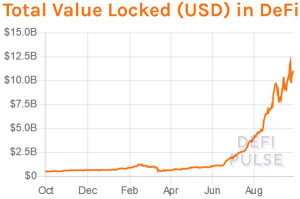
Bitcoin (BTC) and DeFi both had a good summer. After the coronavirus-induced collapse of March, the price of bitcoin rose from USD 3,500 to just over USD 12,000 in August, while the total value locked into DeFi platforms rose from USD 1bn in June to almost USD 12bn in late September.

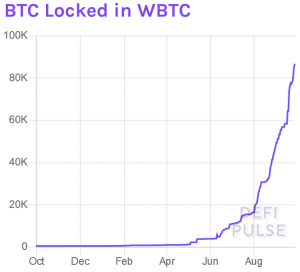
It’s tempting to view the performances of bitcoin and DeFi as connected. Given that the supply of wrapped bitcoin has ballooned from wBTC 500 to almost wBTC 90,000 in the past 12 months, it would seem that bitcoin holders have been driving the growth of DeFi.

However, industry figures speaking to Cryptonews.com said that, while BTC has been a significant player in DeFi’s growth, its importance within the DeFi ecosystem will wane over time. And while some may be tempted to regard Bitcoin and DeFi as interdependent, most commenters believe that each can survive without the other.

Bitcoin boosts DeFi

There’s little doubt that bitcoin — and in particular wrapped bitcoin — has spurred at least a portion of DeFi’s impressive growth over the past few months – USD 1.4bn worth of BTC is locked in DeFi today, or almost 13% of total value locked (TVL) in decentralized finance projects.

As data from Defi Pulse indicates, the demand for wBTC began rising exponentially from the end of June onwards.

‘If DeFi Collapsed, Bitcoin Would Still Be Bitcoin’ 102
Source: defipulse.com

And data also indicates, it was around the end of June that TVL into DeFi platforms suddenly began rising more strongly, as ethereum (ETH) locked in DeFi jumped also this past summer.

‘If DeFi Collapsed, Bitcoin Would Still Be Bitcoin’ 103
Source: defipulse.com

Industry figures agree that the two trends are connected, even if they have their own opinions on how long the interconnection may continue.

“Yes, I think the use of wBTC pair mining will boost the Defi market to a certain extent,” said crypto advisor and author Anndy Lian.

“According to the data released today (the second day of Uniswap Liquidity Mining), 50% of the miners used the wBTC/ETH pair in the initial mining, and most of them are big whales.”

Analyst and CryptoMondays Partner Lou Kerner suggested that bitcoin will remain an important part of DeFi in the medium term, not least because it still accounts for over half of the total value of all cryptoassets.

“Given its scale, bitcoin will be an increasingly significant asset in DeFi. But over time, as real world assets are tokenized and enter DeFi, bitcoin relevance will decrease,” he told Cryptonews.com.

However, while BTC has played a role in DeFi’s recent growth, ADVFN CEO Clem Chambers doesn’t see it as the main factor.

“Bitcoin will influence DeFi but it is not the core driver. The core driver is the powerful use case,” he said.

DeFi boosts BTC

Conversely, commenters agree that DeFi is boosting BTC, or that it will in the near future. By offering the chance to earn an additional return on the bitcoin you own, DeFi’s liquidity mining and yield farming is making BTC seem even more attractive to investors, particularly during a period of reduced economic opportunity.

“DeFi has made BTC even more attractive as an investment,” according to Kerner.

That said, Chambers estimated that most of DeFi’s boost to BTC still awaits us in the future.

“It will [boost bitcoin] but not yet. DeFi is still underground with only the core early adopters ‘getting it’,” he said.

Aside from enhancing the returns offered by bitcoin, Anndy Liang pointed out that DeFi will also result in more and more bitcoins being locked up, “which will bring another bull market for bitcoin.”

Mutual aid, not mutual interdependence

While DeFi and bitcoin both help each other in various ways, commentators seem that they don’t believe that each needs the other to survive.

“Bitcoin crashing would certainly slow the growth of DeFi, but one is not dependent on the other,” said Kerner.

Likewise, if DeFi were to somehow collapse, Interlapse CEO and Co-founder Wayne Chen said that BTC would continue as before.


“Bitcoin has seen massive growth over the past decade and will certainly continue its momentum,” he told Cryptonews.com. “If DeFi collapsed, Bitcoin would still be Bitcoin and continue its growth and adoption.”

On the other hand, some think that bitcoin crashing would have a severe effect on DeFi, since even if parts of the DeFi ecosystem survived, altcoins would struggle.

“Most of the ‘value’ coins will go to zero if the price of bitcoin crashed significantly or collapsed,” suggested Lian. “One thing is for sure: no coin (maybe tiny s***coins can) can survive if bitcoin collapses.”

The future: parallel, not pivotal

As for the more distant future, some experts believe that DeFi and Bitcoin will increasingly operate in parallel, rather than remain interlinked.

“BTC is money, DeFi is banks, that’s how people should think about it. The linkage is parallel not pivotal,” argued Chambers.

Chen claims that it’s in the interests of DeFi and Bitcoin that each maintains a degree of independence from the other in the future.

“Industry professionals will likely try to interrelate DeFi and Bitcoin. However, this needs to be done cautiously so that it doesn’t turn into a complicated financial product which can ultimately confuse the market,” he said.

Anndy Lian isn’t completely sure that DeFi will be around in several years’ time. However, if it is, he said there’s a chance other cryptoassets could emerge to reduce BTC’s influence on DeFi.

“But personally I do hope to see new players coming into challenge Bitcoin’s supremacy,” he said. “With challenges, there are improvements. This is what’s lacking in today’s crypto space.”


Original Source: https://cryptonews.com/exclusives/if-defi-collapsed-bitcoin-would-still-be-bitcoin-7827.htm


Anndy Lian is an early blockchain adopter and experienced serial entrepreneur who is known for his work in the government sector. He is a best selling book author- “NFT: From Zero to Hero” and “Blockchain Revolution 2030”.

Currently, he is appointed as the Chief Digital Advisor at Mongolia Productivity Organization, championing national digitization. Prior to his current appointments, he was the Chairman of BigONE Exchange, a global top 30 ranked crypto spot exchange and was also the Advisory Board Member for Hyundai DAC, the blockchain arm of South Korea’s largest car manufacturer Hyundai Motor Group. Lian played a pivotal role as the Blockchain Advisor for Asian Productivity Organisation (APO), an intergovernmental organization committed to improving productivity in the Asia-Pacific region.

An avid supporter of incubating start-ups, Anndy has also been a private investor for the past eight years. With a growth investment mindset, Anndy strategically demonstrates this in the companies he chooses to be involved with. He believes that what he is doing through blockchain technology currently will revolutionise and redefine traditional businesses. He also believes that the blockchain industry has to be “redecentralised”.

j j j