How Influencers and Content Can Onboard More People onto Web3: Insights from Taipei Blockchain Week 2024

How Influencers and Content Can Onboard More People onto Web3: Insights from Taipei Blockchain Week 2024

The Taipei Blockchain Week 2024 brought together some of the brightest minds in the blockchain and Web3 space to discuss the future of the industry. One of the standout panels of the event was titled “How Influencers and Content Can Onboard More People onto Web3”, featuring a diverse group of panelists:

  • Anndy Lian, Intergovernmental Blockchain Advisor
  • Dan, representing Retail DAO
  • Andrew Weiner, VP of WEEEX Global
  • Emily Lai, CMO of HYPE

The discussion was lively, insightful, and packed with actionable advice on how influencers and content creators can help bridge the gap between Web2 and Web3, making blockchain technology more accessible to the masses. Below, we’ll explore the key takeaways and quotes from the panelists.


The Role of Authenticity in Influencer Marketing

One of the first topics discussed was the importance of authenticity in influencer marketing. Andrew Weiner emphasized that the biggest mistake in influencer marketing is working with influencers who don’t genuinely use or believe in the product they’re promoting. He stated:

“The worst mistake you can make with influencer marketing is getting people to say something good without them authentically using it. Today’s consumers want to see and be educated on how things actually work, not just be sold to.”

This sentiment was echoed by Dan, who shared his approach as a content creator. He explained that he only promotes projects he believes in and ensures transparency with his audience:

“If a company approaches me, I first have to find out if they’re going to be around in a few years. I also make it clear to my audience when content is sponsored. Authenticity is key.”

The panelists agreed that audiences are becoming increasingly savvy and can easily spot inauthentic endorsements. For Web3 projects, building trust through genuine engagement is far more effective than flashy but hollow marketing campaigns.


Community First: The Foundation of Web3 Success

Anndy Lian brought a unique perspective as both an investor and advisor. He stressed the importance of community-driven projects, stating that the strength of a project’s community often determines its success:

“I don’t look at the product first; I look at the community. If the community is strong and genuinely engaged, that’s a good sign. Projects that focus on building a real community will always have a better chance of succeeding.”

He also highlighted the pitfalls of working with influencers who have a short-term mindset, noting that some influencers are quick to sell their tokens, which can harm the project and its community:

“The worst kind of influencers are those who sell early. If you’re bullish on your project, you should hold and support it. A strong community and long-term commitment are what drive success.”

This focus on community was a recurring theme throughout the panel. Emily Lai summarized it well:

“At the end of the day, it’s not just about the go-to-market strategy. Consumers and communities need to genuinely want to engage with and use the product. That’s what creates lasting momentum.”


The Marketing Funnel for Influencers: Different Types for Different Stages

The panelists also discussed the different types of influencers and how they fit into the marketing funnel. Anndy Lian broke it down into three stages:

  1. Awareness Stage:
    At this stage, projects can work with influencers who have large followings, even if their engagement is low or their content is less authentic. The goal is to create noise and get the project on people’s radar.
  2. Engagement Stage:
    Here, projects should collaborate with influencers who have a more engaged audience, even if their reach is smaller. These influencers can help build trust and drive meaningful interactions.
  3. Conversion Stage:
    Finally, projects need to work with high-integrity influencers who have built trust with their audience over time. These influencers can drive conversions and long-term loyalty.

Anndy explained:

“There’s no one-size-fits-all solution. You need to work with different types of influencers at different stages of your project. But ultimately, the goal is to build a community that’s real and engaged.”


The Challenges of Onboarding New Users to Web3

One of the biggest challenges in the Web3 space is onboarding new users, especially those unfamiliar with blockchain technology. Dan, who creates educational content for retail traders, shared his insights:

“The problem with getting people into DeFi is that it’s too complicated. There are too many steps, too many things to remember, and too many ways to lose money. It has to be a gradual process.”

He explained that his most popular content is often educational, such as tutorials on how to use platforms like Coinbase or how to navigate decentralized finance (DeFi). By breaking down complex topics into simple, actionable steps, he’s able to attract and retain a wider audience.


East vs. West: Differences in Influencer Marketing

The panel also explored the differences between influencer marketing in Asia and the West. Andrew Weiner noted that in the West, cryptocurrency has historically been viewed with skepticism, which has shaped the way content is created:

“In the West, crypto was a boogeyman for years. Now, the narrative is shifting, and people are more open to learning about these products. Educational content is crucial for onboarding new users.”

In contrast, Anndy Lian pointed out that in Asia, marketing strategies are often more aggressive and creative. He mentioned the prevalence of referral programs and multi-level marketing (MLM) models in the region, which can be highly effective in driving adoption:

“In the Chinese-speaking market, a lot of projects use referral or MLM strategies to onboard users. It’s very different from the West, where these methods are less common.”


Creativity in Influencer Marketing: Standing Out in a Crowded Market

As the Web3 space becomes increasingly competitive, creativity in marketing is more important than ever. Andrew Weiner shared an example of experiential marketing, which he believes is the next frontier:

“We recently partnered with Michael Owen, a world champion soccer player, to create unique experiences for our users. Instead of just giving away USDT, we’re offering opportunities to attend exclusive events, like coaching sessions or live games. These types of experiences are far more engaging and memorable.”

Anndy Lian added that some projects are even exploring unconventional platforms like OnlyFans to reach new audiences. While this approach may not be suitable for every project, it highlights the importance of thinking outside the box.


The Future of Influencer Marketing in Web3

As the panel wrapped up, the speakers shared their thoughts on the future of influencer marketing in the Web3 space. Emily Lai emphasized the need for authenticity and trust:

“The highest-tier influencers are those who have built trust with their audience over time. In a crowded market, trust is what sets you apart.”

Dan highlighted the importance of education:

“Educational content is key to onboarding new users. The more we can simplify and demystify Web3, the more people we can bring into the space.”

Finally, Anndy Lian reiterated the importance of community:

“At the end of the day, it’s all about the community. A strong, engaged community is the foundation of any successful Web3 project.”


Conclusion

The panel at Taipei Blockchain Week 2024 provided valuable insights into how influencers and content creators can help onboard more people onto Web3. From the importance of authenticity and community to the need for creativity and education, the discussion highlighted the many facets of effective marketing in the blockchain space. As the industry continues to evolve, these strategies will play a crucial role in driving adoption and building a more inclusive Web3 ecosystem.


Anndy Lian is an early blockchain adopter and experienced serial entrepreneur who is known for his work in the government sector. He is a best selling book author- “NFT: From Zero to Hero” and “Blockchain Revolution 2030”.

Currently, he is appointed as the Chief Digital Advisor at Mongolia Productivity Organization, championing national digitization. Prior to his current appointments, he was the Chairman of BigONE Exchange, a global top 30 ranked crypto spot exchange and was also the Advisory Board Member for Hyundai DAC, the blockchain arm of South Korea’s largest car manufacturer Hyundai Motor Group. Lian played a pivotal role as the Blockchain Advisor for Asian Productivity Organisation (APO), an intergovernmental organization committed to improving productivity in the Asia-Pacific region.

An avid supporter of incubating start-ups, Anndy has also been a private investor for the past eight years. With a growth investment mindset, Anndy strategically demonstrates this in the companies he chooses to be involved with. He believes that what he is doing through blockchain technology currently will revolutionise and redefine traditional businesses. He also believes that the blockchain industry has to be “redecentralised”.

j j j

Innoblock 2024: Key Success Factors for Web3 Gaming Projects in a Competitive Landscape

Innoblock 2024: Key Success Factors for Web3 Gaming Projects in a Competitive Landscape


The Innoblock Summit 2024 hosted a panel discussion titled “From Concept to Reality: Key Success Factors for Web3 Gaming Projects in a Competitive Landscape.” Moderated by Anndy Lian, a blockchain advisor and author, the panel featured industry leaders: Aaron Goolsbey (COO, Mythical Games), Florence Li (CCO, METAY), Ricky Wong (Co-Founder, Catizen), JT (Marketing Lead, Seraph), and Alex S (Head of Eco Growth, GGI).

The discussion centered around the critical elements that contribute to a thriving Web3 gaming project. While acknowledging the importance of blockchain technology and tokenomics, panelists emphasized the need to prioritize engaging gameplay and compelling narratives.

Redefining Success Metrics in Web3 Gaming

Challenging the traditional focus on high conversion rates, Ricky Wong highlighted the importance of organic user engagement. Citing Catizen’s success, he suggested a conversion rate between 5% to 10% as a healthy benchmark for Web3 games, emphasizing the need to educate and onboard users from the traditional gaming sphere.

JT echoed this sentiment, emphasizing the importance of attracting and retaining real users, not just incentivized participants. He stressed the need for seamless onboarding experiences, allowing players to enjoy the game before delving into the complexities of Web3 elements.

Beyond Tokenomics: The Power of Narrative and User Experience

Florence Li emphasized the often-overlooked aspect of storytelling in Web3 gaming. She argued that compelling narratives, captivating art, and well-developed game mechanics are crucial for attracting and retaining players, ultimately driving the value of in-game assets.

Aaron Goolsbey challenged the industry to move beyond the Web2 versus Web3 dichotomy, advocating for a focus on enhancing the gaming experience as a whole. He argued that Web3 technology should be seamlessly integrated to enhance existing gaming paradigms, citing Mythical Games’ NFL Rivals as a prime example. The game, with its integrated NFT marketplace, saw a significant increase in player engagement and retention, demonstrating the power of Web3 in adding value for players.

Monetization and Sustainability: Lessons from Web2 and Beyond

Addressing the question of profitability, Aaron Goolsbey acknowledged the inherent challenges of the gaming industry, where only a small percentage of games achieve significant financial success. He stressed the importance of applying proven game development and business practices, regardless of the underlying technology.

JT provided insights into Seraph’s dual revenue stream model, combining traditional in-app purchases with Web3 elements like NFT marketplaces and asset upgrades. This approach caters to a wider audience, allowing players to engage with the game on their own terms.

The Rise of Telegram Mini-Games: A Gateway to Mass Adoption?

The panel explored the burgeoning trend of Telegram mini-games and their potential impact on the Web3 gaming landscape. Aaron Goolsbey expressed excitement about the opportunity for user acquisition and overcoming the hurdle of wallet creation. He envisioned Telegram’s existing infrastructure as a seamless gateway for onboarding new users into the Web3 gaming ecosystem.

Alex S highlighted the potential of Telegram mini-games to attract traditional game developers, further enriching the Web3 gaming space. He emphasized the need for robust developer tools and support systems to foster a thriving ecosystem.

Florence Li and JT expressed optimism about the accessibility and ease of use of Telegram mini-games, making them an ideal entry point for new users. They envisioned a future where Web3 games seamlessly integrate with popular platforms like Telegram, driving mass adoption.

User Acquisition and Retention: Building a Loyal Community

The panelists agreed that user acquisition and retention are paramount for long-term success. Aaron Goolsbey stressed the importance of continuously adding value for players through engaging content and a well-balanced in-game economy.

Florence Li advocated for simplifying the onboarding process, making it easier for new users to experience the benefits of Web3 gaming. She also stressed the importance of creating high-quality content and assets that resonate with players.

The Future of Web3 Gaming: A Collaborative Effort

Anndy Lian concluded with a shared sense of optimism about the future of Web3 gaming. The panelists emphasized the need for collaboration, innovation, and a focus on user experience to unlock the full potential of this emerging technology. As the lines between Web2 and Web3 continue to blur, the future belongs to games that can seamlessly integrate blockchain technology to deliver engaging, rewarding, and truly player-owned gaming experiences.

Anndy Lian is an early blockchain adopter and experienced serial entrepreneur who is known for his work in the government sector. He is a best selling book author- “NFT: From Zero to Hero” and “Blockchain Revolution 2030”.

Currently, he is appointed as the Chief Digital Advisor at Mongolia Productivity Organization, championing national digitization. Prior to his current appointments, he was the Chairman of BigONE Exchange, a global top 30 ranked crypto spot exchange and was also the Advisory Board Member for Hyundai DAC, the blockchain arm of South Korea’s largest car manufacturer Hyundai Motor Group. Lian played a pivotal role as the Blockchain Advisor for Asian Productivity Organisation (APO), an intergovernmental organization committed to improving productivity in the Asia-Pacific region.

An avid supporter of incubating start-ups, Anndy has also been a private investor for the past eight years. With a growth investment mindset, Anndy strategically demonstrates this in the companies he chooses to be involved with. He believes that what he is doing through blockchain technology currently will revolutionise and redefine traditional businesses. He also believes that the blockchain industry has to be “redecentralised”.
j j j

Crypto, Web3 & AI Offers Us All A Chance to Be Involved

Crypto, Web3 & AI Offers Us All A Chance to Be Involved

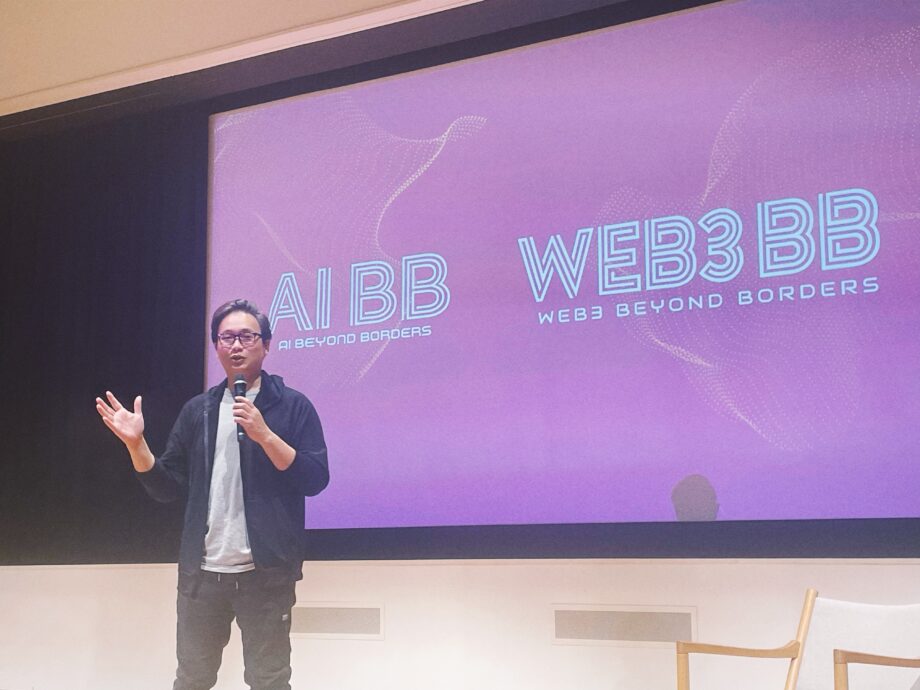
Reflecting on my recent speech at the Web3BB Tokyo event, I am struck by the potent mix of artificial intelligence and Web3, and what they hold for the financial industry.

Having had the privilege of leading AI-driven innovations in finance, I am convinced that the convergence of these two technologies is the key to unlocking a more secure, efficient, and personalized financial landscape. Allow me to share my vision.

Key Takeaways

  • AI and Web3 offer the financial industry security, efficiency, and personalization.
  • Combine them with the decentralized nature of Web3 to add transparency and a user focus.
  • AI-driven insights and Web3’s data management enable sophisticated financial predictions and risk assessments.
  • This is a future worth fighting for, and I am excited to be a part of it.

The Relationship Between AI and Web3

The relationship between AI and Web3 is nothing short of symbiotic. Web3’s decentralized architecture offers a framework in which AI can function with enhanced transparency, security, and user focus.

And then with AI, we can unearth new insights and efficiencies within the financial sector while upholding the highest standards of data integrity and security.

Apply the fusion of AI and Web3 to finance, and you get new ways to trade, invest, and handle your financial planning. AI can also find sophisticated models for predicting market trends, identifying risks, and optimizing investment strategies — the change is unparalleled.

For this to work well, a critical juncture in AI and Web3 is in data management. AI algorithms thrive on data, and Web3’s decentralized nature ensures that the data is secure, transparent, and siloed as appropriate for the user.

The goal is then for AI to analyze vast amounts of decentralized data and offer valuable insights while maintaining privacy and security.

Ushering in a New Era of Financial Innovation

As I gaze into the future, I am exhilarated by the potential impact of AI and Web3 on the financial industry. As the Chairman of Neurai, a pioneering AI startup in Singapore, we are committed to pushing the boundaries of AI-powered finance. Our flagship product, COPX.AI, is already reaping the benefits.

“The future of finance transcends mere trading; it’s about crafting a more secure, efficient, and personalized experience for users,” I emphasized during my speech at Web3BB Tokyo.

But what does this mean for the future of finance? In my view, it signifies a shift towards more decentralized and democratized financial systems. With AI and Web3, we can create more accessible, transparent, and secure platforms. For instance, AI-powered trading platforms can analyze vast amounts of market data to identify trends and patterns that human traders might overlook. This leads to more informed investment decisions and better returns for investors.

Similarly, AI-driven risk management systems can detect potential risks and alert investors before they escalate into major issues, thereby safeguarding investors’ assets and preventing financial losses.

Charting the Path Forward

As the financial industry continues to evolve, we need prioritize innovation and experimentation. The integration of AI and Web3 has the potential to unlock new possibilities and drive growth across the sector, but it necessitates a commitment to ongoing research and development.

At the Web3BB Tokyo event, I had the opportunity to meet over 20 founders of Web3 and AI companies. Their dedication to harnessing the power of AI and Web3 to create a better future for finance is palpable. Many believe that these technologies can democratize access to financial services, promote greater transparency and accountability, and unlock new avenues for growth and innovation.

Navigating the Challenges Ahead

Of course, the road ahead is not without challenges. One of the most significant hurdles is regulatory uncertainty. As AI and Web3 continue to evolve, it remains unclear how regulators will respond. Will they introduce new rules and regulations, or will they adopt a more laissez-faire approach?

Another challenge is the need for education and awareness. Many individuals in the financial industry are still unfamiliar with AI and Web3, necessitating education and training to help them understand the potential benefits and risks of these technologies.

Lastly, there is the challenge of scalability. As AI and Web3 continue to grow and evolve, it remains to be seen whether they can scale to meet the demands of the financial industry.

Where We Go Next

As I look to the future, I am excited to witness the impact of these technologies on the sector. Being deeply involved in AI-powered innovation, I am confident that we can create a more secure, efficient, and personalized financial experience for all.

But this journey is not just about us. It’s about the entire financial industry coming together  and creating a world that is more decentralized, democratized, and accessible to all.

I am convinced that the financial industry will become increasingly decentralized.

Decentralized finance is already becoming a reality, with platforms like MakerDAO and Compound enabling users to lend and borrow cryptocurrencies in a decentralized manner.

But DeFi is just the beginning. With AI and Web3, we can create decentralized platforms for trading, investing, and financial planning. These platforms will be more secure, efficient, and personalized.

I am also convinced that the financial industry will become increasingly democratized — with platforms that are accessible to all, regardless of income or social status.

We can develop platforms that allow anyone to invest in cryptocurrencies, regardless of their financial background, and that provide access to financial services to anyone, regardless of their location or income.

The Bottom Line

Finally, I believe that the financial industry will become increasingly secure — resistant to hacking and cyber-attacks.

We can develop platforms that utilize AI-powered security systems to detect and prevent cyber-attacks. We can create platforms that leverage Web3’s decentralized architecture to protect user data and prevent hacking.

This is a future worth fighting for, and I am excited to be a part of it.


Source: https://www.techopedia.com/anndy-lian-crypto-web3-ai-offers-us-all-a-chance-to-be-involved

Anndy Lian is an early blockchain adopter and experienced serial entrepreneur who is known for his work in the government sector. He is a best selling book author- “NFT: From Zero to Hero” and “Blockchain Revolution 2030”.

Currently, he is appointed as the Chief Digital Advisor at Mongolia Productivity Organization, championing national digitization. Prior to his current appointments, he was the Chairman of BigONE Exchange, a global top 30 ranked crypto spot exchange and was also the Advisory Board Member for Hyundai DAC, the blockchain arm of South Korea’s largest car manufacturer Hyundai Motor Group. Lian played a pivotal role as the Blockchain Advisor for Asian Productivity Organisation (APO), an intergovernmental organization committed to improving productivity in the Asia-Pacific region.

An avid supporter of incubating start-ups, Anndy has also been a private investor for the past eight years. With a growth investment mindset, Anndy strategically demonstrates this in the companies he chooses to be involved with. He believes that what he is doing through blockchain technology currently will revolutionise and redefine traditional businesses. He also believes that the blockchain industry has to be “redecentralised”.

j j j