Memecoin Trends: Insights from the Memewonder Panel Discussion

Memecoin Trends: Insights from the Memewonder Panel Discussion

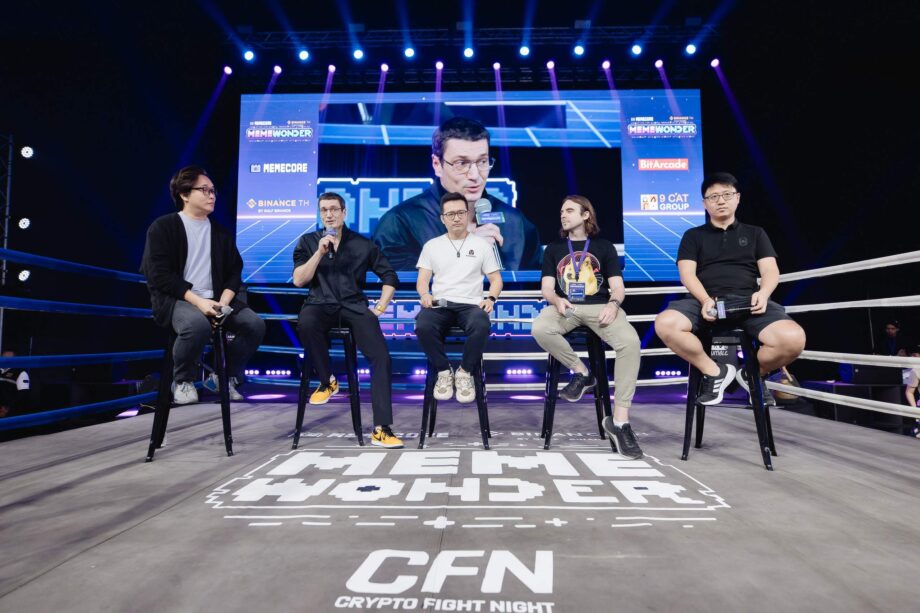
The Memewonder event, co-hosted by Binance Thailand and MemeCore, brought together industry leaders to discuss the evolving landscape of memecoins. This panel, part of the Thailand Blockchain Week 2024, featured insights from key figures in the blockchain and cryptocurrency space. The discussion, moderated by Anndy Lian, a best-selling author and Managing Director of LIFT Ecofund by MemeCore, delved into the trends, challenges, and future of memecoins, particularly focusing on Community Takeover (CTO) projects.

Key Themes and Insights

The Rise of Community Takeover (CTO) Projects

Anndy Lian started off by saying that CTO projects are gaining popularity due to their community-driven nature. Unlike traditional projects led by developers, CTOs empower communities to take charge, fostering a sense of ownership and engagement. This model aligns with the decentralized ethos of blockchain, where communities can drive projects forward without relying on centralized leadership.

Jordan Jefferson, CEO of MyDoge, provided insights from the Dogecoin community, the original CTO project. He highlighted the narrative appeal of CTOs, where communities take over projects from anonymous developers. Jefferson pointed out that while CTOs offer a compelling narrative, they face challenges such as funding and coordination. He emphasized the need for sustainable models and investable opportunities within the Dogecoin ecosystem, aiming to attract more developers and projects to build on Dogecoin.

Challenges and Risks of CTO Projects

Despite their appeal, CTO projects face significant challenges. Anndy Lian highlighted issues such as fragmented communities, lack of funding, and the need for strong leadership. Without adequate resources and coordination, CTO projects risk failing, leading to the demise of the project. The panelists stressed the importance of sustainable models and the need for communities to secure funding and liquidity to thrive.

Louis Bellet, CEO & Fonder, Yellow, replied to the comment by highlighting the role of Yellow in decentralizing finance. He emphasized the importance of community-driven projects, noting that developers often lack the skills to build strong communities. Bellet argued that memecoins should naturally transition to community leadership, where new leaders emerge from within the community to drive the project forward. He also mentioned Yellow’s market-making division, which has been approached by several CTO projects for token listings, underscoring the growing interest in community-led initiatives.

The Role of Memecoins in the Broader Blockchain Ecosystem

Memecoins, often seen as speculative assets, have the potential to drive innovation and engagement in the blockchain space. The panelists discussed the entertainment value of memecoins, likening them to cultural phenomena that capture public imagination. They also noted the potential for memecoins to integrate with real-world applications, such as mobile apps and merchandise, to enhance their utility and appeal.

Eddie Li, Co-founder, AEON, shared his perspective as a payment protocol provider, focusing on the consumer attraction of memecoins. He noted that memecoins, driven by community and financial incentives, are gaining traction where traditional projects struggle. Li emphasized the importance of facilitating payments across different chains to support memecoin adoption. He also expressed concerns about the sustainability of memecoins, cautioning against projects with weak narratives or visions.

Future Trends and Innovations

Looking ahead, the panelists identified several trends that could shape the future of memecoins. They anticipated more innovation in fair launches and community involvement, with projects exploring new ways to engage and reward their communities. The panelists also highlighted the potential for memecoins to collaborate with traditional businesses, leveraging their community-driven nature to create new opportunities and partnerships.

Allan Fang, Partner, Blockchain for Good Alliance and Head of Moledao added that education is important. He stressed the importance of community support and governance in building strong projects. Fang noted that memecoins offer a unique way to engage communities, likening them to totems that foster loyalty and engagement. He also highlighted the potential for memecoins to link with real-world brands, suggesting that they could serve as effective community management tools.

Conclusion

The Memewonder panel discussion provided valuable insights into the evolving landscape of memecoins. As the blockchain industry continues to grow, memecoins are poised to play a significant role in driving innovation and community engagement. However, their success will depend on the ability of communities to navigate the challenges of funding, leadership, and sustainability. By fostering strong communities and exploring new applications, memecoins can continue to thrive and contribute to the broader blockchain ecosystem.


Anndy Lian is an early blockchain adopter and experienced serial entrepreneur who is known for his work in the government sector. He is a best selling book author- “NFT: From Zero to Hero” and “Blockchain Revolution 2030”.

Currently, he is appointed as the Chief Digital Advisor at Mongolia Productivity Organization, championing national digitization. Prior to his current appointments, he was the Chairman of BigONE Exchange, a global top 30 ranked crypto spot exchange and was also the Advisory Board Member for Hyundai DAC, the blockchain arm of South Korea’s largest car manufacturer Hyundai Motor Group. Lian played a pivotal role as the Blockchain Advisor for Asian Productivity Organisation (APO), an intergovernmental organization committed to improving productivity in the Asia-Pacific region.

An avid supporter of incubating start-ups, Anndy has also been a private investor for the past eight years. With a growth investment mindset, Anndy strategically demonstrates this in the companies he chooses to be involved with. He believes that what he is doing through blockchain technology currently will revolutionise and redefine traditional businesses. He also believes that the blockchain industry has to be “redecentralised”.


j j j

What Singapore should do for Token Regulation: My Suggestions for Proposed DTSPs Framework

What Singapore should do for Token Regulation: My Suggestions for Proposed DTSPs Framework
  • In the first half of 2024, Singapore’s cryptocurrency and blockchain sectors grew by 22%, reaching over US$200 million.
  • The MAS proposed a risk-based regulatory approach to enhance anti-money laundering and counter-financing of terrorism.

Singapore has consistently positioned itself as a forward-thinking jurisdiction, balancing innovation with robust regulatory oversight. As a fellow Singaporean, I am very proud of its future planning.

The Monetary Authority of Singapore (MAS) is seeking submissions for the Consultation Paper on the proposed regulatory approach for Digital Token Service Providers (DTSPs) under the Financial Services and Markets Act 2022.

Instead of replying to the submission directly, I will try to share my point of view openly here, offering insights, potential plans, and timelines for implementation. Before I start, I am sharing this in my personal capacity: I do not represent any self-claimed digital assets expert groups, associations, or schools.

License Application and Fee Structures

In the first half of 2024, Singapore’s fintech market saw its cryptocurrency and blockchain sectors achieve US$211.90 million across 72 deals, marking a 22% increase from US$166.30 million over 38 deals in the second half of 2023.

Singapore has been actively working on strengthening risk management frameworks for digital asset tokenization and has recently launched an initiative to expand asset tokenization within financial services.

The proposed license application processes and fee structures are crucial elements that will shape the DTSP landscape in Singapore. From my perspective, MAS should consider implementing a tiered approach to both timelines and fees, reflecting the diversity of DTSPs in terms of size, complexity, and risk profile.

For timelines, I propose a three-tier system:

Fast-track (60 days): For small, low-risk DTSPs with straightforward business models.

Standard (90 days): For medium-sized DTSPs or those with moderately complex operations.

Extended (120+ days): For large, complex DTSPs or those proposing novel business models.

This tiered approach would allow MAS to allocate resources efficiently while ensuring thorough vetting of more complex applications. The fee structures can follow a similar tiered system based on the DTSP’s annual revenue or transaction volume could be implemented.

Minimum Financial Requirements

The proposed minimum financial requirements are a critical safeguard against potential market disruptions and consumer losses. Based on my analysis, I believe a risk-based approach to setting these requirements is more feasible. This could involve:

Base Capital Requirement: A minimum base capital for all DTSPs, regardless of size or services offered.

Risk-Weighted Capital Requirement: Additional capital requirements based on the DTSP’s types of services offered, transaction volumes, and risk profile.

Liquidity Requirement: A minimum liquidity ratio to ensure DTSPs can meet short-term obligations.

Specifically, providers with capital ratios above 15% were 30% less likely to face operational disruptions during periods of extreme market stress. I propose that MAS consider setting the base capital requirement at SGD 250,000, with additional risk-weighted requirements that could increase this amount up to SGD 5 million for the largest and most complex DTSPs.

Audit Requirements

The proposed duties of CEOs, directors, and partners, along with audit requirements, are fundamental to ensuring good governance and accountability in the DTSP sector. The following enhancement is recommended for consideration:

Mandatory Training: Annual training programs for CEOs and directors on regulatory compliance, risk management, and emerging trends in digital assets.

Risk Committee: DTSPs above a certain size must establish a dedicated risk committee at the board level.

Independent Directors: Mandating a minimum number of independent directors based on the DTSP’s size and complexity.

Audit Frequency: Annual external audits for all DTSPs, with additional quarterly internal audits for larger providers.

Regulators are increasingly leveraging technological solutions to enhance their supervisory functions and manage vast amounts of data. Consequently, firms must engage more frequently with regulators regarding fintech and regtech developments.

Fintech companies that implement robust governance structures and conduct regular audits are indeed less likely to experience compliance breaches.

AML/CFT Measures

The measures proposed in parts 5–8 of the consultation paper, particularly those related to Anti-Money Laundering (AML) and Countering the Financing of Terrorism (CFT), are crucial for maintaining the integrity of Singapore’s financial system. I propose the following enhancements:

Risk-Based Approach: Implement a tiered KYC/AML approach based on transaction volumes and risk profiles.

Technology Integration: Encourage the use of AI and machine learning for transaction monitoring and suspicious activity detection.

Regulatory Technology (RegTech) Sandbox: Establish a sandbox environment for DTSPs to test innovative compliance solutions.

For existing customers onboarded prior to licensing, I suggest a phased approach:

Phase 1 (0–6 months): Risk assessment of existing customer base

Phase 2 (6–12 months): Enhanced due diligence for high-risk customers

Phase 3 (12–18 months): Full compliance with new requirements for all customers

Correspondent Account Services

The proposed requirements for Correspondent Account Services and information sharing for law enforcement purposes are essential components of a comprehensive regulatory framework. Perhaps the following would help:

Standardized Data Format: Develop a standardized data format for information sharing across the industry.

Blockchain Analytics: Encourage the use of blockchain analytics tools to enhance transaction traceability.

Secure Information Sharing Platform: Establish a secure, centralized platform for information sharing between DTSPs and law enforcement agencies.

Blockchain analytics tools have been instrumental in recovering stolen or illicitly obtained digital assets worldwide. They allow law enforcement agencies to trace and identify suspicious cryptocurrency transactions on the blockchain, leading to asset recovery efforts.

Technology Risk Management

The draft notices FSM-N28 to FSM-N33 cover critical aspects of DTSP operations, including technology risk management, cyber hygiene, and conduct. Based on my observations, I propose the following:

Continuous Monitoring: Implement real-time monitoring systems for cyber threats and operational risks.

Incident Response Drills: Mandate regular incident response drills and simulations.

Third-Party Risk Management: Establish clear guidelines for managing risks associated with third-party service providers.

Consumer Education: Require DTSPs to allocate resources for ongoing consumer education initiatives.

Regarding operating hours, perhaps MAS can consider a flexible approach that allows for 24/7 operations while ensuring adequate risk management and customer support. This could involve:

Core operating hours (e.g., 9 AM to 5 PM SGT) with full support services

Extended hours with automated systems and on-call support

Scheduled maintenance windows during low-volume periods

Timeline for Implementation:

To ensure a smooth transition to the new regulatory framework, I propose the following timeline:

Month 0–3: Publication of final regulations and guidelines

Month 3–6: Industry consultation and feedback period

Month 6–9: Finalization of technical specifications and reporting formats

Month 9–12: DTSP preparation and system upgrades

Month 12–18: Phased implementation of new requirements

Month 18–24: Full compliance deadline for all DTSPs

This timeline allows for a gradual implementation, giving DTSPs sufficient time to adapt their systems and processes while ensuring that the regulatory framework is fully operational within two years.

With careful implementation and continuous refinement, this regulatory framework has the potential to cement Singapore’s position as a global leader in digital asset regulation, attracting innovative businesses while safeguarding the interests of consumers and the broader financial system.


Source: https://www.financemagnates.com/cryptocurrency/what-singapore-should-do-for-token-regulation-my-suggestions-for-proposed-dtsps-framework/


Anndy Lian is an early blockchain adopter and experienced serial entrepreneur who is known for his work in the government sector. He is a best selling book author- “NFT: From Zero to Hero” and “Blockchain Revolution 2030”.

Currently, he is appointed as the Chief Digital Advisor at Mongolia Productivity Organization, championing national digitization. Prior to his current appointments, he was the Chairman of BigONE Exchange, a global top 30 ranked crypto spot exchange and was also the Advisory Board Member for Hyundai DAC, the blockchain arm of South Korea’s largest car manufacturer Hyundai Motor Group. Lian played a pivotal role as the Blockchain Advisor for Asian Productivity Organisation (APO), an intergovernmental organization committed to improving productivity in the Asia-Pacific region.

An avid supporter of incubating start-ups, Anndy has also been a private investor for the past eight years. With a growth investment mindset, Anndy strategically demonstrates this in the companies he chooses to be involved with. He believes that what he is doing through blockchain technology currently will revolutionise and redefine traditional businesses. He also believes that the blockchain industry has to be “redecentralised”.
j j j

What’s cbBTC and Why Does It Matter?

What’s cbBTC and Why Does It Matter?

There’s always a new term or trend flying around in crypto. Since it’s our goal to be the kindergarten of crypto, you can trust us to explain it to you in the easiest way possible. So what’s the new rave in town? It’s cbBTC

Now, cbBTC is a form of wrapped Bitcoin proposed by Coinbase. What are wrapped Bitcoins (WBTC)? Wrapped Bitcoin is a version of Bitcoin that’s compatible with Ethereum’s blockchain. It’s like a digital cover that allows Bitcoin to be used in Ethereum-based apps.

So, Coinbase, the second-biggest crypto exchange, recently talked about releasing its own wrapped Bitcoin called cbBTC. There’s a lot of excitement about this. And some people think this could even be a huge win for DeFi and investors at large.

What’s the background?

Coinbase sold the idea of cbBTC in a tweet it shared on X on August 13. The exchange posted a ticker of the new cbBTC, along with the message “coming soon.” Jesse Pollak, who runs Base, also shared a post about Base’s plans to build a strong Bitcoin economy on Base.

So, Coinbase is taking advantage of the drama around wrapped Bitcoin to launch its version. Wrapped Bitcoin is currently in muddy waters over its planned restructure. BitGo, the company behind WBTC, plans to transfer control of WBTC to a joint venture with BiT Global and Justin Sun.

Sun is the guy behind Tron, and to most people, he is controversial. BitGo’s restructuring plans aren’t liked by the crypto community. For one, it involves moving the custody of the Bitcoin underlying WBTC outside the U.S. Also, some people are concerned about the lack of transparency in this new venture.

MakerDAO, one of the top DeFi platforms, is also considering whether to stop new DAI minting backed by WBTC in its Maker and SparkLend protocols. This means lots of instability for WBTC. We’ve seen other Sun-associated projects, like TrueUSD, get into trouble. That means the uncertainty around WBTC leaves room for Coinbase’s new cbBTC token. It could emerge as a better alternative for people interested in wrapped Bitcoin.

Why’s this a big deal for DeFi and crypto?

Coinbase’s cbBTC has already sparked massive excitement in crypto. Although there are no details yet, you can tell that it’s going to be massive. By expanding its tokenized asset offerings, Coinbase could reshape how we think about wrapped Bitcoin, especially as demand for tokenized Bitcoin on Ethereum-compatible chains continues to grow. And with its ownership of the Base layer 2 chain, onboarding people into DeFi will be easier than ever before.

Think about it: Coinbase already made waves with cbETH, a wrapped Ethereum token that launched in August 2022. With around 210,000 cbETH in circulation, it’s been a hit. So, if cbBTC follows in cbETH’s footsteps, we could see a major shift in the market.

Lots of crypto executives and thought leaders have positive expectations for cbBTC. Anndy Lian, a blockchain expert, believes cbBTC could offer a more transparent alternative to WBTC. Rena Shah, COO of Trust Machines, sees cbBTC as a huge opportunity for Bitcoin DeFi (BTCFi).

Shah believes that Coinbase’s massive user base alone could bring a significant number of new users to Bitcoin DeFi. And with recent interest in BTCFi, especially after the launch of the Runes protocol, the timing couldn’t be better.


Source: https://www.altcoinbuzz.io/top-article/whats-cbbtc-and-why-does-it-matter/

Anndy Lian is an early blockchain adopter and experienced serial entrepreneur who is known for his work in the government sector. He is a best selling book author- “NFT: From Zero to Hero” and “Blockchain Revolution 2030”.

Currently, he is appointed as the Chief Digital Advisor at Mongolia Productivity Organization, championing national digitization. Prior to his current appointments, he was the Chairman of BigONE Exchange, a global top 30 ranked crypto spot exchange and was also the Advisory Board Member for Hyundai DAC, the blockchain arm of South Korea’s largest car manufacturer Hyundai Motor Group. Lian played a pivotal role as the Blockchain Advisor for Asian Productivity Organisation (APO), an intergovernmental organization committed to improving productivity in the Asia-Pacific region.

An avid supporter of incubating start-ups, Anndy has also been a private investor for the past eight years. With a growth investment mindset, Anndy strategically demonstrates this in the companies he chooses to be involved with. He believes that what he is doing through blockchain technology currently will revolutionise and redefine traditional businesses. He also believes that the blockchain industry has to be “redecentralised”.

j j j