What Singapore should do for Token Regulation: My Suggestions for Proposed DTSPs Framework

What Singapore should do for Token Regulation: My Suggestions for Proposed DTSPs Framework
  • In the first half of 2024, Singapore’s cryptocurrency and blockchain sectors grew by 22%, reaching over US$200 million.
  • The MAS proposed a risk-based regulatory approach to enhance anti-money laundering and counter-financing of terrorism.

Singapore has consistently positioned itself as a forward-thinking jurisdiction, balancing innovation with robust regulatory oversight. As a fellow Singaporean, I am very proud of its future planning.

The Monetary Authority of Singapore (MAS) is seeking submissions for the Consultation Paper on the proposed regulatory approach for Digital Token Service Providers (DTSPs) under the Financial Services and Markets Act 2022.

Instead of replying to the submission directly, I will try to share my point of view openly here, offering insights, potential plans, and timelines for implementation. Before I start, I am sharing this in my personal capacity: I do not represent any self-claimed digital assets expert groups, associations, or schools.

License Application and Fee Structures

In the first half of 2024, Singapore’s fintech market saw its cryptocurrency and blockchain sectors achieve US$211.90 million across 72 deals, marking a 22% increase from US$166.30 million over 38 deals in the second half of 2023.

Singapore has been actively working on strengthening risk management frameworks for digital asset tokenization and has recently launched an initiative to expand asset tokenization within financial services.

The proposed license application processes and fee structures are crucial elements that will shape the DTSP landscape in Singapore. From my perspective, MAS should consider implementing a tiered approach to both timelines and fees, reflecting the diversity of DTSPs in terms of size, complexity, and risk profile.

For timelines, I propose a three-tier system:

Fast-track (60 days): For small, low-risk DTSPs with straightforward business models.

Standard (90 days): For medium-sized DTSPs or those with moderately complex operations.

Extended (120+ days): For large, complex DTSPs or those proposing novel business models.

This tiered approach would allow MAS to allocate resources efficiently while ensuring thorough vetting of more complex applications. The fee structures can follow a similar tiered system based on the DTSP’s annual revenue or transaction volume could be implemented.

Minimum Financial Requirements

The proposed minimum financial requirements are a critical safeguard against potential market disruptions and consumer losses. Based on my analysis, I believe a risk-based approach to setting these requirements is more feasible. This could involve:

Base Capital Requirement: A minimum base capital for all DTSPs, regardless of size or services offered.

Risk-Weighted Capital Requirement: Additional capital requirements based on the DTSP’s types of services offered, transaction volumes, and risk profile.

Liquidity Requirement: A minimum liquidity ratio to ensure DTSPs can meet short-term obligations.

Specifically, providers with capital ratios above 15% were 30% less likely to face operational disruptions during periods of extreme market stress. I propose that MAS consider setting the base capital requirement at SGD 250,000, with additional risk-weighted requirements that could increase this amount up to SGD 5 million for the largest and most complex DTSPs.

Audit Requirements

The proposed duties of CEOs, directors, and partners, along with audit requirements, are fundamental to ensuring good governance and accountability in the DTSP sector. The following enhancement is recommended for consideration:

Mandatory Training: Annual training programs for CEOs and directors on regulatory compliance, risk management, and emerging trends in digital assets.

Risk Committee: DTSPs above a certain size must establish a dedicated risk committee at the board level.

Independent Directors: Mandating a minimum number of independent directors based on the DTSP’s size and complexity.

Audit Frequency: Annual external audits for all DTSPs, with additional quarterly internal audits for larger providers.

Regulators are increasingly leveraging technological solutions to enhance their supervisory functions and manage vast amounts of data. Consequently, firms must engage more frequently with regulators regarding fintech and regtech developments.

Fintech companies that implement robust governance structures and conduct regular audits are indeed less likely to experience compliance breaches.

AML/CFT Measures

The measures proposed in parts 5–8 of the consultation paper, particularly those related to Anti-Money Laundering (AML) and Countering the Financing of Terrorism (CFT), are crucial for maintaining the integrity of Singapore’s financial system. I propose the following enhancements:

Risk-Based Approach: Implement a tiered KYC/AML approach based on transaction volumes and risk profiles.

Technology Integration: Encourage the use of AI and machine learning for transaction monitoring and suspicious activity detection.

Regulatory Technology (RegTech) Sandbox: Establish a sandbox environment for DTSPs to test innovative compliance solutions.

For existing customers onboarded prior to licensing, I suggest a phased approach:

Phase 1 (0–6 months): Risk assessment of existing customer base

Phase 2 (6–12 months): Enhanced due diligence for high-risk customers

Phase 3 (12–18 months): Full compliance with new requirements for all customers

Correspondent Account Services

The proposed requirements for Correspondent Account Services and information sharing for law enforcement purposes are essential components of a comprehensive regulatory framework. Perhaps the following would help:

Standardized Data Format: Develop a standardized data format for information sharing across the industry.

Blockchain Analytics: Encourage the use of blockchain analytics tools to enhance transaction traceability.

Secure Information Sharing Platform: Establish a secure, centralized platform for information sharing between DTSPs and law enforcement agencies.

Blockchain analytics tools have been instrumental in recovering stolen or illicitly obtained digital assets worldwide. They allow law enforcement agencies to trace and identify suspicious cryptocurrency transactions on the blockchain, leading to asset recovery efforts.

Technology Risk Management

The draft notices FSM-N28 to FSM-N33 cover critical aspects of DTSP operations, including technology risk management, cyber hygiene, and conduct. Based on my observations, I propose the following:

Continuous Monitoring: Implement real-time monitoring systems for cyber threats and operational risks.

Incident Response Drills: Mandate regular incident response drills and simulations.

Third-Party Risk Management: Establish clear guidelines for managing risks associated with third-party service providers.

Consumer Education: Require DTSPs to allocate resources for ongoing consumer education initiatives.

Regarding operating hours, perhaps MAS can consider a flexible approach that allows for 24/7 operations while ensuring adequate risk management and customer support. This could involve:

Core operating hours (e.g., 9 AM to 5 PM SGT) with full support services

Extended hours with automated systems and on-call support

Scheduled maintenance windows during low-volume periods

Timeline for Implementation:

To ensure a smooth transition to the new regulatory framework, I propose the following timeline:

Month 0–3: Publication of final regulations and guidelines

Month 3–6: Industry consultation and feedback period

Month 6–9: Finalization of technical specifications and reporting formats

Month 9–12: DTSP preparation and system upgrades

Month 12–18: Phased implementation of new requirements

Month 18–24: Full compliance deadline for all DTSPs

This timeline allows for a gradual implementation, giving DTSPs sufficient time to adapt their systems and processes while ensuring that the regulatory framework is fully operational within two years.

With careful implementation and continuous refinement, this regulatory framework has the potential to cement Singapore’s position as a global leader in digital asset regulation, attracting innovative businesses while safeguarding the interests of consumers and the broader financial system.

 

Source: https://www.financemagnates.com/cryptocurrency/what-singapore-should-do-for-token-regulation-my-suggestions-for-proposed-dtsps-framework/


j j j

Allegations of North Korean Involvement Rock Cosmos Ecosystem

Allegations of North Korean Involvement Rock Cosmos Ecosystem

In an unsettling revelation, Jacob Gadikian, a developer within the Cosmos ecosystem, disclosed on X that North Korean programmers might have been involved in the development of Cosmos’ Liquid Staking Module (LSM). Highlighted in an on-chain investigation, these allegations have not only drawn the attention of the crypto community but also the scrutiny of the FBI in 2023. Gadikian clarified that the issue is not about the developers’ origin but their potential ties to known cybercrime activities, describing them as “the world’s most skilled and prolific crypto thieves.”

Reacting to these serious claims, Ethan Buchman, the co-founder of Cosmos, took to X to address the community’s concerns. He acknowledged that the Cosmos team was previously unaware of the LSM’s potentially compromised development lineage. Buchman detailed the immediate steps being taken, including rapid security audits and plans to lessen or eliminate reliance on the LSM to safeguard the ecosystem.

Security Fears Sparked by Alleged Involvement

Melody Chan, the research lead at Redecentralise, voiced concerns over potential hidden vulnerabilities that could stem from this development, such as covert backdoors. The urgency for thorough code audits is a direct response to these risks, amplified by the recent FBI warnings regarding the security of blockchain projects with possible North Korean integrations.

The infamous Lazarus Group, linked to the North Korean government, is well-known for its extensive history of cryptocurrency theft, including the high-profile $600 million Ronin bridge heist. While the association between the LSM developers and the Lazarus Group remains speculative, the potential implications of such a connection are alarming. Anndy Lian, a blockchain intergovernmental expert, emphasized the need for caution, pointing out that confirmed links to North Korean state operations could reveal serious security flaws within the LSM.

Informal Systems, a core Cosmos contributor, has announced a robust response plan, starting with two comprehensive audits by OtterSec and Binary Builders, and another by Zellic. These audits aim to identify and mitigate any security vulnerabilities promptly. Additionally, a strategic move towards a “phased removal” of the LSM is under discussion, proposing a transition to a more secure and efficient framework that better supports the needs of validators and voters within the Cosmos governance structure.

Community Engagement and Governance

The proposed governance changes involve a community vote on the LSM’s fate, suggesting a grace period for stakeholders to adjust before a complete transition. This process underscores the community’s role in shaping Cosmos’ security protocols and governance models, ensuring that the ecosystem remains resilient against threats and maintains its integrity.

As the Cosmos community confronts these allegations, the outcomes of the upcoming audits and governance decisions will critically influence the ecosystem’s future trajectory. The proactive steps taken by Cosmos leaders and contributors demonstrate a commitment to transparency and security, aiming to restore and enhance trust among users and investors in a landscape marked by increasing cybersecurity challenges.


Source: https://digitalmarketreports.com/news/28267/allegations-of-north-korean-involvement-rock-cosmos-ecosystem/

j j j

Meme Coins: Hype Or Here to Stay? -AMA Session With Anndy Lian

Meme Coins: Hype Or Here to Stay? -AMA Session With Anndy Lian

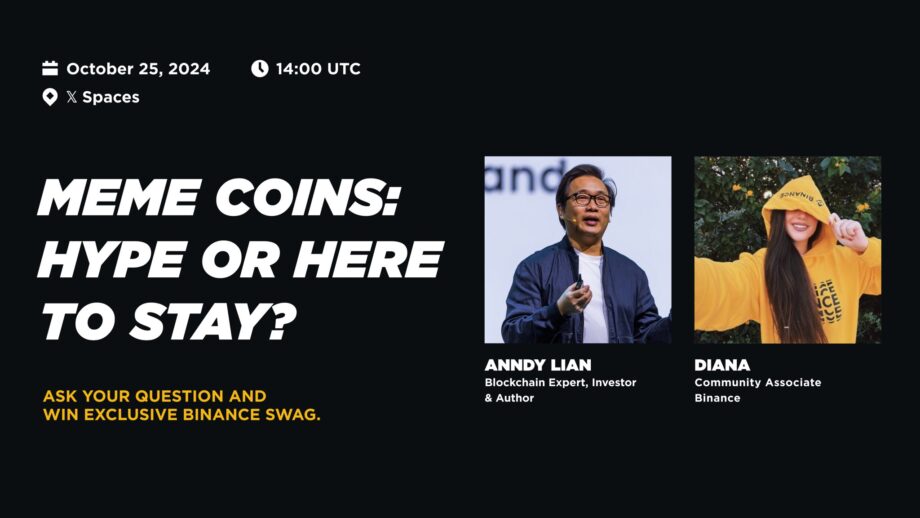
Meme coins have swiftly emerged as a distinctive segment within the cryptocurrency ecosystem, harmonizing humor, community engagement, and cutting-edge blockchain technology. In a recent Ask Me Anything (AMA) session titled “Memes to Millions,” hosted by Diana, a Binance Community Associate, on X (formerly Twitter), Anndy Lian—an accomplished book author, fund manager, and blockchain authority—delved into the multifaceted world of meme coins. The discussion illuminated the potential, inherent challenges, and strategic pathways toward mainstream adoption of meme coins, offering a comprehensive analysis grounded in profound industry expertise.

The Significance of Community in Meme Coin Success

A central theme of the AMA was the pivotal role of community in the proliferation and sustainability of meme coins. Anndy underscored that while technological advancements are crucial, it is the vibrancy and engagement of the community that truly distinguishes enduring meme coins from transient phenomena. “Meme coins are more about community than technology,” he emphasized, pointing out that the initial phases of a meme coin lifecycle are primarily propelled by the enthusiasm and active participation of its community members.

Drawing on examples like Dogecoin, Anndy illustrated how grassroots interactions, such as tipping and community-driven initiatives, form the bedrock for broader adoption. The inherent fun and inclusive nature of meme coins attract a diverse demographic, fostering a robust and dynamic community that sustains and drives the project forward. According to Anndy, the technological infrastructure can evolve in response to the community’s needs and aspirations, ensuring that the meme coin remains relevant and functional as the project matures.

Advancing Meme Coins: Utility and Strategic Partnerships

Looking towards the future, Anndy envisions meme coins transcending their playful origins to assume more substantive roles within the blockchain landscape. He advocates for the development of utility-driven meme coins that seamlessly integrate with decentralized finance (DeFi), gaming, and other innovative sectors. This evolution is driven by the strong community support that meme coins possess, which positions them to redefine the perception and utilization of digital assets.

Anndy highlighted various projects that exemplify this vision, particularly those built on advanced platforms like MemeCore—a multi-chain EVM layer 1 solution. They enable meme coins to stake and earn rewards directly from the layer 1 and further their Proof of Memes consensus model. Anndy encourages users to do that because it is a win-win model. MemeCore can secure their blockchain, while meme projects can get rewards that can be used for their marketing needs. The additional rewards work very well for the current CTO project, where they do not have much budget, and also the older memes from the previous bull run who have run out of budget to market.

Citing similar examples, he discussed the potential of AI-driven financial platforms like COPX, where users can leverage AI tools to enhance their trading strategies. The meme community can partner with COPX to trade their meme coins. In return, commissions from exchanges will be rewarded, along with COPX tokens. These additional rewards can be reinvested into the project’s growth and listing endeavors too.

Furthermore, NFTs are slated to play a significant role in the current bull market. Anndy pointed out that meme coin projects do not need to develop proprietary NFT marketplaces but can collaborate with established platforms like Seed.Photo, which recently partnered with Sandbox. This approach allows meme coins to focus on community-building while leveraging existing infrastructures to support their NFT initiatives.

For new users navigating the complexities of fiat on-ramps and off-ramps, Anndy recommended utilizing payfi protocols like AEON within the Ton ecosystem. Such solutions alleviate the burdens of high transaction fees and provide seamless integration for fiat conversions, enhancing user accessibility and experience. Again, there is no need to spend money on development.

All in all, Anndy’s focus is “Community first! Do not waste money on tech. Use existing tech. and always find ways to earn sustainable fees by partnering with good projects.”

Strategic Investments and Risk Mitigation in Meme Coins

Anndy provided critical guidance for investors considering meme coin investments, emphasizing the necessity of comprehensive due diligence and risk management. He reiterated that all cryptocurrencies carry inherent risks, with meme coins being particularly volatile. “All crypto coins are risky,” he stated, underscoring the importance of thorough research before allocating capital.

Investors are advised to clearly define their risk tolerance and investment objectives, whether seeking long-term stability or short-term gains. Evaluating the tokenomics—the economic framework of a cryptocurrency—is essential in assessing its growth potential and sustainability. Key factors include token distribution, utility, and market demand, which collectively influence the coin’s viability and investor confidence.

The Integral Role of Exchanges in Meme Coin Proliferation

During the AMA, Anndy explored the symbiotic relationship between meme coins and cryptocurrency exchanges. He posited that exchanges should adopt bespoke criteria for listing meme coins, acknowledging their unique characteristics compared to more established cryptocurrencies like Bitcoin or Ethereum. Meme coins, often propelled by community-driven hype rather than purely technological innovation, necessitate a distinct evaluation framework.

Anndy advocated for exchanges such as Binance and OKX to implement nuanced listing guidelines that account for community strength, engagement metrics, and real-world utility instead of expecting big communities. “CTO memes do not have money to create fake numbers.”

Additionally, he suggested that exchanges enhance user education and engagement by integrating tools and features that facilitate deeper understanding and interaction with meme coins. This proactive approach by exchanges can significantly contribute to the growth and mainstream acceptance of meme coins, positioning them for sustained success.

Emerging Trends: DeFi, AI, and Layer One Protocol Innovations

Anndy expressed optimism about several nascent trends within the cryptocurrency sector that hold transformative potential for meme coins. The integration of decentralized finance (DeFi) is a key area where meme coins can expand their utility and application. By leveraging DeFi platforms, meme coins can offer a variety of financial services, including staking, lending, and liquidity provision, thereby enhancing their functionality and appeal to a broader audience.

Moreover, the convergence of artificial intelligence (AI) and blockchain technology is anticipated to be a game-changer. Anndy foresees AI-driven projects within the meme coin ecosystem introducing sophisticated automation, predictive analytics, and personalized user experiences. These advancements can streamline operations, improve decision-making processes, and offer tailored services that increase user engagement and satisfaction.

Practical Strategies for Building and Sustaining Meme Coin Communities

For meme coin projects aiming to cultivate and maintain robust communities, Anndy offered several actionable strategies:

  1. Leveraging Established Platforms: Utilize well-known platforms like Twitter, Telegram, and Discord to facilitate community interactions, disseminate updates, and encourage discussions. Maintaining an active presence on these platforms is crucial for visibility and engagement.
  2. Forming Strategic Partnerships: Establish collaborations with other projects, influencers, and key stakeholders within the blockchain ecosystem. These partnerships can amplify reach, attract new members, and create synergistic opportunities for mutual growth.
  3. Ensuring Transparency and Open Communication: Maintain clear and open lines of communication with the community by providing regular updates, addressing concerns, and seeking feedback. Transparency builds trust and fosters a loyal and supportive community.
  4. Incentivizing Community Participation: Implement reward mechanisms such as airdrops, staking rewards, and community competitions to encourage active participation and contributions. Rewarding engagement fosters a sense of ownership and belonging among members.
  5. Conducting Educational Initiatives: Organize educational sessions, AMAs, and workshops to inform the community about the project’s vision, goals, and roadmap. An informed community is better equipped to advocate for and support the project’s development.

Enhancing Meme Coin Ecosystems through Collaboration and Innovation

Anndy emphasized the importance of creating a cohesive ecosystem where meme coins can collaborate, share resources, and develop collective utilities. By fostering partnerships and encouraging collaboration among various meme coin projects, a sustainable and scalable environment can be established, enabling meme coins to thrive and evolve in tandem with the broader blockchain ecosystem.

This ecosystem-centric approach involves leveraging shared technologies, pooling resources for marketing and development, and co-creating utilities that benefit the entire community. Such collaboration not only enhances individual project strengths but also fortifies the overall meme coin landscape, making it more resilient and adaptable to market dynamics.

The Future Outlook for Meme Coins

The future trajectory of meme coins appears promising, driven by continuous innovation and the unwavering support of dedicated communities. As meme coins integrate more deeply with DeFi, AI, and advanced layer one protocols, their utility and functionality are expected to expand, attracting a wider array of investors and users. This evolution positions meme coins not just as speculative assets but as integral components of the decentralized financial ecosystem.

The strategic role of exchanges in nurturing meme coin growth cannot be overstated. By adopting tailored listing criteria and enhancing user education, exchanges can facilitate the seamless integration of meme coins into mainstream financial systems, thereby accelerating their adoption and stability.

Furthermore, the convergence of AI and blockchain technology is set to revolutionize the meme coin space, introducing innovative solutions that enhance efficiency, security, and user experience. These technological advancements, coupled with strategic partnerships and robust community engagement, will likely drive the next wave of meme coin innovation and adoption.

Conclusion

Meme coins have undeniably carved out a unique and influential niche within the cryptocurrency landscape. The insights shared by Anndy Lian during the “Memes to Millions” AMA highlight the critical factors driving the success and sustainability of meme coins. From the paramount importance of community engagement to the strategic integration of utility and advanced technologies, the future of meme coins is poised for significant growth and mainstream acceptance.

As the cryptocurrency ecosystem continues to evolve, meme coins stand at the forefront of innovation, demonstrating that humor and community spirit can coexist with sophisticated blockchain technology. By embracing strategic partnerships, robust investment strategies, and emerging trends such as DeFi and AI, meme coins are well-positioned to transition from digital curiosities to essential pillars of the decentralized financial world.

For investors, developers, and enthusiasts alike, understanding the intricate dynamics of meme coins is essential for navigating this vibrant and rapidly evolving space. With expert guidance and a focus on sustainable growth, meme coins can achieve their potential, transforming from memes to millions and beyond.


j j j