From Skepticism to Support: The Changing Face of US Crypto Politics

From Skepticism to Support: The Changing Face of US Crypto Politics

The landscape of US politics is undergoing a significant transformation, particularly in its approach toward cryptocurrency. Recent developments suggest a marked shift towards a more pro-crypto stance, with potential implications for the future of digital assets in the American economy. This transformation is evident in the actions and rhetoric of key political figures and the legislative trajectory concerning cryptocurrency regulation.

Historically, the US political environment has been characterized by a cautious, if not skeptical, stance towards cryptocurrency. Regulatory bodies, particularly the Securities and Exchange Commission (SEC), have taken a stringent approach, often viewing digital assets through the lens of traditional securities laws. This has led to a series of regulatory actions aimed at curbing what is perceived as the speculative and risky nature of cryptocurrencies. However, the winds of change seem to be blowing, and the 2024 election cycle may very well be a pivotal moment for the crypto industry.

One of the most striking developments in this regard is the increasing support for crypto-friendly policies among prominent political figures. Former President Donald Trump, who once dismissed Bitcoin and other cryptocurrencies as a “scam,” has seemingly shifted his stance. During a recent fundraising event at his Florida residence, Trump positioned himself as a potential pro-crypto president, garnering significant attention from the cryptocurrency community. His alignment with the crypto sector could signal a broader Republican embrace of digital assets, contrasting sharply with the traditionally more cautious approach of the Democratic Party.

This shift is not limited to rhetoric. Legislative actions also reflect a growing pro-crypto sentiment. On May 22, 2024, the US House of Representatives approved the Financial Innovation and Technology for the 21st Century Act (FIT21). This bill represents the first significant piece of crypto legislation to pass one of the chambers of Congress, marking a potential turning point in how digital assets are regulated. The bill’s passage is particularly noteworthy given the historical reluctance of many Democrats to support crypto legislation, fearing it would legitimize an industry they view with suspicion.

The bipartisan support for FIT21 underscores the changing political dynamics. Notably, former Speaker of the House Nancy Pelosi has expressed support for the bill, indicating a willingness to work across the aisle on crypto-related issues. This is a significant departure from the previously adversarial stance many Democrats held towards cryptocurrencies. Pelosi’s support suggests that even within the Democratic Party, there is a growing recognition of the importance of integrating digital assets into the broader financial system.

The shift towards a more pro-crypto stance is also evident in the actions of the SEC. SEC Chair Gary Gensler has been a vocal critic of the crypto industry, advocating for stringent regulations to protect investors and maintain market integrity. However, there is increasing resistance to this approach within Congress. On May 8, 2024, the US House of Representatives voted in favor of a resolution opposing the SEC’s crypto accounting policy, which had deterred banks from handling crypto customers. This resolution, if adopted, would ease the regulatory burden on banks dealing with cryptocurrencies, potentially fostering greater institutional adoption of digital assets.

President Joe Biden’s stance on cryptocurrency has also evolved. Initially, the Biden administration appeared to support the SEC’s stringent regulatory approach. However, faced with declining approval ratings and a growing recognition of the economic potential of cryptocurrencies, the administration has shown signs of softening its stance. On May 22, the White House indicated that President Biden would not veto the House’s decision to oppose the SEC’s accounting policy, signaling a potential shift towards a more accommodative regulatory environment for cryptocurrencies.

The political calculus surrounding cryptocurrencies is influenced by several factors. First, there is a growing recognition of the economic potential of digital assets. Cryptocurrencies and blockchain technology have the potential to revolutionize various sectors, from finance to supply chain management. By fostering innovation and attracting investment, a pro-crypto stance could spur economic growth and job creation, key priorities for any administration.

Second, the increasing adoption of cryptocurrencies among the American public cannot be ignored. A survey conducted by Pew Research found that nearly 17% of Americans had invested in, traded, or used cryptocurrencies. This growing user base represents a significant voting bloc, particularly among younger voters who are more likely to engage with digital assets. Political leaders who align themselves with the crypto community could gain a strategic advantage in upcoming elections.

Additionally, the geopolitical landscape plays a crucial role. As other countries, particularly China, via Hong Kong, make significant strides in developing their digital currencies and blockchain infrastructure, there is a growing sense of urgency for the US to maintain its technological and economic leadership. Embracing cryptocurrency could be seen as a strategic move to ensure that the US remains at the forefront of financial innovation.

Despite the growing pro-crypto sentiment, there are significant challenges and risks that need to be addressed. The volatility of cryptocurrencies remains a major concern. The dramatic price swings of assets like Bitcoin and Ethereum can lead to substantial financial losses for investors. Regulatory clarity is essential to protect consumers and ensure market stability. This includes establishing clear guidelines on issues such as taxation, anti-money laundering (AML) compliance, and investor protections.

In conclusion, the current state of US politics is increasingly turning pro-crypto, driven by a combination of economic, geopolitical, and electoral considerations. The support from key political figures, coupled with significant legislative developments, indicates a shift towards a more accommodative regulatory environment for digital assets. However, this transformation is not without its challenges. Ensuring regulatory clarity, protecting consumers, and addressing environmental concerns will be crucial in shaping the future of cryptocurrency in the US. As the 2024 election approaches, the stance of political leaders on cryptocurrency will likely play a pivotal role in shaping the industry’s trajectory and its integration into the broader financial system.

 

Source: https://za.investing.com/analysis/from-skepticism-to-support-the-changing-face-of-us-crypto-politics-200602548

j j j

新加坡 AI 科技公司 Neurai 宣布任命 Anndy Lian 为董事长

新加坡 AI 科技公司 Neurai 宣布任命 Anndy Lian 为董事长

专注于金融科技解决方案的初创AI科技公司Neurai,宣布任命Anndy Lian为董事长。Anndy Lian是一位经验丰富的商业战略家,他将以他丰富的行业经验和专业知识,进一步助力Neurai的发展与成长,引领AI在金融科技中的未来。

Anndy Lian的背景跨越多个行业,在这些行业为各种公司、政府和上市公司提供战略咨询服务。他早期采用了区块链技术,加上他作为连续创业者、书籍作者、投资者和主题演讲者的经验,使他成为该领域的远见卓识的领导者。

Anndy Lian目前担任蒙古生产力组织首席数字顾问,致力于推动国家数字化工作。他还是Blockchain Investment with Passion Venture Capital的合伙人,持有新加坡金融管理局(MAS)颁发的资本市场服务许可证,展示了他致力于推动科技领域创新的决心。

在担任当前职务之前,他曾担任Bybit的政府关系顾问和合作伙伴首席,领导了与红牛 F1 车队的创意合作项目。他还担任过现代汽车集团区块链部门Hyundai DAC的顾问委员会成员,负责监督治理和合规事务。此外,他曾担任一家全球知名的加密货币现货交易所的主席,并获得了阿斯塔纳金融服务局的原则性批准,以在当地开展业务。

他的贡献不仅限于企业领域,Anndy 还曾担任亚洲生产力组织(APO)的区块链顾问,与亚太地区各国政府合作,通过区块链技术提高生产力。他也参与了韩国庆尚北道区块链特别委员会的工作,与业内专家共同促进区域内的区块链创新。

Anndy Lian 也是Neurai的早期投资者,因为他相信AI是未来时代的发展方向,金融行业也应当充分拥抱和利用 AI 技术,以完成行业的效率提升,安全性优化和升级发展。接受Neurai的董事长任命与他的投资原则和行业愿景一致。他将以他丰富的行业经验和国际视野,引领Neurai在AI交易领域取得进一步的发展。

Neurai以其尖端的AI驱动解决方案而闻名,利用先进的大型语言模型(LLMs)和机器学习算法,通过其算法交易平台整合金融市场。Neurai的平台能够通过快速准确地分析大量市场数据来进行自主交易决策。这不仅提高了交易效率,还减少了人为错误,为算法交易设定了新的标准。

目前Neurai正在为Copx.ai 等AI驱动的优质金融供应商提供服务,通过其算法交易、投资咨询和风险警报等一系列服务,不断加强金融运营效率和安全性,推动其在行业内 AI 创新的发展。Copx.ai是一个基于去中心化治理和人工智能交叉点的开创性平台,以社区赋权、透明度和尖端AI工具为重点,通过弥合传统金融与数字金融之间的鸿沟,为更加融合的金融生态系统铺平道路。Copx.ai正在为全球金融生态系统制定新标准,其成功也展示了Neurai在其服务中体现的价值和潜力。

对于他的新角色,Anndy 分享了他对金融领域AI未来的热情和愿景:“当我们站在金融技术新时代的风口时,我很荣幸能够加入Neurai担任董事长。AI不仅仅是一个趋势,它是金融业下一次革命的基石。我们将致力于通过利用AI的变革力量,为市场创造更高效、更安全、更智能的金融系统。我们的目标是引领推动AI成为金融领域的一部分,确保我们的客户和整个社会从我们开创的进步中受益。”

随着Anndy Lian担任Neurai董事长,公司期待在金融科技领域推动进一步创新和卓越,巩固其在金融市场中作为AI技术先锋的地位。有关Neurai及其AI驱动解决方案的更多信息,请访问https://neurai.cc。


Source: https://mtz.china.com/touzi/2024/0605/062024_116618.html


j j j

Navigating the Privacy Paradox in Web3: Insights from DeCC Day at Consensus 2024

Navigating the Privacy Paradox in Web3: Insights from DeCC Day at Consensus 2024

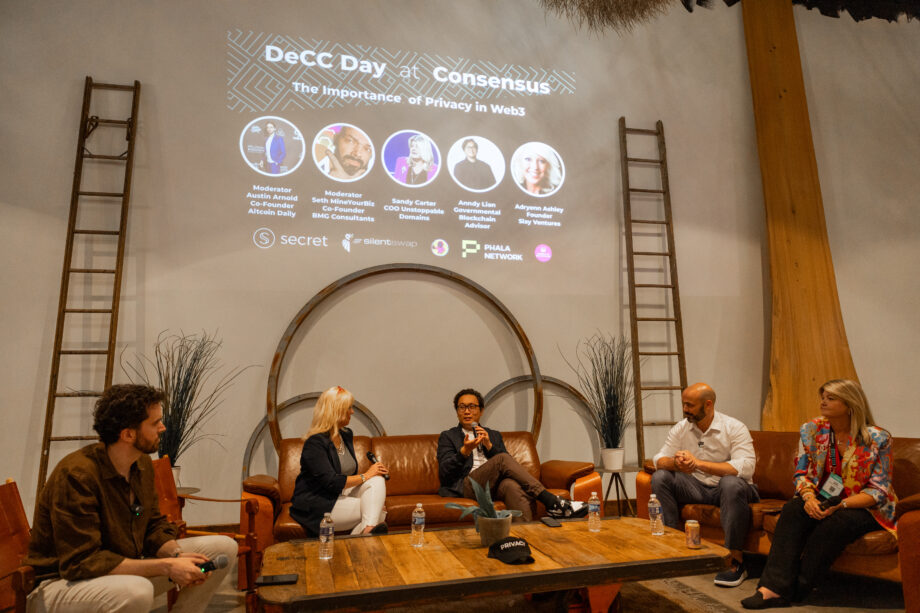
Web3 privacy emerges as a central theme, often heralded as a fundamental human right yet paradoxically elusive in the digital realm. The DeCC Day panel at Consensus 2024, titled “The Importance of Privacy in Web3,” brought together a diverse group of experts to unravel this complex issue.

Adryenn Ashley, a venture capitalist and founder of Slay Ventures, opened the discussion with a provocative introduction, highlighting her background in creating a dating app that prioritized privacy and consent, leveraging blockchain technology. Her energetic tone set the stage for a dynamic exchange of ideas.

Anndy Lian, a book author and fund manager from Singapore, expressed his passion for privacy, emphasizing its significance in various conferences he attends. His perspective as an author and investor provided a unique lens through which to view the privacy debate.

Seth, known in the crypto community as ‘MineyourBiz,’ identified himself as a privacy advocate to the point of affliction. His commitment to evaluating technologies for market viability and technological soundness has led him to monitor major waves in privacy tech, interviewing many privacy-oriented founders.

Sandy Carter, COO of Unstoppable Domains and founder of Unstoppable Women of Web3 in AI, shared her company’s efforts in creating a digital identity platform that empowers users to control their personal information. She underscored the importance of allowing individuals to decide what they disclose, framing privacy as a choice rather than a given.

The panellists engaged in a spirited debate over the nature of privacy and its perception among individuals and governments. Seth argued that privacy is a universal human desire, transcending cultural and political boundaries. However, Adryenn countered that while individuals crave privacy for themselves, they are equally curious about others’ lives, driven by a systematic craving for information.

The conversation took a turn when Anndy brought up the consumer’s role in the privacy equation. He posited that consumers must care about their privacy for it to be effectively protected, citing the use of Zero-Knowledge Proofs (ZKPs) in blockchain applications as a means to preserve user anonymity while enhancing user experience.

Sandy expanded on this by discussing the role of digital identities in managing privacy settings, allowing users to selectively share information with applications. This approach, she argued, respects the individual’s right to privacy while acknowledging the varying degrees of openness each person is comfortable with.

The panelists also tackled the thorny issue of government surveillance and regulation. Seth highlighted the lack of consideration for privacy in government discussions, often viewed as an inconvenience rather than a necessity. Andy shared insights from his direct advisory role with governments, revealing that while on-chain activities might be challenging to trace, off-chain actions, particularly cashing out to fiat, are transparent and traceable.

As the discussion drew to a close, the panellists agreed on the paramount importance of trust in the relationship between privacy, governments, and the public. Austin Arnold, Co-founder of Altcoin Daily closed the panel by emphasizing that privacy builds confidence and trust, which are crucial for market movement and engagement.

In the digital tapestry of Web3, privacy stands as a beacon of individual autonomy, a principle ardently debated and fiercely defended. The DeCC Day panel at Consensus 2024 illuminated the intricate dance between personal discretion and societal transparency. The discourse traversed the spectrum of privacy—from a fundamental human yearning to a nuanced societal construct, challenging the audience to reconsider their own stances on the matter.

The panellists, each a vanguard in their respective fields, unravelled the privacy paradox with eloquence and insight. They painted a world where privacy is not a relic of the past but a cornerstone of the future—a future where trust is the currency and privacy its mint. The dialogue underscored the imperative for privacy to be more than an afterthought in the Web3 narrative; it must be the plot itself.

As the conversation drew to a close, the consensus was clear: privacy in Web3 is not just about the right to secrecy but the right to agency. It is about crafting a digital realm where individuals navigate with confidence, empowered by the sovereignty over their data. The panel at DeCC Day did not just discuss privacy; they championed it, urging us to envision a Web3 ecosystem that is as secure as it is open, as private as it is communal.

In this era of technological renaissance, the panel’s insights serve as a compass, guiding us toward a more equitable and private digital future. The importance of privacy in Web3, as articulated by these thought leaders, is a clarion call to action—a call to protect what makes us human in a world that is increasingly digital.

j j j