Blockchain for Business: Top Use Cases, Benefits & Pitfalls in 2024

Blockchain for Business: Top Use Cases, Benefits & Pitfalls in 2024

blockchain is a shared and immutable data storage technology that is used for payments, supply chain management, trade operations, tokenization, and privacy solutions.

The technology is finding its way into the corporate world because of its unique properties that allow the creation of programmable, transparent, accessible, secure, and trustless systems.

Anndy Lian, an intergovernmental blockchain experttold Techopedia:

“It is not just financial systems; blockchain can empower individuals to take control of their personal data and privacy, mitigating risks associated with centralized data storage. We’re at the early stages of understanding how blockchain and crypto can revolutionize various industries. From supply chain management to healthcare, the potential applications are vast.”

What are the benefits of blockchain applications? What are the challenges that companies may face when adopting blockchain tech? We explore these and highlight some of the most popular use cases of blockchain for businesses in various sectors.

Key Takeaways

  • Blockchain tech has unique properties that allow the creation of programmable, transparent, accessible, secure, and trustless systems.
  • Blockchains are used for payroll, supply chain management, trade operations, tokenization, privacy, and retail operations.
  • Businesses can use public blockchains like Ethereum or create their custom private blockchains.
  • Businesses can use blockchain to build trust, improve privacy, reduce costs, facilitate cross-border payments, and more.
  • Uncertainty around crypto regulation is a key hindrance in adopting blockchain technology.

What Are the Major Blockchain Applications Across Industries?

Here are some of the most popular blockchain use cases and examples of using blockchain for small businesses and large corporations.
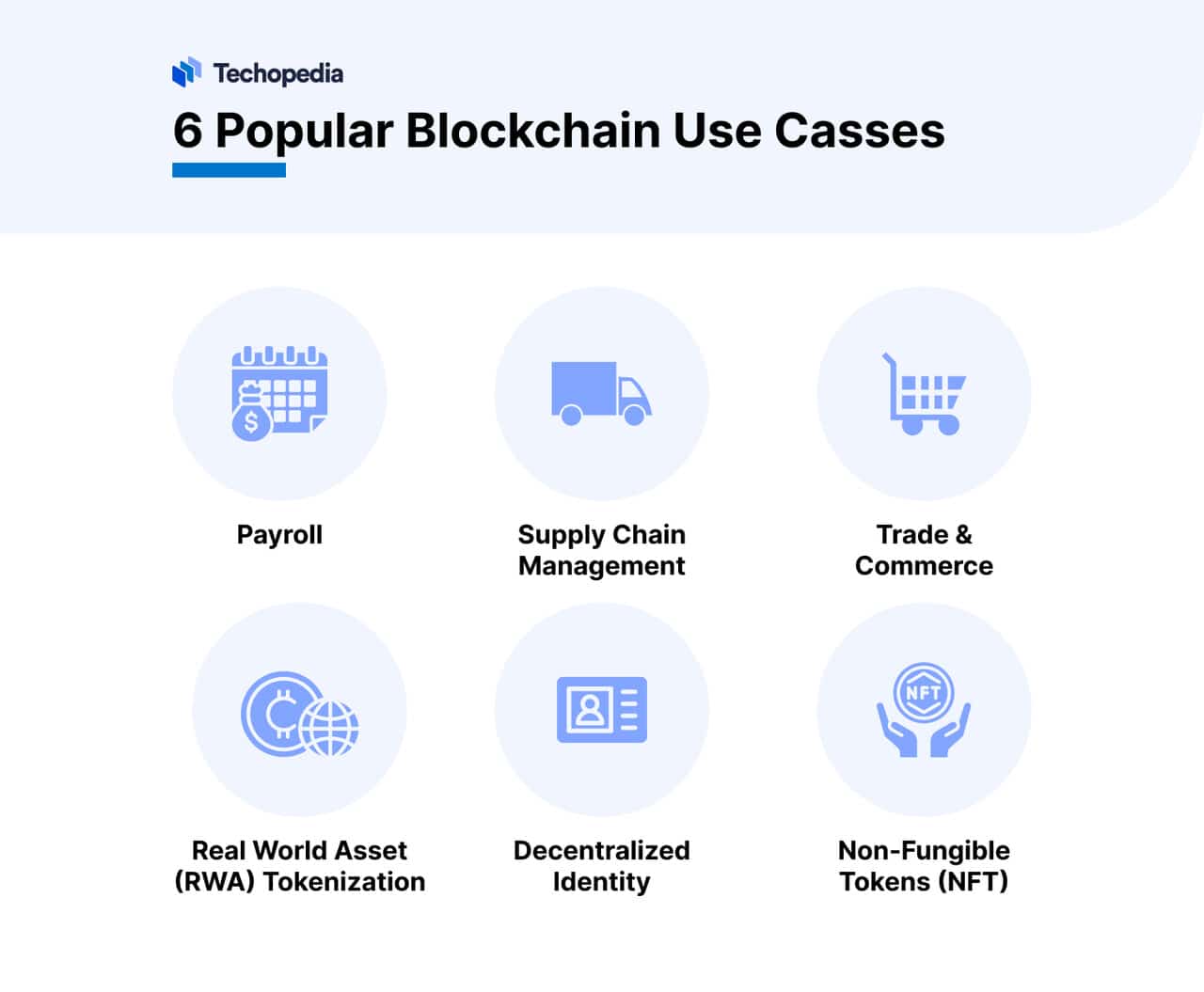
Six Popular Blockchain Use Cases

Payroll

Payments are an obvious use case of blockchain technology. The cryptocurrency industry has used blockchain technology as a bedrock to build peer-to-peer payment systems, while governments are leveraging blockchain technology to create central bank digital currencies (CBDCs).

The growth of remote work has also helped this trend grow as crypto payments facilitate easy, quick, and cheap cross-border payments.

For example, the human resources (HR) management platform Deel allows companies to pay and contractors to receive their salaries in BTCETHUSDC, Dash (DASH), Solana (SOL), and BUSD.

Supply Chain Management

Blockchain supply chain management solutions modernize complex chains that have numerous intermediary parties, processes and endpoints.

The transparent and immutable nature of a blockchain ledger ensures that all concerned parties have a single trusted source of information while providing information in real time to all concerned parties.

Blockchain supply chain solutions also reduce paper-based processes and email exchanges and allow automation, thereby increasing transaction speeds.

Trade management company Covantis created a network to process the execution of bulk agricultural trade operations from the appointment of third-party providers to sharing of documentary instructions and generating drafts and final documents.

Trade & Commerce

Blockchain solutions for trade and commerce created a reliable platform to help buyers find sellers, negotiate with each other, and complete the trade without having to meet each other.

These trading platforms store agreed-upon contracts on the blockchain, while smart contracts custody funds and automate payments when real-world conditions are met. All the information remains visible to all parties on the blockchain.

IBM created a blockchain-based trade management platform we.trade that solves the issue of lack of trust. Importers and exporters that don’t know each other can securely connect with each other on we.trade.

Real World Asset (RWA) Tokenization

Tokenization of real world assets is a promising blockchain use case for businesses that want to increase market liquidity for illiquid assets like real estate. Tokenization can also be used to safeguard intellectual property like copyrights and patents by storing them on an immutable blockchain network.

RWA tokenization is among the top five crypto market trends and technologies in 2024. Traditional finance companies are tokenizing illiquid real estate and fine art into thousands of digital tokens, bringing down the entry barrier for small investors. At the same time, the global nature of public blockchains like Ethereum (ETH) has allowed RWA tokens to reach investors from across the world.

Lian said:

“I believe that tokenization has the potential to democratize access to investment opportunities, allowing individuals from diverse backgrounds to participate in previously inaccessible markets.”

The world saw the first tokenization of real estate in June 2019 when a luxury property called ​​AnnA Villa in France was divided into thousands of digital tokens on the Ethereum blockchain with a minimum entry ticket of investment of €6.5. The tokens came with ownership rights, voting rights, and a one-year vesting period for initial token holders.

Decentralized Identity

Data privacy and security are key issues that businesses have to deal with every day. Using blockchain technology, corporations can leverage a privacy-preserving identity management system called decentralized identity.

Decentralized identities are stored on the blockchain and are not controlled, managed, and stored by centralized third parties. The use of zero-knowledge proof technology, which is gaining popularity on public blockchains, allows organizations to create identifications and certificates that can be verified without revealing any information. Decentralized identification prevents certificate fraud, fake credentials, slow verification processes, and data leaks.

Health-focused enterprise enablement company BurstIQ provides a blockchain-powered platform called LifeGraph that manages sensitive health data. Healthcare and life sciences companies can secure customer data to a single source where participants can control others’ access to their data. Permissioned data can be analyzed, without violating data privacy norms, for improved efficiency, better decision-making, and increased effectiveness in medical processes.

Non-Fungible Tokens (NFT)

Although crypto NFTs are typically associated with absurd market prices, their broad use cases are often misunderstood. Consumer brands like Nike, Puma, and Louis Vuitton have used NFTs as a marketing tool and as a way to digitize and enhance shopping experience.

Since acquiring digital art studio RTFKT in 2021, Nike has occasionally released exclusive NFTs that can be redeemed for physicals. Similarly, in 2023, French luxury fashion house Louis Vuitton sold “phygital” NFTs called Treasure Trunks – worth €39,000 a piece, as reported by Vogue – that granted owners access to goods and experiences.

In September 2022, Starbucks piloted a customer rewards program powered by NFTs called Starbucks Odyssey. However, the company later shut the program in March 2024.

Benefits & Pitfalls of Blockchain for Business

Benefits

  • Trust
  • Improved Privacy & Security
  • Reduced Costs
  • Faster Settlements
  • Programmability & Customizability
  • Tokenization

Challenges

  • Technical Expertise & Investment
  • Regulation Uncertainty
  • Risk of Hacks
  • Limited User Adoption
  • Energy Consumption
  • Scalability & Interoperability

Benefits of Blockchain for Business

Here are the key benefits of using blockchain tech for business operations:

1. Building Trust

Blockchains when paired with smart contract technology can create trustless systems that are immutable, transparent and objective in nature. In a world where there is growing distrust over corporate practices, the use of blockchain technology can help generate trust.

2. Improved Privacy & Security

Although blockchains are not immune to hacks, the development of cryptographic technologies such as zk-proof can ensure data privacy and safety. ZK-proof technology is especially useful in protecting private data as it allows data verification without revealing any information.

Businesses can also leverage public blockchains such as Ethereum to store data and transact upon. The decentralized nature of public blockchains ensures that no centralized party has the power to modify or delete stored data.

3. Reduced Costs


Blockchain technology can help organizations reduce costs by making supply chain and trade management systems efficient, transparent, and accountable. This is especially useful for corporations that have to conduct business operations on the assumption of trust.

4. Faster Settlements

The use of blockchain technology shines when it comes to payments. Cryptocurrency blockchains are global in nature and operate 24/7 making them perfect channels for cheap and immediate cross-border payments.

Unlike the traditional banking sector, businesses will not have to wait for banking hours for settlement and will not incur multiple fees applicable in international money routing.

5. Programmability & Customizability

Businesses have the choice to use different types of blockchains depending on their needs. For example, public crypto blockchains are suitable for handling payrolls, while private blockchains can be developed to allow access to only concerned parties within a supply chain or trade operation.

Furthermore, the use of programmable smart contracts allows the development of applications that use the underlying blockchain networks for data storage and transaction settlement. Smart contracts also allow automation where transactions self-execute when specific conditions are met.

6. Tokenization

Tokenization fits financial use cases. The borderless nature of public blockchains like Ethereum and Solana allows tokenized financial assets to attract a wider pool of investors from across the globe.

Potential Challenges & Pitfalls

Here are the biggest barriers to blockchain adoption in business:

1. Requirement of Technical Expertise & Investment

Businesses will incur costs when recruiting blockchain experts and implementing blockchain technology. The use of public blockchains will require businesses to pay gas fees and auditing fees when setting up applications and smart contracts. Meanwhile, the development of private blockchains from scratch may be expensive and time-consuming due to its complexity.

2. Regulation

The uncertainty around cryptocurrency regulations is one of the biggest challenges in implementing blockchain technology for businesses. Cryptocurrency and blockchain applications often face difficulty finding banking partners in regions with unfriendly and unclear crypto regulations.

The uncertain crypto rules and regulations can hamper business progress and discourage customers from using blockchain-based applications.

3. Hacks

Blockchains are not immune to hacks. 51% attacksdouble-spending, and sybil attacks are key risks to public blockchains. Furthermore, businesses must conduct thorough audits of their smart contracts before deployment or risk being compromised.

4. Limited User Adoption

Blockchain technology is relatively nascent, and therefore, businesses may encounter resistance from trade partners, supply chain management parties and consumers when they introduce blockchain-based solutions. Low awareness about blockchain and cryptocurrency technology among concerned parties is a major hurdle in this area.

5. High Energy Consumption of Proof-of-Work Blockchains

Proof-of-work (PoW) blockchains like Bitcoin are criticized for their high energy consumption rates and carbon footprint. Businesses looking to use these blockchains may attract criticism from customers and investors.

6. Scalability

Public blockchains like Bitcoin and Ethereum often face scalability issues that have resulted in limited network throughput. High transaction volumes on these networks can result in transaction execution failure, exorbitant transaction fees, and delayed transaction processing.

7. Interoperability

Blockchains are often referred to as “data silos” as they tend to exist in isolation from other blockchain networks.

The lack of interoperability between blockchains leads to inefficiencies as businesses will have to rely on third-party solutions to retrieve data from a foreign blockchain.

Fragmentation of data can also hinder collaboration and stifle innovation between businesses or departments within a corporation.

The Bottom Line

Blockchain is a revolutionary technology that offers unique value propositions like trustlessness, transparency, immutability and decentralization.

When duly implemented, blockchain can help corporations make their business operations more efficient and bring about a social and cultural change where trustless and transparent systems become the norm.


Source: https://www.techopedia.com/blockchain-for-business-your-enterprise-guide

j j j

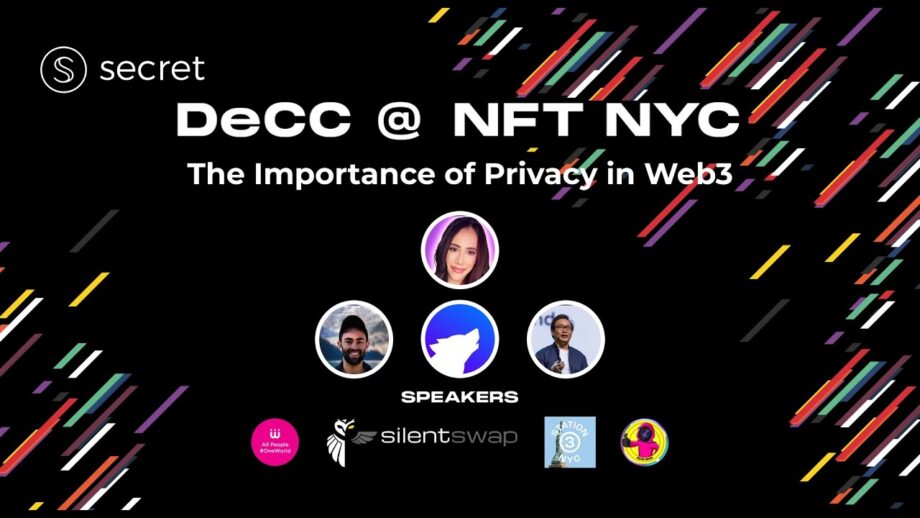
The Future of Privacy in Web3 | DeCC @ NFT.NYC | Wendy O, Anndy Lian, Tor Bair, Gav Blaxberg

The Future of Privacy in Web3 | DeCC @ NFT.NYC | Wendy O, Anndy Lian, Tor Bair, Gav Blaxberg

At the forefront of the Web3 revolution, DeCC @ NFT.NYC convened a panel of visionaries to unravel the complexities of privacy in a blockchain-powered world. Moderated by the influential Wendy O, the panel featured Gav Blaxberg of Wolf Financial, Tor Bair of Stashh, and Anndy Lian, a best-selling author and thought leader.

The event underscored the attendees’ commitment to privacy, with many overcoming significant obstacles to join the conversation. The introduction of “Decentralized Confidential Computing” (DCC) marked a pivotal moment, signaling a shift towards a narrative that champions confidentiality in the transparent realm of blockchain.

Panelists shared their diverse experiences, from advising on crypto regulations to pioneering encrypted NFTs, all converging on the consensus that privacy and security are the bedrock of a sustainable Web3 ecosystem. The dialogue navigated through the evolution from Web2 to Web3, highlighting the persistent challenges and the urgent need for technological alternatives that empower users with control over their data.

A key distinction emerged between privacy and security. While privacy is often viewed as a luxury, security is a fundamental necessity. The irreversible nature of lost privacy was a sobering reminder of the stakes involved. Personal stories from the panelists brought to life the real-world consequences of security breaches, emphasizing the importance of vigilance in the digital age.

The session concluded with an engaging Q&A, where a question about AI’s role in privacy and security sparked a nuanced debate. AI’s dual potential to both compromise and enhance privacy was acknowledged, with a call for responsible AI development that aligns with public interest.

DeCC @ NFT.NYC was not just an event; it was a clarion call for collective action towards a future where privacy is a standard, not an afterthought. The insights and passion of the panelists inspired attendees to advocate for privacy and champion security in the digital domain.

As the narrative around DCC unfolds, the event stands as a testament to the ongoing efforts to protect our digital lives. The journey towards a more private and secure digital world is just beginning, and every step taken is a step towards a better future for all.

j j j

Bitcoin ETFs: Which Region Is Next To See Approvals And Poise As A Hub? Australia? Hong Kong?

Bitcoin ETFs: Which Region Is Next To See Approvals And Poise As A Hub? Australia? Hong Kong?

Bitcoin ETFs are live, changing the investing game everywhere. With the US joining the ranks of other approved countries, the big question is which region is next to see approvals and poise as a hub for Bitcoin ETFs. I will share my views who are the most likely candidates for the next wave of Bitcoin ETF launches, based on their market size, regulatory environment, investor demand, and innovation potential. I will also discuss the analyst sentiment on bringing more liquidity into Bitcoin products through ETF launches, and when the public can expect approval in specific regions.

Why Australia’s main stock market (ASX) makes sense for the next BTC ETF launch

Australia is one of the most developed and sophisticated financial markets in the Asia-Pacific region, with a strong and stable economy, a robust and transparent regulatory framework, and a high level of investor protection and education. The Australian Securities Exchange (ASX) is the primary stock exchange in Australia, and one of the largest in the Asia-Pacific region, with over 2,300 listed companies and a total value of over $2.3 trillion as of February 2024. The ASX also offers a diverse range of products and services, including equities, derivatives, commodities, fixed income, and exchange-traded products (ETPs), such as ETFs and leveraged and inverse products (L&I Products).

Australia is also a leading country in terms of cryptocurrency adoption and innovation, with a supportive and progressive attitude towards digital assets. According to a report, 17% of Australians own some form of cryptocurrencymaking it the top most ready crypto-friendly country in the world, in front of U.S., Brazil and UAE. I was talking to an association in Australia and was told that there are over 300 crypto businesses, 40 crypto exchanges, and 20 crypto funds operating in the country. Although, I do not have the exact numbers but I do believe there are more. Additionally, Australia has a clear and comprehensive regulatory framework for crypto assets, which covers aspects such as taxation, anti-money laundering, consumer protection, and licensing. The Australian Securities and Investments Commission (ASIC) is the main regulator for crypto assets in Australia, and has issued several guidelines and statements on how crypto assets are treated under the existing laws and regulations. You can refer to ASIC’s Information Sheet 225, Crypto-assets (INFO 225) as a guide for the community and industry understand when financial services laws may apply to crypto-assets.

Given these factors, it makes sense for Australia’s main stock market, the ASX, to be the next destination for Bitcoin ETF launches. In fact, Australia already has access to physically backed Bitcoin ETFs since May 2022, via the 21shares Bitcoin ETF (EBTC) listed on Cboe Australia, a secondary exchange that operates under the ASX’s license. However, the ASX itself has not yet approved any Bitcoin ETFs, despite receiving several applications from various providers, such as BetaShares, VanEck, and Fidelity. The main reason for the delay is the ASX’s cautious and conservative approach towards crypto assets, which reflects its high standards and expectations for product quality, investor suitability, and market integrity. The ASX has stated that it is closely monitoring the developments and innovations in the crypto space, and that it is open to considering Bitcoin ETFs, as long as they meet its rigorous requirements and address its concerns8.

Some of the key issues that the ASX is likely to consider before approving Bitcoin ETFs are:

  • The liquidity and volatility of the underlying Bitcoin market, and the potential impact on the ETF’s price discovery, trading, and redemption.
  • The security and reliability of the Bitcoin custodian, and the measures taken to prevent hacking, theft, or loss of the Bitcoin holdings.
  • The valuation and accounting methods used to determine the net asset value (NAV) of the ETF, and the frequency and accuracy of the NAV calculation and dissemination.
  • The risk management and compliance policies and procedures of the ETF provider, and the adequacy of the disclosure and reporting to the investors and the regulators.
  • The suitability and education of the investors, and the availability of sufficient information and guidance on the risks and benefits of investing in Bitcoin ETFs.

I believe that these issues are not insurmountable, and that the ASX will eventually approve Bitcoin ETFs, as long as the applicants can demonstrate that they have addressed them satisfactorily, and that they have the necessary expertise, experience, and resources to offer a high-quality and safe product. I also believe that the ASX will benefit from approving Bitcoin ETFs, as it will enhance its reputation as a leading and innovative exchange, attract more investors and capital to its market, and diversify its product offering and revenue streams. Therefore, I expect that the ASX will approve Bitcoin ETFs in the second half of 2024, following the example of other major exchanges around the world.

Analyst sentiment on bringing more liquidity into Bitcoin products through ETF launches

One of the main benefits of Bitcoin ETFs is that they bring more liquidity into Bitcoin products, by increasing the supply and demand of Bitcoin, and by facilitating the trading and arbitrage of Bitcoin across different platforms and markets. Liquidity is a measure of how easily and quickly an asset can be bought or sold without affecting its price, and it is an important factor for the efficiency, stability, and growth of any market. Higher liquidity means lower transaction costs, faster execution, better price discovery, lower volatility, and higher investor confidence.

Analysts generally have a positive sentiment on bringing more liquidity into Bitcoin products through ETF launches, as they believe that it will improve the overall performance and attractiveness of Bitcoin as an asset class, and that it will create more opportunities and value for investors, traders, and the crypto industry. Some of the main arguments that analysts make in favor of Bitcoin ETFs are:

  • Bitcoin ETFs increase the demand for Bitcoin, as they attract more investors, especially institutional and retail investors, who may otherwise be reluctant or unable to invest in Bitcoin directly, due to technical, regulatory, or operational barriers. Bitcoin ETFs also increase the supply of Bitcoin, as they require the ETF providers to buy and hold Bitcoin to back their ETF shares, creating a positive feedback loop that drives up the price and the adoption of Bitcoin.
  • Bitcoin ETFs facilitate the trading and arbitrage of Bitcoin, as they allow investors to buy and sell Bitcoin on regulated exchanges and platforms, with lower fees, higher liquidity, and better security, than on unregulated or offshore crypto exchanges. Bitcoin ETFs also allow investors to exploit price differences and inefficiencies between the spot and the futures markets, and between different regions and jurisdictions, creating a more integrated and efficient global market for Bitcoin.
  • Bitcoin ETFs improve the price discovery and the volatility of Bitcoin, as they reflect the true and fair value of Bitcoin, based on the supply and demand of the market, rather than the speculation or manipulation of the market. Bitcoin ETFs also reduce the volatility of Bitcoin, as they smooth out the price fluctuations and the shocks caused by external events, such as hacks, bans, or news, by providing more liquidity and stability
  • Bitcoin ETFs enhance the reputation and the legitimacy of Bitcoin, as they bring Bitcoin into the mainstream financial system, by making it available on regulated exchanges and platforms, and by attracting institutional and retail investors who may otherwise be skeptical or hostile towards Bitcoin. Bitcoin ETFs also foster a more positive and constructive relationship between the crypto industry and the regulators, as they demonstrate the willingness and the ability of the crypto industry to comply with the existing laws and regulations, and to cooperate with the regulators to address their concerns and expectations.

When the public can expect approval in specific regions

The approval and the launch of Bitcoin ETFs in different regions depend on various factors, such as the market size, the regulatory environment, the investor demand, and the innovation potential of each region. Therefore, it is difficult to predict with certainty when the public can expect approval in specific regions, as each region has its own challenges and opportunities, and as the crypto space is constantly evolving and changing. However, based on the current trends and developments, I will provide some estimates and expectations for the approval and the launch of Bitcoin ETFs in some of the major regions in the world.

  • Europe: Europe is one of the most advanced and progressive regions in terms of cryptocurrency regulation and innovation, with several countries, such as Germany, Switzerland, and Sweden, already having approved and launched Bitcoin ETFs, and with others, such as France, Italy, and Spain, showing interest and openness towards crypto assets. Europe also has a high level of crypto adoption and awareness, with 15% of Europeans owning some form of cryptocurrency, making it the fourth most crypto-friendly region in the world, behind Africa, Asia, and Oceania. Therefore, I expect that Europe will continue to approve and launch Bitcoin ETFs in the near future, and that it will become one of the leading hubs for Bitcoin ETFs in the world.
  • Latin America: Latin America is one of the most emerging and promising regions in terms of cryptocurrency adoption and innovation, with several countries, such as Brazil, Argentina, Mexico, and Colombia, being among the top adopters and users of crypto assets in the world. Latin America also has a challenging and uncertain regulatory environment for crypto assets, with different countries having different levels and degrees of regulation, supervision, and enforcement of crypto assets, and with some countries facing political and economic instability and turmoil. Therefore, I expect that Latin America will have a slow and gradual outlook for the approval and the launch of Bitcoin ETFs in the near future, with some countries, such as Brazil, being more advanced and ready to approve and launch Bitcoin ETFs, and others, such as Venezuela, being more behind and unprepared to do so.
  • Asia: Asia is one of the most dynamic and diverse regions in terms of cryptocurrency adoption and innovation, with several countries, such as China, Japan, South Korea, and Singapore, being among the top players and influencers in the global crypto market. Asia also has a high level of crypto adoption and enthusiasm. However, Asia also has a complex and inconsistent regulatory environment for crypto assets, with different countries having different views and approaches towards crypto assets, ranging from supportive and progressive, to restrictive and hostile. Therefore, I expect that Asia will have a mixed and varied outlook for the approval and the launch of Bitcoin ETFs in the near future, with some countries, such as Hong Kong, Singapore, and Japan, being more likely to approve and launch Bitcoin ETFs, and others, such as China, India, and Indonesia, being less likely to do so.

Hong Kong is another potential hub for Bitcoin ETFs in the Asia-Pacific region

Hong Kong is one of the world’s leading financial centers and is also a gateway to mainland China, which despite its crackdown on crypto activities, remains a major player and influencer in the global crypto market. Hong Kong is also a prominent country in terms of cryptocurrency adoption and innovation, with a vibrant and growing crypto ecosystem.

According to a report, 18% of Hong Kong residents are active investors of cryptocurrency, while 13% are more passive, making it the most crypto-friendly country in the world. Hong Kong also has a supportive and progressive attitude towards digital assets, with a vision to become a leading fintech and crypto hub in the region. Hong Kong’s regulatory environment for crypto assets has been somewhat unclear and inconsistent in the past, with different regulators having different views and approaches towards crypto assets. The main regulator for crypto assets in Hong Kong is the Securities and Futures Commission (SFC), which oversees the securities and futures markets in the country. The SFC has issued several guidelines and statements on how crypto assets are treated under the existing laws and regulations. However, the SFC’s jurisdiction only covers crypto assets that fall under the definition of “securities” or “futures contracts”, which excludes most of the cryptocurrencies, such as Bitcoin, that are not backed by any physical assets, rights, or obligations. Therefore, the SFC has adopted a voluntary and opt-in regulatory framework for crypto exchanges and funds that deal with non-security crypto assets, which means that they can choose to apply for a license and comply with the SFC’s rules and standards, or they can operate outside the SFC’s purview, as long as they do not offer any security crypto assets to the public.

This regulatory framework has created some challenges and uncertainties for the crypto industry and the investors in Hong Kong, as it limits the scope and the quality of the crypto products and services that are available and accessible in the country, and as it exposes them to higher risks and lower protections. However, in recent months, there have been some significant changes and developments that are pushing for a change in the regulatory relation between the SFC and the crypto industry in Hong Kong, and that are creating more favorable conditions for the approval and the launch of Bitcoin ETFs in the country. Some of these changes and developments are:

  • The pressure and the competition from the US and other approved countries, which have approved and launched Bitcoin ETFs, and which have attracted a huge amount of capital and interest from investors and traders around the world. The SFC may feel the need and the urge to catch up with the global trend and to maintain its competitiveness and relevance as a leading financial center and a crypto hub in the region.
  • The feedback and the demand from the crypto industry and the investors in Hong Kong, who have expressed their desire and their expectation for more clarity and consistency in the regulation of crypto assets, and for more access and exposure to Bitcoin and other non-security crypto assets, especially through regulated and reputable products and platforms, such as Bitcoin ETFs.
  • The innovation and the improvement in the crypto space, which have addressed some of the SFC’s concerns and issues regarding the liquidity, the volatility, the security, and the reliability of Bitcoin and other non-security crypto assets, and which have demonstrated the feasibility and the viability of Bitcoin ETFs, as evidenced by the successful performance and the popularity of Bitcoin ETFs in other markets.
  • The cooperation and the communication between the crypto industry and the regulators in Hong Kong, which have increased and enhanced in recent times, and which have fostered a more positive and constructive relationship and dialogue between the two parties, with the aim of finding a common ground and a mutual understanding on the regulation and the development of crypto assets in the country.

I believe that these changes and developments are indicative of a warming regulatory relation in Hong Kong, and that they will pave the way for the approval and the launch of Bitcoin ETFs in the country. I also believe that Hong Kong will benefit from approving Bitcoin ETFs, as it will boost its reputation and its attractiveness as a fintech and a crypto hub, attract more investors and capital to its market, and diversify its product offering and revenue streams. Therefore, I expect that Hong Kong will approve Bitcoin ETFs as early as end of the first quarter of 2024.

Conclusion

Bitcoin ETFs are more than just another investment product. They are a catalyst and a conduit for the transformation and the evolution of the global financial system, and for the adoption and the integration of Bitcoin and other crypto assets into the mainstream economy and society. Bitcoin ETFs offer a simple, convenient, and secure way for investors to access and benefit from the potential and the value of Bitcoin, without having to deal with the technical, regulatory, or operational challenges and risks of investing in Bitcoin directly. Bitcoin ETFs also bring more liquidity, efficiency, stability, and legitimacy to the Bitcoin market, by increasing the supply and demand of Bitcoin, by facilitating the trading and arbitrage of Bitcoin across different platforms and markets, by improving the price discovery and the volatility of Bitcoin, and by enhancing the reputation and the relationship of Bitcoin with the regulators and the public.

With the US joining the ranks of other approved countries, such as Canada, Germany, Switzerland, and Sweden, the big question is which region is next to see approvals and poise as a hub for Bitcoin ETFs. In this article, I have argued that Australia and Hong Kong are the most likely candidates for the next wave of Bitcoin ETF launches, based on their market size, regulatory environment, investor demand, and innovation potential. I have also provided some estimates and expectations for the approval and the launch of Bitcoin ETFs in other major regions, such as Europe, Latin America, and Asia. However, these are not the only factors that will determine the future and the fate of Bitcoin ETFs.

The crypto space is constantly changing and evolving, and new developments and innovations may emerge and disrupt the status quo and the expectations of the market and the regulators. Therefore, it is important to keep an eye on the trends and the signals that indicate the direction and the pace of the Bitcoin ETF movement, and to be prepared and adaptable to the opportunities and the challenges that it may bring. Bitcoin ETFs are not the end goal, but the means to an end.

The end goal is to create a more open, inclusive, and sustainable financial system, and to empower people with more choice, freedom, and value. Bitcoin ETFs are one of the ways to achieve that goal, and I believe that they will play a significant and positive role in the future of finance and society.


Source: https://www.securities.io/bitcoin-etfs-which-region-is-next-to-see-approvals-and-poise-as-a-hub-australia-hong-kong/

j j j