Exclusive: Inside Snowfro’s Collaboration With Oracle Red Bull Racing and Bybit

Exclusive: Inside Snowfro’s Collaboration With Oracle Red Bull Racing and Bybit

First launched into motion in late July, the Velocity Series, a digital art-focused joint project between Oracle Red Bull Racing (ORBR) and crypto exchange Bybit, with curation from AOI, has recently stepped into the third of its four drops.

The web3 project melds speed, technology, and artistry from globally recognized digital artists — which have included, up to this point, Rik OostenbroekPer Kristian Stoveland, and most recently Art Blocks founder and Chromie Squiggle creator Erick Calderon, aka “Snowfro.”

Digital artworks featured in the project draw inspiration from race team analytics and, more specifically, the RB19 F1 car’s telemetry. Additionally, each stage aligns with the 2023 Formula 1 races in the Netherlands, Japan, the United States, and Abu Dhabi.

For an exclusive inside look at the concept, curation, and creation of the Velocity Series, we spoke with ORBR, Bybit, AOI, and Calderon.

Concept

Taking a closer look at the concept, ORBR explained to us that “The merging of art and racing in the Velocity Series represents a dynamic fusion of two seemingly distinct worlds.”

It explained that the project was designed with a dual purpose to offer broader motorsport enthusiasts an immersive introduction to the realm of digital art, as well as provide its own fans with a tangible connection to their favorite team through unique team-inspired designs.

Other considerations included a fan engagement initiative designed to introduce web3 fans to the world of racing, with an underlying hope to transform them into lifelong ORBR supporters.

“This collaboration underscores both Oracle Red Bull Racing and Bybit’s commitment to constantly innovate and push boundaries in both motorsport and the digital space,” shared ORBR.

ORBR, known for its collaborations with traditional artists like Mr.Doodle, chose a more avant-garde path in the web3 domain. They commented, “We identified two clear markets within the world of web3 for us to focus on – native crypto enthusiasts and ORBR fans who are web3 non-rejectors, and this project aimed to serve the crypto enthusiast audience of people already appreciative of existing digital art.”

Emphasizing digital and generative art, ORBR highlights its commitment to “pushing the boundaries of technology and innovation.” In the Velocity Series, ORBR and Bybit aimed to make digital art accessible to diverse collectors, reflecting their vision of inclusivity. They stated, “This decision is rooted in our vision of inclusivity, inviting diverse participants into this pioneering movement.”

The series offers both exclusive and publicly available collectibles, evolving with the season for a richer experience. Additionally, a remix competition via Joyn.XYZ is underway until October 24. ORBR expressed their admiration for Snowfro’s /// collection, noting its minimalist yet impactful theme, and said, “As the name suggests, /// embodies a minimal yet impactful theme. We were truly inspired by how artworks with similarly simple motifs, like Dmitri Cherniak’s The Goose and Grant Yun’s Cow, successfully encouraged the artistic community to generate remixes.”

Curation

Curating the collection is AOI, a foundation for emerging art and technology with a focus on the convergence of the two — which the foundation shared it found a “vibrant expression” of in the Velocity Series project.

“The curation process was a meticulous journey, where we facilitated the creative interaction between the artistic realm and the data-driven domain of Oracle Red Bull Racing,” AOI shared, explaining, “Our role was to provide a fertile ground where artists could explore, interpret, and transcend the conventional boundaries of digital art inspired by racing data.”

Speaking to the artist selection process, AOI shared that “Our criteria were rooted not only in artistic excellence but also in the ability to synergize with big brands.”

The foundation explained that it sought out artists whose past engagements with notable brands “honed their capability to align creative prowess with brand ethos, ensuring a seamless blend of artistic and commercial objectives.”

However, one of the other and perhaps more significant considerations was identifying artists who “embrace boundary-pushing and are unafraid to explore never before seen concepts.”

“Continual innovation with each release is crucial to highlighting the technologies that underpin digital art.”

AOI

Creation

Calderon delved into the inspirations behind stage three of the Velocity Series, highlighting his love for driving and speed as major influences on the /// project. He elaborated, “As I have participated in the world of racing, mostly as a hobbyist, I see extensive use of italicized fonts to demonstrate a more dynamic vibe, and the forward slash is a character that is in an eternal state of italics and therefore felt like a great way to encapsulate motion or speed in a single character.”

The /// project aimed to distill motion into its most basic form, resonating with Calderon’s affinity for minimalism and echoing the simplicity of his renowned Chromie Squiggle collection.

In addition to its visual simplicity, /// introduces a tactile element through embroidery. Calderon commented on this choice, saying, “There are also limitations to what can be done, and while I’m excited to potentially push those boundaries in the future, this initial project was going to be complex enough simply to make it exist and work. So something simple felt critical, and I can apply my color techniques to simple shapes — although again, it was a learning process to figure out how to make gradients within the limitations of embroidery.”

Despite its physical limitations, some fans of the work on X have shared that they see a direct connection to Chromie Squiggle in ///, something Calderon said he loves to hear, as he hopes to “continue to apply a common thread to my work where it is recognizable as being part of the same body.”

He expanded on this thought, stating, “Perhaps specifically to the micro-brand element of the project, what PFPs and GenArt have taught me is an inherent desire for people in the digital realm to express themselves as individuals within a broader family or group.”

Calderon compared the constraints of embroidery to custom ceramic tile mosaics, a technique he used prior to Chromie Squiggle and employed in his recent project, heart + Craft, with Prohibition’s Jordan Lyall. Discussing the choice of embroidery, Calderon clarified that it was crucial for him, saying it was a key component of his involvement in the Velocity Series.

He confessed, “To be perfectly candid, I’m utterly overwhelmed and overcommitted as it is,” and added, “While I’m always proud and excited for new opportunities to get to express myself through art, I have had many of those opportunities already and felt that I could not justify the bandwidth that was going to go into this unless I could do something that tested new ideas.”

Calderon revealed a long-standing interest in generative embroidery, having pitched the idea of a supporting infrastructure to Art Blocks over a year ago. He remarked, “It was not utilized much, and I realize oftentimes it is critical to demonstrate a proof of concept for others to be willing to go deep into rabbit holes to want to consider a concept for their own work. I definitely had to intimately learn the craft of embroidery to pull this together, which required hours of research through trial and error.”

He expressed his enthusiasm, stating, “I’ve been really excited to demonstrate generative embroidery at scale for a really long time, and this provided the perfect opportunity to showcase what Art Blocks Engine built that facilitates this.”

Calderon emphasized the significance of the live algorithm in generative embroidery. He explained, “At Art Blocks, we render PNGs basically in an effort to be backward compatible with the majority of aggregation platforms, but the reality is that the digital artwork is animated and has options for the user to customize it based on their mood, whether in a party mood or a lonely mood, you have control of the way the digital is presented on your screen, down to the background color.” He also provided insight into the interactive features of the artwork, allowing users to modify its appearance using various keyboard controls.
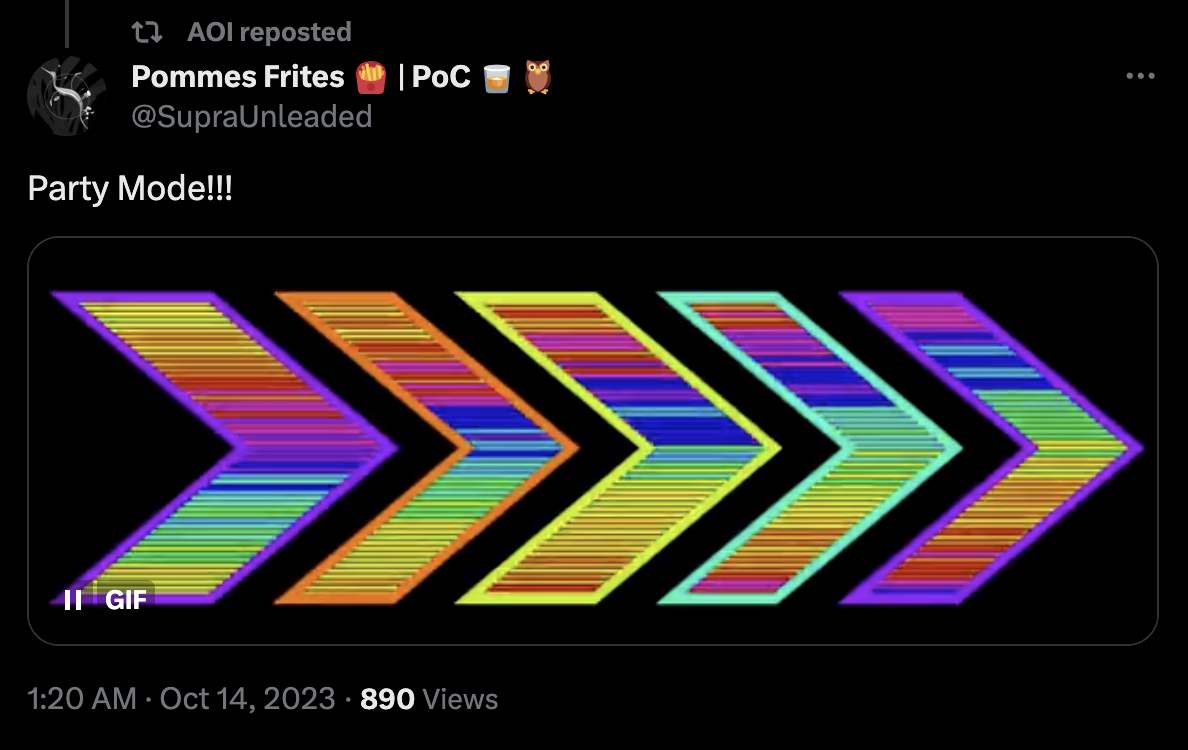
Calderon emphasized the importance of aligning the physical and digital realms in the world of NFTs, stating, “What felt critical though is that the main subject would match with the embroidered output, which is also generated by the algorithm.”

He introduced a concept called “digital optional/physical optional” to promote wider adoption of NFT technology. Calderon believes that participation in the content a creator produces shouldn’t be determined solely by one’s presence in the physical or digital space.

Calderon remarked, “They can keep that physical object — imagine a scratch-off with a seed phrase or an IYK-linked product and onboard into web3 at their own pace, on their terms.” He also fondly mentioned collaborating with his wife Mara on the Velocity Series, saying, “I’ve really enjoyed collaborating with my wife Mara, as she’s been so supportive of this crazy journey I’ve been on over the last three years and here there was a project that could lean into her skillset and area of expertise.”

Catalyst

“As the curtain falls on this project, our aspiration is to leave a lasting imprint on the digital art community,” shared Anndy Lian, head of partnerships at Bybit, adding, “We envisage the Velocity Series as a catalyst for more such innovative rendezvous between new communities, fostering a culture of exploration, learning, and appreciation for digital art that transcends traditional boundaries.”

Calderon further outlined that there is a general incompatibility between the ability to prove ownership of a digital object and the ability to prove ownership of a physical object. As a result, he sees the digital object as a permission mechanism to facilitate the creation of the physical — rather than a one-to-one relationship like a COA or Soul Bound Token where the two are locked together.

In conclusion, he shared, “Projects like this one really let me test these ideas out, especially if over time we see people take the embroidery file that comes with their mints and use it to make their own stuff like backpacks and shirts, etc., because they are the owners of the work.”

Teasing at what’s to come, Oracle Red Bull Racing said, “We are announcing the fourth artist very soon. They are, in our opinion, a real innovator in the space, and they have released a number of collections recently that are pushing the boundaries in terms of digital art and interactivity.”


Source: https://nftnow.com/features/exclusive-inside-snowfros-collaboration-with-oracle-red-bull-racing/


 

j j j

Anndy Lian: Bitcoin Price Surges to $35,000, More Gains Ahead

Anndy Lian: Bitcoin Price Surges to $35,000, More Gains Ahead

Bitcoin, the world’s largest and most popular cryptocurrency, has been on a bullish streak lately, reaching $35,000 for the first time since May 2022. The digital asset has more than doubled in value this year as investors flock to it amid inflation fears, regulatory developments, and growing adoption.

One of the main drivers of Bitcoin’s rally is the anticipation of a spot Bitcoin exchange-traded fund (ETF) approval by the U.S. Securities and Exchange Commission (SEC). A spot ETF would allow investors to buy and sell Bitcoin directly on regulated stock exchanges without having to deal with crypto platforms or custody issues.

Several companies have applied for a spot in Bitcoin ETF, including BlackRock (NYSE:BLK), WisdomTree, Invesco Galaxy, Wise Origin, VanEck, Bitwise, and Valkyrie Digital Assets. The SEC has postponed its decision on these applications until November, but some analysts believe that the regulator will eventually greenlight at least one of them.

A spot Bitcoin ETF would be a game-changer for the crypto industry, as it would boost the liquidity, accessibility, and legitimacy of Bitcoin. It would also attract more institutional and retail investors to the market, creating more demand and driving up the price.

Another factor that is fueling Bitcoin’s rise is the upcoming halving event in 2024. The halving is a process that reduces the reward for mining new blocks of Bitcoin by 50% every four years. This creates a scarcity effect that increases the value of each coin. The halving also coincides with a cyclical pattern of Bitcoin’s price movements, which tend to peak about a year after each halving.

The last halving occurred in May 2020, when the reward dropped from 12.5 to 6.25 bitcoins per block. Since then, Bitcoin has surged from around $9,000 to over $35,000. The next halving is expected to happen in May 2024, when the reward will drop to 3.125 bitcoins per block. Many experts believe that this will trigger another bull run that could push Bitcoin to new heights.

One of them is Peter Brandt, a legendary trader and analyst who has been following Bitcoin since 2011. Brandt has recently shared his bullish chart that predicts new all-time highs for Bitcoin by the third quarter of 2024. He says that Bitcoin has hit its bottom at around $25,000 in July 2023 and will break out of its long-term range by mid-2024. He also suggests that Bitcoin will go through a period of consolidation or sideways movement until then.

Brandt’s chart shows that Bitcoin follows a series of bullish impulses followed by periods of correction. He expects that Bitcoin will reach around $40,000 in the short term, based on its convincing break above the $32,000 level. He then forecasts that Bitcoin will correct to around $30,000 before resuming its uptrend and reaching new highs above $70,000 by Q3 2024.

Brandt is not alone in his optimistic outlook. Other analysts have also made bold predictions for Bitcoin’s future price. Some of them include:

  • Alistair Milne, founder of Altana Digital Currency Fund, predicts that Bitcoin will surge to $45,000 depending on what happens with inflation.
  • Dan Tapiero, co-founder of 10T Holdings and Gold Bullion International, who believes that Bitcoin could reach $100,000 by 2025.
  • Tim Draper, billionaire investor and founder of Draper Associates and DFJ Venture Capital, expects that Bitcoin will hit $250,000 by mid-2023.
  • John McAfee, a software entrepreneur and crypto advocate, who claims that Bitcoin will reach $1 million by 2025.

Why I Think Bitcoin Will Drop to $29,000 Before Surging to $40,000

Bitcoin, the world’s leading cryptocurrency, has been on a roller coaster ride this year, reaching new highs and lows. As of writing this article, Bitcoin is trading at around $35,000, up from its recent low of $25,000 in July 2023. However, I believe that this rally is not sustainable and that Bitcoin will face another major correction before it can break out of its long-term range and reach new heights.

There are several reasons why I think Bitcoin will drop to $29,000 before it can surge to $40,000 and above. These include:

  • The lack of a spot Bitcoin ETF approval by the SEC
  • The increasing competition from other cryptocurrencies and technologies
  • The diminishing returns of the halving effect

Let me explain each of these points in detail.

The lack of a spot Bitcoin ETF approval by the SEC

One of the main catalysts for Bitcoin’s recent rally is the expectation of a spot Bitcoin ETF approval by the U.S. Securities and Exchange Commission (SEC). A spot ETF would allow investors to buy and sell Bitcoin directly on regulated stock exchanges without having to deal with crypto platforms or custody issues.

However, I think that this expectation is too optimistic and that the SEC will not approve any spot Bitcoin ETF anytime soon. The SEC has been very cautious and sceptical about Bitcoin and crypto in general, citing issues such as market manipulation, fraud, volatility, liquidity, custody, and investor protection.

The SEC has already postponed its decision on several spot Bitcoin ETF applications until November, but I doubt that it will grant any approval by then. The SEC has rejected or delayed every Bitcoin ETF proposal since 2013, and I don’t see any reason why it would change its stance now.

Therefore, I think that the market is overestimating the probability of a spot Bitcoin ETF approval and that this will lead to disappointment and sell-off when the SEC announces its verdict. I expect that this will trigger a downward pressure on Bitcoin’s price and push it below $30,000.

The increasing competition from other cryptocurrencies and technologies

Another factor that could weigh on Bitcoin’s price is the increasing competition from other cryptocurrencies and technologies that offer faster, cheaper, more scalable, and more innovative solutions.

Bitcoin is the first and most dominant cryptocurrency, but it is not the only one. There are thousands of other cryptocurrencies that have emerged since Bitcoin’s inception in 2009, each with its own features, advantages, and disadvantages.

Some of these cryptocurrencies are challenging Bitcoin’s supremacy in different aspects, such as:

  • Ethereum, which is the second-largest cryptocurrency by market cap and the leading platform for smart contracts, decentralized applications (DApps), decentralized finance (DeFi), non-fungible tokens (NFTs), and more.
  • Cardano, which is the third-largest cryptocurrency by market cap and a rival to Ethereum that claims to offer a more scalable, secure, and sustainable platform for smart contracts and DApps.
  • Solana, which is the fifth-largest cryptocurrency by market cap and a high-performance blockchain that boasts over 50,000 transactions per second (TPS), low fees, and interoperability with other blockchains.
  • Dogecoin, which is the ninth-largest cryptocurrency by market cap and a meme-inspired coin that has gained popularity among retail investors and celebrities such as Elon Musk.

These are just some examples of the many alternatives to Bitcoin that are gaining traction and adoption in the crypto space. These cryptocurrencies are not only competing for market share but also for innovation and development.

While Bitcoin has a loyal fan base and a strong network effect, it also suffers from some limitations and challenges that could hinder its growth potential. Some of these include:

  • Its slow transaction speed of around 7 TPS, makes it unsuitable for micropayments or high-frequency transactions
  • Its high transaction fees of around $10 per transaction, which make it expensive for small or frequent transfers
  • Its limited scalability is due to its fixed block size of 1 MB, which limits its capacity to handle more transactions per second
  • Its high energy consumption is due to its proof-of-work (PoW) consensus mechanism, which requires a lot of computing power and electricity to secure the network
  • Its lack of programmability due to its simple scripting language, which limits its ability to support complex functions or applications

These limitations could make Bitcoin less attractive or relevant compared to other cryptocurrencies or technologies that offer better solutions or features. Therefore, I think that Bitcoin will face more competition and pressure from other players in the crypto space and that this will affect its price negatively.

The diminishing returns of the halving effect

A third reason why I think Bitcoin will drop to $29,000 before it can surge to $40,000 is the diminishing returns of the halving effect.

The halving is a process that reduces the reward for mining new blocks of Bitcoin by 50% every four years. This creates a scarcity effect that increases the value of each coin. The halving also coincides with a cyclical pattern of Bitcoin’s price movements, which tend to peak about a year after each halving.

The last halving occurred in May 2020, when the reward dropped from 12.5 to 6.25 bitcoins per block. Since then, Bitcoin has surged from around $9,000 to over $35,000. The next halving is expected to happen in May 2024, when the reward will drop to 3.125 bitcoins per block.

Many experts believe that this will trigger another bull run that could push Bitcoin to new heights. However, I think that this effect will be weaker and less predictable than before.

There are several reasons why I think the halving effect will diminish over time. These include:

  • The decreasing impact of the reward reduction on the supply and demand of Bitcoin. As the reward gets smaller and smaller, it will have less influence on the inflation rate and the market price of Bitcoin. For instance, the first halving in 2012 reduced the inflation rate from 50% to 25%, while the fourth halving in 2024 will reduce it from 1.8% to 0.9%. This means that the supply shock will be less significant and less noticeable than before.
  • The increasing difficulty and cost of mining Bitcoin. As the reward gets smaller and smaller, it will become harder and more expensive for miners to break even or make a profit. This could lead to some miners exiting or reducing their operations, which could affect the security and stability of the network. It could also create more selling pressure on the market, as miners need to sell some of their coins to cover their expenses.
  • The decreasing correlation between the halving and the price cycles of Bitcoin. As Bitcoin matures and becomes more influenced by other factors such as adoption, regulation, innovation, and competition, it will become less dependent on the halving as a price driver. The halving may not be as reliable or accurate as a predictor or indicator of future price movements as before.

Therefore, I think that the halving effect will not be as strong or consistent as before and that it will not be enough to propel Bitcoin to new highs without other positive catalysts or developments.

Conclusion

Of course, these predictions are not guaranteed to come true and should be taken with a grain of salt. Bitcoin is a volatile and unpredictable asset that can be influenced by many factors beyond anyone’s control. Some of the risks and challenges that could affect Bitcoin’s price include:

  • Regulatory uncertainty and crackdowns from governments and central banks
  • Cyberattacks and hacks on crypto platforms and users
  • Technical issues and bugs in the Bitcoin network or software
  • Competition from other cryptocurrencies and technologies
  • Market manipulation and fraud by whales and bad actors
  • Loss of confidence and trust among investors and users

Therefore, anyone who is interested in investing in Bitcoin should do their own research and due diligence before making any decisions. They should also be aware of the potential rewards and risks involved and be prepared for high volatility and price swings.

Bitcoin is a revolutionary and innovative invention that has changed the world of finance and technology. It has also created a new asset class that offers unprecedented opportunities and challenges for investors and users. As Bitcoin enters its second decade of existence, it will continue to evolve and grow, and possibly reach new heights that no one can imagine.


Source: https://in.investing.com/analysis/anndy-lian-bitcoin-price-surges-to-35000-more-gains-ahead-200601620


j j j

Navigating the UK’s Cryptocurrency Landscape

Navigating the UK’s Cryptocurrency Landscape

The United Kingdom’s recent proactive stance towards the cryptoasset sector is indicative of its commitment to provide clarity, assurance, and protection for both consumers and businesses. With these new regulations slated for implementation earlier this month, the purview spans a vast spectrum of crypto activities, right from trading, and lending, to custody and promotion. However, they also inadvertently weave in a layer of complexity, especially for foreign entities and those yet to be registered, who are vying for a foothold in the UK market.

Central to this regulatory framework is the Payment Services Act (PSA) of 2019, which lays the groundwork for payment service providers, and by extension, entities involved in the realm of cryptoassets. The PSA defines cryptoassets as digital representations of value or rights, which are secured cryptographically and can be transferred and used for investment purposes. It’s pertinent to note that these definitions exclude cryptoassets that squarely fit within the classifications of electronic money or controlled investments already in existence. A further demarcation within the PSA categorizes services as digital payment token (DPT) services and e-money token (EMT) services. The former encompasses platforms, brokers, and those involved in custody and lending, while the latter is predominantly focused on assets that are pegged to a fiat currency or another asset, such as stablecoins.

A salient feature of these regulations is the directive that mandates all DPT service providers to be registered with the Financial Conduct Authority (FCA). The underpinning rationale is anchored in the Money Laundering, Terrorist Financing and Transfer of Funds (Information on the Payer) Regulations 2017 (MLRs). These are intricate by design and compel DPT service providers to uphold stringent standards to combat the dual threats of money laundering and terrorist financing. This translates to rigorous customer due diligence, monitoring of transactions, and meticulous record-keeping, especially in scenarios where activities appear suspicious. The mantle of ensuring compliance with the MLRs rests with the FCA.

Expanding the horizon further, there is the inclusion of a financial promotion regime specifically for DPT services. This is orchestrated to integrate the Financial Services and Markets Act 2000 (FSMA) within its scope. The FSMA has always been instrumental in regulating the promotion of financial products and services to consumers in the UK, ensuring they are transparent, accurate, and devoid of misleading information. The implications of this integration are multifaceted. It means DPT service providers will now be obligated to provide clear risk warnings, assess the suitability of consumers, instate a cooling-off period, especially for those new to the investment landscape, and disallow certain incentives that might be deemed inappropriate.

Moreover, there are plans to introduce a market abuse regime, which will widen the reach of the Market Abuse Regulation (MAR) to include DPT service providers. This will scrutinize practices that include but are not limited to, insider trading, manipulation of the market, and unauthorized dissemination of information. This initiative is primarily to clamp down on deceptive activities that encompass tactics like spoofing, front-running, and the notorious pump-and-dump strategies that have plagued many an investor.

In the realm of consumer protection, the introduction of a statutory trust requirement is noteworthy. What this signifies is that by the close of 2023, service providers would need to hold the assets of customers in a trust arrangement. On this front, the FCA is in the process of formulating guidelines.

The landscape, with the advent of these regulations, becomes a double-edged sword for crypto businesses aspiring to set their footprint in the UK market. While clarity is a boon, the challenges are manifold. Non-compliance or even partial adherence could lead to businesses having to restructure their operations, which could span from customer due diligence, and transaction monitoring to rethinking their promotional strategies.

For the consumer, the landscape is both protective and cumbersome. While they will be cushioned by enhanced protective measures, they would also need to wade through increased verification processes and other regulatory protocols.

One of the foremost challenges is the delineation of DPT services. There might be grey areas when it comes to categorizing certain cryptoassets or services under the DPT umbrella. Additionally, challenges on the jurisdictional front arise as the actual enforceability of these regulations on businesses based overseas remains to be seen. Lastly, adaptation by the industry is pivotal. The crypto industry, which has been relatively unbridled, might encounter resistance when adapting to these norms.

The trajectory of the UK’s cryptocurrency regulations, while poised in the right direction, necessitates a harmonious effort from regulators, businesses, and consumers to ensure a seamless transition and integration.


Source: https://intpolicydigest.org/navigating-the-uk-s-cryptocurrency-landscape/

j j j