Why regulated decentralized exchanges are the wave of crypto trading’s future

Why regulated decentralized exchanges are the wave of crypto trading’s future

The world of cryptocurrency trading is undergoing a profound metamorphosis, fueled by a growing wave of investors seeking alternatives to the well-established centralized exchanges (CEXs) that have long reigned supreme. These CEXs have traditionally acted as intermediaries, facilitating transactions between buyers and sellers of digital currencies like Bitcoin and Ethereum. While CEXs offer certain advantages such as liquidity, convenience and security, they also carry significant downsides, including hefty fees and privacy concerns as well as susceptibility to hacking and fraud.

Rise of decentralized crypto trading

Crypto’s shifting landscape has propelled decentralized exchanges (DEXs) into the limelight. DEXs are platforms that empower users to engage in direct peer-to-peer trading of crypto assets, eliminating the need for intermediaries. Harnessing the power of blockchain or distributed ledger technology, DEXs introduce a range of advantages over their centralized counterparts, including:

1. Lower fees: DEXs typically impose more favorable fee structures than CEXs, which often burden users with high commissions, spreads and withdrawal charges.

2. Enhanced privacy: Unlike CEXs, which demand personal information and identity verification, DEXs operate with greater privacy, sidestepping anti-money laundering (AML) and know-your-customer (KYC) regulations.

3. Greater control: DEXs empower users by allowing them to maintain full control over their crypto assets and private keys, unlike CEXs that hold users’ funds in their own wallets or custodial services.

4. Fostering innovation: DEXs provide access to a broader spectrum of crypto assets and services, including lending, borrowing, staking, yield farming, non-fungible tokens (NFTs) and more.

Nonetheless, decentralized exchanges grapple with their own set of challenges, such as:

1. Limited liquidity: DEXs often face lower trading volumes and liquidity compared to CEXs, resulting in higher price slippage and longer transaction processing times.

2. Increased complexity: DEXs may require users to possess a higher degree of technical expertise compared to CEXs, potentially discouraging novice or casual traders.

3. Security concerns: DEXs are not immune to cyberattacks or technical glitches, posing risks to the platform’s integrity and the functionality of underlying smart contracts.

4. Regulatory uncertainty: Operating within a legal gray area, DEXs often lack clear definitions or regulations in most jurisdictions, raising questions about their compliance.

The birth of RDEXs

Is it possible to marry the strengths of centralized exchanges and decentralized exchanges? Can we envision a decentralized exchange that adheres to regulatory standards? The answer is affirmative. Enter the regulated decentralized exchange (RDEX). An RDEX allows users to engage in direct crypto asset trading while adhering to relevant laws and regulations in its jurisdiction of operation. It preserves the fundamental tenets of decentralization — transparency, immutability and censorship resistance — while bolstering them with legitimacy, accountability and security.

So, how does an RDEX function? It achieves this delicate balance by incorporating a regulatory framework into its protocol design, employing smart contracts to enforce user and transaction rules and standards. For instance, it may mandate user registration with real identities and source of funds verification before permitting trading. It may also impose limits on trade amounts or frequencies and report transactions to authorities for tax and compliance purposes.

Some of them will adopt a hybrid approach, blending on-chain and off-chain components. By leveraging off-chain service providers for KYC/AML checks and liquidity pools, they maintain decentralization and security through cryptographic proofs, ensuring the honesty and integrity of these services.

Value of RDEXs

Why are RDEXs so vital in the crypto space? It presents a pragmatic solution to one of the crypto industry’s foremost challenges: regulation. As governments and regulators worldwide grow increasingly concerned about the economic and societal implications of crypto activities, regulation becomes inevitable. While constructive regulation can offer clarity, security and recognition, excessive restrictions can stifle innovation and growth.

RDEXs can serve as a bridge between the crypto industry and regulators. They demonstrate that crypto activities can be conducted in a responsible, compliant and transparent manner, preserving decentralization’s core values. By fostering trust among users, investors and authorities, RDEXs mitigate the risks of fraud, manipulation and abuse.

Moreover, RDEXs empower the future of decentralized trading by granting access to a broader array of crypto assets and services. These include the trading of security tokens, which represent real-world assets like stocks, bonds, real estate or art. While security tokens promise to revolutionize the financial industry, their strict regulations demand compliant platforms, which RDEXs can provide.

Central bank digital currencies (CBDCs) are another facet of the crypto landscape that RDEXs can facilitate. CBDCs, digital versions of fiat currencies issued by central banks, promise faster, cheaper and more secure transactions but pose unique challenges for the crypto industry. It can integrate CBDCs with other crypto assets and services, ensuring privacy, interoperability and competition.

RDEXs in action

RDEXs are not just theoretical concepts; they are tangible realities. Projects like eToroX, backed by eToro and licensed by the Gibraltar Financial Services Commission, is an example of the RDEX in action — enabling users to trade crypto assets, including security tokens and stablecoins pegged to fiat currencies while adhering to regulatory frameworks.

Injective Protocol, supported by Binance, another major player in the crypto space, offers a layer-2 DEX built on Ethereum. It facilitates the trading of crypto assets, including derivatives, futures, options and synthetics, and collaborates with central banks on CBDC integration.

Projects like Bitverse, supported by Bybit and the Mantle Network, are pioneering a credit rating system. This system allows users to leverage their crypto assets and reputation to access a range of financial services and products in the Web3 space. Regulators could explore such platforms to verify user creditworthiness, both on and off-chain. (I do not have any ties to any of the projects or companies mentioned in this piece.)

On the horizon

In summary, RDEXs represent a new breed of decentralized exchanges that adhere to regulation. They bridge the gap between the crypto industry and regulators, providing platforms that cater to both sides’ needs. It unlocks access to a broader spectrum of crypto assets and services, empowering the future of decentralized trading.

However, RDEXs are not the final destination of crypto’s evolution. Numerous challenges and questions remain, including those related to interoperability, scalability, security and the ever-growing complexity of crypto assets and services.

Furthermore, the crypto industry continues to dream beyond RDEXs. Web 4.0, the hypothetical next chapter of the internet, hints at an even more immersive, intuitive and intelligent way of interacting with information and value in the most decentralization manner governed by artificial intelligence may be the way forward. While Web4 remains speculative, it underscores the crypto industry’s relentless pursuit of innovation, openness, fairness and decentralization. This concept also works well with RDEXs, where no single person is running the exchange, it is run by codes and AI.

The crypto industry’s evolution is far from over, with more innovative solutions and revolutionary ideas on the horizon, all aimed at shaping a more decentralized future.


Source: https://forkast.news/egulated-decentralized-exchanges-crypto-future/

j j j

Op-ed: JPEX – A crypto scandal that shakes Hong Kong’s reputation

Op-ed: JPEX – A crypto scandal that shakes Hong Kong’s reputation

Hong Kong, a global financial hub and a gateway to China, has been rocked by a massive crypto scandal involving JPEX. This Dubai-based cryptocurrency exchange allegedly defrauded thousands of investors of more than $160 million. The case has exposed the regulatory loopholes, the lack of investor protection in Hong Kong’s nascent crypto industry, and the risks of relying on social media influencers to promote unlicensed platforms.

JPEX, which stands for Japan Exchange, claimed to be the world’s first crypto exchange offering its users dividends. It also boasted of partnering with major institutions such as HSBC, Standard Chartered, and Alibaba. It lured investors with promises of high returns and low fees and used aggressive marketing strategies such as billboards, online ads, and influencer endorsements.

Among the influencers who promoted JPEX were Joseph Lam, a barrister turned insurance salesman who called himself Hong Kong’s “Trolling King”, and Chan Yee, a YouTube personality with 200,000 subscribers. They showed their followers how Bitcoin profits could help them buy houses and cars and encouraged them to sign up for JPEX using their referral codes.

The SFC revealed that it had issued a warning letter to JPEX in June 2023, asking it to cease its activities in Hong Kong or apply for a license. However, JPEX ignored the letter and continued to operate illegally. The SFC also said it had no jurisdiction over JPEX’s operations in Dubai, where it was registered.

The Hong Kong police launched an investigation into JPEX after receiving complaints from more than 2,000 investors claiming to have lost HK$1.3 billion ($166 million). The police arrested 11 people, including Lam and Chan, on suspicion of fraud, money laundering, and conspiracy to defraud. The police also seized computers, mobile phones, bank cards, and documents from the suspects’ premises.

The case has sparked public outrage and raised questions about Hong Kong’s regulatory framework for crypto assets. Hong Kong has been trying to position itself as a global hub for innovation and technology, especially after introducing the national security law in 2020 that eroded its autonomy and freedoms. In November 2020, the SFC announced a new licensing regime for virtual asset trading platforms to enhance investor protection and combat money laundering.

The regime only took effect in June 2023, leaving a gap of more than six months for unregulated platforms like JPEX. Moreover, the regime only covers platforms that trade at least one security token, a type of crypto asset representing ownership or rights in an underlying asset or business. Platforms that trade only non-security tokens, such as Bitcoin or Ethereum, are not required to obtain a license from the SFC.

This means there is still a large segment of the crypto market that is unregulated and unsupervised in Hong Kong. According to CoinMarketCap, more than 11,000 crypto assets are in circulation, with a total market capitalization of over $2 trillion. Many of these assets are highly volatile and speculative; some may be fraudulent or illegal.

The JPEX case also highlights the dangers of trusting social media influencers who endorse crypto products or platforms without proper disclosure or due diligence. Influencers may have ulterior motives or conflicts of interest when they promote certain platforms or tokens. They may also lack the expertise or credibility to provide accurate or reliable information about the risks and rewards of investing in crypto assets.

Investors should be wary of any platform or product that promises unrealistic returns or guarantees without disclosing the risks involved. They should also do their own research and verify the credentials and reputation of any platform or product they intend to use. They should also check whether the platform or product is licensed or regulated by any authority in Hong Kong or elsewhere.

The JPEX case has also drawn attention to the role of Dubai as a crypto haven for shady operators. Dubai, part of the United Arab Emirates (UAE), has been attracting crypto businesses with its low taxes, lax regulations, and friendly attitude.

Dubai has no specific law or authority to regulate crypto assets and does not require crypto platforms to obtain a license or register with any agency. Dubai also does not have an extradition treaty with Hong Kong, making it difficult for the authorities to pursue JPEX or its founders.

However, Dubai’s crypto-friendly stance may come at a cost for its reputation and security. Dubai may become a magnet for scammers, hackers, and terrorists who use crypto assets to evade sanctions, launder money, or finance illicit activities.

Dubai may also face pressure from other countries or international organizations to tighten its crypto industry oversight and compliance. Dubai may have to balance its ambition to become a global leader in innovation and technology with its responsibility to prevent and combat financial crimes and risks.

The JPEX case is not the first nor the last crypto scandal that Hong Kong will face. This is not only a wake-up call for investors but also for regulators and policymakers. As the crypto industry grows and evolves, new challenges and opportunities will emerge for Hong Kong and its stakeholders. Hong Kong needs to learn from the JPEX case and take proactive and preventive measures to safeguard its interests and values.

Hong Kong needs to enhance its regulatory framework, enforcement of the crypto industry, and its education and awareness campaigns for the public. Hong Kong must cooperate and coordinate with other jurisdictions and agencies to combat cross-border crypto crimes and risks.

The JPEX case is a crypto scandal that shakes Hong Kong’s reputation as a global financial hub and a gateway to China. It exposes the regulatory loopholes and the lack of investor protection in Hong Kong’s crypto industry, as well as the risks of relying on social media influencers to promote unlicensed platforms.

Hong Kong needs to strengthen its oversight and enforcement of the crypto industry and its education and awareness campaigns for the public. Hong Kong also needs to balance fostering and regulating the crypto industry and protecting and empowering its investors. Only then can Hong Kong maintain its edge and competitiveness in the global arena.

Source: https://cryptoslate.com/op-ed-jpex-a-crypto-scandal-that-shakes-hong-kongs-reputation/

j j j

Exclusive: Anndy Lian: “Web3 and AI Are Transforming NFTs” — Keynote Speech

Exclusive: Anndy Lian: “Web3 and AI Are Transforming NFTs” — Keynote Speech

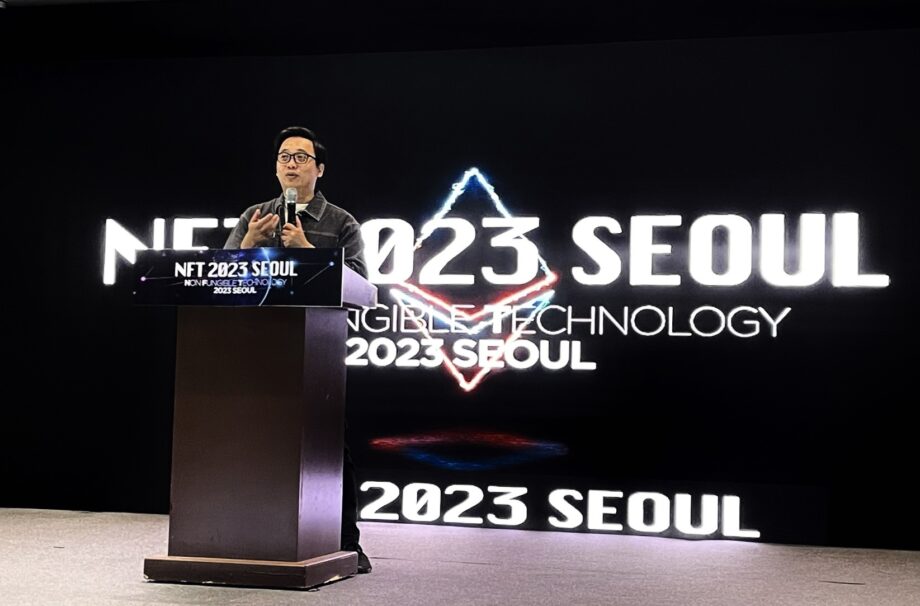
I was honored to be invited as a keynote speaker at the NFT 2023 Seoul conference, which took place on September 1, 2023, at the COEX Convention Center in Seoul, South Korea. The conference was a huge success, attracting many attendees from around the world who were interested in the latest developments and trends in the non-fungible tokens space.

The speech was titled “The Journey of NFTs in the Age of AI and Web3”. In it, I shared my insights on how NFTs have evolved and what their future holds, how artificial intelligence (AI) is creating new possibilities and challenges for NFTs, and how Web3 is emerging as a new version of the internet that is more decentralized, open, and user-centric.

In this article, I will summarize some of my speech’s key points and provide examples of NFT projects that illustrate them. I hope you will find them informative and inspiring.

What Are NFTs?

One of the topics that I covered in my speech was the basic concept and definition of NFTs. NFTs are non-fungible tokens, which means that they are unique and irreplaceable. Unlike fungible tokens, such as cryptocurrencies, that can be exchanged for one another, NFTs have their own individual characteristics and value. They are mostly digital items, such as artworks, music, videos, games, collectibles, and even virtual land, that users can buy and sell online using blockchain technology.

Blockchain technology is the backbone of NFTs, providing a secure and transparent way of verifying their authenticity, scarcity, and ownership. Blockchain is a distributed ledger system that records transactions in a network of computers without the need for a central authority. Each transaction is verified by the network and added to a chain of blocks that cannot be altered or tampered with. This ensures that NFTs are original, rare, and belong to their rightful owners.

The NFT market has been booming in recent years, especially in 2021, when it reached new heights of popularity and profitability. According to data from NonFungible.com, the total sales volume of NFTs in 2021 was over $12 billion, which is more than 20 times higher than the previous year. The average price of an NFT also increased significantly, from $142 in 2020 to $3,700 in 2021.

Some of the more popular and best-selling NFT collections in the market as of last week were:

  • Bored Ape Yacht Club: 7-Day Sales Volume: $52.2 million
  • The Sandbox: 7-Day Sales Volume: $33.1 million
  • CryptoPunks: 7-Day Sales Volume: $17.5 million
  • Art Blocks: 7-Day Sales Volume: $13.2 million
  • Decentraland: 7-Day Sales Volume: $6.6 million

These collections feature different types of digital assets, such as pixelated characters, generative art, virtual worlds, and more. They have attracted thousands of buyers and sellers from around the world, who are willing to pay millions of dollars for some of the rarest and most coveted pieces. Just to put some figures to illustrate these NFTs. A Bored Ape Yacht Club NFT sold for $24.4 million at Sotheby’s auction house in September 2021.

A CryptoPunk NFT sold for $11.8 million at Christie’s auction house in May 2021. An Art Blocks NFT sold for $5.4 million on the OpenSea platform in August 2021.

How is AI Transforming NFTs?

Another topic I covered in my speech was the impact and potential of artificial intelligence on NFTs. I explained how AI is transforming NFTs by creating new possibilities for generating unique digital assets that can appeal to different tastes and preferences. I also explained how AI can integrate dynamic experiences into NFTs, making them more interactive and adaptive.

One of the ways that AI is creating new possibilities for NFTs is by enabling users to automatically create artworks using various algorithms and models. This means that users do not need to have any artistic skills or experience to create their own NFTs. They can simply use AI tools and platforms that can generate images based on their inputs, such as keywords, styles, colors, and more. Some of the examples of AI-generated NFTs include:

  • Artbreeder is a platform that allows users to create and breed images using neural networks. Users can choose from different categories, such as portraits, landscapes, animals, and abstract art, and then adjust various parameters, such as genes, mutations, and mixtures, to create unique images. Users can also combine different images to create hybrids and variations.
  • GANksy is a collection of street art created by a generative adversarial network (GAN) inspired by Banksy. A GAN is an AI model consisting of two competing networks: a generator that creates fake images and a discriminator that tries to distinguish them from real ones. The generator learns from the feedback of the discriminator and improves over time. GANksy is a GAN that was trained on hundreds of Banksy artworks and then generated its own original pieces.
  • Alethea AI is a platform that enables users to create and trade intelligent NFTs that can speak, interact, and learn. Users can upload their own images or choose from a gallery of pre-made avatars and then use a text-to-speech engine to give them a voice. Users can also customize the personality, mood, and emotion of their NFTs and teach them new skills and knowledge.

Another way that AI is transforming NFTs is by integrating dynamic experiences into them thanks to their self-learning capabilities. This means that NFTs can change over time based on external factors, such as data, events, user actions, and more. This makes them more dynamic compared to more traditional NFTs that often take the form of an image or audio file.

What is Web3 and How Does It Enhance the NFT Ecosystem?

The final topic that I covered in my speech was Web3 and how it enhances the NFT ecosystem. Web3 is a new version of the internet that aims to give users more control over their data and online interactions. Web3 is built on blockchain technology and includes features such as cryptocurrencies, NFTs, and decentralized autonomous organizations (DAOs).

Identity is one of the key features of Web3 that allows users to manage their online identities in a more secure and efficient way without relying on a central authority. Web3 identity solutions enable users to create and use digital wallets on the blockchain that store their personal information, such as name, email, phone number, address, and more.

Users can then use these wallets to access various Web3 applications and services, such as marketplaces, social networks, games, and more. Users can also choose what information they want to share with each application or service and revoke access at any time. Some of the examples of Web3 identity solutions:

  • MetaMask is a browser extension that allows users to access Ethereum-based applications. MetaMask acts as a bridge between the user’s browser and the Ethereum network, enabling them to send and receive transactions, interact with smart contracts, and manage their Ethereum accounts.
  • Civic is a platform that provides identity verification services using blockchain. Civic allows users to verify their identity once and then use it across multiple platforms without going through the same process again. Civic also protects users’ privacy by using zero-knowledge proofs, which are cryptographic techniques that allow users to prove something without revealing any details.
  • ENS (Ethereum Name Service) is a protocol that allows users to register human-readable names for their Ethereum addresses. ENS makes it easier for users to send and receive transactions, as they do not have to deal with long and complex alphanumeric strings. ENS also allows users to attach other information to their names, such as websites, social media profiles, and NFTs.

NFTs are another key feature of Web3 that enhances the ecosystem by offering a decentralized internet where users are not just consumers but active participants. They are unique blockchain tokens that allow users to transparently provide proof of ownership for things such as digital art, music, data, in-game assets, personal records, and more. NFTs also enable users to create, trade, collect, and showcase their digital assets on various Web3 platforms and services.

The Bottom Line

I wrapped up my speech by stressing the importance and potential of the fusion of AI and NFTs in the Web3 era, arguing that the convergence of AI and NFTs will allow us to create and own unique digital assets that can interact with each other and with the environment in dynamic and intelligent ways.

I also argued that Web3 will offer us a more democratic and decentralized internet where we can have more freedom and control over our online identities and experiences.

“Web3 is based on the idea of decentralization, which means that no single entity or authority can control or censor the network. This aligns perfectly with the core values of NFTs, which are based on the idea of ownership, which means that we can prove and transfer our rights to our digital assets. The fusion of AI and NFTs within the context of Web3 opens up a new horizon for innovation and creativity, where we can explore endless possibilities and have greater agency over our digital assets.”

Thank you to the audience for their attention and to the organizers of NFT 2023 Seoul. Find me on X/Twitter at @anndylian.


Source: https://www.techopedia.com/anndy-lians-keynote-speech-at-nft-2023-seoul

j j j