Bitcoin is Bigger in Asia with U.S. Supply Dropping 11% This Year

Bitcoin is Bigger in Asia with U.S. Supply Dropping 11% This Year

According to on-chain data, Asia has surpassed the United States in terms of active capital in Bitcoin and crypto markets.

Glassnode, an on-chain analytics service, announced on June 5 that the gap between US and Asia Bitcoin supplies held or transacted had grown.


According to Glassnode, the year-over-year change in BTC supply by geographical region shows a notable disparity. The US entities’ extreme dominance in 2020-21 has obviously reversed, with US supply dominance declining by 11% since mid-2022. Also, over the last year, European markets have been rather neutral, whereas Asian trading hours have seen a major increase in supply dominance.

The gap has grown wider as America becomes more hostile to Bitcoin and overall cryptocurrency sector while Asia opens up. “This is a distinct reversal from the 2020-21 bull cycle,” Glassnode observed.

The United States’ supremacy began to decline in 2021 and switched negative in mid-2022. This occurred at the same time as the Terra/Luna ecology collapsed and regulatory pressure increased. Since then, the government and federal officials have been on a mission to put an end to the industry through regulatory action.

Glassnode also noticed significant changes in stablecoin supply. Since the beginning of the year, the aggregate stablecoin supply from the top five issuers has decreased by 7.5%, or $10 billion.

A substantial chunk of this fall can be attributed to Circle’s USDC, which was once favored by US financial institutions. In 2023, the USDC supply has fallen by $15.7 billion, or 35%. Circle was also severely harmed as a result of its exposure to the now-defunct Silicon Valley Bank.

Why Is Southeast Asia a Crypto-Friendly Region?

Although cryptocurrency may have started in the G7 (if presumed that Satoshi Nakamoto is Japanese), underdeveloped countries have often been the most enthusiastic about adopting decentralized virtual currencies. The explanation is simple: the promise of financial democratization offered by cryptocurrency has a tremendous appeal in nations where huge segments of the population lack access to key banking services.

It is no coincidence that Asia’s two greatest developing countries, China and India, have imposed severe sanctions on cryptocurrency while rising Southeast Asia has not. Approximately 80% of individuals in both nations have bank accounts.

In comparison, up to 70% of Vietnamese, 66% of Indonesians, and 44% of Filipinos are unbanked. Regulators in these countries are, predictably, slower to restrict access to cryptocurrencies than their colleagues in China and India.

Also, this month, Hong Kong began enabling exchanges to facilitate trading, while in the West, legal proceedings against key exchanges in the United States represented a watershed moment for the industry.

Brian Armstrong, CEO of Coinbase, one of the targets of the SECs legal action, cautioned in an opinion article for MarketWatch that weak regulation would harm the United States.

“In the 1990s and early 2000s, smart—and tailored—regulation enabled the United States to define the Internet Age,” he wrote.

Regarding Hong Kong, Armstrong stated that China’s drive for the crypto story was “no surprise.”

Be it as it may,  some people familiar with the situation believe that US regulatory action against two big cryptocurrency exchanges, Coinbase and Binance, may serve as a model for Hong Kong and Singapore as they seek to combine expansion with investor safety.

The revelation has rattled investor confidence just as Hong Kong is attempting to position itself as a trading hub alongside Singapore, which already has such a framework in place.

US Actions May Be Used as Point of Reference

According to experts, the two cities may use the US action as a reference point, which might mean greater inspection of Bitcoin and crypto trades in Asia.

Anndy Lian, Singapore-based author of the book “NFT: From Zero to Hero” said that there would be a fallout for sure.

“Hong Kong and Singapore are taking measures to regulate the cryptocurrency industry by proposing new licensing regimes for virtual asset trading platforms,” he said .

The Securities and Futures Commission (SFC) in Hong Kong has asked for an evaluation of a proposal that would urge crypto trading platform operators to get the same licenses as securities traders.

According to Lian, other firms that were not applying had been asked to prepare for an orderly closure as well.

Securities, unlike other financial assets, are heavily regulated and require extensive disclosures to notify investors of potential dangers.

“These developments indicate that cryptocurrency exchanges seeking approval in Hong Kong and Singapore will have to adhere to new regulatory requirements and may be subject to increased scrutiny from regulators,” Lian concluded.

Julian Hosp, the CEO and co-founder of Cake Group, a fast-growing Southeast Asia’s digital assets innovator, asserted that the war that the US is waging on cryptocurrencies “shows no signs of abating, and it will only intensify as time wears on.”

He went on to say that the regulator’s action is part of a bigger trend that would most likely continue through the 2024 presidential election.

Rajagopal Menon, vice-president of WazirX stressed that the SEC’s lawsuit primarily focuses on actions that have taken place in the United States and their impact on American citizens. However, he warned that for regulators in Hong Kong, such as the Securities and Futures Commission, and Dubai’s Virtual Asset Regulatory Authority, the SEC’s lawsuit could serve as a point of reference or information.


Source: https://www.ccn.com/bitcoin-is-bigger-in-asia-than-us/

j j j

Will Singapore, Hong Kong step up crypto scrutiny as US cracks down on Binance, Coinbase?

Will Singapore, Hong Kong step up crypto scrutiny as US cracks down on Binance, Coinbase?
  • The moves by the US SEC against Binance, Coinbase spooked investment sentiment just as Hong Kong seeks to establish itself as a trading hub along with Singapore
  • Unlike Singapore and Hong Kong, the US does not have comprehensive regulations for crypto and blockchain firms to operate without fear of regulatory action

US regulatory action against two major cryptocurrency exchanges, Coinbase and Binance, is likely to serve as a reference point for Hong Kong and Singapore as they seek to balance growth with investors’ safety, analysts have said.

The crackdown is the latest in a series of measures by the US Securities and Exchange Commission (SEC), which has levied fines and other penalties against crypto-lending firms, following the collapse of one of the most-reliable crypto exchanges FTX last November that sparked public outrage.

The SEC said Coinbase had acted as a broker, exchange and clearing agency for investments without proper registration. The complaint came a day after the regulator sued Binance, alleging it had tried to evade US regulation.

Binance said the enforcement action was unwarranted and alleged it was a regulatory “overreach” that damages the United States’ status as a global financial hub. Paul Grewal, Coinbase’s general counsel, said in a statement that the company would continue operating as usual and had “demonstrated commitment to compliance”, according to Reuters.

The development spooked investment sentiment just as Hong Kong is seeking to frame regulations to establish itself as a trading hub along with Singapore, which already has such a framework.

The two cities may look at the US action as a reference point, which could mean tighter scrutiny even in the Asian hubs, analysts say.

“There will be a fallout for sure. Hong Kong and Singapore are taking measures to regulate the cryptocurrency industry by proposing new licensing regimes for virtual asset trading platforms,” said Anndy Lian, Singapore-based author of the book “NFT: From Zero to Hero”.

Unlike Singapore and Hong Kong, the US has yet to come up with a comprehensive set of regulations that allows cryptocurrency and blockchain firms to operate transparently without fear of regulatory action.

“The war that the US is waging on cryptocurrencies shows no signs of abating, and it will only intensify as time wears on,” said Julian Hosp, the CEO and co-founder of Cake Group, a fast-growing Southeast Asia’s digital assets innovator.

The regulator’s action is part of a larger trend which is likely to continue into the 2024 presidential election, Hosp said.

Industry cautions on overkill

The Securities and Futures Commission (SFC) in Hong Kong has requested feedback on a proposal that would require virtual asset trading platform operators to obtain the same type of licences as securities traders, Lian said, adding that it had asked other firms who were not applying to prepare for an orderly closure.

Securities, as opposed to other financial assets, are strictly regulated and require detailed disclosures to inform investors of potential risks.

“These developments indicate that cryptocurrency exchanges seeking approval in Hong Kong and Singapore will have to adhere to new regulatory requirements and may be subject to increased scrutiny from regulators,” Lian said.

But new regulations could help establish the legitimacy of the cryptocurrency industry and potentially attract more investors and businesses at a time people are increasingly wary of the US market, analysts said.

“The SEC’s lawsuit primarily focuses on actions that have taken place in the United States and their impact on American citizens,” said Rajagopal Menon, vice-president of WazirX, India’s leading cryptocurrency exchange.

“As for regulators in Hong Kong, such as the Securities and Futures Commission, and Dubai’s Virtual Asset Regulatory Authority, the SEC’s lawsuit can serve as a point of reference or information. However, it does not automatically alter their regulatory stance or trigger immediate action,” he added.

At the two-day Crypto Expo Asia in Singapore, attendees were unbothered by news about Binance and Coinbase, with little to no mention about the developments.

Though the US action may not have a direct impact on other regions, Menon conceded that it could potentially have some indirect influence on their decision-making processes.

Nizam Ismail, founder of Singapore-based compliance consultancy Ethikom Consultancy, said crypto investors too were likely to be more cautious about risks and the need for due diligence on intermediaries.

“These products will be subject to prudential and consumer protection requirements. In the longer term, regulatory gaps will be addressed and consumer protection measures are likely to be introduced,” he added.

The development also exposed extreme price fluctuations in the digital assets which have made many traditional investors in assets like stocks and bonds cautious about investing in the digital asset.

After initially falling to a three-month low of US$25,750 following the Binance lawsuit, bitcoin has rebounded to around US$27,000 in afternoon trade in Asian hours.

Some investors – typically traditional investors, family offices and high net worth individuals – may have been deterred by the US regulator’s lawsuits, while “die-hards” long time investors “would not care”, said Hayden Hughes, the chief executive office and co-founder of Alpha Impact, a social trading platform.

A key takeaway from the incident for Asian hubs like Hong Kong is to have “regulatory clarity”, he said, adding that Hong Kong’s decision to open up to crypto and implement regulations had been a step in the right direction.

But it is unlikely that the event would deter crypto exchanges from seeking approval from Hong Kong and Singapore authorities, he said, highlighting that the two cities would gain from establishing clear rules and a licensing framework.

“Asian hubs can focus on their core mission of protecting the retail investors. There is absolutely no incentive for regulators to move fast and break things,” Hughes said.

Industry executives urged regulators to strike a balance with the fledgling industry.

Hong Kong and Singapore were unlikely to be impacted by the developments “if there is a will on both sides” and regulators are cautious “to not overkill the opportunity”, said Thomas Tallis, CEO of TVVIN, a firm that takes real-world assets and issues them on the blockchain.

Source: https://www.scmp.com/week-asia/economics/article/3223305/will-singapore-hong-kong-step-crypto-scrutiny-us-cracks-down-binance-coinbase

j j j

Can cryptocurrency be tamed?

Can cryptocurrency be tamed?

The Newsmakers is TRT World’s flagship current affairs programme, featuring in-depth reports and interviews with the drivers of the biggest stories of the week.

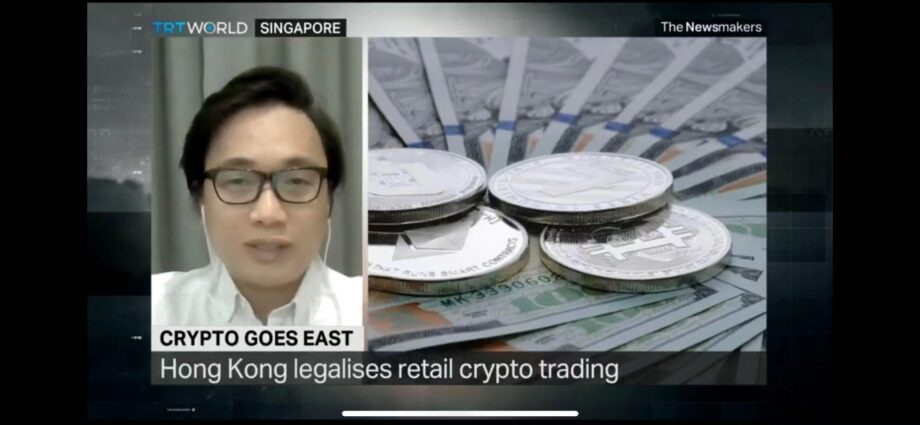
The recent crackdown on crypto exchanges in the United States has raised questions about the regulation of cryptocurrencies. With lawsuits filed against prominent platforms such as Coinbase and Binance, the Securities and Exchange Commission (SEC) aims to assert its jurisdiction over the industry. Meanwhile, Hong Kong has taken a different approach by legalizing retail crypto trading. This discussion delves into the regulatory landscape surrounding cryptocurrencies, explores the implications of the U.S. crackdown, and examines Hong Kong’s progressive stance on crypto trading.

The discussion is hosted by Andrea Sanke. The panel of experts includes Anndy Lian, Intergovernmental Blockchain Advisor, Vanessa Harris, Product Leader at Web3 Advisor and Andrew Leung, China Strategist.


The U.S. Crackdown on Crypto Exchanges:

In an escalating series of actions, the SEC has filed lawsuits against two major trading platforms, Coinbase and Binance, accusing them of operating deceptively. The lawsuits allege that Coinbase traded 13 crypto assets that qualify as securities without proper registration. The SEC’s lawsuits have the potential to transform the crypto market by establishing the commission’s authority over the industry. While the crypto industry has argued against regulation, the SEC argues that failure to regulate poses a risk to consumers. It seeks to bring these platforms into compliance with existing securities laws, emphasizing the need for proper controls to protect against fraud and manipulation.


Coinbase and Binance Respond:

Coinbase, which has suffered significant net customer outflows since the lawsuit was announced, claims that the SEC’s refusal to provide clarity demonstrates its misguided approach to regulating the digital asset industry. Binance, the world’s largest cryptocurrency exchange, has called the SEC lawsuit unwarranted and accuses the authorities of failing to engage proactively. Both platforms emphasize the importance of regulatory clarity to foster industry growth and protect investors.

“I think they’re treating it as a political football, and essentially, they’re not allowing the innovation to flourish. They’re not providing the clarity that the industry needs.” – Vanessa Harris, Product Leader and Web 3 Advisor.


Hong Kong’s Approach to Crypto Regulation:

In contrast to the U.S. crackdown, Hong Kong has embraced a different regulatory regime for virtual assets. Starting on the first of this month, the city now allows retail investors to trade major digital tokens at licensed crypto exchanges. This move comes after a consultation process with industry stakeholders and requires exchanges to obtain a license from the Securities and Futures Commission. Hong Kong, as an international financial center, aims to align with the global consensus that virtual assets are here to stay. It recognizes the potential benefits of cryptocurrencies in enhancing economic ecosystems, payment systems, and efficiency.

“Hong Kong is an International Financial Center, so what we are trying to do is in line with an emerging global consensus that, first of all, virtual assets are going to stay, and secondly, it carries with it fundamental value in terms of enhancing efficiency in the economic ecosystem.” Andrew Leung, China Strategist commented.


The Significance of Hong Kong’s Approach:

Hong Kong’s decision to legalize crypto trading reflects its desire to remain at the forefront of financial innovation. By offering a regulated environment for crypto activities, Hong Kong aims to attract talent and capital while ensuring investor protection. The move also positions Hong Kong alongside other jurisdictions, such as Singapore, that are actively fostering the growth of the digital asset industry. While China maintains a ban on crypto trading, Hong Kong’s actions could serve as a testing ground for future regulatory developments in the mainland.

Anndy Lian, Intergovernmental Blockchain Advisor said “It seems like maybe China is treating Hong Kong as a form of sandbox to trial and error and make sure that all possible teething issues to be tested and resolved. I think what is happening right now is actually a very good thing because this shows that the industry is maturing. Big nations are more willing to try.


The Future of Crypto Regulation:

As the United States cracks down on crypto exchanges, there is a growing sense that regulatory clarity is lacking. Companies like Coinbase seek clear guidelines from the SEC to comply with existing laws. The absence of such guidance may prompt crypto companies to explore jurisdictions that provide a more supportive regulatory environment, like Hong Kong and Singapore. These jurisdictions aim to balance innovation with the need for consumer protection, recognizing the long-term potential of cryptocurrencies and blockchain technology.


Conclusion:

The regulation of cryptocurrencies remains a complex and evolving landscape. While the U.S. crackdown on crypto exchanges raises concerns, Hong Kong’s decision to legalize retail crypto trading demonstrates a more progressive approach. As the industry matures, regulatory clarity becomes increasingly important to foster innovation, attract investment, and protect consumers. Moving forward, finding the right balance between regulation and innovation will be crucial to ensure the long-term success of the crypto industry.


Source: https://www.trtworld.com/video/the-newsmakers/can-cryptocurrency-be-tamed-13527763

j j j