SEC removes digital assets from hedge fund rule: What does it mean for the future of digital asset regulation

SEC removes digital assets from hedge fund rule: What does it mean for the future of digital asset regulation

The U.S. Securities and Exchange Commission (SEC), which regulates the securities industry, has recently decided about digital assets. Digital assets are virtual or digital currencies that can be traded or exchanged. The SEC previously defined digital assets as securities in its hedge fund rule, subjecting them to additional regulations.

Hedge fund rule

The hedge fund rule, officially known as Rule 206(4)-8 under the Investment Advisers Act of 1940, is a rule created by the U.S. Securities and Exchange Commission (SEC) to prevent investment advisers from making false or misleading statements to investors in pooled investment vehicles such as hedge funds.

The rule imposes additional reporting and disclosure requirements on advisers to hedge funds and other private funds and requires them to implement specific compliance programs and risk management measures. The rule is designed to protect investors and maintain the integrity of the financial markets by ensuring that investment advisers act in their client’s best interests and provide accurate and complete information about their investment strategies and risks.

In the context of digital assets, the SEC included a definition of “digital assets” as securities in its hedge fund rule, subjecting them to additional regulations. However, the SEC recently removed this definition, indicating that it is still evaluating the term and has not yet decided whether digital assets should be classified as securities.

New asset class for “digital assets”?

Many people have been surprised by this move and have questioned the SEC’s approach to regulating digital assets. It’s worth noting that SEC Chair Gary Gensler gave a speech before the House Financial Services Committee on April 18, 2023, regarding the agency’s stance on digital assets. The hearing was not dedicated exclusively to the SEC’s crypto strategies, but the regulatory agency’s chairman faced criticism over perceived regulatory overreach and lack of clear crypto classification. During the hearing, Gensler refused to comment on whether Ether (ETH) was a security or a commodity, saying it depends on the facts and the law, despite being told he knows. It is worth noting that the U.S. House Financial Services Committee and House Agriculture Committee are set to put together legislation to oversee the crypto sector. The bill will be introduced within the next two months.

Having said so, I do see this in a more positive light. This suggests that the SEC is working on a regulatory framework for digital assets, and this decision may be part of a larger strategy. The SEC may have removed the definition of “digital assets” from the hedge fund rule to allow for further consideration and evaluation of the appropriate regulatory approach for this new asset class. The SEC could be taking a cautious approach to ensure that any regulatory framework it develops is appropriate for digital assets’ unique characteristics and addresses potential risks without hindering innovation.

Regulating digital assets is complex and contentious

Experts have commented on the SEC’s decision to remove its previous definition of digital assets as securities, which would have subjected them to additional regulations. Coinbase, a major player in the crypto industry, has publicly opposed the SEC’s stance on regulating digital assets. Some experts believe that the digital assets sector needs to focus more on risk management and operational due diligence, coupled with thoughtful regulation, to repair its reputation.

It’s essential to recognize that the SEC has had a changing stance on digital assets, and this recent decision isn’t the first time they’ve taken a position on their classification. Previously, the SEC confirmed that a 401(k) plan could be considered a single investor under section 3 (c) (1) and a qualified purchaser under section 3 (c) (7) if plan participants have investment discretion to allocate their accounts.

The question of how to regulate digital assets is complex and contentious. In addition to the points made, some argue that digital assets fundamentally differ from traditional securities and should be treated as a separate asset class. Because they operate on a decentralized network, digital assets aren’t subject to the same regulations and oversight as traditional securities. This lack of regulation has led to concerns about market manipulation, fraud, and other illicit activities.

Moreover, digital assets aren’t backed by physical assets or government guarantees, which makes them inherently risky. However, they also have the potential for high returns, which can entice investors who are willing to take on more risk in their investments. Due to these unique characteristics, some experts suggest that digital assets require a different approach to risk management, valuation, and investment strategies than traditional securities.

The evolving nature of the digital asset market may require clearer regulatory frameworks and standards as it matures. However, there is uncertainty surrounding how these assets will be classified and regulated and how this will affect the overall market. Digital assets have unique characteristics that differentiate them from traditional assets, including decentralization and the use of blockchain technology. This technology enables borderless transactions, smart contracts, and decentralized applications that offer new investment opportunities for retail and institutional investors.

Ending remarks

The growth of the digital asset market has attracted significant attention from regulators and investors, with some arguing that digital assets should be treated as securities to protect investors from fraud. The SEC’s decision to remove the definition of digital assets as securities from its hedge fund rule have fueled ongoing debate about the appropriate regulatory framework for this asset class. As the use of digital assets continues to expand, the SEC will likely continue to develop its regulatory approach.

In conclusion, the SEC’s recent decision is a significant development in regulating digital assets and raises questions about how these assets will be classified and regulated. As the digital asset market matures, there may be a need for clearer regulatory frameworks and standards to protect investors and prevent fraud while allowing for innovation and growth.


Source: https://www.financialexpress.com/business/blockchain-sec-removes-digital-assets-from-hedge-fund-rule-what-does-it-mean-for-the-future-of-digital-asset-regulation-3080830/

j j j

The Future Of AI And Copyright Law In U.S.: Navigating The Nuances And Complexities

The Future Of AI And Copyright Law In U.S.: Navigating The Nuances And Complexities

Artificial Intelligence (AI) is a rapidly evolving technology that has permeated a diverse range of domains, including natural language processing, image recognition, and product recommendation systems. AI has made significant breakthroughs in various areas, such as language translation and speech recognition, allowing machines to produce text and communicate with humans more effectively than ever before.

For example, Google Lens employs AI in image recognition to identify objects and provide information about them using the camera on a mobile device. In contrast, Amazon’s product suggestion system harnesses machine learning algorithms to analyze users’ shopping behavior and offer personalized recommendations based on their preferences.

AI has also made its way into the art world, where “Edmond de Belamy,” an AI-generated portrait, was sold for a staggering $432,500 at a major auction. This marked the first instance of an AI-generated artwork being sold at such a high-profile event, prompting concerns about whether such works are eligible for copyright protection.

Copyright law typically grants exclusive rights to creators of original works, allowing them to maintain control over how their creations are used, copied, and distributed. When it comes to training AI models, the use of copyrighted materials is considered to be in a legal grey area. As it stands now, copyright laws do not safeguard any creation that is wholly generated by AI, regardless of whether it stemmed from a human-crafted text prompt. While fair use laws permit the use of copyrighted material under certain conditions without the owner’s permission, the ongoing legal disputes could disrupt this status quo and bring uncertainty in the future of AI model training.

Undoubtedly, the advent of generative AI has revolutionized our lifestyle, labor practices, and artistry output within a mere few months. In turn, the inundation of AI-fabricated written works, pictures, and tunes, alongside the mechanisms through which they were created, has stimulated a plethora of intricate legal inquiries. These challenge our understanding of ownership, fairness, and the core foundation of innovation.

Is It Possible To Copyright Art Created By AI?

The question of whether AI-generated art can be protected by copyright laws is a subject of much debate. The U.S. Copyright Office has stated that creations made by non-human entities, including machines, cannot be eligible for copyright protection. This means that the product of a generative AI model cannot be considered copyrightable.

The challenge stems from the way generative AI systems operate. These models learn by identifying and replicating patterns found in data. To produce output such as written text or images, the AI system must first learn from human creations. For instance, an AI-generated image resembling the art of Japanese artist Yokoyama Taikan would have been trained using actual pieces of art created by the human artist. Similarly, to generate written content in the style of J.K. Rowling, the AI system would require training with words written by J.K. Rowling.

However, according to current U.S. copyright law, these AI systems – which include image and music generators, as well as chatbots like ChatGPT – cannot be seen as the creators of the content they produce. Instead, their outputs result from a culmination of human-generated work, much of which is copyrighted in some form and sourced from the internet. Nonetheless, this doesn’t necessarily mean that AI-generated works are in the public domain. For example, if a company employs AI to produce content, that company may still have proprietary rights to that content, such as a trade secret or patent.

This raises a difficult question: how can the rapidly evolving artificial intelligence industry be reconciled with the intricate details of U.S. copyright law? This is a question that creative professionals, companies, courts, and the U.S. government are all grappling with as they navigate the complexities and nuances of AI-generated content and intellectual property laws.

Could Copyright Concerns Become More Challenging As Humans Collaborate With AI To Produce Work?

The topic of copyright protection for creative works resulting from collaboration between humans and machines is quite complicated. The Copyright Office specifies that if a human creatively arranges or selects AI-generated material, or modifies it in a sufficiently creative way, then copyright protection will only apply to the human-authored portions of the work, and not the AI-generated material itself. However, when it comes to works created jointly by humans and machines, the issue of copyright protection is less clear, and registration applications must identify all joint authors.

Using generative AI to create artistic works can also raise concerns regarding copyright infringement if the output bears similarities to pre-existing works on the internet. These models often learn from existing works found online, which may result in similarities to previous works. While there are instances where a human creatively arranges or selects AI-generated material, resulting in copyright protection for only the human-authored components of the work, the situation becomes less clear with jointly created works. It is necessary to name all joint authors, which could potentially include the AI, in registration applications. It can be challenging to determine whether generative AI output is a derivative work or infringes upon the rights of previous authors.

Legal Battles Emerge In The Age Of Generative AI

Getty Images has taken legal action against Stability AI for allegedly copying more than 12 million photos from Getty Images’ collection and using them in generative AI systems without proper permission or licensing. Stability AI is one of several companies facing lawsuits related to generative AI. The rise of generative AI technology has led to creative industries filing lawsuits over the use of copyrighted work by AI, including the recent lawsuit by a group of artists against Stability AI, Midjourney, and DeviantArt for alleged mass copyright infringement.

In another legal case involving generative AI, a group of companies including Microsoft, GitHub, and OpenAI were collectively sued for copyright infringement related to their AI-powered coding aide GitHub Copilot. The plaintiffs claimed that Copilot generated code derived from code licensed under open source without the necessary authorization. The case aims to attain class-action status and could have an impact on the entire AI industry. They have however submitted a motion to dismiss the lawsuit, arguing that Copilot produces unique code and not identical copies of the data used for training.

These lawsuits highlight the legal implications of using generative AI and its increasing prevalence. The outcome of these legal actions and their influence on the AI industry remain uncertain.

Final Thoughts

Copyright law is a crucial component in safeguarding intellectual property and promoting creativity. It enables creators to control how their work is used, shared, and modified, motivating them to produce more by providing them with exclusive rights. Additionally, Creative Commons licenses give creators the option to select the degree of protection they prefer for their work.

With the rise of AI technology, it has become increasingly involved in the creative process. AI can generate original content and work with humans to create collaborative works, highlighting the need for a legal framework that considers copyright protection for such works. It’s vital to strike a balance between protecting creators’ rights while fostering innovation and creativity. The trajectory of copyright law concerning AI-generated content remains unpredictable, but one thing is evident: the legal framework will evolve significantly as AI technology becomes further integrated into the creative process.


Source: https://www.benzinga.com/23/05/32162183/the-future-of-ai-and-copyright-law-in-u-s-navigating-the-nuances-and-complexities

j j j

Anndy Lian’s NFT NYC Speech: Think Bigger in the Next NFT Summer

Anndy Lian’s NFT NYC Speech: Think Bigger in the Next NFT Summer

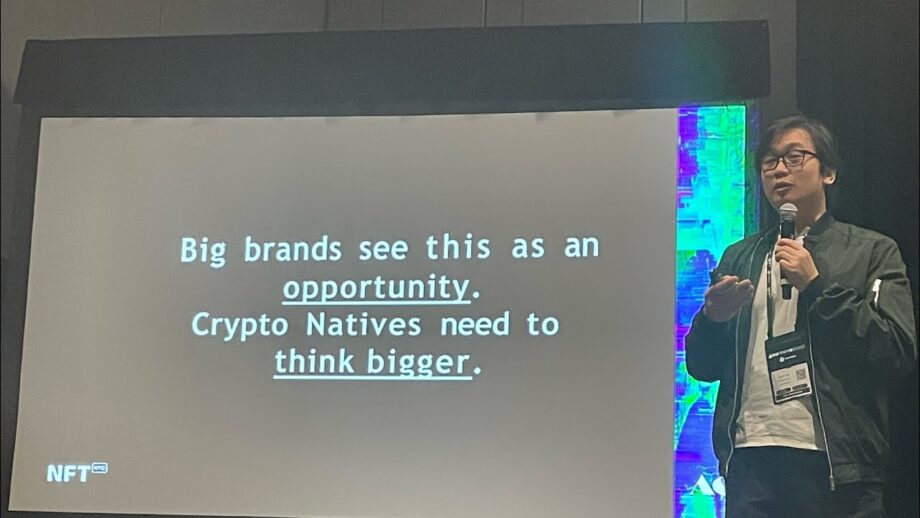
Best selling book author, Anndy Lian gave his speech titled “Think Bigger In the next NFT Summer” at NFT.NYC 2023.

The concept of NFTs (Non-Fungible Tokens) has been in existence for some time now. However, while it has gained considerable popularity, it has also raised concerns amongst some people. Many individuals have developed a negative perception of NFTs due to the hype surrounding them. There have also been instances of NFT wash trades, which are used to inflate NFT prices artificially. Additionally, some NFTs have no practical use, and some are regarded as securities, which is a regulatory issue.

Despite this, the NFT craze is far from over, and it could be just the beginning of a new era. Big names like Gucci, Porsche, Starbucks, Amazon, and Red Bull Racing have started investing in NFTs, which suggests that the market is gaining traction and legitimacy. This year could be the last NFT summer where people only see NFTs as a speculative asset.

In 1999, Bill Gates predicted that everything would be on the internet. Jack Ma did the same in China, but people thought it was impossible. Now, we are living in a world where the internet is an integral part of our daily lives. If we continue to use our current mindset to envision the future, we risk being left behind, just like those who laughed at the internet in its early days.

We need to broaden our minds and start thinking beyond the current limitations of NFTs. NFTs can be used for anything, from digital art and music to virtual real estate and gaming items. The possibilities are endless, and the new assets are in the digital world. Crypto natives need to think bigger and explore the true potential of NFTs.

Although we currently view NFTs as speculative, we must start using them in the future we create. Big brands have recognized this and are willing to invest in the technology. It is time for us to move past the current hype and start creating and exploring the digital world that awaits us.

In conclusion, the next NFT summer will not be about speculating on assets but rather about creating and using them. NFTs represent the future, and it is time for us to start thinking beyond our current limitations and explore their full potential. The possibilities are endless, and anything can be an NFT. Let us embrace this technology and start creating a better digital world.

NFT NYC is a yearly event dedicated to NFTs and blockchain technology, which has quickly become a major focus of the art and collectibles world. This immersive conference and festival attracts a wide variety of participants, including industry leaders, artists, collectors, and enthusiasts, who come together to explore the possibilities of NFTs. Attendees can learn about the latest trends, technologies, and best practices related to NFTs.

Timeline:

00:00 Introduction of Anndy Lian’s vlog at New York
00:19 Anndy Lian gets his VIP Speaker badge to NFT.NYC Conference
00:30 Walking into NFT.NYC Conference area
00:59 Visting the art gallery at NFT.NYC
01:13 Introduction of the First Speaker, Anndy Lian
01:47 Anndy Lian’s Introduction
02:05 Anndy Lian’s Talk on “Thinking Bigger in the Next NFT Summer”
04:01 Anndy Lian’s Discussion on NFTs and their Current State
04:52 Anndy Lian’s Thoughts on NFTs in the Upcoming Summer and the Participation of Big Brands
08:57 Anndy urges all to think bigger in the next NFT Summer
10:19 Conclusion to Anndy Lian’s speech is “Anything can be NFT. Your new assets is in the digital world.”
11:50 End of Anndy’s speech
11:55 Continue to look at the exhibitions and network
12:42 End of video

Tags:

#NFTs, #ThinkBigger, #AnndyLian, #NFTNYC, #DigitalAssets, #BlockchainTechnology, #CryptoNatives, #VirtualRealEstate, #GamingItems, #ArtandMusic, #EndlessPossibilities
#CreateTheFuture, #BeyondLimitations, #InvestInTechnology, #BetterDigitalWorld, #NFT, #newyork

j j j