Crypto Expo Asia Announces Partnerships with Asia Blockchain Association, Asia Blockchain Gaming Alliance, Asosiasi Blockchain Indonesia, Singapore Fintech Association, and More

Crypto Expo Asia Announces Partnerships with Asia Blockchain Association, Asia Blockchain Gaming Alliance, Asosiasi Blockchain Indonesia, Singapore Fintech Association, and More

SINGAPORE, April 11, 2023 (GLOBE NEWSWIRE) — Crypto Expo Asia , one of the region’s leading crypto conferences and exhibitions, today announced partnerships with the Asia Blockchain Association ( ABA ), Asia Blockchain Gaming Alliance ( ABGA ), Asosiasi Blockchain Indonesia ( ABI ), Singapore Fintech Association ( SFA ), and the Singapore University of Social Sciences Node for Inclusive FinTech Blockchain Security Alliance ( SUSS NiFT ) to bolster collaboration with leading industry groups and offer preferential rates to association members. This second edition of Crypto Expo Asia will take place from 7 – 8 June at Singapore’s iconic Marina Bay Sands Expo.

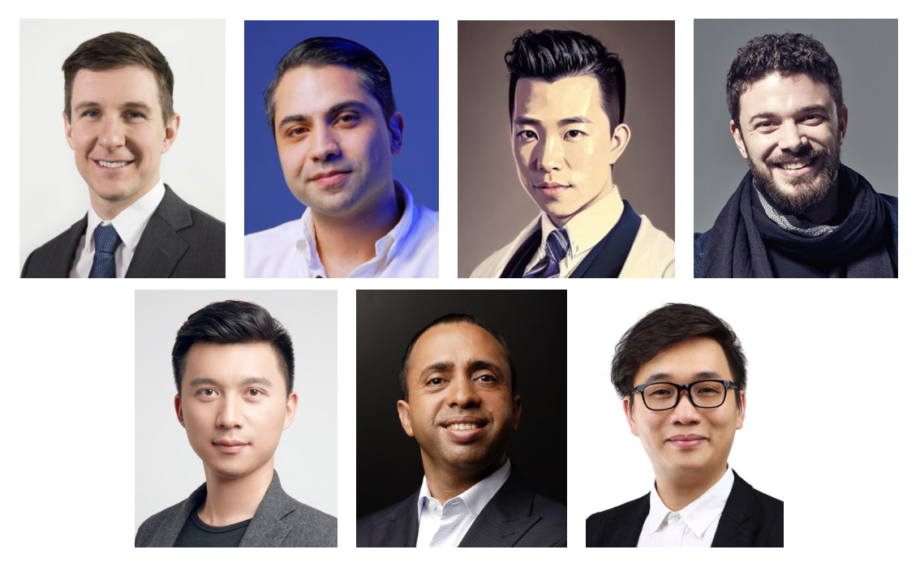
The event also unveiled its latest line-up of headline speakers, which include Hayden Hughes, Co-Founder and CEO of Alpha Impact ; Sidney Macdessi, Head of Institutional Sales at Cake DeFi ; Peter Sumer, COO of BITmarkets ; Igneus Terrenus, Head of Communications & Business Development at the Mantle Network by BitDAO ; Giulio Xiloyannis, CEO of Pixelmon ; Chen Zhuling, CEO and Founder of RockX ; Pradeep Goel, Founder & CEO of Solve.Care ; renowned blockchain strategist and thought leader, Anndy Lian; and more.

Media partners for the event include Cointelegraph Blockhead CoinCu Chain Debrief Jinse Finance , and U.Today .

[L – R] Hayden Hughes, Co-Founder and CEO of Alpha Impact; Sidney Macdessi, Head of Institutional Sales at Cake DeFi; Igneus Terrenus, Head of Communications & Business Development at the Mantle Network by BitDAO; Giulio Xiloyannis, CEO of Pixelmon; Chen Zhuling, CEO and Founder of RockX; Pradeep Goel, Founder & CEO of Solve.Care; blockchain strategist, Anndy Lian

Michael Xuan, Director, Crypto Expo Asia, said: “Amid calls for greater regulatory oversight around crypto, it is apparent that now is the time for open dialogue between companies, developers, investors, and governments, to chart the way forward. As with all bleeding-edge developments, intra-industry collaboration is critical to advancing the entire blockchain and crypto ecosystem, ensuring it evolves in a sustainable and responsible manner without stymieing innovation.”

Speakers and panellists at Crypto Expo Asia will address key trends shaping the global Web3 and crypto industry, including artificial intelligence, central bank digital currencies (CBDCs), Web3 regulation, blockchain gaming, and what this will ultimately mean for an industry that has undergone scrutiny and seismic change over the last few months.

“With more businesses trying to navigate the metaverse, we are pleased to announce the inaugural Web3 Expo Asia Summit, a sub-event under the auspices of Crypto Expo Asia. This first summit will introduce pilot sessions for metaverse and NFT-specific panels and discussions,” added Michael.

Shawn Tham, Co-Chairman, Asia Blockchain Association, said: “The industry’s recent trials have shown just how important it is for the community to engage in productive discourse, and conferences such as Crypto Expo Asia provide a platform for discussion. Driving conversations and facilitating solutions to the industry’s most pressing issues is part of the ABA’s raison d’être, and we look forward to the ideas and solutions that will emerge from the conference this year.”

Ahead of what is shaping up to be the definitive return for one of Asia’s most exciting crypto industry events, Crypto Expo Asia has already seen major crypto players including ABX BEOSIN BITmarkets Coinstore , and PurpleFi pledge their support for the event.

Organised by international exhibitions and conference company, HQMENA , Crypto Expo Asia is the second crypto-focused event of the HQMENA calendar, following the highly successful second run for Crypto Expo Dubai which ran from 8 – 9 March 2023. This year’s Crypto Expo Dubai drew over 4,000 attendees and welcomed representatives from the Blockchain Founders Fund Chainalysis Nexo , and more.

Interested sponsors, partners, and speakers for Crypto Expo Asia are encouraged to visit the website for more information: https://cryptoexpoasia.com/ .

– END

About Crypto Expo Asia
Crypto Expo Asia is the premier event for the global crypto ecosystem in Asia, creating an integral platform for the industry to connect and exchange ideas. Attendees gain valuable insight into the global crypto ecosystem and are given a chance to exchange ideas with established thought leaders.

Topics discussed include the future of the blockchain-based economy and the possible impacts on industry and society, while attendees are among the first to know about market movements, partnerships and product launches. Crypto Expo Asia is an unrivalled global meeting place for like-minded entrepreneurs, industry insiders and investors.

For more information, visit: https://cryptoexpoasia.com/


Source: https://www.investorsobserver.com/news/qm-pr/4781239619583701
j j j

Crypto Staking is not Securities, Maybe ‘Steaking’ Is

Crypto Staking is not Securities, Maybe ‘Steaking’ Is

There is a debate over whether crypto-staking products are considered securities or not.

Brian Armstrong, the CEO of Coinbase, has defended the company’s staking product and said in a Bloomberg interview that it is not a security. Armstrong also mentioned that customers never turn their assets to Coinbase and that staking is not a security under the U.S. Securities Act or the Howey Test used by the Securities and Exchange Commission (SEC) to determine whether an investment contract is a security.

However, Coinbase has reportedly received investigative subpoenas from the SEC regarding staking, stablecoin, and yield-generating products. Nonetheless, Coinbase’s chief legal officer asserts that the staking service is different and is not a security.

Crypto staking refers to the process of holding a certain amount of cryptocurrency to participate in the validation of transactions and earn rewards in return. It is a process by which an individual can hold and lock up their cryptocurrencies in a wallet or other digital platform, and participate in the consensus mechanism of a blockchain network in order to earn rewards. The consensus mechanism used in staking is typically proof of stake (PoS), which enables validators to be chosen based on the number of coins they hold and have locked up in their wallets.

Validators are then responsible for creating new blocks and verifying transactions on the network. In return for their participation, validators earn a percentage of the block rewards in the form of additional cryptocurrency. Staking is seen as a way to help secure a blockchain network, as it incentivizes users to hold onto their coins and participate in the network’s governance.

Staking on centralized exchanges can come with risks. Centralized exchanges control the staked assets and may not always distribute rewards fairly. Moreover, centralized exchanges are more susceptible to hacks and security breaches, which can result in the loss of staked assets.

In February, the SEC cracked down on cryptocurrency firms and centralized exchanges. The SEC aims to protect investors by enforcing securities laws, imposing fines, and promoting transparency. Kraken, a cryptocurrency exchange platform, has paid a $30 million settlement to the SEC after being charged with violating securities rules by offering an unregistered securities program known as staking. The SEC claimed that Kraken marketed the staking platform as an investment opportunity and generated nearly $15 million in net income from U.S.-based users on revenue of $45.2 million.

As a result of the settlement, Kraken has ceased offering staking programs in the U.S. The company has also agreed to pay $30 million in disgorgement, prejudgment interest, and civil penalties as part of the settlement. The settlement highlights the need for companies to comply with securities regulations and register their staking services as securities offerings with the SEC.

One question that often arises in relation to staking is whether it is considered a security under U.S. securities law.

According to Coinbase, staking is not considered a security under the U.S. Securities Act or the Howey Test, which the SEC uses to determine whether an investment contract is a security. The Howey Test, which comes from a 1946 U.S. Supreme Court case, requires that an investment contract involve; an investment of money; in a common enterprise; with an expectation of profits; and, solely from the efforts of others. A transaction qualifies as an investment contract if it meets all four elements. Staking, however, fails to satisfy any of these prongs.

Firstly, staking does not qualify as an investment of money as customers do not give up any assets to receive staking rewards. The provision of staking services does not involve the exchange of assets or the transfer of ownership. Customers retain full ownership of their tokens and can unstake them at any time.

Secondly, staking does not meet the common enterprise prong of the Howey Test. Stakers on a blockchain network are not connected through a common enterprise or a central authority. Instead, they are part of a decentralized network that relies on consensus mechanisms to validate transactions. Stakers do not share profits or losses and are not part of a joint venture.

Thirdly, staking does not meet the reasonable expectation of profits element of the Howey Test. While stakers earn rewards for validating transactions, these rewards are not considered profits. The rewards are predetermined by the blockchain protocol and are not influenced by market conditions or the actions of service providers. Stakers do not have an expectation of profits beyond the rewards for validation services.

Finally, staking does not involve the efforts of others, a requirement under the Howey Test. Service providers offering staking services do not perform managerial or entrepreneurial activities. Instead, they provide tech services that allow customers to participate in the validation process. Service providers do not influence the rewards or the decision-making process on the blockchain network.

In the case of staking as mentioned above, the customers hold and control their assets and participate in the network’s validation process, which is considered an essential function of the cryptocurrency system. Thus, the SEC’s definition of a security does not apply to staking, as the rewards earned through staking are considered an inherent feature of the cryptocurrency network rather than solely from the efforts of others.

It’s important to note that the SEC has recently been cracking down on cryptocurrency-related activities, including crypto lending and staking and it is possible that their interpretation of the U.S. Securities Act could change in the future. Other countries may have different regulatory frameworks, so it is essential to be aware of local regulations and seek professional advice when engaging in cryptocurrency activities.

New York Attorney General Letitia James filed a lawsuit against KuCoin, a Seychelles-based cryptocurrency exchange, for allegedly violating securities laws by offering tokens that meet the criteria for securities without registering with the attorney general’s office. The lawsuit also alleges that KuCoin misrepresented itself as an exchange and lacked registration for that function as well. The lawsuit claims that this is the first time a regulator has claimed Ether is a security in court. The lawsuit specifically cites SEC v. Ripple as a precedent.

As an alternative, some investors may prefer decentralized exchange (DEX) platforms for staking, as they offer greater privacy, lower fees, and operate on a peer-to-peer network method. Crypto staking on a centralized exchange involves depositing and holding crypto assets to participate in staking activities, but it comes with risks and regulatory scrutiny. Investors should weigh the pros and cons and consider alternative options such as DEX platforms. I want to see what the SEC can do with decentralized exchanges and its series of Defi products.

I tend to agree with Gary Gensler when he said, “What does steak have to do with our securities law?”


Source: https://intpolicydigest.org/crypto-staking-is-not-securities-maybe-steaking-is/

j j j

Web 3.0 marketing: How marketers can stay ahead of the curve- How to excel

Web 3.0 marketing: How marketers can stay ahead of the curve- How to excel

Marketing in Web 3.0 is a complex task that demands a deep understanding of both the technical and cultural aspects of the technology. Successfully marketing a product in this new landscape requires striking a delicate balance between appealing to consumers’ cultural preferences and remaining faithful to the technology’s technical underpinnings. This is what a panel of experts discussed at the World Blockchain Summit held in Dubai.

The panel consisted of three experts from different industries. Anndy Lian, a Singapore-based venture investor and government advisor; Mirko Maccarrone, director of Web3 Lightblue; and Shashwat Eternal, CMO of NFT3.

Anndy initiated a discussion by highlighting the effectiveness and ineffectiveness of marketing campaigns in both web2 and web3 realms. He mentioned that web3, being agile and efficient, can be influenced by negative marketing practices from web2. It is of utmost importance to develop marketing strategies that are intricately designed for web3, meticulously taking into consideration the cultural norms and preferences of the target audience. Only by doing so can businesses effectively advertise their products and services while also forming a deep and meaningful connection with their audience. The ever-evolving marketing landscape requires constant adaptation to stay relevant, incorporating the latest trends and best practices to achieve sustained success.

Mirko, a seasoned professional in the realm of global and regional marketing, possesses a wealth of experience in launching web-free departments for numerous brands. He places immense emphasis on the criticality of culturally-oriented marketing, highlighting the potential of experts in creative writing and fashion marketing to deliver compelling messages that effortlessly resonate with the audience. Such marketing messages must steer clear of technical jargon and unfounded conjecture, ensuring that the audience remains engaged and invested in the brand’s offerings. By embracing cultural insights and staying attuned to the audience’s preferences and values, marketers can craft campaigns that evoke a profound emotional response from the audience. Mirko’s astute observations underscore the pressing need for businesses to foster a sense of closeness with their audience, thus facilitating seamless communication and cultural awareness.

Shashwat, an accomplished marketeer who has been navigating the web3 landscape for the past three years, concurs with Miracle and elaborates that marketers must have a nuanced understanding of the technology’s intricate workings while also catering to the audience’s cultural orientation. His firm, NFT3, is actively developing a cutting-edge face ID system for web3 that streamlines the process of signing in across all web3 platforms, thus paving the way for a seamless and hassle-free user experience. Shashwat’s insights shed light on the ever-increasing demand for marketing professionals who possess a multifaceted skill set, encompassing both technical and cultural expertise. As the web3 industry continues to mature, companies must adapt to meet the evolving needs of their audience, innovating and leveraging technology to deliver an unparalleled user experience.

The panelists also discussed mass adoption, which is crucial for web3’s success. They agreed that mass adoption can only happen when there is a cultural connection between the product and the audience. This connection is possible when marketers understand the audience’s cultural background and can communicate the product’s technicalities in a way that they understand.

One of the major challenges confronting marketers in the era of Web 3.0 is the need to strike a balance between innovation and cultural relevance. Unlike traditional marketing approaches, which rely on generic messaging and branding, Web 3.0 marketing necessitates a more intricate approach that considers the audience’s unique cultural contexts and sensibilities.

To excel in Web 3.0 marketing, it is imperative to be culturally oriented and possess a varied range of experiences and perspectives. This implies collaborating with individuals who have backgrounds in areas such as fashion, literature, and the arts, as well as those who possess technical expertise in blockchain and decentralized technologies.

Another crucial factor for successful Web 3.0 marketing is the ability to adapt promptly to changing market conditions. The swift and ever-evolving nature of the Web 3.0 landscape necessitates marketers to be nimble and agile, capable of rapidly pivoting in response to new trends and emerging technologies.Web 3.0 marketing necessitates a profound understanding of the underlying technologies and concepts that drive this new era of innovation. This requires staying current with the latest developments in fields like decentralized finance, non-fungible tokens (NFTs), and smart contracts, and being able to explicate these complex concepts in straightforward language to non-technical audiences.

Web 3.0 marketing presents a thrilling opportunity to create more engaging and interactive experiences for customers. Decentralized applications (dApps) and NFTs provide new prospects for gamification and social interaction, enabling marketers to create immersive, personalized experiences that drive engagement and loyalty.

In conclusion, marketing in web3 is a delicate balance between the technicalities of the technology and the audience’s cultural orientation. Marketers need to be culturally oriented, speak in a language that people understand, and understand the technicalities of the technology they are marketing. Mass adoption will only happen when there is a cultural connection between the product and the audience.


Source: https://www.financialexpress.com/business/blockchain/web3-0-marketing-how-marketers-can-stay-ahead-of-the-curve-how-to-excel/3056626/

j j j
