Are Regulations and Sanctions Driving Change in the Crypto Industry?

Are Regulations and Sanctions Driving Change in the Crypto Industry?

The powerful combination of incoming crypto regulation in the US, and the immediate global impact of Russian sanctions, mean the crypto exchange market looks to be in for a serious shake up in 2022. Just this week US Senator Elizabeth Warren announced a new piece of legislation to stop crypto businesses outside the US from working with sanctioned companies. It also authorizes the Financial Crimes Enforcement Network (FinCEN) to force US citizens with crypto transactions of $10,000 or more to report them.

Clearly global sanctions against Russia have moved crypto exchanges firmly into the center of geo-politics for the first time. Coinbase announced it was banning 25,000 Russian accounts. While Binance declared that: “To unilaterally decide to ban people’s access to their crypto would fly in the face of the reason why crypto exists.” But just as revealing was the news from Wasabi Wallet that it will start introducing censorship methods into its mixing procedures, showing that fear of regulation was starting to impact beyond mainstream exchanges even before Warren’s planned legislative action.

What this means in all probability is that the advantage the exchanges outside the US had in largely ignoring regulations, benefiting from lower overheads and restrictions to their business activity is well and truly over. It’s not all bad news, as the positive response to the US administration’s crypto executive order shows, but it certainly means the industry needs to consider what this means for the long term, and what this means for crypto investors and traders looking for the best deal or the most secure transactions.

The US executive order underlines the seismic changes in the administration’s approach to crypto by seeking “to establish the first-ever comprehensive federal digital assets strategy for the United States” and by directing the Depart of Commerce to create a framework that “drives U.S. competitiveness and leadership in, and leveraging of, digital asset technologies.” In summary the administration’s six key priorities, according to the fact sheet, are to protect US interests, protect global financial stability, prevent illegal uses, promote responsible innovation, financial inclusion, and US leadership. As confirmed in a CoinDesk report, the order does not lay out specific positions the administration wants agencies to adopt, or impose new regulations on the sector. Indeed, it was welcomed by many in the industry who see it as a positive step forward. According to Jeremy Allaire, the CEO of Circle, which runs stablecoin USDC, “this is a watershed moment for crypto, digital assets, and Web 3 akin to 1996/1997 entire government wakeup to the commercial internet.”

Circle CEO Jeremey Allaire in a Twitter thread responding to the news.

But as the legislative moves by Senator Warren demonstrate, its actions and not words that count. The recent news of action to reign in the SEC by the US Congress after its enforcement arm chased “information from unregulated cryptocurrency and blockchain industry participants in a manner inconsistent with the Commission’s standards for initiating investigations” shows that significant risks for crypto exchanges remain while the US decides its crypto policy.

Despite the understandable focus on the US crypto regulation in recent weeks this sea change hasn’t appeared overnight, for example the China ban on crypto trading and mining took place in 2021, after the ICO ban in 2017. In contrast in Singapore, a leading location for the crypto industry, as late as July 2021, while the rest of the world was hellbent on cracking down on crypto, “crypto players like Binance have found Singapore to be a paradise of opportunity, even while a regulations storm looms over the industry in other parts of the globe.” As recently as last October following the latest crypto crackdown in China, the city-state of Singapore was seen as a chief beneficiary of fleeing businesses.

But then in December 2021 Binance, with a daily turnover of US$76 billion, no doubt fed up with the delays and opaqueness of the MAS licensing system, withdrew its Singapore application. In 2022 how Binance responded is also revealing, with its move to partner with Paysafe in the UK, providing the exchange with access to the UK payments network despite concerns from the UK financial regulator the FCA. While this week Binance’s CEO CZ has been meeting Brazilian regulators after signing an MOU to buy a securities brokerage and secured a virtual asset license in Dubai in a series of moves underling its look to secure its future in a more regulated crypto marketplace.

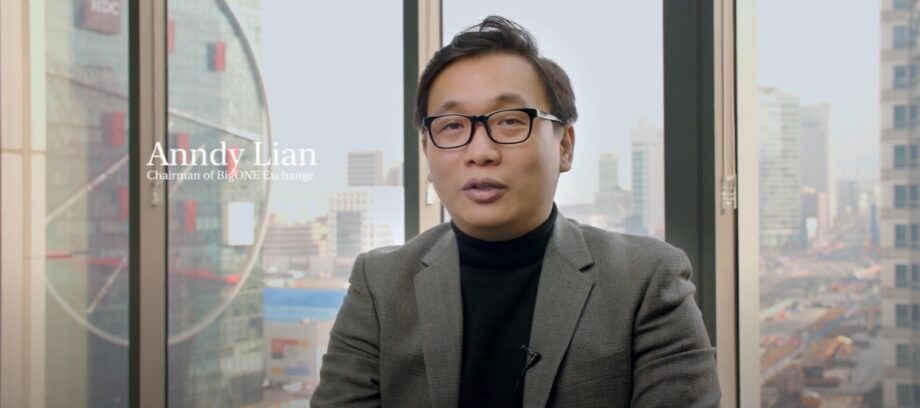
All these moves, along with competitors such as FTX and Coinbase, are to establish a future in the more regulated global environment in crypto. Anndy Lian, chairman of BigONE Exchange said, “I believe these twin forces of policy regulation led by the US, and even tighter Russian sanctions on crypto transactions, will in the near future in the next 12 – 18 months result in an expanded more regulated sector with greater competition particularly between exchanges and tighter profit margins than in the past.” Speaking after his expert contribution to Crypto Expo Dubai, Lian suggested this meant that decentralized exchanges, and privacy platforms, will be more clearly separated from the mainstream than in the past. “What does this mean for mainstream exchange service and offerings? The bottom line is that it’s got to be led by the needs of the community, by the exchange’s users,” he added.

How best to accomplish this community involvement is clearly still up for grabs. Notable are the remarks by Ethereum’s co-founder Joseph Lubin who has questioned the longer term viability of Solana, which in his eyes pays overly generous rewards to users validating transactions on the network, all backed up by generous VC cash. Solana needs to “figure out a more sustainable business model for the network”, Lubin said. In response to Lubin’s criticism, Solana Labs, said that “simply looking at protocol revenue doesn’t tell the full story of the long-term performance” of a blockchain’s economic model. Figuring out the economic model for crypto businesses, faced with new regulation and Russian sanctions, whether decentralized or centralized, is key to the future of the long term future of the crypto sector.

Speaking on the panel ‘Why are crypto exchanges still flourishing?’ at Crypto Expo Dubai on March 16 Lian warned: “I believe being regulated is a very good thing, it’s the reason I invested my time in giving cryptocurrency and blockchain advice to government over the years. But the thing is we also have to understand the other side of the crypto startup equation which is innovation; if we kept ourselves solely in the sandbox environment, in a closed regulated environment it the real risk is the innovative decentralized aspect will be lost and we’ll end up with a centralized world.”


Original Source: https://www.securities.io/are-regulations-and-sanctions-driving-change-in-the-crypto-industry/

j j j

Anndy Lian Witnessed Heritage DAO Securing National Treasure “Power of Decentralisation”

Anndy Lian Witnessed Heritage DAO Securing National Treasure “Power of Decentralisation”

HeritageDAO is a decentralized autonomous organization for our cultural heritage. Powered by web3 technologies, we revolutionize the way we collect, protect, share and enjoy cultural heritage.

It all started with this unfortunate story – Due to Covid-19, the very first private art museum in Korea was forced to put two National Treasures out for an auction out of devastation. This is the very first time in the history of Korea to see such treasures out for a transaction. We heard about this incident 4 days before the auction day and decided to address this in a Web 3.0 way. So, HeritageDAO was initiated just 4 Days before the Auction, ended up raising 900+ ETH and securing a National Treasure in 8 days while raising awareness about this incident across millions of people worldwide.

Basically, National Treasure #73 that we secured is a portable temple that people used to carry around 1,000 years ago. Back then, Buddhism was the main religion of Korea – and people carried this to practice their religion anywhere. With growing members, the need for a place that our members can call home grows bigger. Therefore, we wanted to secure this portable temple to symbolize a place our HSS members can call home. This temple will be featured on Sandbox too.

“I was in South Korea and when I heard Heritage DAO’s calling. I have decided to help and also joined the DAO’s governing council. All of us want to help and using the power of decentralisation, we have managed to secure the National Treasure and kept it in the gallery. On top of that, in good gesture, we have sent 51% of the ownership back to the original owners. This is our way to preserve the National Treasure in good hands. This is also a way to showcase how crypto is used to do help in times of need.” Anndy Lian, thought leader and Chairman of BigONE explained.

The DAO seeks to reach out and connect with the nonmaterial individuals, advocates, philanthropists, and innovators that hone the cultural values of the heritages. To do that, HDAO is introducing the High Sloth Society – The First NFT project by HDAO; a prestigious and secretive society of 10,000 elite sloths that pursue greater goods with missions to preserve and hone the essence of human heritage.

j j j

Singapore’s crypto players face added scrutiny under new law

Singapore’s crypto players face added scrutiny under new law

SINGAPORE — Singapore on Tuesday passed a law that extends its cryptocurrency regulations to companies with a local presence that provide digital token services outside the city-state, as authorities further tighten rules around the emerging industry.

Lawmakers approved the Financial Services and Markets Bill 2022, which was brought up in parliament for debate on Monday. The law brings digital token service providers created in Singapore but who provide their services elsewhere under the purview of domestic regulators.

The legislation covers industry players who deal in Bitcoin, Ethereum and other digital currencies, facilitate their exchange or offer financial advice on the sale of these tokens, among other activities.

Crypto players operating in Singapore and serving the local market are already regulated by the city-state’s central bank. They are required by law to adhere to licensing requirements as well as be able to guard against money laundering and terrorist financing.

But those who do not provide digital token services in the city-state were not under the same oversight. The new law changes this, requiring all crypto players, whether they serve the local or foreign markets, to come under the same licensing requirements.

“Sad, disappointed — we went 10 steps backwards,” said a member of a crypto lobby group in Singapore who spoke on condition of anonymity. The source questioned the necessity of digital asset players with a base in the city-state being licensed if they do not target domestic consumers, which was a worry for the central bank. “So MAS [the Monetary Authority of Singapore, the city-state’s financial regulator and central bank] is making the assumption that the license is like gold — that everyone will want to get it?”

Alvin Tan, a board member of the MAS, explained the state’s reasoning to parliament on Monday.

“We could be exposed to reputational risks brought by digital token service providers created in Singapore, and which provide services relating to virtual assets such as Bitcoin outside Singapore,” he said. “The FSM Bill seeks to mitigate such risks by licensing these players and imposing AML/CFT requirements on them.”

Singapore is not alone in tightening its scrutiny of the booming crypto sector.

Last month, Thailand issued a ban against payments using cryptocurrencies and other digital assets in a bid to maintain stability in financial markets.

China has banned all cryptocurrency payments and services for disrupting the “economic and financial order.”

In 2019, Japan’s Financial Services Agency imposed stricter information technology requirements on licensed exchanges, following security breaches and hacking incidents that marred the industry.

In January, Singapore published a set of guidelines instructing crypto players to stop marketing or advertising their offerings to retail investors in public spaces, both physical and virtual, calling the trading of such assets “highly risky and not suitable for the general public.”

The law approved on Tuesday has also garnered some positive reactions.

Singapore-based Anndy Lian, chairman of Netherlands-registered crypto trading platform BigONE Exchange, told Nikkei Asia that the city-state’s enhanced regulations are “reasonable.”

“If you walk the ground hard enough, you will see many bad actors and dubious crypto companies using Singapore as a base of their operations,” he said. “We need to properly regulate things so that the bad actors won’t affect this industry’s image.”

Even before the new law hit the books, the MAS had been busy processing license requests. In January it said there were about 180 applications for permits, more than 60 of which were withdrawn or rejected. Only a handful of applicants were successful, though others were awaiting the central bank’s decision.

With the tightened regulations, the central bank is poised to sift through a batch of additional license requests as Singapore-based crypto players that mainly deal overseas are now required to meet the state’s standards if they want to use the city for their operations.

In March, Singapore-based payments company Digital Treasures Center, which provides a platform to facilitate cryptocurrency transactions, said it received in-principle approval from MAS to provide digital payment token services.

Desmond Yong, its chief strategy officer, told Nikkei that crypto players will need to devote additional resources to monitor foreign transactions so as not to run afoul of the new law.

“For companies that are unable to fulfill the AML/CFT requirement, they will need to move out to other countries,” he said. “But with more governments regulating cryptocurrency in different jurisdictions, these companies will soon find it hard to operate.”


Original Source: https://asia.nikkei.com/Spotlight/Cryptocurrencies/Singapore-s-crypto-players-face-added-scrutiny-under-new-law


j j j