The Future of Gaming and Mini Apps: Insights from OKX Ventures Panel Discussion

The Future of Gaming and Mini Apps: Insights from OKX Ventures Panel Discussion

The gaming industry is undergoing a transformative phase, with mini apps and blockchain technology playing a pivotal role in shaping its future. At a recent panel discussion hosted by OKX Ventures, industry leaders shared their insights on the evolving landscape of gaming and mini apps. The panel featured Anndy Lian, Intergovernmental Blockchain Advisor and Managing Director of MemeCore Ecofund; 撒幣哥, Founder of CashCash Boot; and Darren Wong, Head of Business Development at Spacenation. The discussion revolved around the integration of blockchain, the rise of mini apps, and the challenges and opportunities in the gaming ecosystem.


The Role of Blockchain in Gaming

Anndy Lian, representing MemeCore Ecofund, emphasized the importance of blockchain in creating a more inclusive and secure gaming environment. He explained how MemeCore Ecofund focuses on Layer 1 solutions for meme coins, bringing together large communities to engage in gaming ecosystems. According to Lian, the key to success lies in making gaming platforms easy to use and integrating blockchain wallets seamlessly.

“When it’s easy to use, people will come and play,” Lian remarked. He highlighted the growing adoption of mini games and platforms like Telegram, which have integrated blockchain wallets to enhance user experience. Lian also pointed out that the gaming industry is moving towards greater transparency and security, thanks to blockchain technology.


Mini Apps: The Gateway to Mass Adoption

撒幣哥, the founder of CashCash Boot, shared his perspective on the role of mini apps in driving user engagement. He noted that mini apps, particularly on platforms like Telegram, have gained significant traction due to their simplicity and accessibility.

“The biggest adoption right now is to make it very easy,” he said, emphasizing the importance of user-friendly interfaces. He also discussed the integration of wallets within mini apps, which provides users with a sense of security and ease of management.

撒幣哥 highlighted the challenges of attracting genuine users to mini apps, as many platforms face issues with fake accounts and bots. He stressed the need for robust monitoring systems to ensure a real and engaged community.

“We need to keep a more real community on these gaming platforms,” he stated, adding that exchanges and projects are becoming smarter in identifying and filtering out fake users.


The Evolution of MMORPGs and Virtual Economies

Darren Wong from Spacenation delved into the future of MMORPGs (Massively Multiplayer Online Role-Playing Games) and the role of virtual economies. He explained how Spacenation is leveraging blockchain to streamline existing gaming models rather than reinventing the wheel.

“We’re not inventing something new; we’re streamlining what already works,” Wong said. He cited examples like World of Warcraft, where players have been trading assets and accounts for years. Blockchain, he argued, provides a more efficient and secure way to manage these transactions.

Wong also emphasized the importance of a strong in-game economy for the success of MMORPGs. He noted that many games fail because their economies collapse, leading to a decline in player engagement.

“The reason some games are so successful is because they have the right recipe for their economy,” he explained. Spacenation is focusing on creating a sustainable virtual economy that can support long-term player engagement.


Challenges in the Gaming Ecosystem

The panelists also discussed the challenges faced by the gaming industry, particularly in the context of mini apps and blockchain integration. One major issue is the prevalence of low-value users who participate in giveaways and promotions without genuine interest in the platform.

“There will always be people who are just in it for the free money,” Lian acknowledged. However, he argued that these users are still necessary for building initial momentum and creating a buzz around new projects.

Darren Wong added that unrealistic KPIs set by exchanges and platforms often force projects to resort to tactics like buying followers or inflating user numbers. He called for more realistic standards to ensure sustainable growth.

“When we have more realistic standards, we won’t need to resort to these unusual tactics,” Wong said.


The Role of AI in Gaming

Towards the end of the discussion, the panelists touched upon the potential of AI in revolutionizing the gaming industry. Anndy Lian expressed his hope for AI to play a larger role in game development, from content creation to user experience optimization.

“I really hope to see AI coming into the picture,” he said, adding that AI could help streamline various aspects of game development and enhance the overall gaming experience.


The Future of Gaming and Mini Apps

The panel concluded with a discussion on the future of gaming and mini apps. The panelists agreed that platforms like TikTok and WeChat are setting the stage for the next wave of mini app innovation. Darren Wong predicted that these platforms would continue to drive high-quality content and user engagement.

“I believe that mini games on platforms like TikTok and WeChat will follow the same path of success,” Wong said.

Anndy Lian emphasized the need for collaboration between projects to create a more cohesive gaming ecosystem. He called for greater integration of blockchain and AI to unlock new possibilities in gaming.

“The only way we get very decent results is by working closely together,” he concluded.


Key Takeaways

  1. Blockchain Integration: Blockchain technology is transforming gaming by enhancing transparency, security, and user experience.
  2. Mini Apps: Platforms like Telegram and TikTok are driving the adoption of mini apps, thanks to their simplicity and accessibility.
  3. Virtual Economies: Sustainable in-game economies are crucial for the success of MMORPGs and other gaming platforms.
  4. Challenges: The industry must address issues like fake users, unrealistic KPIs, and low-value engagement to ensure long-term growth.
  5. AI in Gaming: AI has the potential to revolutionize game development and user experience, paving the way for the next generation of gaming.

The panel discussion hosted by OKX Ventures provided valuable insights into the future of gaming and mini apps. As blockchain and AI continue to evolve, the gaming industry is poised for unprecedented growth and innovation. By addressing current challenges and leveraging emerging technologies, the industry can create a more inclusive and engaging gaming ecosystem for players worldwide.


Anndy Lian is an early blockchain adopter and experienced serial entrepreneur who is known for his work in the government sector. He is a best selling book author- “NFT: From Zero to Hero” and “Blockchain Revolution 2030”.

Currently, he is appointed as the Chief Digital Advisor at Mongolia Productivity Organization, championing national digitization. Prior to his current appointments, he was the Chairman of BigONE Exchange, a global top 30 ranked crypto spot exchange and was also the Advisory Board Member for Hyundai DAC, the blockchain arm of South Korea’s largest car manufacturer Hyundai Motor Group. Lian played a pivotal role as the Blockchain Advisor for Asian Productivity Organisation (APO), an intergovernmental organization committed to improving productivity in the Asia-Pacific region.

An avid supporter of incubating start-ups, Anndy has also been a private investor for the past eight years. With a growth investment mindset, Anndy strategically demonstrates this in the companies he chooses to be involved with. He believes that what he is doing through blockchain technology currently will revolutionise and redefine traditional businesses. He also believes that the blockchain industry has to be “redecentralised”.

j j j

OKX成TBW金牌贊助商,將舉辦「NIGHT OF THE FUTURE」邀請制活動

OKX成TBW金牌贊助商,將舉辦「NIGHT OF THE FUTURE」邀請制活動

OKX Ventures 成為 TBW 金牌贊助商

OKX Ventures 宣佈成為第三屆台北區塊鏈週 TBW 金牌贊助商。屆時,OKX Ventures 合夥人 Jeff Ren 將出席相關活動。此外,諸多重磅嘉賓也將出席本次會議。

據悉,第三屆台北區塊鏈週 TBW 將於 2024 年 12 月 12 日至 12 月 14 日期間舉行,是該地區年底最大的加密產業活動,預計將吸引超過 5,000 人參會。OKX Ventures 將在 12 月 12 日與 SUI、Spacenation、UXLINK 等國際性 Web3 生態及機構共同舉辦「NIGHT OF THE FUTURE」邀請制活動。


OKX Ventures 舉辦「NIGHT OF THE FUTURE」邀請制活動

OKX Ventures 也將聯合 Copex、OKX OS、SUI、Spacenation、Kronos、MemeCore、Orderly Network、Yei Finance、UXLINK 等國際性項目和機構一同在 12 月 12 日舉辦「NIGHT OF FUTURE」閉門活動,並有 Kaia、Line Next、菁英交易學院、Dacaptial、BlockBooster、CashCashBot、SignalPlus 等協助支持,旨在促進與加密貨幣愛好者共同交流 Web3 產業基層技術、生態和交易的未來發展。

據悉,OKX Ventures 合夥人 Jeff Ren 將出席本次活動並發表「NOW and FUTURE of OKX Ventures」主題演講,向大家分享對於產業生態發展與未來。同時,還有 SUI Ranier Gadduang、Space Nation Ryan He、MemeCore Anndy Lian、Kronos Research Vincent Liu 等諸多重磅嘉賓也將出席本次活動,與大家一同分享 Web3 產業的生態和交易相關內容,共同構建產業未來。

關於 OKX Ventures

OKX Ventures 是領先的加密資產交易所和 Web3 科技公司 OKX 的投資部門,初始資本為 1 億美元,專注於在全球範圍內發掘最佳區塊鏈項目,支持區塊鏈前沿技術創新,促進全球區塊鏈產業健康發展,投資長期結構性價值。OKX Ventures 致力於支持為區塊鏈產業發展做出貢獻的企業家,幫助他們建立創新型公司,並為其項目帶來全球資源和豐富經驗。

關於 SUI

SUI 是首個基於第一原理重新設計的 Layer 1 區塊鏈和智能合約平台,旨在讓數位資產的擁有變得快速、私密、安全且人人可及。

憑藉水準可擴充功能的處理和儲存能力,SUI 以超快的速度和極低的成本支持多種應用部署。

關於 Space Nation

Space Nation 以核心產品 Web3 MMORPG 為起點,旨在虛擬太空世界打造強勁開放的經濟與社交生態。通過不斷擴充功能遊戲、影視及其它內容,最終建設一個可容納數億使用者的元宇宙生態,定義虛擬世界的全新標準。

關於 Kronos Research

Kronos Research 是一家技術和數據驅動的交易公司,致力於透過培育動態的金融生態系,提供卓越的交易表現、先進的加密貨幣投資策略和廣泛的流動性支持,以改變數位資產產業。

關於 MemeCore

MemeCore 是一個基於 EVM 的 L1 多鏈跨鏈質押區塊鏈,採用創新的 Proof of 迷因 (PoM) 共識機制進行安全保護。專為迷因幣設計,致力於在區塊鏈生態系中打造一個迷因社群的專屬樂園。

關於 Orderly Network

Orderly Network 是專業的雲端流動性基礎設施項目,致力於整合全鏈衍生性金融商品流動性。在 Orderly Chain 的技術支持下,Orderly 將不同鏈上的訂單整合到統一的鏈上訂單簿中,有效提高交易效率,提供更深的流動性和更小的價差。Orderly Network 創建了一個統一的全鏈流動性生態系,為開發者、交易者和交易所等提供超過 70 個永續合約交易對,打造全方位的交易體驗。

關於 UXLINK

UXLINK 是全球最大的 Web3 社交平台與基礎設施,致力於構建社交成長層(Social Growth Layer)和社交生態系(Social Ecosystem)。UXLINK 同時服務於使用者和開發者,幫助使用者打造個人專屬的 Web3 社交網路,並為開發者提供社交化成長的解決方案。

關於 Yei Finance

Yei Finance 是 Sei 網路上的一個主要 DeFi 協議,自 2024 年 6 月推出以來,其生態系中擁有最大的資金市場,總鎖倉量(TVL)達到 1.3 億美元。

通過由 Stargate 和 Circle 的 CCTP 驅動的跨鏈橋,Yei Finance 能夠實現以太坊、Avalanche 和 Arbitrum 等主要區塊鏈之間的無縫、安全資產轉移。此項創新降低了交易成本,提高了資本效率,消除了流動性碎片化,為互通性樹立了新標準。

關於 Copex

CopeX 是一款基於通訊軟體的智慧交易工具,讓你緊跟精準訊號指標和頂尖交易員的操作,一鍵輕鬆下單,快速抓住市場先機,領先一步賺取收益!


Source: https://www.cryptocity.tw/news/okx-becomes-tbw-gold-sponsor

Anndy Lian is an early blockchain adopter and experienced serial entrepreneur who is known for his work in the government sector. He is a best selling book author- “NFT: From Zero to Hero” and “Blockchain Revolution 2030”.

Currently, he is appointed as the Chief Digital Advisor at Mongolia Productivity Organization, championing national digitization. Prior to his current appointments, he was the Chairman of BigONE Exchange, a global top 30 ranked crypto spot exchange and was also the Advisory Board Member for Hyundai DAC, the blockchain arm of South Korea’s largest car manufacturer Hyundai Motor Group. Lian played a pivotal role as the Blockchain Advisor for Asian Productivity Organisation (APO), an intergovernmental organization committed to improving productivity in the Asia-Pacific region.

An avid supporter of incubating start-ups, Anndy has also been a private investor for the past eight years. With a growth investment mindset, Anndy strategically demonstrates this in the companies he chooses to be involved with. He believes that what he is doing through blockchain technology currently will revolutionise and redefine traditional businesses. He also believes that the blockchain industry has to be “redecentralised”.
j j j

Exploring the Future of Privacy-Preserving DeFi: Insights from the DeCC Day X Shielding Summit

Exploring the Future of Privacy-Preserving DeFi: Insights from the DeCC Day X Shielding Summit

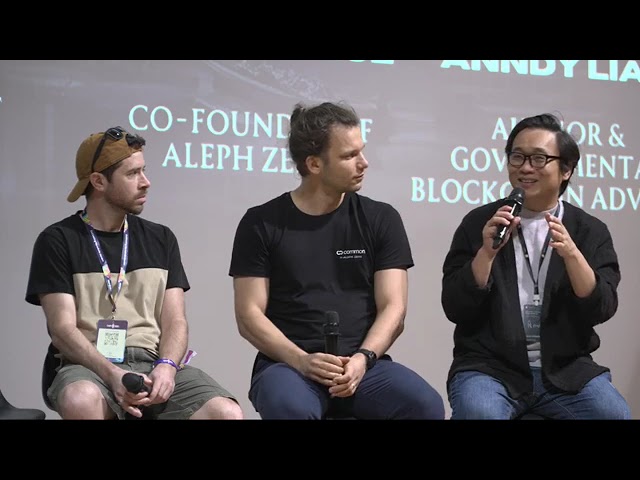
Privacy remains a critical yet challenging frontier. The DeCC Day X Shielding Summit brought together thought leaders and innovators to discuss the current state and future of privacy-preserving DeFi. Moderated by Carter Woetzel of Shade Protocol, the panel featured Supdoggie of SilentSwap, Adam Gagol of Aleph Zero, and intergovernmental expert Anndy Lian. The panel dives into their insights on the importance of privacy in DeFi, the hurdles faced by developers, and the potential pathways to broader adoption.

The Importance of Privacy in DeFi

Privacy in DeFi is not just a feature; it’s a necessity. As Carter Woetzel pointed out, “Privacy and the concept of shielding assets in DeFi have been around for a long time, yet adoption has lagged.” The panelists agreed that privacy is crucial for protecting user data and preventing malicious activities like front-running, where traders exploit transaction information for profit.

Anndy Lian, a governmental blockchain advisor, emphasized the significance of privacy from an investment perspective. “I realized that privacy is really important,” he said, drawing from his experience in the medical field where data breaches are a major concern. Lian’s journey into privacy began with creating a blockchain-based medical record system, highlighting the cross-industry relevance of privacy solutions.

Challenges in Privacy-Preserving DeFi

Despite its importance, privacy in DeFi faces significant challenges. Adam Gagol of Aleph Zero noted, “Right now, it has terrible user experience because the proof generation times are over 10 seconds for most products.” This technical hurdle, coupled with the complexity of privacy protocols, deters users who are accustomed to more straightforward financial interactions.

Regulatory barriers also play a significant role in stifling adoption. Supdoggie pointed out that “the biggest problem is regulation,” citing the example of Tornado Cash, a privacy tool classified as a mixer and banned in many jurisdictions. This regulatory uncertainty creates a hostile environment for privacy-focused projects, limiting their growth and accessibility.

Overcoming the Hurdles

To overcome these challenges, the panelists discussed several strategies. Improving user experience is paramount. As Adam Gagol mentioned, “We’re trying to build a wallet that looks like a regular wallet so that you don’t immediately even notice that this is a private wallet.” By simplifying the user interface and reducing the complexity of privacy features, developers can make privacy-preserving DeFi more accessible to the average user.

Another approach is to address liquidity issues. Supdoggie explained that SilentSwap is tackling this by “borrowing liquidity from public blockchains but transacting or swapping privately.” This innovative method allows users to benefit from the liquidity of public networks while maintaining privacy.

The Path to Adoption

The path to widespread adoption of privacy-preserving DeFi involves not only technical improvements but also strategic marketing and community building. Anndy Lian highlighted the importance of creating demand: “If you don’t have users, you don’t have liquidity. If you don’t have liquidity, you have nothing.” Building a strong community and generating excitement around privacy features are crucial steps toward achieving critical mass.

Carter Woetzel added that the race between privacy-first projects and traditional DeFi platforms integrating privacy features will be pivotal. “The Uniswaps of the world are going to start adding in privacy features,” he noted, suggesting that the first to successfully combine privacy with liquidity and user-friendliness will gain a significant advantage.

The Future of Privacy-Preserving DeFi

Looking ahead, the panelists were optimistic about the future of privacy-preserving DeFi. Adam Gagol predicted that “the proof generation time for the majority of use cases will stop being the topic of conversation because it’s going to be low enough to be actually useful.” As technical barriers diminish, the focus will shift to broader adoption and integration with existing financial systems.

Anndy Lian emphasized the need for collaboration and integration with larger platforms. “Instead of them creating that demand, the real true blue privacy guys should go there and say, ‘Hey, can we integrate? Can we do something together?'” By partnering with established players, privacy-focused projects can leverage existing networks to reach a wider audience.

Conclusion

The DeCC Day X Shielding Summit highlighted both the challenges and opportunities in the realm of privacy-preserving DeFi. As the panelists discussed, the road to adoption is fraught with technical, regulatory, and market challenges. However, with innovative solutions, strategic partnerships, and a focus on user experience, the future of privacy in DeFi looks promising. As Carter Woetzel aptly summarized, “Private DeFi is good. Can we find the demand and do it before someone else integrates privacy with large-scale distribution?” The race is on, and the stakes are high.

Anndy Lian is an early blockchain adopter and experienced serial entrepreneur who is known for his work in the government sector. He is a best selling book author- “NFT: From Zero to Hero” and “Blockchain Revolution 2030”.

Currently, he is appointed as the Chief Digital Advisor at Mongolia Productivity Organization, championing national digitization. Prior to his current appointments, he was the Chairman of BigONE Exchange, a global top 30 ranked crypto spot exchange and was also the Advisory Board Member for Hyundai DAC, the blockchain arm of South Korea’s largest car manufacturer Hyundai Motor Group. Lian played a pivotal role as the Blockchain Advisor for Asian Productivity Organisation (APO), an intergovernmental organization committed to improving productivity in the Asia-Pacific region.

An avid supporter of incubating start-ups, Anndy has also been a private investor for the past eight years. With a growth investment mindset, Anndy strategically demonstrates this in the companies he chooses to be involved with. He believes that what he is doing through blockchain technology currently will revolutionise and redefine traditional businesses. He also believes that the blockchain industry has to be “redecentralised”.

j j j