Exploring the Future of Privacy-Preserving DeFi: Insights from the DeCC Day X Shielding Summit

Exploring the Future of Privacy-Preserving DeFi: Insights from the DeCC Day X Shielding Summit

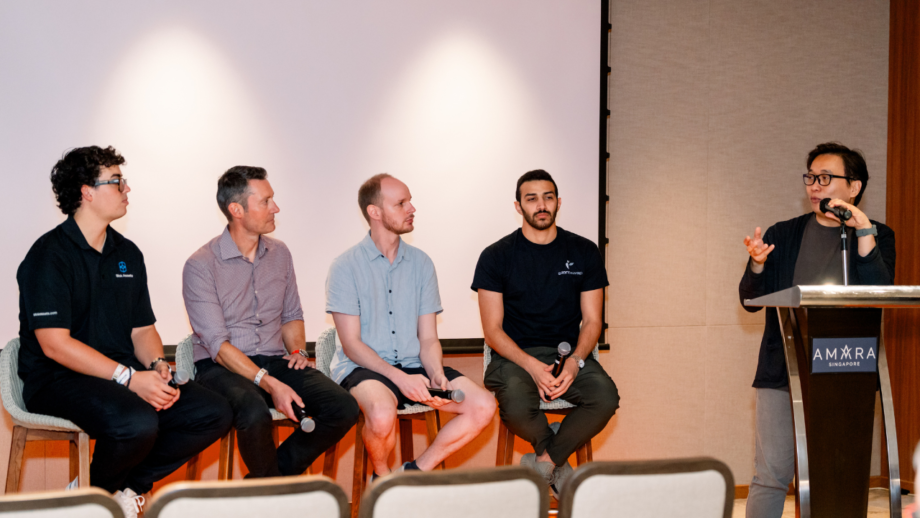
Privacy remains a critical yet challenging frontier. The DeCC Day X Shielding Summit brought together thought leaders and innovators to discuss the current state and future of privacy-preserving DeFi. Moderated by Carter Woetzel of Shade Protocol, the panel featured Supdoggie of SilentSwap, Adam Gagol of Aleph Zero, and intergovernmental expert Anndy Lian. The panel dives into their insights on the importance of privacy in DeFi, the hurdles faced by developers, and the potential pathways to broader adoption.

The Importance of Privacy in DeFi

Privacy in DeFi is not just a feature; it’s a necessity. As Carter Woetzel pointed out, “Privacy and the concept of shielding assets in DeFi have been around for a long time, yet adoption has lagged.” The panelists agreed that privacy is crucial for protecting user data and preventing malicious activities like front-running, where traders exploit transaction information for profit.

Anndy Lian, a governmental blockchain advisor, emphasized the significance of privacy from an investment perspective. “I realized that privacy is really important,” he said, drawing from his experience in the medical field where data breaches are a major concern. Lian’s journey into privacy began with creating a blockchain-based medical record system, highlighting the cross-industry relevance of privacy solutions.

Challenges in Privacy-Preserving DeFi

Despite its importance, privacy in DeFi faces significant challenges. Adam Gagol of Aleph Zero noted, “Right now, it has terrible user experience because the proof generation times are over 10 seconds for most products.” This technical hurdle, coupled with the complexity of privacy protocols, deters users who are accustomed to more straightforward financial interactions.

Regulatory barriers also play a significant role in stifling adoption. Supdoggie pointed out that “the biggest problem is regulation,” citing the example of Tornado Cash, a privacy tool classified as a mixer and banned in many jurisdictions. This regulatory uncertainty creates a hostile environment for privacy-focused projects, limiting their growth and accessibility.

Overcoming the Hurdles

To overcome these challenges, the panelists discussed several strategies. Improving user experience is paramount. As Adam Gagol mentioned, “We’re trying to build a wallet that looks like a regular wallet so that you don’t immediately even notice that this is a private wallet.” By simplifying the user interface and reducing the complexity of privacy features, developers can make privacy-preserving DeFi more accessible to the average user.

Another approach is to address liquidity issues. Supdoggie explained that SilentSwap is tackling this by “borrowing liquidity from public blockchains but transacting or swapping privately.” This innovative method allows users to benefit from the liquidity of public networks while maintaining privacy.

The Path to Adoption

The path to widespread adoption of privacy-preserving DeFi involves not only technical improvements but also strategic marketing and community building. Anndy Lian highlighted the importance of creating demand: “If you don’t have users, you don’t have liquidity. If you don’t have liquidity, you have nothing.” Building a strong community and generating excitement around privacy features are crucial steps toward achieving critical mass.

Carter Woetzel added that the race between privacy-first projects and traditional DeFi platforms integrating privacy features will be pivotal. “The Uniswaps of the world are going to start adding in privacy features,” he noted, suggesting that the first to successfully combine privacy with liquidity and user-friendliness will gain a significant advantage.

The Future of Privacy-Preserving DeFi

Looking ahead, the panelists were optimistic about the future of privacy-preserving DeFi. Adam Gagol predicted that “the proof generation time for the majority of use cases will stop being the topic of conversation because it’s going to be low enough to be actually useful.” As technical barriers diminish, the focus will shift to broader adoption and integration with existing financial systems.

Anndy Lian emphasized the need for collaboration and integration with larger platforms. “Instead of them creating that demand, the real true blue privacy guys should go there and say, ‘Hey, can we integrate? Can we do something together?'” By partnering with established players, privacy-focused projects can leverage existing networks to reach a wider audience.

Conclusion

The DeCC Day X Shielding Summit highlighted both the challenges and opportunities in the realm of privacy-preserving DeFi. As the panelists discussed, the road to adoption is fraught with technical, regulatory, and market challenges. However, with innovative solutions, strategic partnerships, and a focus on user experience, the future of privacy in DeFi looks promising. As Carter Woetzel aptly summarized, “Private DeFi is good. Can we find the demand and do it before someone else integrates privacy with large-scale distribution?” The race is on, and the stakes are high.

Anndy Lian is an early blockchain adopter and experienced serial entrepreneur who is known for his work in the government sector. He is a best selling book author- “NFT: From Zero to Hero” and “Blockchain Revolution 2030”.

Currently, he is appointed as the Chief Digital Advisor at Mongolia Productivity Organization, championing national digitization. Prior to his current appointments, he was the Chairman of BigONE Exchange, a global top 30 ranked crypto spot exchange and was also the Advisory Board Member for Hyundai DAC, the blockchain arm of South Korea’s largest car manufacturer Hyundai Motor Group. Lian played a pivotal role as the Blockchain Advisor for Asian Productivity Organisation (APO), an intergovernmental organization committed to improving productivity in the Asia-Pacific region.

An avid supporter of incubating start-ups, Anndy has also been a private investor for the past eight years. With a growth investment mindset, Anndy strategically demonstrates this in the companies he chooses to be involved with. He believes that what he is doing through blockchain technology currently will revolutionise and redefine traditional businesses. He also believes that the blockchain industry has to be “redecentralised”.

j j j

Highlights of DeCC Day at Token2049 Singapore

Highlights of DeCC Day at Token2049 Singapore

Lisa Loud, executive director of Secret Network Foundation, opened the day and spoke of two key conversations that were directly relevant to DeCC Day.

The first was a gathering at EthDenver in February where the DeCC Alliance first met, and first put together an overview and informal alliance of companies dedicated to promoting and delivering confidential computing. It is really important to note that the almost 30 companies under this umbrella use different technologies, and some are even directly competitive, but all have as a common goal confidential computing.

The second conversation germane to the DeCC Day was Lisa’s meetings with SEC Commissioner Hester Pierce. Lisa remarked to Hester that she really deserved the term CryptoMom for her hard work on behalf of crypto.

However, Hester replied she wasn’t a champion of crypto, she was a champion of people making their own decisions.

And to paraphrase the last line from Robert Frost’s poem ‘The Road not Taken’ that has made all the difference.

The DeCC Day carried on in style. The Silent Swap team were there in force and made a big announcement that their Beta was open. Supdoggie from the team gave a highly technical look at how SilentSwap is using TEE and FHE in its architecture.

Sodalabs, represented by Avishay Yanai, gave a talk on the tech behind Garbled Circuits, yet another technology added to the Alliance which already includes TEE, MPC, ZK and FHE.

The first panel, on the Importance of DePIN, was moderated by Crypto Megan. Her guests were Amar Bedi of Tashi, Alex Zaidelson of SCRT Labs and Anil Murty of Akash. The triple A guests were united in their comment that OpenAI is very closed – and that is why we need DePIN to democratize access to GPUs.

The Building Web3 Responsibly panel was moderated by Varuni Trivedi, editor of The Coin Republic and included LC of IBL Law, Joshua Maddox of COTI, Bruce Ahn of Partisia, and Zheng Leong Chua of Automata Network. Echoing shades of Games of Thrones, LC said ‘regulation is coming.’ Bruce said ‘Devs understand the rules.’ Zheng said ‘we love compliance,’ and Joshua said ‘we need to get dirty.’

Zoe McFox of Phala Network moderated the Power of DeCC panel. During this conversation, it was pointed out that in the military, there are armed guards securing databases with guns, and that we needed to find equally secure tech solutions. She was joined by Supdoggie, Yannick Schrade of Arcium and Kabal.

Finally, Anndy Lian, Governmental Blockchain Advisor, led the panel looking at commercial use cases. He was joined by Josh Wyant of Novapolis, Gavin Thomas of TEN, Cal of SquidGrow and Juan Mari of Blok Assets. During this panel it was observed that Vitalik’s lack of privacy is well documented with people tracking him through his publicly acknowledged wallets. But it’s the same for ordinary people who need protection also.

Throughout the presentations and discussions, the audience was engaged and every opportunity for questions to be asked was filled with participation and insightful answers.

The event ended with a powerful round of networking where relationships were built that will live on and keep the value of the event going for years to come.


Source: https://www.blockleaders.io/events/highlights-of-decc-day-at-token2049-singapore-

Anndy Lian is an early blockchain adopter and experienced serial entrepreneur who is known for his work in the government sector. He is a best selling book author- “NFT: From Zero to Hero” and “Blockchain Revolution 2030”.

Currently, he is appointed as the Chief Digital Advisor at Mongolia Productivity Organization, championing national digitization. Prior to his current appointments, he was the Chairman of BigONE Exchange, a global top 30 ranked crypto spot exchange and was also the Advisory Board Member for Hyundai DAC, the blockchain arm of South Korea’s largest car manufacturer Hyundai Motor Group. Lian played a pivotal role as the Blockchain Advisor for Asian Productivity Organisation (APO), an intergovernmental organization committed to improving productivity in the Asia-Pacific region.

An avid supporter of incubating start-ups, Anndy has also been a private investor for the past eight years. With a growth investment mindset, Anndy strategically demonstrates this in the companies he chooses to be involved with. He believes that what he is doing through blockchain technology currently will revolutionise and redefine traditional businesses. He also believes that the blockchain industry has to be “redecentralised”.

j j j

APO, NPCC hold training on Blockchain Tech applications in e-Government

APO, NPCC hold training on Blockchain Tech applications in e-Government

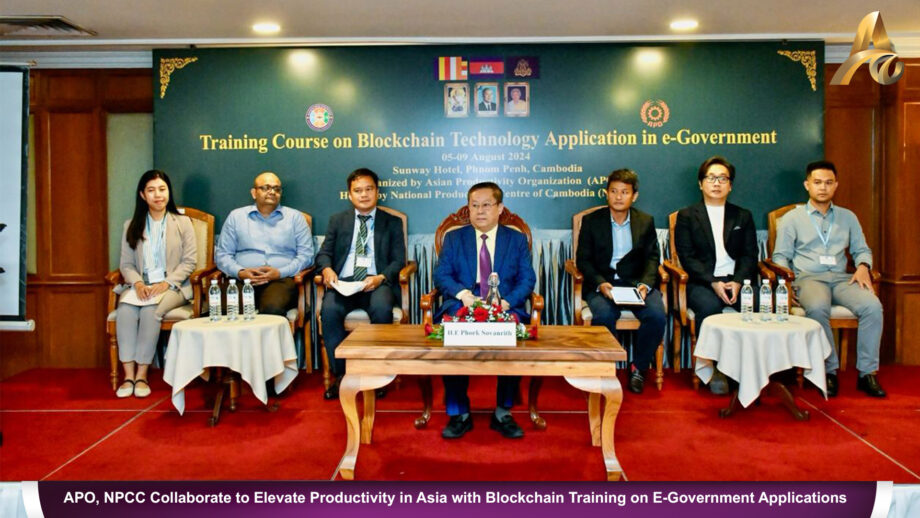
The Asian Productivity Organization (APO) and the National Productivity Centre (NPCC) of MISTI are co-hosting a training programme on Blockchain Technology Applications in e-Government from Monday until Friday in Phnom Penh. The programme aims to enhance productivity in the Asian region.

The event, presided over by Phork Sovanrith, MISTI’s Secretary of State and APO Director for Cambodia, brought together productivity representatives from various countries, including Cambodia, India, Indonesia, Malaysia, Pakistan, the Philippines, Sri Lanka, Thailand, Turkey, and Vietnam.

“Blockchain technology has emerged as a transformative force in various sectors, including e-government initiatives in Cambodia. Its application can significantly enhance transparency, efficiency, and security in governmental processes,” said Sovanrith.

Throughout the programme, productivity representatives from the region will engage in hands-on exploration of the practical applications of blockchain-driven solutions in e-governance systems. The objective is to help them understand the practical importance of blockchain architecture in advancing e-government initiatives and improving service delivery by public-sector organisations, ultimately enhancing the efficiency and effectiveness of e-government programmes through the integration of blockchain technology.

The APO, a key player in promoting productivity in the Asia-Pacific region, is committed to enhancing economic growth and development through collaborative activities, capacity building, and knowledge sharing. This training programme is a testament to our dedication to this mission.


Source:  https://www.khmertimeskh.com/501535446/apo-npcc-hold-training-on-blockchain-tech-applications-in-e-government/

Anndy Lian is an early blockchain adopter and experienced serial entrepreneur who is known for his work in the government sector. He is a best selling book author- “NFT: From Zero to Hero” and “Blockchain Revolution 2030”.

Currently, he is appointed as the Chief Digital Advisor at Mongolia Productivity Organization, championing national digitization. Prior to his current appointments, he was the Chairman of BigONE Exchange, a global top 30 ranked crypto spot exchange and was also the Advisory Board Member for Hyundai DAC, the blockchain arm of South Korea’s largest car manufacturer Hyundai Motor Group. Lian played a pivotal role as the Blockchain Advisor for Asian Productivity Organisation (APO), an intergovernmental organization committed to improving productivity in the Asia-Pacific region.

An avid supporter of incubating start-ups, Anndy has also been a private investor for the past eight years. With a growth investment mindset, Anndy strategically demonstrates this in the companies he chooses to be involved with. He believes that what he is doing through blockchain technology currently will revolutionise and redefine traditional businesses. He also believes that the blockchain industry has to be “redecentralised”.
j j j