X Spaces with Anndy Lian on Web4 with Kespa Community

X Spaces with Anndy Lian on Web4 with Kespa Community
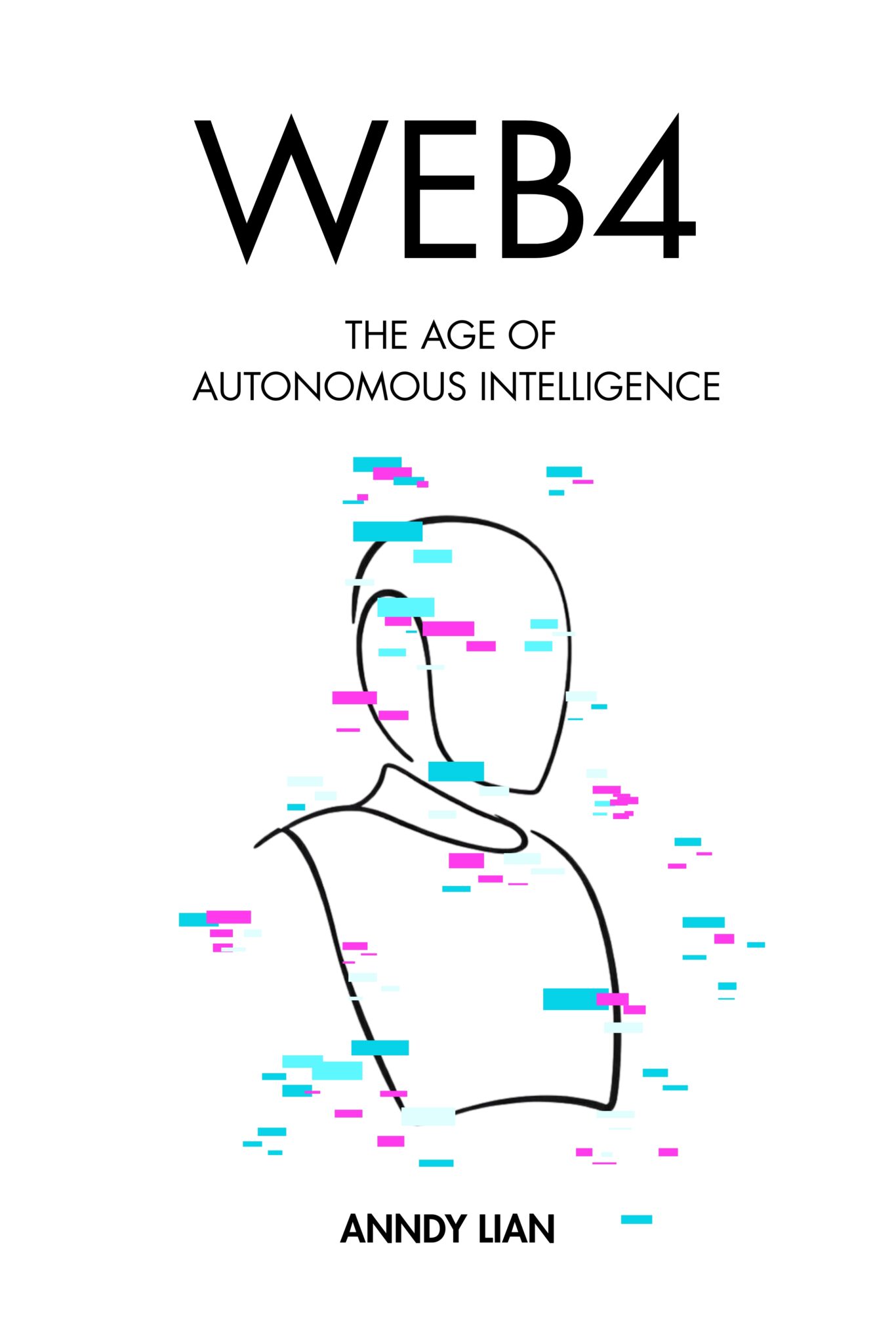
As the crypto industry matures, the limitations of Web3 are becoming apparent. We sat down with Anndy Lian, book author of Web4: The Age of Autonomous Intelligence to discuss the next evolution of the internet.
Book is ranked number 1 new release. Web4: The Age of Autonomous Intelligence by Anndy Lian https://www.amazon.com/Web4-Autonomous-Intelligence-Anndy-Lian-ebook/dp/B0H35597HS

Book is ranked number 1 new release. Web4: The Age of Autonomous Intelligence by Anndy Lian https://www.amazon.com/Web4-Autonomous-Intelligence-Anndy-Lian-ebook/dp/B0H35597HS

Travladd: You have been in the crypto space for over fifteen years. Why do you believe Web3 has fallen short of its decentralized promises?
Anndy Lian: Web3 introduced programmable money and smart contracts, but it often lacks the cognitive layer to manage complex operations autonomously. Venture capital concentration and centralized governance bottlenecks have left the ecosystem with a significant intelligence gap. True decentralization remains compromised because the architecture simply cannot support fully autonomous, trustless workflows without an intelligent layer.
Travladd: How does Web4 solve this intelligence gap?
Anndy Lian: Web4 is a fundamental architectural realignment that fuses artificial intelligence with blockchain technology. It positions AI as the brain and blockchain as the spine. In this symbiotic relationship, AI agents execute complex tasks, navigate protocols, and automate workflows. The blockchain simultaneously provides the immutable foundation that ensures security, transparency, and cryptographic checks and balances.
Travladd: Can you break down the technical architecture of a Web4 network?
Anndy Lian: I view it through a four layer model. First is the Interface Layer, which translates human intent into complex multichain operations seamlessly. Second is the Agent Layer, the autonomous workforce where AI agents manage cross chain states and execute goals based on user constraints. Third is the Protocol Layer, providing programmable trust through AI enhanced smart contracts capable of rapid micro transactions. Finally, the Data Layer mandates decentralized storage networks and zero knowledge proof data structures. Without a decentralized data layer, true sovereignty is impossible.
Travladd: How does this decentralized vision intersect with global financial infrastructure and government policy?
Anndy Lian: Having advised governments on blockchain integration, I see a clear divergence. Many central banks are pushing retail Central Bank Digital Currencies, which I view as mechanisms of surveillance and control. Web4 offers the antithesis. It provides a privacy preserving, decentralized financial layer that empowers the individual. We must move beyond superficial narratives and build economic layers that genuinely protect user sovereignty, ensuring the next generation of digital assets serves as a foundation for global financial innovation rather than state overreach.
Travladd: How will this shift impact the human workforce?
Anndy Lian: The fear of AI replacing human jobs is largely misplaced. Instead of performing repetitive tasks, humans will evolve into the architects and handlers of AI agents. We will design the strategic parameters, fine tune the prompts, and oversee the ethical boundaries of these autonomous systems. AI will handle the execution while humans provide the vision.
Travladd: What is your ultimate vision for Web4?
Anndy Lian: Web4 represents the necessary maturation of the decentralized web. By marrying the cognitive capabilities of artificial intelligence with the immutable nature of blockchain technology, we can build an internet that is exponentially smarter and fundamentally fairer. The future belongs to the visionaries who refuse to compromise on decentralization, building systems where intelligence is autonomous, data remains strictly sovereign, and network power is truly distributed.
Final words
Anndy Lian: A critical pillar of the Web4 thesis is the decentralization of AI itself. Currently, the AI frontier is heavily monopolized by a few centralized entities controlling vast troves of data and computing power. This centralization poses a severe risk to digital sovereignty. Web4 advocates for distributed AI, where computing power, model training, and data governance are shared across the community. By decentralizing AI, we prevent single points of failure and ensure that autonomous intelligence remains a public good rather than a proprietary tool for surveillance or control.

Check out it out:

Web4: The Age of Autonomous Intelligence by Anndy Lian

Socials:

Facebook: http://www.facebook.com/anndylian
Twitter: http://www.twitter.com/anndylian
Instagram: http://www.instagram.com/liananndy
LinkedIn: https://www.linkedin.com/in/anndylian/
Homepage: http://www.anndy.com
YouTube: https://www.youtube.com/@AnndyLian


Anndy Lian is an early blockchain adopter and experienced serial entrepreneur who is known for his work in the government sector. He is a best selling book author- “NFT: From Zero to Hero” and “Blockchain Revolution 2030”.

Currently, he is appointed as the Chief Digital Advisor at Mongolia Productivity Organization, championing national digitization. Prior to his current appointments, he was the Chairman of BigONE Exchange, a global top 30 ranked crypto spot exchange and was also the Advisory Board Member for Hyundai DAC, the blockchain arm of South Korea’s largest car manufacturer Hyundai Motor Group. Lian played a pivotal role as the Blockchain Advisor for Asian Productivity Organisation (APO), an intergovernmental organization committed to improving productivity in the Asia-Pacific region.

An avid supporter of incubating start-ups, Anndy has also been a private investor for the past eight years. With a growth investment mindset, Anndy strategically demonstrates this in the companies he chooses to be involved with. He believes that what he is doing through blockchain technology currently will revolutionise and redefine traditional businesses. He also believes that the blockchain industry has to be “redecentralised”.

j j j

Interview with Author – Anndy Lian [Web4: The Age of Autonomous Intelligence]

Interview with Author – Anndy Lian [Web4: The Age of Autonomous Intelligence]

About Anndy Lian:
Anndy Lian is an all-rounded business strategist in Asia. He has provided advisory across a variety of industries for local, international, public listed companies and governments.

What inspires you to write?
My writing is entirely driven by a desire to tackle systemic problems and demystify the complex technical realities shaping our society. When I look at the current digital landscape, I see an environment where users have been reduced to products and data refugees under the weight of surveillance capitalism.

What inspires me to put pen to paper is the belief that knowledge shared is power multiplied. I write to provide a rigorous, forward-thinking blueprint that gives individuals the tools to understand, challenge tech hype, and reclaim their digital sovereignty.

What authors do you read when you aren’t writing?
When I look at authors and thinkers who influence my perspective, I am drawn to those who possess deep industry realism and refuse to get swept up in corporate or tech hype. I deeply respect pioneers, builders, and strategic minds who put in the work, say what they mean, and focus on practical frameworks over speculation.

My favorite literature consists of foundational whitepapers, rigorous economic models, and strategic treatises that analyze how human coordination, national-level regulation, and digital assets intersect to shape human civilization.

Robert Kiyosaki is one of my favourite. CZ Zhao has a good book too.

Tell us about your writing process.
My writing process is iterative, data-driven, and relies heavily on structural pressure testing. I spent three years and total of 23 versions finishing it. Because I write about bleeding-edge infrastructure and macroeconomic trends, my process begins with a raw critique of market conditions—such as tracking data extraction pipelines, analyzing validator concentration, or evaluating smart contract failures.

Once the core thesis is built, I write extensively to flesh out the concepts, and then I edit aggressively. For this book, I removed over 140 pages from the final draft simply to make it more “readable” and digestible for a mainstream audience. If a concept is too dense to be actionable for a builder or a policymaker, it gets cut.

For Fiction Writers: Do you listen (or talk to) to your characters?
While I am a non-fiction writer, I do interact extensively with the “characters” of the machine economy: Autonomous AI Agents. My interaction with them involves rigorous behavioral modeling and game-theoretic pressure testing.

When mapping out scenes like the one in “A Day in the Life: 2035,” I am constantly evaluating how an agent like “Nate” would react to real-time supply chain data, health metrics, or zero-knowledge identity requests without human oversight. I don’t “talk” to them in a literary sense; instead, I simulate their algorithmic decision-making loops to ensure they remain cryptographically aligned with human stewardship rather than corporate exploitation.

What advice would you give other writers?
My primary advice is to write with skepticism and edit with courage. Do not write to simply repeat industry buzzwords or to flatter the pre-existing biases of your audience. If your work is going to be the basis for how people understand the future, it must survive intense internal stress tests.

Be willing to throw away entire sections of your work if they do not serve the reader’s clarity. If it takes you years and dozens of revisions to make a complex concept elegant and accessible, put in the work. True impact lies in execution and readability, not speculation.

How did you decide how to publish your books?
For my books, including Web4: The Age of Autonomous Intelligence, the decision of how to publish comes down to a balance of global accessibility, speed to market, and maintaining absolute content integrity. Because technology cycles move at an unprecedented velocity, waiting years in traditional publishing backlogs can render a forward-looking technological blueprint obsolete before it hits the shelves.

I opt for agile publishing frameworks across multiple digital formats (including PDF, Kindle, Mobi, and Epub) alongside physical rollouts (Hardback and Paperback) to ensure the community can access the insights instantly and globally. For new authors exploring the space, I highly advise prioritizing digital-first distribution and open accessibility. If your goal is to empower a global community, your infrastructure must allow you to bypass geographic and corporate gatekeepers seamlessly.

What do you think about the future of book publishing?
The future of book publishing is on the verge of its own agentic turn. We are transitioning away from a passive distribution model toward an era of intelligent, context-aware content ingestion. By 2035, fully autonomous AI agents will account for a massive percentage of digital decision-making, and this includes how information is parsed and consumed.

Books will no longer be static, inert files sitting on a digital shelf. Instead, they will act as dynamic, verifiable knowledge repositories that personal AI agents can query, verify via cryptographic audit trails, and instantly synthesize to assist humans in real-time problem solving. The future of publishing belongs to authors who write structured, high-integrity content that can seamlessly integrate into the cognitive and trust layers of tomorrow’s web.

What genres do you write?: Bitcoin & Cryptocurrencies, Technology & Infrastructure, Computer Science & Artificial Intelligence, Decentralized Finance (DeFi) & Blockchain Governance, Macroeconomics & Digital Sovereignty


Source: https://bookgoodies.com/interview-with-author-anndy-lian/

Anndy Lian is an early blockchain adopter and experienced serial entrepreneur who is known for his work in the government sector. He is a best selling book author- “NFT: From Zero to Hero” and “Blockchain Revolution 2030”.

Currently, he is appointed as the Chief Digital Advisor at Mongolia Productivity Organization, championing national digitization. Prior to his current appointments, he was the Chairman of BigONE Exchange, a global top 30 ranked crypto spot exchange and was also the Advisory Board Member for Hyundai DAC, the blockchain arm of South Korea’s largest car manufacturer Hyundai Motor Group. Lian played a pivotal role as the Blockchain Advisor for Asian Productivity Organisation (APO), an intergovernmental organization committed to improving productivity in the Asia-Pacific region.

An avid supporter of incubating start-ups, Anndy has also been a private investor for the past eight years. With a growth investment mindset, Anndy strategically demonstrates this in the companies he chooses to be involved with. He believes that what he is doing through blockchain technology currently will revolutionise and redefine traditional businesses. He also believes that the blockchain industry has to be “redecentralised”.

j j j

Anndy Lian: Clear-Minded Choices in a No

Anndy Lian: Clear-Minded Choices in a No

In the noisy world of Web3, narratives often speak louder than facts, and new terminology tends to appear faster than technology can meaningfully iterate.

From ICOs to DeFi, from NFTs to RWAs, and now the latest cycle of AI+Crypto—the industry keeps reinventing its vocabulary at a pace that outstrips most people’s ability to grasp the fundamentals behind it.

At its core, Web3 was meant to be built on shared consensus—decentralization, openness, and community-driven development.

Yet as the industry expands at high speed and capital floods in, these once-solid values have been diluted. More and more projects rely on narratives to create perceived value; more people enter Web3 for the “trend,” not the belief; and those who genuinely maintain a sense of community-driven mission have become increasingly rare.

This is precisely why someone like Anndy Lian (@anndylian) stands out.

With a background that spans government advisory roles in Mongolia, a board seat at Hyundai DAC, involvement in national digital strategy, several bestselling books, and cross-cultural influence in the Web3 ecosystem, he could have easily become one of the most “institutionalized” voices in the industry.

But he chose a different path—lonelier, sharper, less popular, yet far more authentic.

He does not worship regulation, chase hype, or seek favor from power. Above all his titles and roles, he insists on holding onto one core identity: someone who still takes the original spirit of Web3 seriously.

And such insistence has become rare.

Guest Profile

  • Anndy Lian is a blockchain expert specializing in government collaboration, having served as a Web3 and digitalization advisor in Korea, Singapore, Mongolia, and other countries.
  • He is the bestselling author of Blockchain Revolution 2030, NFT: From Zero to Hero, and more, covering policy, industry, and public education.
  • An active investor and board member for multiple companies, he focuses on early-stage projects, infrastructure, and global digital-economy development.
  • With nearly 200,000 followers on X, he is among Singapore’s most influential Web3 thinkers and content creators.

█ “Decentralization in Web3 Has Long Been Dead.”

For years, Anndy’s work unfolded inside government meeting rooms.

Around 2017, as many countries began exploring digital governance, he joined discussions on regulatory frameworks in Singapore, Korea, Mongolia, and others—sitting at the same table as policymakers debating how they should interpret Web3.

This proximity gave him a rare view of the logic behind regulation at a national level:

  • Financial powerhouses ask how Web3 can merge into their existing systems.
  • Emerging countries ask whether blockchain can strengthen infrastructure.
  • And most regulatory frameworks, at their core, exist to protect existing capital.

“Regulation will come—and it will definitely come. But the rules set by governments mostly protect the wealthy,” he says.

It’s one of his most direct, and most candid, judgments.

Years of institutional experience didn’t make him trust power more—it made him understand it more deeply: how it operates, how it shapes markets, how it influences narratives.

This led him to a clear conclusion:

“Crypto needs regulation, but it should not be governed by governments or centralized authorities. It needs a set of trustworthy rules.”

Behind this statement lies both vigilance toward power and loyalty to Web3’s original intent.

Which is also why he ultimately said:

“Decentralization in Web3 has long been dead.”

This is not pessimism. It is a sober acknowledgment of how power structures work in the real world.

Paradoxically, this clarity is what strengthens his belief that someone must continue to keep a distance from power—and stay close to the community and the everyday users that keep Web3 alive.

█ Finding Real Value Among the Ruins of Narratives

Viewed across time, Web3 follows a familiar cycle:

Narrative emerges → Hype inflates → Capital rushes in → Crowd frenzy → Logic collapses → Story dissolves.

ICO, DeFi, NFTs, GameFi, RWA—none have escaped this pattern.

Anndy does not oppose new narratives.

He opposes replacing facts with narratives.

On the current hype around RWA, he offers a viewpoint many find uncomfortable:

“If a real-estate developer is doing well, they don’t need to go on-chain.

If they’re doing poorly, going on-chain won’t make anyone buy.

Much of RWA is a metaphysical story.”

On NFTs, he is equally blunt:

“Aside from art, most NFT structures are built for extracting money.”

Yet he is not anti-narrative; he simply understands that long-term value never comes from emotional surges—it comes from capabilities.

If he had to name the capabilities that will define the next decade of Web3, they would be:

1. AI + Blockchain: The Engine of Next-Generation Consensus

He believes the structure of Web4 is already taking shape:

  • AI determines consensus
  • Blockchain provides the foundation
  • Humans reduce subjective control
  • Governance shifts from organizations to models

“I trust code and AI more than ever—and I’ve become more cautious about trusting humans.”

This is not only a technical forecast—it is a governance philosophy.


2. Prediction Markets + Oracle Networks: The Undervalued Infrastructure

Prediction markets are not simply “bets on the future”—they support risk management, asset pricing, social consensus, and financial products.

Oracles, meanwhile, are the gateway through which all off-chain data enters blockchain systems.

“They are not just sectors—they are long-term, foundational capabilities.”

In other words, they are cross-cycle assets.

3. Privacy: The Future Default of All Chains

He believes the privacy narrative may be short-lived, but privacy as a capability will be long-lasting.

“Privacy will not become one big sector—but it will become the default of every chain.”

Like the security module of an operating system: not sexy, but absolutely essential.

His investment philosophy therefore reduces to one simple question:

“Can this survive for a decade?”

█ While Industry Leaders Talk About the Future, He Talks About the Present

On stage, the industry loves speaking in future tense:

projects talk ecosystems, VCs talk cycles, experts talk trends.

But for Anndy, evaluating a project is surprisingly simple—even blunt:

“If a project doesn’t have a real community of at least 500 users, I won’t touch it.”

In an industry supported by PPTs, roadmaps, and press releases, this is almost a form of rebellion.

What he cannot tolerate are projects with:

  • Zero product
  • Zero users
  • Zero real business

Yet still packaging themselves as “the next revolution.”

He only looks at three things:

  • Does the technology actually work?
  • Do real users exist?
  • Has the community formed genuine consensus?

He avoids the lofty conversations of industry elites, but willingly spends time answering questions from retail users.

This isn’t sentimentality—it is a return to where Web3 should have always belonged: the people and the community.

█ Epilogue: The Weight of Being Clear-Minded

In Web3, stories are easier to construct than systems, and trends are easier to chase than value.

But when the tide recedes, what remains are not the loudest voices, but the clearest ones.

Anndy has crossed policy rooms, capital circles, corporate boards, and grassroots communities—yet he has never become polished or complacent.

Instead, his boundaries have only grown sharper:

No pandering.

No avoidance.

No embellishment.

No compromise.

He critiques false narratives because he believes in real value.

He questions regulation because he understands power.

He avoids the limelight yet walks with the users.

He knows decentralization is painfully difficult, yet still believes technology should make the world fairer.

This is not radicalism—it is clarity.

Not rebellion—but a quiet guardianship of the industry’s core.

The noise will continue. Narratives will rotate. Illusions will return.

But clarity will remain rare.

And because it is rare, it matters even more.


Source: https://www.me.news/contents/251407

Anndy Lian is an early blockchain adopter and experienced serial entrepreneur who is known for his work in the government sector. He is a best selling book author- “NFT: From Zero to Hero” and “Blockchain Revolution 2030”.

Currently, he is appointed as the Chief Digital Advisor at Mongolia Productivity Organization, championing national digitization. Prior to his current appointments, he was the Chairman of BigONE Exchange, a global top 30 ranked crypto spot exchange and was also the Advisory Board Member for Hyundai DAC, the blockchain arm of South Korea’s largest car manufacturer Hyundai Motor Group. Lian played a pivotal role as the Blockchain Advisor for Asian Productivity Organisation (APO), an intergovernmental organization committed to improving productivity in the Asia-Pacific region.

An avid supporter of incubating start-ups, Anndy has also been a private investor for the past eight years. With a growth investment mindset, Anndy strategically demonstrates this in the companies he chooses to be involved with. He believes that what he is doing through blockchain technology currently will revolutionise and redefine traditional businesses. He also believes that the blockchain industry has to be “redecentralised”.

j j j