Entertainment’s Next Evolution: AI, Web3, and Data Privacy

Entertainment’s Next Evolution: AI, Web3, and Data Privacy

The ways we consume media, interact with technology, and protect user data are constantly changing. Web3 and Artificial Intelligence (AI) are new technologies that are transforming the media and entertainment landscape even further.

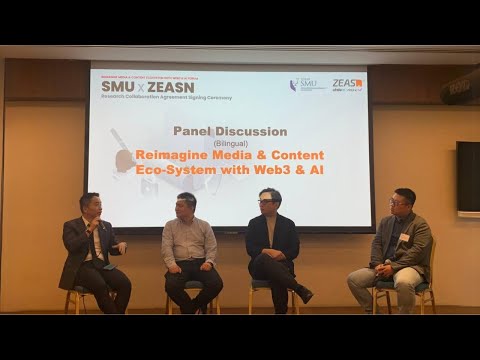
In a panel discussion titled “Reimagine Media & Content Ecosystem with Web3 & AI,” Feida Zhu (Associate Dean at SMU), James Liu (Director at Alibaba Cloud), Raymond Chung (CTO at ZEASN), and Anndy Lian (Advisor at Bybit) discussed the impact of these technologies on the industry.

Here is a recap of the event:

AI and the Changing Face of Television

With the proliferation of smartphones and portable devices, traditional TV viewership has been on the decline. People are now looking for more convenient and interactive ways to consume content. This shift has prompted experts to contemplate the future of television.

Many believe that AI is the key to making television more interactive and engaging. AI can offer personalized recommendations, provide real-time interaction, and enhance the overall viewing experience. AI-powered TVs can respond to voice commands, adapt to users’ preferences, and even offer educational content for children.

Anndy commented:

“AI can transform TV from a passive experience into an interactive one. Imagine a world where your TV is not just a screen but a knowledgeable companion. It can ask what kind of movie you’d like to watch, suggest content based on your preferences, and even help you with tasks like gaming or education.”

He added that AI can play a significant role in generating high-quality content. By using AI technology, content producers can create engaging, diverse, and unique content, ensuring that there is always something exciting to watch.

Raymond shared his experience:

“The integration of AI technology into the content creation process is another exciting prospect. With AI’s ability to generate high-quality content, it becomes possible to produce a plethora of new, engaging materials. This means AI can generate dynamic, interactive, and even personalized content, enhancing the user’s experience.

AI’s capabilities can extend beyond entertainment to areas like education and gaming. For instance, AI can create educational content tailored to a student’s learning style or generate interactive gaming experiences that adapt to a player’s skills and preferences. With AI, content creation is limited only by our imagination.”

Web3 and the Promise of Transparency

As the entertainment industry moves towards a more decentralized and transparent ecosystem, Web3 technology is gaining prominence. Web3, built on the principles of blockchain and decentralized networks, aims to provide a secure and transparent environment for content creators, users, and service providers.

James explained:

“One major advantage of Web3 is data privacy and security. Traditional platforms often collect massive amounts of user data, raising concerns about privacy and data breaches. With Web3, data can be stored securely on decentralized networks, ensuring that users have more control over their personal information.”

Feida continued by say that Web3 also enables creators to tokenize their influence. By using blockchain, content creators can create and manage their tokens, which represent their influence or popularity. These tokens can be traded or used within the ecosystem, creating a more fair and sustainable economy for content creators and their audiences.

Moreover, the transparency of blockchain can help combat piracy issues. Blockchain technology can track and verify content ownership, making it difficult for unauthorized parties to distribute content illegally.

To make the most of AI in user engagement, trust, and control are paramount. We must be cautious of deep fakes and manipulated content. This is where blockchain technology comes in as a control tool. By utilizing blockchain to verify the authenticity of content, we can ensure that what we see and hear is genuine.

Additionally, blockchain can offer transparency and accountability, which are essential in combating misinformation and promoting reliable content. By combining AI’s creativity with blockchain’s security, we can create a safer and more immersive digital landscape.

See the Full Panel Here
 

Monetization and the Creator’s Economy

Feida emphasized to all that Web 3, with its cryptocurrency and decentralized platforms, opens up new monetization opportunities.

Creators can use Web3 to create and sell non-fungible tokens (NFTs) of their content. This gives them a new way to monetize their work and reach a wider audience. The Creator’s Economy allows users to create content and share their experiences. AI, together with blockchain, can enhance the value of these experiences.

Users can be incentivized to produce content that resonates with a wide audience. From anime to soap operas, the possibilities are endless. AI and blockchain technologies provide a win-win situation for content creators and consumers, driving user engagement to new heights.

The Challenge of Data Privacy

While AI and Web3 technologies hold tremendous promise, they also raise concerns about data privacy. AI models require vast amounts of data to function effectively, and this data can potentially be misused or exploited.

Anndy shared his views:

“The responsibility falls on both service providers and users to protect data privacy. Service providers must design robust systems to ensure that sensitive data is stored securely and accessible only to authorized personnel. Users, on the other hand, need to be cautious about the information they provide and understand the implications of sharing personal data whether is it Web2 or Web3.”

Additionally, the development of privacy-focused AI models and encryption methods is crucial in safeguarding user data in the AI-driven world.

The Bottom Line

The evolution of entertainment is driven by AI, Web3 technology, and the demand for greater data privacy and security. The transformation of television into an interactive experience, the promise of Web3 for transparency and fair content monetization, and the challenges of data privacy all shape the future of the entertainment industry.

As we move forward, it is essential to embrace these technologies while being mindful of data privacy and ethical AI practices. The entertainment industry is on the cusp of a revolution, and only those who adapt to this changing landscape will thrive in the digital age.

This event is supported by Singapore Management University and Moledao.


Source: https://www.techopedia.com/entertainments-next-evolution-ai-web3-and-data-privacy

Anndy Lian is an early blockchain adopter and experienced serial entrepreneur who is known for his work in the government sector. He is a best selling book author- “NFT: From Zero to Hero” and “Blockchain Revolution 2030”.

Currently, he is appointed as the Chief Digital Advisor at Mongolia Productivity Organization, championing national digitization. Prior to his current appointments, he was the Chairman of BigONE Exchange, a global top 30 ranked crypto spot exchange and was also the Advisory Board Member for Hyundai DAC, the blockchain arm of South Korea’s largest car manufacturer Hyundai Motor Group. Lian played a pivotal role as the Blockchain Advisor for Asian Productivity Organisation (APO), an intergovernmental organization committed to improving productivity in the Asia-Pacific region.

An avid supporter of incubating start-ups, Anndy has also been a private investor for the past eight years. With a growth investment mindset, Anndy strategically demonstrates this in the companies he chooses to be involved with. He believes that what he is doing through blockchain technology currently will revolutionise and redefine traditional businesses. He also believes that the blockchain industry has to be “redecentralised”.

j j j

Coinbase’s MPI License: A Game-Changer For Crypto In Singapore, But A Challenge For Competitors

Coinbase’s MPI License: A Game-Changer For Crypto In Singapore, But A Challenge For Competitors

Coinbase, the largest cryptocurrency exchange in the US, has recently obtained a Major Payment Institution (MPI) licence from the Monetary Authority of Singapore (MAS), the country’s central bank and financial regulator. This licence will allow Coinbase to offer regulated digital payment token (DPT) products and services in Singapore, such as buying and selling cryptocurrencies, storing them in wallets, and transferring them to other users.

They not the first crypto exchange to receive an MPI licence from MAS. In June 2023, two other platforms, Crypto.com and Circle, were also granted full licences after obtaining in-principle approvals in 2021. However, Coinbase is arguably the most prominent and influential one among them, given its global reach, market capitalization, and reputation.

Coinbase’s entry into the Singaporean market is seen by many as a positive sign for the crypto industry in the region, as it reflects the country’s openness and support for innovation and digital finance. Singapore has been widely regarded as a crypto-friendly jurisdiction, with a clear and progressive regulatory framework for DPT service providers under the Payment Services Act (PSA) that came into effect in 2020.

According to the PSA, any entity that provides DPT services in Singapore must obtain a licence from MAS, either as a standard payment institution (SPI) or as an MPI. The difference between the two types of licences lies in the scale and scope of their operations. SPIs can provide any combination of regulated payment services, but are subject to transactional volume or e-money limits. MPIs have no such limits, but are subject to more stringent requirements, such as safeguarding customer funds, complying with anti-money laundering and counter-terrorism financing rules, and submitting regular audits and reports to MAS.

By obtaining an MPI licence, Coinbase has demonstrated its ability and willingness to meet the high standards set by MAS for DPT service providers. This could give it a competitive edge over other crypto exchanges that operate in Singapore, especially those that have not yet obtained a licence or are still waiting for approval.

As mentioned on MAS’s website, there are currently 170 entities that have applied for a licence under the PSA, but only three have been granted full licences so far (Coinbase, Crypto.com, and Circle). Among the applicants are some of the most popular and well-known crypto exchanges in Singapore, such as Binance, Kraken, Coinhako, Gemini, and Independent Reserve. These exchanges have been allowed to continue their operations while their applications are being processed by MAS, under a grace period that was initially supposed to end on July 28, 2021. However, due to the large number of applications and the complexity of the assessment process, MAS has extended the grace period for most applicants until January 28, 2023.

This means that these exchanges have less than four months left to obtain their licences from MAS, or they will have to cease their DPT services in Singapore. This could pose a significant challenge and risk for them, as they may lose their market share and customer base to Coinbase and other licensed platforms.

Competitive Challenges For Other Crypto Exchanges

While Coinbase’s MPI license is undoubtedly a boon for the company, it also presents a competitive challenge for other crypto exchanges operating in Singapore. Here are some key challenges they are likely to face:

  • Regulatory Compliance Pressure: The foremost challenge for competitors is the need to meet the stringent regulatory standards set by MAS. Coinbase’s compliance with these standards sets a high bar, and other exchanges will need to invest significant resources to achieve similar levels of regulatory approval.
  • Increased Competition: Coinbase’s entry into the Singaporean market intensifies competition. As a well-established global exchange, Coinbase has a strong brand presence and the resources to invest in marketing, user acquisition, and product development. Competitors will need to step up their game to compete effectively.
  • User Trust and Confidence: Coinbase’s MPI license not only signifies regulatory compliance but also implies a higher degree of trust and confidence from users. Competitors will need to work harder to gain the trust of customers and differentiate themselves in a market where regulatory compliance and security are paramount.

Recommendations For Success In The Singaporean Crypto Market

To thrive in this evolving landscape and address the challenges posed by Coinbase’s MPI license, crypto exchanges in Singapore should consider several strategic approaches:

  • Collaborate with Local Partners: Building relationships with local financial institutions, fintech companies, and government agencies can help crypto exchanges navigate the complex regulatory landscape in Singapore. Collaborations can also open doors to new markets and customer segments.
  • Innovate New Products and Services: To stand out in a competitive market, exchanges should focus on innovation. Developing new products and services that cater to the unique needs and preferences of Singaporean users can help differentiate them from Coinbase and other competitors.
  • Educate Customers and Regulators: Crypto exchanges should actively engage in educational initiatives aimed at both customers and regulators. Providing resources and information on responsible crypto use, security practices, and the benefits of blockchain technology can help build trust and bridge knowledge gaps.
  • Adapt to Changing Market Conditions: The crypto industry is known for its rapid evolution. Exchanges must remain agile and adaptable to changing market conditions, regulatory updates, and technological advancements. Staying ahead of the curve can be a key differentiator.
  • Foster Regulatory Relationships: Building positive relationships with regulators is essential. Exchanges should actively engage with regulatory authorities, participate in industry consultations, and contribute to the development of fair and effective crypto regulations.
  • Emphasize Security and Compliance: Like Coinbase, prioritizing security measures and regulatory compliance is non-negotiable. Exchanges should invest in robust security infrastructure and continuously monitor for potential vulnerabilities or risks.
  • Customer-Centric Approach: To succeed in a competitive market, exchanges should prioritize the needs and concerns of their customers. Providing excellent customer service, transparent fee structures, and responsive support channels can help build loyalty and trust.
  • Diversify Product Offerings: Beyond trading, exchanges should consider diversifying their product offerings. This could include services like staking, lending, or even non-fungible tokens (NFTs). Diversification can attract a broader user base and increase revenue streams.

In Conclusion

Coinbase’s MPI license from MAS is a watershed moment for the cryptocurrency industry in Singapore. It signifies not only the legitimization of digital assets but also the importance of regulatory compliance and security within the sector. While this development poses competitive challenges for other crypto exchanges operating in the country, it also sets a high standard that can benefit the entire industry.

Success in the Singaporean crypto market will require a combination of regulatory adherence, innovation, customer education, and adaptability. By focusing on these aspects and strategically positioning themselves, other exchanges can thrive alongside Coinbase in this dynamic and rapidly evolving sector. Ultimately, the success of these exchanges will contribute to the broader adoption and acceptance of cryptocurrencies in Singapore and around the world.


Source: https://www.nasdaq.com/articles/coinbases-mpi-license:-a-game-changer-for-crypto-in-singapore-but-a-challenge-for

Anndy Lian is an early blockchain adopter and experienced serial entrepreneur who is known for his work in the government sector. He is a best selling book author- “NFT: From Zero to Hero” and “Blockchain Revolution 2030”.

Currently, he is appointed as the Chief Digital Advisor at Mongolia Productivity Organization, championing national digitization. Prior to his current appointments, he was the Chairman of BigONE Exchange, a global top 30 ranked crypto spot exchange and was also the Advisory Board Member for Hyundai DAC, the blockchain arm of South Korea’s largest car manufacturer Hyundai Motor Group. Lian played a pivotal role as the Blockchain Advisor for Asian Productivity Organisation (APO), an intergovernmental organization committed to improving productivity in the Asia-Pacific region.

An avid supporter of incubating start-ups, Anndy has also been a private investor for the past eight years. With a growth investment mindset, Anndy strategically demonstrates this in the companies he chooses to be involved with. He believes that what he is doing through blockchain technology currently will revolutionise and redefine traditional businesses. He also believes that the blockchain industry has to be “redecentralised”.

j j j

No, NFTs Are Not Dead

No, NFTs Are Not Dead

It’s pretty fashionable to dance on the grave of NFTs these days. Social media abounds with people laughing at the jpegs of zoo animals that sold for thousands of dollars a few years ago. But I’m here to poop that party. Because, I believe NFTs are not only here to stay, but they will kickstart a new era of creative expression, economic efficiency, and digital culture.

Let’s start with some facts. NFTs have been growing in popularity and value in recent years, especially in 2021 and 2022. According to the data from NonFungible.com, the NFT market size reached $10.7 billion in the third quarter of 2021, up from $1.3 billion in the second quarter.

And, while the downturn has been admittedly harsh, there are some exciting trends emerging in recent months. Take generative artwork, which is created by an algorithm or a computer program based on inputs from the artist or the collector, like Art Blocks, which lets users mint unique pieces of art on the Ethereum blockchain, and Otherside, which generates psychedelic portraits of celebrities and historical figures.

Or what about fractionalizing valuable collectibles? This is a process of dividing a rare or expensive NFT into smaller pieces or fractions, which can be traded or owned by multiple people. This allows more people to access and invest in high-value NFTs, which they otherwise could not afford. Examples of fractionalized NFTs are DAO Records, which owns a copy of Wu-Tang Clan’s Once Upon a Time in Shaolin album, and Fractional, which enables anyone to create and trade fractions of any NFT.

And so-called smart money is getting involved. Established companies are creating their own digital collectibles, or collaborating with existing NFT communities. This shows the growing mainstream recognition and adoption of NFTs as a new form of digital expression and engagement.

Take Visa, which bought a CryptoPunk for $150,000, Coca-Cola, which auctioned off four NFTs for charity, and Marvel, which launched its own NFT marketplace for comic book fans. Or my recent project: The Velocity Pass, an exclusive NFT that gives holders access to a series of digital artworks created by world-class artists.

The artworks are inspired by Oracle Red Bull Racing’s RB19 race car and the Formula One World Championship. The Velocity Pass is a limited edition of only 1,000 NFTs and will evolve over the course of the race season, with each new drop reflecting the thrills and spills of each race.

There are four collaborating artists in this series. So far we have revealed works from Rik Oostenbroek, Per Kristian and Erick “Snowfro” Calderon and the last artist will be revealed soon.

For too long, artists have struggled to receive fair compensation for their work in the digital realm. NFTs offer a lifeline, enabling creators to retain ownership and receive royalties for their art in perpetuity. This paradigm shift empowers artists to break free from the shackles of traditional intermediaries, putting the power and profits back into the hands of those who create.

Furthermore, NFTs have the potential to revolutionize the way we think about ownership and property rights. With blockchain technology at their core, NFTs provide indisputable proof of ownership, eliminating the need for cumbersome paper trails and legal disputes.

This has far-reaching implications beyond the art world, from real estate to intellectual property rights. Imagine a world where disputes over ownership are virtually nonexistent, where property rights are as secure as the blockchain itself.

“The obituary for NFTs is premature at best and, at worst, a misunderstanding of the transformative power of these digital tokens. The evidence is clear: NFTs are reshaping our concept of value, ownership, and creativity” – Anndy Lian, head of partnerships at Bybit.


Source: https://blog.bybit.com/en-US/post/no-nfts-are-not-dead-blt723d571c62a7a08b/

Anndy Lian is an early blockchain adopter and experienced serial entrepreneur who is known for his work in the government sector. He is a best selling book author- “NFT: From Zero to Hero” and “Blockchain Revolution 2030”.

Currently, he is appointed as the Chief Digital Advisor at Mongolia Productivity Organization, championing national digitization. Prior to his current appointments, he was the Chairman of BigONE Exchange, a global top 30 ranked crypto spot exchange and was also the Advisory Board Member for Hyundai DAC, the blockchain arm of South Korea’s largest car manufacturer Hyundai Motor Group. Lian played a pivotal role as the Blockchain Advisor for Asian Productivity Organisation (APO), an intergovernmental organization committed to improving productivity in the Asia-Pacific region.

An avid supporter of incubating start-ups, Anndy has also been a private investor for the past eight years. With a growth investment mindset, Anndy strategically demonstrates this in the companies he chooses to be involved with. He believes that what he is doing through blockchain technology currently will revolutionise and redefine traditional businesses. He also believes that the blockchain industry has to be “redecentralised”.
j j j