KAVA price prediction: Will Kava 10 upgrade boost the coin?

Kava Network, a decentralised finance (DeFi) platform for lending and borrowing crypto assets, is set to upgrade its network to Kava 10 in 2022, adding Ethereum Co-Chain to the currently used Cosmos blockchain.

Yet, despite the buzz generated in anticipation of the launch, its native token Kava (KAVA) suffered a volatile ride in 2022 amid a wider dip in cryptocurrency markets.

Can the coin regain momentum and what does the KAVA crypto price prediction for 2022, 2025 and 2030 look like?

What is the KAVA coin?

The Kava Network was founded in 2018 by Kava Labs, a company focused on making financial services easily accessible to all. On 14 November 2019 the Kava mainnet launched.

The Kava blockchain acts like a decentralised bank. It’s the first DeFi platform to offer users the possibility to borrow and lend major crypto assets without the need for a traditional financial intermediary, according to its whitepaper. It supports a number of cryptocurrencies, including Bitcoin (BTC)Ripple (XPR)Binance (BNB) and Cosmos (ATOM).

Many DeFi platforms are powered by the Ethereum network. Kava is the first to be built on Cosmos, which, according to its creators, allows Kava to operate “lightning-fast” – the platform’s major unique selling point.

The network is powered by Co-Chain architecture, which combines the flexibility and speed of the Ethereum blockchain with the interoperability of the Cosmos SDK, merging the two most used permissionless ecosystems into a single, scalable, network.

This allows users to access the most popular blockchains and establishes the free flow of assets and projects within the Kava Ecosystem.

The platform has three functions:

  • Kava Lend: allows users to earn rewards by supplying and borrowing assets from money markets.
  • Kava Swap: allows users purchase and sell assets across the Kava Blockchain and earn rewards by providing liquidity pools.
  • Kava Mint: allows users to take USD-pegged stablecoins called USDX loans by using their crypto assets as collateral.

Kava’s crypto-backed stablecoin can be minted by anyone who owns crypto assets. To mint USDX a user must deposit more crypto assets in USD value than they wish to create USDX of. Different crypto assets have a different collateralisation ration.

Users receive rewards for minting USDX in the form of Kava Network’s native cryptocurrency, the KAVA token, which can be used for governance and staking. The number of rewards an owner receives in KAVA varies Accor to the type of their owned crypto assets.

There were 100m KAVA tokens initially released by the network. According to CoinMarketCap, at of the time of writing (8 February 2022), over 152m KAVA tokens were in circulation, with their total supply exceeding 154m. The token’s market capitalisation amounted to over $562m, giving it a rank of 125.

KAVA crypto price: Latest drivers

The KAVA token was priced at $0.9646 at its launch on 26 October 2019. It surged by 32.44% to $1.2776 on 19 November 2019 following the announcement on 16 November that the KAVA mainnet had officially launched into full gear “making DeFi on Cosmos a reality”.

Through the end of 2019 and the start of 2020, the token’s price started to fluctuate. It dropped to its all-time low of $0.3438 on 16 March 2020, despite the token being listed on three different exchange platforms throughout January and February that year.

Since it’s all-time low in March, the token regained momentum in the summer of 2020. By 8 August, the token’s price reached $4.6653 – a 1256.98% surge since that all time low.

The KAVA token then kept a steady rate of growth, rising 9.12% to $5.091 on 16 August after an announcement that Kava had embarked on a partnership with Injective Protocol.

By 23 August 2021, the KAVA token reached its all time high of $8.7159, a rise of 161.1% since its low of $3.3381 on 20 July, amid anticipation of the launch of Kava Swap on 30 August.

Between 23 and 26 August the coin’s price started to decline. It gained momentum on 26 August when the platform rebranded by introducing the Kava Mint, Kava Lend and Kava Swap Protocols. This led to a 14.19% rise in the token’s price from$7.5813 on 26 August to $8.6573 on 28 August.

The next major catalyst in KAVA crypto news came at the end of October 2021 when the company announced that it was planning to launch its big Kava 9 update. The token, which has been falling since September, failed to gain much momentum rising by 5.18% between 21 and 26 October, from $5.6376 to $5.9299.

The Kava 9 mainnet update successfully launched on 19 January 2022, however, the token’s price stayed in a bearish trend falling by 38.8% from $5.5258 to $3.3785 between 16 and 23 January 2022 amid a general dip in the cryptocurrency markets.

Technical analysis provided by CoinCodex showed that short-term sentiment on the KAVA token was bearish as of the time of writing (8 February), with 21 indicators showing bearish signals and nine showing bullish signals.

What’s to come in 2022?

In recent KAVA crypto news, the company uncovered plans that the blockchain will undergo another major upgrade known as Kava 10 which will introduce the Ethereum Co-Chain along with the currently used Cosmos blockchain. According to the platform, bringing Ethereum and Cosmos together will create a surge of activity on the Kava Network. The launch of Kava 10 is anticipated for 3 May 2022.

Other upcoming projects on Kava’s roadmap that could influence n the token’s price include the GameFi and non-fungible tokens (NFT) incentive program scheduled for May 2022.

BigONE Exchange’s chair Anndy Lian explained that Kava’s function to lend and borrow assets using a number of cryptocurrencies as collateral still serves as a big plus for the platform.

“[Kava’s] debt-to-collateral ratio is reasonable too. For example, based on a 300% ratio, the cryptocurrency locked in the network would be liquidated if it falls below 3 X of the USDX loaned,” he told Capital.com.

“Their codes are sound and their treasury is still holding up well.”

by Anndy Lian, BigONE exchange chair

“The slide in the price recently is due to the overall market conditions. Some investors may see steeper plunges due to the performances of their collateralised assets. In my humble opinion, there is nothing to be worried about at this point, their codes are sound and their treasury is still holding up well.”

KAVA price prediction 2022-2030

Algorithm-based forecasting service Wallet Investor gave a bullish KAVA crypto price prediction, as of the time of writing (8 February), calling it an “awesome long-term investment”.

Based on its analysis of the cryptocurrency’s past performance, the forecasting service predicted that KAVA could trade at $5.917 in 2023 and $14.649 by 2027.

DigitalCoinPrice supported the bullish Kava forecast, seeing the coin reach $5.33 by the end of 2022. The coin’s price is estimated to surpass its all-time high in November 2025 at $8.78, according to the site.

Although a KAVA coin price prediction for 2030 is not currently available, DigitalCoinPrice estimated that the token could reach $8.50 by the end of 2027, rise to $11.73 in December 2028 and jump to $16.28 in the following year.

Note that algorithm-based price predictions can be wrong. Forecasts should not be used as a substitute for your own research. Always conduct your own due diligence before investing. And never invest or trade money you cannot afford to lose.


Original Source: https://capital.com/kava-price-prediction

Anndy Lian is an early blockchain adopter and experienced serial entrepreneur who is known for his work in the government sector. He is a best selling book author- “NFT: From Zero to Hero” and “Blockchain Revolution 2030”.

Currently, he is appointed as the Chief Digital Advisor at Mongolia Productivity Organization, championing national digitization. Prior to his current appointments, he was the Chairman of BigONE Exchange, a global top 30 ranked crypto spot exchange and was also the Advisory Board Member for Hyundai DAC, the blockchain arm of South Korea’s largest car manufacturer Hyundai Motor Group. Lian played a pivotal role as the Blockchain Advisor for Asian Productivity Organisation (APO), an intergovernmental organization committed to improving productivity in the Asia-Pacific region.

An avid supporter of incubating start-ups, Anndy has also been a private investor for the past eight years. With a growth investment mindset, Anndy strategically demonstrates this in the companies he chooses to be involved with. He believes that what he is doing through blockchain technology currently will revolutionise and redefine traditional businesses. He also believes that the blockchain industry has to be “redecentralised”.


j j j

Is Dubai stealing Singapore’s thunder in crypto?- Anndy Lian’s View

Is Dubai stealing Singapore’s thunder in crypto?- Anndy Lian’s View

A summarised version of what I said:

“The trend is obvious. Businesses are moving away” to markets like Dubai and Europe

With the exchange’s core market in Latin America, Lian says his firm has no plans to apply for a license in Singapore.

Binance had served as a litmus test for crypto firms looking to set up a base in Singapore

“Singapore is openly welcoming everybody, then openly rejecting almost everybody.” It “makes people think, ‘is Singapore not a place that I can set up? Is Singapore not a place for me to house myself’?”

While smaller crypto projects and decentralized autonomous organizations (DAOs) from Vietnam and Thailand still find Singapore an attractive location, more than half of “large exchanges” operating in Singapore no longer think that the city-state is a viable location for their Asia headquarters.

Binance’s departure simply hastened the exits of other crypto companies out of the city-state, which began six months ago.

Dubai’s openness has drawn a flood of crypto-natives to the city

Singapore’s success in the international markets and its ever-ready finance infrastructure is also known in the global markets. I want Singapore to maintain its lead in the crypto space too. As a Singaporean, I hope to see Singapore grow into that crypto hub for Asia.

Perhaps that is the “kiasu” mindset in me :>

Anndy Lian is an early blockchain adopter and experienced serial entrepreneur who is known for his work in the government sector. He is a best selling book author- “NFT: From Zero to Hero” and “Blockchain Revolution 2030”.

Currently, he is appointed as the Chief Digital Advisor at Mongolia Productivity Organization, championing national digitization. Prior to his current appointments, he was the Chairman of BigONE Exchange, a global top 30 ranked crypto spot exchange and was also the Advisory Board Member for Hyundai DAC, the blockchain arm of South Korea’s largest car manufacturer Hyundai Motor Group. Lian played a pivotal role as the Blockchain Advisor for Asian Productivity Organisation (APO), an intergovernmental organization committed to improving productivity in the Asia-Pacific region.

An avid supporter of incubating start-ups, Anndy has also been a private investor for the past eight years. With a growth investment mindset, Anndy strategically demonstrates this in the companies he chooses to be involved with. He believes that what he is doing through blockchain technology currently will revolutionise and redefine traditional businesses. He also believes that the blockchain industry has to be “redecentralised”.
j j j

India’s Digital Rupee Plan Draws Mixed Response from Investors

India’s Digital Rupee Plan Draws Mixed Response from Investors

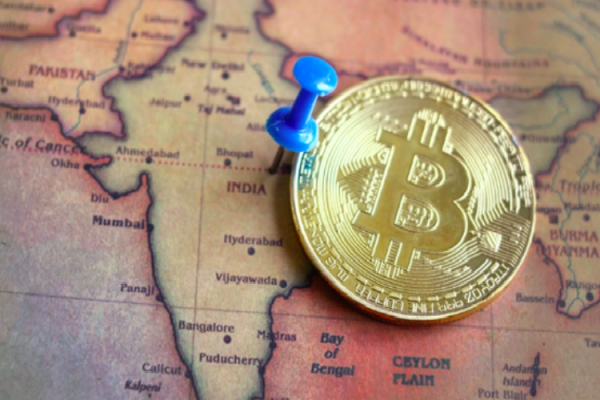
India has joined a growing group of countries introducing central bank digital currencies (CBDCs).

In the Union Budget 2022-2023, the Finance Minister has announced that the country will have its digital rupee backed by the blockchain and it will begin a phased rollout of the currency this financial year.

Blockchain Assets Review spoke to industry insiders and here is what they had to say about the digital rupee and it drew a mixed response.

While industry insiders see a lot of potential in the concept, some are still doubtful of the timely implementation of such a digital currency.

Aliasgar Merchant, a developer relations engineer at blockchain firm Tendermint, said, “The introduction of ‘Digital Rupee’ or CBDC is definitely a positive move” however, it also raises “some concerns and questions.”

Merchant noted that given the Reserve Bank of India’s (RBI) past record on technological implementation, the timely rollout of CBDC is a “matter of concern.”

Furthermore, he said that the RBI’s centralized hold over the currency defies the purpose and applications of a decentralized currency.

Another negative impact, Merchant said, is that “we do not know what kind of data the banks will gather from the people who use them, whether there would be a limit to how much one person can withdraw or deposit if there will be different transaction limit for individuals and businesses.”

“In addition, if a fraud is uncovered after the launch of CBDC, any wrongdoings will be attributed to the RBI,” he said, adding that having such a centralized authority is always risky.

Jay Hao, chief executive of global exchange OKX, appreciated that India is joining a growing list of countries in introducing CBDCs. However, he said that the country is slightly lagging behind in the digital currency race mainly due to the regulatory hurdles and reluctance in accepting the growing popularity of digital assets around the world.

“I hope the announcement made by Finance Minister regarding CBDC is implemented without any further delay as it will give a much-needed push to the blockchain industry in India,” Hao added.

Anndy Lian, chairman of BigONE Exchange, said, “The digital rupee is not an easy task for India. India is a big economy and may need to exercise more control over its currency before adopting it to its fullest scale.”

Potential security issues can be a problem at the start and experts should look deeper into the direct and indirect costs potentially linked to the implementation, he added.

While the announcement has made experts raise questions, many still trust the future of CBDCs in the country.

Charles Tan, head of marketing at Coinstore, said: “The digital rupee launch by RBI is a very interesting development as it makes the RBI’s stance on digital assets crystal clear,” he said.

India is moving from an unregulated space to a government-monitored crypto market, which will benefit all the stakeholders of the industry, he said.

Shivam Thakral, CEO of BuyUcoin, a homegrown cryptocurrency exchange said, “RBI has always been ambitious with its CBDC launch. The launch of CBDC by RBI will catalyze the growth of blockchain infrastructure in India and will encourage more entrepreneurs to join the blockchain revolution.”

Interestingly, Thakral noted if RBI allows the trading of CBDC on private exchanges, it will add a new dimension to public-private partnership in the country’s fintech space.

“The launch of RBI’s CBDC will prove to be a momentous occasion for the digital asset industry as it will create a government-approved market for the launch of new/existing digital assets,” he added.

Nischal Shetty, founder and chief executive of crypto exchange, WazirX, is bullish and called the news a ‘phenomenal’ one and said that the country is on the path to legitimizing the crypto sector.

“India launching a blockchain-powered Digital Rupee is phenomenal news. This move will pave the way for crypto adoption and put India in the front seat of innovation,” he told Blockchain Asset Review.

Sumit Gupta, co-founder & chief executive of crypto exchange, CoinDCX, said: “Introduction of CBDC sends a clear signal of India being a digital-first, efficiency-driven, and transparency-led system. CBDC with the backbone of blockchain will help us hold a powerful position in the global economy.

“We welcome the move and congratulate the govt for this visionary move,” he added.

Pratik Gauri, founder and chief executive of the blockchain firm 5ire noted that digital currency will open up great opportunities for innovation and foreign investment.

Raj Kapoor, founder of India Blockchain Alliance and chief growth officer at Chainsense Ltd, said: “The introduction of a digital currency in the next financial year using blockchain and other supporting technology validates not just the technology but also the intent to give a big shot in the arm for the digital economy. Digital currency will also lead to a more efficient and cheaper currency management system.”

In the budget announcement, Finance Minister Nirmala Sitharaman said that the introduction of a central bank digital currency will give “a boost, a big boost to the digital economy,”

“Digital currency will also lead to a more efficient and cheaper currency management system,” she said.

Countries all over the world are increasingly introducing digital currencies. Jamaica has also recently announced that it will roll out its national digital token in the first quarter of the year to reduce transaction costs and offer financial services to citizens who do not otherwise use banks.

Eastern Caribbean nations including Grenada, Saint Lucia, Antigua, and others launched a digital currency in 2021 called DCash while Japan, China, and the United States are also reportedly exploring the possibility of launching CBDCs.


Original source: https://blockchainassetreview.com/indias-digital-rupee-plan-draws-mixed-response-from-investors/

Anndy Lian is an early blockchain adopter and experienced serial entrepreneur who is known for his work in the government sector. He is a best selling book author- “NFT: From Zero to Hero” and “Blockchain Revolution 2030”.

Currently, he is appointed as the Chief Digital Advisor at Mongolia Productivity Organization, championing national digitization. Prior to his current appointments, he was the Chairman of BigONE Exchange, a global top 30 ranked crypto spot exchange and was also the Advisory Board Member for Hyundai DAC, the blockchain arm of South Korea’s largest car manufacturer Hyundai Motor Group. Lian played a pivotal role as the Blockchain Advisor for Asian Productivity Organisation (APO), an intergovernmental organization committed to improving productivity in the Asia-Pacific region.

An avid supporter of incubating start-ups, Anndy has also been a private investor for the past eight years. With a growth investment mindset, Anndy strategically demonstrates this in the companies he chooses to be involved with. He believes that what he is doing through blockchain technology currently will revolutionise and redefine traditional businesses. He also believes that the blockchain industry has to be “redecentralised”.

j j j