
RBI should hold debates, discussions before any crypto decision: Experts + Anndy Lian’s additional comments

RBI should hold debates, discussions before any crypto decision: Experts + Anndy Lian’s additional comments

Additional comments that I have given to the editors: 

In a big country like India there are many conflicts of interest. Banning cryptocurrencies is not the way forward. It could be an easy way out for now. I would encourage them to need to find a way to embrace it and build a different and hopefully better future with this form of currency.

If they understand cryptocurrencies well enough, they will know that regulating a basket of crypto that can be almost 100 percent traceable is not difficult. In fact, it allows you to reduce and avoid macroeconomic instability from their legacy systems.

Education and awareness is the key to moving forward. Investors, in general, must know what they are investing in and be cautioned at all stages when dealing with cryptocurrencies.


– Anndy Lian


RBI should hold debates, discussions before any crypto decision: Experts

Reserve Bank of India (RBI) has been a stringent critic of crypto assets, reiterating its tough stand on the new age asset class.

Deputy governor T Rabi Sankar called for an outright ban on private cryptocurrencies at the IBA Banking Technology Awards. He claimed the notorious early 20th century Ponzi schemes were better than investing cryptos.

Prior to this, RBI governor Shaktikanta Das said that private cryptos are a serious threat to macroeconomic and financial stability, and investors should keep risks in mind as such assets have no underlying value whatsoever, ‘not even a tulip’.

The harsh remarks from the central bank has vexed the crypto industry. They suggested the RBI hold debates and discussions at various forums before making a final conclusion.

Rahat Beri, Founder and CEO, Acryptoverse, a crypto advisory firm said that cryptos are a budding technology and an asset class that should have the freedom to be explored with guardrails. “Otherwise we risk being left behind.”

“Stablecoins are backed by currency, assets or other projects. We have seen success right in our own backyards,” she added. Cryptos come with multiple challenges and these must be addressed, experts said. Authorities should move in the direction of debate, assessment and deliberation over such assets.

RBI has always been an active critic of crypto assets and vocal advocate to put a blanket ban on the private crypto assets. Proliferation of such currencies will undermine the rupee, they said.

Repulsing from RBI’s opinion, market experts said that banning cryptocurrencies is not the right way forward, rather the easiest way out for now.

In a country like India, there are many conflicts of interest, said Anndy Lian, Chairman, BigONE Exchange. “The central bank should find a way to embrace it and build a different and hopefully better future with this form of currency,” he added.

Change is never accepted easily, said Beri. “A decade ago, no one gave online payments much of a chance and today the common man uses it. A nascent technology comes with inherent challenges.”

In the union budget 2022, Finance Minister Nirmala Sitharama announced that the gains arising from the transactions in the private crypto assets will be taxed at a flat rate of 30 per cent, with no exemption or deduction.

The loss arising from the sale of any virtual assets cannot be set off against any other income. TDS at the rate of 1 per cent would be levied on payments made on transfer of digital assets.

The move was welcomed by the crypto players, particularly the exchanges. Reading between the lines, they expected a positive regulatory framework to the new age asset class. However, after RBI comments, the dreams appear to be shattered.

The crypto companies may also hold back on their expansion plans just because there are no clear instructions from the government, said the crypto experts.

Jay Hao, CEO of OKX said that it’s important for the regulators of a country to be on the same page to form the crypto policy framework. He believes that India needs clear guidelines for the continued growth of the crypto ecosystem.

“Multiple statements from officials may create confusion in the minds of investors which could be harmful for the users,” Hao added.

“The lack of clarity on regulations also discourages foreign institutional investors from investing in the sector.”


Original Source: https://economictimes.indiatimes.com/markets/cryptocurrency/rbi-should-hold-debates-discussions-before-any-crypto-decision-experts/articleshow/89616737.cms

Anndy Lian is an early blockchain adopter and experienced serial entrepreneur who is known for his work in the government sector. He is a best selling book author- “NFT: From Zero to Hero” and “Blockchain Revolution 2030”.

Currently, he is appointed as the Chief Digital Advisor at Mongolia Productivity Organization, championing national digitization. Prior to his current appointments, he was the Chairman of BigONE Exchange, a global top 30 ranked crypto spot exchange and was also the Advisory Board Member for Hyundai DAC, the blockchain arm of South Korea’s largest car manufacturer Hyundai Motor Group. Lian played a pivotal role as the Blockchain Advisor for Asian Productivity Organisation (APO), an intergovernmental organization committed to improving productivity in the Asia-Pacific region.

An avid supporter of incubating start-ups, Anndy has also been a private investor for the past eight years. With a growth investment mindset, Anndy strategically demonstrates this in the companies he chooses to be involved with. He believes that what he is doing through blockchain technology currently will revolutionise and redefine traditional businesses. He also believes that the blockchain industry has to be “redecentralised”.
j j j

‘All eyes are on it:’ CryptoPunks at center of copyright legal dispute

‘All eyes are on it:’ CryptoPunks at center of copyright legal dispute
Additional comments from me.
From an investor standpoint myself, the key issues to this lawsuit will result in financial repercussions. CryptoPunks V2 is the most talked-about NFT collection globally, they are one of the key figures in the NFT market. Imagine another 10,000 images from CryptoPunks V1 is proven to be legit, this move could possibly affect the brand and show a significant decrease in their NFT price. Simple maths, V2 has 10,000, V1 added another 10,000. The price could be halved technically. This potential decrease in price is not only affecting CryptoPunks, it could also let the non-crypto natives or non-believers create new FUDs.
Firstly, NFTs are intellectual property (IP) in my opinion. They are changing how we see ownership and usage rights. Secondly, NFTs is likely to supplement and disrupt the IP markets. Web 3.0 is that enabler and the bridge.

Web 1.0: Ownership is a legal contract; Usage rights are non and unauthorised; Enforcement is by lawyers.

Web 2.0: Ownership is a legal contract; Usage rights is is based on the platform;  Enforcement is by the platform and lawyers.

While Web 3.0 is a combination. Ownership is NFT; Usage rights are creator-driven and platform to facilitate; Enforcement is by lawyers, smart contract. platform and community.

In this structure, the creator will be able to gain their IP rights in a global manner, compensated accordingly when they authorised usage and all these are trackable, administrated by the smart contract and platform.

With all these in mind, I believe NFTs need a global standard and enforceable contracts and licenses agreement to protect all parties.

– Anndy Lian


‘All eyes are on it:’ CryptoPunks at center of copyright legal dispute

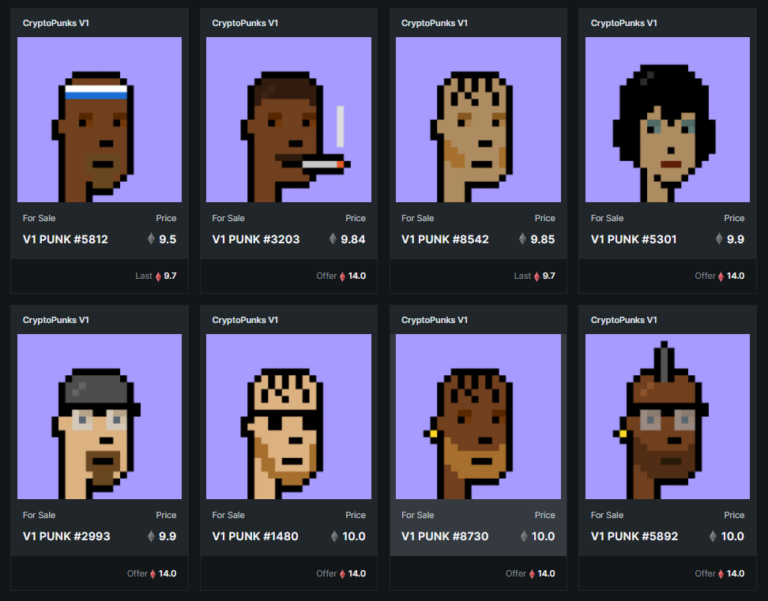
The biggest-selling NFT collection of all time has two competing versions, threatening to undermine the value of the tokens and faith in the industry itself.

Holders of the original non-fungible token (NFT) collection CryptoPunks V1 have filed a counter-DMCA notice to overturn a request by creator Larva Labs to delist the collection from OpenSea.

Larva Labs issued the DMCA notice — a takedown notice by copyright holders — earlier in the month, arguing it maintains the license for the V1  tokens and no longer wants them to be traded, as they undermine the value of the current V2 series. The V1 community is arguing that as close to US$50 million has been spent on the V1s, the community holds at least some ownership over the assets.

As the legal proceedings continue, the case will be closely watched for what it may reveal about the future of copyright laws and the potential need for oversight within the industry.

“I’m really excited to see how it does play out,” said Yehuda Petscher, strategist at NFT data aggregator CryptoSlam, telling Forkast it’s one of the more significant stories we’ve seen on the NFT scene to date. “All eyes are on it: we’re talking about the biggest brand in NFTs with Larva Labs and CryptoPunks, so it’s going to be a wild one.”

The V1 series was the original minting of the CryptoPunks collection but were replaced by the current V2 models upon the discovery of a bug that allowed buyers to instantly withdraw the Ether used to purchase them, leaving sellers with no profits. Existing holders of the series were airdropped updated V2 versions which became the standard, authorized versions of the collection.

Petscher himself is a V1 holder, which he bought as he recognized the historic significance of the initially discarded collection.

CryptoPunks are the most traded NFT collection in the world, with over US$2 billion in sales volume across their 10,000 units. If the V1s are considered legitimate, that would double the supply of CryptoPunks and potentially deflate their unit price.

Larva Labs had actually sold 210 ETH or over US$600,000 worth of CryptoPunks V1 prior to issuing the takedown order, as the company thought selling the tokens would give the impression they were not of any value — a fact the firm now recognizes was a poor decision.

The V1s have already been delisted from OpenSea only weeks after launch once the V2s were issued, as they were perceived to be inauthentic. Once the V1s were wrapped and listed on competing marketplace LooksRare, however, OpenSea reversed course once they began growing in popularity.

But the impacts of the case go beyond simply the price, as some have suggested it could see an NFT standard introduced in the industry in order to protect copyright — and investors.

“Until there is the NFT standard, it is very tough to police each and every single transaction and collection in the market,” Anndy Lian, founding member of NFT creative studio Influxo, told Forkast, explaining that blockchain is useful for determining ownership but does not guarantee copyright. “The industry is still very much driven by speculation and price and if this continues you will see a lot more of these cowboys running around in the crypto market and in the NFT space,” he added.

CryptoSlam’s Petscher disagrees, saying all the information required to verify an asset is already stored on the blockchain along with the token itself, it’s just a matter of educating people to read and interpret the data that is stored there.

“The beauty of the blockchain is you don’t need that kind of oversight,” he said. “You don’t need certain regulations because some of these things are now indisputable. That is the power of the blockchain.”

The V1 CryptoPunks are still available through LooksRare, the upstart marketplace that has transacted greater sales volumes than OpenSea since launching in early January, though they have a significantly lower floor price of 9.3 ETH (US$26,500) compared to 72.69 ETH for the V2s. 


Original Source: https://forkast.news/all-eyes-cryptopunks-center-copyright-legal-dispute/

Anndy Lian is an early blockchain adopter and experienced serial entrepreneur who is known for his work in the government sector. He is a best selling book author- “NFT: From Zero to Hero” and “Blockchain Revolution 2030”.

Currently, he is appointed as the Chief Digital Advisor at Mongolia Productivity Organization, championing national digitization. Prior to his current appointments, he was the Chairman of BigONE Exchange, a global top 30 ranked crypto spot exchange and was also the Advisory Board Member for Hyundai DAC, the blockchain arm of South Korea’s largest car manufacturer Hyundai Motor Group. Lian played a pivotal role as the Blockchain Advisor for Asian Productivity Organisation (APO), an intergovernmental organization committed to improving productivity in the Asia-Pacific region.

An avid supporter of incubating start-ups, Anndy has also been a private investor for the past eight years. With a growth investment mindset, Anndy strategically demonstrates this in the companies he chooses to be involved with. He believes that what he is doing through blockchain technology currently will revolutionise and redefine traditional businesses. He also believes that the blockchain industry has to be “redecentralised”.

j j j

Crypto community high on hopes after positive signals from India, Russia govts

Crypto community high on hopes after positive signals from India, Russia govts
My Additional comments:
1. After the initial green signals from India and Russia, what is next for Crypto Industry?
With the green lights from India and Russia, we are seeing an increase in Bitcoin’s spot volume in the last 24 hours on BigONE Exchange. The pricing of BTC has also increased by more than 2.5%. A huge country like Russia that embraces crypto is positive news for the whole world. We have seen more retail investors in the communities starting to feel comfortable and bullish. This is especially so in the meme coins’ communities. Still, I want to caution all that the bullish shift could be short term as it still appears negative in the charts for the longer term. With India and Russia taking their stand on crypto, I will do many other countries taking reference from them and following their footsteps. Some of the other countries that I am giving advice on are also more receptive after two big countries accepted cryptocurrencies.
2. Do you think that different regulations around the globe will help the industry or the world should come as one?
The world would not and should not come as one as it is not feasible for most nations. Cryptocurrencies are seen as bridges between worlds and the new regulations in place will serve as a financial connector between countries. This could also mean that cryptocurrencies would be further scrutinized, monitored and monitored. Those who see decentralisation as removing control and governance will not be happy with regulations. While those who really want crypto to grow will see the acceptance by the regulators as a sign of further disruptions.
3. What would be the key concerns of industry, post regulations?
There will be a lot of changes post regulations. We will see the real issues when the countries start to implement and allow crypto into their system fully. I hope the other countries can use Singapore’s sandbox model for instance to simulate the possible scenarios before going into full-scale implementation. There should be awareness programs in the country to tell new users what is crypto, the ups and downsides of investing in crypto and other taxations issues too. The education process will empower users to make better decisions, hence fewer headaches for the regulators.

Crypto community high on hopes after positive signals from India, Russia govts

Synopsis

Crypto industry at large is positive on the announcement and believes that the governments across the world are stepping ahead to take a big awaited call in the digital assets

After Russia’s intentions to regulate crypto, players in India and across the globe are high on hopes over the new-age asset class.

They are expecting that two major nations – India and Russia – have stepped ahead for the legitimisation of the crypto assets, and more major economies may join the forces soon.

However, India has made it clear that the legitimate or illegitimate are separate questions and the government is simply taxing the gains from the crypto transactions, which is its sovereign right.

On the other hand, the Putin government is eyeing crypto regulations, bucking the recommendation from its central bank to ban the mining and trading of the private digital tokens.

Crypto industry at large is positive on the announcement and believes that the governments across the world are stepping ahead to take a big awaited call in the digital assets.

Anndy Lian, Chairman, BigONE Exchange said that a country like Russia embracing crypto is positive news for the whole world. More retail investors in the communities are starting to feel comfortable and bullish, especially on memecoins.

“With India and Russia taking their stand on crypto, many other countries may take reference from them and follow in their footsteps,” he added.

Sathvik Vishwanath, Co-Founder and CEO, of Unocoin said that it will be a matter of time before more and more countries start looking at the crypto industry in a positive way.

The ones who had shied away from cryptos in the past are changing their perspectives and Russia is one of them, he added. “On the other side India has taken the wait and watch policy, but is not opening up with its views.”

Crypto fanatics, who see decentralisation as removing control and governance, will not be happy with regulations put across by the authorities across the globe.

Dileep Seinberg, Founder and CEO, Thinkchain said that every nation is likely to have its own cryptocurrency, with a potential to build a crypto-economy globally.

However, the industry players do not believe that the world should join the force and come as one to regulate the crypto assets uniformly. They do not see this as a viable option.

Cryptocurrencies are seen as bridges between worlds and the new regulations in place will serve as a financial connector between countries, said the experts.

The world would not and should not come as one as it is not feasible for most nations, said Lian of BigONE. “This could also mean that cryptocurrencies would be further scrutinized, monitored and monitored.”

It would be an unrealistic home for specific guidelines to be applicable for the entire world as one. At the tech level there definitely is uniformity irrespective of which country it is working in.

“The taxation, regulations, and enforcement differ which needs to be handled by the governments within the country,” said,” Vishwanath of Unocoin.

Once the regulations are out in different parts of the world, there will be a lot of changes through. However, experts said that governments, authorities and regulators should primarily focus on education and awareness about the asset class.

“We will see the real issues when the countries start to implement and allow crypto into their system fully,” Lian said. “I hope the other countries can use Singapore’s sandbox model for instance to simulate the possible scenarios before going into full-scale implementation.”

“Most important industry concerns would not come from technology but to see if few companies can monopolies like any other industry in the world,” said Sienberg. “This might damage the very fabric of the decentralised crypto world.”

Anndy Lian is an early blockchain adopter and experienced serial entrepreneur who is known for his work in the government sector. He is a best selling book author- “NFT: From Zero to Hero” and “Blockchain Revolution 2030”.

Currently, he is appointed as the Chief Digital Advisor at Mongolia Productivity Organization, championing national digitization. Prior to his current appointments, he was the Chairman of BigONE Exchange, a global top 30 ranked crypto spot exchange and was also the Advisory Board Member for Hyundai DAC, the blockchain arm of South Korea’s largest car manufacturer Hyundai Motor Group. Lian played a pivotal role as the Blockchain Advisor for Asian Productivity Organisation (APO), an intergovernmental organization committed to improving productivity in the Asia-Pacific region.

An avid supporter of incubating start-ups, Anndy has also been a private investor for the past eight years. With a growth investment mindset, Anndy strategically demonstrates this in the companies he chooses to be involved with. He believes that what he is doing through blockchain technology currently will revolutionise and redefine traditional businesses. He also believes that the blockchain industry has to be “redecentralised”.

j j j