Exclusive: Inside Snowfro’s Collaboration With Oracle Red Bull Racing and Bybit

Exclusive: Inside Snowfro’s Collaboration With Oracle Red Bull Racing and Bybit

First launched into motion in late July, the Velocity Series, a digital art-focused joint project between Oracle Red Bull Racing (ORBR) and crypto exchange Bybit, with curation from AOI, has recently stepped into the third of its four drops.

The web3 project melds speed, technology, and artistry from globally recognized digital artists — which have included, up to this point, Rik OostenbroekPer Kristian Stoveland, and most recently Art Blocks founder and Chromie Squiggle creator Erick Calderon, aka “Snowfro.”

Digital artworks featured in the project draw inspiration from race team analytics and, more specifically, the RB19 F1 car’s telemetry. Additionally, each stage aligns with the 2023 Formula 1 races in the Netherlands, Japan, the United States, and Abu Dhabi.

For an exclusive inside look at the concept, curation, and creation of the Velocity Series, we spoke with ORBR, Bybit, AOI, and Calderon.

Concept

Taking a closer look at the concept, ORBR explained to us that “The merging of art and racing in the Velocity Series represents a dynamic fusion of two seemingly distinct worlds.”

It explained that the project was designed with a dual purpose to offer broader motorsport enthusiasts an immersive introduction to the realm of digital art, as well as provide its own fans with a tangible connection to their favorite team through unique team-inspired designs.

Other considerations included a fan engagement initiative designed to introduce web3 fans to the world of racing, with an underlying hope to transform them into lifelong ORBR supporters.

“This collaboration underscores both Oracle Red Bull Racing and Bybit’s commitment to constantly innovate and push boundaries in both motorsport and the digital space,” shared ORBR.

ORBR, known for its collaborations with traditional artists like Mr.Doodle, chose a more avant-garde path in the web3 domain. They commented, “We identified two clear markets within the world of web3 for us to focus on – native crypto enthusiasts and ORBR fans who are web3 non-rejectors, and this project aimed to serve the crypto enthusiast audience of people already appreciative of existing digital art.”

Emphasizing digital and generative art, ORBR highlights its commitment to “pushing the boundaries of technology and innovation.” In the Velocity Series, ORBR and Bybit aimed to make digital art accessible to diverse collectors, reflecting their vision of inclusivity. They stated, “This decision is rooted in our vision of inclusivity, inviting diverse participants into this pioneering movement.”

The series offers both exclusive and publicly available collectibles, evolving with the season for a richer experience. Additionally, a remix competition via Joyn.XYZ is underway until October 24. ORBR expressed their admiration for Snowfro’s /// collection, noting its minimalist yet impactful theme, and said, “As the name suggests, /// embodies a minimal yet impactful theme. We were truly inspired by how artworks with similarly simple motifs, like Dmitri Cherniak’s The Goose and Grant Yun’s Cow, successfully encouraged the artistic community to generate remixes.”

Curation

Curating the collection is AOI, a foundation for emerging art and technology with a focus on the convergence of the two — which the foundation shared it found a “vibrant expression” of in the Velocity Series project.

“The curation process was a meticulous journey, where we facilitated the creative interaction between the artistic realm and the data-driven domain of Oracle Red Bull Racing,” AOI shared, explaining, “Our role was to provide a fertile ground where artists could explore, interpret, and transcend the conventional boundaries of digital art inspired by racing data.”

Speaking to the artist selection process, AOI shared that “Our criteria were rooted not only in artistic excellence but also in the ability to synergize with big brands.”

The foundation explained that it sought out artists whose past engagements with notable brands “honed their capability to align creative prowess with brand ethos, ensuring a seamless blend of artistic and commercial objectives.”

However, one of the other and perhaps more significant considerations was identifying artists who “embrace boundary-pushing and are unafraid to explore never before seen concepts.”

“Continual innovation with each release is crucial to highlighting the technologies that underpin digital art.”

AOI

Creation

Calderon delved into the inspirations behind stage three of the Velocity Series, highlighting his love for driving and speed as major influences on the /// project. He elaborated, “As I have participated in the world of racing, mostly as a hobbyist, I see extensive use of italicized fonts to demonstrate a more dynamic vibe, and the forward slash is a character that is in an eternal state of italics and therefore felt like a great way to encapsulate motion or speed in a single character.”

The /// project aimed to distill motion into its most basic form, resonating with Calderon’s affinity for minimalism and echoing the simplicity of his renowned Chromie Squiggle collection.

In addition to its visual simplicity, /// introduces a tactile element through embroidery. Calderon commented on this choice, saying, “There are also limitations to what can be done, and while I’m excited to potentially push those boundaries in the future, this initial project was going to be complex enough simply to make it exist and work. So something simple felt critical, and I can apply my color techniques to simple shapes — although again, it was a learning process to figure out how to make gradients within the limitations of embroidery.”

Despite its physical limitations, some fans of the work on X have shared that they see a direct connection to Chromie Squiggle in ///, something Calderon said he loves to hear, as he hopes to “continue to apply a common thread to my work where it is recognizable as being part of the same body.”

He expanded on this thought, stating, “Perhaps specifically to the micro-brand element of the project, what PFPs and GenArt have taught me is an inherent desire for people in the digital realm to express themselves as individuals within a broader family or group.”

Calderon compared the constraints of embroidery to custom ceramic tile mosaics, a technique he used prior to Chromie Squiggle and employed in his recent project, heart + Craft, with Prohibition’s Jordan Lyall. Discussing the choice of embroidery, Calderon clarified that it was crucial for him, saying it was a key component of his involvement in the Velocity Series.

He confessed, “To be perfectly candid, I’m utterly overwhelmed and overcommitted as it is,” and added, “While I’m always proud and excited for new opportunities to get to express myself through art, I have had many of those opportunities already and felt that I could not justify the bandwidth that was going to go into this unless I could do something that tested new ideas.”

Calderon revealed a long-standing interest in generative embroidery, having pitched the idea of a supporting infrastructure to Art Blocks over a year ago. He remarked, “It was not utilized much, and I realize oftentimes it is critical to demonstrate a proof of concept for others to be willing to go deep into rabbit holes to want to consider a concept for their own work. I definitely had to intimately learn the craft of embroidery to pull this together, which required hours of research through trial and error.”

He expressed his enthusiasm, stating, “I’ve been really excited to demonstrate generative embroidery at scale for a really long time, and this provided the perfect opportunity to showcase what Art Blocks Engine built that facilitates this.”

Calderon emphasized the significance of the live algorithm in generative embroidery. He explained, “At Art Blocks, we render PNGs basically in an effort to be backward compatible with the majority of aggregation platforms, but the reality is that the digital artwork is animated and has options for the user to customize it based on their mood, whether in a party mood or a lonely mood, you have control of the way the digital is presented on your screen, down to the background color.” He also provided insight into the interactive features of the artwork, allowing users to modify its appearance using various keyboard controls.
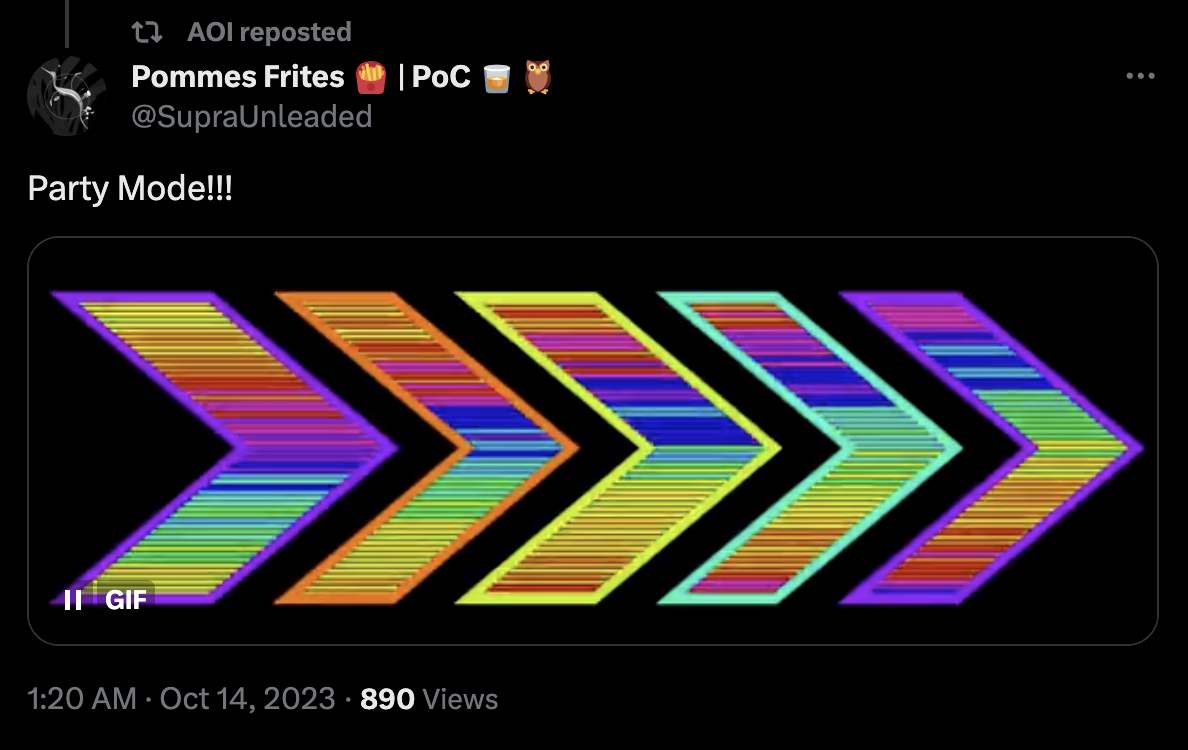
Calderon emphasized the importance of aligning the physical and digital realms in the world of NFTs, stating, “What felt critical though is that the main subject would match with the embroidered output, which is also generated by the algorithm.”

He introduced a concept called “digital optional/physical optional” to promote wider adoption of NFT technology. Calderon believes that participation in the content a creator produces shouldn’t be determined solely by one’s presence in the physical or digital space.

Calderon remarked, “They can keep that physical object — imagine a scratch-off with a seed phrase or an IYK-linked product and onboard into web3 at their own pace, on their terms.” He also fondly mentioned collaborating with his wife Mara on the Velocity Series, saying, “I’ve really enjoyed collaborating with my wife Mara, as she’s been so supportive of this crazy journey I’ve been on over the last three years and here there was a project that could lean into her skillset and area of expertise.”

Catalyst

“As the curtain falls on this project, our aspiration is to leave a lasting imprint on the digital art community,” shared Anndy Lian, head of partnerships at Bybit, adding, “We envisage the Velocity Series as a catalyst for more such innovative rendezvous between new communities, fostering a culture of exploration, learning, and appreciation for digital art that transcends traditional boundaries.”

Calderon further outlined that there is a general incompatibility between the ability to prove ownership of a digital object and the ability to prove ownership of a physical object. As a result, he sees the digital object as a permission mechanism to facilitate the creation of the physical — rather than a one-to-one relationship like a COA or Soul Bound Token where the two are locked together.

In conclusion, he shared, “Projects like this one really let me test these ideas out, especially if over time we see people take the embroidery file that comes with their mints and use it to make their own stuff like backpacks and shirts, etc., because they are the owners of the work.”

Teasing at what’s to come, Oracle Red Bull Racing said, “We are announcing the fourth artist very soon. They are, in our opinion, a real innovator in the space, and they have released a number of collections recently that are pushing the boundaries in terms of digital art and interactivity.”


Source: https://nftnow.com/features/exclusive-inside-snowfros-collaboration-with-oracle-red-bull-racing/


Anndy Lian is an early blockchain adopter and experienced serial entrepreneur who is known for his work in the government sector. He is a best selling book author- “NFT: From Zero to Hero” and “Blockchain Revolution 2030”.

Currently, he is appointed as the Chief Digital Advisor at Mongolia Productivity Organization, championing national digitization. Prior to his current appointments, he was the Chairman of BigONE Exchange, a global top 30 ranked crypto spot exchange and was also the Advisory Board Member for Hyundai DAC, the blockchain arm of South Korea’s largest car manufacturer Hyundai Motor Group. Lian played a pivotal role as the Blockchain Advisor for Asian Productivity Organisation (APO), an intergovernmental organization committed to improving productivity in the Asia-Pacific region.

An avid supporter of incubating start-ups, Anndy has also been a private investor for the past eight years. With a growth investment mindset, Anndy strategically demonstrates this in the companies he chooses to be involved with. He believes that what he is doing through blockchain technology currently will revolutionise and redefine traditional businesses. He also believes that the blockchain industry has to be “redecentralised”.

j j j

Entertainment’s Next Evolution: AI, Web3, and Data Privacy

Entertainment’s Next Evolution: AI, Web3, and Data Privacy

The ways we consume media, interact with technology, and protect user data are constantly changing. Web3 and Artificial Intelligence (AI) are new technologies that are transforming the media and entertainment landscape even further.

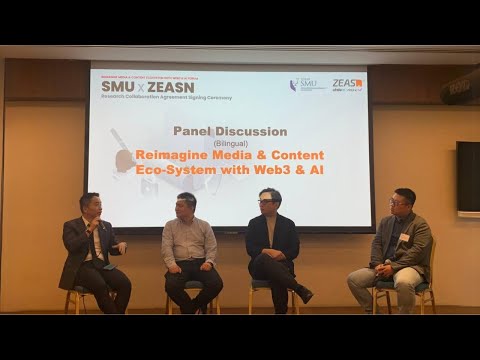
In a panel discussion titled “Reimagine Media & Content Ecosystem with Web3 & AI,” Feida Zhu (Associate Dean at SMU), James Liu (Director at Alibaba Cloud), Raymond Chung (CTO at ZEASN), and Anndy Lian (Advisor at Bybit) discussed the impact of these technologies on the industry.

Here is a recap of the event:

AI and the Changing Face of Television

With the proliferation of smartphones and portable devices, traditional TV viewership has been on the decline. People are now looking for more convenient and interactive ways to consume content. This shift has prompted experts to contemplate the future of television.

Many believe that AI is the key to making television more interactive and engaging. AI can offer personalized recommendations, provide real-time interaction, and enhance the overall viewing experience. AI-powered TVs can respond to voice commands, adapt to users’ preferences, and even offer educational content for children.

Anndy commented:

“AI can transform TV from a passive experience into an interactive one. Imagine a world where your TV is not just a screen but a knowledgeable companion. It can ask what kind of movie you’d like to watch, suggest content based on your preferences, and even help you with tasks like gaming or education.”

He added that AI can play a significant role in generating high-quality content. By using AI technology, content producers can create engaging, diverse, and unique content, ensuring that there is always something exciting to watch.

Raymond shared his experience:

“The integration of AI technology into the content creation process is another exciting prospect. With AI’s ability to generate high-quality content, it becomes possible to produce a plethora of new, engaging materials. This means AI can generate dynamic, interactive, and even personalized content, enhancing the user’s experience.

AI’s capabilities can extend beyond entertainment to areas like education and gaming. For instance, AI can create educational content tailored to a student’s learning style or generate interactive gaming experiences that adapt to a player’s skills and preferences. With AI, content creation is limited only by our imagination.”

Web3 and the Promise of Transparency

As the entertainment industry moves towards a more decentralized and transparent ecosystem, Web3 technology is gaining prominence. Web3, built on the principles of blockchain and decentralized networks, aims to provide a secure and transparent environment for content creators, users, and service providers.

James explained:

“One major advantage of Web3 is data privacy and security. Traditional platforms often collect massive amounts of user data, raising concerns about privacy and data breaches. With Web3, data can be stored securely on decentralized networks, ensuring that users have more control over their personal information.”

Feida continued by say that Web3 also enables creators to tokenize their influence. By using blockchain, content creators can create and manage their tokens, which represent their influence or popularity. These tokens can be traded or used within the ecosystem, creating a more fair and sustainable economy for content creators and their audiences.

Moreover, the transparency of blockchain can help combat piracy issues. Blockchain technology can track and verify content ownership, making it difficult for unauthorized parties to distribute content illegally.

To make the most of AI in user engagement, trust, and control are paramount. We must be cautious of deep fakes and manipulated content. This is where blockchain technology comes in as a control tool. By utilizing blockchain to verify the authenticity of content, we can ensure that what we see and hear is genuine.

Additionally, blockchain can offer transparency and accountability, which are essential in combating misinformation and promoting reliable content. By combining AI’s creativity with blockchain’s security, we can create a safer and more immersive digital landscape.

See the Full Panel Here

Monetization and the Creator’s Economy

Feida emphasized to all that Web 3, with its cryptocurrency and decentralized platforms, opens up new monetization opportunities.

Creators can use Web3 to create and sell non-fungible tokens (NFTs) of their content. This gives them a new way to monetize their work and reach a wider audience. The Creator’s Economy allows users to create content and share their experiences. AI, together with blockchain, can enhance the value of these experiences.

Users can be incentivized to produce content that resonates with a wide audience. From anime to soap operas, the possibilities are endless. AI and blockchain technologies provide a win-win situation for content creators and consumers, driving user engagement to new heights.

The Challenge of Data Privacy

While AI and Web3 technologies hold tremendous promise, they also raise concerns about data privacy. AI models require vast amounts of data to function effectively, and this data can potentially be misused or exploited.

Anndy shared his views:

“The responsibility falls on both service providers and users to protect data privacy. Service providers must design robust systems to ensure that sensitive data is stored securely and accessible only to authorized personnel. Users, on the other hand, need to be cautious about the information they provide and understand the implications of sharing personal data whether is it Web2 or Web3.”

Additionally, the development of privacy-focused AI models and encryption methods is crucial in safeguarding user data in the AI-driven world.

The Bottom Line

The evolution of entertainment is driven by AI, Web3 technology, and the demand for greater data privacy and security. The transformation of television into an interactive experience, the promise of Web3 for transparency and fair content monetization, and the challenges of data privacy all shape the future of the entertainment industry.

As we move forward, it is essential to embrace these technologies while being mindful of data privacy and ethical AI practices. The entertainment industry is on the cusp of a revolution, and only those who adapt to this changing landscape will thrive in the digital age.

This event is supported by Singapore Management University and Moledao.


Source: https://www.techopedia.com/entertainments-next-evolution-ai-web3-and-data-privacy

Anndy Lian is an early blockchain adopter and experienced serial entrepreneur who is known for his work in the government sector. He is a best selling book author- “NFT: From Zero to Hero” and “Blockchain Revolution 2030”.

Currently, he is appointed as the Chief Digital Advisor at Mongolia Productivity Organization, championing national digitization. Prior to his current appointments, he was the Chairman of BigONE Exchange, a global top 30 ranked crypto spot exchange and was also the Advisory Board Member for Hyundai DAC, the blockchain arm of South Korea’s largest car manufacturer Hyundai Motor Group. Lian played a pivotal role as the Blockchain Advisor for Asian Productivity Organisation (APO), an intergovernmental organization committed to improving productivity in the Asia-Pacific region.

An avid supporter of incubating start-ups, Anndy has also been a private investor for the past eight years. With a growth investment mindset, Anndy strategically demonstrates this in the companies he chooses to be involved with. He believes that what he is doing through blockchain technology currently will revolutionise and redefine traditional businesses. He also believes that the blockchain industry has to be “redecentralised”.

j j j

Asian nations more cautious of crypto regulation after Hamas taps digital assets for Israel strike

Asian nations more cautious of crypto regulation after Hamas taps digital assets for Israel strike

Kapoor, who was a speaker at one of the G20 committee meetings on cryptocurrency assets, said the statement had not been translated into action. It was time to revisit the declaration and come up with solutions to back it, he said.

Digital-currency wallets that Israeli authorities linked to the PIJ received as much as US$93 million in cryptocurrency between August 2021 and June this year, the WSJ report said, citing analysis by crypto researcher Elliptic.

Wallets connected to Hamas received about US$41 million over a similar time period, the report added, citing research by crypto analytics and software firm BitOK that is based in Tel Aviv.

“Some countries may bring up the narrative that banning cryptocurrencies is the way forward,” said Anndy Lian, Singapore-based author of the book NFT: From Zero to Hero.

“I would argue that banning cryptocurrencies would not stop terrorist financing, but rather drive it underground and make it harder to trace and stop,” he added. “Cryptocurrencies can be traced and tracked, while fiat (currency) such as US dollars cannot.”

Singapore and Hong Kong have regulated cryptocurrency markets, but most of the governments in the region are just beginning to understand the power of cryptocurrencies that could open up new financing opportunities.

However, investors’ faith has been time and again been tested by scandals and collapses of digital exchanges.

Hong Kong’s cryptocurrency sector was recently hit by a JPEX scandal in which more than HK$1.5 billion (US$192 million) went missing, prompting complaints against an ostensibly Hong Kong-based exchange, run by people who have still not been identified.

The revelation about Hamas funding could add to public discomfort, analysts said.

“The disclosure about Hamas could potentially lead to stricter regulations and enhanced scrutiny of crypto transactions in Singapore. It may prompt the MAS to enhance its oversight and enforcement of the crypto sector, as well as to collaborate more closely with other countries to prevent and disrupt terrorist financing through digital assets,” Lian said, referring to Singapore’s central bank.
The Monetary Authority of Singapore (MAS) has been taking measures to regulate the cryptocurrency industry, and has been one of the first to regulate the sector in Asia. Hong Kong has been following Singapore’s lead.

“While the government recognises the economic and social potential of cryptocurrency, it is also cautious about identifying and managing risks involved, such as consumer protection and anti-money-laundering/counter-financing of terrorism,” Lian added.

But cryptocurrencies could easily be tracked down “so this may not be the best way for terrorist organisations”, said Singapore-based Branson Lee, who runs custody solution provider Custodize.com.

“Finally, there are many tools to track and trace these funds. Overall, the crypto industry remains aware of these risks and has done well since to conform to many regulations from FATF (Financial Action Task Force) to jurisdictional compliance,” he said.

Southeast Asia, with nearly 700 million residents, has one of the world’s fastest-growing populations, with some 480 million of them as active internet users.

Consumers in countries like Vietnam and India have been among the fastest worldwide to adapt to cryptocurrencies, but authorities in many other places have not yet found a path to govern the ecosystem effectively.

India does not have any specific cryptocurrency regulations in place, but has been working on introducing legislation.

Earlier this month, local media reported that a probe by Indian police brought to light a case where 3 million rupees (US$36,000) in cryptocurrency was stolen from the digital wallets of a Delhi-based businessman and transferred to the accounts of Hamas.

Manhar Garegret, India head at digital wallet Liminal, highlighted that Hamas had launched campaigns on social media to raise funds through cryptocurrency, but Israel used its technical know-how to block the crypto accounts.

The case of digital theft in Delhi together with the report on Hamas funding showed why each country needed to have standards for cryptocurrency regulation and use technical know-how to integrate into a global standard, Kapoor said.

“Criminals are always one step ahead, but if you reverse-engineer processes, then you can have some solutions,” he said. “Every country is vulnerable to some extent or the other.”

Source: https://emeatribune.com/asian-nations-more-cautious-of-crypto-regulation-after-hamas-taps-digital-assets-for-israel-strike/

Anndy Lian is an early blockchain adopter and experienced serial entrepreneur who is known for his work in the government sector. He is a best selling book author- “NFT: From Zero to Hero” and “Blockchain Revolution 2030”.

Currently, he is appointed as the Chief Digital Advisor at Mongolia Productivity Organization, championing national digitization. Prior to his current appointments, he was the Chairman of BigONE Exchange, a global top 30 ranked crypto spot exchange and was also the Advisory Board Member for Hyundai DAC, the blockchain arm of South Korea’s largest car manufacturer Hyundai Motor Group. Lian played a pivotal role as the Blockchain Advisor for Asian Productivity Organisation (APO), an intergovernmental organization committed to improving productivity in the Asia-Pacific region.

An avid supporter of incubating start-ups, Anndy has also been a private investor for the past eight years. With a growth investment mindset, Anndy strategically demonstrates this in the companies he chooses to be involved with. He believes that what he is doing through blockchain technology currently will revolutionise and redefine traditional businesses. He also believes that the blockchain industry has to be “redecentralised”.

j j j