27 stats about NFTs in 2022 – who are the big winners

27 stats about NFTs in 2022 – who are the big winners

“Web 3.0 brings endless opportunities to many people, changes lives in Kenya, removes barriers in India and empowers developers in China to service global audiences during the COVID lockdown period. Your gateway to Web 3.0 is just one click away. Let’s innovate.”

– Anndy Lian.


At the beginning of the year, when the crypto market was red hot, it was extremely tough to understand what was going on in the NFT industry.

At the beginning of the year, when the crypto market was red hot, it was extremely tough to understand what was going on in the NFT industry.

The massive influx of collections, new marketplaces, and easy money in the space created the perfect mix of incentives for fraudulent activity. As we know, I published an article in October about NFT wash trading, several “OpenSea killers” were built entirely on fake activity, and not everything was as it seemed when you looked at NFT collection leaderboards. As the market crashed, so did activity across the board (both fake and organic).

But not all was negative. Several highly innovative NFT collections broke the mold of zany PFP images and proved a market for digital, non-fungible art existed.

While there was a proliferation of small collections and grassroots community-building in some corners of the industry (e.g., Solana and Magic Eden), the year also saw consolidation with the birth of the first NFT megacorp in Yuga Labs.

Instead of telling you what to think about 2022 and where the NFT world is heading in 2023, this article has the essential stats from last year so you can create your own analysis.

9 Stats about the NFT Industry

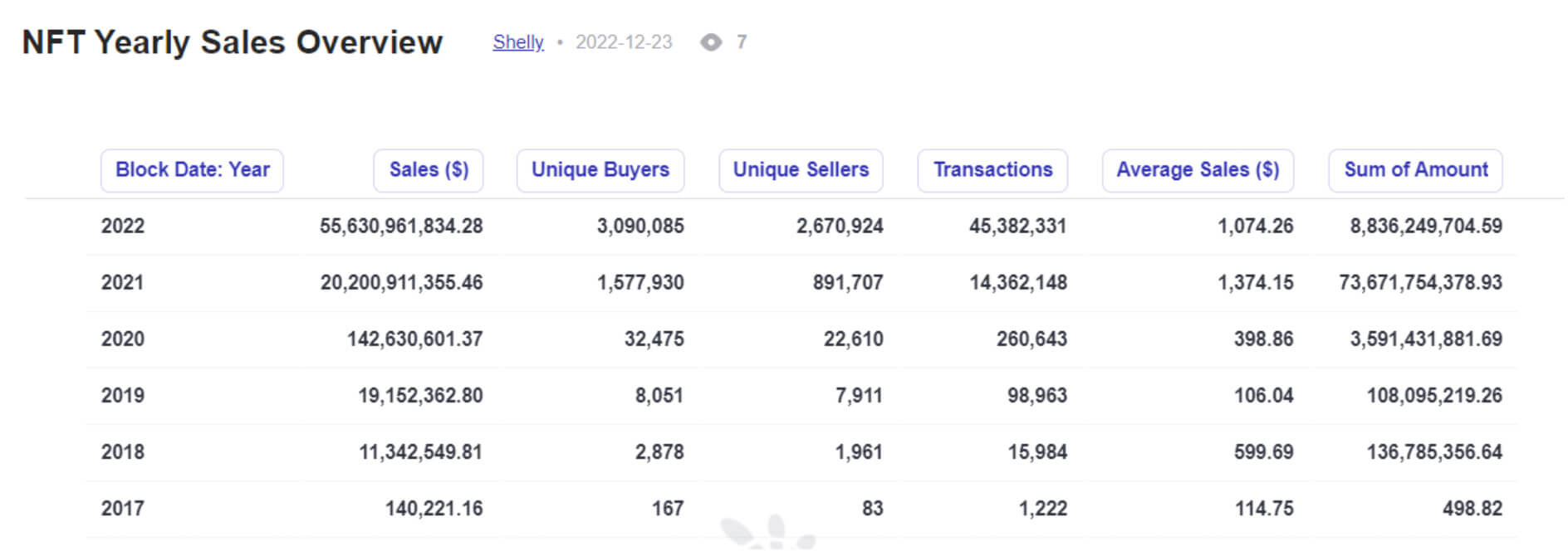
1. Total sales of NFTs in 2022 was $55.5B

This is up 175from $20.2B in 2021. When you compare 2020 to 2022 total sales, it is 390X more.
2. The market capitalization of the NFT industry peaked on April 4th at $41.5B

Market capitalization is calculated as the sum of each NFT valued at the greater of its last traded price and the floor price of the collection, respectively. Suspected wash trades have been filtered out.
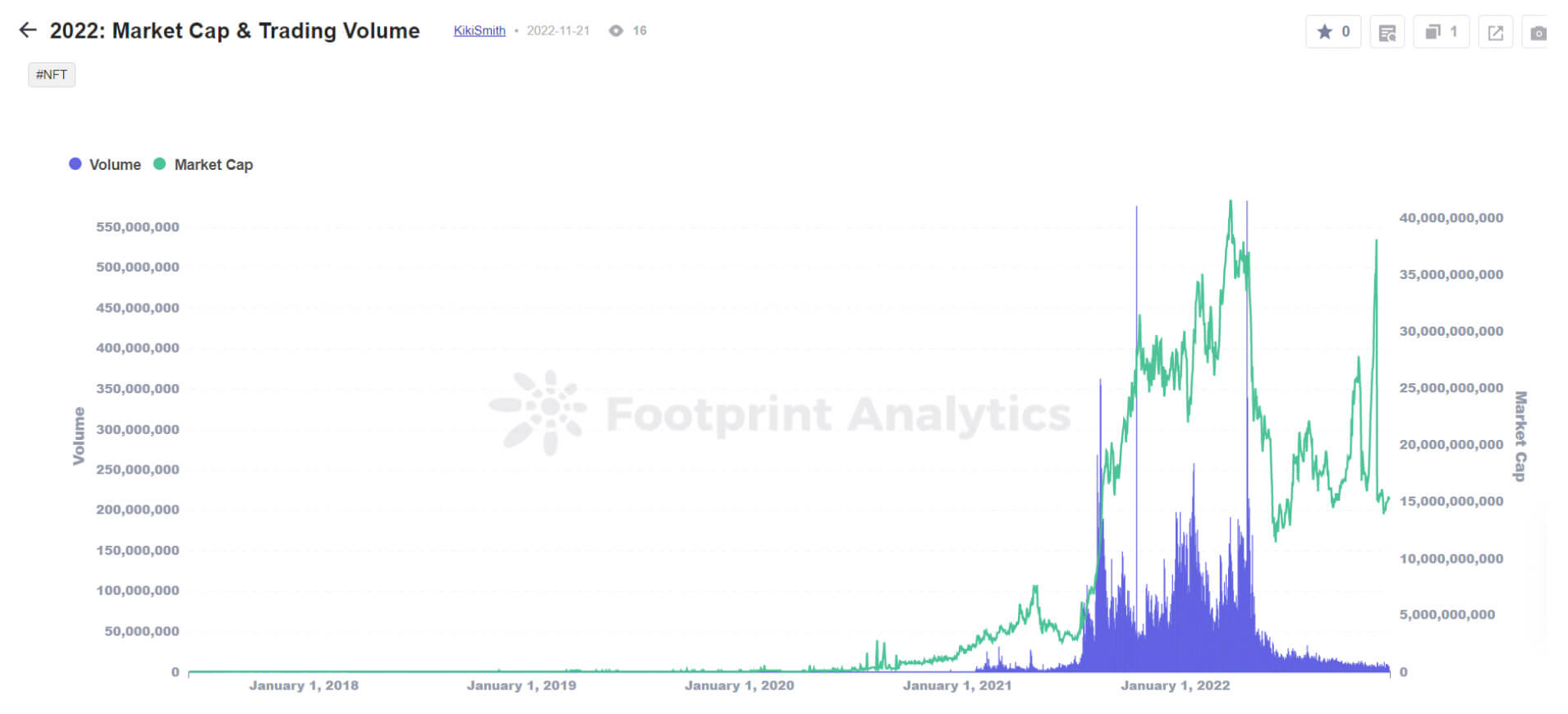
2022 Market Cap & Trading Volume

3. Roughly 85K NFT collections were launched last year

In 2021, there were around 14.5K collections, while the number nearly reached 99K by the end of 2022. Notice that Opensea remains the leader in both years.
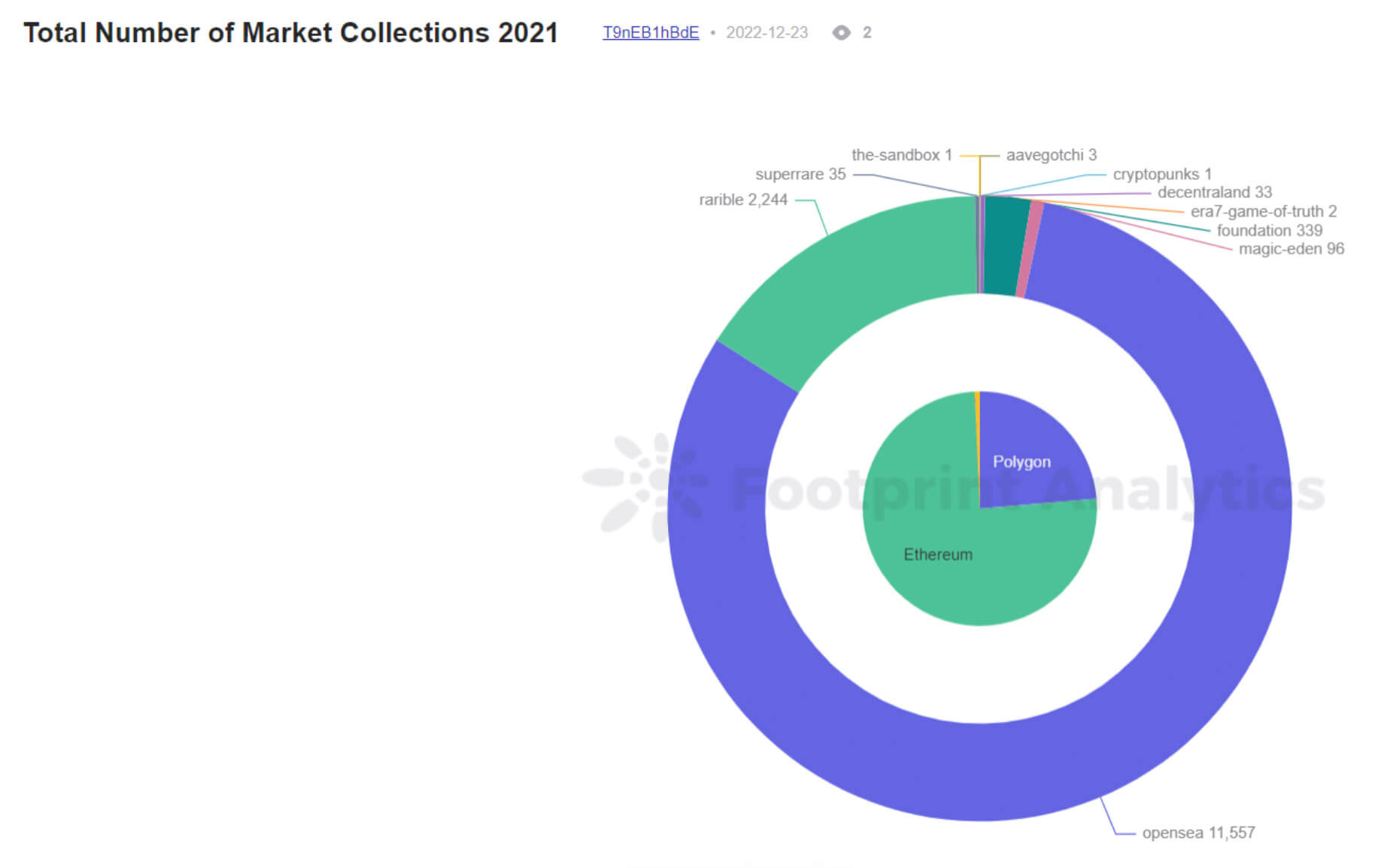
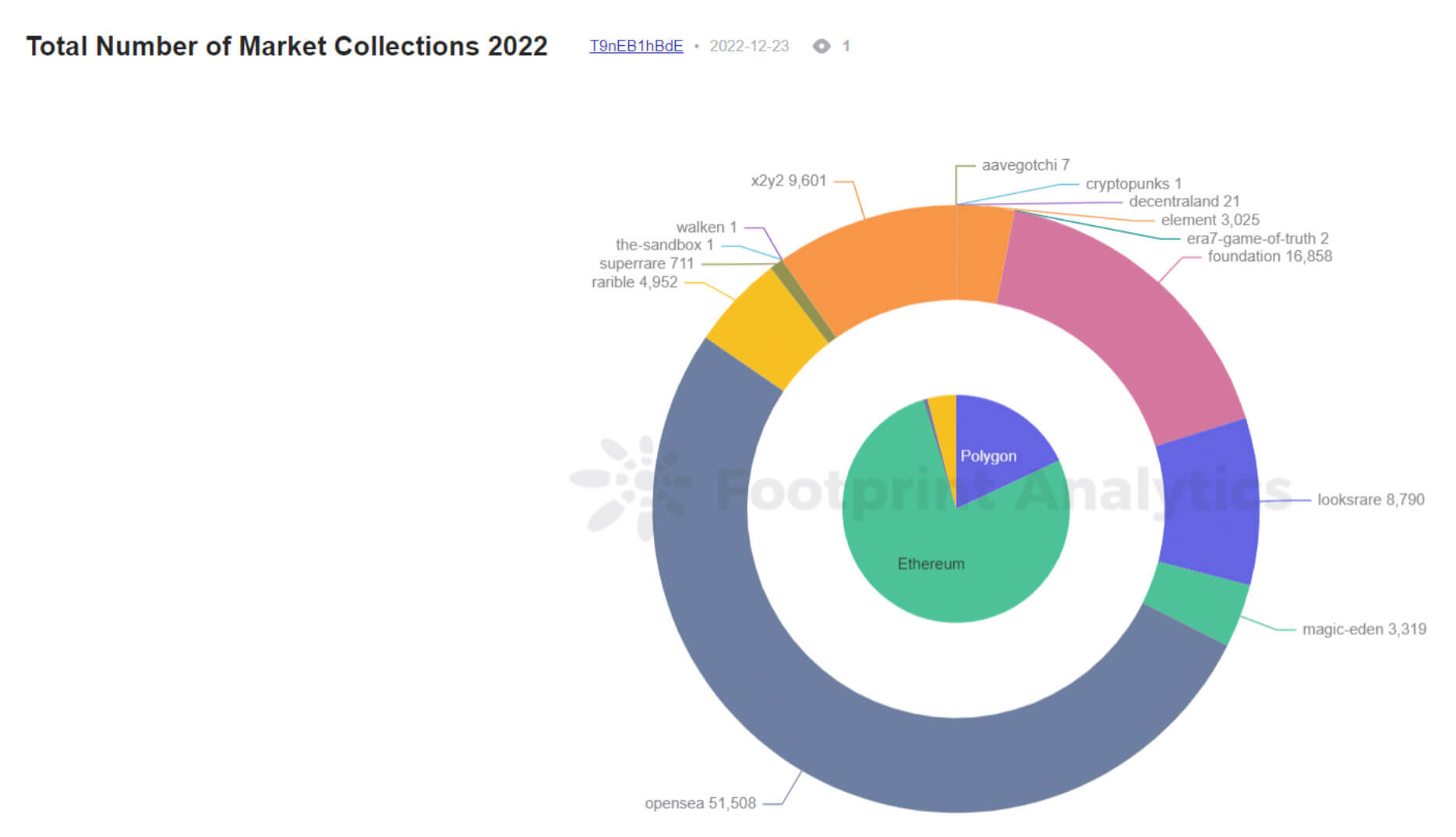
Total Number of Market Collections 2021
Total Number of Market Collections 2022
Total Number of Market Collections 2022 / Reference: Total Number of Market Collections 2021 vs Total Number of Market Collections 2022

4. About 7,700 collections had trading volume over $100K

Do note that the majority of this activity did not come from a legitimate, organic interest in the project based on the date collected.
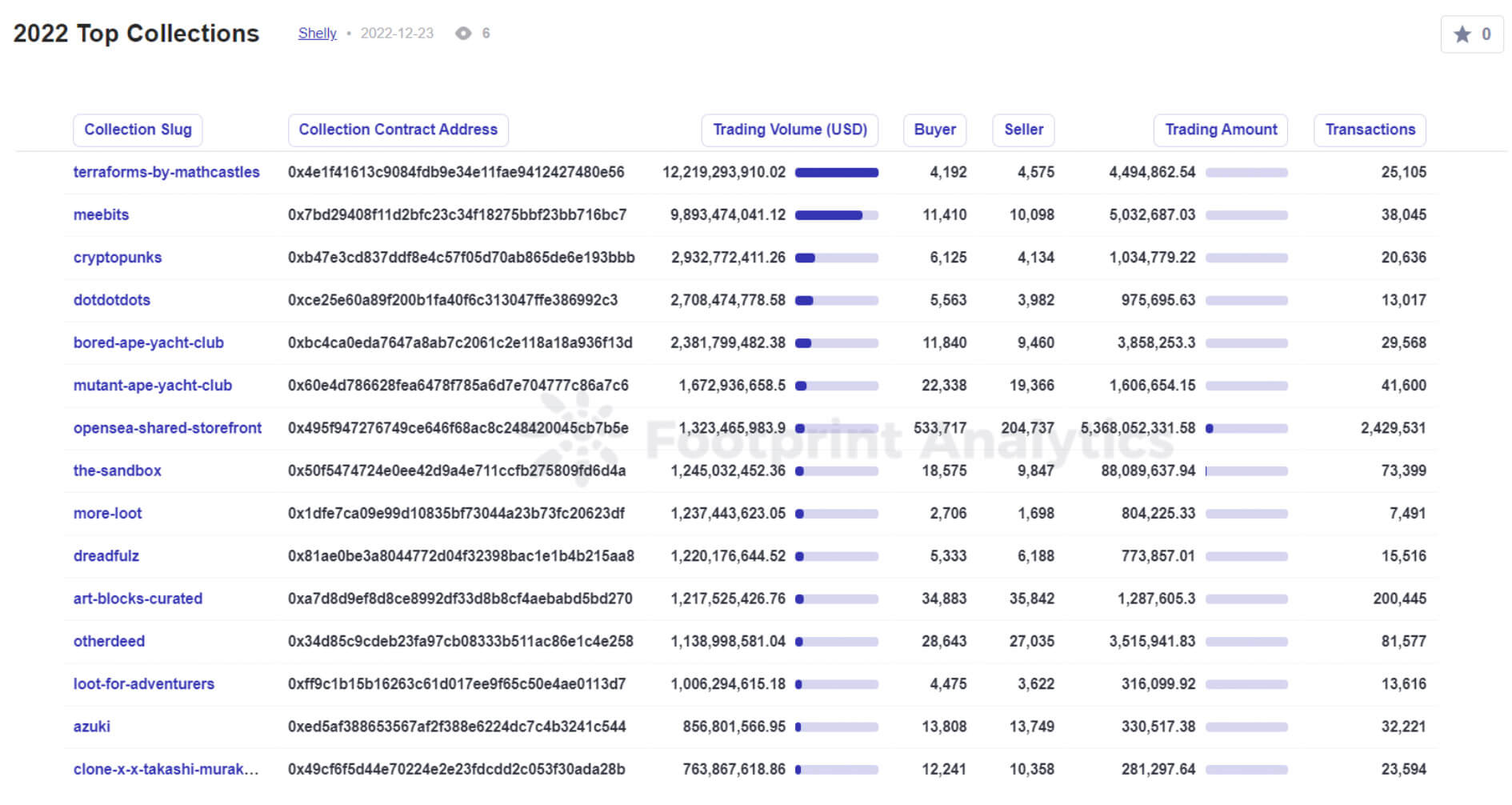
2022 Top Collections
2022 Top Collections / Reference: Top Collections 2022

5. Only 2,623 collections had more than 1000 unique buyers

As with all stats in the NFT industry, this one should be taken with a grain of salt due to the significant amount of wash trading, especially during the year’s first half.
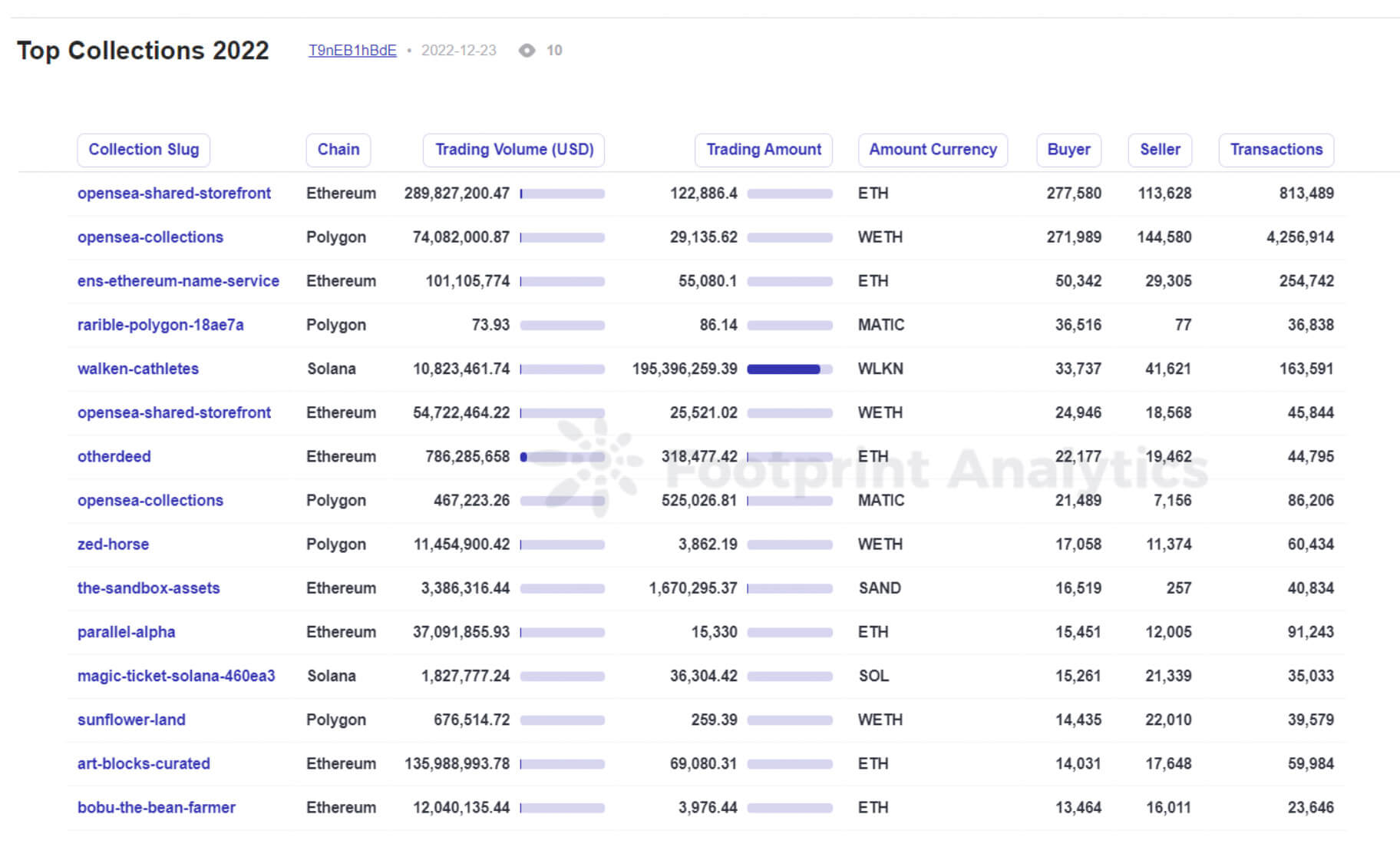
Top Collections 2022

Reference: Top Collections 2022

6. NFT trading volume reached its 2022 peak in January, with $17.4B in value

This was more than a 4x jump from the previous month (December 2021). This was also the month when Google searches for the keyword “NFT” reached their all-time high.
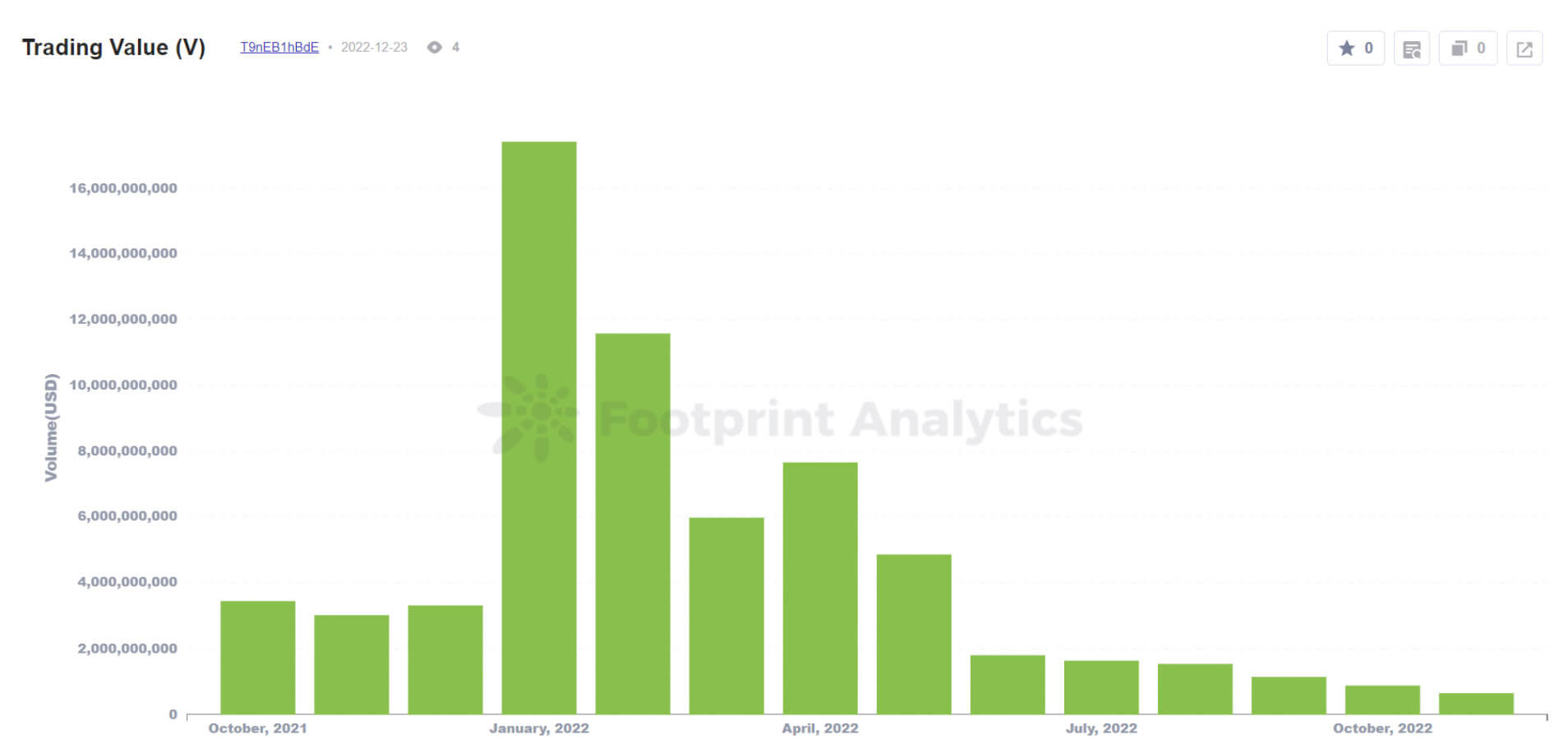
NFT Trading Value
NFT Trading Value

Reference: Trading Value (V)

7. The biggest gap between the number of sellers and buyers was in January, with about 200K more sellers than there were buyers.

Yet January was also the hottest month for NFT prices for most major collections, indicating that using these metrics as an analog for supply and demand has flaws.
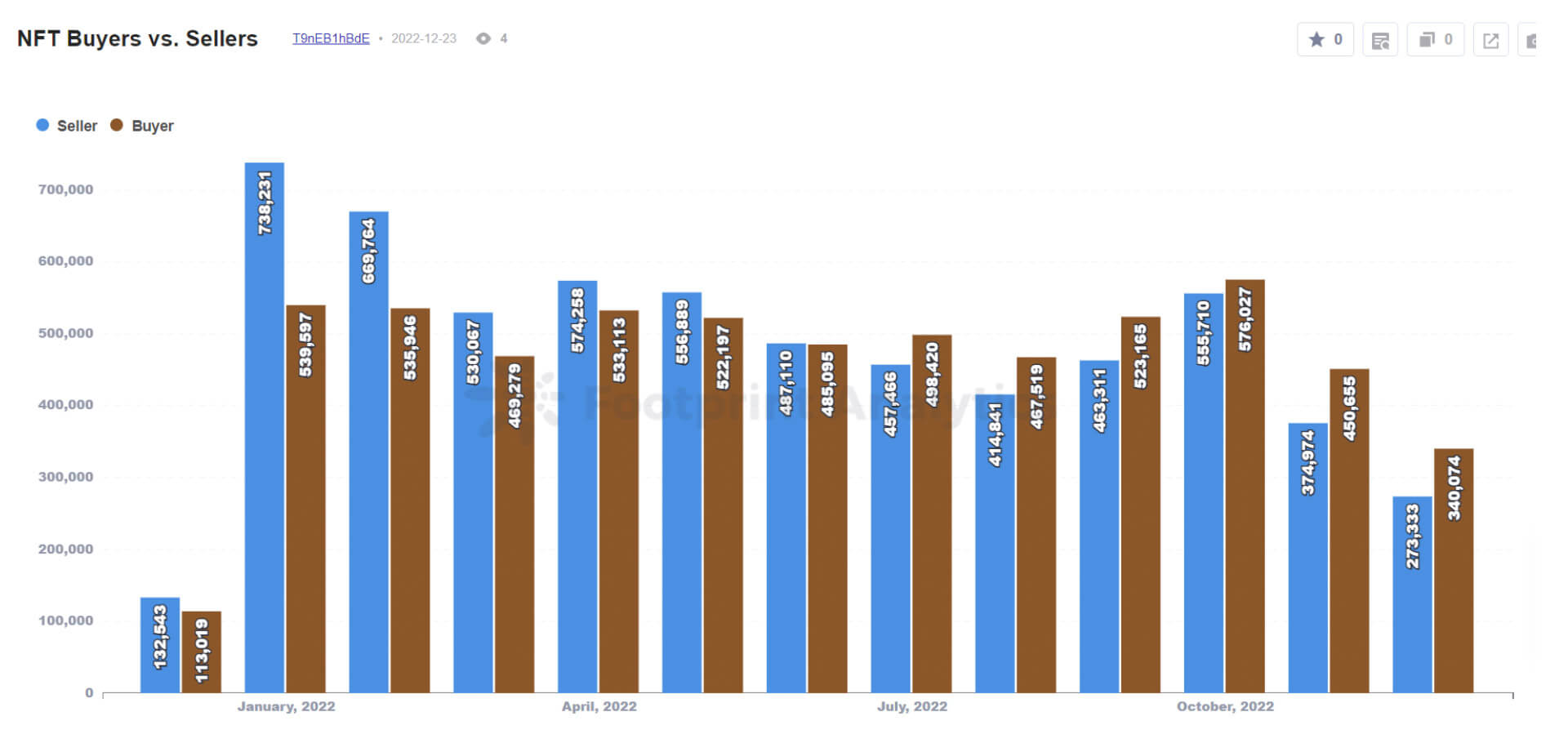
NFT Buyers vs. Sellers

Reference: NFT Buyers vs. Sellers

8. Last year, 46% of total NFT trading volume was likely to be caused by wash trading

There are several indicators and filters to detect suspicious activity. To identify these types of transactions, I use Footprint Analytics’ filters to separate transactions to the following formula:

  • a.) Overpriced NFT trades (10x OpenSea Average Price)
  • b.) Collections with 0% royalties (except CryptoPunks and ENS)
  • c.) An NFT bought more than a normal amount of times in a day (currently filtered for more than 3+)
  • d.) An NFT bought by the same buyer address in a short period (currently filtered for 120 minutes)
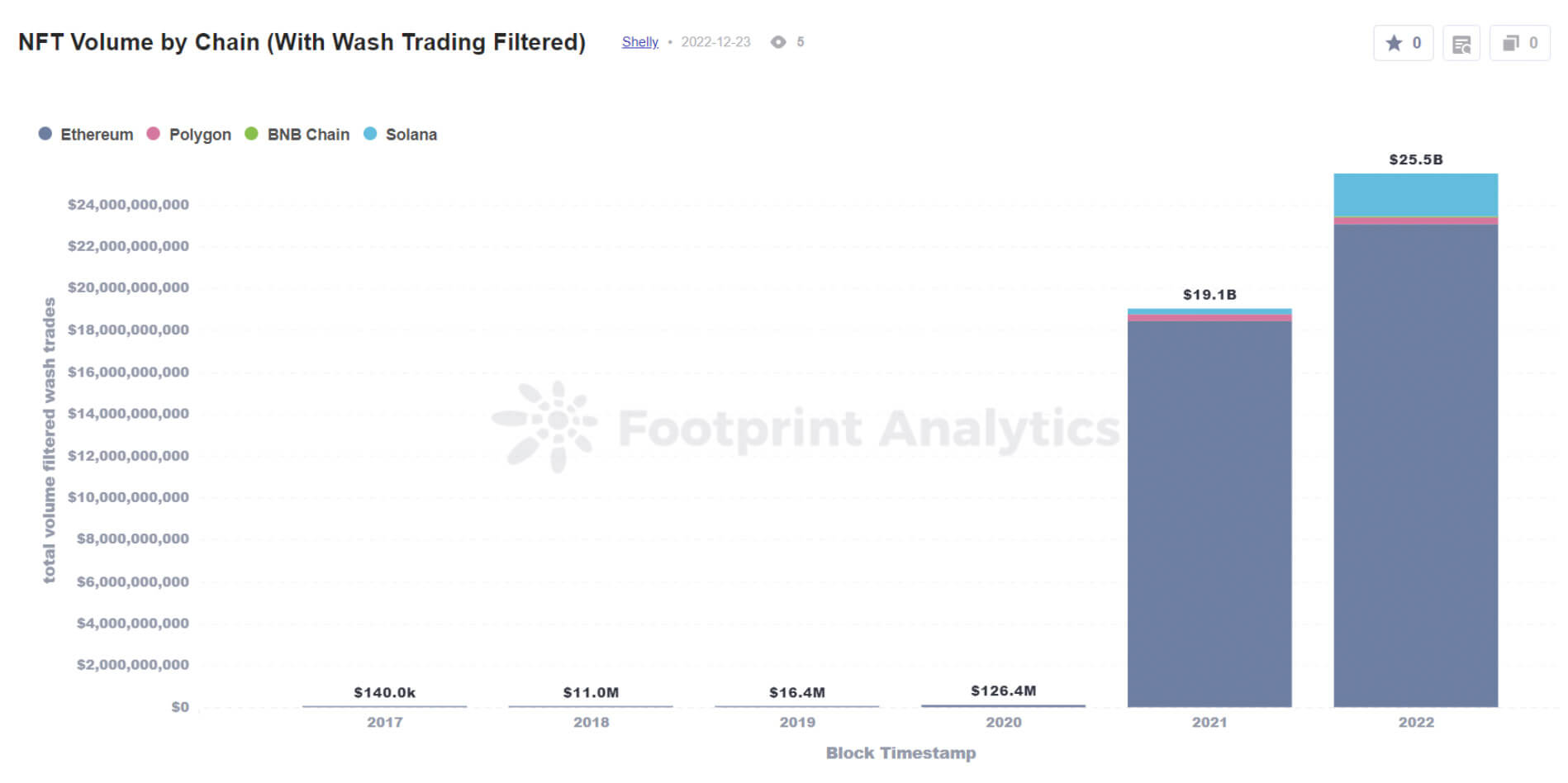
NFT Volume by Chain
NFT Volume by Chain / Reference: NFT Volume by Chain (With Wash Trading Filtered) vs. NFT Volume By Chain

6 Stats about NFT Collections

9. The collection with the largest market cap by the end of the year was CryptoPunks at $1.1B

Crypto Punks, launched by Larva Labs in 2017, was the first NFT collection to become a household name and have the highest floor price in the industry. Yuga Labs acquired the IP of the collection in March 2022.

Reference: 2022: Top Collections by Market Cap

10. Trading volume of major collections in the Yugaverse—Yuga Labs’ portfolio of products—was $3.1B

This sum includes Bored Ape Yacht Club, Mutant Ape Yacht Club, Bored Ape Kennel Club, Otherside, and CryptoPunks. It excludes Meebits, which had more trading volume than all of these combined,

Reference: Yuga Labs (Trading Volume in 2022)

11. Yuga Labs’ portfolio accounts for about 20% of the total market cap of the entire NFT industry

This sum includes Bored Ape Yacht Club, Mutant Ape Yacht Club, Bored Ape Kennel Club, Otherside, CryptoPunks and Meebits.

12. Without any wash trade filtering, Terraforms by Mathcastles had an astounding $12B in trading volume, more than any other collection, across 11,341 transactions

However, 99.8% of the volume and 46.3% of transactions were detected as wash trading.

Reference: NFT – Collections

13. When filtering out wash trading, CryptoPunks had the highest volume ($2.9B) followed by Bored Ape Yacht Club ($2.3B)

Reference: 2022: Top Collections by volume

14. ArtBlocks Curated was the 4th most traded collection by volume and amassed a market cap $325M

ArtBlocks demonstrated that there is a market for high-end artistic NFTs—it stands out among Yuga PFP projects, and metaverse land NFTs at the top of the rankings

15. There were 7 major collections whose volume was over 95% wash trading

For this stat, “major” means having over $1M in real trading volume. Terraforms by Mathcastles, More Loot, dotdotdots, Dreadfulz, Audioglyphs, CryptoPhunksV2, and Meebits.

6 Stats about Chains and Markets for NFT Projects

16. Ethereum had 95% percent of volume, 47% of transactions, and 71% of protocols

These figures are almost the same as in 2021. Based on the data, Ethereum is still the most widely used for NFT.

Reference: 2022 Market Share of Transactions by Chain and 2022 Market Share of Trading Volume by Chain and Yearly Number of NFT Protocols by Chain

17. Solana went from having no NFT protocols in 2021 to 5,335 in 2022

Solana is ranked third globally at the point of writing.

Another thing to note is that Ethereum grew from 420 in 2019 to 55,144 in 2022.
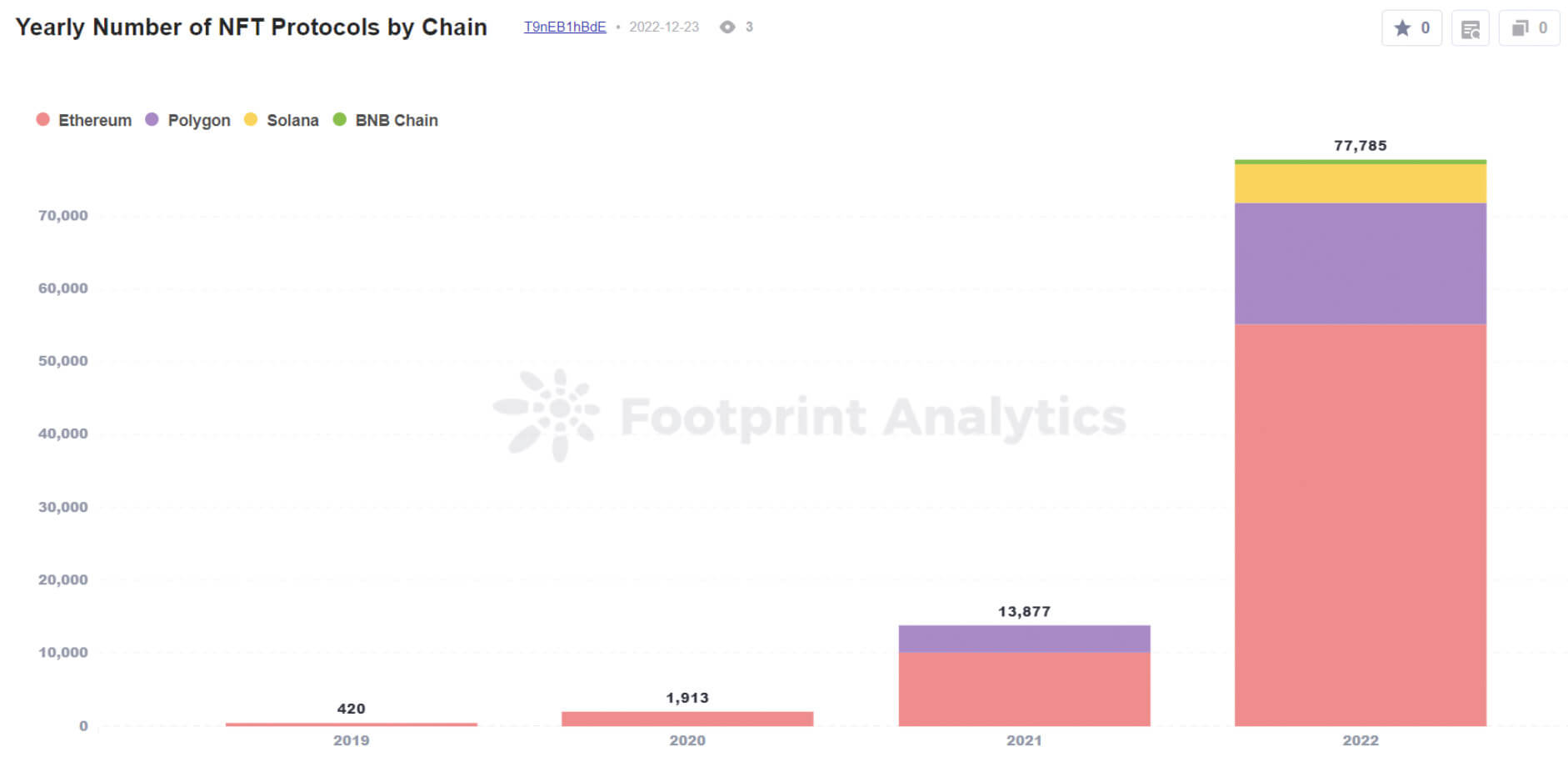
Yearly Number of NFT Protocols by Chain
Yearly Number of NFT Protocols by Chain / Reference: Yearly Number of NFT Protocols by Chain

18. OpenSea hosted 53% of all total collections

OpenSea remained the marketplace of choice for Ethereum and Polygon. However, Magic Eden capitalized on its Solana first-mover advantage to be the marketplace of choice for collections on this chain (OpenSea started listing them in April.) Note: a collection can list on multiple marketplaces.

Reference: 2022: Number of Marketplace Collections by Chain

19. Solana had more active users in October, with 411K, than Ethereum, with 392K

While most of the blue-chip collections and collectors transact on OpenSea and Ethereum, Solana built up a sizable community of NFT enthusiasts in 2022. Solana’s active users hovered between 20-45% of the total market share—October was the only month it overtook Ethereum for this metric

Reference: Chain Monthly Active User

20. OpenSea had 96,459 unique wallets make a transaction on the protocol on Feb. 2

This is more transactions than any other marketplace on any other day.

Reference: 2022 Marketplace Daily Active User

21. Over $903M in platform fees were generated on OpenSea, going to both the marketplace and creators

This made OpenSea the most profitable marketplace in terms of fees generated from trading (which went to the platform and are disbursed to creators.)

Reference: Top Marketplaces

6 Stats about NFT Investment & Fundraising

22. The NFT industry received a total of $2.98B in fundraising in 2022

The highest was in January 2022 at $964M. The lowest is in December at $29.4M.
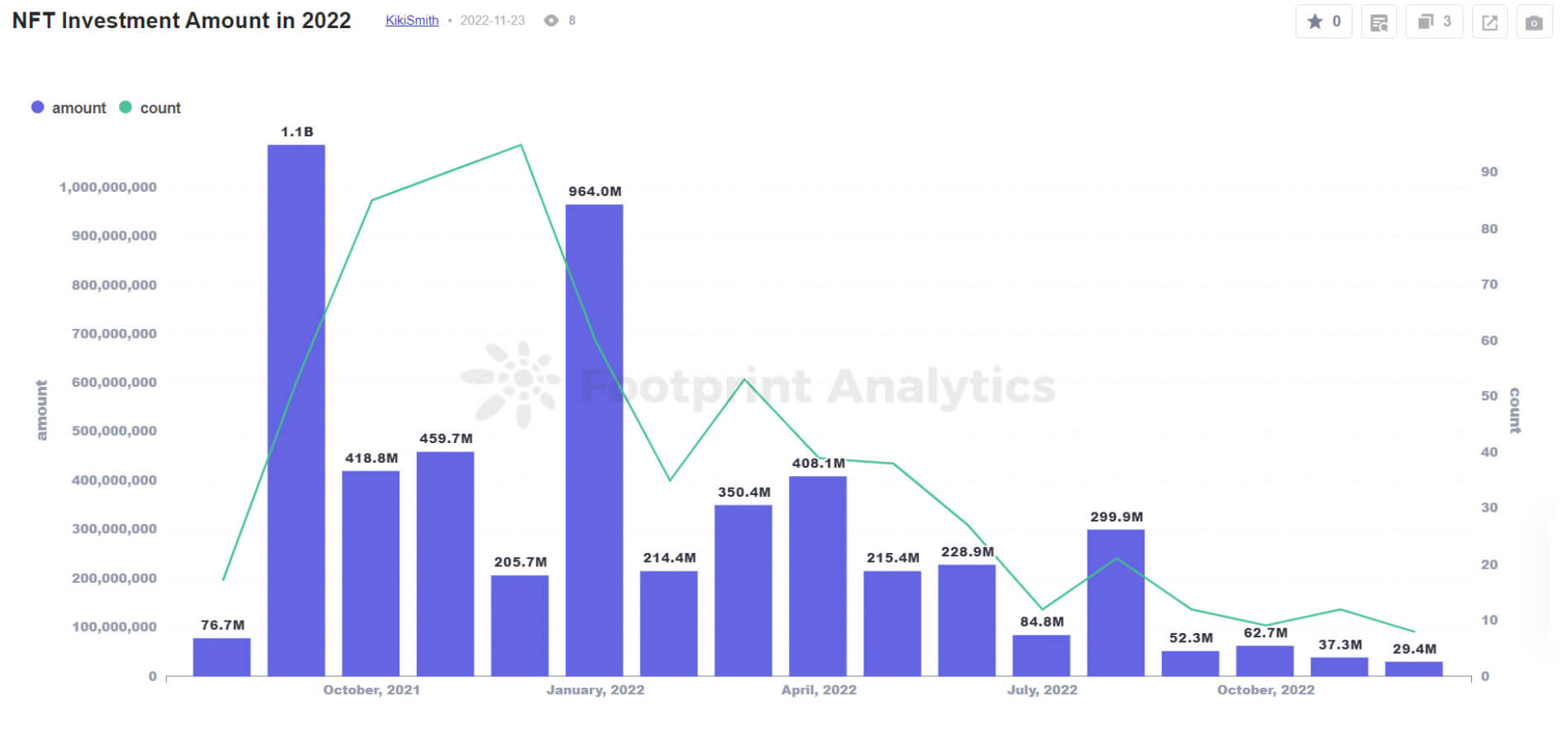
NFT Investment Amount in 2022
NFT Investment Amount in 2022 / Reference: NFT investment Amount in 2022

23. Animoca Brands closed the largest round of the year, $358M led by Liberty City Ventures

Animoca has said it will use the funding for strategic acquisitions and investments, develop its games and metaverse products, and acquire licenses for popular intellectual properties.

Reference: 2022 NFT Fundraising Details

24. There were 1,992 total fundraising rounds in 2022, 756 more than in 2021

Reference: Investment by Category in 2022

25. While NFT-related projects were the most popular category among VCs by the number of rounds, they were the 2nd-least popular in 2022

In 2022, general Web3 projects closed the most rounds (711), followed by DeFi (362), infrastructure (331), NFTs (326), and, finally, CeFi (257).
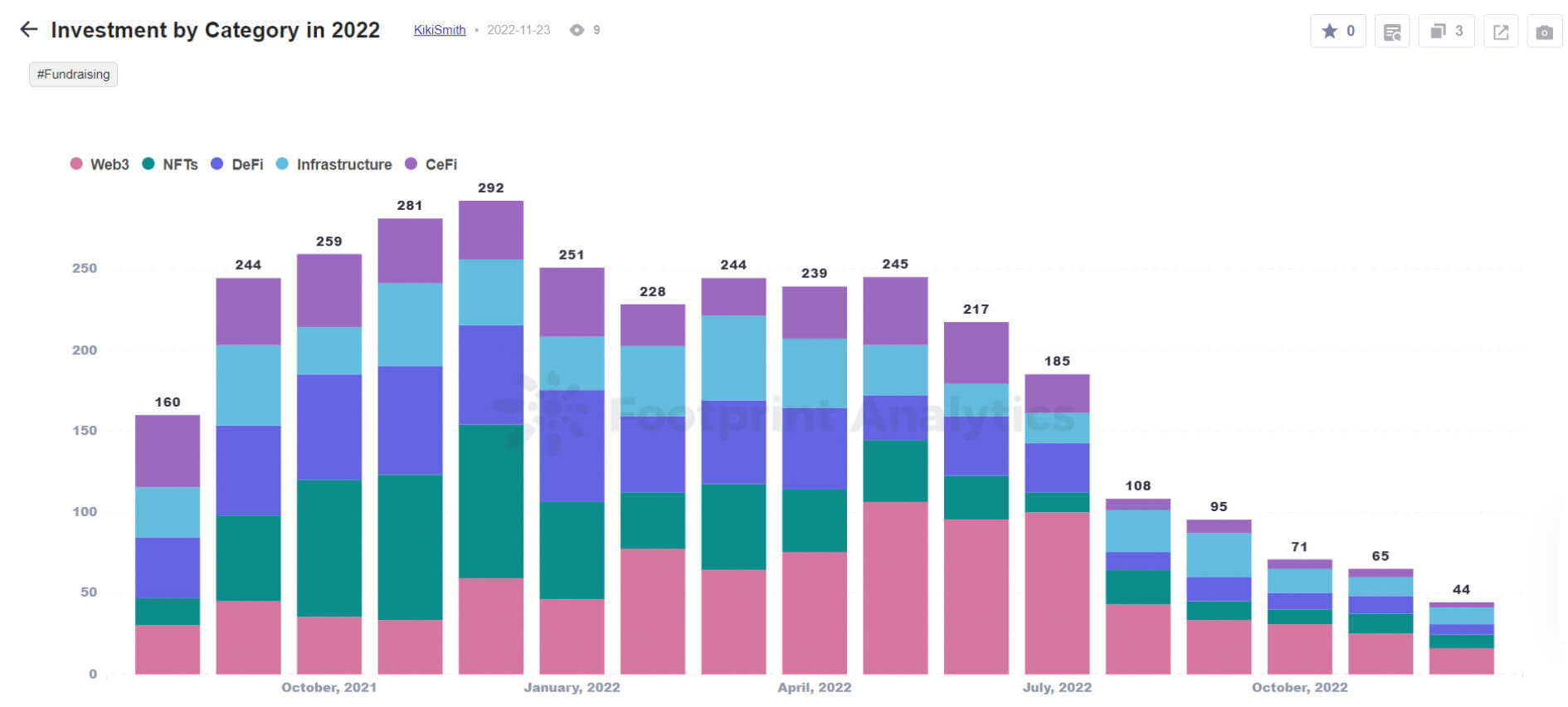
NFT Investment by Category in 2022
NFT Investment by Category in 2022 / Reference: Investment by Category in 2022

26. Seed rounds made up 81% of total NFT funding rounds

Reference: NFTs Funding Rounds

27. The 2 largest rounds for pure NFT projects went to OpenSea ($300M) and Dapper Labs ($250M)

The OpenSea round was one of only 5 Series C or D rounds in 2022. Dapper Labs is the studio behind the NBA Top Shot collection.

Key Takeaways

As we can see, Web 3.0 is proliferating. NFT is undoubtedly part of the whole Web 3.0 ecosystem. In the Web 3.0 ecosystem, NFTs are often used to facilitate the buying and selling of unique digital assets on decentralized platforms. These platforms use smart contracts to enable transactions without the need for intermediaries. They can facilitate the buying and selling of NFTs and allow NFT holders to earn passive income by lending out their NFTs. There are many use cases to showcase.

Web 3.0 will continue to draw more investment in 2023 based on some of the deal flows I see in the market. OKX Ventures and GSRV co-lead a $2 Million seed round for a Web 3.0 decentralized Identity platform. Binance Labs launched a $500M fund to support promising Web 3.0 projects and start-up firms with great potential earlier this year. Du Jun, the co-founder of cryptocurrency exchange Huobi Global, runs ABCDE Capital, a $400M Web 3.0 venture capital fund is dedicated to investing in web3 builders.

Apart from the crypto firms-led firms, it’s also true that traditional investment companies are beginning to take notice of the Web 3.0 ecosystem and are starting to invest in companies and projects that are working on decentralized technologies, such as blockchain and non-fungible tokens (NFTs).

There are several reasons why traditional investment companies might be interested in investing in web3 technologies. One reason is that the Web 3.0 ecosystem is still in its early stages and has much growth potential. Decentralized technologies have the potential to revolutionize many different industries, from finance and real estate to art and collectibles.

Another reason is that the Web 3.0 ecosystem is relatively uncorrelated with traditional financial markets, which can offer diversification benefits for investors. This can be especially appealing in times of economic uncertainty, when traditional financial markets may be more volatile.

Ending with a quote:

“Web 3.0 brings endless opportunities to many people, changes lives in Kenya, removes barriers in India and empowers developers in China to service global audiences during the COVID lockdown period. Your gateway to Web 3.0 is just one click away. Let’s innovate.” – Anndy Lian.


Source: https://cryptoslate.com/27-stats-about-nfts-in-2022-who-are-the-big-winners/

Anndy Lian is an early blockchain adopter and experienced serial entrepreneur who is known for his work in the government sector. He is a best selling book author- “NFT: From Zero to Hero” and “Blockchain Revolution 2030”.

Currently, he is appointed as the Chief Digital Advisor at Mongolia Productivity Organization, championing national digitization. Prior to his current appointments, he was the Chairman of BigONE Exchange, a global top 30 ranked crypto spot exchange and was also the Advisory Board Member for Hyundai DAC, the blockchain arm of South Korea’s largest car manufacturer Hyundai Motor Group. Lian played a pivotal role as the Blockchain Advisor for Asian Productivity Organisation (APO), an intergovernmental organization committed to improving productivity in the Asia-Pacific region.

An avid supporter of incubating start-ups, Anndy has also been a private investor for the past eight years. With a growth investment mindset, Anndy strategically demonstrates this in the companies he chooses to be involved with. He believes that what he is doing through blockchain technology currently will revolutionise and redefine traditional businesses. He also believes that the blockchain industry has to be “redecentralised”.


j j j

Bitcoin Has Died Nearly 500 Times as Bear Market Bottom Signals End of Crypto

Bitcoin Has Died Nearly 500 Times as Bear Market Bottom Signals End of Crypto
  • Bitcoin has been declared dead 465+ times from 2010
  • Over 124 articles claimed crypto was dead in 2017.
  • The first such claim was made in 2010 by the Underground Economist when Bitcoin was trading at $0.23.

Renowned Indian Author Chetan Bhagat wrote a column declaring that crypto is dead. Is it the sign at the bottom?

The article from the well-known author Chetan Bhagat focuses on how crypto is dead due to the collapse of FTX. He expressed his strong anti-crypto opinion stating that crypto is like communism which promises decentralization but ultimately leads to power in the hands of a select few.

Bitcoin declared dead 465 times.

Bitcoin has been declared dead 465+ times, according to a page in 99Bitcoins, that counts the total reported Bitcoin obituaries. The Underground Economist made the first such report with the title, “Why Bitcoin can’t be a currency,” when the price of Bitcoin was $0.23. The article is no longer live today.

Satoshi Stacker, a well-known crypto analyst, predicted that as more and more people hear about the damage caused by FTX, there will be more reporting on “Crypto is Dead.”

Is the bottom in?

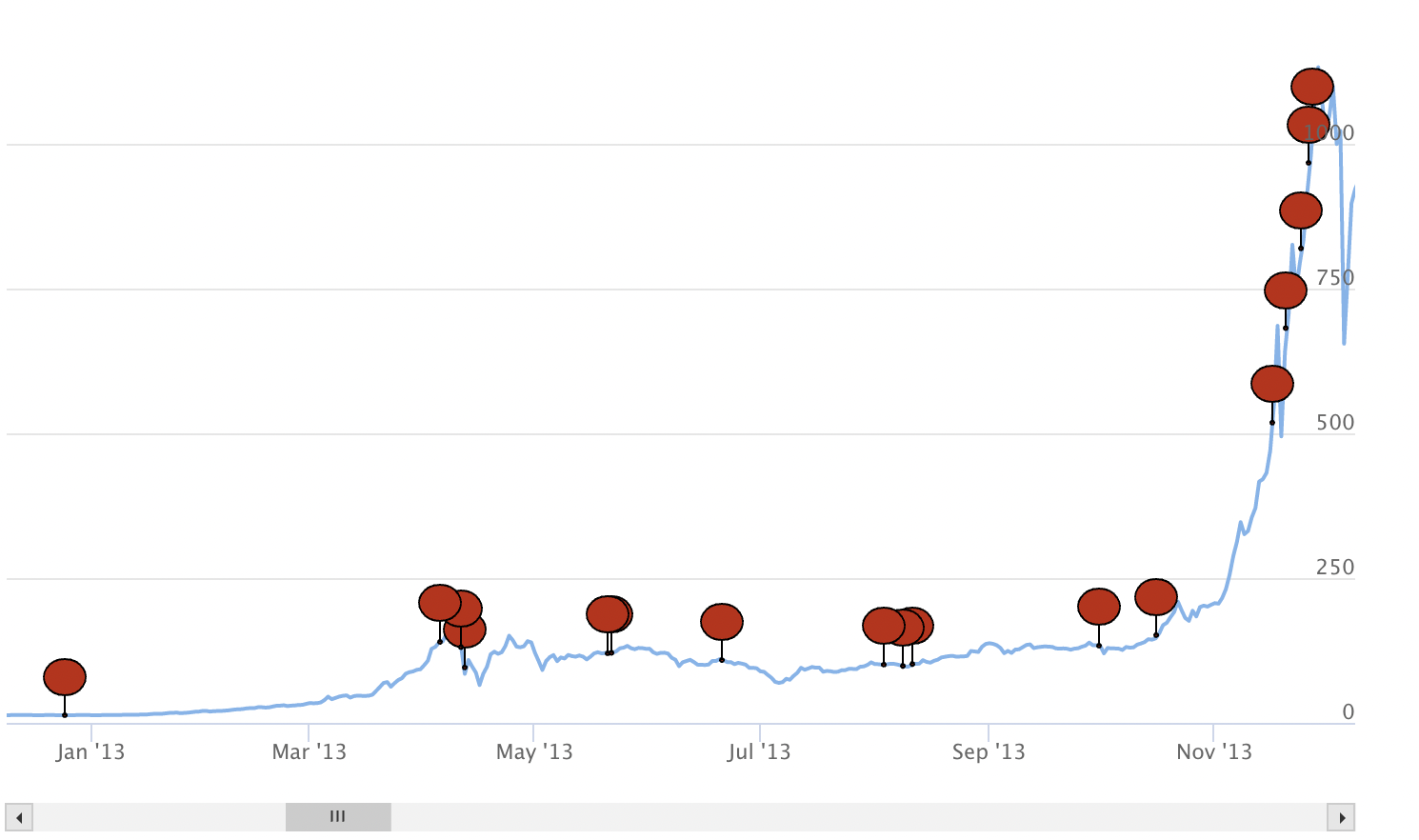
The crypto community believes that such articles are a signal for the bottom. Usually, during the market bottom, the FUD (Fear, Uncertainty, and Doubt) is at its peak. The frequency of articles claiming the death of crypto increases. The chart below shows that most articles with bearish sentiment were written when the market was preparing for a rally in Nov 2013.

Bitcoin bottom
Source: 99Bitcoins

Similarly, 93 obituaries were reported when the market bottomed in 2018. In 2020 various reports claimed Bitcoin was worthless, dead, and rat poison. The exception to this was in 2017 when over 124 articles were written declaring crypto dead due to multiple bans on crypto exchanges, Initial Coin Offering (ICOs) in China.


Source: https://beincrypto.com/bitcoin-has-died-nearly-500-times-as-bear-market-bottom-signals-end-of-crypto/


Anndy Lian is an early blockchain adopter and experienced serial entrepreneur who is known for his work in the government sector. He is a best selling book author- “NFT: From Zero to Hero” and “Blockchain Revolution 2030”.

Currently, he is appointed as the Chief Digital Advisor at Mongolia Productivity Organization, championing national digitization. Prior to his current appointments, he was the Chairman of BigONE Exchange, a global top 30 ranked crypto spot exchange and was also the Advisory Board Member for Hyundai DAC, the blockchain arm of South Korea’s largest car manufacturer Hyundai Motor Group. Lian played a pivotal role as the Blockchain Advisor for Asian Productivity Organisation (APO), an intergovernmental organization committed to improving productivity in the Asia-Pacific region.

An avid supporter of incubating start-ups, Anndy has also been a private investor for the past eight years. With a growth investment mindset, Anndy strategically demonstrates this in the companies he chooses to be involved with. He believes that what he is doing through blockchain technology currently will revolutionise and redefine traditional businesses. He also believes that the blockchain industry has to be “redecentralised”.
j j j

STRONG coin price prediction: Can token regain growth?

STRONG coin price prediction: Can token regain growth?

StrongBlock is the first of its kind decentralised platform attempting to make launching nodes, necessary for the smooth running of blockchains, cheaper and easier.

Its native cryptocurrency, STRONG token, has had quite the journey since launching in 2020, enjoying a rather fruitful 2021. Yet since then, the coin started to dramatically fall in the second half of January 2021, unable to reach past heights.

Can STRONG rise back to its October 2021 value and which factors are driving the STRONG/USD forecast?

What is the STRONG coin?

StrongBlock was founded in 2018 by ‘blockchain pioneers’ David Moss, Brian Abramson and Corey Lederer with the goal  to easily add secure, decentralised blockchains to any application.

It had taken the company, however, two years to launch its Blockchain-as-a-Service (BaaS) platform.

By tackling one of the biggest problems new blockchains face, StrongBlock managed to become the first and only blockchain-agnostic protocol that rewards its users for running nodes.

Nodes, which are vital for the existence of any blockchain, keep full copies of blockchain transactions but are hard to create and pricey to operate. This leads many nodes to run outdated software, store incomplete blockchain histories and be intermittently offline.

StrongBlock’s Nodes-as-a-Service (NaaS) function lets cryptocurrency miners create nodes in seconds. In turn, miners are rewarded in the form of the blockchain’s native cryptocurrency, STRONG, for maintaining the node without having to run their device 24/7.

Rewards can be boosted with StrongBlock non-fungible tokens (NFTs) that are available in four categories: bronze, silver, gold and platinum.

Once a node is launched, it can be used by anyone to access the blockchain the node was built for. So far, StrongBlock supports hundreds of nodes built for Polygon, Ethereum and Sentinel. The approximate amount to set up and run a full Ethereum node is $113.11 per month.

Being listed as an eligible node on StrongBlock is free, however, users should expect a mining deposit to amount to 10 STRONG tokens.

STRONG is an ERC-20 cryptocurrency built on the Ethereum network. Its original supply amounted to 10 million, however, after launching the second version of its Decentralised Finance (DeFi) protocol, StrongBlock ended up burning 94% of the original tokens limiting the supply to around 535,000 STRONG coins.

In the second version of its tokenomics paper, StrongBlock noted that the token:

  • Is primarily used for rewards.
  • Supports a low-inflation model with rewards mostly generated through node participation that may adjust in accordance to token valuation over time. In addition, deflationary measures will also be used including the burning of STRONG tokens in some transactions.
  • Establishes governance, which will eventually determine how StrongBlock works as a decentralised network.
  • Is helping the project reach a model of long-term, self-sustaining growth.

As of the time of writing (1 April), StrongBlock is rewarding 444,676 nodes.

Over 138,000 coins are currently in circulation, according to data provided by CoinMarketCap at the time of writing. STRONG currently has a market capitalisation surpassing $16m (£12.2m) and is ranked as the 828th largest cryptocurrency.

STRONG price analysis: Bear trend

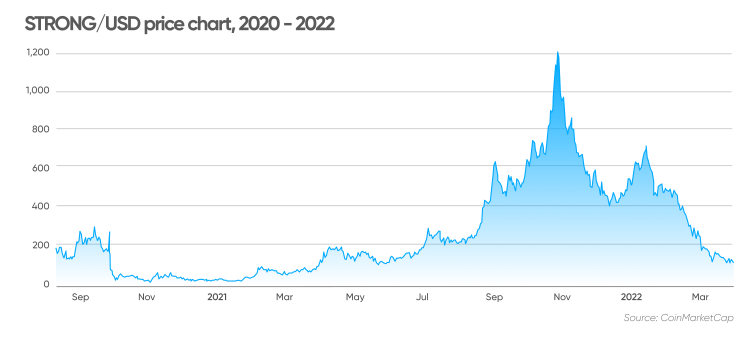
The STRONG cryptocurrency embarked on quite the journey during its two years in circulation. After reaching a record high of $1,193.31 on 28 October 2021, the StrongBlock coin failed to regain those levels, slumping to the $116 mark, as of 1 April 2022.

After a mini peak of $708.97 on 14 January 2022 the STRONG token started to drastically drop, losing 35.48% of its value in 10 days. Throughout February 2022, the STRONG coin value lost 47% amid broad negative market sentiment as tensions rose on the Russia-Ukraine border.

STRONG/USD price chart, 2020 – 2022

In the most recent STRONG coin news, the project announced that the StrongBlock had reached 270,000 nodes on 27 January 2022.

The number of nodes being activated on StrongBlock drastically increased in February 2022 from 285,000 on 3 February to 350,000 on 27 February. In addition, the token celebrated great success as it debuted third on the top 10 US trending coins for the week chart on CoinGecko on 18 February. This gave investors hope that the token’s price could still resurface.

STRONG’s price continued to decrease in the next couple of weeks, falling to $113.62 on 26 March 2022, its lowest value that month.

Last year STRONG’s price action seemed hopeful as it surged to a record high of $1,193.31 on 28 October 2021 as the blockchain announced the start of its metal NFT lottery where miners would be eligible to qualify to purchase one StrongBlock metal NFT for its original price in STRONG.

In terms of STRONG technical analysis, the short-term sentiment for the token was largely bearish as at the time of writing (1 April).

Relative Strength Index (RSI) reading of 31 was extremely close to the oversold territory. A reading of 30 or below would indicate that the asset has become undervalued and a trend reversal is likely. Meanwhile, the token was trading below its three, five and 10-day moving averages, indicating a bearish trend.

STRONG token price prediction: Key drivers

On 28 February 2022, StrongBlock published its roadmap for 2022 underlining some key goals including:

  • The launch of its new token, STRONGER, which plans to solve a number of problems that followed the success of the NaaS DApp.
  • The release of several new features including two new, different types of nodes, a node marketplace and node transfer.
  • The platform’s intention to build a Layer 1, EVM-compatible blockchain protocol that will be known as StrongChain with the bigger goal in mind of moving its NaaS platform to StrongChain and creating a community-oriented model that will unlock new economic layers, increase sustainability, make STRONG more resilient, and lay a new foundation for growth.

BigONE Exchange chair in Asia, Anndy Lian, told Capital.com that the token’s price could be struggling due to the platform being unable to gain retail investor understanding.

“STRONG brings more decentralisation to the current decentralised space by offering multi chain third party external nodes and other data oracles to build robustness and efficiency,” Lian exclusively told Capital.com.

“They believe the best way to adopt blockchain is through DAO governance and reward the community sufficiently. This idea works well on the paper but may not be well understood by the retail investors as a whole. Things might change when they list in the more major exchanges,” he added.

Thus far, the STRONG token has been listed on ChainSwap and Poloniex Exchange.

In the recent announcement by the project, StrongBlock warned investors to beware of scams, suggesting it has been prone to attacks in the past.

StrongBlock (STRONG) price prediction 2022 – 2025

Despite the latest downward price action, algorithm-based forecasting service WalletInvestor gave a bullish STRONG crypto price prediction at the time of writing (1 April). The site noted that STRONG is “an awesome long-term investment”, adding that it has a long-term earning potential amounting to 1,343.3%.

Based on its analysis of past price performance, Wallet Investor predicted that STRONG could cost $460.507 in 2023 and reach $1,751.200 by 2027.

DigitalCoinPrice supported the positive STRONG/USD forecast but saw a much slower pace of growth in the following years, expecting the token to grow to $167.83 by the end of 2022 and reach $248.68 by the end of 2025.

By the end of 2027, the site predicted that the price of STRONG coin could reach $376.08. Its long-term STRONG token forecast showed the cryptocurrency reaching $553.34 by 2030.

Note that predictions about the future of STRONG can be wrong. Forecasts and analyst expectations shouldn’t be used as a substitute for your own research. Always conduct your own due diligence and rely on your own projections, and never invest or trade money you cannot afford to lose.


Original Source: https://capital.com/strongblock-strong-coin-price-prediction

Anndy Lian is an early blockchain adopter and experienced serial entrepreneur who is known for his work in the government sector. He is a best selling book author- “NFT: From Zero to Hero” and “Blockchain Revolution 2030”.

Currently, he is appointed as the Chief Digital Advisor at Mongolia Productivity Organization, championing national digitization. Prior to his current appointments, he was the Chairman of BigONE Exchange, a global top 30 ranked crypto spot exchange and was also the Advisory Board Member for Hyundai DAC, the blockchain arm of South Korea’s largest car manufacturer Hyundai Motor Group. Lian played a pivotal role as the Blockchain Advisor for Asian Productivity Organisation (APO), an intergovernmental organization committed to improving productivity in the Asia-Pacific region.

An avid supporter of incubating start-ups, Anndy has also been a private investor for the past eight years. With a growth investment mindset, Anndy strategically demonstrates this in the companies he chooses to be involved with. He believes that what he is doing through blockchain technology currently will revolutionise and redefine traditional businesses. He also believes that the blockchain industry has to be “redecentralised”.
j j j