AAAI 2023 Inaugural Summer Symposium: Financial Innovation in the Age of Web3

AAAI 2023 Inaugural Summer Symposium: Financial Innovation in the Age of Web3

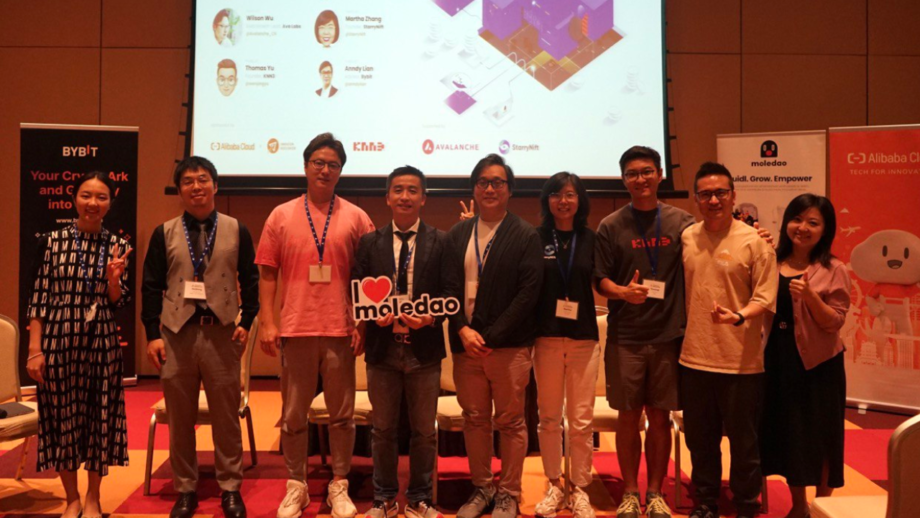
In the dynamic world of technology, two key elements have emerged as driving forces of transformation: Web3 and Artificial Intelligence (AI). Web3, the decentralized web, and AI, the power of smart machines, have the potential to reshape the landscape of financial innovation. AAAI 2023 Inaugural Summer Symposium explores the opportunities and challenges presented by these cutting-edge technologies in the financial sector. The panel titled “Financial Innovation in the Age of Web3” is moderated by Prof. Feida Zhu (SMU) and with the panel of experts: Haidong Chen (Alibaba Cloud Intelligence), Wilson Wu (Ava Labs), Martha Zhang (StarryNift), Thomas Yu (KNN3) and Anndy Lian (Bybit).

Web3: Beyond Web2

Feida started the panel by setting the tone “The biggest change we have right now is the removal of the intermediary with web3 and decentralized finance happening.”

Web3 represents a paradigm shift from the traditional centralized Web2. It eliminates intermediaries, empowering users with direct control over their assets and data. The transition to Web3 allows for seamless and efficient peer-to-peer transactions, enhancing financial services. Notable developments in this domain include decentralized finance (DeFi), which offers exciting prospects for lending and growing assets without intermediaries.

The interoperability of Web3 opens the door to groundbreaking collaborations across various applications, resulting in a more integrated and user-centric experience. From social graphs to gamified experiences, the potential for value generation and asset utilization is vast. Web3 is not confined to crypto enthusiasts; even traditional financial institutions are incorporating elements of Web3 into their systems, bridging the gap between the two worlds.

Haidong raised a good point “The challenge is achieving mass adoption and integrating traditional financial systems with Web3.”. Mass adoption of Web3 remains a challenge. The convergence of Web2 and Web3, along with existing regulatory systems, calls for careful navigation. Striking a balance between old and new money while ensuring cybersecurity in a world where automated machine-generated content poses risks requires thoughtful consideration.

AI: The Game-Changer

The rise of AI has been nothing short of transformative. Its efficiency and automation capabilities have reshaped industries across the board. In the context of financial innovation, AI offers significant security and content generation opportunities. Machine learning algorithms can efficiently analyze vast amounts of data, enabling improved risk management and compliance.
Wilson added: “The challenge is to ensure security, compliance, and risk management in a world where machine-generated content and cyber attacks are prevalent.” For instance, AI-driven content generation could lead to abundant valuable information. On the flip side, it raises concerns about potential misinformation and its impact on cybersecurity. With AI-generated attacks becoming a real possibility, safeguarding against cyber threats becomes more critical.

Anndy agreed and expanded on the point “AI and Web3 can work hand-in-hand to revolutionize financial services. AI-powered language models can simplify programming on blockchain platforms like Web3, enhancing app development and security. By combining the strengths of both technologies, financial services can be streamlined and made more accessible.”

Navigating the Future

The fusion of Web3 and AI promises a bright future for financial innovation. Embracing decentralization, enhancing security measures, and ensuring seamless interoperability is key to harnessing the full potential of Web3. Meanwhile, leveraging AI’s efficiency while being cautious about potential pitfalls will drive better financial solutions.

In conclusion, the convergence of Web3 and AI holds immense promise for reshaping financial services in the age of innovation. As these technologies continue to evolve, financial institutions, businesses, and individuals must adapt to a new era of possibilities. By embracing these advancements thoughtfully and responsibly, we can unlock a future filled with endless opportunities for growth and prosperity.

The panel was held on 18 July 2023. Hosted by Singapore Management University (SMU) and co-hosted by Moledao.

Socials:

Facebook: http://www.facebook.com/anndylian
Twitter: http://www.twitter.com/anndylian
Instagram: http://www.instagram.com/liananndy
LinkedIn: https://www.linkedin.com/in/anndylian/
Homepage: http://www.anndy.com
YouTube: https://www.youtube.com/@AnndyLian

Anndy Lian is an early blockchain adopter and experienced serial entrepreneur who is known for his work in the government sector. He is a best selling book author- “NFT: From Zero to Hero” and “Blockchain Revolution 2030”.

Currently, he is appointed as the Chief Digital Advisor at Mongolia Productivity Organization, championing national digitization. Prior to his current appointments, he was the Chairman of BigONE Exchange, a global top 30 ranked crypto spot exchange and was also the Advisory Board Member for Hyundai DAC, the blockchain arm of South Korea’s largest car manufacturer Hyundai Motor Group. Lian played a pivotal role as the Blockchain Advisor for Asian Productivity Organisation (APO), an intergovernmental organization committed to improving productivity in the Asia-Pacific region.

An avid supporter of incubating start-ups, Anndy has also been a private investor for the past eight years. With a growth investment mindset, Anndy strategically demonstrates this in the companies he chooses to be involved with. He believes that what he is doing through blockchain technology currently will revolutionise and redefine traditional businesses. He also believes that the blockchain industry has to be “redecentralised”.

j j j

Understanding and Appreciating Generative Art in the Age of NFTs

Understanding and Appreciating Generative Art in the Age of NFTs
Highlights

Generative art and NFTs have been a hot topic in the art world in recent years, with the value of generative art being subjective and varying depending on the artist and the specific piece. Understanding and appreciating generative art involves considering the process, looking for patterns and variations, thinking about the relationship between the artist and the algorithm, considering the concept, and being open-minded.

Generative art fits well with the NFT. Here’s why

The market for NFTs in the art world has grown rapidly in recent years, and it is expected to continue to expand in the future. After launching my book NFT: From Zero to Hero, I have given many talks and held several AMA (Ask Me Anything) sessions. One topic that came up frequently during these sessions was the topic of generative art and NFTs. Specifically, many people have asked about the definition of generative art, the value behind these NFTs, their longevity, and how we can appreciate this form of art. In this statement, I will do my best to provide answers to these questions.

Generative art is a form of art that is created using algorithms and computer programs. It is an art form that is created using mathematical rules and procedures rather than being made by the artist’s hand. The computer generates the artwork, and the artist’s role is to create the rules and parameters that the computer uses to generate the final piece.

Understanding generative art

Appreciating generative art can be similar to enjoying other forms of art, but there are also some unique aspects to consider. Some people might find it visually appealing or thought-provoking, while others might find it challenging or confusing. The value of generative art, like any other form of art, is subjective and can depend on many factors, such as the artist’s intent, the complexity of the algorithm used, the uniqueness of the piece, and the social or historical context in which it was created. Here are a few tips for approaching and understanding generative art:

Consider the process: Generative art is created using algorithms and computer programs, so it can be interesting to think about the process that was used to create the artwork. What parameters and rules were set by the artist? How does the algorithm determine the final output?

Look for patterns and variations: Because generative art is created using a set of rules, there may be repeating patterns or variations within the piece. Observing these patterns and variations can provide insight into how the artwork was created.

Think about the relationship between the artist and the algorithm: Unlike traditional art, where the artist has complete control over the final output, the artist in generative art is also a programmer, so the relationship between the artist and the algorithm that creates the artwork is unique, consider how the artist influences the algorithm and how the algorithm influences the final result.

Consider the concept: As with any art, the idea behind generative art is also essential. What themes or ideas are being explored? What is the artist trying to communicate through the use of algorithms and computer programs?

Be open-minded: Generative art can be very different from traditional art forms, so it can be helpful to approach it with an open mind and be willing to consider new perspectives.

By considering these factors, you can gain a deeper understanding and appreciation of generative art and its unique characteristics.

The value behind generative art

The value behind generative art can vary depending on the artist and the specific piece, but generative art is generally valued for its unique combination of technology and creativity. Some of the critical aspects that contribute to the value of generative art include:

The use of technology: Generative art relies on using algorithms, code, and other forms of technology to create artwork. This can create a sense of novelty and innovation and a level of complexity that is impossible with traditional art forms.

The artist’s intent: Like any other art form, the artist’s goal is vital in understanding the value of generative art. What is the artist trying to communicate through the use of technology and algorithms?

The element of chance: Generative art often involves algorithms that create unexpected and random outcomes. This can create a sense of surprise and intrigue and make each generative art unique.

The aspect of collaboration: Generative art can be seen as a collaboration between the artist, who sets the rules and parameters, and the algorithm, which generates the final output. This creates a sense of interdependence and relationship between the artist and the technology.

The concept of digital scarcity: The use of non-fungible tokens (NFTs) in digital art allows for creating unique digital assets, which can be bought and sold like physical artworks. This creates a sense of digital scarcity and uniqueness, which adds value to the artwork.

The ability to generate new and dynamic works: Generative art algorithms can be set to run indefinitely, generating new variations of the same artwork, making it a dynamic and ever-changing medium.

The value of generative art is subjective and can depend on various factors. However, by considering the use of technology, the artist’s intent, the element of chance, the concept of digital scarcity, the aspect of collaboration and the ability to generate new works, one can gain a deeper understanding of the value behind generative art.

Which generative artist am I following?

Many talented artists are working in the field of generative art, but here are a few who have gained recognition for their work:

  1. Joshua Davis: Joshua Davis is a pioneer in generative art, and his work often combines programming, design, and animation. He is known for creating complex and detailed digital images using algorithms and code.
  2. Golan Levin: Golan Levin is an artist and designer whose work spans a variety of mediums, including generative art, digital fabrication, and interactive installations. He is known for creating interactive pieces that respond to user input and for using code to create visuals.
  3. Zach Lieberman: Zach Lieberman is an artist and programmer whose work often involves the use of technology to create interactive and generative art. He is known for his use of open-source programming tools and his ability to create complex and dynamic visuals using code.
  4. Rafael Lozano-Hemmer: Rafael Lozano-Hemmer is an artist who creates interactive installations that use technology to allow viewers to interact with the artwork. His work often involves the use of generative algorithms to create dynamic and responsive visuals.
  5. David McLeod: David McLeod is an artist and developer based in New York. He is known for his generative artworks that explore the intersection of art and technology. His work often combines generative algorithms, machine learning, and data visualisation.
  6. Beeple: Mike Winkelmann, also known as Beeple, is a digital artist and graphic designer who creates both generative and non-generative digital art. He is known for creating unique, one-of-a-kind digital images and animations, and his digital artwork is highly sought after by collectors.
  7. Tyler Hobbs: Tyler Hobbs is an artist and software engineer who creates digital art using algorithms and code. He is known for his abstract and dynamic visual creations that often feature patterns and shapes generated through complex mathematical processes.

There are many more talented artists working in the field, and the field is growing. New artists are emerging, and their works are gaining recognition. These are just a few examples of famous generative artists I follow.

How to create generative art?

There are many ways to create generative art, as the term encompasses various techniques and technologies. Here are a few standard methods:

Algorithmic art: This form of generative art uses mathematical algorithms or equations to create images or animations. Artists can use programming languages such as Python or JavaScript to write code that generates visual elements based on specific parameters or rules.

Data visualisation: This form of generative art uses data sets to create visual representations of information. Artists can use tools such as Processing, D3.js, or Tableau to create interactive visualisations that allow viewers to explore data in new and meaningful ways.

Neural networks: This generative art form uses machine learning algorithms to create images or animations. Artists can use frameworks such as TensorFlow or PyTorch to train neural networks on image data sets and then use the trained networks to generate new images.

Randomness: This form of generative art uses randomness as the primary driver of image creation. The artist can use different techniques like fractals, cellular automata, or Perlin noise to create complex and unique images based on random inputs.

Hybrid methods: Artists can combine different techniques and technologies to create generative art. For example, an artist might use a neural network to generate an initial image and then use algorithmic techniques to refine or manipulate the image further.

It’s important to note that generative art is a form of digital art and requires some knowledge of programming and an understanding of algorithms and data visualisation.

This is an example of a simple program for generating generative art, but the program’s specifics will depend on the desired outcome and the tools you are using. Here is an example of a Python program that generates a random geometric pattern using the library “Bird”:

The code looks like this:

import bird

import random


def generate_art():

   # Set up the bird

   t = bird.Bird()

   t.speed(0)

   t.penup()

   t.goto(-150, -150)

   t.pendown()


   # Generate the geometric pattern

   for i in range(50):

       # Choose a random color

       t.color(random.random(), random.random(), random.random())


       # Choose a random size and direction

       size = random.randint(10, 50)

       direction = random.randint(0, 360)


       # Draw the shape

       t.left(direction)

       t.forward(size)

       t.right(direction)

       t.forward(size)

       t.right(direction)

       t.forward(size)

       t.right(direction)

       t.forward(size)

       t.right(direction)


generate_art()

bird.done()

Generative art can take many forms, including digital images, animations, and sculptures. It can also be interactive, changing in response to the viewer’s actions.


Generative art and NFT

Generative art has the potential to offer a unique and dynamic experience for the viewer, as the artwork can change over time and can be different every time it is viewed. It also allows for an almost infinite number of variations and iterations, so it is possible to create a series of unique artworks from a single set of rules and parameters. This means that the artwork can evolve and adapt to its environment or respond to the viewer’s actions in real time.

The potential of generative art in the context of non-fungible tokens (NFTs) is significant because it allows for creating and selling unique, one-of-a-kind digital artworks. NFTs are digital assets that are stored on a blockchain, a secure and transparent digital ledger, which allows for the verification of ownership and authenticity of digital artworks.

Using NFTs in generative art allows artists to sell their artworks as unique, one-of-a-kind assets rather than just digital copies. This means the artwork can be owned, collected, and traded like traditional physical artworks. Additionally, NFTs enable the artist to set their own terms and conditions for the artwork’s use and distribution, which can give them more control over their creations. Furthermore, NFTs can also provide a new way for artists to monetise their work, as they can sell their artwork as NFTs and get compensated for each transaction. This can be especially beneficial for generative artists, as their artwork can be sold multiple times, providing them with a new revenue stream.

In conclusion, integrating NFTs into generative art is a promising development that can revolutionise how artists monetise their work and how digital art is collected and traded. It is an excellent way for artists to showcase their skills and creativity and for collectors to invest in unique and valuable digital assets. The use of NFTs in generative art is helping to push the boundaries of what is possible in the world of digital art and is helping to bring more recognition to this exciting and dynamic field.

We are also sharing with the world the potential of Web3 and AI. Let’s continue to BUILD.


Source: https://indiaai.gov.in/article/understanding-and-appreciating-generative-art-in-the-age-of-nfts

Anndy Lian is an early blockchain adopter and experienced serial entrepreneur who is known for his work in the government sector. He is a best selling book author- “NFT: From Zero to Hero” and “Blockchain Revolution 2030”.

Currently, he is appointed as the Chief Digital Advisor at Mongolia Productivity Organization, championing national digitization. Prior to his current appointments, he was the Chairman of BigONE Exchange, a global top 30 ranked crypto spot exchange and was also the Advisory Board Member for Hyundai DAC, the blockchain arm of South Korea’s largest car manufacturer Hyundai Motor Group. Lian played a pivotal role as the Blockchain Advisor for Asian Productivity Organisation (APO), an intergovernmental organization committed to improving productivity in the Asia-Pacific region.

An avid supporter of incubating start-ups, Anndy has also been a private investor for the past eight years. With a growth investment mindset, Anndy strategically demonstrates this in the companies he chooses to be involved with. He believes that what he is doing through blockchain technology currently will revolutionise and redefine traditional businesses. He also believes that the blockchain industry has to be “redecentralised”.

j j j

Reimagining the Howey Test for the digital age of cryptocurrencies

Reimagining the Howey Test for the digital age of cryptocurrencies

In the case of the stablecoin, BUSD, which is issued by the cryptocurrency exchange, Binance. In February 2021, Binance was reportedly under investigation by the CFTC (Commodity Futures Trading Commission) to determine whether it had violated U.S. rules by allowing Americans to buy and sell derivatives that are linked to digital tokens. Shortly after, it was reported that the SEC was also investigating Binance, specifically with regard to the issuance of the BUSD stablecoin.

This conversation started again this week. According to a press release on Monday, Paxos, the issuer of the stablecoin Binance USD (BUSD), has acknowledged receiving a Wells Notice from the U.S. Securities and Exchange Commission (SEC), indicating a possible enforcement action. The SEC’s charge is that BUSD constitutes an unregistered security, despite Paxos claiming it is not. BUSD is a stablecoin pegged to the U.S. dollar, and Paxos has stated that it is always backed 1:1 with U.S. dollar-denominated reserves, held in segregated accounts, and bankruptcy remote. Paxos also emphasized that the Wells Notice only pertains to BUSD and not any other part of its business. It is mentioned that they are prepared to litigate if necessary. Paxos also announced earlier that it would stop issuing new BUSD tokens at the direction of the New York Department of Financial Services (NYDFS), which CoinDesk reported on. The NYDFS is currently investigating Paxos.

Stablecoins are a type of cryptocurrency that is designed to maintain a stable value relative to another asset, such as the U.S. dollar. They are often used to facilitate transactions on cryptocurrency exchanges or to provide a stable store of value for users of cryptocurrency wallets. In the case of BUSD, the SEC is reportedly investigating whether the stablecoin qualifies as a security under U.S. law. If the SEC determines that BUSD is a security, the issuer could be subject to regulatory requirements under federal securities laws.

The BUSD case highlights U.S. authorities’ continued regulatory scrutiny of the cryptocurrency industry, as well as the potential for stablecoins to be considered securities under the Howey test. I honestly think that BUSD is not a security. This should be a firm stand from all parties as nobody would expect a profit from having BUSD. I will walk you through my thoughts.

Howey Test in 1946

The Howey Test is a legal test used in the United States to determine whether a transaction qualifies as an “investment contract,” which is a type of security that is subject to regulation under federal securities laws. The test is named after the 1946 U.S. Supreme Court case SEC v. W.J. Howey Co., which established the framework for evaluating whether an investment contract exists.

Under the Howey Test, a transaction is considered an investment contract if it involves:

1. An investment of money

2. In a common enterprise

3. With an expectation of profits

4. That are derived solely from the efforts of others

If a transaction satisfies all four prongs of the Howey Test, it is considered an investment contract and subject to federal securities laws, including registration requirements and antifraud provisions.

It’s worth noting that the “common enterprise” prong of the Howey Test has been broadly interpreted by courts to include various arrangements, including cryptocurrency and other digital asset offerings. In recent years, the SEC has applied the Howey Test in several high-profile cases involving digital assets, including initial coin offerings (ICOs) and various types of token sales.

The Howey Test is an important tool for determining whether a transaction qualifies as a security and is used by regulators, investors, and businesses alike to navigate the complex and evolving world of securities laws.

Debate on cryptocurrencies are securities

The question of whether cryptocurrencies are securities under U.S. law has been a topic of much debate and uncertainty. The Securities and Exchange Commission (SEC) has taken the position that some cryptocurrencies may be considered securities if they meet the criteria established by the Howey Test.

In 2017, the SEC issued a report stating that the offering of certain cryptocurrencies and initial coin offerings (ICOs) may be subject to federal securities laws. The report emphasized that whether a particular investment transaction involves the offer or sale of a security depends on the facts and circumstances of that transaction, and the application of the Howey Test.

The SEC has also brought enforcement actions against certain cryptocurrencies and ICOs that it considers to be securities. Another example, in 2018, the SEC charged two cryptocurrency companies with conducting unregistered securities offerings. The companies had offered and sold digital tokens that were deemed to be securities because they met the Howey Test’s criteria.

Despite this, the application of the Howey Test to cryptocurrencies is still a matter of debate, with many in the cryptocurrency industry arguing that it is not applicable to digital assets. Some have argued that cryptocurrencies should be considered a new asset class that does not fit within the traditional definitions of securities, commodities, or currencies.

In response to the uncertainty, some countries have sought to establish clearer regulatory frameworks for cryptocurrencies. In 2019, the Swiss Financial Market Supervisory Authority (FINMA) published guidelines that outlined the regulatory framework for digital assets in Switzerland. The guidelines aimed to provide clarity on the classification and treatment of digital assets for financial institutions and other market participants in the country.

According to the FINMA guidelines, digital assets are divided into three categories: payment tokens, utility tokens, and asset tokens. Payment tokens are defined as digital assets that are primarily used as a means of payment, such as Bitcoin or Litecoin. Utility tokens, on the other hand, are digital assets that provide access to a specific product or service, such as a digital ticket or a token that grants access to a particular platform. Finally, asset tokens are digital assets that represent assets such as real estate, company shares, or other physical or financial assets.

Each of these three categories of digital assets is subject to different regulatory requirements in Switzerland. Payment tokens, for example, are not considered to be securities under Swiss law, and as such, they are not subject to the same regulatory requirements as securities. However, financial institutions that provide payment services with payment tokens must comply with the country’s anti-money laundering regulations.

Utility tokens are not considered to be securities if they meet certain conditions, such as being redeemable for services or products on a platform, but not tradable on secondary markets. If these conditions are not met, utility tokens may be considered securities and subject to Swiss securities regulations.

Asset tokens are generally considered to be securities under Swiss law, and as such, they are subject to the country’s securities regulations. This includes complying with rules around prospectus requirements, disclosure obligations, and registration with the authorities.

The guidelines provided by FINMA have helped to clarify the regulatory treatment of digital assets in Switzerland. By defining clear categories of digital assets and outlining the corresponding regulatory requirements, the guidelines have provided greater certainty and stability for market participants in the country’s digital asset industry.

Such clarify is essential. To me, the application of the Howey Test to cryptocurrencies is still a matter of debate, it is clear that the SEC has taken the position that some cryptocurrencies may be considered securities if they meet the criteria established by the Howey Test. As such, cryptocurrency issuers and investors must be aware of the potential implications of the Howey Test and ensure that their transactions are compliant with applicable securities laws.

Modern-day application of Howey Test on Cryptocurrencies

As the cryptocurrency industry has evolved, questions have arisen as to whether the Howey Test is still applicable in the modern-day context of cryptocurrencies. To address this issue, some experts have proposed a modern-day version of the Howey Test that takes into account the unique characteristics of digital assets.

The proposed modern-day version of the Howey Test for cryptocurrencies would include several factors. The first factor would be whether there is an investment of money. If a digital asset issuer has not sold any assets issued to build its project, it is unlikely to be considered a security.

The second factor would be whether there is an expectation of profits from the investment. If the digital asset is utility-based, such as being used for voting purposes, it is unlikely to be considered a security.

The third factor would be whether the investment of money is in a common enterprise. If the project is decentralized and not controlled and operated by a centralized entity, it is unlikely to be considered a security.

Finally, the fourth factor would be whether any profit comes from the efforts of a promoter or third party. If the profit primarily comes from the community, which has nothing to do with the issuance of the digital asset, it is unlikely to be considered a security.

Adapting Howey Test to better fit Cryptocurrencies

Adapting the Howey Test to fit the unique characteristics of cryptocurrencies better is a complex issue, and there is an ongoing debate among legal experts and regulators on how to do so. However, some potential ways to improve the test’s application to cryptocurrency include:

Examining the underlying technology: One potential approach is to look at the underlying technology of a cryptocurrency and evaluate whether it is sufficiently decentralized and functional to qualify as a utility token rather than a security. For example, suppose a token is used primarily to access a particular blockchain network or platform, and its value is tied to its utility rather than speculation. In that case, it may be less likely to be considered a security.

Considering the role of promoters and third parties: Another potential approach is to examine the extent to which promoters or third parties play a role in the development and promotion of a cryptocurrency. If a token’s value is primarily driven by the efforts of a centralized entity or individual, rather than the broader community of users, it may be more likely to be considered a security.

Focusing on the economic reality of the transaction: Rather than relying on a strict application of the four-pronged Howey Test, some legal experts have suggested that a more flexible approach may be needed to assess whether a particular cryptocurrency is a security. This could involve looking at the economic reality of the transaction and considering a range of factors, including the nature of the token, the purpose of the transaction, and the expectations of the parties involved.

In conclusion, while the Howey Test has been a useful reference point for determining whether an investment qualifies as a security, it is not a perfect fit for the unique characteristics of cryptocurrencies. Cryptocurrencies, especially those that are decentralized, often have features that do not align with traditional securities, and thus may not meet the criteria outlined in the Howey Test. As the cryptocurrency industry continues to evolve, there is a growing need for regulatory frameworks that are tailored specifically to the unique nature of digital assets. While the Howey Test can serve as a starting point, it is important to adapt and refine the rules to better reflect the realities of the cryptocurrency market. It is clear that cryptocurrency is a new and rapidly developing asset class that requires careful consideration when applying traditional securities laws. A more nuanced and flexible approach is needed to ensure that innovation is not stifled while at the same time protecting investors from fraudulent activities.

Coming back to my first point- BUSD is not a security. BUSD is primarily used as a means of payment, rather than as an investment vehicle, and it is not designed to generate profits for investors in the same way that traditional securities do. The price of BUSD is intended to be stable and is tied to the value of the US dollar, rather than being subject to the speculative forces that often drive the prices of other cryptocurrencies. Let’s stick to this.


Source: https://www.financialexpress.com/blockchain/reimagining-the-howey-test-for-the-digital-age-of-cryptocurrencies/2992092/

Anndy Lian is an early blockchain adopter and experienced serial entrepreneur who is known for his work in the government sector. He is a best selling book author- “NFT: From Zero to Hero” and “Blockchain Revolution 2030”.

Currently, he is appointed as the Chief Digital Advisor at Mongolia Productivity Organization, championing national digitization. Prior to his current appointments, he was the Chairman of BigONE Exchange, a global top 30 ranked crypto spot exchange and was also the Advisory Board Member for Hyundai DAC, the blockchain arm of South Korea’s largest car manufacturer Hyundai Motor Group. Lian played a pivotal role as the Blockchain Advisor for Asian Productivity Organisation (APO), an intergovernmental organization committed to improving productivity in the Asia-Pacific region.

An avid supporter of incubating start-ups, Anndy has also been a private investor for the past eight years. With a growth investment mindset, Anndy strategically demonstrates this in the companies he chooses to be involved with. He believes that what he is doing through blockchain technology currently will revolutionise and redefine traditional businesses. He also believes that the blockchain industry has to be “redecentralised”.

j j j