
Modi’s push for global crypto regulation and ethical AI shows India’s leadership in the digital economy

Modi’s push for global crypto regulation and ethical AI shows India’s leadership in the digital economy

What do you think of when you hear the words “cryptocurrencies” and “artificial intelligence”? Do you think of innovation and opportunity, or risk and uncertainty? Do you think of the future, or the present? These are some of the questions that Indian Prime Minister Narendra Modi has raised in his capacity as the G20 president, as he calls for a global framework to regulate these technologies and ensure their responsible and beneficial use.

Cryptocurrencies and artificial intelligence (AI) are two of the most disruptive and transformative technologies of our time. They have the potential to revolutionize various sectors and industries, create new opportunities and challenges, and impact the lives of billions of people around the world. However, they also pose significant risks and uncertainties, such as volatility, illicit activities, environmental impact, ethical dilemmas, and social implications. Therefore, it is imperative to have a global framework to regulate these technologies and ensure their responsible and beneficial use.

This is exactly what Indian Prime Minister Narendra Modi has advocated for in his capacity as the G20 president. He has called for international cooperation and guidelines to address the challenges posed by cryptocurrencies and the ethical use of AI. Modi’s push for a unified framework aligns with India’s stance on cryptocurrency regulations, which includes a 30% tax on crypto gains in 2022. It also reflects India’s growing prominence in the field of AI, ranking fourth globally in AI talent.

Modi made these remarks at the B20 Summit in 2023, where he emphasized the need for international rules for cryptocurrencies due to their global impact, comparing it to standardized regulations in the aviation industry. He also highlighted the importance of protecting the interests of all stakeholders, especially the developing and emerging economies, while harnessing the potential of these technologies.

India has been actively participating in the global discussions on crypto regulation, as it holds the G20 presidency in 2023. India has also released a presidency note, which outlines its suggestions for a global framework for crypto assets, based on the guidelines issued by the Financial Stability Board (FSB), the Financial Action Task Force (FATF) and the International Monetary Fund (IMF). The note also emphasizes the need to address the macroeconomic challenges posed by cryptocurrencies, such as volatility, illicit activities and environmental impact.

India’s proactive stance on crypto regulation is commendable, as it shows its awareness of the opportunities and risks associated with these technologies. India has a large and growing crypto market, with over 15 million users and $6.6 billion worth of transactions. India also has a vibrant and innovative crypto ecosystem, with over 300 startups and 10 unicorns. However, India also faces complex legal and regulatory issues regarding cryptocurrencies, such as their status, taxation, KYC norms, consumer protection, and cyber security.

Therefore, India needs to balance its domestic interests with its global obligations. India needs to create a clear and consistent regulatory framework for cryptocurrencies that promotes innovation and growth, while ensuring compliance and accountability. India also needs to collaborate with other countries on creating a common set of standards and rules for cryptocurrencies that foster trust and stability, while respecting diversity and sovereignty.

Furthermore, Modi stressed the importance of integrating rapid technological advancements and protecting stakeholders’ interests. India’s growing prominence in the field of AI, ranking fourth globally in AI talent, makes it a significant player in shaping global discussions on ethical AI and emerging technologies. Modi said that AI has the power to transform various sectors and industries, such as agriculture, health care, education, and manufacturing. He also called for ensuring its ethical use, as it involves human values, rights, and responsibilities.

India has been taking several initiatives to develop responsible AI, such as the National Strategy for Artificial Intelligence and the Responsible AI for Social Empowerment Summit. India has also been collaborating with other countries on advancing AI research and innovation, such as the Global Partnership on Artificial Intelligence (GPAI) and the Indo-French Centre for Applied Mathematics (IFCAM). India has also been supporting various social causes through AI applications, such as disaster management, wildlife conservation, and women empowerment. India’s proactive stance on ethical AI is admirable, as it shows its commitment to contributing to the global dialogue on AI governance and ethics. India has a huge potential to leverage AI for social good, as it has a large population of 1.3 billion people, many of whom face challenges such as poverty, illiteracy, malnutrition, and disease. India also has a rich and diverse culture, which can offer valuable insights and perspectives on AI ethics and values.

Therefore, India needs to balance its technological aspirations with its social obligations. India needs to create a robust and inclusive AI ecosystem that fosters innovation and excellence, while ensuring equity and justice. India also needs to collaborate with other countries on creating a universal framework for ethical AI that respects human dignity and rights, while promoting human development and well-being.

Modi’s push for a global crypto regulation and ethical AI reflects India’s vision of becoming a leader in the digital economy and innovation. It also signals India’s willingness to collaborate with other countries on shaping the future of these emerging technologies. India has a unique opportunity and responsibility to play a pivotal role in the global governance and ethics of cryptocurrencies and AI. India should seize this opportunity and fulfill this responsibility, as it will benefit not only itself, but also the world.


Source: https://wishu.io/modis-push-for-global-crypto-regulation-and-ethical-ai-shows-indias-leadership-in-the-digital-economy/


Anndy Lian is an early blockchain adopter and experienced serial entrepreneur who is known for his work in the government sector. He is a best selling book author- “NFT: From Zero to Hero” and “Blockchain Revolution 2030”.

Currently, he is appointed as the Chief Digital Advisor at Mongolia Productivity Organization, championing national digitization. Prior to his current appointments, he was the Chairman of BigONE Exchange, a global top 30 ranked crypto spot exchange and was also the Advisory Board Member for Hyundai DAC, the blockchain arm of South Korea’s largest car manufacturer Hyundai Motor Group. Lian played a pivotal role as the Blockchain Advisor for Asian Productivity Organisation (APO), an intergovernmental organization committed to improving productivity in the Asia-Pacific region.

An avid supporter of incubating start-ups, Anndy has also been a private investor for the past eight years. With a growth investment mindset, Anndy strategically demonstrates this in the companies he chooses to be involved with. He believes that what he is doing through blockchain technology currently will revolutionise and redefine traditional businesses. He also believes that the blockchain industry has to be “redecentralised”.
j j j

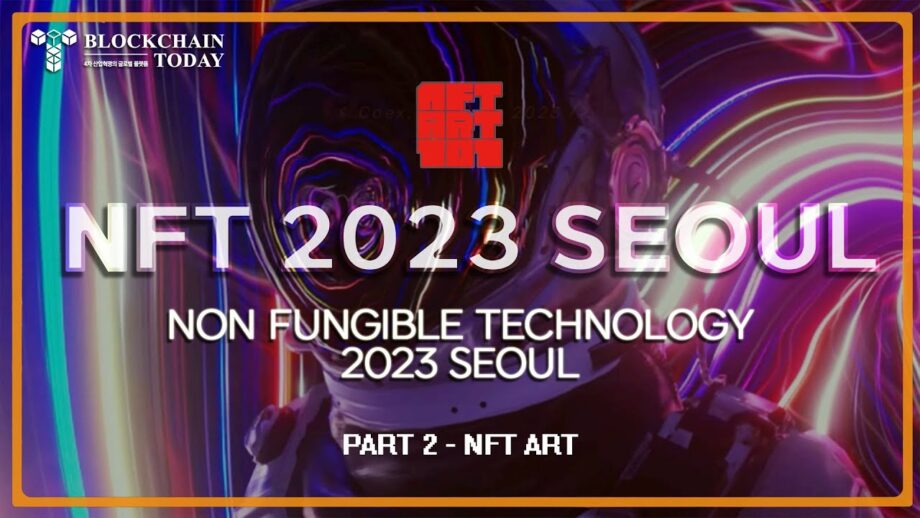
NFT 2023 SEOUL – The Future of Art in the Digital Age

NFT 2023 SEOUL – The Future of Art in the Digital Age

NFT 2023 SEOUL is a dynamic and forward-thinking event that dives deep into the convergence of art and technology in the digital age. With a lineup of expert speakers covering a wide range of topics, the event explores how NFTs, generative AI, blockchain, and decentralized technologies are reshaping the art landscape.

From discussions on the transformative power of AI-generated art to insights into decentralized curation and the fusion of physical and digital art forms, attendees will gain a comprehensive understanding of the evolving art world. The event also highlights the role of NFTs in media and other industries, showcasing their influence beyond traditional art realms.

Thoughts on the Evolution of Art in the Age of Generative AI, NFT, and other Digital Technologies – 차인혁: Explore the transformative impact of generative AI, NFTs, and digital technologies on the world of art.

The following are the key speakers for Part 2:

ART & TECHNOLOGY & Community – Mariko Nishimura: Delve into the dynamic relationship between art, technology, and the influential role of communities in shaping the art landscape.

Creative collaboration, co-creation, and decentralized curation – Aleksandra: Discover how decentralized curation and collaborative approaches are redefining the art world in the context of NFTs.

Decentralized Dreams: The Journey of NFTs in the Age of AI and Web3 – Anndy Lian: Trace the exciting journey of NFTs within the realms of AI and Web3, exploring their potential and impact.

Blockchain as a new medium for ART + Coding ART – Nori: Dive into the technical aspects of utilizing blockchain as an artistic medium, where coding meets artistry to create innovative works.

Legitimate / Physital- NFT 기술 실제적 융합 – Calvin: Explore the practical integration of NFT technology in art, addressing authenticity concerns and the fusion of physical and digital art forms.

Web3 Art NFT Platform – 2r2.io – 정창희: Showcase the capabilities of the 2r2.io NFT platform within the Web3 ecosystem, shedding light on tools available for artists and collectors.

NFT NOW: Future of media and beyond – Alejandro Navia: Gain insights into how NFTs are shaping the future of media and extending their influence across diverse industries beyond traditional art.

This event promises a comprehensive exploration of NFTs, generative AI, blockchain, and their profound impact on the evolving world of art and digital expression.

Anndy Lian is an early blockchain adopter and experienced serial entrepreneur who is known for his work in the government sector. He is a best selling book author- “NFT: From Zero to Hero” and “Blockchain Revolution 2030”.

Currently, he is appointed as the Chief Digital Advisor at Mongolia Productivity Organization, championing national digitization. Prior to his current appointments, he was the Chairman of BigONE Exchange, a global top 30 ranked crypto spot exchange and was also the Advisory Board Member for Hyundai DAC, the blockchain arm of South Korea’s largest car manufacturer Hyundai Motor Group. Lian played a pivotal role as the Blockchain Advisor for Asian Productivity Organisation (APO), an intergovernmental organization committed to improving productivity in the Asia-Pacific region.

An avid supporter of incubating start-ups, Anndy has also been a private investor for the past eight years. With a growth investment mindset, Anndy strategically demonstrates this in the companies he chooses to be involved with. He believes that what he is doing through blockchain technology currently will revolutionise and redefine traditional businesses. He also believes that the blockchain industry has to be “redecentralised”.

j j j

Understanding the Interplay of AI and Crypto

Understanding the Interplay of AI and Crypto

In the intersection of artificial intelligence (AI) and the cryptocurrency universe, we are witnessing an evolving landscape teeming with innovation and transformation. Prominent among the outcomes of this fusion is the advent of AI-powered trading platforms, such as Bybit’s ToolsGPT. These platforms utilize sophisticated AI algorithms and intricate data analytics to provide real-time insights and predictive models, extending their utility to both experienced traders and newcomers to the space.

Beyond the confines of trading, the sphere of influence of AI stretches into novel realms, giving rise to AI-guided entities that introduce novel dimensions of interaction, thereby blurring the traditional lines that separate human users from AI personifications. This interplay between humans and AI doesn’t just foster communities; it lights the fuse for innovative economic models within the cryptocurrency ecosystem.

Revamping finance with central bank digital currencies

Central bank digital currencies (CBDCs) have instigated a transformative paradigm shift that deeply resonates throughout the financial arena. These innovative digital currencies come imbued with the inherent capacity to redefine the very essence of transactions, heralding a new period defined by unparalleled levels of traceability, accountability, and tax compliance.

Within the context of cryptocurrencies, CBDCs facilitate an unprecedented infusion of transparency, effectively sealing the rift that has long divided traditional finance from the nascent realm of digital currencies. Noteworthy is the meticulous capability of CBDCs to trace and authenticate financial transactions, affording a sweeping overview of economic flows that surpasses the narrow scope of individual transactions, thereby offering a holistic understanding of macroeconomic dynamics.


Decentralization and privacy in lockstep

Long hailed as an enduring cornerstone of the cryptocurrency milieu, the notion of decentralization is now entering a transformative phase, prompted by the burgeoning popularity of decentralized applications (dApps) and the rapid expansion of peer-to-peer networks. In this new epoch, we find ourselves residing in a landscape marked by an intricate balance between the extension of surveillance and nuanced governance. The advancement of these systems is guided by a deep-rooted comprehension of the delicate equilibrium required between the mandates of privacy and security, all while diligently conforming to established regulatory frameworks.
The Ascendance of Decentralized Governance

As the ecosystem of decentralized applications and networks continues to thrive, a captivating trend is beginning to surface—the rise of decentralized governance models. This signifies a groundbreaking approach to decision-making, one that is firmly anchored in collaborative methodologies, ensuring that a complex mosaic of stakeholders is seamlessly integrated into the governance fabric of each consequential decision. The confluence of rapidly evolving decentralized technologies with the regulatory capacities offered by artificial intelligence acts as a powerful catalyst, propelling the cryptocurrency universe towards an environment that is both meticulously organized and inherently automated.


NFTs pave the path for digital collectibles and beyond

Non-fungible tokens (NFTs) have vaulted into the limelight, challenging traditional conceptions of digital ownership and artistic creation. While the marketplace for NFTs has exhibited fluctuating patterns, their broader acceptance continues to surge, fueled by strategic collaborations with recognized brands and organizations. But the influence of NFTs extends beyond the conventional boundaries of art and collectibles, infiltrating sectors like real estate, healthcare records, and legal documentation, thus potentially revolutionizing industries that fundamentally rely on trust and provenance.


The conflux of AI and decentralization

Web4 represents the next evolutionary leap in the trajectory of the decentralized Internet (often referred to as Web3). It sketches out a visionary framework that envisages a world where AI’s computational prowess collaboratively intermingles with well-established decentralized technologies. This confluence represents more than mere technological evolution; it signifies a profound transformation in how decision-making is orchestrated within the digital sphere. In this intricate choreography, AI functions as a catalyst, bestowing decentralized networks with unparalleled capabilities, courtesy of its proficiency in data processing, pattern recognition, and real-time insight generation.


Blockchain’s reach into commodities

The advent of security tokens, or STOs, is revolutionizing the representation of financial assets within the blockchain infrastructure. This transformation of traditional securities into tokenized forms serves as a keystone in bridging conventional finance with cutting-edge blockchain technology. Beyond securities, the domain of commodities trading is witnessing a renaissance facilitated by blockchain technology. Tokenization methods are democratizing access to a broader spectrum of investors by offering fractional ownership, thereby potentially reshaping the global trade landscape.


Embracing regulations and institutional adoption

In the fluid panorama of cryptocurrency regulation, clarity in legislative frameworks is emerging as a potent catalyst, igniting institutional interest in this relatively uncharted digital frontier. Far from being solely about financial growth, the allure of cryptocurrencies lies in their potential to upend conventional investment models. With crystallizing regulatory guidelines, these entities are not merely edging closer to the cryptocurrency space but are making deliberate inroads, driven by newfound confidence and strategic intentions to diversify their investment portfolios.

In sum, the future of cryptocurrencies and their underlying technologies is a complex tapestry, embroidered with threads of artificial intelligence, regulatory maturation, and innovative blockchain applications. As we continue to witness these trends unfurl, the world of cryptocurrency stands on the precipice of a comprehensive metamorphosis—one that promises to upend traditional finance and stretch the boundaries of what is conceivable within the digital universe.

This article has been extracted from “The Future of Crypto: What are the next big trends?” with JCI Ventures on August 22, 2023.


Source: https://intpolicydigest.org/understanding-the-interplay-of-ai-and-crypto/

Anndy Lian is an early blockchain adopter and experienced serial entrepreneur who is known for his work in the government sector. He is a best selling book author- “NFT: From Zero to Hero” and “Blockchain Revolution 2030”.

Currently, he is appointed as the Chief Digital Advisor at Mongolia Productivity Organization, championing national digitization. Prior to his current appointments, he was the Chairman of BigONE Exchange, a global top 30 ranked crypto spot exchange and was also the Advisory Board Member for Hyundai DAC, the blockchain arm of South Korea’s largest car manufacturer Hyundai Motor Group. Lian played a pivotal role as the Blockchain Advisor for Asian Productivity Organisation (APO), an intergovernmental organization committed to improving productivity in the Asia-Pacific region.

An avid supporter of incubating start-ups, Anndy has also been a private investor for the past eight years. With a growth investment mindset, Anndy strategically demonstrates this in the companies he chooses to be involved with. He believes that what he is doing through blockchain technology currently will revolutionise and redefine traditional businesses. He also believes that the blockchain industry has to be “redecentralised”.

j j j