India’s Digital Economy: Modi’s Call for Global Crypto Regulation and Ethical AI

India’s Digital Economy: Modi’s Call for Global Crypto Regulation and Ethical AI

When we contemplate the words “cryptocurrencies” and “artificial intelligence,” a myriad of thoughts and emotions may rush into our minds. These terms are emblematic of innovation and opportunity for some while evoking risk and uncertainty for others. They beckon visions of the future, where our lives are transformed by technology, but they also cast shadows of doubt and concern. These questions have gained renewed significance as Indian Prime Minister Narendra Modi, in his capacity as the G20 president, calls for a global framework to regulate these transformative technologies and ensure their responsible and beneficial utilization.

Cryptocurrencies and artificial intelligence (AI) are two of our era’s most disruptive forces. They possess the potential to revolutionize industries, introduce fresh opportunities, and address previously insurmountable challenges. However, they also bring significant risks and uncertainties, including price volatility, illicit activities, environmental concerns, ethical dilemmas, and societal implications. As such, we must establish a comprehensive global framework to oversee these technologies and steer them toward responsible and advantageous outcomes.

This article will examine the compelling arguments and initiatives of Indian Prime Minister Narendra Modi, who has championed the cause of global regulation for cryptocurrencies and ethical AI. His endeavors align with India’s own stance on cryptocurrency regulations, which saw the introduction of a 30% tax on crypto gains in 2022. Moreover, Modi’s vision reflects India’s burgeoning prominence in AI, where the nation ranks fourth globally in terms of AI talent.

Cryptocurrency Regulation: A Global Imperative

Prime Minister Modi made these pivotal declarations during the 2023 B20 Summit, underscoring the necessity of international rules for cryptocurrencies due to their far-reaching impact. He likened this call for regulation to the standardized controls in the aviation industry, a sector vital for global connectivity and safety. Emphasizing the importance of safeguarding the interests of all stakeholders, particularly those in developing and emerging economies, Modi underscored the need to harness the potential of these technologies judiciously.

India has been actively engaged in international discussions on cryptocurrency regulation, capitalizing on its role as the G20 presidency for 2023. The nation has released a presidency note, outlining its recommendations for a global framework for crypto assets, grounded in the guidelines issued by prominent bodies such as the Financial Stability Board (FSB), the Financial Action Task Force (FATF), and the International Monetary Fund (IMF). This note also highlights the imperative to address cryptocurrencies’ macroeconomic challenges, such as price volatility, involvement in illicit activities, and environmental ramifications.

India’s proactive stance on cryptocurrency regulation is commendable, underlining its astuteness in recognizing the opportunities and risks of these technologies. India is home to a burgeoning cryptocurrency market, boasting over 15 million users and facilitating transactions exceeding $6.6 billion in value. The nation also nurtures a vibrant and innovative cryptocurrency ecosystem, boasting over 300 startups and 10 unicorns. Nevertheless, India confronts intricate legal and regulatory issues concerning cryptocurrencies, including their legal status, tax treatment, know-your-customer (KYC) norms, consumer protection, and cybersecurity.

Hence, India faces the delicate task of balancing its domestic interests with its global obligations. The nation must craft a regulatory framework for cryptocurrencies that is lucid and coherent, one that propels innovation and economic growth while ensuring adherence and accountability. India also must collaborate harmoniously with other nations to establish a unified set of standards and rules for cryptocurrencies, fostering trust and stability while respecting the diversity and sovereignty of individual nations.

Ethical AI: Charting a Responsible Path

Prime Minister Modi also accentuated the significance of embracing swift technological advancements while preserving the interests of all stakeholders. India’s growing prominence in the AI domain, ranking fourth globally in AI talent, positions it as a pivotal participant in shaping worldwide discussions on ethical AI and emerging technologies. Modi asserted that AI possesses the potential to revolutionize various sectors, including agriculture, healthcare, education, and manufacturing. Concurrently, he called for meticulous attention to its ethical deployment, recognizing the ethical dimensions linked to human values, rights, and responsibilities.

India has undertaken various initiatives to foster responsible AI, such as the National Strategy for Artificial Intelligence and the Responsible AI for Social Empowerment Summit. The nation has also entered into collaborative ventures with other countries to advance AI research and innovation, exemplified by the Global Partnership on Artificial Intelligence (GPAI) and the Indo-French Centre for Applied Mathematics (IFCAM). India has further harnessed AI applications for social causes, including disaster management, wildlife conservation, and women’s empowerment.

India’s proactive stance on ethical AI is indeed admirable, serving as a testament to its commitment to contributing to the global dialogue on AI governance and ethics. India has immense potential to leverage AI for the greater good, thanks to its population of 1.3 billion people, many of whom grapple with enduring challenges such as poverty, illiteracy, malnutrition, and disease. The nation’s rich and diverse cultural tapestry equips it to offer invaluable insights and perspectives on AI ethics and values.
As a consequence, India is confronted with the arduous task of balancing its technological aspirations with its social responsibilities. India must construct a robust and inclusive AI ecosystem that nurtures innovation and excellence while ensuring equity and justice for all. Moreover, India must harmonize its efforts with other nations to formulate a universal framework for ethical AI, one that respects human dignity and rights, while advancing human development and well-being.

India’s Vision: Leadership in the Digital Economy

Prime Minister Modi’s call for global cryptocurrency regulation and ethical AI encapsulates India’s overarching vision of ascending to a leadership role in the digital economy and innovation sphere. His pronouncements underscore India’s willingness to collaborate with other nations to shape these nascent technologies’ destiny. India, given its unique circumstances, bears both an unparalleled opportunity and a profound responsibility to occupy a pivotal role in shaping the global governance and ethics surrounding cryptocurrencies and AI. India should seize this moment and fulfill its mandate, as this endeavor will not only redound to its benefit but will also be a boon to the entire world.

Ending Remarks

In a world perpetually navigating the crossroads of innovation and responsibility, the clarion call by Indian Prime Minister Modi for global cryptocurrency regulation and ethical AI resonates as a beacon of foresight and prudence. As we stand on the precipice of a digital revolution, with cryptocurrencies and AI as the vanguards of change, Modi’s vision compels us to ponder our collective destiny.

Cryptocurrencies, with their tantalizing promises of financial inclusion and empowerment, and AI, with its boundless potential to augment human capabilities, beckon us forward. Yet, they also beckon us to consider the road we choose to traverse. Will we embrace these technologies with reckless abandon, stumbling into the abyss of unchecked consequences? Or will we heed the wisdom of international cooperation, shared values, and ethical compasses that ensure our journey is one of progress, equity, and shared prosperity?

The answer lies not only with India but with all nations, stakeholders, and individuals. We are at a pivotal juncture, and the choices we make today will reverberate through generations. Modi’s call is a reminder that leadership in the digital economy entails not just innovation, but a profound commitment to the greater good. As we contemplate the future of cryptocurrencies and AI, let us not forget the fundamental question: What kind of world do we want to create?


Source: https://in.investing.com/analysis/indias-digital-economy-modis-call-for-global-crypto-regulation-and-ethical-ai-200599314


Anndy Lian is an early blockchain adopter and experienced serial entrepreneur who is known for his work in the government sector. He is a best selling book author- “NFT: From Zero to Hero” and “Blockchain Revolution 2030”.

Currently, he is appointed as the Chief Digital Advisor at Mongolia Productivity Organization, championing national digitization. Prior to his current appointments, he was the Chairman of BigONE Exchange, a global top 30 ranked crypto spot exchange and was also the Advisory Board Member for Hyundai DAC, the blockchain arm of South Korea’s largest car manufacturer Hyundai Motor Group. Lian played a pivotal role as the Blockchain Advisor for Asian Productivity Organisation (APO), an intergovernmental organization committed to improving productivity in the Asia-Pacific region.

An avid supporter of incubating start-ups, Anndy has also been a private investor for the past eight years. With a growth investment mindset, Anndy strategically demonstrates this in the companies he chooses to be involved with. He believes that what he is doing through blockchain technology currently will revolutionise and redefine traditional businesses. He also believes that the blockchain industry has to be “redecentralised”.

j j j

Exclusive: Anndy Lian: “Web3 and AI Are Transforming NFTs” — Keynote Speech

Exclusive: Anndy Lian: “Web3 and AI Are Transforming NFTs” — Keynote Speech

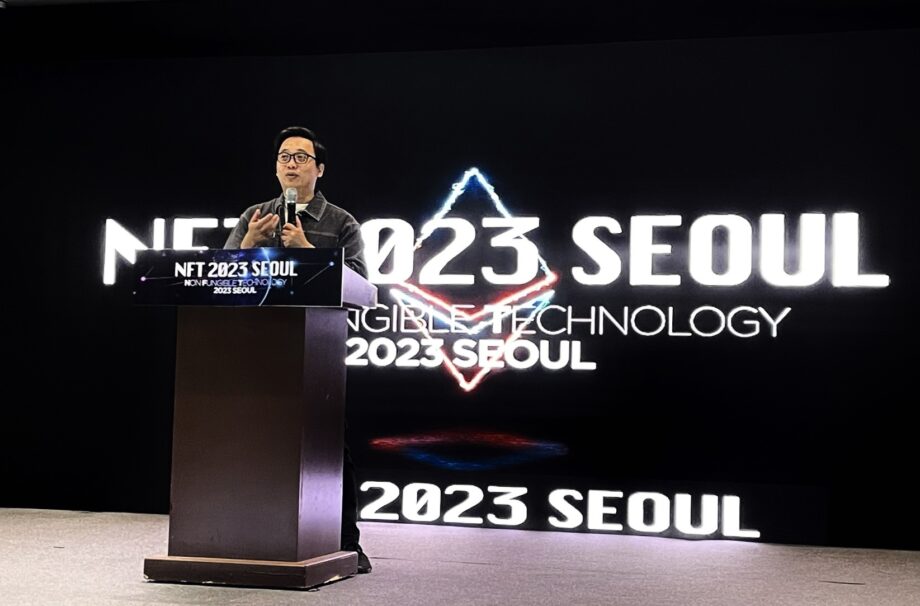
I was honored to be invited as a keynote speaker at the NFT 2023 Seoul conference, which took place on September 1, 2023, at the COEX Convention Center in Seoul, South Korea. The conference was a huge success, attracting many attendees from around the world who were interested in the latest developments and trends in the non-fungible tokens space.

The speech was titled “The Journey of NFTs in the Age of AI and Web3”. In it, I shared my insights on how NFTs have evolved and what their future holds, how artificial intelligence (AI) is creating new possibilities and challenges for NFTs, and how Web3 is emerging as a new version of the internet that is more decentralized, open, and user-centric.

In this article, I will summarize some of my speech’s key points and provide examples of NFT projects that illustrate them. I hope you will find them informative and inspiring.

What Are NFTs?

One of the topics that I covered in my speech was the basic concept and definition of NFTs. NFTs are non-fungible tokens, which means that they are unique and irreplaceable. Unlike fungible tokens, such as cryptocurrencies, that can be exchanged for one another, NFTs have their own individual characteristics and value. They are mostly digital items, such as artworks, music, videos, games, collectibles, and even virtual land, that users can buy and sell online using blockchain technology.

Blockchain technology is the backbone of NFTs, providing a secure and transparent way of verifying their authenticity, scarcity, and ownership. Blockchain is a distributed ledger system that records transactions in a network of computers without the need for a central authority. Each transaction is verified by the network and added to a chain of blocks that cannot be altered or tampered with. This ensures that NFTs are original, rare, and belong to their rightful owners.

The NFT market has been booming in recent years, especially in 2021, when it reached new heights of popularity and profitability. According to data from NonFungible.com, the total sales volume of NFTs in 2021 was over $12 billion, which is more than 20 times higher than the previous year. The average price of an NFT also increased significantly, from $142 in 2020 to $3,700 in 2021.

Some of the more popular and best-selling NFT collections in the market as of last week were:

  • Bored Ape Yacht Club: 7-Day Sales Volume: $52.2 million
  • The Sandbox: 7-Day Sales Volume: $33.1 million
  • CryptoPunks: 7-Day Sales Volume: $17.5 million
  • Art Blocks: 7-Day Sales Volume: $13.2 million
  • Decentraland: 7-Day Sales Volume: $6.6 million

These collections feature different types of digital assets, such as pixelated characters, generative art, virtual worlds, and more. They have attracted thousands of buyers and sellers from around the world, who are willing to pay millions of dollars for some of the rarest and most coveted pieces. Just to put some figures to illustrate these NFTs. A Bored Ape Yacht Club NFT sold for $24.4 million at Sotheby’s auction house in September 2021.

A CryptoPunk NFT sold for $11.8 million at Christie’s auction house in May 2021. An Art Blocks NFT sold for $5.4 million on the OpenSea platform in August 2021.

How is AI Transforming NFTs?

Another topic I covered in my speech was the impact and potential of artificial intelligence on NFTs. I explained how AI is transforming NFTs by creating new possibilities for generating unique digital assets that can appeal to different tastes and preferences. I also explained how AI can integrate dynamic experiences into NFTs, making them more interactive and adaptive.

One of the ways that AI is creating new possibilities for NFTs is by enabling users to automatically create artworks using various algorithms and models. This means that users do not need to have any artistic skills or experience to create their own NFTs. They can simply use AI tools and platforms that can generate images based on their inputs, such as keywords, styles, colors, and more. Some of the examples of AI-generated NFTs include:

  • Artbreeder is a platform that allows users to create and breed images using neural networks. Users can choose from different categories, such as portraits, landscapes, animals, and abstract art, and then adjust various parameters, such as genes, mutations, and mixtures, to create unique images. Users can also combine different images to create hybrids and variations.
  • GANksy is a collection of street art created by a generative adversarial network (GAN) inspired by Banksy. A GAN is an AI model consisting of two competing networks: a generator that creates fake images and a discriminator that tries to distinguish them from real ones. The generator learns from the feedback of the discriminator and improves over time. GANksy is a GAN that was trained on hundreds of Banksy artworks and then generated its own original pieces.
  • Alethea AI is a platform that enables users to create and trade intelligent NFTs that can speak, interact, and learn. Users can upload their own images or choose from a gallery of pre-made avatars and then use a text-to-speech engine to give them a voice. Users can also customize the personality, mood, and emotion of their NFTs and teach them new skills and knowledge.

Another way that AI is transforming NFTs is by integrating dynamic experiences into them thanks to their self-learning capabilities. This means that NFTs can change over time based on external factors, such as data, events, user actions, and more. This makes them more dynamic compared to more traditional NFTs that often take the form of an image or audio file.

What is Web3 and How Does It Enhance the NFT Ecosystem?

The final topic that I covered in my speech was Web3 and how it enhances the NFT ecosystem. Web3 is a new version of the internet that aims to give users more control over their data and online interactions. Web3 is built on blockchain technology and includes features such as cryptocurrencies, NFTs, and decentralized autonomous organizations (DAOs).

Identity is one of the key features of Web3 that allows users to manage their online identities in a more secure and efficient way without relying on a central authority. Web3 identity solutions enable users to create and use digital wallets on the blockchain that store their personal information, such as name, email, phone number, address, and more.

Users can then use these wallets to access various Web3 applications and services, such as marketplaces, social networks, games, and more. Users can also choose what information they want to share with each application or service and revoke access at any time. Some of the examples of Web3 identity solutions:

  • MetaMask is a browser extension that allows users to access Ethereum-based applications. MetaMask acts as a bridge between the user’s browser and the Ethereum network, enabling them to send and receive transactions, interact with smart contracts, and manage their Ethereum accounts.
  • Civic is a platform that provides identity verification services using blockchain. Civic allows users to verify their identity once and then use it across multiple platforms without going through the same process again. Civic also protects users’ privacy by using zero-knowledge proofs, which are cryptographic techniques that allow users to prove something without revealing any details.
  • ENS (Ethereum Name Service) is a protocol that allows users to register human-readable names for their Ethereum addresses. ENS makes it easier for users to send and receive transactions, as they do not have to deal with long and complex alphanumeric strings. ENS also allows users to attach other information to their names, such as websites, social media profiles, and NFTs.

NFTs are another key feature of Web3 that enhances the ecosystem by offering a decentralized internet where users are not just consumers but active participants. They are unique blockchain tokens that allow users to transparently provide proof of ownership for things such as digital art, music, data, in-game assets, personal records, and more. NFTs also enable users to create, trade, collect, and showcase their digital assets on various Web3 platforms and services.

The Bottom Line

I wrapped up my speech by stressing the importance and potential of the fusion of AI and NFTs in the Web3 era, arguing that the convergence of AI and NFTs will allow us to create and own unique digital assets that can interact with each other and with the environment in dynamic and intelligent ways.

I also argued that Web3 will offer us a more democratic and decentralized internet where we can have more freedom and control over our online identities and experiences.

“Web3 is based on the idea of decentralization, which means that no single entity or authority can control or censor the network. This aligns perfectly with the core values of NFTs, which are based on the idea of ownership, which means that we can prove and transfer our rights to our digital assets. The fusion of AI and NFTs within the context of Web3 opens up a new horizon for innovation and creativity, where we can explore endless possibilities and have greater agency over our digital assets.”

Thank you to the audience for their attention and to the organizers of NFT 2023 Seoul. Find me on X/Twitter at @anndylian.


Source: https://www.techopedia.com/anndy-lians-keynote-speech-at-nft-2023-seoul

Anndy Lian is an early blockchain adopter and experienced serial entrepreneur who is known for his work in the government sector. He is a best selling book author- “NFT: From Zero to Hero” and “Blockchain Revolution 2030”.

Currently, he is appointed as the Chief Digital Advisor at Mongolia Productivity Organization, championing national digitization. Prior to his current appointments, he was the Chairman of BigONE Exchange, a global top 30 ranked crypto spot exchange and was also the Advisory Board Member for Hyundai DAC, the blockchain arm of South Korea’s largest car manufacturer Hyundai Motor Group. Lian played a pivotal role as the Blockchain Advisor for Asian Productivity Organisation (APO), an intergovernmental organization committed to improving productivity in the Asia-Pacific region.

An avid supporter of incubating start-ups, Anndy has also been a private investor for the past eight years. With a growth investment mindset, Anndy strategically demonstrates this in the companies he chooses to be involved with. He believes that what he is doing through blockchain technology currently will revolutionise and redefine traditional businesses. He also believes that the blockchain industry has to be “redecentralised”.
j j j

Modi’s push for global crypto regulation and ethical AI shows India’s leadership in the digital economy

Modi’s push for global crypto regulation and ethical AI shows India’s leadership in the digital economy

What do you think of when you hear the words “cryptocurrencies” and “artificial intelligence”? Do you think of innovation and opportunity, or risk and uncertainty? Do you think of the future, or the present? These are some of the questions that Indian Prime Minister Narendra Modi has raised in his capacity as the G20 president, as he calls for a global framework to regulate these technologies and ensure their responsible and beneficial use.

Cryptocurrencies and artificial intelligence (AI) are two of the most disruptive and transformative technologies of our time. They have the potential to revolutionize various sectors and industries, create new opportunities and challenges, and impact the lives of billions of people around the world. However, they also pose significant risks and uncertainties, such as volatility, illicit activities, environmental impact, ethical dilemmas, and social implications. Therefore, it is imperative to have a global framework to regulate these technologies and ensure their responsible and beneficial use.

This is exactly what Indian Prime Minister Narendra Modi has advocated for in his capacity as the G20 president. He has called for international cooperation and guidelines to address the challenges posed by cryptocurrencies and the ethical use of AI. Modi’s push for a unified framework aligns with India’s stance on cryptocurrency regulations, which includes a 30% tax on crypto gains in 2022. It also reflects India’s growing prominence in the field of AI, ranking fourth globally in AI talent.

Modi made these remarks at the B20 Summit in 2023, where he emphasized the need for international rules for cryptocurrencies due to their global impact, comparing it to standardized regulations in the aviation industry. He also highlighted the importance of protecting the interests of all stakeholders, especially the developing and emerging economies, while harnessing the potential of these technologies.

India has been actively participating in the global discussions on crypto regulation, as it holds the G20 presidency in 2023. India has also released a presidency note, which outlines its suggestions for a global framework for crypto assets, based on the guidelines issued by the Financial Stability Board (FSB), the Financial Action Task Force (FATF) and the International Monetary Fund (IMF). The note also emphasizes the need to address the macroeconomic challenges posed by cryptocurrencies, such as volatility, illicit activities and environmental impact.

India’s proactive stance on crypto regulation is commendable, as it shows its awareness of the opportunities and risks associated with these technologies. India has a large and growing crypto market, with over 15 million users and $6.6 billion worth of transactions. India also has a vibrant and innovative crypto ecosystem, with over 300 startups and 10 unicorns. However, India also faces complex legal and regulatory issues regarding cryptocurrencies, such as their status, taxation, KYC norms, consumer protection, and cyber security.

Therefore, India needs to balance its domestic interests with its global obligations. India needs to create a clear and consistent regulatory framework for cryptocurrencies that promotes innovation and growth, while ensuring compliance and accountability. India also needs to collaborate with other countries on creating a common set of standards and rules for cryptocurrencies that foster trust and stability, while respecting diversity and sovereignty.

Furthermore, Modi stressed the importance of integrating rapid technological advancements and protecting stakeholders’ interests. India’s growing prominence in the field of AI, ranking fourth globally in AI talent, makes it a significant player in shaping global discussions on ethical AI and emerging technologies. Modi said that AI has the power to transform various sectors and industries, such as agriculture, health care, education, and manufacturing. He also called for ensuring its ethical use, as it involves human values, rights, and responsibilities.

India has been taking several initiatives to develop responsible AI, such as the National Strategy for Artificial Intelligence and the Responsible AI for Social Empowerment Summit. India has also been collaborating with other countries on advancing AI research and innovation, such as the Global Partnership on Artificial Intelligence (GPAI) and the Indo-French Centre for Applied Mathematics (IFCAM). India has also been supporting various social causes through AI applications, such as disaster management, wildlife conservation, and women empowerment. India’s proactive stance on ethical AI is admirable, as it shows its commitment to contributing to the global dialogue on AI governance and ethics. India has a huge potential to leverage AI for social good, as it has a large population of 1.3 billion people, many of whom face challenges such as poverty, illiteracy, malnutrition, and disease. India also has a rich and diverse culture, which can offer valuable insights and perspectives on AI ethics and values.

Therefore, India needs to balance its technological aspirations with its social obligations. India needs to create a robust and inclusive AI ecosystem that fosters innovation and excellence, while ensuring equity and justice. India also needs to collaborate with other countries on creating a universal framework for ethical AI that respects human dignity and rights, while promoting human development and well-being.

Modi’s push for a global crypto regulation and ethical AI reflects India’s vision of becoming a leader in the digital economy and innovation. It also signals India’s willingness to collaborate with other countries on shaping the future of these emerging technologies. India has a unique opportunity and responsibility to play a pivotal role in the global governance and ethics of cryptocurrencies and AI. India should seize this opportunity and fulfill this responsibility, as it will benefit not only itself, but also the world.


Source: https://wishu.io/modis-push-for-global-crypto-regulation-and-ethical-ai-shows-indias-leadership-in-the-digital-economy/


Anndy Lian is an early blockchain adopter and experienced serial entrepreneur who is known for his work in the government sector. He is a best selling book author- “NFT: From Zero to Hero” and “Blockchain Revolution 2030”.

Currently, he is appointed as the Chief Digital Advisor at Mongolia Productivity Organization, championing national digitization. Prior to his current appointments, he was the Chairman of BigONE Exchange, a global top 30 ranked crypto spot exchange and was also the Advisory Board Member for Hyundai DAC, the blockchain arm of South Korea’s largest car manufacturer Hyundai Motor Group. Lian played a pivotal role as the Blockchain Advisor for Asian Productivity Organisation (APO), an intergovernmental organization committed to improving productivity in the Asia-Pacific region.

An avid supporter of incubating start-ups, Anndy has also been a private investor for the past eight years. With a growth investment mindset, Anndy strategically demonstrates this in the companies he chooses to be involved with. He believes that what he is doing through blockchain technology currently will revolutionise and redefine traditional businesses. He also believes that the blockchain industry has to be “redecentralised”.

j j j