“NFTS ARE NOT DEAD”: EXPLORING BYBIT’S ANNDY LIAN’S TAKE

“NFTS ARE NOT DEAD”: EXPLORING BYBIT’S ANNDY LIAN’S TAKE

While NFTs have been the subject of both hype and skepticism, Head of Partnerships for ByBit, Anndy Lian, has taken a positive view of the current landscape. In a recent article, Lian dismantles the notion that the NFT market has reached its end. Contrary to popular belief, he argues that NFTs serve as a catalyst for a new era of creativity and financial accessibility.

Emerging Trends

To start with, Lian references the market’s rise to a $10.7 billion total market cap in 2021 and its subsequent fall. He points out that despite this downturn in the market, several promising trends are taking shape. For example, generative artwork allows users to mint unique digital art pieces through algorithms or computer programs. Projects like Art Blocks and Otherside have already made strides in this space.

He also highlights the idea of fractionalizing high-value collectibles. This involves breaking down a rare or expensive NFT into smaller, tradable portions. According to Lian, this approach expands access and investment opportunities in high-value NFTs for a broader audience.

Furthermore, established companies like Coca-Cola and Marvel are entering the NFT sphere by creating digital collectibles or collaborating with existing NFT communities. “This shows the growing mainstream recognition and adoption of NFTs as a new form of digital expression and engagement,” says Lian.

Lian’s latest project, the Velocity Pass, demonstrates how NFTs can evolve over time. Limited to 1,000 pieces, each new drop of this NFT series reflects the developments in Oracle Red Bull Racing’s RB19 race car and the Formula One World Championship. The project features artwork from collaborating artists such as Rik Oostenbroek, Per Kristian, and Erick “Snowfro” Calderon.

Beyond Art and Collectibles

According to Lian, the transformative power of NFTs extends well beyond the realm of art. They have the potential to revolutionize our understanding of ownership and property rights. He asks us to “Imagine a world where disputes over ownership are virtually nonexistent, where property rights are as secure as the blockchain itself.” In addition to artwork, these changes could affect various sectors like real estate and intellectual property.

Anndy Lian presents a compelling case for the ongoing relevance and transformative potential of NFTs. Despite market fluctuations, emerging trends and broader applications suggest that the NFT phenomenon is far from a short-lived craze. As blockchain technology continues to mature, NFTs have the potential to reshape our concepts of value, ownership, and creativity.

Lian concludes his article by dismissing claims that NFTs are a fading trend, saying, “The obituary for NFTs is premature at best and, at worst, a misunderstanding of the transformative power of these digital tokens.”


Source: https://nftnewstoday.com/2023/10/14/nfts-are-not-dead-exploring-bybits-anndy-lians-take/

Anndy Lian is an early blockchain adopter and experienced serial entrepreneur who is known for his work in the government sector. He is a best selling book author- “NFT: From Zero to Hero” and “Blockchain Revolution 2030”.

Currently, he is appointed as the Chief Digital Advisor at Mongolia Productivity Organization, championing national digitization. Prior to his current appointments, he was the Chairman of BigONE Exchange, a global top 30 ranked crypto spot exchange and was also the Advisory Board Member for Hyundai DAC, the blockchain arm of South Korea’s largest car manufacturer Hyundai Motor Group. Lian played a pivotal role as the Blockchain Advisor for Asian Productivity Organisation (APO), an intergovernmental organization committed to improving productivity in the Asia-Pacific region.

An avid supporter of incubating start-ups, Anndy has also been a private investor for the past eight years. With a growth investment mindset, Anndy strategically demonstrates this in the companies he chooses to be involved with. He believes that what he is doing through blockchain technology currently will revolutionise and redefine traditional businesses. He also believes that the blockchain industry has to be “redecentralised”.

j j j

Anndy Lian: The Rise of Crypto ETFs and Regulatory Considerations

Anndy Lian: The Rise of Crypto ETFs and Regulatory Considerations

Crypto assets have been gaining popularity and legitimacy in recent years, attracting the attention of investors, regulators, and policymakers worldwide.

One of the most significant developments in the crypto space is the emergence of crypto exchange-traded funds (ETFs), which are investment vehicles that track the performance of a basket of crypto assets or related products.

Crypto ETFs offer several advantages for investors who want to gain exposure to the crypto market without dealing with the technical and operational challenges of buying, storing, and securing crypto assets directly. They also provide more liquidity, transparency, diversification, and tax efficiency than other forms of crypto investment.

However, several regulatory challenges and uncertainties may limit their growth potential and market acceptance. I will explore the rise of crypto ETFs, their mechanics, regulatory hurdles, and their potential to reshape the investment landscape.

What is a Crypto ETF and How Does It Work?

An ETF is a type of fund that trades on a stock exchange like a regular stock. It typically holds a portfolio of assets that track an underlying index or benchmark, such as a stock index, a commodity, a currency, or a sector. Investors can buy and sell shares of an ETF through a broker or an online platform, just like any other stock.

A crypto ETF is a type of ETF that tracks the performance of a basket of crypto assets or related products. There are different types, depending on how they obtain exposure to the crypto market. Some examples are:

  • Physical-backed crypto ETFs: They hold actual crypto assets in custody and issue shares that represent a proportional ownership of the underlying assets. For example, a Bitcoin ETF would hold Bitcoin (BTC) in a secure vault and issue shares that reflect the value of Bitcoin.
  • Futures-based crypto ETFs: They use futures contracts or other derivatives to gain exposure to the price movements of crypto assets without holding them directly. For example, a Bitcoin futures ETF would buy and sell Bitcoin futures contracts on a regulated exchange and issue shares that reflect the value of the contracts.
  • Synthetic crypto ETFs: They use swaps or other complex financial instruments to replicate the performance of crypto assets without holding them directly or indirectly. For example, a Bitcoin synthetic ETF would enter into an agreement with a counterparty to exchange the returns of Bitcoin for another asset or index.
  • Crypto-related ETFs: They invest in companies or sectors that are involved in or benefit from the development and adoption of crypto assets and technologies. For example, a blockchain ETF would invest in companies that provide blockchain solutions or services.

Why are Crypto ETFs Popular?

They are popular because they offer several benefits for investors who want to access the crypto market in a convenient and cost-effective way. Some of these benefits are:

  • Liquidity: Trade on regulated stock exchanges with high volumes and low spreads, which means investors can buy and sell them easily and quickly at any time during market hours. This contrasts with buying and selling crypto assets directly on unregulated or illiquid platforms, which may involve delays, fees, or risks.
  • Transparency: Disclose their holdings, fees, and performance on a regular basis, which means investors can monitor their investments and make informed decisions. This contrasts with buying and selling crypto assets directly on platforms that may lack adequate disclosure or oversight.
  • Diversification: Allow investors to diversify their portfolios across different types of crypto assets or related products, which may reduce their overall risk and volatility. This contrasts with buying and selling individual crypto assets directly, which may expose investors to high concentration risk.
  • Tax efficiency: May offer tax advantages for investors who hold them in certain jurisdictions or accounts. For example, in some countries, investors may defer capital gains taxes on crypto ETFs until they sell them, whereas they may have to pay taxes on every transaction involving direct ownership of crypto assets.
  • Accessibility: Allow investors to access the crypto market without having to deal with the technical and operational challenges of buying, storing, and securing crypto assets directly. For example, investors do not need to set up digital wallets, manage private keys, or worry about hacks or thefts.

What are the Regulatory Challenges for Crypto ETFs?

Despite their popularity and benefits, crypto ETFs also face several regulatory challenges and uncertainties that may limit their growth potential and market acceptance. Some of these challenges are:

  • Lack of global harmonization: Crypto assets and related products are subject to different and evolving regulatory frameworks across different jurisdictions, which may create inconsistencies, gaps, or conflicts for crypto ETFs. For example, some countries may allow or ban certain types of crypto ETFs, while others may have different definitions, classifications, or requirements for them.
  • Lack of clear guidance: Such products are often novel and complex, which may pose difficulties for regulators to understand, monitor, and supervise them. For example, regulators may have questions or concerns about the valuation, custody, liquidity, risk management, or governance of crypto ETFs.
  • Lack of investor protection: They are often volatile, speculative, and risky, which may expose investors to potential losses or frauds. For example, investors may face market manipulation, cyberattacks, operational failures, or counterparty defaults involving crypto ETFs or their underlying assets or products.
  • Lack of market infrastructure: It often relies on emerging or untested technologies, platforms, or services, which may lack adequate standards, safeguards, or interoperability for crypto ETFs. For example, crypto ETFs may face challenges or risks in accessing, verifying, or transferring crypto assets or products across different systems or networks.

What is the Potential Impact of Crypto ETFs?

They have the potential to reshape the investment landscape by creating new opportunities and challenges for investors, regulators, and policymakers. Some of the possible impacts are:

  • Increased adoption and innovation: May increase the adoption and innovation of crypto assets and technologies by making them more accessible and attractive to a wider range of investors, especially institutional and retail investors who may otherwise be reluctant or unable to enter the crypto market directly.
  • Increased competition and integration: May increase the competition and integration between the traditional and crypto financial systems by creating new products and services that bridge the gap between them. For example, crypto ETFs may enable investors to trade crypto assets on stock exchanges or use them as collateral for loans or derivatives.
  • Increased regulation and supervision: May increase the regulation and supervision of crypto assets and related products by bringing them under the purview of existing or new regulatory frameworks and authorities. For example, crypto ETFs may require registration, authorization, disclosure, reporting, auditing, or compliance with certain rules or standards.
  • Increased education and awareness: May increase the education and awareness of crypto assets and technologies by providing more information and resources for investors to learn about them. For example, crypto ETFs may offer educational materials, webinars, podcasts, or newsletters to explain their features, benefits, risks, or performance.

The Bottom Line

Crypto ETFs are a growing phenomenon in the crypto space that offer several advantages for investors who want to gain exposure to the crypto market in a convenient and cost-effective way.

However, it faces several regulatory challenges and uncertainties that may limit their growth potential and market acceptance. They have the potential to reshape the investment landscape by creating new opportunities and challenges for investors, regulators, and policymakers.

Many of my friends are looking forward to the regulated crypto ETFs together with the Bitcoin halving next year. They believe that the real bull run will start from there. Do you feel the same too?


Source: https://www.techopedia.com/anndy-lian-the-rise-of-crypto-etfs-and-regulatory-considerations

Anndy Lian is an early blockchain adopter and experienced serial entrepreneur who is known for his work in the government sector. He is a best selling book author- “NFT: From Zero to Hero” and “Blockchain Revolution 2030”.

Currently, he is appointed as the Chief Digital Advisor at Mongolia Productivity Organization, championing national digitization. Prior to his current appointments, he was the Chairman of BigONE Exchange, a global top 30 ranked crypto spot exchange and was also the Advisory Board Member for Hyundai DAC, the blockchain arm of South Korea’s largest car manufacturer Hyundai Motor Group. Lian played a pivotal role as the Blockchain Advisor for Asian Productivity Organisation (APO), an intergovernmental organization committed to improving productivity in the Asia-Pacific region.

An avid supporter of incubating start-ups, Anndy has also been a private investor for the past eight years. With a growth investment mindset, Anndy strategically demonstrates this in the companies he chooses to be involved with. He believes that what he is doing through blockchain technology currently will revolutionise and redefine traditional businesses. He also believes that the blockchain industry has to be “redecentralised”.

j j j

Exclusive: Anndy Lian: “Web3 and AI Are Transforming NFTs” — Keynote Speech

Exclusive: Anndy Lian: “Web3 and AI Are Transforming NFTs” — Keynote Speech

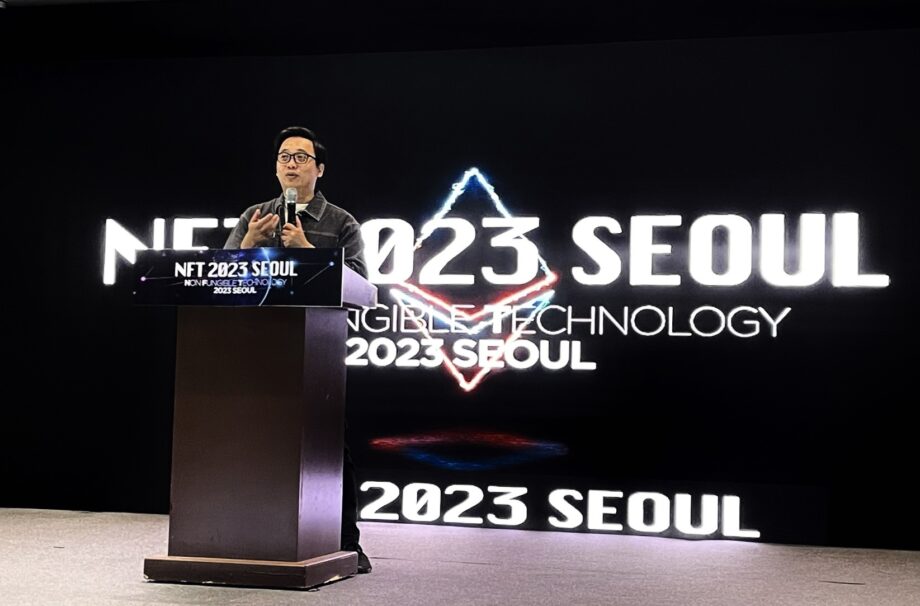
I was honored to be invited as a keynote speaker at the NFT 2023 Seoul conference, which took place on September 1, 2023, at the COEX Convention Center in Seoul, South Korea. The conference was a huge success, attracting many attendees from around the world who were interested in the latest developments and trends in the non-fungible tokens space.

The speech was titled “The Journey of NFTs in the Age of AI and Web3”. In it, I shared my insights on how NFTs have evolved and what their future holds, how artificial intelligence (AI) is creating new possibilities and challenges for NFTs, and how Web3 is emerging as a new version of the internet that is more decentralized, open, and user-centric.

In this article, I will summarize some of my speech’s key points and provide examples of NFT projects that illustrate them. I hope you will find them informative and inspiring.

What Are NFTs?

One of the topics that I covered in my speech was the basic concept and definition of NFTs. NFTs are non-fungible tokens, which means that they are unique and irreplaceable. Unlike fungible tokens, such as cryptocurrencies, that can be exchanged for one another, NFTs have their own individual characteristics and value. They are mostly digital items, such as artworks, music, videos, games, collectibles, and even virtual land, that users can buy and sell online using blockchain technology.

Blockchain technology is the backbone of NFTs, providing a secure and transparent way of verifying their authenticity, scarcity, and ownership. Blockchain is a distributed ledger system that records transactions in a network of computers without the need for a central authority. Each transaction is verified by the network and added to a chain of blocks that cannot be altered or tampered with. This ensures that NFTs are original, rare, and belong to their rightful owners.

The NFT market has been booming in recent years, especially in 2021, when it reached new heights of popularity and profitability. According to data from NonFungible.com, the total sales volume of NFTs in 2021 was over $12 billion, which is more than 20 times higher than the previous year. The average price of an NFT also increased significantly, from $142 in 2020 to $3,700 in 2021.

Some of the more popular and best-selling NFT collections in the market as of last week were:

  • Bored Ape Yacht Club: 7-Day Sales Volume: $52.2 million
  • The Sandbox: 7-Day Sales Volume: $33.1 million
  • CryptoPunks: 7-Day Sales Volume: $17.5 million
  • Art Blocks: 7-Day Sales Volume: $13.2 million
  • Decentraland: 7-Day Sales Volume: $6.6 million

These collections feature different types of digital assets, such as pixelated characters, generative art, virtual worlds, and more. They have attracted thousands of buyers and sellers from around the world, who are willing to pay millions of dollars for some of the rarest and most coveted pieces. Just to put some figures to illustrate these NFTs. A Bored Ape Yacht Club NFT sold for $24.4 million at Sotheby’s auction house in September 2021.

A CryptoPunk NFT sold for $11.8 million at Christie’s auction house in May 2021. An Art Blocks NFT sold for $5.4 million on the OpenSea platform in August 2021.

How is AI Transforming NFTs?

Another topic I covered in my speech was the impact and potential of artificial intelligence on NFTs. I explained how AI is transforming NFTs by creating new possibilities for generating unique digital assets that can appeal to different tastes and preferences. I also explained how AI can integrate dynamic experiences into NFTs, making them more interactive and adaptive.

One of the ways that AI is creating new possibilities for NFTs is by enabling users to automatically create artworks using various algorithms and models. This means that users do not need to have any artistic skills or experience to create their own NFTs. They can simply use AI tools and platforms that can generate images based on their inputs, such as keywords, styles, colors, and more. Some of the examples of AI-generated NFTs include:

  • Artbreeder is a platform that allows users to create and breed images using neural networks. Users can choose from different categories, such as portraits, landscapes, animals, and abstract art, and then adjust various parameters, such as genes, mutations, and mixtures, to create unique images. Users can also combine different images to create hybrids and variations.
  • GANksy is a collection of street art created by a generative adversarial network (GAN) inspired by Banksy. A GAN is an AI model consisting of two competing networks: a generator that creates fake images and a discriminator that tries to distinguish them from real ones. The generator learns from the feedback of the discriminator and improves over time. GANksy is a GAN that was trained on hundreds of Banksy artworks and then generated its own original pieces.
  • Alethea AI is a platform that enables users to create and trade intelligent NFTs that can speak, interact, and learn. Users can upload their own images or choose from a gallery of pre-made avatars and then use a text-to-speech engine to give them a voice. Users can also customize the personality, mood, and emotion of their NFTs and teach them new skills and knowledge.

Another way that AI is transforming NFTs is by integrating dynamic experiences into them thanks to their self-learning capabilities. This means that NFTs can change over time based on external factors, such as data, events, user actions, and more. This makes them more dynamic compared to more traditional NFTs that often take the form of an image or audio file.

What is Web3 and How Does It Enhance the NFT Ecosystem?

The final topic that I covered in my speech was Web3 and how it enhances the NFT ecosystem. Web3 is a new version of the internet that aims to give users more control over their data and online interactions. Web3 is built on blockchain technology and includes features such as cryptocurrencies, NFTs, and decentralized autonomous organizations (DAOs).

Identity is one of the key features of Web3 that allows users to manage their online identities in a more secure and efficient way without relying on a central authority. Web3 identity solutions enable users to create and use digital wallets on the blockchain that store their personal information, such as name, email, phone number, address, and more.

Users can then use these wallets to access various Web3 applications and services, such as marketplaces, social networks, games, and more. Users can also choose what information they want to share with each application or service and revoke access at any time. Some of the examples of Web3 identity solutions:

  • MetaMask is a browser extension that allows users to access Ethereum-based applications. MetaMask acts as a bridge between the user’s browser and the Ethereum network, enabling them to send and receive transactions, interact with smart contracts, and manage their Ethereum accounts.
  • Civic is a platform that provides identity verification services using blockchain. Civic allows users to verify their identity once and then use it across multiple platforms without going through the same process again. Civic also protects users’ privacy by using zero-knowledge proofs, which are cryptographic techniques that allow users to prove something without revealing any details.
  • ENS (Ethereum Name Service) is a protocol that allows users to register human-readable names for their Ethereum addresses. ENS makes it easier for users to send and receive transactions, as they do not have to deal with long and complex alphanumeric strings. ENS also allows users to attach other information to their names, such as websites, social media profiles, and NFTs.

NFTs are another key feature of Web3 that enhances the ecosystem by offering a decentralized internet where users are not just consumers but active participants. They are unique blockchain tokens that allow users to transparently provide proof of ownership for things such as digital art, music, data, in-game assets, personal records, and more. NFTs also enable users to create, trade, collect, and showcase their digital assets on various Web3 platforms and services.

The Bottom Line

I wrapped up my speech by stressing the importance and potential of the fusion of AI and NFTs in the Web3 era, arguing that the convergence of AI and NFTs will allow us to create and own unique digital assets that can interact with each other and with the environment in dynamic and intelligent ways.

I also argued that Web3 will offer us a more democratic and decentralized internet where we can have more freedom and control over our online identities and experiences.

“Web3 is based on the idea of decentralization, which means that no single entity or authority can control or censor the network. This aligns perfectly with the core values of NFTs, which are based on the idea of ownership, which means that we can prove and transfer our rights to our digital assets. The fusion of AI and NFTs within the context of Web3 opens up a new horizon for innovation and creativity, where we can explore endless possibilities and have greater agency over our digital assets.”

Thank you to the audience for their attention and to the organizers of NFT 2023 Seoul. Find me on X/Twitter at @anndylian.


Source: https://www.techopedia.com/anndy-lians-keynote-speech-at-nft-2023-seoul

Anndy Lian is an early blockchain adopter and experienced serial entrepreneur who is known for his work in the government sector. He is a best selling book author- “NFT: From Zero to Hero” and “Blockchain Revolution 2030”.

Currently, he is appointed as the Chief Digital Advisor at Mongolia Productivity Organization, championing national digitization. Prior to his current appointments, he was the Chairman of BigONE Exchange, a global top 30 ranked crypto spot exchange and was also the Advisory Board Member for Hyundai DAC, the blockchain arm of South Korea’s largest car manufacturer Hyundai Motor Group. Lian played a pivotal role as the Blockchain Advisor for Asian Productivity Organisation (APO), an intergovernmental organization committed to improving productivity in the Asia-Pacific region.

An avid supporter of incubating start-ups, Anndy has also been a private investor for the past eight years. With a growth investment mindset, Anndy strategically demonstrates this in the companies he chooses to be involved with. He believes that what he is doing through blockchain technology currently will revolutionise and redefine traditional businesses. He also believes that the blockchain industry has to be “redecentralised”.

j j j