China’s Cryptocurrency Ban: Is FOMO Gradually Being Replaced by FUD?

China’s Cryptocurrency Ban: Is FOMO Gradually Being Replaced by FUD?

After the People’s Bank of China (PBoCprohibited cryptocurrency transactions and mining the price of Bitcoin and other cryptocurrencies fell as a result. In the last 12 years, China has banned cryptocurrency around a dozen times. Every time they impose a ban on crypto currencies, they instil FUD (Fear, Uncertainty, and Doubt) in the crypto community within China and abroad. Is the recent decision to impose another ban on crypto activities shifting the market’s current state from FOMO (Fear of Missing Out) to FUD (Fear, Uncertainty, and Doubt)? I would like to discuss this with the BigONE community.


China FUD vs. Crypto

Going down memory lane, China has taken several anti-crypto stances since the early days of Bitcoin following its launch in 2009. China’s Ministry of Commerce banned virtual currencies from paying for goods and services in June 2009, just a few months after the first Bitcoin transaction. The decision was reportedly made to limit the use of video game currencies, which were allegedly devaluing the Yuan at the time.

Since then, China has taken many hostile stances toward crypto activities. At first, it was stated that it was not a “real currency.” Another instance of FUD that stood out in this back and forth was false news published by Weibo in March 2014. According to reports, the “PBoC has imposed an outright ban on Bitcoin transactions. This false news completely destabilized the market, causing thousands of traders and investors to liquidate their holdings, and Bitcoin, which was trading at around $1k at the time of the news, fell in value by half in just three months. Fast forward to 2021; China has stepped up its anti-crypto campaign in the last four months. First, regulators launched a massive crackdown on Bitcoin mining operations. The crackdown had a significant impact on the cryptocurrency scene because China housed 75% of the world’s Bitcoin miners at the time.

Then in July, it was revealed that the PBoC had shut down a tech firm that provided software services to cryptocurrency firms. The price of Bitcoin immediately dropped because of this news. Finally, on September 24th, the PBoC announced that all cryptocurrency transactions in China are illegal. As a result, the price of Bitcoin fell by more than 5%, causing traders and investors to liquidate their positions. Ironically in the US, where talk of crypto regulation from the SEC has been spreading its own FUD, the news from China could slowthe drive to clamp down on Crypto. Notably Senator Pat Toomey tweeted that, “Beijing is so hostile to economic freedom they cannot even tolerate their people participating in what is arguably the most exciting innovation in finance in decades. Economic liberty leads to faster growth, and ultimately, a higher standard of living for all.

While this appears to be, to coin a phrase conjured by a recent Bloomberg article, a “peak FUD moment for crypto” the fact is the actual impact on Bitcoin’s value for these government actions may be over-exaggerated. As the article in Bloomberg went on to say: “The remarkable thing is that — like the proverbial “wall of worry” that never seems to hurt the stock market — growing FUD never seems to do much damage to the value of crypto assets. At least, not for long.

Yes, Bitcoin is down 5% following China’s latest ban on all crypto transactions and vow to root out mining of digital assets, but that’s just another day in the virtual office for this volatile asset class. Bitcoin and other coins actually were hit harder earlier this week when concerns over China Evergrande Group spread throughout all manner of global markets,” the article noted.


The rise and fall of FUD

FOMO has increased in the crypto scene due to the rapid growth of Bitcoin and other cryptocurrencies in recent years. To put it simply everyone wants to profit from cryptocurrency price increases. As a result, as new users enter the crypto scene, the adoption rate rises. At the same time the emergence of cryptocurrencies has also resulted in regulatory scrutiny and crackdowns. Despite several hostile actions from China and other regulators, we’ve seen that this caused FUD but for a brief period as the cryptocurrency market always finds a way to recover. I believe that ignorance of the intrinsic value of cryptocurrencies also contributes to FUD, which is why perceptions and news coverage continues to influence the market significantly. After each crypto crackdown by regulators, you have no doubt noticed that Bitcoin often goes on a bull run following a brief price drop.

“The China news is not surprising to those of who’ve been in the cryptocurrency space for some time, and as with most FUD, I believe the decentralized crypto market and community is resilient enough to get through this. From an exchange perspective, the other side of the coin is to stay regulated and follow the rules. Anndy Lian, Chairman of BigONE Exchange commented.

Writing in Forkast, Lily Z. King suggests an upside to all the FUD caused by the ban, will drive a significant decentralization of crypto power from China to other markets, particularly Southeast Asia. As the economy of Southeast Asia has been heavily impacted by the Covid-19 crisis, the new inflow of crypto capital and technology might bring a much-needed boost for their digital economy. Taking the long-term perspective, this diffusion is good for the builder-type among Chinese crypto entrepreneurs and is good for the crypto movement globally,” she concluded.

Although digital currencies may survive China’s recent crackdown on cryptocurrencies, I believe correct information and knowledge about cryptocurrencies and the market are essential for long term success. Still, if news and perceptions continue to influence the market, it is difficult to predict whether FOMO will always triumph over FUD. Will the latest crackdown on cryptocurrency activities lead to another Bitcoin all-time high? The only way to find out is to wait. In the meantime, the knock-on effect in the region may end up benefiting Southeast Asia.


Original Source: https://london-post.co.uk/chinas-cryptocurrency-ban-is-fomo-gradually-being-replaced-by-fud/


 

Anndy Lian is an early blockchain adopter and experienced serial entrepreneur who is known for his work in the government sector. He is a best selling book author- “NFT: From Zero to Hero” and “Blockchain Revolution 2030”.

Currently, he is appointed as the Chief Digital Advisor at Mongolia Productivity Organization, championing national digitization. Prior to his current appointments, he was the Chairman of BigONE Exchange, a global top 30 ranked crypto spot exchange and was also the Advisory Board Member for Hyundai DAC, the blockchain arm of South Korea’s largest car manufacturer Hyundai Motor Group. Lian played a pivotal role as the Blockchain Advisor for Asian Productivity Organisation (APO), an intergovernmental organization committed to improving productivity in the Asia-Pacific region.

An avid supporter of incubating start-ups, Anndy has also been a private investor for the past eight years. With a growth investment mindset, Anndy strategically demonstrates this in the companies he chooses to be involved with. He believes that what he is doing through blockchain technology currently will revolutionise and redefine traditional businesses. He also believes that the blockchain industry has to be “redecentralised”.

j j j

Anndy Lian believes DeFi will also result in more and more bitcoins being locked up, “which will bring another bull market for bitcoin.”

Anndy Lian believes DeFi will also result in more and more bitcoins being locked up, “which will bring another bull market for bitcoin.”

Anndy Lian’s comments were featured on CryptoNews on 27 September 2020. He believes that DeFi will also result in more and more bitcoins being locked up, “which will bring another bull market for bitcoin.”

“This inter-related relationship between Bitcoin and Defi works hand in hand with the demand as seen in the market. The breakout trend in Defi for 2020 will continue. New terms will supersede “Yield Farming”  and a more stable environment will be established as you see the bigger exchanges like Binance, Gemini, Huobi and Okex taking the lead.” Anndy Lian added.

Read more about the article on Google News:

https://news.google.com/articles/CAIiEGyo6SpEJbiRN5EMTwYXqjoqMwgEKioIACIQOG0vTzP65T11pGTnFueHJCoUCAoiEDhtL08z-uU9daRk5xbnhyQwg7vbBg?hl=en-SG&gl=SG&ceid=SG%3Aen


‘If DeFi Collapsed, Bitcoin Would Still Be Bitcoin’


  • The core driver of DeFi is its use case, not Bitcoin.
  • “BTC is money, DeFi is banks, that’s how people should think about it.”
‘If DeFi Collapsed, Bitcoin Would Still Be Bitcoin’ 101
Source: Adobe/golibtolibov

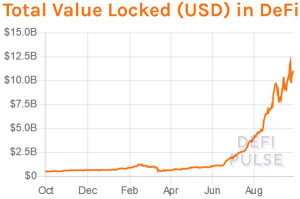
Bitcoin (BTC) and DeFi both had a good summer. After the coronavirus-induced collapse of March, the price of bitcoin rose from USD 3,500 to just over USD 12,000 in August, while the total value locked into DeFi platforms rose from USD 1bn in June to almost USD 12bn in late September.

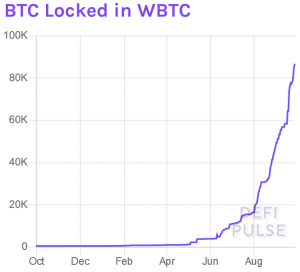
It’s tempting to view the performances of bitcoin and DeFi as connected. Given that the supply of wrapped bitcoin has ballooned from wBTC 500 to almost wBTC 90,000 in the past 12 months, it would seem that bitcoin holders have been driving the growth of DeFi.

However, industry figures speaking to Cryptonews.com said that, while BTC has been a significant player in DeFi’s growth, its importance within the DeFi ecosystem will wane over time. And while some may be tempted to regard Bitcoin and DeFi as interdependent, most commenters believe that each can survive without the other.

Bitcoin boosts DeFi

There’s little doubt that bitcoin — and in particular wrapped bitcoin — has spurred at least a portion of DeFi’s impressive growth over the past few months – USD 1.4bn worth of BTC is locked in DeFi today, or almost 13% of total value locked (TVL) in decentralized finance projects.

As data from Defi Pulse indicates, the demand for wBTC began rising exponentially from the end of June onwards.

‘If DeFi Collapsed, Bitcoin Would Still Be Bitcoin’ 102
Source: defipulse.com

And data also indicates, it was around the end of June that TVL into DeFi platforms suddenly began rising more strongly, as ethereum (ETH) locked in DeFi jumped also this past summer.

‘If DeFi Collapsed, Bitcoin Would Still Be Bitcoin’ 103
Source: defipulse.com

Industry figures agree that the two trends are connected, even if they have their own opinions on how long the interconnection may continue.

“Yes, I think the use of wBTC pair mining will boost the Defi market to a certain extent,” said crypto advisor and author Anndy Lian.

“According to the data released today (the second day of Uniswap Liquidity Mining), 50% of the miners used the wBTC/ETH pair in the initial mining, and most of them are big whales.”

Analyst and CryptoMondays Partner Lou Kerner suggested that bitcoin will remain an important part of DeFi in the medium term, not least because it still accounts for over half of the total value of all cryptoassets.

“Given its scale, bitcoin will be an increasingly significant asset in DeFi. But over time, as real world assets are tokenized and enter DeFi, bitcoin relevance will decrease,” he told Cryptonews.com.

However, while BTC has played a role in DeFi’s recent growth, ADVFN CEO Clem Chambers doesn’t see it as the main factor.

“Bitcoin will influence DeFi but it is not the core driver. The core driver is the powerful use case,” he said.

DeFi boosts BTC

Conversely, commenters agree that DeFi is boosting BTC, or that it will in the near future. By offering the chance to earn an additional return on the bitcoin you own, DeFi’s liquidity mining and yield farming is making BTC seem even more attractive to investors, particularly during a period of reduced economic opportunity.

“DeFi has made BTC even more attractive as an investment,” according to Kerner.

That said, Chambers estimated that most of DeFi’s boost to BTC still awaits us in the future.

“It will [boost bitcoin] but not yet. DeFi is still underground with only the core early adopters ‘getting it’,” he said.

Aside from enhancing the returns offered by bitcoin, Anndy Liang pointed out that DeFi will also result in more and more bitcoins being locked up, “which will bring another bull market for bitcoin.”

Mutual aid, not mutual interdependence

While DeFi and bitcoin both help each other in various ways, commentators seem that they don’t believe that each needs the other to survive.

“Bitcoin crashing would certainly slow the growth of DeFi, but one is not dependent on the other,” said Kerner.

Likewise, if DeFi were to somehow collapse, Interlapse CEO and Co-founder Wayne Chen said that BTC would continue as before.


“Bitcoin has seen massive growth over the past decade and will certainly continue its momentum,” he told Cryptonews.com. “If DeFi collapsed, Bitcoin would still be Bitcoin and continue its growth and adoption.”

On the other hand, some think that bitcoin crashing would have a severe effect on DeFi, since even if parts of the DeFi ecosystem survived, altcoins would struggle.

“Most of the ‘value’ coins will go to zero if the price of bitcoin crashed significantly or collapsed,” suggested Lian. “One thing is for sure: no coin (maybe tiny s***coins can) can survive if bitcoin collapses.”

The future: parallel, not pivotal

As for the more distant future, some experts believe that DeFi and Bitcoin will increasingly operate in parallel, rather than remain interlinked.

“BTC is money, DeFi is banks, that’s how people should think about it. The linkage is parallel not pivotal,” argued Chambers.

Chen claims that it’s in the interests of DeFi and Bitcoin that each maintains a degree of independence from the other in the future.

“Industry professionals will likely try to interrelate DeFi and Bitcoin. However, this needs to be done cautiously so that it doesn’t turn into a complicated financial product which can ultimately confuse the market,” he said.

Anndy Lian isn’t completely sure that DeFi will be around in several years’ time. However, if it is, he said there’s a chance other cryptoassets could emerge to reduce BTC’s influence on DeFi.

“But personally I do hope to see new players coming into challenge Bitcoin’s supremacy,” he said. “With challenges, there are improvements. This is what’s lacking in today’s crypto space.”


Original Source: https://cryptonews.com/exclusives/if-defi-collapsed-bitcoin-would-still-be-bitcoin-7827.htm


Anndy Lian is an early blockchain adopter and experienced serial entrepreneur who is known for his work in the government sector. He is a best selling book author- “NFT: From Zero to Hero” and “Blockchain Revolution 2030”.

Currently, he is appointed as the Chief Digital Advisor at Mongolia Productivity Organization, championing national digitization. Prior to his current appointments, he was the Chairman of BigONE Exchange, a global top 30 ranked crypto spot exchange and was also the Advisory Board Member for Hyundai DAC, the blockchain arm of South Korea’s largest car manufacturer Hyundai Motor Group. Lian played a pivotal role as the Blockchain Advisor for Asian Productivity Organisation (APO), an intergovernmental organization committed to improving productivity in the Asia-Pacific region.

An avid supporter of incubating start-ups, Anndy has also been a private investor for the past eight years. With a growth investment mindset, Anndy strategically demonstrates this in the companies he chooses to be involved with. He believes that what he is doing through blockchain technology currently will revolutionise and redefine traditional businesses. He also believes that the blockchain industry has to be “redecentralised”.

j j j