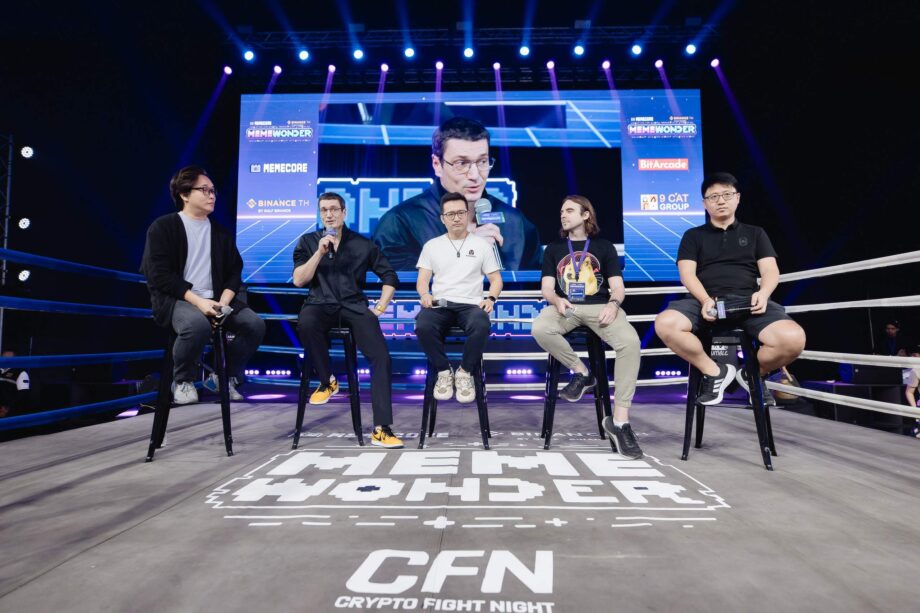
Session 7: Blockchain Application for Smart Contract and Decentralized Applications by Anndy Lian

Session 7: Blockchain Application for Smart Contract and Decentralized Applications by Anndy Lian

The digital age has ushered in an era of unprecedented technological advancement, and with it, a wave of innovation is sweeping across all sectors, including the often-complex realm of governance. At the forefront of this transformation lies the convergence of cryptocurrency, decentralized applications (dApps), and e-governance, a powerful synergy poised to redefine the relationship between governments and citizens. Anndy Lian, an intergovernmental blockchain expert, shares his views at a training program co-hosted by The Asian Productivity Organization (APO) and the National Productivity Centre (NPCC) of MISTI of Cambodia.

At its core, this transformation is fueled by the principles of decentralization, transparency, and efficiency – values deeply embedded within the architecture of blockchain technology. Unlike traditional centralized systems, where power and control reside in the hands of a few, blockchain operates as a distributed ledger, accessible to all participants. This inherent transparency fosters a new level of accountability, as every transaction, every decision, is recorded immutably and can be publicly verified. For governments grappling with issues of corruption and mistrust, blockchain emerges as a powerful tool to restore faith and ensure ethical conduct.

Beyond transparency, blockchain empowers the creation of automated, efficient systems through the use of smart contracts. These self-executing agreements, encoded on the blockchain, have the potential to revolutionize public services, eliminating bureaucratic bottlenecks and reducing the risk of human error. Imagine a world where applying for permits, receiving government benefits, or registering property is as simple as clicking a button – a world where citizens are no longer bogged down by paperwork and lengthy processing times. Smart contracts can make this vision a reality, streamlining government operations and freeing up resources for more critical tasks.

The burgeoning world of Decentralized Finance (DeFi) offers a compelling glimpse into the transformative potential of these technologies for e-governance. Platforms like PancakeSwap and Aave, built on blockchain networks, have gained immense popularity for their ability to facilitate financial transactions with minimal fees and user-friendly interfaces. These platforms demonstrate how governments could leverage similar principles to create more inclusive and efficient systems for distributing aid, managing public funds, and incentivizing citizen participation in governance initiatives.

One of the key barriers to widespread adoption of these technologies, however, is the perceived complexity of blockchain and cryptocurrency. Many view these as highly technical domains, accessible only to programmers and tech-savvy individuals. However, this perception is rapidly changing with the emergence of user-friendly tools like ChatGPT, which can assist even non-programmers in writing and testing smart contracts. These tools are democratizing access to blockchain technology, empowering individuals and organizations to explore its potential without requiring extensive technical expertise.

While the opportunities are vast, it is crucial to acknowledge the challenges that come with integrating these nascent technologies into existing governance structures. Establishing clear regulatory frameworks for cryptocurrencies, addressing concerns related to security and volatility, and building the necessary technological infrastructure will require careful consideration and collaboration between governments, technologists, and citizens.

Despite these challenges, the potential rewards are too significant to ignore. The convergence of cryptocurrency, dApps, and e-governance represents a paradigm shift in how we think about governance in the digital age. By embracing the principles of decentralization, transparency, and efficiency, governments can harness the power of these technologies to create more responsive, accountable, and citizen-centric societies. The journey may be complex, but the destination – a future where technology empowers and strengthens the very fabric of our democracies – is one worth striving for.

Anndy Lian is an early blockchain adopter and experienced serial entrepreneur who is known for his work in the government sector. He is a best selling book author- “NFT: From Zero to Hero” and “Blockchain Revolution 2030”.

Currently, he is appointed as the Chief Digital Advisor at Mongolia Productivity Organization, championing national digitization. Prior to his current appointments, he was the Chairman of BigONE Exchange, a global top 30 ranked crypto spot exchange and was also the Advisory Board Member for Hyundai DAC, the blockchain arm of South Korea’s largest car manufacturer Hyundai Motor Group. Lian played a pivotal role as the Blockchain Advisor for Asian Productivity Organisation (APO), an intergovernmental organization committed to improving productivity in the Asia-Pacific region.

An avid supporter of incubating start-ups, Anndy has also been a private investor for the past eight years. With a growth investment mindset, Anndy strategically demonstrates this in the companies he chooses to be involved with. He believes that what he is doing through blockchain technology currently will revolutionise and redefine traditional businesses. He also believes that the blockchain industry has to be “redecentralised”.

j j j

Session 2: Blockchain: Architecture and Platforms by Anndy Lian

Session 2: Blockchain: Architecture and Platforms by Anndy Lian

Anndy Lian, a renowned business strategist and blockchain expert, led a captivating training session for the Asian Productivity Organization (APO) and the National Productivity Centre (NPCC). For his session, he wanted to demystify the complex world of blockchain architecture, platforms, and their integration with other cutting-edge technologies.

Lian began by breaking down the fundamental building blocks of blockchain architecture. He explained how individual computers or devices, known as nodes, form the backbone of the network, each meticulously maintaining a copy of the blockchain and working collaboratively to validate transactions. He delved into the concept of the blockchain protocol, a set of rules and procedures that dictate the network’s operation, including the crucial consensus mechanisms that ensure all nodes agree on the blockchain’s state.

He then ventured into the different types of blockchains, each with unique characteristics and applications. Public blockchains, like Bitcoin and Ethereum, are open to anyone, operating in a decentralized and transparent manner. Private blockchains, on the other hand, are permissioned networks accessible only to a select group, often favored by organizations prioritizing efficiency and control. Lastly, hybrid blockchains combine elements of both, offering flexibility and scalability by controlling data visibility.

To illustrate blockchain’s real-world impact, Lian presented a compelling case study involving IBM and Maersk’s TradeLens platform. This innovative platform leverages blockchain to revolutionize global trade by digitizing and streamlining processes, addressing the challenges posed by traditional manual systems. TradeLens creates a transparent and tamper-proof system for tracking shipments and managing documentation, paving the way for a more efficient and secure global trade network.

Lian emphasized that blockchain’s potential is unlocked when integrated with other emerging technologies. He highlighted its synergy with Artificial Intelligence (AI) and Machine Learning, where blockchain can enhance AI models by securing data sharing for training and enabling the creation of decentralized AI systems. He also explored its role in the Internet of Things (IoT), where blockchain enhances security, transparency, and decentralized management of connected devices and data.

Looking towards the future, Lian discussed how blockchain can strengthen security and enable efficient device authentication in the rapidly evolving domains of 5G and Edge Computing. He also touched upon its potential in Augmented Reality (AR) and Virtual Reality (VR), where blockchain can enhance security and ownership of digital assets.

For government officials considering blockchain adoption, Lian offered practical advice. He encouraged starting small with a simple project to gain a practical understanding of the technology and its potential. He stressed the importance of clearly defining objectives, identifying the specific problem blockchain will solve, and understanding the data involved. Choosing the right platform is crucial, considering factors like security, scalability, support, and long-term viability. Finally, he emphasized prioritizing data security and privacy, implementing robust measures to protect sensitive information.

The session concluded with an engaging Q&A, where participants sought Lian’s insights on various aspects of blockchain technology. He addressed questions on consensus mechanisms, mining, 51% attacks, the proliferation of blockchain platforms, and interoperability challenges. Lian stressed the importance of choosing reputable platforms with solid backing and comprehensive documentation, advising participants to seek expert guidance for complex integrations.

Anndy Lian’s session provided invaluable insights into the transformative potential of blockchain technology. He demystified its complexities, offered practical guidance for implementation, and ignited the imagination of participants by showcasing its potential to revolutionize various sectors. As blockchain continues to evolve, its integration with other emerging technologies promises to unlock unprecedented opportunities for innovation and efficiency across industries and government services alike.


Anndy Lian is an early blockchain adopter and experienced serial entrepreneur who is known for his work in the government sector. He is a best selling book author- “NFT: From Zero to Hero” and “Blockchain Revolution 2030”.

Currently, he is appointed as the Chief Digital Advisor at Mongolia Productivity Organization, championing national digitization. Prior to his current appointments, he was the Chairman of BigONE Exchange, a global top 30 ranked crypto spot exchange and was also the Advisory Board Member for Hyundai DAC, the blockchain arm of South Korea’s largest car manufacturer Hyundai Motor Group. Lian played a pivotal role as the Blockchain Advisor for Asian Productivity Organisation (APO), an intergovernmental organization committed to improving productivity in the Asia-Pacific region.

An avid supporter of incubating start-ups, Anndy has also been a private investor for the past eight years. With a growth investment mindset, Anndy strategically demonstrates this in the companies he chooses to be involved with. He believes that what he is doing through blockchain technology currently will revolutionise and redefine traditional businesses. He also believes that the blockchain industry has to be “redecentralised”.

j j j

Session 1: Blockchain: Introduction of the Concept by Anndy Lian

Session 1: Blockchain: Introduction of the Concept by Anndy Lian

Blockchain: A Practical Introduction for Enhanced Transparency, Security, and Efficiency

This article summarizes a session led by Anndy Lian, a prominent blockchain expert, focusing on introducing blockchain technology and its real-world applications. The session was part of a training program co-hosted by The Asian Productivity Organization (APO) and the National Productivity Centre (NPCC) of MISTI, aimed at improving productivity in the Asian region.

Anndy Lian, drawing from his extensive experience as an advisor, investor, and chairman of various tech companies, provided a simplified yet comprehensive explanation of blockchain. He described it as a distributed database, or ledger, shared across a network of computers. This decentralized system allows for secure and transparent recording of transactions between parties in a permanent and efficient manner.

The session delved into the key characteristics of blockchain, emphasizing its open, distributed nature, peer-to-peer functionality, and permanence. Lian highlighted the use of cryptography in securing exchanges and ensuring the immutability of records. He explained how each transaction, represented as a block, is broadcasted across the network for approval before being added to the blockchain, creating a transparent and tamper-proof history.

The session further explored the impact of blockchain on various sectors. In the realm of cryptocurrency, blockchain’s secure transaction capabilities have challenged traditional banking norms. Lian provided examples of how financial institutions are leveraging blockchain for faster, more cost-effective international payments, crowdfunding, and securities management. He cited DBS Bank’s digital exchange as a real-world example of blockchain’s integration into existing financial systems.

The healthcare sector, too, benefits significantly from blockchain technology. Lian discussed how blockchain enhances patient data transparency, allowing for secure tracking of medical records and drug traceability. He shared examples of healthcare systems using blockchain for efficient record management, reducing fraud and improving trust. He also highlighted the potential of blockchain in incentivizing patient participation in treatment plans through micropayments and smart contracts.

Lian emphasized the importance of integrating blockchain with existing systems rather than replacing them entirely, especially in government sectors. He cited Estonia’s successful implementation of blockchain for digital identity, voting, and land titling as a prime example. He stressed the need for governments to start with smaller, manageable projects to demonstrate the value and efficiency of blockchain before scaling up.

The session concluded with a video showcasing Estonia’s digital transformation, highlighting how the country embraced technology to create a secure and efficient digital society. Lian emphasized that while replicating Estonia’s success in larger countries presents challenges, their approach offers valuable lessons for a world increasingly reliant on digital solutions.

Anndy Lian is an early blockchain adopter and experienced serial entrepreneur who is known for his work in the government sector. He is a best selling book author- “NFT: From Zero to Hero” and “Blockchain Revolution 2030”.

Currently, he is appointed as the Chief Digital Advisor at Mongolia Productivity Organization, championing national digitization. Prior to his current appointments, he was the Chairman of BigONE Exchange, a global top 30 ranked crypto spot exchange and was also the Advisory Board Member for Hyundai DAC, the blockchain arm of South Korea’s largest car manufacturer Hyundai Motor Group. Lian played a pivotal role as the Blockchain Advisor for Asian Productivity Organisation (APO), an intergovernmental organization committed to improving productivity in the Asia-Pacific region.

An avid supporter of incubating start-ups, Anndy has also been a private investor for the past eight years. With a growth investment mindset, Anndy strategically demonstrates this in the companies he chooses to be involved with. He believes that what he is doing through blockchain technology currently will revolutionise and redefine traditional businesses. He also believes that the blockchain industry has to be “redecentralised”.

j j j