
The Future of NFT Bridges in the Blockchain Ecosystem

The Future of NFT Bridges in the Blockchain Ecosystem

The thriving world of Non-Fungible Tokens (NFTs) is rapidly expanding beyond digital art and collectibles, finding applications in gaming, the metaverse, and decentralized finance (DeFi). A crucial element in this evolution is the emergence of NFT bridges – protocols that enable the seamless transfer of NFTs between different blockchains. These bridges hold the potential to unlock new levels of interoperability and liquidity, but also raise critical questions about scalability, security, and regulation.

To explore the future of NFT bridges and their impact on the blockchain ecosystem, The Shib gathered insights from leading industry experts: Anndy Lian, an intergovernmental blockchain expert and author; Arpan Mondal, MegaVerse Founder and CEO; and Sergey Onyshchenko, co-founder at Blaize.

Scaling the Bridge: Addressing Transaction Volume and Congestion

One of the key challenges facing NFT bridges is the need to handle the increasing volume of transactions and the potential for network congestion, particularly when dealing with large-scale NFT collections.

Lian highlighted the limitations of current blockchain infrastructure and suggested that “NFT bridges face a tough challenge when it comes to scalability, especially with the surge in NFT adoption.” He proposed leveraging layer-2 scaling solutions like optimistic rollups and zk-rollups to address this issue, explaining that these solutions can “drastically reduce gas costs and increase transaction throughput” by bundling transactions off-chain.

Onyshchenko echoed this sentiment, emphasizing the role of bridges in distributing transaction load and “alleviating pressure on individual networks.” Both Onyshchenko and Mondal viewed bridges as essential tools for “expanding the overall capacity of the decentralized ecosystem” and paving the way for broader adoption.

Liquidity and Pricing: Navigating the Arbitrage Landscape

NFT bridges have the potential to significantly impact the liquidity and pricing of NFTs by connecting previously isolated marketplaces.

Lian pointed out that this increased interoperability could lead to a more unified and efficient market, but also cautioned about the risks of price arbitrage and market manipulation. He warned that “savvy traders could exploit price discrepancies between marketplaces on different chains,” potentially leading to artificial price inflation and market instability.

Onyshchenko focused on the benefits of increased market reach, noting that bridges “widen the market for NFTs and provide more flexibility.” Mondal agreed, suggesting that bridges can “unlock trapped assets and inject liquidity into DEXs, fostering efficient price discovery.” He also acknowledged the potential for arbitrage opportunities, stating that bridges “empower nimble players to capitalize on fleeting disparities in rates across the interoperable landscape.”

Regulatory Frameworks: Striking a Balance Between Innovation and Protection

The rapid development of NFT bridges has outpaced the development of clear regulatory frameworks.

Lian emphasized the need for regulations to address concerns around money laundering and consumer protection. He predicted stricter “Know Your Customer” rules and anti-money laundering checks, as well as potential requirements for bridge operators to meet security standards and handle disputes. He also raised the complex issue of whether some NFTs should be treated as securities, particularly when bridges are involved in issuing wrapped tokens or other financial instruments.

While Mondal didn’t delve into specific regulations for NFT bridges, he underscored the importance of regulations for blockchain bridges in general, emphasizing their role in fostering a more “inclusive, efficient, and dynamic blockchain revolution.”

Security Vulnerabilities: Safeguarding Digital Assets

The security of NFT bridges is paramount, as vulnerabilities can expose users and their digital assets to significant risks.

Onyshchenko acknowledged the potential for higher security risks with bridging due to the involvement of additional parties in the transfer process. Mondal highlighted the trade-off between trusted and trustless bridges, suggesting that users must consider their individual needs and risk tolerance when choosing a bridge.

Lian painted a vivid picture of the potential security threats, comparing using an insecure NFT bridge to “walking across a tightrope with valuable treasures in hand.” He warned about the risks of smart contract vulnerabilities, rug pulls, and hacks, emphasizing the need for thorough code audits, decentralized governance, and user education to mitigate these risks.

Cross-Chain Gaming: Unlocking Interoperability and Immersive Experiences

NFT bridges hold immense promise for the future of gaming, particularly in enabling cross-chain gaming experiences and enhancing interoperability between different gaming ecosystems.

Onyshchenko used the example of a user moving assets between Ethereum and Polygon to illustrate the broader potential of bridges for unlocking diverse use cases. Mondal’s insights on liquidity and arbitrage opportunities also apply to the gaming context, suggesting that bridges could facilitate the development of vibrant in-game economies.

Lian envisioned a future where players could seamlessly port their digital assets across different games, creating a more interconnected and immersive gaming metaverse. He highlighted the potential for cross-chain gaming economies, where players can earn and trade NFTs across different games, fostering a more unified and rewarding gaming experience.

Building Bridges to a Decentralized Future

The future of NFT bridges is filled with both promise and challenges. As these protocols mature and evolve, addressing issues of scalability, security, and regulation will be crucial for realizing their full potential. The insights shared by Lian, Mondal, and Onyshchenko provide a valuable framework for understanding the key considerations shaping the development and adoption of NFT bridges.

By fostering collaboration between developers, regulators, and users, the blockchain community can work towards building robust and secure bridges that connect the diverse ecosystems of the decentralized world, unlocking new possibilities for innovation and growth.

To delve deeper into the insights of Anndy Lian, check out the verbatim interview at the link below.

Exclusive: Anndy Lian Discusses the Future of NFT Bridges


Source: https://magazine.shib.io/article/66e1d32a8378350001d69c75#articles-5-edition-41
Anndy Lian is an early blockchain adopter and experienced serial entrepreneur who is known for his work in the government sector. He is a best selling book author- “NFT: From Zero to Hero” and “Blockchain Revolution 2030”.

Currently, he is appointed as the Chief Digital Advisor at Mongolia Productivity Organization, championing national digitization. Prior to his current appointments, he was the Chairman of BigONE Exchange, a global top 30 ranked crypto spot exchange and was also the Advisory Board Member for Hyundai DAC, the blockchain arm of South Korea’s largest car manufacturer Hyundai Motor Group. Lian played a pivotal role as the Blockchain Advisor for Asian Productivity Organisation (APO), an intergovernmental organization committed to improving productivity in the Asia-Pacific region.

An avid supporter of incubating start-ups, Anndy has also been a private investor for the past eight years. With a growth investment mindset, Anndy strategically demonstrates this in the companies he chooses to be involved with. He believes that what he is doing through blockchain technology currently will revolutionise and redefine traditional businesses. He also believes that the blockchain industry has to be “redecentralised”.
j j j

Blockchain & AI Change the Shape of Government in 2024

Blockchain & AI Change the Shape of Government in 2024

As we venture into the heart of 2024, information technology is undergoing a seismic shift. Government IT chiefs are grappling with a dual challenge: staying abreast of cutting-edge tech while harnessing its power to boost efficiency, security, and innovation.

This year’s standout trend? blockchain meeting artificial intelligence (AI) to reshape public sector IT strategies.

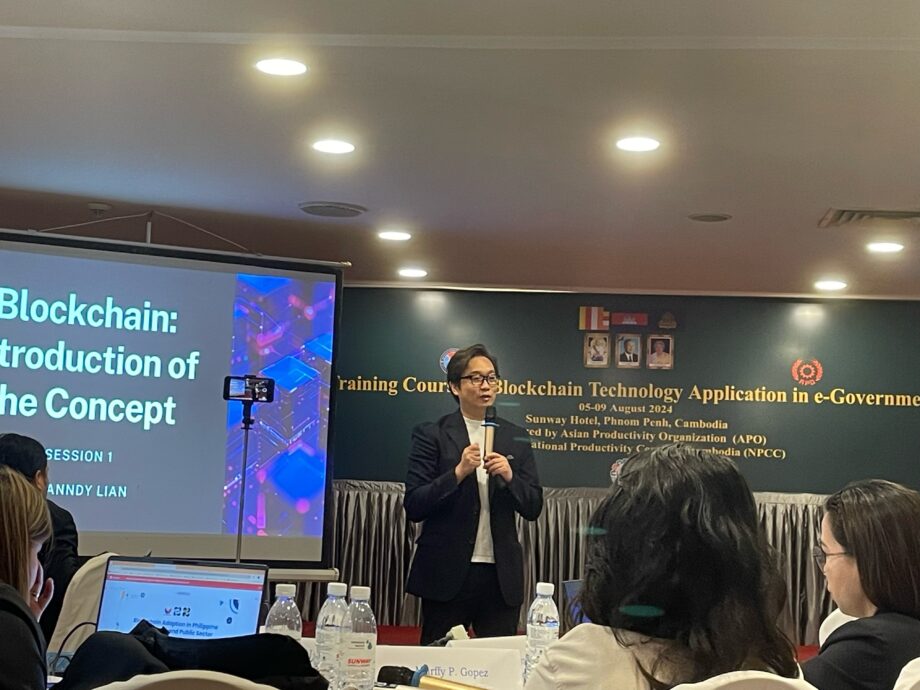
A recent workshop on Blockchain in e-Government, held in Cambodia’s bustling capital from August 5-9, 2024, highlighted the growing fascination with blockchain among state bodies.

The event drew delegates from nine nations and boasted the presence of dignitaries like H.E. Phork Sovanrith, a top official from MISTI and Cambodia’s APO Director, and highlighted blockchain’s pivotal role in molding tomorrow’s digital government services.

As the expert speaker, I witnessed firsthand the palpable excitement surrounding blockchain. The lively debates and probing questions revealed a keen appetite among public sector representatives for blockchain adoption. This shift isn’t fleeting; it marks a profound change in governmental attitudes toward technology.

Key Takeaways

  • Blockchain and AI are beginning to change how public sector IT works, offering security, efficiency, and innovation.
  • The Cambodia workshop in August highlighted global interest in blockchain’s role in transforming e-government services.
  • Blockchain’s transparency and AI’s analytical power can turbo-charge government operations and citizen engagement.
  • There are challenges in adopting these technologies — scalability, interoperability, and ensuring inclusive access among them.
  • Successful e-government transformation hinges on strategic planning, collaboration, and the ethical implementation of blockchain and AI.

Blockchain’s allure for the public sector is multifaceted. At its core, it offers a transparent, decentralized, and tamper-proof ledger system, significantly bolstering the security and integrity of government data and transactions. In our era of sophisticated cyberthreats, blockchain’s security features present an enticing shield for sensitive information.

Furthermore, blockchain’s capacity to streamline operations, slash red tape, and boost transparency aligns perfectly with e-government objectives. Its potential applications span from land registries and identity management to voting systems and public procurement.

Yet, blockchain’s true potential in e-government lies in its synergy with other emerging technologies, particularly AI. This powerful combination could spawn highly efficient, secure, and intelligent systems, revolutionizing public services.

Picture AI algorithms sifting through blockchain-stored data, uncovering patterns, forecasting trends, and making informed decisions. This could lead to more responsive and proactive government services. For instance, an AI-enhanced blockchain system could automatically flag and prevent fraud in public procurement, saving taxpayer money and ensuring fair competition.

Moreover, the AI-blockchain duo could supercharge citizen engagement in governance. Imagine smart contracts on a blockchain paired with AI-powered interfaces, creating intuitive, personalized e-government services. Citizens could interact using everyday language while AI ensures accurate processing and blockchain recording of their requests.

The enthusiasm for these technologies isn’t confined to one region. The diverse attendance at the Cambodia workshop, with participants from nine countries, signals global recognition of blockchain’s potential. This international collaboration is crucial for developing standards and best practices to facilitate widespread blockchain adoption in e-government.

However, the path to blockchain integration in the public sector isn’t without hurdles. Scalability, interoperability, and regulatory compliance are key challenges. There’s also an urgent need for capacity building and skill development within government agencies to implement and manage blockchain solutions effectively.

Looking ahead, it’s clear that blockchain and AI will remain focal points for IT leaders’ strategies. The public sector stands to gain significantly from these technologies. However, success hinges on a strategic approach that considers not just technical aspects but also organizational and cultural shifts needed to fully adopt these technologies.

For public sector IT leaders, key priorities should include developing clear blockchain strategies, investing in AI capabilities, fostering collaboration, prioritizing security, focusing on user experience, addressing ethical considerations, and maintaining agility in the face of rapid technological change.

It Won’t Be a Smooth Ride Though

The enthusiasm observed at the Cambodia workshop is encouraging, suggesting we’re on the brink of a major transformation in government operations and service delivery. However, it’s crucial to temper this excitement with a realistic understanding of the challenges ahead.

Implementing blockchain and AI solutions at a governmental level is a complex undertaking requiring careful planning, substantial resources, and, often, legislative changes. It’s not just about adopting new technologies; it’s about reimagining the delivery of government services and citizen-state interactions.

As governments rush to adopt these technologies, there’s a risk of creating a digital divide. Not all citizens may have equal access to or understanding of these new systems. IT leaders must ensure that blockchain and AI adoption doesn’t inadvertently exclude segments of the population.

Despite these challenges, the potential benefits of blockchain and AI in e-government are too significant to ignore. These technologies promise more efficient, transparent, and responsive government services. They can help rebuild trust in public institutions by providing verifiable records of government actions and decisions.

The interest shown by public sector representatives at the Cambodia workshop is a positive sign, indicating a willingness to learn and adapt. However, this enthusiasm must be channeled into concrete action plans and sustained efforts to realize the full potential of these technologies.

As we progress, it will be fascinating to see how different countries approach blockchain and AI adoption in their e-government initiatives. Will we witness a race to become blockchain-enabled smart nations? Or will the adoption be more measured and cautious?

What’s certain is that blockchain and AI are no longer just buzzwords or experimental technologies. They’re becoming integral to IT strategies, particularly in the public sector. The focus now should be on responsible and effective implementation that truly serves citizens’ needs.

The Bottom Line

In conclusion, as IT leaders map out their strategies for the coming years, blockchain and AI will undoubtedly be at the forefront. The convergence of these technologies presents an unprecedented opportunity to transform e-government services. However, success will depend on more than just technological prowess. It will require visionary leadership, collaborative efforts, and a commitment to ethical and inclusive implementation.

The journey towards blockchain and AI-enabled e-government has just begun. The enthusiasm witnessed at events like the Cambodia workshop is just the first step. The real test lies in translating this enthusiasm into tangible improvements in government services and citizen experiences. As we stand at this technological crossroads, one thing is certain: the future of e-government is exciting, and it’s powered by blockchain and AI.


Source: https://www.techopedia.com/blockchain-ai-in-government

Anndy Lian is an early blockchain adopter and experienced serial entrepreneur who is known for his work in the government sector. He is a best selling book author- “NFT: From Zero to Hero” and “Blockchain Revolution 2030”.

Currently, he is appointed as the Chief Digital Advisor at Mongolia Productivity Organization, championing national digitization. Prior to his current appointments, he was the Chairman of BigONE Exchange, a global top 30 ranked crypto spot exchange and was also the Advisory Board Member for Hyundai DAC, the blockchain arm of South Korea’s largest car manufacturer Hyundai Motor Group. Lian played a pivotal role as the Blockchain Advisor for Asian Productivity Organisation (APO), an intergovernmental organization committed to improving productivity in the Asia-Pacific region.

An avid supporter of incubating start-ups, Anndy has also been a private investor for the past eight years. With a growth investment mindset, Anndy strategically demonstrates this in the companies he chooses to be involved with. He believes that what he is doing through blockchain technology currently will revolutionise and redefine traditional businesses. He also believes that the blockchain industry has to be “redecentralised”.
j j j

Session 7: Blockchain Application for Smart Contract and Decentralized Applications by Anndy Lian

Session 7: Blockchain Application for Smart Contract and Decentralized Applications by Anndy Lian

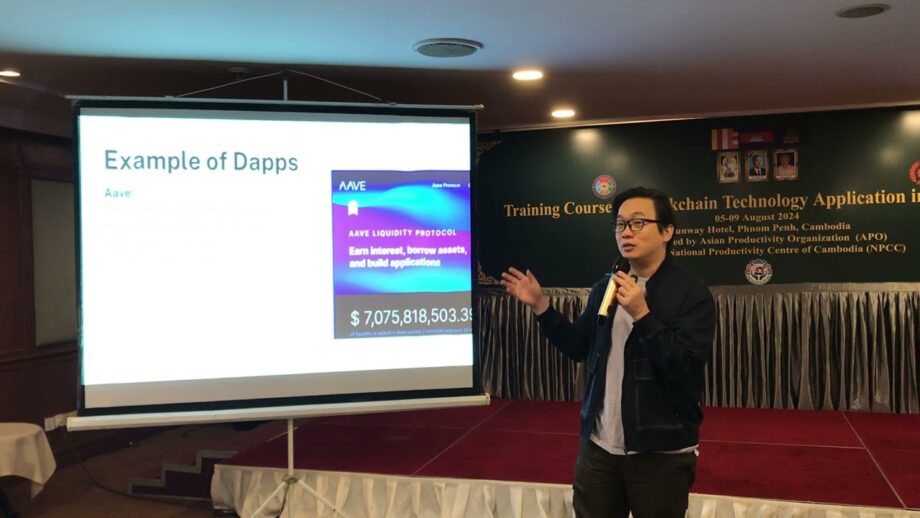
The digital age has ushered in an era of unprecedented technological advancement, and with it, a wave of innovation is sweeping across all sectors, including the often-complex realm of governance. At the forefront of this transformation lies the convergence of cryptocurrency, decentralized applications (dApps), and e-governance, a powerful synergy poised to redefine the relationship between governments and citizens. Anndy Lian, an intergovernmental blockchain expert, shares his views at a training program co-hosted by The Asian Productivity Organization (APO) and the National Productivity Centre (NPCC) of MISTI of Cambodia.

At its core, this transformation is fueled by the principles of decentralization, transparency, and efficiency – values deeply embedded within the architecture of blockchain technology. Unlike traditional centralized systems, where power and control reside in the hands of a few, blockchain operates as a distributed ledger, accessible to all participants. This inherent transparency fosters a new level of accountability, as every transaction, every decision, is recorded immutably and can be publicly verified. For governments grappling with issues of corruption and mistrust, blockchain emerges as a powerful tool to restore faith and ensure ethical conduct.

Beyond transparency, blockchain empowers the creation of automated, efficient systems through the use of smart contracts. These self-executing agreements, encoded on the blockchain, have the potential to revolutionize public services, eliminating bureaucratic bottlenecks and reducing the risk of human error. Imagine a world where applying for permits, receiving government benefits, or registering property is as simple as clicking a button – a world where citizens are no longer bogged down by paperwork and lengthy processing times. Smart contracts can make this vision a reality, streamlining government operations and freeing up resources for more critical tasks.

The burgeoning world of Decentralized Finance (DeFi) offers a compelling glimpse into the transformative potential of these technologies for e-governance. Platforms like PancakeSwap and Aave, built on blockchain networks, have gained immense popularity for their ability to facilitate financial transactions with minimal fees and user-friendly interfaces. These platforms demonstrate how governments could leverage similar principles to create more inclusive and efficient systems for distributing aid, managing public funds, and incentivizing citizen participation in governance initiatives.

One of the key barriers to widespread adoption of these technologies, however, is the perceived complexity of blockchain and cryptocurrency. Many view these as highly technical domains, accessible only to programmers and tech-savvy individuals. However, this perception is rapidly changing with the emergence of user-friendly tools like ChatGPT, which can assist even non-programmers in writing and testing smart contracts. These tools are democratizing access to blockchain technology, empowering individuals and organizations to explore its potential without requiring extensive technical expertise.

While the opportunities are vast, it is crucial to acknowledge the challenges that come with integrating these nascent technologies into existing governance structures. Establishing clear regulatory frameworks for cryptocurrencies, addressing concerns related to security and volatility, and building the necessary technological infrastructure will require careful consideration and collaboration between governments, technologists, and citizens.

Despite these challenges, the potential rewards are too significant to ignore. The convergence of cryptocurrency, dApps, and e-governance represents a paradigm shift in how we think about governance in the digital age. By embracing the principles of decentralization, transparency, and efficiency, governments can harness the power of these technologies to create more responsive, accountable, and citizen-centric societies. The journey may be complex, but the destination – a future where technology empowers and strengthens the very fabric of our democracies – is one worth striving for.

Anndy Lian is an early blockchain adopter and experienced serial entrepreneur who is known for his work in the government sector. He is a best selling book author- “NFT: From Zero to Hero” and “Blockchain Revolution 2030”.

Currently, he is appointed as the Chief Digital Advisor at Mongolia Productivity Organization, championing national digitization. Prior to his current appointments, he was the Chairman of BigONE Exchange, a global top 30 ranked crypto spot exchange and was also the Advisory Board Member for Hyundai DAC, the blockchain arm of South Korea’s largest car manufacturer Hyundai Motor Group. Lian played a pivotal role as the Blockchain Advisor for Asian Productivity Organisation (APO), an intergovernmental organization committed to improving productivity in the Asia-Pacific region.

An avid supporter of incubating start-ups, Anndy has also been a private investor for the past eight years. With a growth investment mindset, Anndy strategically demonstrates this in the companies he chooses to be involved with. He believes that what he is doing through blockchain technology currently will revolutionise and redefine traditional businesses. He also believes that the blockchain industry has to be “redecentralised”.

j j j