Web3 Creator Summit Expert Keynote: Crypto Trends of 2024 by Anndy Lian

Web3 Creator Summit Expert Keynote: Crypto Trends of 2024 by Anndy Lian

As we look into the future of the crypto industry, it’s essential to anticipate the trends and developments that will shape the landscape in 2024. I discussed the transformative power of artificial intelligence (AI), the significance of Central Bank Digital Currency (CBDC), the advancement of the crypto travel rule, and the shift towards decentralized governance, among other topics. Let’s explore these predictions further:

Artificial Intelligence: Transforming Everyday Life

I believe that AI will continue to disrupt various sectors and seamlessly integrate into our daily lives. Its impact is expected to be profound, reshaping industries and revolutionizing the way we interact and conduct business.

CBDC: A Game-Changer for the Crypto Industry

I place great emphasis on the significance of Central Bank Digital Currency (CBDC) as a pivotal element in tracking, tracing, and taxing financial transactions. The introduction of CBDCs holds the potential to drive the widespread adoption of digital assets and revolutionize the crypto industry as a whole. The enhanced transparency and accountability provided by CBDCs have the capacity to reshape our perception of and engagement with cryptocurrencies.

Crypto Travel Rule: Advancing Traceability and Taxation

The imminent advancement of the crypto travel rule aims to elevate traceability and taxation within the crypto space. By implementing stricter regulations, authorities can ensure that transactions are closely monitored, leading to a more secure and transparent ecosystem for all participants.

Layer 2: The Growing Influence of Bitcoin and Ethereum

I highlight the continued growth of Bitcoin and Ethereum, the two leading cryptocurrencies. Additionally, the rise of BRC20 tokens and the development of zero-knowledge proofs (ZK) are expected to contribute to the expansion of Layer 2 solutions. These advancements promise to enhance scalability, security, and efficiency within blockchain networks, fostering an environment conducive to widespread adoption.

Next Level NFT: Adoption and Brand Recognition

Non-Fungible Tokens (NFTs) have experienced increased adoption, thanks to the support and endorsement of major brands. Although the sales volume of NFTs has not seen significant growth, their relevance and influence continue to expand. NFTs provide unique digital assets that hold intrinsic value and can be securely traded on blockchain platforms, revolutionizing the concept of ownership and collectibles.

Web4: A Decentralized and Autonomous Web

The emergence of Web4 signifies a paradigm shift towards a more decentralized and autonomous web. Internet natives are actively participating in building decentralized narratives and fostering a more inclusive online environment. This transition aims to empower individuals and ensure that digital spaces remain democratic and accessible to all, free from the control of centralized entities.

Security Tokens: Advancing Crypto’s Potential

Security tokens play a vital role in unlocking the full potential of the crypto market. By tokenizing traditional financial assets such as stocks and bonds, the adoption of security tokens has the potential to revolutionize traditional markets and attract a broader investor base to the world of crypto. This democratization of access to financial assets promises to reshape the investment landscape.

Commodity Trading with Crypto: Expanding Possibilities

The integration of cryptocurrencies into commodity trading markets opens up exciting new possibilities for investors. From oil to gold, crypto enables individuals to seamlessly trade popular commodities, providing greater flexibility and choice while reducing traditional barriers to entry.

Mainstream Adoption: Defi and Financial Institutions

Decentralized finance (Defi) is gaining traction among mainstream financial companies. Banks, their clients, and family offices are increasingly allocating a significant portion of their assets to crypto. This mainstream acceptance further solidifies the legitimacy and potential of Defi as an integral part of the financial ecosystem, encouraging wider adoption and collaboration.

In conclusion, these predictions offer valuable insights into the future of various industries. Embracing the disruptions brought about by artificial intelligence, CBDCs, decentralized governance, and other emerging trends will be essential for individuals and businesses to thrive in an ever-changing world. By leveraging these transformative forces, we can unlock new opportunities, reshape traditional models, and shape a future that is both innovative and inclusive.


Anndy Lian is an early blockchain adopter and experienced serial entrepreneur who is known for his work in the government sector. He is a best selling book author- “NFT: From Zero to Hero” and “Blockchain Revolution 2030”.

Currently, he is appointed as the Chief Digital Advisor at Mongolia Productivity Organization, championing national digitization. Prior to his current appointments, he was the Chairman of BigONE Exchange, a global top 30 ranked crypto spot exchange and was also the Advisory Board Member for Hyundai DAC, the blockchain arm of South Korea’s largest car manufacturer Hyundai Motor Group. Lian played a pivotal role as the Blockchain Advisor for Asian Productivity Organisation (APO), an intergovernmental organization committed to improving productivity in the Asia-Pacific region.

An avid supporter of incubating start-ups, Anndy has also been a private investor for the past eight years. With a growth investment mindset, Anndy strategically demonstrates this in the companies he chooses to be involved with. He believes that what he is doing through blockchain technology currently will revolutionise and redefine traditional businesses. He also believes that the blockchain industry has to be “redecentralised”.

j j j

The Role of Pro-Crypto Politicians in Cryptocurrency Adoption: A Critical Examination

The Role of Pro-Crypto Politicians in Cryptocurrency Adoption: A Critical Examination

Cryptocurrencies have become a topic of heated debates and discussions worldwide. Pro-crypto politicians have emerged as enthusiastic advocates, highlighting the potential benefits of digital currencies, including economic growth, financial inclusion, and technological advancement. However, to gain a well-rounded perspective on the role of these politicians in cryptocurrency adoption, it is essential to consider the opposing viewpoints.

Critics argue that the speculative nature of cryptocurrencies often overshadows their supposed benefits, casting doubt on the claims made by pro-crypto politicians. They point out the highly volatile nature of digital assets like Bitcoin, which can lead to significant price fluctuations and create an environment conducive to speculative trading and market manipulation. Skeptics caution that the lack of robust regulations exposes investors to financial risks and has the potential to destabilize the broader economy. To address these concerns, pro-crypto politicians must acknowledge and address the risks associated with cryptocurrencies through appropriate regulatory measures.

Here are a few examples of politicians who have shown support for cryptocurrencies and have advocated for their adoption:

Francis Suarez:  Suarez is one of several local politicians in the US with a crypto-friendly stance. He took office as the mayor of Miami in 2017 and soon became the first American politician to take 100% of their salary in Bitcoin. He has also been hailed as one of the leading proponents of cryptocurrency adoption in the US.

Andrew Yang: Yang is a former Democratic presidential candidate who has been an advocate for cryptocurrencies. He has previously stated that he believes cryptocurrencies and blockchain technology have the potential to create a more transparent and accountable government.

Ted Cruz: Cruz is a Senator from Texas who has been a vocal advocate for cryptocurrency. He has proposed making Texas a “crypto oasis” and has introduced legislation to require vendors on Capitol Hill to accept crypto payments. He has also pushed for the adoption of cryptocurrency within Congress using incentives such as food.

Cynthia Lummis: Lummis is a Senator from Wyoming who has been a vocal advocate for Bitcoin and cryptocurrency. She believes that Bitcoin can be an effective store of value, and has criticized the U.S. dollar for losing its value over time due to inflation. Lummis also supports the idea of a decentralized financial system, and sees cryptocurrencies as a way to achieve this.

Here are a few examples of politicians who have voiced concerns or expressed reservations about cryptocurrencies:

Janet Yellen: As the former Chair of the Federal Reserve and the current United States Secretary of the Treasury, Janet Yellen has expressed concerns about the misuse of cryptocurrencies for illicit activities. She has highlighted the need for strong regulatory measures to prevent money laundering, terrorist financing, and other financial crimes associated with digital currencies.

Elizabeth Warren: Senator Elizabeth Warren has been critical of cryptocurrencies, particularly their lack of consumer protection and the potential for market manipulation. She has called for increased regulation and oversight to safeguard investors and ensure market integrity.

Brad Sherman: Congressman Brad Sherman has been one of the most vocal critics of cryptocurrencies in the United States. He has expressed concerns about the potential for cryptocurrencies to facilitate illegal activities, including money laundering and tax evasion. Sherman has advocated for a complete ban on cryptocurrencies, citing their potential threats to the stability of the financial system.

Gary Gensler: While not strictly anti-crypto, Gary Gensler, the current Chairman of the U.S. Securities and Exchange Commission (SEC), has emphasized the need for robust regulation and investor protection in the cryptocurrency space. He has voiced concerns about the lack of transparency, potential fraud, and market manipulation in the crypto markets.

Key Challenges

Regulation and oversight

The cryptocurrency industry is grappling with a significant challenge – the need for effective regulation and oversight. Pro-crypto politicians have consistently championed a light-touch regulatory approach, believing it to be the key to fostering innovation and driving industry growth. They argue that excessive regulation can stifle technological advancements and impede the potential benefits that cryptocurrencies offer.

However, opponents of this approach raise legitimate concerns about the potential risks associated with a less stringent regulatory framework. They argue that a light-touch approach might inadvertently create loopholes in regulations, leaving consumers exposed to various threats, including fraud, security breaches, and other malicious activities. Without robust regulations in place, critics assert that malicious actors may exploit the decentralized nature of cryptocurrencies, potentially resulting in financial harm to unsuspecting investors.

To address these concerns, critics emphasize the importance of comprehensive regulations that strike a delicate balance between nurturing innovation and safeguarding the interests of investors and the general public. They stress the need to implement measures that effectively combat money laundering, fraudulent schemes, and market manipulation. By establishing clear guidelines and standards, they argue that market integrity can be upheld, and a transparent and reliable crypto ecosystem can be built.

Furthermore, critics of the light-touch regulatory approach emphasize that effective oversight plays a crucial role in maintaining public trust in digital currencies. They assert that without proper supervision, cryptocurrencies risk being viewed as illegitimate financial instruments, thereby hindering their widespread adoption. Skeptics argue that by implementing comprehensive regulations and establishing competent oversight bodies, confidence can be instilled among users, investors, and the public at large.

While pro-crypto politicians advocate for a light-touch regulatory approach to foster innovation and industry growth, critics raise valid concerns about potential regulatory loopholes, consumer vulnerability, and the erosion of public trust. Striking the right balance between nurturing innovation and ensuring comprehensive regulations is a complex challenge that policymakers and stakeholders must tackle. By adopting a thoughtful and well-crafted regulatory framework, risks can be mitigated, investors can be protected, and a robust crypto ecosystem that fosters innovation and consumer confidence can be cultivated.

Potential for technological innovation

While politicians who support cryptocurrencies often emphasize the exciting possibilities for technological innovation, there are critics who voice concerns about their speculative nature. These critics argue that the volatile nature of cryptocurrencies and their susceptibility to market manipulation make them a risky investment choice, posing significant financial risks not only to individual investors but also to the broader economy.

Skeptics are quick to point out the unpredictable price fluctuations exhibited by cryptocurrencies like Bitcoin, which create an environment conducive to speculative trading and market manipulation. They argue that without robust safeguards and regulations in place, unscrupulous actors can exploit these vulnerabilities, potentially causing substantial losses for unsuspecting investors. These risks have far-reaching consequences, as financial market stability can be compromised.

Furthermore, critics caution against politicians who passionately promote cryptocurrencies without adequately addressing the associated risks. They argue that policymakers must recognize the potential dangers posed by speculative trading, market manipulation, and the lack of investor protection. Failing to address these concerns could inadvertently encourage reckless behavior and contribute to financial instability.

The concerns raised by skeptics extend beyond the individual investor’s well-being. They emphasize how cryptocurrency volatility can have a profound impact on the broader economy. Unpredictable price swings and market manipulations can erode market confidence, impact consumer sentiment, and disrupt established financial systems. To mitigate these risks and ensure the stability and integrity of financial markets, critics stress the need for comprehensive regulations and effective oversight.

In essence, while politicians in favor of cryptocurrencies highlight the potential for technological innovation, critics bring forth valid concerns regarding their speculative nature and associated risks. They caution against political endorsements that overlook these risks and advocate for a more measured and responsible approach to promoting cryptocurrencies. By acknowledging and addressing these concerns, policymakers can strike a balance that fosters innovation while safeguarding investors and maintaining stability in the broader economy.

Financial exclusion and inequality

Financial exclusion and inequality are critical issues that generate considerable debate within the context of cryptocurrencies. Pro-crypto politicians frequently emphasize the potential for financial inclusion, particularly in regions where access to traditional banking systems is limited. They argue that cryptocurrencies offer an opportunity for individuals without access to formal financial services to participate in the global economy.

However, skeptics express concerns about the decentralized nature of cryptocurrencies and its potential impact on existing inequalities. They argue that individuals with limited resources or technological literacy may face significant barriers when it comes to accessing and engaging with the crypto ecosystem. This, in turn, can exacerbate the digital divide, deepening the disparities that already exist within society.

Critics stress the importance of policymakers acknowledging and addressing these concerns to ensure that the benefits of cryptocurrencies are accessible to all segments of society. They advocate for the implementation of measures that bridge the gap and promote inclusivity. These measures could include initiatives to improve digital literacy, expand internet access, and make cryptocurrencies more user-friendly for individuals with limited technological expertise. By doing so, policymakers can help mitigate the potential for cryptocurrencies to perpetuate existing inequalities and instead leverage their transformative potential to foster financial inclusion.

It is essential for policymakers to consider the broader implications of cryptocurrency adoption and develop strategies that promote equal participation and access. By proactively addressing the challenges related to financial exclusion, policymakers can work towards creating a more equitable and inclusive crypto ecosystem. Through targeted efforts, education, and infrastructure development, it becomes possible to empower individuals from all walks of life to harness the benefits of cryptocurrencies and contribute to a more inclusive financial future.

Pragmatic and informed approach

In light of these arguments, it is crucial for policymakers and pro-crypto politicians to adopt a pragmatic and informed approach. While the potential benefits of cryptocurrencies are significant, it is essential to thoroughly evaluate and understand the associated risks. This includes considerations such as consumer protection, investor education, and cybersecurity. Critics caution against blind promotion of cryptocurrencies without considering the potential consequences. Instead, they advocate for evidence-based decision-making and collaboration with experts from various fields to develop effective regulations and policies that strike a balance between fostering innovation and ensuring public safety.

To sum up, while pro-crypto politicians assert that their support is instrumental in driving cryptocurrency adoption, skeptics raise valid concerns that cannot be ignored. Striking the right balance between innovation, regulation, and consumer protection is crucial for the sustainable growth and adoption of cryptocurrencies. Pro-crypto politicians must address these counterarguments and work towards comprehensive frameworks that maximize the potential benefits while mitigating risks. By making informed decisions and remaining adaptable, policymakers can pave the way for responsible cryptocurrency adoption in the future.


Source: https://www.securities.io/the-role-of-pro-crypto-politicians-in-cryptocurrency-adoption-a-critical-examination/

Anndy Lian is an early blockchain adopter and experienced serial entrepreneur who is known for his work in the government sector. He is a best selling book author- “NFT: From Zero to Hero” and “Blockchain Revolution 2030”.

Currently, he is appointed as the Chief Digital Advisor at Mongolia Productivity Organization, championing national digitization. Prior to his current appointments, he was the Chairman of BigONE Exchange, a global top 30 ranked crypto spot exchange and was also the Advisory Board Member for Hyundai DAC, the blockchain arm of South Korea’s largest car manufacturer Hyundai Motor Group. Lian played a pivotal role as the Blockchain Advisor for Asian Productivity Organisation (APO), an intergovernmental organization committed to improving productivity in the Asia-Pacific region.

An avid supporter of incubating start-ups, Anndy has also been a private investor for the past eight years. With a growth investment mindset, Anndy strategically demonstrates this in the companies he chooses to be involved with. He believes that what he is doing through blockchain technology currently will revolutionise and redefine traditional businesses. He also believes that the blockchain industry has to be “redecentralised”.

j j j

Web4: Is the Crypto Space Moving on from Web3 Already?

Web4: Is the Crypto Space Moving on from Web3 Already?

Web4?! What on earth is Web4? Weren’t we just on the cusp of Web3 adoption? People are finally warming to the idea of Bitcoin (BTC)Ethereum (ETH), and blockchain technology. Yet, some theorists in the cryptocurrency industry have already fixed their gaze on the next shiny horizon.

The internet moves fast. Decentralized technologies and the crypto industry move even faster, so it makes sense that ‘the next generation of the internet’ is already being speculated about.

Web4 AI and Brain-Computer Interfaces promise to change how we use the internet forever, but what does that actually mean?

The Evolution of the Internet

The internet has evolved dramatically since its inception, from a simple, static network of chunky, hyperlinked web pages to a dynamic, interactive, and increasingly decentralized platform.

Distinct phases have marked this evolution, each bringing its own set of innovations and challenges.

Web1: A Read-Only Internet

Web 1 Read-Only Diagram
Source: BidsCube

It seems strange to call it Web 1.0 now, but the original World Wide Web was exactly that. Also known as the “read-only web,” it was the first iteration of the Internet. Invented by Tim Berners-Lee, it was a static network of hyperlinked web pages where users could only consume information.

The lack of interactive elements and user control was due to the technological limitations of the time, including the absence of read/write functionalities and cloud systems.

Early detractors laughed at the idea of the World Wide Web. On an American talk show in 1995, David Letterman teased Bill Gates, ‘What about this Internet thing?’ and made jokes implying that existing inventions like radio and tape recorders made it redundant.

Web2: A Read/Write Internet

Circular dial of Web 2 app logos.
Source: DigitalBE

Web 2.0 marked a significant shift in the internet’s evolution, transforming it into a dynamic, interactive platform. It’s the most cherished and beloved internet we are familiar with today.

The advent of cloud computing characterized this era, improved read/write capabilities, content creation, and the explosion of social media platforms. Everyone, not just computer ‘nerds’, could now contribute to and expand the internet, creating content and sharing their ideas.

If Web 1.0 was like a book that people could read, Web 2.0 was more like a book with blank pages that people could fill. Web2 brought everything from blogs and community forums to online shopping, mobile apps, and remote startups.

Web2 gave birth to thousands of new use cases and business models, like online advertising. But the parabolic growth of Web 2.0 was something of a double-edged sword. It raised concerns about data privacy and ownership, as users’ personal data was often controlled by centralized entities, like Meta and Twitter.

Web3: A Read/Write/Own Internet

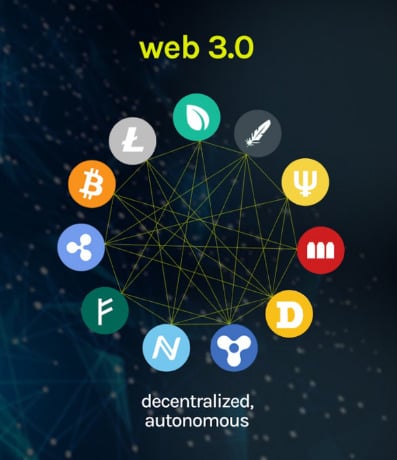
Web 3 app logos in a circle.
Source: Clubic

This brings us to where we are now, the Web3 revolution. Also called the semantic web, cryptocurrency enthusiasts consider Web3 an improved internet where new technologies like blockchain, cryptocurrency, and NFTs give users greater control over their assets, data, and identity online.

Decentralization is the key driving force of the Web3 movement. Instead of vast portions of the internet being controlled and owned by centralized entities and exploitative intermediaries, ownership is distributed among everyday users like you and me.

Through blockchain technology, cryptocurrency, and smart contracts, Web3 gave birth to decentralized finance (DeFi). DeFi is a central pillar of the Web3 world, giving everyone on the planet permissionless, trustless access to financial tools and services they were previously excluded from.

Internet users are no longer required to share their data with centralized entities or use them to transfer funds over the Internet. Instead, peer-to-peer networks, like Bitcoin and Ripple (XRP), give people full control and self-custody of their assets.

Where do we go from here?

Web4: The Symbiotic Web

Web 4.0 is the proposed next phase of the internet’s evolution. It’s envisioned as a more connected, intelligent, and personalized version of the Internet that draws on emerging technology like artificial intelligence.

Often referred to as ‘The Symbiotic Web’, Web4 promises to intertwine our lives and the internet more deeply than ever before.

What exactly does that mean?

What Is Web4?

Web4 -human finger connects with robotic finger.
Source: Medium

Before diving into what we can expect from Web4, I need to clarify: Web4 is a purely theoretical concept that is fuelled entirely by speculation. The roadmap for what Web4 looks like is unclear, with theorists sparking off radical ideas.

Web4’s proponents present the next evolutionary stage of the internet as a decentralized web that fully incorporates new technologies to deliver an unprecedented internet user experience.

Artificial Intelligence

Web4 AI is expected to play a significant role in the next generation of the internet, enabling more dynamic and adaptable machine learning ecosystems that can learn from data and improve over time.

Like a giant universal ChatGPT, Web4 AI could lead to more personalized and efficient online experiences.

Brain-Computer Interfaces

If you thought Apple’s new VR/AR headset was impressive, Brain-Computer Interfaces (BCI) is the next step up. BCIs allow humans to interact with computers using their thoughts by measuring brain activity and translating it into commands that computers can understand.

While undoubtedly a fascinating piece of technology, it all sounds rather dystopic. Just because we might be able to connect our brains to the Internet directly doesn’t mean we should. Even on top of all the ethical questions it raises, BCI connections seem like a massive security and health risk waiting to happen.

Metaverse

A virtual space portraying Metaverse.
Source: MuddyColours

As we know, the Metaverse is a virtual reality space where users can engage in immersive experiences and interact with a vast array of digital content. If you ever saw Spielberg’s 2018 film ‘Ready Player One,’ you probably have a pretty good idea of what the Metaverse looks like.

Web4 seeks to expand the Metaverse, offering new avenues for social interaction, entertainment, and economic opportunities through blockchain-powered virtual assets.

Sound familiar? That’s because it is. All these features are already possible in the Web 3 world. This brings me nicely to my next point.

Is Web4 Really Any Different from Web3?

Apart from Brain-Computer Interfaces, everything Web4 theorists speculate about already exists within the Web3 world. Web3 aims to create a decentralized internet of permissionless, trustless applications, giving users self-custody and complete control over their digital assets.

Based on the information circulating the internet, Web4 has the same goals. One of the leading proponents of Web4, Anndy Lian, argues that “Web4 is more decentralized than Web3.”

He supports this claim, asserting:

“Web4 also aims to create decentralized applications (dApps) that run on decentralized infrastructure, which eliminates the need for intermediaries and centralized organizations to control and manage the applications.”
ralized infrastructure, which eliminates the need for intermediaries and centralized organizations to control and manage the applications.”

Maybe I’ve missed something, but replace Web4 with Web3, and you have the same sentence and the same idea.

At the same time, maybe I’m behaving just like David Letterman in 1995. It’s absolutely possible that while Web3 laid the foundation for decentralized applications and user ownership of data, Web4 will take it a step further by integrating advanced technologies to enhance the user experience.

Perhaps Web4 envisions a future where the boundaries between physical and digital realities blur, offering unprecedented possibilities that we cannot yet fathom.

Web4 Pros and Cons

Like any technological advancement, Web4 has its own advantages and challenges. Let’s objectively recap Web4’s pros and cons.

Pros

  • Enhanced user experiences – Web4 promises immersive and personalized experiences, leveraging AI and the Metaverse to create dynamic and interactive digital environments.
  • Improved efficiency – AI-powered automation in Web 4.0 could boost productivity, speed up time to market, and lower costs, giving businesses a competitive edge and better customer service.
  • Expanded possibilities for cryptocurrencies – Web4’s advancements offer new opportunities for cryptocurrency integration, fostering innovation in areas like DeFi.

Cons

  • Scalability –  As the number of devices and people connected to the internet grows, it will become increasingly challenging to keep up with the demand.
  • Security – As Web4 incorporates advanced technologies, ensuring personal data privacy and cybersecurity becomes more challenging, demanding robust security measures.
  • Ethical implications – AI and BCIs raise important ethical questions regarding privacy, consent, and the potential misuse of personal information. Responsible development and regulation are vital.

On the Flipside

  • While discussions turn towards Web4 and whatever that might mean for the future of the internet, Twitter creator and Bitcoin Maxi Jack Dorsey is already one step ahead. Dorsey is crafting Web5, an even more decentralized internet built on the Bitcoin blockchain.

Why This Matters

People are always looking for the next big thing in the crypto market. Web3 is well-established. We know what it is, and have tangible applications and use cases that we can take advantage of daily.

On the other hand, Web4 still asks more questions than it answers. It’s still unclear what Web4 will actually look like and how it differs from Web3.

FAQs

What is Web4?

Web4 is the proposed next generation of the internet, which promises an improved user experience through emerging technologies like artificial intelligence.

Is there a Web4 now?

At this point Web4 is purely speculative, with no concrete examples of its applications or use cases.

Does Web3 have a future?

If you believe in cryptocurrency, decentralization, and the right self-custody of assets, then Web3 definitely has a future for you.

Is Web3 just crypto?

Parts of the Web3 world use crypto to transfer funds on peer-to-peer networks. However, the scope of Web3 is much larger than crypto alone and includes ownership and control of your data online.


Source: https://dailycoin.com/what-is-web-4/

Anndy Lian is an early blockchain adopter and experienced serial entrepreneur who is known for his work in the government sector. He is a best selling book author- “NFT: From Zero to Hero” and “Blockchain Revolution 2030”.

Currently, he is appointed as the Chief Digital Advisor at Mongolia Productivity Organization, championing national digitization. Prior to his current appointments, he was the Chairman of BigONE Exchange, a global top 30 ranked crypto spot exchange and was also the Advisory Board Member for Hyundai DAC, the blockchain arm of South Korea’s largest car manufacturer Hyundai Motor Group. Lian played a pivotal role as the Blockchain Advisor for Asian Productivity Organisation (APO), an intergovernmental organization committed to improving productivity in the Asia-Pacific region.

An avid supporter of incubating start-ups, Anndy has also been a private investor for the past eight years. With a growth investment mindset, Anndy strategically demonstrates this in the companies he chooses to be involved with. He believes that what he is doing through blockchain technology currently will revolutionise and redefine traditional businesses. He also believes that the blockchain industry has to be “redecentralised”.

j j j