Are Swiss Authorities Kneecapping Crypto Innovation?

Are Swiss Authorities Kneecapping Crypto Innovation?

Switzerland, long revered as a global financial sanctuary, has sent shockwaves through the cryptocurrency community with a recent move that could reshape the landscape of digital finance. The Swiss Financial Market Supervisory Authority (FINMA) has issued new guidance on stablecoin issuance, prompting innovators’ and entrepreneurs’ outcry. To some, this appears to be a direct threat to the country’s burgeoning  crypto sector. But is this an overreach by regulators or a necessary check in the chaotic world of digital assets?

To unravel this controversy, we need to examine the financial tempest stirred by FINMA’s announcement.

At the center of the storm is FINMA’s requirement that stablecoin issuers must either secure a banking license or obtain a bank guarantee. On the surface, this seems like a rational step—stablecoins, after all, are intended to maintain a stable value, often tied to traditional currencies. But a closer examination reveals the full weight of this mandate.

Consider the scenario: A visionary entrepreneur has developed a groundbreaking concept for a new stablecoin. However, under these stringent new rules, what was once a challenging journey to market now resembles a near-impossible ascent of Mount Everest—wearing nothing but flip-flops. The obstacles they now face are not merely steep; they are stratospheric.

Obtaining a banking license in Switzerland is no trivial matter. It is a grueling process, often taking years and costing millions of Swiss francs. The requirements are daunting, demanding comprehensive documentation, robust  risk management frameworks, and significant capital reserves. For a fledgling startup, this is like asking a toddler to run a marathon before they’ve even learned to walk.

Yet, let’s entertain the possibility that FINMA’s intentions are well-founded. The stablecoin market is not without its pitfalls. The collapse of TerraUSD in 2022 sent ripples through the crypto ecosystem, erasing billions in value and shaking investor confidence. More recently, the brief de-pegging of USDC in March 2023 underscored the vulnerabilities inherent even in well-established stablecoins.

From this perspective, FINMA’s move could be seen as a preemptive strike to safeguard the Swiss financial system from potential instability. By raising the entry bar, they might argue, only the most robust and well-capitalized entities will be able to issue stablecoins, thus protecting consumers and preserving Switzerland’s reputation as a secure financial haven.

However, this argument quickly loses its footing when we consider the broader consequences for innovation and competition. The crypto industry thrives on disruption and fresh ideas. By erecting such formidable barriers to entry, FINMA risks stifling the very innovation that has made Switzerland a global hub for blockchain and cryptocurrency ventures.

Let’s put this challenge into perspective with some numbers. A typical banking license in Switzerland requires a minimum capital of 10 million Swiss francs (around $11.2 million). But that’s just the beginning. Once you factor in the costs of legal counsel, compliance officers, risk management systems, and the opportunity cost of the time spent navigating bureaucratic red tape, the total investment could easily exceed $20 million before a single stablecoin is issued.

Now, contrast this with the lean operations of established players like Tether. With a relatively small team, Tether has emerged as a dominant force in the stablecoin market, with a market cap exceeding $83 billion as of August 2023. Their profit margins are the stuff of legend, reportedly reaching billions annually.

Unsurprisingly, savvy investors would hesitate to pour tens of millions into regulatory compliance when existing players have shown that lean, agile operations can achieve astronomical returns. The disparity is so stark that it borders on absurdity.

Perhaps the most puzzling aspect of FINMA’s guidance is the potential for it to backfire. By making it nearly impossible for new stablecoin projects to launch in Switzerland, the country may inadvertently drive innovation offshore to more welcoming jurisdictions. This could trigger a brain drain of blockchain talent and diminish Switzerland’s standing as a  crypto leader.

Moreover, the ripple effects of these regulations could extend well beyond Swiss borders. Stablecoins have become a cornerstone of the decentralized finance (DeFi) ecosystem, bridging the volatile world of cryptocurrencies with the stability of traditional finance. FINMA’s rules could chill the entire DeFi sector by restricting diversity and innovation in the stablecoin market.

Let’s draw a historical parallel. In the early days of the Internet, a relatively light regulatory touch allowed for rapid innovation, giving rise to world-changing companies. Imagine if, in the mid-1990s, regulators had required every website to obtain the equivalent of a broadcasting license. The giants of today—Amazon, Google, Facebook—might never have emerged.

Similarly, blockchain and  cryptocurrency are still in their infancy. While regulation is essential for consumer protection and financial stability, overly burdensome requirements risk strangling innovation before it can flourish.

But not all is lost. The crypto community is nothing if not resilient. Already, there are whispers of potential workarounds. Some speculate that stablecoin projects might collaborate with existing banks to circumvent the licensing demands. Others are exploring decentralized stablecoin models that might escape FINMA’s regulatory reach.

This situation could even spark unexpected innovation. We may witness the rise of algorithmic stablecoins that bypass traditional banking infrastructure or hybrid models that blend centralized and decentralized approaches to meet regulatory standards while preserving the essence of crypto innovation.

It’s also important to remember that regulatory positions can evolve. As the real-world impact of these requirements becomes clearer, there might be room for dialogue between FINMA and the crypto industry. After all, Switzerland has a vested interest in maintaining its reputation as a global financial innovator.

FINMA’s guidance on stablecoin issuance marks a significant shift in the regulatory landscape. While it aims to enhance stability and consumer protection, it risks stifling innovation and competition.

The crypto community now stands at a crossroads. Will this regulatory hurdle prove insurmountable or ignite a new wave of innovation and creative problem-solving? Only time will tell.

As we navigate these turbulent waters, one thing is clear: The stablecoin saga in Switzerland is far from over. It highlights the delicate balance regulators must strike between protecting consumers and fostering innovation. As the dust settles, the global crypto community will be watching closely, ready to adapt, innovate, and push the boundaries of what’s possible in the ever-evolving world of digital finance.

In this brave new world of regulated stablecoins, one question looms large: Can the relentless drive for crypto innovation coexist with the rigid frameworks of traditional financial regulation? The answer to this question may well determine the future of finance itself.


Source: https://intpolicydigest.org/are-swiss-authorities-kneecapping-crypto-innovation/

Anndy Lian is an early blockchain adopter and experienced serial entrepreneur who is known for his work in the government sector. He is a best selling book author- “NFT: From Zero to Hero” and “Blockchain Revolution 2030”.

Currently, he is appointed as the Chief Digital Advisor at Mongolia Productivity Organization, championing national digitization. Prior to his current appointments, he was the Chairman of BigONE Exchange, a global top 30 ranked crypto spot exchange and was also the Advisory Board Member for Hyundai DAC, the blockchain arm of South Korea’s largest car manufacturer Hyundai Motor Group. Lian played a pivotal role as the Blockchain Advisor for Asian Productivity Organisation (APO), an intergovernmental organization committed to improving productivity in the Asia-Pacific region.

An avid supporter of incubating start-ups, Anndy has also been a private investor for the past eight years. With a growth investment mindset, Anndy strategically demonstrates this in the companies he chooses to be involved with. He believes that what he is doing through blockchain technology currently will revolutionise and redefine traditional businesses. He also believes that the blockchain industry has to be “redecentralised”.

j j j

Crypto, Web3 & AI Offers Us All A Chance to Be Involved

Crypto, Web3 & AI Offers Us All A Chance to Be Involved

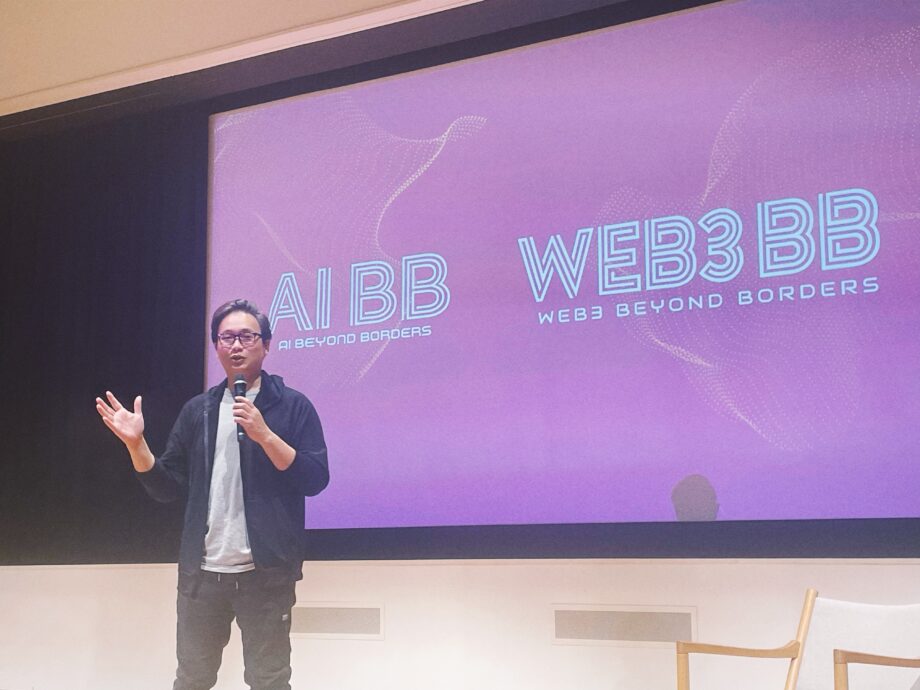
Reflecting on my recent speech at the Web3BB Tokyo event, I am struck by the potent mix of artificial intelligence and Web3, and what they hold for the financial industry.

Having had the privilege of leading AI-driven innovations in finance, I am convinced that the convergence of these two technologies is the key to unlocking a more secure, efficient, and personalized financial landscape. Allow me to share my vision.

Key Takeaways

  • AI and Web3 offer the financial industry security, efficiency, and personalization.
  • Combine them with the decentralized nature of Web3 to add transparency and a user focus.
  • AI-driven insights and Web3’s data management enable sophisticated financial predictions and risk assessments.
  • This is a future worth fighting for, and I am excited to be a part of it.

The Relationship Between AI and Web3

The relationship between AI and Web3 is nothing short of symbiotic. Web3’s decentralized architecture offers a framework in which AI can function with enhanced transparency, security, and user focus.

And then with AI, we can unearth new insights and efficiencies within the financial sector while upholding the highest standards of data integrity and security.

Apply the fusion of AI and Web3 to finance, and you get new ways to trade, invest, and handle your financial planning. AI can also find sophisticated models for predicting market trends, identifying risks, and optimizing investment strategies — the change is unparalleled.

For this to work well, a critical juncture in AI and Web3 is in data management. AI algorithms thrive on data, and Web3’s decentralized nature ensures that the data is secure, transparent, and siloed as appropriate for the user.

The goal is then for AI to analyze vast amounts of decentralized data and offer valuable insights while maintaining privacy and security.

Ushering in a New Era of Financial Innovation

As I gaze into the future, I am exhilarated by the potential impact of AI and Web3 on the financial industry. As the Chairman of Neurai, a pioneering AI startup in Singapore, we are committed to pushing the boundaries of AI-powered finance. Our flagship product, COPX.AI, is already reaping the benefits.

“The future of finance transcends mere trading; it’s about crafting a more secure, efficient, and personalized experience for users,” I emphasized during my speech at Web3BB Tokyo.

But what does this mean for the future of finance? In my view, it signifies a shift towards more decentralized and democratized financial systems. With AI and Web3, we can create more accessible, transparent, and secure platforms. For instance, AI-powered trading platforms can analyze vast amounts of market data to identify trends and patterns that human traders might overlook. This leads to more informed investment decisions and better returns for investors.

Similarly, AI-driven risk management systems can detect potential risks and alert investors before they escalate into major issues, thereby safeguarding investors’ assets and preventing financial losses.

Charting the Path Forward

As the financial industry continues to evolve, we need prioritize innovation and experimentation. The integration of AI and Web3 has the potential to unlock new possibilities and drive growth across the sector, but it necessitates a commitment to ongoing research and development.

At the Web3BB Tokyo event, I had the opportunity to meet over 20 founders of Web3 and AI companies. Their dedication to harnessing the power of AI and Web3 to create a better future for finance is palpable. Many believe that these technologies can democratize access to financial services, promote greater transparency and accountability, and unlock new avenues for growth and innovation.

Navigating the Challenges Ahead

Of course, the road ahead is not without challenges. One of the most significant hurdles is regulatory uncertainty. As AI and Web3 continue to evolve, it remains unclear how regulators will respond. Will they introduce new rules and regulations, or will they adopt a more laissez-faire approach?

Another challenge is the need for education and awareness. Many individuals in the financial industry are still unfamiliar with AI and Web3, necessitating education and training to help them understand the potential benefits and risks of these technologies.

Lastly, there is the challenge of scalability. As AI and Web3 continue to grow and evolve, it remains to be seen whether they can scale to meet the demands of the financial industry.

Where We Go Next

As I look to the future, I am excited to witness the impact of these technologies on the sector. Being deeply involved in AI-powered innovation, I am confident that we can create a more secure, efficient, and personalized financial experience for all.

But this journey is not just about us. It’s about the entire financial industry coming together  and creating a world that is more decentralized, democratized, and accessible to all.

I am convinced that the financial industry will become increasingly decentralized.

Decentralized finance is already becoming a reality, with platforms like MakerDAO and Compound enabling users to lend and borrow cryptocurrencies in a decentralized manner.

But DeFi is just the beginning. With AI and Web3, we can create decentralized platforms for trading, investing, and financial planning. These platforms will be more secure, efficient, and personalized.

I am also convinced that the financial industry will become increasingly democratized — with platforms that are accessible to all, regardless of income or social status.

We can develop platforms that allow anyone to invest in cryptocurrencies, regardless of their financial background, and that provide access to financial services to anyone, regardless of their location or income.

The Bottom Line

Finally, I believe that the financial industry will become increasingly secure — resistant to hacking and cyber-attacks.

We can develop platforms that utilize AI-powered security systems to detect and prevent cyber-attacks. We can create platforms that leverage Web3’s decentralized architecture to protect user data and prevent hacking.

This is a future worth fighting for, and I am excited to be a part of it.


Source: https://www.techopedia.com/anndy-lian-crypto-web3-ai-offers-us-all-a-chance-to-be-involved

Anndy Lian is an early blockchain adopter and experienced serial entrepreneur who is known for his work in the government sector. He is a best selling book author- “NFT: From Zero to Hero” and “Blockchain Revolution 2030”.

Currently, he is appointed as the Chief Digital Advisor at Mongolia Productivity Organization, championing national digitization. Prior to his current appointments, he was the Chairman of BigONE Exchange, a global top 30 ranked crypto spot exchange and was also the Advisory Board Member for Hyundai DAC, the blockchain arm of South Korea’s largest car manufacturer Hyundai Motor Group. Lian played a pivotal role as the Blockchain Advisor for Asian Productivity Organisation (APO), an intergovernmental organization committed to improving productivity in the Asia-Pacific region.

An avid supporter of incubating start-ups, Anndy has also been a private investor for the past eight years. With a growth investment mindset, Anndy strategically demonstrates this in the companies he chooses to be involved with. He believes that what he is doing through blockchain technology currently will revolutionise and redefine traditional businesses. He also believes that the blockchain industry has to be “redecentralised”.
j j j

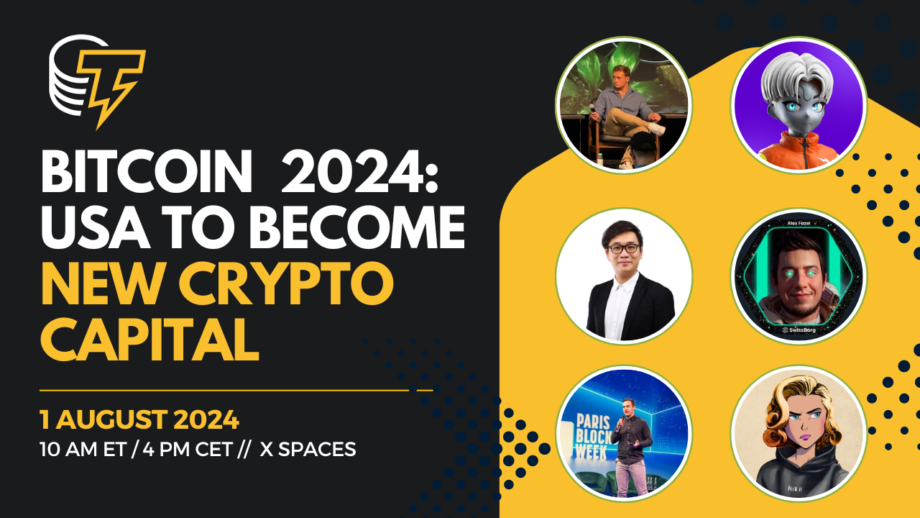
Bitcoin 2024: USA to Become New Crypto Capital- Hosted by Cointelegraph

Bitcoin 2024: USA to Become New Crypto Capital- Hosted by Cointelegraph

This episode dives deep into the heart of Bitcoin 2024, unpacking the event’s highlights and controversies with industry experts like Scott Presler, Mitchell, David Bailey, Matthew Sigel, Mattunchi, Alex Faze, Anndy Lian, and the Cointelegraph team. We dissect Donald Trump’s Bitcoin promises, questioning whether they signal true support or mere campaign strategy. Was his vision for Bitcoin, including removing SEC Chair Gary Gensler and forming a strategic Bitcoin reserve, genuine or simply a play for votes?

We then contrast this with RFK Jr.’s compelling perspective, exploring why many believe he demonstrated a more profound grasp of Bitcoin and what his ambitious plan to secure a vast Bitcoin reserve could mean for the US.

This episode doesn’t shy away from the uncomfortable questions, either. We tackle the increasing politicization of Bitcoin, debating whether the influx of politicians signals mainstream acceptance or raises concerns about potential political manipulation. What does this mean for the future of the industry?

Zooming out, we examine Bitcoin’s potential as a geopolitical game-changer. Could the US leveraging Bitcoin ignite a global power struggle, perhaps even prompting China to rethink its crypto stance?

Finally, with a crucial US election on the horizon, we analyze the potential ramifications of both a Democrat and Republican administration on Bitcoin regulation and adoption. Will the US become a crypto haven or a regulatory battleground?

Source: https://x.com/hannieris_/status/1819362697374584943


Anndy Lian is an early blockchain adopter and experienced serial entrepreneur who is known for his work in the government sector. He is a best selling book author- “NFT: From Zero to Hero” and “Blockchain Revolution 2030”.

Currently, he is appointed as the Chief Digital Advisor at Mongolia Productivity Organization, championing national digitization. Prior to his current appointments, he was the Chairman of BigONE Exchange, a global top 30 ranked crypto spot exchange and was also the Advisory Board Member for Hyundai DAC, the blockchain arm of South Korea’s largest car manufacturer Hyundai Motor Group. Lian played a pivotal role as the Blockchain Advisor for Asian Productivity Organisation (APO), an intergovernmental organization committed to improving productivity in the Asia-Pacific region.

An avid supporter of incubating start-ups, Anndy has also been a private investor for the past eight years. With a growth investment mindset, Anndy strategically demonstrates this in the companies he chooses to be involved with. He believes that what he is doing through blockchain technology currently will revolutionise and redefine traditional businesses. He also believes that the blockchain industry has to be “redecentralised”.

j j j