
Meme Coin Mania: Exploring the Risks and Potential of Community-Driven Crypto

Meme Coin Mania: Exploring the Risks and Potential of Community-Driven Crypto

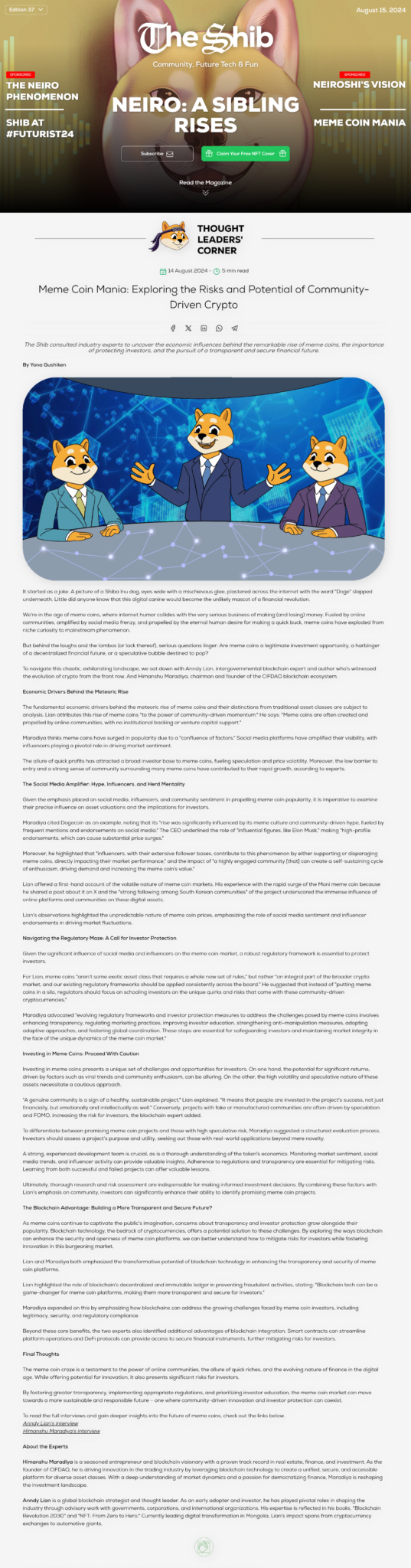
It started as a joke. A picture of a Shiba Inu dog, eyes wide with a mischievous glee, plastered across the internet with the word “Doge” slapped underneath. Little did anyone know that this digital canine would become the unlikely mascot of a financial revolution.

We’re in the age of meme coins, where internet humor collides with the very serious business of making (and losing) money. Fueled by online communities, amplified by social media frenzy, and propelled by the eternal human desire for making a quick buck, meme coins have exploded from niche curiosity to mainstream phenomenon.

But behind the laughs and the lambos (or lack thereof), serious questions linger: Are meme coins a legitimate investment opportunity, a harbinger of a decentralized financial future, or a speculative bubble destined to pop?

To navigate this chaotic, exhilarating landscape, we sat down with Anndy Lian, intergovernmental blockchain expert and author who’s witnessed the evolution of crypto from the front row. And Himanshu Maradiya, chairman and founder of the CIFDAQ blockchain ecosystem.

Economic Drivers Behind the Meteoric Rise

The fundamental economic drivers behind the meteoric rise of meme coins and their distinctions from traditional asset classes are subject to analysis. Lian attributes this rise of meme coins “to the power of community-driven momentum.” He says: “Meme coins are often created and propelled by online communities, with no institutional backing or venture capital support.”

Maradiya thinks meme coins have surged in popularity due to a “confluence of factors.” Social media platforms have amplified their visibility, with influencers playing a pivotal role in driving market sentiment.

The allure of quick profits has attracted a broad investor base to meme coins, fueling speculation and price volatility. Moreover, the low barrier to entry and a strong sense of community surrounding many meme coins have contributed to their rapid growth, according to experts.

The Social Media Amplifier: Hype, Influencers, and Herd Mentality

Given the emphasis placed on social media, influencers, and community sentiment in propelling meme coin popularity, it is imperative to examine their precise influence on asset valuations and the implications for investors.

Maradiya cited Dogecoin as an example, noting that its “rise was significantly influenced by its meme culture and community-driven hype, fueled by frequent mentions and endorsements on social media.” The CEO underlined the role of “influential figures, like Elon Musk,” making “high-profile endorsements, which can cause substantial price surges.”

Moreover, he highlighted that “influencers, with their extensive follower bases, contribute to this phenomenon by either supporting or disparaging meme coins, directly impacting their market performance,” and the impact of “a highly engaged community [that] can create a self-sustaining cycle of enthusiasm, driving demand and increasing the meme coin’s value.”

Lian offered a first-hand account of the volatile nature of meme coin markets. His experience with the rapid surge of the Moni meme coin because he shared a post about it on X and the “strong following among South Korean communities” of the project underscored the immense influence of online platforms and communities on these digital assets.

Lian’s observations highlighted the unpredictable nature of meme coin prices, emphasizing the role of social media sentiment and influencer endorsements in driving market fluctuations.

Navigating the Regulatory Maze: A Call for Investor Protection

Given the significant influence of social media and influencers on the meme coin market, a robust regulatory framework is essential to protect investors.

For Lian, meme coins “aren’t some exotic asset class that requires a whole new set of rules,” but rather “an integral part of the broader crypto market, and our existing regulatory frameworks should be applied consistently across the board.” He suggested that instead of “putting meme coins in a silo, regulators should focus on schooling investors on the unique quirks and risks that come with these community-driven cryptocurrencies.”

Maradiya advocated “evolving regulatory frameworks and investor protection measures to address the challenges posed by meme coins involves enhancing transparency, regulating marketing practices, improving investor education, strengthening anti-manipulation measures, adopting adaptive approaches, and fostering global coordination. These steps are essential for safeguarding investors and maintaining market integrity in the face of the unique dynamics of the meme coin market.”

Investing in Meme Coins: Proceed With Caution

Investing in meme coins presents a unique set of challenges and opportunities for investors. On one hand, the potential for significant returns, driven by factors such as viral trends and community enthusiasm, can be alluring. On the other, the high volatility and speculative nature of these assets necessitate a cautious approach.

“A genuine community is a sign of a healthy, sustainable project,” Lian explained. “It means that people are invested in the project’s success, not just financially, but emotionally and intellectually as well.” Conversely, projects with fake or manufactured communities are often driven by speculation and FOMO, increasing the risk for investors, the blockchain expert added.

To differentiate between promising meme coin projects and those with high speculative risk, Maradiya suggested a structured evaluation process. Investors should assess a project’s purpose and utility, seeking out those with real-world applications beyond mere novelty.

A strong, experienced development team is crucial, as is a thorough understanding of the token’s economics. Monitoring market sentiment, social media trends, and influencer activity can provide valuable insights. Adherence to regulations and transparency are essential for mitigating risks. Learning from both successful and failed projects can offer valuable lessons.

Ultimately, thorough research and risk assessment are indispensable for making informed investment decisions. By combining these factors with Lian’s emphasis on community, investors can significantly enhance their ability to identify promising meme coin projects.

The Blockchain Advantage: Building a More Transparent and Secure Future?

As meme coins continue to captivate the public’s imagination, concerns about transparency and investor protection grow alongside their popularity. Blockchain technology, the bedrock of cryptocurrencies, offers a potential solution to these challenges. By exploring the ways blockchain can enhance the security and openness of meme coin platforms, we can better understand how to mitigate risks for investors while fostering innovation in this burgeoning market.

Lian and Maradiya both emphasized the transformative potential of blockchain technology in enhancing the transparency and security of meme coin platforms.

Lian highlighted the role of blockchain’s decentralized and immutable ledger in preventing fraudulent activities, stating: “Blockchain tech can be a game-changer for meme coin platforms, making them more transparent and secure for investors.”

Maradiya expanded on this by emphasizing how blockchains can address the growing challenges faced by meme coin investors, including legitimacy, security, and regulatory compliance.

Beyond these core benefits, the two experts also identified additional advantages of blockchain integration. Smart contracts can streamline platform operations and DeFi protocols can provide access to secure financial instruments, further mitigating risks for investors.

Final Thoughts

The meme coin craze is a testament to the power of online communities, the allure of quick riches, and the evolving nature of finance in the digital age. While offering potential for innovation, it also presents significant risks for investors.

By fostering greater transparency, implementing appropriate regulations, and prioritizing investor education, the meme coin market can move towards a more sustainable and responsible future – one where community-driven innovation and investor protection can coexist.

To read the full interviews and gain deeper insights into the future of meme coins, check out the links below.
Anndy Lian’s interview
Himanshu Maradiya’s interview

About the Experts

Himanshu Maradiya is a seasoned entrepreneur and blockchain visionary with a proven track record in real estate, finance, and investment. As the founder of CIFDAQ, he is driving innovation in the trading industry by leveraging blockchain technology to create a unified, secure, and accessible platform for diverse asset classes. With a deep understanding of market dynamics and a passion for democratizing finance, Maradiya is reshaping the investment landscape.

Anndy Lian is a global blockchain strategist and thought leader. As an early adopter and investor, he has played pivotal roles in shaping the industry through advisory work with governments, corporations, and international organizations. His expertise is reflected in his books, “Blockchain Revolution 2030” and “NFT: From Zero to Hero.” Currently leading digital transformation in Mongolia, Lian’s impact spans from cryptocurrency exchanges to automotive giants.


Source: https://magazine.shib.io/article/66bcd2bde30f660001f07c59
Anndy Lian is an early blockchain adopter and experienced serial entrepreneur who is known for his work in the government sector. He is a best selling book author- “NFT: From Zero to Hero” and “Blockchain Revolution 2030”.

Currently, he is appointed as the Chief Digital Advisor at Mongolia Productivity Organization, championing national digitization. Prior to his current appointments, he was the Chairman of BigONE Exchange, a global top 30 ranked crypto spot exchange and was also the Advisory Board Member for Hyundai DAC, the blockchain arm of South Korea’s largest car manufacturer Hyundai Motor Group. Lian played a pivotal role as the Blockchain Advisor for Asian Productivity Organisation (APO), an intergovernmental organization committed to improving productivity in the Asia-Pacific region.

An avid supporter of incubating start-ups, Anndy has also been a private investor for the past eight years. With a growth investment mindset, Anndy strategically demonstrates this in the companies he chooses to be involved with. He believes that what he is doing through blockchain technology currently will revolutionise and redefine traditional businesses. He also believes that the blockchain industry has to be “redecentralised”.
j j j

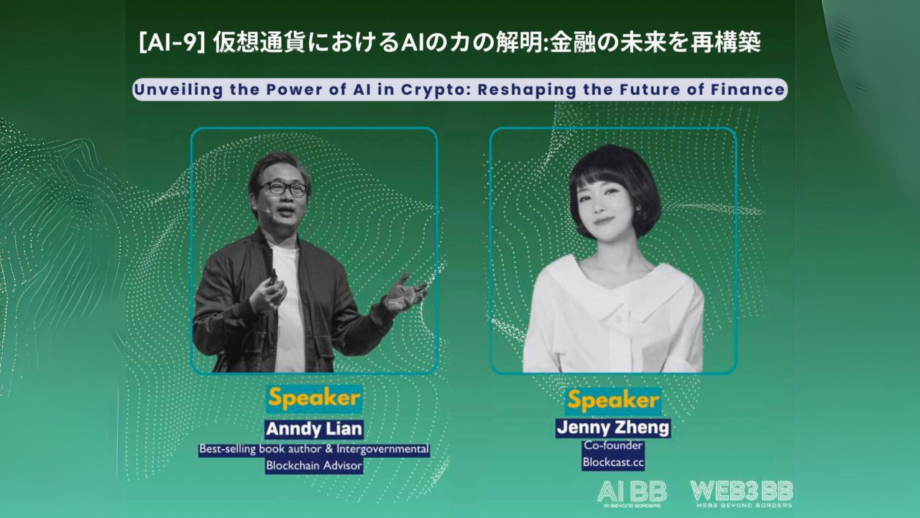
Unveiling the Power of AI in Crypto: Reshaping the Future of Finance at WEB3BB Tokyo 2024

Unveiling the Power of AI in Crypto: Reshaping the Future of Finance at WEB3BB Tokyo 2024

The intersection of artificial intelligence (AI) and cryptocurrency is rapidly becoming one of the most exciting frontiers in the tech world. As both technologies continue to evolve at breakneck speeds, their synergy promises to revolutionize how we interact with digital assets and financial systems.

To explore this cutting-edge convergence, Web3BB, one of Japan’s largest business communities dedicated to bridging global and Japanese perspectives on emerging technologies, recently hosted a panel discussion on “The Power of AI in Crypto.” This event brought together industry luminaries, including Anndy Lian, a book author and venture capitalist, and Jenny Zheng, co-founder of Blockcast.cc. Their insights offer a compelling glimpse into how AI is reshaping the cryptocurrency landscape and what we can expect in the near future.

Beyond Trading: AI’s Broader Impact on Crypto

While trading applications are at the forefront, Anndy emphasized that AI’s potential in the crypto space extends far beyond just price predictions. Some key areas of impact include:

1. Security Enhancement: AI can be used to detect security vulnerabilities in blockchain networks and identify irregular activities or potential threats.

2. Productivity and Automation: AI is helping streamline various processes in the crypto industry, from smart contract development to project auditing.

3. User Experience Improvement: AI assistants are being developed to lower the technical barriers for crypto adoption, helping users navigate complex processes like wallet management and transactions.

4. Code Auditing: Project owners can use AI to analyze smart contracts and identify potential bugs or vulnerabilities, enhancing the overall security of their platforms.

5. Due Diligence: Venture capital firms are leveraging AI models to conduct more thorough and efficient due diligence on crypto projects.

Blockchain as a Secure Foundation for AI

An interesting perspective shared during the panel was how blockchain technology could serve as a secure foundation for AI systems. By storing AI models and data sets on blockchain networks, it adds an extra layer of security and transparency to their AI operations.

This integration of blockchain and AI is becoming increasingly seamless. As Anndy noted, “Nowadays there are fewer people talking about blockchain… because it’s really very well integrated into different systems.” He predicts that the combination of AI and blockchain will soon become so commonplace that it will no longer be considered newsworthy.

Ethical Considerations and Risk Mitigation

The panel also touched on the ethical implications of AI in the crypto space. Jennty commented that while AI offers numerous benefits, there are concerns about potential misuse or unintended consequences. The experts suggested that blockchain technology could play a role in governing AI systems, potentially serving as a failsafe mechanism.

For example, smart contracts could be programmed to automatically limit or shut down AI systems if certain conditions are met, providing a decentralized and tamper-resistant way to mitigate risks associated with AI.

Looking Ahead: The Future of AI in Crypto

As the discussion concluded, the panelists emphasized the transformative potential of AI in the crypto industry. They encouraged users to embrace AI tools to enhance their decision-making processes, while also maintaining a balanced perspective on the technology’s capabilities and limitations.

Anndy’s final advice to the audience was clear: “Try to use smarter tools to get by your days… AI has a lot to do to help you with your whole decision-making process. Just try to use it.”

As AI continues to evolve and integrate more deeply with blockchain and cryptocurrency systems, we can expect to see even more innovative applications emerge. From more sophisticated trading algorithms to enhanced security measures and improved user experiences, AI is set to play a crucial role in shaping the future of the crypto industry.

Conclusion

The key for users and industry participants will be to stay informed about these developments, critically evaluate AI tools, and leverage them responsibly to navigate the complex and fast-paced world of cryptocurrencies.

As with any powerful technology, the responsible development and deployment of AI in the crypto space will be crucial. The ethical considerations and risk mitigation strategies discussed by the panelists underscore the need for a balanced approach. As we move forward, it will be essential for industry players, regulators, and users alike to stay informed and engaged in shaping the future of AI in crypto.

Anndy Lian is an early blockchain adopter and experienced serial entrepreneur who is known for his work in the government sector. He is a best selling book author- “NFT: From Zero to Hero” and “Blockchain Revolution 2030”.

Currently, he is appointed as the Chief Digital Advisor at Mongolia Productivity Organization, championing national digitization. Prior to his current appointments, he was the Chairman of BigONE Exchange, a global top 30 ranked crypto spot exchange and was also the Advisory Board Member for Hyundai DAC, the blockchain arm of South Korea’s largest car manufacturer Hyundai Motor Group. Lian played a pivotal role as the Blockchain Advisor for Asian Productivity Organisation (APO), an intergovernmental organization committed to improving productivity in the Asia-Pacific region.

An avid supporter of incubating start-ups, Anndy has also been a private investor for the past eight years. With a growth investment mindset, Anndy strategically demonstrates this in the companies he chooses to be involved with. He believes that what he is doing through blockchain technology currently will revolutionise and redefine traditional businesses. He also believes that the blockchain industry has to be “redecentralised”.

j j j

Crypto in India: Balancing Adoption and Regulatory Challenges

Crypto in India: Balancing Adoption and Regulatory Challenges
Imagine a country caught between the excitement of new digital money and the worry of keeping its financial system safe. That’s India right now, grappling with the world of cryptocurrency. It’s like walking a tightrope – lean too far one way, and you might miss out on a financial revolution; lean too far the other, and you risk financial chaos.

This balancing act has led to a series of back-and-forth decisions, leaving both crypto enthusiasts and government officials scratching their heads. India isn’t saying a flat-out “yes” or “no” to crypto. Instead, it’s trying to find a sweet spot where it can enjoy the benefits of this new technology without putting its economy at risk. But with the government sending mixed signals and a much-anticipated Crypto Bill still in the works, everyone’s left wondering: what’s next for crypto in India?

The Crypto Bill: A Work in Progress

The Crypto Bill has become somewhat of a legend in Indian crypto circles. Initially seen as a potential game-changer, it was expected to pave the way for a digital currency issued by the Reserve Bank of India (RBI), hinting at a progressive stance that could put India at the forefront of the CBDC revolution.

The reality has been more complicated. The bill, years in the making, has faced numerous revisions and delays. Its contents remain unclear, with conflicting reports about its stance on private cryptocurrencies. This lack of clarity has left the Indian crypto community uncertain about the future of their investments and businesses. The bill’s journey mirrors the global struggle to effectively regulate digital assets. While governments see the potential of blockchain and digital currencies, concerns about financial stability, investor protection, and illicit activities remain significant.

Mixed Messages from the Ministry of Finance

Adding to the complexity, India’s Ministry of Finance recently stated there are no proposals for legislation governing digital asset trading. This announcement surprised many, given the ongoing discussions about the Crypto Bill. This apparent contradiction reveals differing viewpoints within the Indian government regarding cryptocurrency regulation. It also highlights the challenge policymakers face in keeping up with the rapidly evolving crypto landscape.

The Ministry’s statement is open to interpretation. It could suggest a hands-off approach, allowing organic market evolution. It might indicate that the government is still formulating its position, preferring to observe global regulatory trends before committing to a specific course of action.

The Adoption Paradox: India and China

One intriguing aspect of India’s crypto story is the disconnect between regulatory caution and widespread adoption. Despite the government’s cautious stance and occasional anti-crypto rhetoric, India has seen a surge in crypto adoption. This phenomenon isn’t unique to India. China, despite taking a stricter approach with outright bans on cryptocurrency trading and mining, also continues to see strong crypto adoption among its citizens.

A Chainalysis report revealed that India ranked second largest crypto market in the world in terms of raw transaction volume, beating UK, Turkey and Russia. This high adoption rate, despite regulatory uncertainty, speaks volumes about the perceived value and potential of cryptocurrencies among the Indian population. The situations in India and China offer valuable insights for policymakers worldwide. They suggest that heavy-handed attempts to discourage crypto adoption may be ineffective and potentially counterproductive. Instead, a more nuanced and adaptive approach to crypto regulation may be necessary.

Self-Regulation: A Potential Bridge

Given the challenges of top-down regulation, there’s growing support for self-regulation within India’s crypto sector. This approach could offer a middle ground between unfettered market freedom and stringent government control.

Self-regulation in the crypto space could involve industry-led initiatives to establish best practices, implement robust KYC and AML procedures, and create consumer protection mechanisms. By proactively addressing regulatory concerns, the crypto industry could demonstrate its commitment to responsible growth and potentially ease some of the government’s apprehensions. Some Indian crypto exchanges have already taken steps in this direction. WazirX, a major Indian crypto exchange, has implemented stringent KYC procedures and collaborates with law enforcement agencies to prevent illicit activities.

Nevertheless, self-regulation has its limitations. I would argue that it may not sufficiently address all regulatory concerns and could potentially lead to conflicts of interest. Despite these challenges, self-regulation could play a crucial role in the short to medium term, especially given the current regulatory uncertainty.

The Current Landscape: Taxation and AML Measures

While India may lack a comprehensive crypto regulatory framework, it has taken steps to bring the sector under some form of oversight, primarily through taxation and anti-money laundering measures. The 2022 budget introduced a 30% tax on income from cryptocurrencies and other digital assets. Additionally, a 1% Tax Deducted at Source (TDS) was imposed on crypto transactions above a certain threshold. On the AML front, crypto exchanges operating in India must comply with the Prevention of Money Laundering Act (PMLA).

These measures represent a pragmatic approach to crypto regulation. By focusing on taxation and AML compliance, the government has found a way to exercise some control over the crypto sector without explicitly legalizing or banning cryptocurrencies.

Binance’s Regulatory Milestone in India

I believe this is a significant development that could reshape India’s crypto landscape. Global cryptocurrency exchange Binance achieved a major regulatory breakthrough on August 15, 2024. Binance announced its successful registration as a reporting entity with India’s Financial Intelligence Unit (FIU-IND), marking its 19th global regulatory milestone. This registration underscores a pivotal shift in India’s approach to cryptocurrency regulation and offers a compelling case study of how international players can navigate the country’s evolving regulatory framework.

Binance’s registration demonstrates its commitment to adhering to India’s anti-money laundering (AML) standards, aligning with the government’s focus on preventing illicit activities in the crypto sector. It also allows Binance to fully operate its website and application for Indian users, providing them access to a comprehensive suite of crypto services and tools.

Binance CEO Richard Teng emphasized the significance of this milestone, stating, “Recognizing the vitality and potential of the Indian VDA market, this alignment with Indian regulations allows us to tailor our services to the needs of Indian users.”

This development is particularly noteworthy given India’s position in the global crypto landscape. India leads the world in grassroots adoption according to Chainalysis’ 2023 Global Crypto Adoption Index, India leads the world in grassroots crypto adoption, ranking in the top five by estimated transaction volume across various crypto platforms and protocols.

Binance’s successful registration and entry into the Indian market could serve as a catalyst for more comprehensive crypto regulations in India. It demonstrates that it’s possible for global crypto players to operate within India’s regulatory framework, potentially encouraging the government to develop more detailed guidelines for the industry.

The Need for Clarity: A Growing Chorus

Despite recent developments, there’s a growing chorus calling for greater regulatory clarity. The crypto industry in India argues that clear regulations are essential for the sector’s growth and for attracting institutional investments. They contend that regulatory uncertainty hampers innovation and puts India at risk of falling behind in the global crypto race.

Moreover, clear regulations could provide better protection for retail investors and help prevent illicit activities. The Supreme Court of India, in its 2020 judgment that lifted the RBI’s banking ban on crypto, emphasized the need for clear regulations, noting that the absence of regulations does not make an activity illegal by default.

Global Lessons: Charting a Path Forward

As India navigates its crypto regulatory journey, it can learn from global experiences. Different countries have adopted varying approaches to crypto regulation, ranging from outright bans to embracing cryptocurrencies as legal tender.

The United States has taken a largely fragmented approach, with different agencies exercising oversight based on their jurisdictions. In contrast, countries like Switzerland and Singapore have developed more comprehensive crypto-friendly regulations. El Salvador’s bold move to adopt Bitcoin as legal tender offers another interesting case study, albeit one that comes with significant risks and challenges. India could potentially carve out a middle path, drawing on these global experiences while tailoring its approach to its unique economic and social context.

Finding the Balance: Embracing the Inevitable

Looking ahead, it’s clear that India needs a balanced and nuanced approach to crypto regulation. The country’s large and tech-savvy population, coupled with its growing digital economy, presents immense opportunities in the crypto space. These opportunities however must be balanced against legitimate concerns about financial stability, consumer protection, and illicit activities.

A potential roadmap for India could involve developing clear legal definitions for cryptocurrencies, creating a regulatory framework that distinguishes between different crypto activities, establishing a licensing regime for crypto businesses, encouraging innovation through regulatory sandboxes, investing in public education about cryptocurrencies, and collaborating with international bodies to develop global standards for crypto regulation.

In conclusion, India’s journey with cryptocurrency regulation reflects the global struggle to come to terms with this disruptive technology. The high adoption rates despite regulatory uncertainty demonstrate that cryptocurrencies are not a passing fad, but a financial innovation that’s here to stay. By embracing the inevitability of crypto adoption and working towards clear, balanced regulations, India has the opportunity to position itself as a leader in the global crypto economy. This approach could unlock significant economic benefits while addressing legitimate regulatory concerns.

As India stands at this crucial juncture, the decisions it makes regarding crypto regulation will have far-reaching implications, not just for its own economy, but for the global financial landscape. The world watches with keen interest as this crypto conundrum unfolds in one of the world’s largest and most dynamic economies.


Source: https://www.securities.io/crypto-in-india-balancing-adoption-and-regulatory-challenges/

Anndy Lian is an early blockchain adopter and experienced serial entrepreneur who is known for his work in the government sector. He is a best selling book author- “NFT: From Zero to Hero” and “Blockchain Revolution 2030”.

Currently, he is appointed as the Chief Digital Advisor at Mongolia Productivity Organization, championing national digitization. Prior to his current appointments, he was the Chairman of BigONE Exchange, a global top 30 ranked crypto spot exchange and was also the Advisory Board Member for Hyundai DAC, the blockchain arm of South Korea’s largest car manufacturer Hyundai Motor Group. Lian played a pivotal role as the Blockchain Advisor for Asian Productivity Organisation (APO), an intergovernmental organization committed to improving productivity in the Asia-Pacific region.

An avid supporter of incubating start-ups, Anndy has also been a private investor for the past eight years. With a growth investment mindset, Anndy strategically demonstrates this in the companies he chooses to be involved with. He believes that what he is doing through blockchain technology currently will revolutionise and redefine traditional businesses. He also believes that the blockchain industry has to be “redecentralised”.

j j j