AI: The invisible hand steering Blockchain’s evolution

AI: The invisible hand steering Blockchain’s evolution

Imagine stepping into a world where every transaction you make, every contract you sign, isn’t just a simple exchange, but part of a vast, interconnected web of data. This is the world of blockchain, a place where every piece of information is locked in a digital chain, visible for all to see, yet secure and unchangeable. It’s like a digital time capsule, preserving the history of our digital interactions with absolute fidelity.

Now, enter AI, the brilliant, ever-learning brain that’s starting to dip its toes into this digital stream. It’s not just dipping, though; it’s diving deep, swimming through the currents of data with the grace of a dolphin. AI is the new guardian of this realm, a sentinel that never sleeps, always watching, learning, and adapting to keep the blockchain universe safe and sound.

Think of AI as the Sherlock Holmes of the digital world. It looks at the blockchain with a magnifying glass, picking up on the subtlest clues that hint at something amiss. It’s on the lookout for the digital equivalent of Moriarty, ready to pounce on any fraudulent transaction that tries to slip through the cracks. And it’s not just good at catching the bad guys; it’s also a master of efficiency, optimising the way smart contracts work, making them smarter, faster, and more reliable.


Role of AI within in blockchain

The role of artificial intelligence (AI) within the blockchain environment is a multifaceted one, intersecting with issues of security, efficiency, and innovation. As blockchain technology underpins a growing number of systems, from cryptocurrencies to supply chain management, the need for advanced oversight and maintenance becomes increasingly critical. AI, with its expansive capabilities, stands as a pivotal tool in ensuring the robustness of blockchain applications.

At the core of blockchain technology is the concept of a distributed ledger—a database that is consensually shared and synchronised across multiple sites, institutions, or geographies, accessible by multiple people. It allows transactions to have public “witnesses,” thereby creating a level of accountability for all parties involved in the transaction. Each transaction is recorded as a “block” and contains a timestamp and a link to the previous block, forming a chronological chain.

One of the primary roles of AI in this environment is to enhance the security of these blockchains. Given the immutable nature, once data is entered, it is exceedingly difficult to alter. This is a fundamental feature that ensures the integrity of the ledger’s history. However, before this data is entered, there is a critical need to verify its accuracy and legitimacy. AI algorithms are increasingly sophisticated in detecting patterns and anomalies that could indicate fraudulent activity. By analysing vast quantities of transaction data, AI can identify irregularities that may elude human oversight, acting as an early detector for possible fraud and scams.

Moreover, AI systems can be trained to understand the typical behavior of a blockchain network, which means they can also detect deviations that could signify a security breach. This is particularly relevant in the realm of cryptocurrencies, where large-scale fraud and theft have resulted in significant financial losses. AI-driven security systems can work continuously, scanning for suspicious activities across multiple chains and alerting human operators to potential threats in real-time.

Another essential application of AI in blockchain is the optimisation of smart contracts. Smart contracts are self-executing contracts with the terms of the agreement directly written into lines of code. They are designed to automatically enforce and verify contract terms, reducing the need for intermediaries and thereby lowering transaction costs. However, smart contracts are only as effective as the code they are written in, and bugs or flaws in this code can lead to significant vulnerabilities. Utilising AI to check and validate smart contracts before they are launched can greatly reduce the risk of errors that could be exploited by malicious actors.

AI can also assist in the development of smart contracts by providing predictive models based on historical data, which can guide the creation of more robust and resilient contracts. The use of machine learning algorithms can enable a dynamic approach to smart contract management, where contracts can evolve in response to changing conditions without human intervention.

The integration of AI also extends to its operational efficiency. The processing power required to validate transactions on a blockchain, particularly for proof-of-work systems like Bitcoin, is substantial. AI can streamline the validation process by intelligently predicting which transactions are most likely to be legitimate and prioritising them for confirmation. This not only accelerates transaction processing times but can also reduce the energy consumption associated with mining activities—a critical concern given the environmental impact of large-scale cryptocurrency mining operations.

On the matter of data integrity, AI systems can help maintain the accuracy and consistency of data on the blockchain. By using AI algorithms to cross-reference and corroborate information from multiple sources, it’s possible to ensure that the data being added on chain is both accurate and complete. This is particularly vital in supply chain applications where provenance and authenticity are paramount.

My perspectives on the current state

To provide a personal perspective on the current state, the integration of AI in blockchain is still in its early stages. However, the potential implications are immense. Blockchain technology promises a level of transparency and security that was previously unattainable in many digital transactions. When combined with the predictive power of AI, blockchain’s capabilities are significantly enhanced.

Statistics and data support the optimistic view of AI and blockchain integration. According to a report by MarketsandMarkets, the global AI in the blockchain market size is expected to grow from USD 228 million in 2020 to USD 703 million by 2025, at a Compound Annual Growth Rate (CAGR) of 25.3% during the forecast period. This growth is indicative of the increasing recognition of the value that AI brings to blockchain-based applications.

Citing from the National Library of Medicine, AI and blockchain stand out as the twin pillars of innovation birthed by the Fourth Industrial Revolution, heralding profound transformations across industries. The fusion of these technologies promises to unlock unprecedented opportunities, paving the way for novel business paradigms empowered by digitalisation. Despite existing research on their individual applications and collective convergence, a comprehensive grasp of how their integration can benefit businesses is still developing. This study is designed to bridge this knowledge gap by delineating the diverse applications and advantages of the combination, showcasing their potential across various business sectors. I would like to add on to say that it led to the development of more efficient and trustworthy digital platforms. AI could significantly enhance the decision-making processes inherent in blockchain networks, leading to more intelligent and adaptive digital ecosystems.

Conclusion

In conclusion, the role of AI in the blockchain environment is both transformative and essential. AI’s ability to analyse large datasets, detect patterns, and predict outcomes makes it an invaluable asset in managing and securing the blockchain. From optimising smart contracts to enhancing security and operational efficiency, AI provides the tools necessary to address the inherent challenges of blockchain technology.

Bearing in mind, AI’s role isn’t just about playing defense; it’s also about building a better future. It’s like a skilled architect, using historical data as its blueprint to design smart contracts that are not just smart by name but truly intelligent. These contracts can adapt, evolve, and respond to the world around them without any human needing to lift a finger.

And let’s not forget the sheer muscle power AI brings to the table. Validating transactions in the blockchain world, especially in the energy-hungry proof-of-work systems, is like a never-ending marathon. AI is like a world-class coach, ensuring that every step, every breath, every beat of the heart is optimised for peak performance, cutting down on the energy bill and keeping the digital world green.

In the grand scheme of things, the marriage of AI and blockchain is still fresh, the ink on the wedding certificate barely dry. But oh, the potential it holds! It’s like we’ve been given a glimpse of a utopian digital society, where transparency and security are the norm, not the exception. The stats and studies are painting a rosy picture, with growth charts and forecasts all pointing skywards, telling us that this is just the beginning of a beautiful partnership.

So, as we stand on the brink of this new digital dawn, let’s not just watch; let’s dive in and swim with the current. The fusion of AI and blockchain isn’t just a technological revolution; it’s a promise of a more secure, efficient, and sustainable future. And as we continue to explore and innovate, who knows what wonders we’ll uncover in this brave new world of bits and bytes. The continued research and development in this field will undoubtedly unlock new possibilities and reinforce the foundational role these technologies will play in the evolution of digital infrastructure.

Anndy Lian is an Intergovernmental Blockchain Expert and Best Selling Book Author “NFT: From Zero to Hero”. The views in this article are personal and do not represent the organisation’s views.


Source: https://ciosea.economictimes.indiatimes.com/blog/ai-the-invisible-hand-steering-blockchains-evolution/109388874

Anndy Lian is an early blockchain adopter and experienced serial entrepreneur who is known for his work in the government sector. He is a best selling book author- “NFT: From Zero to Hero” and “Blockchain Revolution 2030”.

Currently, he is appointed as the Chief Digital Advisor at Mongolia Productivity Organization, championing national digitization. Prior to his current appointments, he was the Chairman of BigONE Exchange, a global top 30 ranked crypto spot exchange and was also the Advisory Board Member for Hyundai DAC, the blockchain arm of South Korea’s largest car manufacturer Hyundai Motor Group. Lian played a pivotal role as the Blockchain Advisor for Asian Productivity Organisation (APO), an intergovernmental organization committed to improving productivity in the Asia-Pacific region.

An avid supporter of incubating start-ups, Anndy has also been a private investor for the past eight years. With a growth investment mindset, Anndy strategically demonstrates this in the companies he chooses to be involved with. He believes that what he is doing through blockchain technology currently will revolutionise and redefine traditional businesses. He also believes that the blockchain industry has to be “redecentralised”.

j j j

2023: A pivotal year for AI evolution – What’s next in 2024 and beyond?

2023: A pivotal year for AI evolution – What’s next in 2024 and beyond?

The year 2023 has been a remarkable one for the development and application of artificial intelligence (AI) across various domains and industries. From healthcare to education, from entertainment to finance, from agriculture to manufacturing, AI has demonstrated its potential to enhance human capabilities, solve complex problems, and create new opportunities. But what is the next big thing in AI? And what can we expect from AI in 2024 and beyond?

I will offer my personal perspective on the current state and the future trends of AI, based on the latest research and data from various sources. I will also discuss the implications and challenges of these trends, and how we can prepare for the impact of AI on our society and economy.

One of the most prominent and promising areas of AI research and innovation is the field of natural language processing (NLP), which enables machines to understand, generate, and communicate natural language. NLP has been advancing rapidly in recent years, thanks to the availability of large-scale datasets, powerful computing resources, and novel deep learning techniques. One of the most notable breakthroughs in NLP is the emergence of large-scale pre-trained language models, such as GPT-3, BERT, and T5, which can perform a wide range of natural language tasks, such as text summarisation, question answering, sentiment analysis, and text generation, with minimal or no task-specific fine-tuning.

One of the most exciting applications of NLP is ChatGPT, a conversational AI system that can chat with users on any topic, using natural and engaging language. ChatGPT is based on GPT-4, a massive language model with 175 billion parameters, trained on a large corpus of web texts, books, news articles, and social media posts. ChatGPT can generate coherent and relevant responses, based on the user’s input and the context of the conversation. It can also switch between different modes, such as balanced, creative, and precise, to suit the user’s preferences and needs. It can also generate graphical artworks, based on the user’s prompt, using an artificial intelligence model that can create realistic and artistic images.

ChatGPT is not only a fun and entertaining tool, but also a powerful and versatile one, that can help users with various tasks, such as writing, rewriting, improving, or optimising their content. ChatGPT can also help users with learning, researching, exploring, or discovering new topics, by providing relevant information, facts, opinions, and insights. It can also help users with expressing, creating, or sharing their ideas, thoughts, feelings, or emotions, by generating poems, stories, code, essays, songs, celebrity parodies, and more, using its own words and knowledge.

It is changing the way we interact with machines, and with each other, by enabling natural and meaningful conversations, and by generating rich and diverse content. It is also changing the way we perceive machines, and ourselves, by showcasing the capabilities and limitations of AI, and by challenging our assumptions and expectations of what machines can and cannot do. It has given us a glimpse into the future of AI, and a reflection of our present.

The potential of ChatGPT is immense, and it is expected to grow exponentially in the coming years, as the technology behind it improves and evolves. MarketsandMarkets published a report in April 2023 saying that the global conversational AI market size is expected to increase from USD 10.7 billion in 2023 to USD 29.8 billion by 2028 with a predicted CAGR of 22.6% during the forecast period. The main drivers of this growth are the increasing demand for natural and personalised user experiences, the availability of big data and cloud computing, the advancement of NLP and deep learning technologies, and the emergence of new use cases and applications.

However, ChatGPT also faces significant challenges and risks, such as the complexity and uncertainty of the system, the security and privacy of the data and conversations, the ethical and social implications of the responses and content, and the regulation and governance of the technology. Therefore, it is essential that we develop and implement appropriate frameworks and guidelines for chatgpt, to ensure that it is used responsibly and beneficially, and to prevent and mitigate its potential harms and abuses.

The intersection of AI and the Internet of Things (IoT)

Another important and emerging area of AI research and innovation is the intersection of AI and the Internet of Things (IoT). The IoT refers to the network of physical devices, vehicles, appliances, sensors, and other objects that are connected to the internet and can communicate and exchange data with each other. According to Statista, the global IoT market size is expected to reach $1.6 trillion by 2025, with more than 75 billion IoT connected devices worldwide. The IoT enables the collection and analysis of massive amounts of data from various sources, which can provide valuable insights and enable smarter decisions and actions.

However, the IoT also poses significant challenges, such as data security, privacy, interoperability, scalability, and reliability. This is where AI comes in, as a key enabler and enhancer of the IoT. AI can help to process and interpret the data generated by the IoT devices, using techniques such as machine learning, deep learning, natural language processing, computer vision, and speech recognition. AI can also help to optimize the performance and functionality of the IoT devices, using techniques such as reinforcement learning, federated learning, edge computing, and blockchain. AI can also help to create new applications and services based on the IoT data, using techniques such as generative adversarial networks, neural style transfer, and natural language generation.

The combination of AI and IoT, also known as AIoT, is creating a new paradigm of intelligent and connected systems that can transform various domains and industries. For example, AIoT can enable smart healthcare, where IoT devices such as wearable sensors, smart implants, and medical robots can monitor, diagnose, and treat patients, while AI algorithms can analyze the data and provide personalised and preventive care. AIoT can also enable smart education, where IoT devices such as smart boards, tablets, and cameras can facilitate interactive and immersive learning, while AI algorithms can provide adaptive and customized feedback and assessment. AIoT can also enable smart entertainment, where IoT devices such as smart TVs, speakers, and gaming consoles can deliver engaging and immersive content, while AI algorithms can provide personalized and contextual recommendations and interactions.

The potential of AIoT is immense, and it is expected to grow exponentially in the coming years. Based on what MarketsandMarkets mentioned, the global AIoT market size is projected to grow from $5 billion in 2023 to a projected reach of $24.9 billion by 2028, at a CAGR of 37.7% in 6 years. The main drivers of this growth are the increasing demand for smart and connected devices, the availability of big data and cloud computing, the advancement of AI and IoT technologies, and the emergence of new use cases and applications.

AIoT also faces significant challenges and risks, such as the complexity and heterogeneity of the systems, the security and privacy of the data, the ethical and social implications of the decisions and actions, and the regulation and governance of the technologies. Therefore, it is essential that we develop and implement appropriate frameworks and guidelines for AIoT, to ensure that it is used responsibly and beneficially, and to prevent and mitigate its potential harms and abuses.

The AI and Crypto combine

Another important and emerging area of AI research and innovation is the intersection of AI and cryptocurrency. Cryptocurrency is a form of digital currency that is not issued by any central authority, but is based on a decentralised network of peer-to-peer transactions that are verified and recorded by cryptography. Cryptocurrency offers advantages such as anonymity, transparency, security, and efficiency, but also faces challenges such as volatility, scalability, usability, and regulation. AI can help to improve and enhance the cryptocurrency ecosystem, using techniques such as machine learning, deep learning, natural language processing, computer vision, and speech recognition. AI can also help to create new applications and services based on cryptocurrency, using techniques such as generative adversarial networks, neural style transfer, and natural language generation.

The combination of AI and cryptocurrency, also known as AI crypto, is creating a new paradigm of intelligent and decentralised systems that can transform various domains and industries. For example, AI crypto can enable smart contracts, where cryptocurrency transactions can be executed automatically and securely based on predefined rules and conditions, without the need for intermediaries or trust. AI crypto can also enable smart governance, where cryptocurrency communities can make collective decisions and actions based on the preferences and feedback of the participants, without the need for central authorities or hierarchies. AI crypto can also enable smart finance, where cryptocurrency users can access and manage their assets and liabilities based on the analysis and prediction of the market trends and risks, without the need for traditional financial institutions or intermediaries.

The potential of AI crypto is enormous, and it is expected to grow rapidly in the coming years. The global cryptocurrency market capitalisation is currently around $1.5 trillion, with more than 10,000 cryptocurrencies in existence. The main drivers of this growth are the increasing adoption and acceptance of cryptocurrency as a legitimate and alternative form of money, the innovation and diversification of cryptocurrency technologies and platforms, and the emergence of new use cases and applications.

Again, AI crypto also faces significant challenges and risks, such as the complexity and uncertainty of the systems, the security and privacy of the transactions, the ethical and social implications of the decisions and actions, and the regulation and governance of the technologies. Therefore, it is crucial that we develop and implement appropriate frameworks and guidelines for AI crypto, to ensure that it is used responsibly and beneficially, and to prevent and mitigate its potential harms and abuses.

Web 4.0- the next frontier

One of the most visionary and ambitious areas of AI research and innovation is the concept of Web 4.0, also known as the symbiotic web. Web 4.0 is the next generation of the World Wide Web, where AI and IoT are integrated and interconnected, creating a web of intelligent and autonomous systems that can interact and collaborate with humans and each other. Web 4.0 is based on the convergence of several technologies and trends, such as 5G, cloud computing, big data, blockchain, and semantic web.

Web 4.0 offers advantages such as ubiquity, identity, and connectivity, but also faces challenges such as complexity, interoperability, and reliability. AI can help to enable and enhance Web 4.0, using techniques such as machine learning, deep learning, natural language processing, computer vision, and speech recognition. AI can also help to create new applications and services based on Web 4.0, using techniques such as generative adversarial networks, neural style transfer, and natural language generation.

The combination of AI and Web 4.0, also known as AI web, is creating a new paradigm of intelligent and symbiotic systems that can transform various domains and industries. For example, AI web can enable smart healthcare, where Web 4.0 devices and platforms can monitor, diagnose, and treat patients, while AI algorithms can analyse the data and provide personalised and preventive care. AI web can also enable smart education, where Web 4.0 devices and platforms can facilitate interactive and immersive learning, while AI algorithms can provide adaptive and customised feedback and assessment. AI web can also enable smart entertainment, where Web 4.0 devices and platforms can deliver engaging and immersive content, while AI algorithms can provide personalised and contextual recommendations and interactions.

The potential of AI web is immense, and it is expected to grow exponentially in the coming years. AI web too, faces significant challenges and risks, such as the complexity and heterogeneity of the systems, the security and privacy of the data and transactions, the ethical and social implications of the decisions and actions, and the regulation and governance of the technologies. Therefore, it is essential that we develop and implement appropriate frameworks and guidelines for AI web, to ensure that it is used responsibly and beneficially, and to prevent and mitigate its potential harms and abuses.

In conclusion, the next big thing in AI is the integration and interconnection of AI with other technologies and domains, such as IoT, cryptocurrency, and Web 4.0. These combinations create new paradigms of intelligent and connected systems that can transform various domains and industries. However, these combinations also pose significant challenges and risks, such as the complexity and uncertainty of the systems, the security and privacy of the data and transactions, the ethical and social implications of the decisions and actions, and the regulation and governance of the technologies. Therefore, it is crucial that we develop and implement appropriate frameworks and guidelines for these combinations, to ensure that they are used responsibly and beneficially, and to prevent and mitigate their potential harms and abuses.

Remember, ChatGPT is a remarkable achievement of artificial intelligence, but it is not the end of the journey. It is a milestone that marks the beginning of a new era of human-machine interaction, where natural language is the bridge that connects us. ChatGPT is not only a tool, but also a partner, a friend, and a teacher, that can help us explore, learn, create, and share. ChatGPT is not only a reflection of our intelligence, but also a catalyst for our imagination.

Source: https://ciosea.economictimes.indiatimes.com/blog/2023-a-pivotal-year-for-ai-evolution-whats-next-in-2024-and-beyond/105799659

FAQ

The intersection of AI and the Internet of Things (IoT) is something we should watch in 2024?

Yes. Anndy Lian thinks that we should look deeper into AI and IoT. The combination of AI and IoT, also known as AIoT, is creating a new paradigm of intelligent and connected systems that can transform various domains and industries.

Do you think AI and cryptocurrency is a good combination?

Anndy Lian is a good combination. AI crypto can enable smart contracts, where cryptocurrency transactions can be executed automatically and securely based on predefined rules and conditions, without the need for intermediaries or trust. AI crypto can also enable smart governance, where cryptocurrency communities can make collective decisions and actions based on the preferences and feedback of the participants, without the need for central authorities or hierarchies. AI crypto can also enable smart finance, where cryptocurrency users can access and manage their assets and liabilities based on the analysis and prediction of the market trends and risks, without the need for traditional financial institutions or intermediaries.

What is Web 4.0?

Web 4.0 is the next generation of the World Wide Web, where AI and IoT are integrated and interconnected, creating a web of intelligent and autonomous systems that can interact and collaborate with humans and each other. Web 4.0 is based on the convergence of several technologies and trends, such as 5G, cloud computing, big data, blockchain, and semantic web.

Who is Anndy Lian?

Anndy Lian is an all-rounded business strategist in Asia. He has provided advisory across a variety of industries for local, international, public listed companies and governments. He is an early blockchain adopter and experienced serial entrepreneur, best-selling book author, investor, board member, and keynote speaker.

Anndy Lian is an early blockchain adopter and experienced serial entrepreneur who is known for his work in the government sector. He is a best selling book author- “NFT: From Zero to Hero” and “Blockchain Revolution 2030”.

Currently, he is appointed as the Chief Digital Advisor at Mongolia Productivity Organization, championing national digitization. Prior to his current appointments, he was the Chairman of BigONE Exchange, a global top 30 ranked crypto spot exchange and was also the Advisory Board Member for Hyundai DAC, the blockchain arm of South Korea’s largest car manufacturer Hyundai Motor Group. Lian played a pivotal role as the Blockchain Advisor for Asian Productivity Organisation (APO), an intergovernmental organization committed to improving productivity in the Asia-Pacific region.

An avid supporter of incubating start-ups, Anndy has also been a private investor for the past eight years. With a growth investment mindset, Anndy strategically demonstrates this in the companies he chooses to be involved with. He believes that what he is doing through blockchain technology currently will revolutionise and redefine traditional businesses. He also believes that the blockchain industry has to be “redecentralised”.

j j j

Entertainment’s Next Evolution: AI, Web3, and Data Privacy

Entertainment’s Next Evolution: AI, Web3, and Data Privacy

The ways we consume media, interact with technology, and protect user data are constantly changing. Web3 and Artificial Intelligence (AI) are new technologies that are transforming the media and entertainment landscape even further.

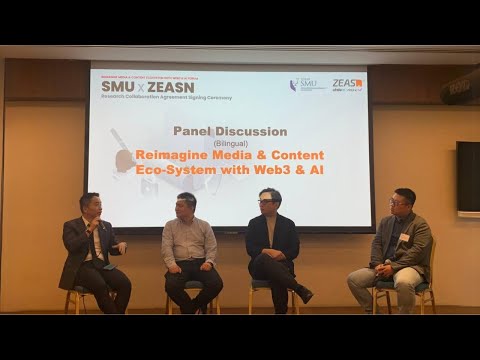
In a panel discussion titled “Reimagine Media & Content Ecosystem with Web3 & AI,” Feida Zhu (Associate Dean at SMU), James Liu (Director at Alibaba Cloud), Raymond Chung (CTO at ZEASN), and Anndy Lian (Advisor at Bybit) discussed the impact of these technologies on the industry.

Here is a recap of the event:

AI and the Changing Face of Television

With the proliferation of smartphones and portable devices, traditional TV viewership has been on the decline. People are now looking for more convenient and interactive ways to consume content. This shift has prompted experts to contemplate the future of television.

Many believe that AI is the key to making television more interactive and engaging. AI can offer personalized recommendations, provide real-time interaction, and enhance the overall viewing experience. AI-powered TVs can respond to voice commands, adapt to users’ preferences, and even offer educational content for children.

Anndy commented:

“AI can transform TV from a passive experience into an interactive one. Imagine a world where your TV is not just a screen but a knowledgeable companion. It can ask what kind of movie you’d like to watch, suggest content based on your preferences, and even help you with tasks like gaming or education.”

He added that AI can play a significant role in generating high-quality content. By using AI technology, content producers can create engaging, diverse, and unique content, ensuring that there is always something exciting to watch.

Raymond shared his experience:

“The integration of AI technology into the content creation process is another exciting prospect. With AI’s ability to generate high-quality content, it becomes possible to produce a plethora of new, engaging materials. This means AI can generate dynamic, interactive, and even personalized content, enhancing the user’s experience.

AI’s capabilities can extend beyond entertainment to areas like education and gaming. For instance, AI can create educational content tailored to a student’s learning style or generate interactive gaming experiences that adapt to a player’s skills and preferences. With AI, content creation is limited only by our imagination.”

Web3 and the Promise of Transparency

As the entertainment industry moves towards a more decentralized and transparent ecosystem, Web3 technology is gaining prominence. Web3, built on the principles of blockchain and decentralized networks, aims to provide a secure and transparent environment for content creators, users, and service providers.

James explained:

“One major advantage of Web3 is data privacy and security. Traditional platforms often collect massive amounts of user data, raising concerns about privacy and data breaches. With Web3, data can be stored securely on decentralized networks, ensuring that users have more control over their personal information.”

Feida continued by say that Web3 also enables creators to tokenize their influence. By using blockchain, content creators can create and manage their tokens, which represent their influence or popularity. These tokens can be traded or used within the ecosystem, creating a more fair and sustainable economy for content creators and their audiences.

Moreover, the transparency of blockchain can help combat piracy issues. Blockchain technology can track and verify content ownership, making it difficult for unauthorized parties to distribute content illegally.

To make the most of AI in user engagement, trust, and control are paramount. We must be cautious of deep fakes and manipulated content. This is where blockchain technology comes in as a control tool. By utilizing blockchain to verify the authenticity of content, we can ensure that what we see and hear is genuine.

Additionally, blockchain can offer transparency and accountability, which are essential in combating misinformation and promoting reliable content. By combining AI’s creativity with blockchain’s security, we can create a safer and more immersive digital landscape.

See the Full Panel Here

Monetization and the Creator’s Economy

Feida emphasized to all that Web 3, with its cryptocurrency and decentralized platforms, opens up new monetization opportunities.

Creators can use Web3 to create and sell non-fungible tokens (NFTs) of their content. This gives them a new way to monetize their work and reach a wider audience. The Creator’s Economy allows users to create content and share their experiences. AI, together with blockchain, can enhance the value of these experiences.

Users can be incentivized to produce content that resonates with a wide audience. From anime to soap operas, the possibilities are endless. AI and blockchain technologies provide a win-win situation for content creators and consumers, driving user engagement to new heights.

The Challenge of Data Privacy

While AI and Web3 technologies hold tremendous promise, they also raise concerns about data privacy. AI models require vast amounts of data to function effectively, and this data can potentially be misused or exploited.

Anndy shared his views:

“The responsibility falls on both service providers and users to protect data privacy. Service providers must design robust systems to ensure that sensitive data is stored securely and accessible only to authorized personnel. Users, on the other hand, need to be cautious about the information they provide and understand the implications of sharing personal data whether is it Web2 or Web3.”

Additionally, the development of privacy-focused AI models and encryption methods is crucial in safeguarding user data in the AI-driven world.

The Bottom Line

The evolution of entertainment is driven by AI, Web3 technology, and the demand for greater data privacy and security. The transformation of television into an interactive experience, the promise of Web3 for transparency and fair content monetization, and the challenges of data privacy all shape the future of the entertainment industry.

As we move forward, it is essential to embrace these technologies while being mindful of data privacy and ethical AI practices. The entertainment industry is on the cusp of a revolution, and only those who adapt to this changing landscape will thrive in the digital age.

This event is supported by Singapore Management University and Moledao.


Source: https://www.techopedia.com/entertainments-next-evolution-ai-web3-and-data-privacy

Anndy Lian is an early blockchain adopter and experienced serial entrepreneur who is known for his work in the government sector. He is a best selling book author- “NFT: From Zero to Hero” and “Blockchain Revolution 2030”.

Currently, he is appointed as the Chief Digital Advisor at Mongolia Productivity Organization, championing national digitization. Prior to his current appointments, he was the Chairman of BigONE Exchange, a global top 30 ranked crypto spot exchange and was also the Advisory Board Member for Hyundai DAC, the blockchain arm of South Korea’s largest car manufacturer Hyundai Motor Group. Lian played a pivotal role as the Blockchain Advisor for Asian Productivity Organisation (APO), an intergovernmental organization committed to improving productivity in the Asia-Pacific region.

An avid supporter of incubating start-ups, Anndy has also been a private investor for the past eight years. With a growth investment mindset, Anndy strategically demonstrates this in the companies he chooses to be involved with. He believes that what he is doing through blockchain technology currently will revolutionise and redefine traditional businesses. He also believes that the blockchain industry has to be “redecentralised”.

j j j