
Global players cheer crypto tax as first step to nod

Global players cheer crypto tax as first step to nod
Additional comments I have for the article on Economic Times.
India’s plan to put a tax of 30% on crypto gains is a big step forward. Their plans to digitalize their currency is another bigger step forward. This means that India recognizes the importance of crypto, digital assets and their underlying technology, blockchain too. They are able to collect more tax from crypto trading and are able to reduce risks of money laundering, terrorist financing and price volatility using their digital dollar in the future.
 
As mentioned in my previous commentaries, I strongly believe India will not put a ban on crypto as it has a big economic impact on them and some of my friends in India were saying that crypto maybe elevates India’s position globally.
I said this openly on my Twitter yesterday and I am going to say this again. “The next crypto bull market could be led by India.” Adding to this optimism, I would also see that the requirements of the regulations for crypto exchange and users will be tightened up in India very soon to align to protect the Indian market.
Anndy Lian

Global players cheer crypto tax as first step to nod

Mumbai: The worldwide crypto community has lauded India’s announcement to tax cryptocurrencies and develop a blockchain-based, regulator-backed digital currency as a significant step forward toward legitimising the asset class and encouraging innovation in blockchain technology.

“This means that India recognises the importance of crypto, digital assets and their underlying technology, blockchain, too,” said Anndy Lian, Chairman of the Singapore-based BigONE exchange. “The next crypto bull market could be led by India.”

On February 1, Finance Minister Nirmala Sitharaman announced the government would impose a blanket tax rate of 30% on the transfer of “virtual digital assets.”

Global crypto players believe the tax clarity will enable fence sitters to activate their India investments.

“The tax clarity is a very positive step forward. The Indian government is taking a progressive stance by going ahead in the direction of innovation. By bringing in taxation, the government legitimises the crypto industry and trading to a large extent,” said Serdar Bisi, CEO of Tycoon, a Cyprus-based crypto startup. “This makes it now possible for institutions and corporations that have been sitting on the sidelines because of uncertainty to participate in this emerging market and industry.”

Adam Mazzaferro, Founder of Australia-based @pay, said people forget that cryptocurrencies are simply another form of asset class, just like shares and real property, and should be treated in the same light, and the Indian government’s announcement has validated the asset class.

“Indian government’s move to tax cryptocurrencies is welcomed as it is consistent with how other modern economies are treating cryptocurrency,” Mazzaferro said. “Although the taxable rate of 30% is relatively high, any form of government regulation of cryptocurrency is encouraging as it goes a long way towards validating the asset and making it more mainstream and widely accepted in everyday business and commerce.”

Kaz Patafta, co-founder of First Eleven Club and Director of McDonald Patafta & Associate Lawyers, an Australian law firm, said the imposition of crypto asset tax now solidifies the adoption of crypto in India and allays concerns of a regulatory ban in one of the largest transactional markets for virtual assets.

Wahid Chammas, a Cyprus-based investor and chairman of Faith Tribe, an open-source fashion design platform that works with many Indian fashion designers, said that these designers will, for once, have a fighting chance to thrive in the highly competitive global marketplace. “But it would be such a shame for the new crypto tax regime to render them uncompetitive with this highly regressive tax,” he said.

Global crypto experts believe the government’s announcement of 1% TDS at the time of transfer of digital assets will be a powerful tool to track transactions.

Pratik Gauri, CEO and Founder, Singapore-based 5ire, said using Tax Deducted at Source (TDS) was a necessary element and, with the increasing awareness of KYC/AML and how shady segments of society often use crypto to launder money, TDS can provide the government with the needed information and money to build an infrastructure for crypto monitoring for tax purposes.

“I do not think that 1% is a prohibitive amount. And it will simultaneously bring needed foreign exchange and investment to India,” he said.

On Tuesday, Changpend Zhao, CEO of Binance, the world’s biggest crypto exchange, said on Twitter, “Crypto is legally recognised in India with a 30 percent tax.”

However, experts say that the recognition of digital assets under income tax is not akin to granting legal status.

According to Charles Tan, Head of Marketing at Coinstore, India is transitioning from an unregulated to a government-monitored crypto market, which will benefit all stakeholders in the industry.

Global crypto exchanges are also keeping a close eye on India’s progress on its CBDC that, according to the budget announcement, will be launched in FY 22-23.

Jay Hao, CEO of OKX.com, said that central banks around the globe have already launched or are about to launch their digital currencies and that India was slightly lagging in the digital currency race, mainly due to the regulatory hurdles and reluctance to accept the growing popularity of digital assets/digital currency around the world. “I hope the announcement made by the Finance Minister regarding CBDC is implemented without any further delay as it will give a much needed push to the blockchain industry in India,” he said.

The announcement, according to Santiago Sabater, Co-founder of DeFiChain Accelerator in Germany, was a step in the right direction, and the security in taxation is the first step for adoption to progress.”If India manages to support crypto startups, create more fair regulations, and enable cooperation with banks, it has the potential to become the world’s leading crypto-hub for web 3.0,” said Sabater.

Anndy Lian is an early blockchain adopter and experienced serial entrepreneur who is known for his work in the government sector. He is a best selling book author- “NFT: From Zero to Hero” and “Blockchain Revolution 2030”.

Currently, he is appointed as the Chief Digital Advisor at Mongolia Productivity Organization, championing national digitization. Prior to his current appointments, he was the Chairman of BigONE Exchange, a global top 30 ranked crypto spot exchange and was also the Advisory Board Member for Hyundai DAC, the blockchain arm of South Korea’s largest car manufacturer Hyundai Motor Group. Lian played a pivotal role as the Blockchain Advisor for Asian Productivity Organisation (APO), an intergovernmental organization committed to improving productivity in the Asia-Pacific region.

An avid supporter of incubating start-ups, Anndy has also been a private investor for the past eight years. With a growth investment mindset, Anndy strategically demonstrates this in the companies he chooses to be involved with. He believes that what he is doing through blockchain technology currently will revolutionise and redefine traditional businesses. He also believes that the blockchain industry has to be “redecentralised”.

j j j

DeFi Live Virtual Stream: How Global Macro Trends Might Affect Crypto in the Near Future

DeFi Live Virtual Stream: How Global Macro Trends Might Affect Crypto in the Near Future

DeFI Live is a 2-day experience hosted virtually and in-person in London, showcasing the hottest DeFi Projects and biggest tech breakthroughs in the works. There were over 700 attendees, 200 speakers and more than 2000 global audiences at the event.

In this panel titled ‘How Global Macro Trends Might Affect Crypto in the Near Future’, the following speakers were present to share their insights: William Ralston Saul – Co-Founder, InCryptoHub; Barry Herbst – Snr VP Strategic Partnerships & growth. The Elliot; Anndy Lian – Chairman. Asia BigONE Exchange and Dan Beurthe – Director of communications, Zebu.

This panel discussion covered several trending topics and issues:
– Effects of over-regulation on personal and business banking activities
– Effects of inflation
– Effects of the developments in technology
– Thoughts on traditional companies moving into the tokenised space
– Key driving forces behind adoption of blockchain technology
– NFTs: how they are viewed vs its true purpose
– Utility coins vs memecoins

It is not rocket science that regulatory costs will continue to climb and remain a top concern for bankers. This all adds cost, with consumers ultimately bearing the burden. New technology will aid this process. “With all the over-regulation happening with personal and business bank accounts, the move to have all your financial activities done on the blockchain is inevitable.” – William Ralston Saul

“Cryptocurrency empowers people to rethink their typical career life.” – Anndy Lian. Blockchain, the technology behind cryptocurrency, has also finally taken a step towards the mainstream. Cryptocurrency provides many incentives for entrepreneurs across the globe. It has made it easier for entrepreneurs to reach international markets rather than strictly sticking to the national markets.

Web 3.0 is the next stage of the web evolution that would make the internet more intelligent or process information with near-human-like intelligence through the power of AI systems that could run smart programs to assist users. The combination of Web 3.0 and crypto will change things. “When people realise that they are the product – their data is the product – Web3 will take over in terms of people owning their data using protocols, blockchains, and DApps.” – Barry Herbst.

“The true value of cryptocurrency is not the price; it is how we use blockchain to do good for everybody.” – Anndy Lian. This will depend on the future of blockchain technology and how we position it now. The hype may fade, but the technology will continue to evolve if we keep building. Anndy also mentioned that the trends can be meme coin for example. This is a trend that is easily relatable to new users. It can be Shiba or Kishu, as long as they build products that people can use and their community is strong, this has already fulfilled the utility portion of blockchain.

The adoption of blockchain technology, especially cryptocurrencies, is truly inevitable and it’s approaching at a speed faster than we think. This industry is growing larger by the day and we’re glad to have had this board of panellists discuss what our future could hold. Are you ready?

To find out more, view the full video at https://youtu.be/ufrdOKFErEY.

Anndy Lian is an early blockchain adopter and experienced serial entrepreneur who is known for his work in the government sector. He is a best selling book author- “NFT: From Zero to Hero” and “Blockchain Revolution 2030”.

Currently, he is appointed as the Chief Digital Advisor at Mongolia Productivity Organization, championing national digitization. Prior to his current appointments, he was the Chairman of BigONE Exchange, a global top 30 ranked crypto spot exchange and was also the Advisory Board Member for Hyundai DAC, the blockchain arm of South Korea’s largest car manufacturer Hyundai Motor Group. Lian played a pivotal role as the Blockchain Advisor for Asian Productivity Organisation (APO), an intergovernmental organization committed to improving productivity in the Asia-Pacific region.

An avid supporter of incubating start-ups, Anndy has also been a private investor for the past eight years. With a growth investment mindset, Anndy strategically demonstrates this in the companies he chooses to be involved with. He believes that what he is doing through blockchain technology currently will revolutionise and redefine traditional businesses. He also believes that the blockchain industry has to be “redecentralised”.
j j j

Anndy Lian Spoke at Global Roundtable Review: Short Selling: What is it? Why is it Risky and How this will affect Crypto?

Anndy Lian Spoke at Global Roundtable Review: Short Selling: What is it? Why is it Risky and How this will affect Crypto?

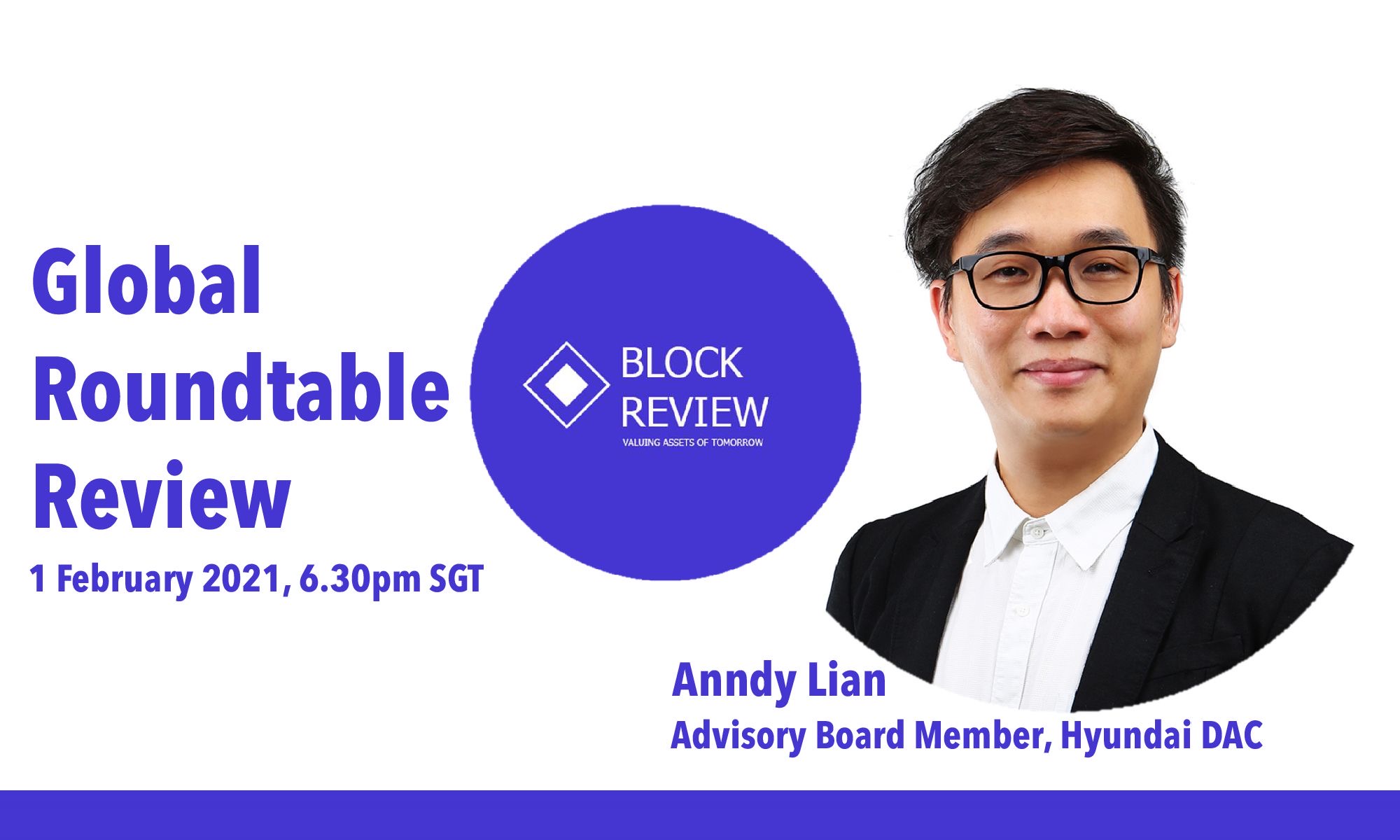
Anndy Lian, Advisory Board Member to Hyundai DAC participated in event “Global Roundtable Review” organised by Block Review. Anndy Lian talked about the recent short selling incident for Gamestop and investors worked through social media to gain an advantage.

The following is a summary of Anndy’s speech:

An overview of the Gamestop saga: What is a short squeeze?

The last week of events is unprecedented in my opinion.
When you buy a stock, you own it and the price goes up due to the company’s performance and all. But when you short it, you are basically betting on the stock to do badly. Some hedge funds are shorting a couple of stocks. They shorted more than a 100%.

The reddit group used publicly available information, went in to buy the stocks and driving the price up, they created a short squeeze. The group drove up the price of the stock, leading to the hedge fund paying more than what they had sold it for before returning the borrowed shares, at the cost of professional traders.

That led to stopping Robinhood app that is targeted at mass retail investors to buy the stock. Forcing a crash and despite all these, the stock went back up. The people are winning.

If Gamestop new shareholders were to hold them long enough, the hedge funds will go out of business. Melvin Capital lost 53% of their investment.
Elon Musk and many other celebrities are also tweeting asking all to buy and hold. This movement has become organic.


What should investors know before shorting stocks?

Investors need to know what kind of risk they are getting themselves in. If you’ve ever lost money on a stock, you’ve probably wondered if there’s a way to make money when stocks fall. There is, and it’s called short selling. Even though it seems to be the perfect strategy for capitalizing on declining stock prices, it comes with even more risk than buying stocks the traditional way. Investing in stocks in the usual way is risky enough. Short selling should be left to very experienced investors, with large portfolios that can easily absorb sudden and unexpected losses.


How risky is it to be following leads on forums (like reddit)

If you are in investment groups or on social media, there are many groups soliciting to jab individual stocks. This is not something new. Social influencers are also doing this, in the stocks and crypto market. I would say it is very dangerous to follow blindly to the “financial advice” on social media as many times the expected outcomes are not what you want. This time this Reddit group managed to make it, but what about the hundreds or even thousands of times where retailor investors got hurt.


In the Gamestop saga, was there institutional money (the other camp) pushing the squeeze? Will blockchain technology help?

I hope not, else we will be losing faith in this so call free, open market in USA. I would believe not all hedge funds are bad. There are a small handful of bad actors right now. Nasdaq CEO is calling regulators to come in and account for what has been done.

Regulators should get to the bottom of this, how is it possible for them to short more than 100% of the stocks. The system must be upgraded. In order to have a fair market, this is also a perfect time to look at blockchain technology, this the same technology that is backing up Bitcoin and many others. Blockchain technology will improve transparency and efficient too.

The reddit group – called SatoshiStreetBets – has driven up price of Doge, similar to how WallStreetBets did for GameStop. DOGE started rallying after a Twitter user calling himself the chairman of WallStreetBets (though who is not affiliated with the subreddit) asked followers about the cryptocurrency.

“What you are seeing on DOGE is not a short squeeze. It is the effects of social media gathering and working together. You cannot short sell or squeeze DOGE. It’s only rising because of speculation.”

This DOGE movement is used to demonstrate how users can manipulate prices if they move together. An individual cannot drive the prices but a group or a community of people who worked on the same goal can do that.


Can a similar short squeeze situation happen in Singapore?

Short-selling is not banned in Singapore, but SGX already requires investors to mark sell orders as “long” or “short” and publishes both daily and weekly reports on short-selling activity. “Abusive” short-selling – for example, with the spread of false rumours – could also be prosecuted as market manipulation or deception under the Securities and Futures Act.
Such policies will improve transparency on short-selling activities in the securities market and enable investors to make more informed trading decisions. With the added on help with technology such as blockchain, it reduces the chance of us being in this situation.

But then again, “Anything can happen.” Maybe less likely in Singapore.


Video:

https://youtu.be/KeoTRTKrwVA


About Anndy Lian:

www.anndy.com/about

Anndy Lian is an early blockchain adopter and experienced serial entrepreneur who is known for his work in the government sector. He is a best selling book author- “NFT: From Zero to Hero” and “Blockchain Revolution 2030”.

Currently, he is appointed as the Chief Digital Advisor at Mongolia Productivity Organization, championing national digitization. Prior to his current appointments, he was the Chairman of BigONE Exchange, a global top 30 ranked crypto spot exchange and was also the Advisory Board Member for Hyundai DAC, the blockchain arm of South Korea’s largest car manufacturer Hyundai Motor Group. Lian played a pivotal role as the Blockchain Advisor for Asian Productivity Organisation (APO), an intergovernmental organization committed to improving productivity in the Asia-Pacific region.

An avid supporter of incubating start-ups, Anndy has also been a private investor for the past eight years. With a growth investment mindset, Anndy strategically demonstrates this in the companies he chooses to be involved with. He believes that what he is doing through blockchain technology currently will revolutionise and redefine traditional businesses. He also believes that the blockchain industry has to be “redecentralised”.

j j j