
What you should know about how tokenised digital money helps with safer transactions

What you should know about how tokenised digital money helps with safer transactions

Like most Singaporeans, Mr Leslie Koh, 50, welcomed the $300 worth of Community Development Council (CDC) vouchers he received.

He was one of over 1.1 million, or 90 per cent, of Singaporean households who had claimed the third tranche of the vouchers within a month of its launch in January.

The vouchers were part of the Government’s measures to support Singaporeans with cost-of-living concerns. Of the $300, half could be used at participating hawker stalls and heartland merchants’ stores, and the other half at participating supermarkets.

Residents claim the vouchers at go.gov.sg/cdcv. They will receive a link on their verified mobile numbers, where vouchers in fixed denominations of $2, $5 and $10 can be accessed.

To use them, you select the amount, get a QR code, and show it to participating merchants to scan and complete the transaction. The current tranche of vouchers will be valid until Dec 31, and can be claimed any time until then.

“My wife and I found the CDC vouchers convenient and easy to use,” says Mr Koh, an editor at a Christian organisation. “We redeemed most of it at the neighbourhood hawker centre, provision shop and barber.”

So it seemed easy to use. But was it as easy for merchants to accept? Not quite.

The Problem

An AsiaOne report last year revealed that the scheme faced teething issues shortly after it was first launched to all Singaporean households in December 2021.

Some older hawkers were unfamiliar with accepting digital payments and tried to avoid accepting CDC vouchers. Others were short-handed and found it quicker to accept cash. Some hawkers shared that they were duped by consumers who used fake QR codes that did not result in any payment being made.

For voucher schemes like CDC, merchants must also sign separate contracts before joining a new phase of the campaign – even if they had participated in previous ones, notes the Monetary Authority of Singapore (MAS) in its Project Orchid White Paper released last November.

Project Orchid, launched by MAS in 2021, seeks to explore and experiment with the infrastructure needed to implement a digital Singdollar.

The voucher claiming process also requires all parties – such as the merchants, voucher issuer and bank – to ensure accurate cash flow. Any discrepancies could lead to a “long and costly dispute resolution process”, notes the MAS.

Nevertheless, interest among merchants has grown. The number of participating merchants increased from about 10,000 in 2021, to over 22,000 this year.

But is there a better way to administer such schemes?

The Possible Solution

Purpose-bound money (PBM) could potentially address these issues, says Ms Janet Young, managing director and head of Group Channels and Digitalisation at UOB.

PBM refers to a protocol that sets the conditions upon which an underlying tokenised digital currency can be used.

It controls how the money is spent by “wrapping” rules or conditions around it. These rules can limit spending to specific merchants or particular goods or services.

For example, the Government can use PBM to issue vouchers such as those by the CDCs, which can only be used at participating merchants, and cannot be used beyond the expiry date. If these conditions are met, the digital money is “unwrapped” and released instantly to the merchant during the transaction.

“PBMs, allocated for specific uses or goals, offer several benefits,” says Ms Young. “It promotes financial discipline, ensures funds are directed toward intended objectives, reduces the risk of misallocation, and addresses inefficiencies of the current voucher schemes.”

Intergovernmental blockchain expert Anndy Lian points out that PBMs can enhance payment security and transparency by ensuring that the underlying digital money is used only by the intended person, and for the specific reason spelt out in the PBM.

“PBMs can be used for anti-money laundering, counter-terrorism financing, or tax compliance purposes, where the underlying digital money is traceable and reportable,” Mr Lian explains.

To UOB, PBM is “an important element in the future of digital money as it enables money to be directed towards a specific purpose, without requiring the money itself to be programmed”, says Ms Young.

“As we uncover the potential of PBMs, we open doors to a future of digital money that can direct allocations, driving opportunities for innovation, value creation and efficiency.”

The Potential

MAS’ Project Orchid is exploring the use of PBMs, and various trials have been initiated with banks and the private sector on the applications of PBMs and a digital Singdollar. To support MAS’ efforts, UOB has run three pilot trials so far.

Last year, UOB partnered with SkillsFuture Singapore to explore how the disbursement of SkillsFuture credits for courses by overseas training providers could be enhanced, using a digital Singdollar issued by the bank. The pilot is expected to be completed by the end of the year.

At the Formula One festivities in September, UOB worked with Grab and fintech firm Fazz to launch the Singapore Pitstop Pack. Participants could use PBM-based commercial vouchers to make purchases. The vouchers can be used until the end of the year at over 200 participating merchants islandwide, and are available to locals and tourists.

Last month, at the Singapore Fintech Festival, UOB and OCBC ran a trial on the fungibility of a digital Singdollar and interbank settlement using a simulated wholesale CBDC. As part of the trial, participants could request PBM from one bank, and use it to claim a piece of merchandise from the other.

Ms Young says: “The successful completion of the last two pilots represents a significant stride in Singapore’s larger ambition to work towards a truly seamless financial ecosystem with domestic and cross-border applications.”


Source: https://www.straitstimes.com/business/what-you-should-know-about-how-tokenised-digital-money-helps-with-safer-transactions

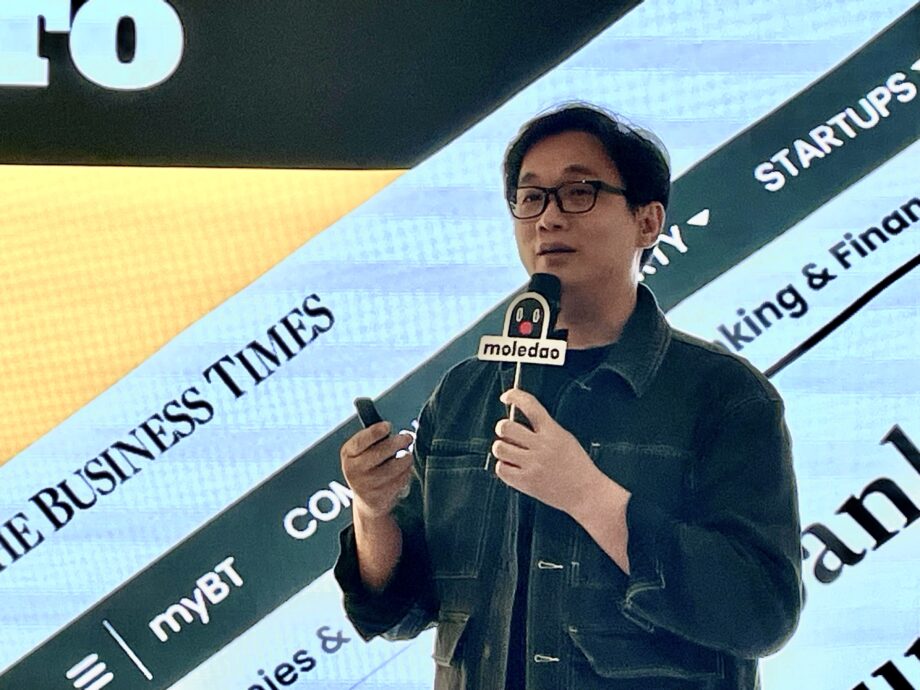
Anndy Lian is an early blockchain adopter and experienced serial entrepreneur who is known for his work in the government sector. He is a best selling book author- “NFT: From Zero to Hero” and “Blockchain Revolution 2030”.

Currently, he is appointed as the Chief Digital Advisor at Mongolia Productivity Organization, championing national digitization. Prior to his current appointments, he was the Chairman of BigONE Exchange, a global top 30 ranked crypto spot exchange and was also the Advisory Board Member for Hyundai DAC, the blockchain arm of South Korea’s largest car manufacturer Hyundai Motor Group. Lian played a pivotal role as the Blockchain Advisor for Asian Productivity Organisation (APO), an intergovernmental organization committed to improving productivity in the Asia-Pacific region.

An avid supporter of incubating start-ups, Anndy has also been a private investor for the past eight years. With a growth investment mindset, Anndy strategically demonstrates this in the companies he chooses to be involved with. He believes that what he is doing through blockchain technology currently will revolutionise and redefine traditional businesses. He also believes that the blockchain industry has to be “redecentralised”.
j j j

Looking ahead 2030 – How crypto will shape the future of finance

Looking ahead 2030 – How crypto will shape the future of finance

The year is 2030. The world has changed dramatically in the past decade, especially in the field of finance. Cryptocurrencies, once considered a niche and speculative asset class, have become mainstream and widely adopted by millions of people around the world. What are the factors that have contributed to this rapid growth and popularity of crypto? And what are the challenges and opportunities that lie ahead for the crypto industry and its users?

One of the main drivers of crypto adoption is the innovation and development of the underlying technology, blockchain. Blockchain is a distributed ledger that records transactions in a secure, transparent, and immutable way. It enables peer-to-peer transactions without intermediaries, reduces costs and friction, and enhances efficiency and trust.

Blockchain has enabled the creation and proliferation of various types of crypto assets, such as Bitcoin, Ethereum, stablecoins, utility tokens, security tokens, non-fungible tokens (NFTs), and more. These assets have different use cases and value propositions, such as store of value, medium of exchange, digital representation of real-world assets, access to decentralized applications (DApps), and ownership of digital collectibles.

According to a study conducted by Grand View Research, Inc., the global cryptocurrency market size is expected to reach USD 11.71 billion by 2030, expanding at a compound annual growth rate (CAGR) of 7.1% from 2021 to 2030. The study attributes this growth to the increasing demand for crypto assets among retail and institutional investors, the growing adoption of blockchain technology in various sectors, and the supportive regulatory environment in some countries.

Popularity and Mainstream Adoption

Another factor that has boosted crypto adoption is the increasing awareness and education among the general public. More people are becoming familiar with the benefits and potential of crypto, such as financial inclusion, empowerment, privacy, and sovereignty. Crypto adoption is also facilitated by the availability and accessibility of various platforms and services, such as exchanges, wallets, payment processors, lending platforms, and more.

According to a report on Github, it is estimated that the number of crypto users will reach one billion by 2030, based on a historical growth rate of 63.2% per year. The report also identifies the key drivers of crypto adoption, such as the growth of Bitcoin and Ethereum, the emergence of DeFi and NFTs, the launch of institutional products and services, and the endorsement of celebrities and influencers.

Decentralization: The Core of Web3

One of the most significant and revolutionary aspects of crypto is decentralization. Decentralization means that no single entity or authority controls or governs the network, the protocol, or the data. Instead, the power and responsibility are distributed among the participants, who are incentivized to cooperate and coordinate through consensus mechanisms and economic models.

Decentralization is the core of Web3, the next generation of the internet that is built on blockchain and other distributed technologies. Web3 aims to create a more open, fair, and democratic web, where users have more control and ownership over their data, identity, and digital assets. Web3 also enables the development of new types of applications and services that are decentralized, peer-to-peer, and censorship-resistant.

Some of the examples of Web3 applications and services are:

  • Decentralized Applications (DApps): These are applications that run on a decentralized network, such as Ethereum, and use smart contracts to execute logic and transactions. DApps can provide various functions and features, such as gaming, social media, e-commerce, and more.
  • Smart Contracts: These are self-executing contracts that are encoded on the blockchain and perform actions based on predefined rules and conditions. Smart contracts can facilitate trustless and transparent transactions, such as escrow, swaps, and auctions.
  • Governance and DAOs: These are mechanisms and organizations that enable the collective decision-making and management of a network, a protocol, or a project. Governance and DAOs allow the stakeholders to propose, vote, and implement changes and improvements, such as upgrades, parameters, and policies.
  • DeFi: This is a term that refers to the decentralized and open financial system that is enabled by blockchain and smart contracts. DeFi aims to provide alternative and innovative financial services and products, such as lending, borrowing, trading, investing, and saving, without intermediaries or intermediaries.
  • Web4: This is a term that refers to the future evolution of the web, where the physical and digital worlds are integrated and augmented by technologies such as artificial intelligence, virtual reality, and the internet of things. Web4 will enable new forms of interaction, communication, and expression, such as immersive experiences, holograms, and avatars.

Challenges and Opportunities

Despite the remarkable progress and potential of crypto, there are still many challenges and uncertainties that need to be addressed and overcome. Some of the main challenges are:

  • Regulation and Compliance: The legal and regulatory status of crypto varies widely across different jurisdictions and regions. Some countries have adopted a friendly and supportive approach, while others have imposed bans or restrictions. The lack of clarity and consistency in regulation and compliance can pose risks and barriers for crypto users, developers, and businesses.
  • Security and Scalability: The security and scalability of crypto networks and platforms are essential for ensuring the reliability, performance, and user experience of crypto. However, there are still many technical and operational challenges and trade-offs that need to be solved and optimized, such as network congestion, high fees, hacking attacks, and human errors.
  • Education and Adoption: The education and adoption of crypto are crucial for achieving the vision and mission of crypto. However, there are still many gaps and obstacles that need to be bridged and overcome, such as the lack of awareness, understanding, and trust, the complexity and usability of crypto, and the resistance and inertia of the incumbents and the status quo.

On the other hand, there are also many opportunities and possibilities that crypto can offer and explore. Some of the main opportunities are:

  • Innovation and Development: The innovation and development of crypto are driven by the creativity and collaboration of the crypto community, which consists of diverse and talented individuals and groups from various backgrounds and disciplines. The crypto community is constantly experimenting and iterating on new ideas and solutions, such as layer-2 protocols, interoperability standards, and privacy-enhancing technologies.
  • Inclusion and Empowerment: The inclusion and empowerment of crypto are enabled by the accessibility and affordability of crypto, which can reach and serve anyone with an internet connection and a smartphone. Crypto can provide financial and social inclusion and empowerment to the unbanked and underbanked, the marginalized and oppressed, and the aspiring and ambitious.
  • Transformation and Disruption: The transformation and disruption of crypto are manifested by the impact and influence of crypto on various sectors and industries, such as finance, media, art, and gaming. Crypto can transform and disrupt the existing models and paradigms, such as intermediation, centralization, and monetization, and create new and better alternatives, such as peer-to-peer, decentralized, and tokenized.

Conclusion

Crypto is not just a technology, a currency, or an asset. It is a movement, a culture, and a vision. It is a movement that aims to create a more open, fair, and democratic world. It is a culture that values innovation, collaboration, and diversity. It is a vision that imagines a future where everyone can participate, contribute, and benefit from the digital economy.

As we look ahead to 2030, we can expect crypto to continue to grow, evolve, and mature, and to face new challenges and opportunities. We can also expect crypto to shape the future of finance, and beyond. Crypto is not only the future of money, but also the future of the web, and the future of the world.


Source: https://www.financialexpress.com/business/digital-transformation-looking-ahead-2030-how-crypto-will-shape-the-future-of-finance-3310083/

Anndy Lian is an early blockchain adopter and experienced serial entrepreneur who is known for his work in the government sector. He is a best selling book author- “NFT: From Zero to Hero” and “Blockchain Revolution 2030”.

Currently, he is appointed as the Chief Digital Advisor at Mongolia Productivity Organization, championing national digitization. Prior to his current appointments, he was the Chairman of BigONE Exchange, a global top 30 ranked crypto spot exchange and was also the Advisory Board Member for Hyundai DAC, the blockchain arm of South Korea’s largest car manufacturer Hyundai Motor Group. Lian played a pivotal role as the Blockchain Advisor for Asian Productivity Organisation (APO), an intergovernmental organization committed to improving productivity in the Asia-Pacific region.

An avid supporter of incubating start-ups, Anndy has also been a private investor for the past eight years. With a growth investment mindset, Anndy strategically demonstrates this in the companies he chooses to be involved with. He believes that what he is doing through blockchain technology currently will revolutionise and redefine traditional businesses. He also believes that the blockchain industry has to be “redecentralised”.

j j j

How Crypto Exchanges Should Be Regulated: Challenges And Scenarios For 2024 And Beyond

How Crypto Exchanges Should Be Regulated: Challenges And Scenarios For 2024 And Beyond

Crypto exchanges, the platforms that allow users to buy, sell, and trade cryptocurrencies and other digital assets, have been at the center of the crypto industry’s growth and innovation. However, they have also been the source of many controversies and risks, such as hacks, frauds, scams, market manipulation, money laundering, and tax evasion. As the crypto market matures and attracts more attention from regulators, investors, and the public, the question of how crypto exchanges should be regulated becomes more urgent and complex.

The Current State Of Crypto Exchange Regulation

The current state of crypto exchange regulation is fragmented, inconsistent, and uncertain. Different jurisdictions have different approaches and standards for crypto exchanges, ranging from outright bans to laissez-faire policies to comprehensive frameworks. Some of the key regulatory issues and challenges that crypto exchanges face include:

  • The legal status and classification of crypto assets: Crypto assets, such as Bitcoin, stablecoins, and tokens, have different features and functions, and may belong to different legal categories, such as securities, commodities, currencies, or something else. Depending on the category, crypto assets may have to follow different rules and regulations, such as registration, disclosure, reporting, taxation, and consumer protection. But there is no global agreement or clarity on how to define and classify crypto assets, and different regulators may have different views and opinions.
  • The jurisdiction and authority of regulators: These platforms operate globally and in a decentralized way, often serving customers across borders and countries. But regulators may have different scopes and powers to oversee and enforce them, depending on where they are, where they are registered, where they are incorporated, or where they operate. They may have to deal with conflicting or overlapping regulatory requirements or expectations from different regulators, or they may try to avoid or escape regulation by moving or hiding their operations or assets.
  • The applicability and interpretation of existing laws and regulations: These platforms may have to follow existing laws and regulations that apply to traditional financial institutions or intermediaries, such as anti-money laundering (AML), counter-terrorism financing (CTF), know-your-customer (KYC), investor protection, market integrity, and prudential standards. But these laws and regulations may not be fully suitable or relevant, as they may not capture the unique features and risks of crypto assets and activities, such as decentralization, anonymity, volatility, and innovation. Moreover, these laws and regulations may vary across countries and may be subject to different interpretations and implementations by regulators and courts.

The Future Scenarios Of Crypto Exchange Regulation

The future scenarios of crypto exchange regulation are uncertain and dynamic, as they depend on various factors, such as the evolution of the crypto market, the development of the regulatory frameworks, the actions and reactions of the regulators and the industry, and the emergence of new technologies and innovations. However, based on the current trends and signals, some of the possible scenarios that crypto exchanges may face in 2024 and beyond include:

  • Scenario 1: Global harmonization and standardization: In this scenario, global regulators and standard-setters, such as the Financial Action Task Force (FATF), the Financial Stability Board (FSB), the Basel Committee on Banking Supervision (BCBS), and the International Organization of Securities Commissions (IOSCO), work together to create and apply a consistent and coherent set of rules and guidelines for these platforms, based on common principles and best practices. They have to follow these rules and guidelines, no matter where they are or operate, and are subject to regular supervision and enforcement by competent authorities. They also benefit from regulatory clarity and certainty, as well as enhanced trust and legitimacy among investors and the public. But they also face increased compliance costs and risks, as well as reduced innovation and competition, as they have to stick to strict and uniform standards that may not fit their specific needs or preferences.
  • Scenario 2: Regional integration and differentiation: In this scenario, regional regulators and authorities, such as the European Union (EU), the Association of Southeast Asian Nations (ASEAN), and the African Union (AU), create and apply their own regional frameworks and initiatives for these platforms, based on their regional goals and priorities. They have to follow these regional frameworks and initiatives, depending on where they are or operate, and are subject to regional supervision and enforcement by regional bodies or agencies. These platforms benefit from regulatory alignment and cooperation, as well as tailored solutions and opportunities, within their respective regions. But also face regulatory fragmentation and confusion, as well as limited access and exposure, across different regions, as they have to deal with different and divergent standards that may create barriers or conflicts.
  • Scenario 3: Local adaptation and experimentation: In this scenario, local regulators and authorities, such as the US, China, India, and Switzerland, create and apply their own local policies and measures for these platforms, based on their local conditions and interests. They have to follow these local policies and measures, depending on where they are or operate, and are subject to local supervision and enforcement by local agencies or courts. These platforms benefit from regulatory flexibility and diversity, as well as customized support and incentives, within their respective jurisdictions. They also face regulatory uncertainty and volatility, as well as increased complexity and risk, across different jurisdictions, as they have to cope with different and changing standards that may create uncertainty or instability.

To Sum Up

Crypto exchanges are a vital and vibrant part of the crypto industry, but they also pose significant challenges and risks for regulators, investors, and the public. As the market evolves and matures, the question of how they should be regulated becomes more urgent and complex. The future scenarios of crypto exchange regulation are uncertain and dynamic, and may vary across different levels and dimensions, such as global, regional, and local. They may face different regulatory outcomes and implications, depending on the scenario that prevails or emerges. They may need to prepare and adapt for different regulatory scenarios, by enhancing their regulatory awareness and compliance, engaging and collaborating with regulators and stakeholders, and leveraging their innovation and differentiation.


Source: https://www.benzinga.com/23/11/35682896/how-crypto-exchanges-should-be-regulated-challenges-and-scenarios-for-2024-and-beyond

Anndy Lian is an early blockchain adopter and experienced serial entrepreneur who is known for his work in the government sector. He is a best selling book author- “NFT: From Zero to Hero” and “Blockchain Revolution 2030”.

Currently, he is appointed as the Chief Digital Advisor at Mongolia Productivity Organization, championing national digitization. Prior to his current appointments, he was the Chairman of BigONE Exchange, a global top 30 ranked crypto spot exchange and was also the Advisory Board Member for Hyundai DAC, the blockchain arm of South Korea’s largest car manufacturer Hyundai Motor Group. Lian played a pivotal role as the Blockchain Advisor for Asian Productivity Organisation (APO), an intergovernmental organization committed to improving productivity in the Asia-Pacific region.

An avid supporter of incubating start-ups, Anndy has also been a private investor for the past eight years. With a growth investment mindset, Anndy strategically demonstrates this in the companies he chooses to be involved with. He believes that what he is doing through blockchain technology currently will revolutionise and redefine traditional businesses. He also believes that the blockchain industry has to be “redecentralised”.
j j j