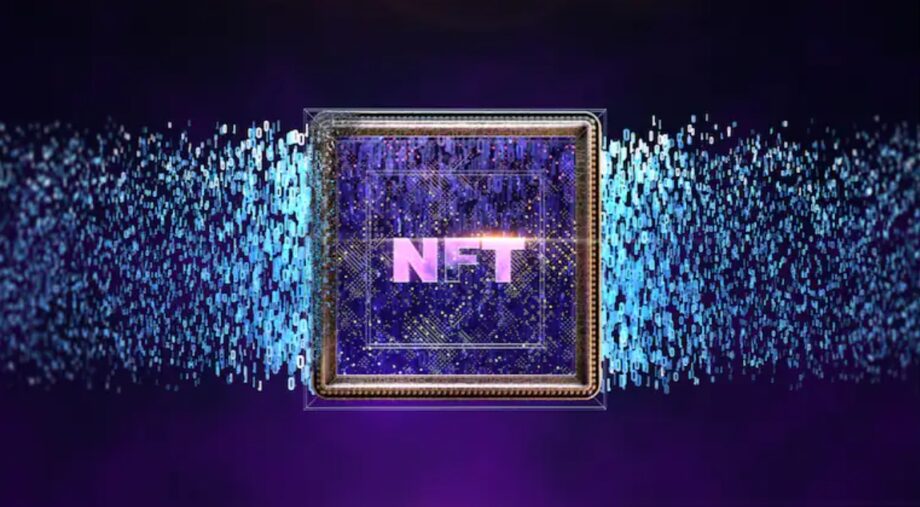
Tax on virtual digital assets a concern for NFTs; impact may be short term: Experts

Tax on virtual digital assets a concern for NFTs; impact may be short term: Experts

A slowdown in cryptocurrency trading may have an impact on NFT transactions as well, although it could be a temporary phenomenon as investors await more clarity from the government.

The 30 percent tax on income from the transfer of virtual digital assets (VDAs) that came into effect from April 1 is a cause of concern not only for cryptocurrencies, which have seen a drop in trading volumes, but also for non-fungible tokens (NFTs) that gathered steam in India in the past year with the entry of sports and Bollywood celebrities.

“The immediate scenario is bleak for crypto and even bleaker for NFTs in India,” Raj Kapoor, strategic advisor at Acryptoverse, a crypto-marketing firm, told Moneycontrol. “NFTs in India will face a fallout with only unique models surviving. NFT creators here are popping up daily while collectors remain non-existent.”

Anndy Lian, Chairman, BigONE Exchange, a crypto trading platform, said the tax on VDAs in India will impact NFT sales.

“The overall market condition is not favourable. NFT sales will drop further and only the better assets will have a place in the crypto-verse,” he said.

He added that NFTs that are more speculative in nature and driven by profit will suffer hard when it comes to tax.

Vinu Peter Immanuel, a partner at Link Legal who tracks NFTs, said that with average trading volumes on top cryptocurrency exchanges dropping 80 to 90 percent from a few months ago, the impact will also be seen on NFTs.

“Since NFTs are traded mostly by using cryptocurrencies, any slowdown in cryptocurrency trading may have an impact on NFT transactions as well. Although it could be a temporary phenomenon where cryptocurrency investors have taken a step back and are waiting for more clarity from the government,” he said.

Short-term impact

However, Hitesh Malviya, founder of IBC (It’s Blockchain) DAO (decentralised autonomous organisation) said NFTs in India are not even a $10 million market in terms of daily sales.

“We have got limited traction here if we compare it to the west. In the US, marketplaces are doing over a billion dollar sales volume every month. Since it’s a limited market, I don’t see many people have got affected as we have less than 1 lakh Indians who have bought any NFTs,” Immanuel said.

Siddharth Jaiswal, founder of Sportzchain, said the new taxation policy will have a short-term impact on NFTs.

“For all of us, this is the first year for the cryptocurrency and NFT tax framework. For many, 30 percent may seem a lot, but if you see the kind of exponential returns, 30 percent may seem less. There have been exponential gains as well, to the tune of 300 to 500 percent, so 30 percent (tax) seems less. However, the same is subjective,” he said.

Malviya noted that while it’s a tough law for short-term traders as they will be required to pay 1 percent on each NFT trade, it would be fine for a long-term value investor like him.

“I don’t mind paying 30 percent tax on my crypto or NFT assets,” he said.

The government said a 1 percent tax would be deducted at source on the transfer of VDAs starting July 1.

“The TDS (tax deducted at source) on its own is causing major havoc for crypto exchanges because the high-volume daily traders have disappeared and these are the guys that provide liquidity to the exchanges. But this impact has so far just appeared on cryptocurrencies,” said Pratik Gauri, founder of 5ire. “Still, I think it’ll become more widespread and show up on all VDAs, precisely because the tax has some mandates, like not being able to write off losses from one deal into another that will have a significant impact on the trading on VDAs, be it cryptos, NFTs, or other VDAs.”

Positive outlook

While Lian and Jaiswal said the tax will have an effect on NFTs, they also believe the outlook for digital collectibles is positive.

“Utility-based NFTs should expect an increase. This increase would be in favour for the India market as they will help the industry to hit a new level of adoption,” said Lian.

He expects India to triple its NFT sales in the next year.

Sportzchain’s Jaiswal noted that NFT marketplaces are coming up with new strategies to smoothen the entire buying process, with less reliance on cryptocurrencies as the medium for buying these NFTs.

“For example, NFT marketplaces in India have introduced UPI as one of the payment modes to buy these NFTs. So a drop in the trading volumes will not adversely impact the market for NFTs,” he said.

Unified Payments Interface (UPI) is a real-time payment system that facilitates instant transfer of funds between bank accounts.

Acryptoverse’s Kapoor said NFT stakeholders should really look at India’s gaming sector for a strong product market fit with NFTs as this sector has exploded in the past year, recording 170 percent growth. Jaiswal also anticipates NFTs on game merchandise to see an upswing.

“Additionally, with metaverse applications also gaining momentum, the uptake of NFTs will only increase in the future,” he said.

However, Malviya said that in India, fan collectible NFTs are emerging with entertainment companies and actors launching digital assets to promote their movies or brands.

“While NFTs will be used as an emerging tool of branding by many lifestyle and entertainment firms, such NFTs will not value over time. These are hype-driven assets that might never get any value in the secondary markets,” he said.


Original Source: https://www.moneycontrol.com/news/trends/tax-on-virtual-digital-assets-a-concern-for-nfts-impact-may-be-short-term-experts-8378261.html

Anndy Lian is an early blockchain adopter and experienced serial entrepreneur who is known for his work in the government sector. He is a best selling book author- “NFT: From Zero to Hero” and “Blockchain Revolution 2030”.

Currently, he is appointed as the Chief Digital Advisor at Mongolia Productivity Organization, championing national digitization. Prior to his current appointments, he was the Chairman of BigONE Exchange, a global top 30 ranked crypto spot exchange and was also the Advisory Board Member for Hyundai DAC, the blockchain arm of South Korea’s largest car manufacturer Hyundai Motor Group. Lian played a pivotal role as the Blockchain Advisor for Asian Productivity Organisation (APO), an intergovernmental organization committed to improving productivity in the Asia-Pacific region.

An avid supporter of incubating start-ups, Anndy has also been a private investor for the past eight years. With a growth investment mindset, Anndy strategically demonstrates this in the companies he chooses to be involved with. He believes that what he is doing through blockchain technology currently will revolutionise and redefine traditional businesses. He also believes that the blockchain industry has to be “redecentralised”.
j j j

How NFTs create new opportunities in the entertainment industry

How NFTs create new opportunities in the entertainment industry

The non-fungible token (NFT) community Arabian Camels is making a $50 million Hollywood film called “Antara.” The movie makers recently announced a highly anticipated NFT drop for the project, which allows holders to partly fund the movie, own a share of digital rights and benefit from its box office achievements.

This project is just a glimpse into what NFTs could achieve in the world of entertainment.

NFTs started out as standalone pieces of art and memes by individual creators and today is a massive industry that’s swarming with innovative NFT projects today. In 2021 alone, an estimated $41 billion worth of NFTs were sold, which is a testament to their growing popularity and value.

Major industries like art and gaming have benefited from NFTs already, and recent developments suggest that the realm of entertainment could be next in line to receive a transformative blow from the NFT industry.

Integrating NFTs into the movie business

Worth over $2.2 trillion, the global entertainment industry isn’t only one of the most valuable industries in the world but also a huge part of our culture. Over the span of a century, the industry has never failed to amaze its audience with enticing movies, TV shows, music, and it has stood the test of time, staying relevant even today.

Transforming the entertainment industry

NFTs in entertainment have the potential to completely transform the way films are made, produced, and distributed, democratizing this unilateral industry in the process. To understand this better, we go back to Arabian Camels’ Antara project. This big-budget Hollywood epic is one of the first films to be produced by the NFT community, demonstrating the concept of movie NFTs.

For the makers and producers of films, this means that they’re no longer limited by budget constraints or the difficult financing methods of top production houses. Movie NFTs provide a way for them to distribute part ownership of the movie to its viewers, raising the required funds in the process. This is especially useful for budding filmmakers and artists who are hardly visible in the industry. Specific roles like “producer” can be represented and offered as an NFT, making its owner the producer of the film. And through all the stages of filmmaking, NFTs can be offered as a way to include the community in the decision-making process, market the project and build a loyal fanbase beforehand.

“NFTs present a tremendous opportunity for mixed-reality world-building experiences, deepening user engagement and interaction and fostering a community for our hundreds of millions of global consumers to create one-of-a-kind digital collections and Autograph is the optimal destination for this discovery,” claims Jenefer Brown, Executive VP & Head of Lionsgate Global.

The NFTs to be released could range anywhere from character avatars to video clips from the films.

Now, in the case of emerging artists, technicians, musicians and directors, NFTs could be their on-ramp to popularity within the industry. The fact that Ben Mauro, a Hollywood concept artist, earned more in seven minutes with his NFT collection than he has in the 12 years of working in Hollywood is telling. Just like Mauro, these emerging artists could use NFTs in unique ways to represent their talent, garner an audience and increase their visibility in the industry.

Movie merchandising is another realm where NFTs in entertainment could make a huge difference. Fans have long been collecting posters, clothing and character figures from their favorite films, and NFTs add a new dimension to this. The rarity of NFTs gives fans the satisfaction of owning a part of the film that cannot be replicated. Celebrities can also make the most of this opportunity by creating NFT merchandise collections for their fanbase. This particular trend has picked up quite recently and celebrities like Eminem, Justin Beiber, SnoopDogg and Jimmy Fallon have all followed suit.

If we look at the whole picture, the integration of NFTs into the entertainment industry allows users to actively participate every step of the way. Both viewers and creators have the chance to connect beyond the screen and thus take the industry to unimaginable dimensions.

How NFTs open closed doors

Since its inception, the entertainment industry has been opaque in its operations, shutting down external interference. This stringent way of operation vastly limited opportunities for emerging artists trying to make it in the industry. But with the NFT integration, the entertainment industry is now opening its door to a wider section of artists, producers, and viewers. While producers and creators have new ways of monetizing their work and raising funds, viewers now have a way to directly participate in the industry’s happenings, not only to fund films but also earn from their gain. This symbiotic relationship between viewers and creators could change the face of global entertainment in the years to come.


Original Source: https://venturebeat.com/2022/03/08/how-nfts-create-new-opportunities-in-the-entertainment-industry/

Anndy Lian is an early blockchain adopter and experienced serial entrepreneur who is known for his work in the government sector. He is a best selling book author- “NFT: From Zero to Hero” and “Blockchain Revolution 2030”.

Currently, he is appointed as the Chief Digital Advisor at Mongolia Productivity Organization, championing national digitization. Prior to his current appointments, he was the Chairman of BigONE Exchange, a global top 30 ranked crypto spot exchange and was also the Advisory Board Member for Hyundai DAC, the blockchain arm of South Korea’s largest car manufacturer Hyundai Motor Group. Lian played a pivotal role as the Blockchain Advisor for Asian Productivity Organisation (APO), an intergovernmental organization committed to improving productivity in the Asia-Pacific region.

An avid supporter of incubating start-ups, Anndy has also been a private investor for the past eight years. With a growth investment mindset, Anndy strategically demonstrates this in the companies he chooses to be involved with. He believes that what he is doing through blockchain technology currently will revolutionise and redefine traditional businesses. He also believes that the blockchain industry has to be “redecentralised”.
j j j

New NFTs Need To Build Community To Succeed, Says Head of Crypto Exchange

New NFTs Need To Build Community To Succeed, Says Head of Crypto Exchange

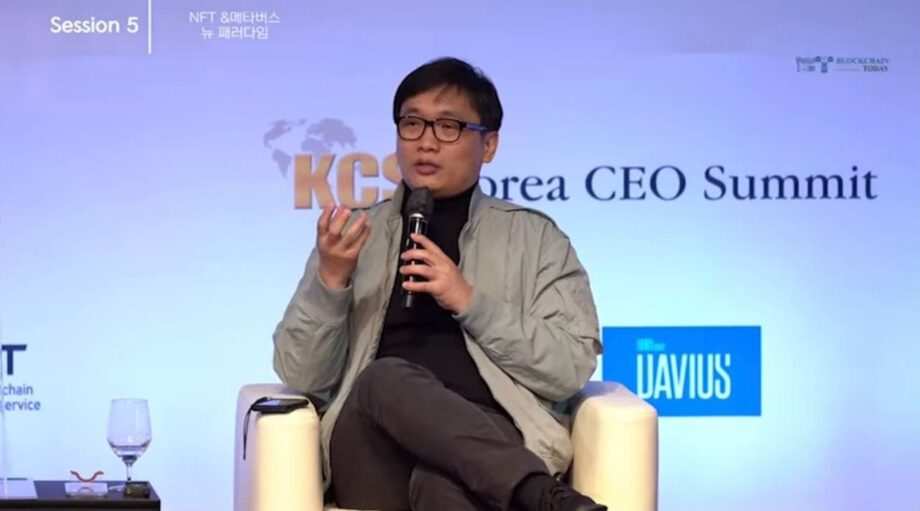
Speaking at the 14th World Blockchain Summit MARVELS, the Chairman of BigONE Exchange Anndy Lian said that key to success for NFT startups was a supportive community and a compelling user case. As a guest speaker at the event on February 22, under the theme of ‘NFT META Korea 2022’, Lian agreed that the global market for NFTs was very active currently but wanted to share his experience in how NFT projects can be successful in the longer run.


“While NFT creation looks straightforward the true essence of the NFT, the true value comes from community, as well as the technology and the tokenomics. If you are looking to launch a NFT studio, and you wish to partner with our partners, it could be with a meme coin community with Shiba Inu, Kishu Inu, or XRdoge, as all these projects have a very big community behind them; if you need that kind of partnership to succeed in the global market then we can help you,” Lian told his audience at the Seoul event.


The market in NFTs boomed in 2021, with total sales globally totaling $25 billion, up from just $94.9 million the year before, according to DappRadar. “Not surprisingly social media is awash with tales of get rich quick NFT success, from CryptoPunks to Bored Apes, and everything in between, but the fascination with digital art is going to change in 2022, with more use cases around utility. Clearly NFT projects need to be as transparent as possible when creating their offerings and grow a viable community as they progress, said Lian


One key factor that should be with a team from the outset is to ensure the NFT has utility, which is closely tied to the importance of community. At its core of course NFTs are a great way for creators and artists to contact directly with their fans, with their community. And that’s probably the most compelling use case to date that’s going to sustain the growth of NFTs into the future, Lian added.


Lian illustrated for the audience the importance of getting this relationship between the NFT and its community, between creators and fans, with the example of starting a NFT around a well-known soccer player. While on paper the fans of a soccer player appear to be automatically part of the NFT community you are building, that isn’t necessarily the case. What is needed is a strong bond to be created between the fans and the soccer star and the platform for it to work. This was related to the importance of ensuring that when you see a new project in the NFT space you should as an investor consider whether it has utility.


Lian added that for NFT creators it was important to be transparent about their offering to investors, not only to better convey its value, but also to ensure that when regulators start to enter the space in 2022 the quality of the NFT industry stands up to scrutiny.


Oh Myung, former Deputy Prime Minister and Minister of Science and Technology; Oh Se-hoon, Mayor of Seoul City; Lee Won-Wook, National Assemblyman and Minister of Land, Infrastructure, and Transport; Cho Myung-hee, chairman of the National Assembly and the Special Committee for Future Industry Jobs; Yoon Chang-Hyun, chairman of the Special Committee for Virtual Assets; and Yang Jung-sook, a member of the National Assembly and the Korea Communications Commission delivered speeches opening the conference.


About BigONE Exchange


BigONE is a global cryptocurrency exchange that provides a platform for trading various cryptocurrencies. It was founded in 2017 and registered in the Netherlands. The group operates in Russia, Brazil, Vietnam, Seychelles, Singapore, Japan, and Indonesia, providing marketing, investment, and blockchain technology research & development. Further information here.


Original Source: https://www.asiaone.com/business/new-nfts-need-build-community-succeed-says-head-crypto-exchange

Anndy Lian is an early blockchain adopter and experienced serial entrepreneur who is known for his work in the government sector. He is a best selling book author- “NFT: From Zero to Hero” and “Blockchain Revolution 2030”.

Currently, he is appointed as the Chief Digital Advisor at Mongolia Productivity Organization, championing national digitization. Prior to his current appointments, he was the Chairman of BigONE Exchange, a global top 30 ranked crypto spot exchange and was also the Advisory Board Member for Hyundai DAC, the blockchain arm of South Korea’s largest car manufacturer Hyundai Motor Group. Lian played a pivotal role as the Blockchain Advisor for Asian Productivity Organisation (APO), an intergovernmental organization committed to improving productivity in the Asia-Pacific region.

An avid supporter of incubating start-ups, Anndy has also been a private investor for the past eight years. With a growth investment mindset, Anndy strategically demonstrates this in the companies he chooses to be involved with. He believes that what he is doing through blockchain technology currently will revolutionise and redefine traditional businesses. He also believes that the blockchain industry has to be “redecentralised”.

j j j