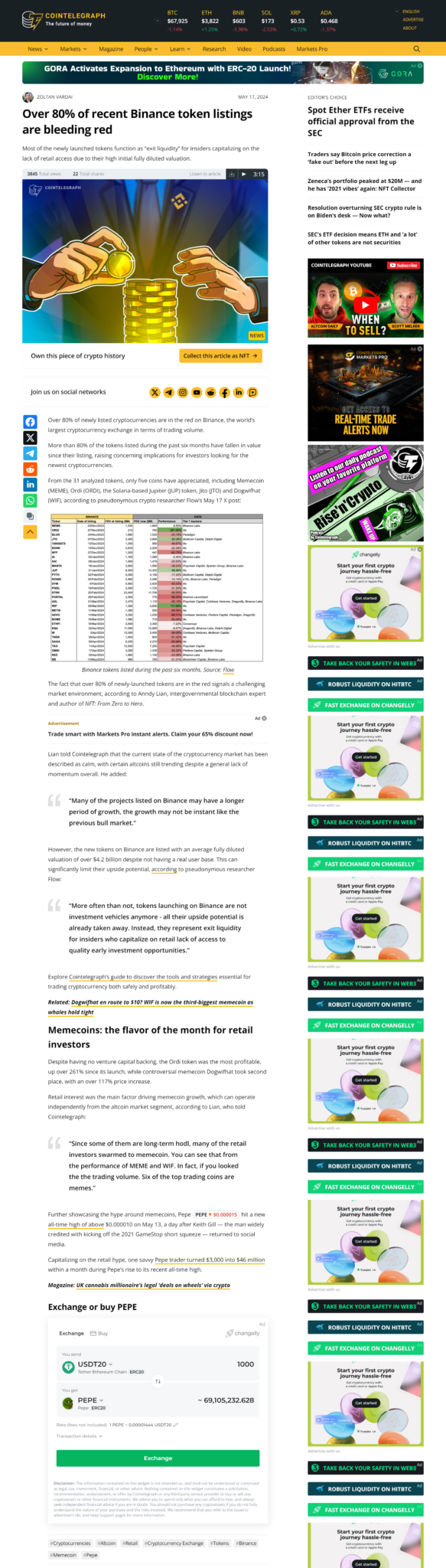
As of March 2023, there have been discussions on the stance of the International Monetary Fund (IMF) towards cryptocurrencies. While some believe that banning cryptocurrencies should be an option, the IMF chief has stated that there are disagreements over restructuring debt for distressed economies. The IMF’s position on cryptocurrencies seems to be geared towards exerting control rather than an outright ban.
One article from Bloomberg suggests that the IMF is committed to presenting a foundation for the regulation of private cryptocurrencies. The report suggests that the Financial Stability Board and the Bank for International Settlements are also involved in this effort. However, it is not clear from this report whether the IMF prefers regulation to an outright ban.
Another report from Yahoo Finance suggests that the IMF is concerned about cryptocurrencies being used to evade capital controls imposed by governments. The report also suggests that the IMF is discouraging countries from making Bitcoin the legal currency of their countries. However, the report does not explicitly state whether the IMF prefers regulation to an outright ban.
Reports from other sources suggest that the IMF is more interested in regulating cryptocurrencies than banning them outright. For example, an article from the South China Morning Post suggests that India has asked the IMF and the Financial Stability Board to prepare a technical paper on crypto assets that could be used to formulate a coordinated and comprehensive policy to regulate cryptocurrencies. The article notes that while some countries may consider banning cryptocurrencies outright, this approach may not be the most effective way to manage the risks associated with these assets.
However, despite these concerns, the IMF’s recent actions and statements suggest that the organization does not necessarily favor an outright ban on cryptocurrencies. Instead, the IMF appears to be focused on developing effective policies and regulations for crypto assets. For example, in February 2023, the IMF’s Executive Board discussed a board paper on “Elements of Effective Policies for Crypto Assets” that provided guidance to IMF member countries on key elements of an appropriate policy response to crypto assets. The paper defined and classified crypto assets based on their underlying features, described their purported benefits and potential risks, and presented a policy framework for crypto assets that aimed to achieve key policy objectives such as consumer and investor protection, financial stability, and anti-money laundering and combating the financing of terrorism (AML/CFT).
In addition, the IMF’s recent actions suggest that the organization is open to working with countries to develop coordinated and comprehensive policies to regulate crypto assets. For example, India, which currently holds the G20 Presidency, has asked the IMF and the Financial Stability Board (FSB) to jointly prepare a technical paper on crypto assets that could be used to formulate such policies.
“Developing effective policies and regulations for crypto assets” seems to be the underlying agenda. There are various reasons for the IMF’s stance on cryptocurrencies. One of the reasons is that the IMF seeks to protect the stability of the global financial system. The use of cryptocurrencies has the potential to disrupt traditional financial systems and destabilize the global economy. By exerting control over cryptocurrencies, the IMF hopes to minimize the risks associated with this disruptive technology.
IMF’s stance on cryptocurrencies is that it believes in the potential benefits of the underlying blockchain technology. Blockchain can potentially increase transparency and accountability in financial transactions, which could help reduce corruption and fraud. By exerting control over cryptocurrencies, the IMF hopes to encourage the development of blockchain technology while minimizing the risks associated with cryptocurrencies.
Some argue that the decentralized nature of cryptocurrencies is one of their greatest strengths and that too much control could undermine this feature. My concern is that the IMF’s desire for control over cryptocurrencies could lead to overly restrictive regulations that restrict innovation and growth in the industry. Apart from losing out on innovation, I would like to point out a few other pointers that I picked up while reading related news articles.
- The use of the term “digital money”. Speaking on the sidelines of the G20 finance ministers meetings in Bengaluru, India, IMF Managing Director Kristalina Georgieva explained, “We are very much in favour of regulating the world of digital money”. In my humble opinion, crypto is not digital money. I would consider crypto as crypto assets, not money. If she considers crypto as digital money, USD is also digital money; it will confuse normal people. It also can be misinterpreted that IMF is considering crypto as a legal tender.
- CBDC is not cryptocurrency. According to an interview with Bloomberg published on February 27, she responded to a question on her recent comments about a potential complete ban on cryptocurrencies. “Our first objective is to differentiate between central bank digital currencies that are backed by the state and publically issued crypto assets and stablecoins.” Again, this statement makes things more confusing. Central bank digital currencies, CBDCs, are a new form of a digital currency issued and regulated by central banks. It has nothing to do with cryptocurrencies.
- Fully backed by? In the same interview, she also said that fully-backed stablecoins create a “reasonably good space for the economy,” but non-backed crypto assets are speculative, high risk, and not money. The term “fully backed” should be appropriately defined, fully backed with high-quality and liquid assets or 1:1 fiat currency or another altcoin. Some stablecoins, such as Tether, are backed by a mixture of cash and other assets but are not transparent about the types of assets doing the backing. In fact, Canadian regulators have classified fiat-backed stablecoins as securities, indicating that stablecoins may be subject to securities legislation. It is important to carefully evaluate the backing of stablecoins before considering them as a stable investment option.
- CBDC is 100% not stablecoin. CBDC refers to a digital form of a country’s currency that is issued and backed by a central bank. On the other hand, stablecoins are cryptocurrencies that are designed to maintain a stable value relative to a certain asset, such as the US dollar or gold. For instance, the UK is exploring the development of a CBDC, known as the Digital Pound, which would take at least five years to develop, according to the deputy governor of the Bank of England. The Bank of England is exploring both wholesale and retail CBDC. Still, they see limitations, and the design and structure of the digital pound could vary greatly depending on its intended use.
IMF may be clear on all these terms, but I would like to highlight that the interchange and usage of words in interviews must be consistent to avoid misunderstanding.
Coming back to the core topic, the IMF’s stance on cryptocurrencies is geared towards exerting control rather than an outright ban. The organization believes that cryptocurrencies have the potential to disrupt traditional financial systems and destabilize the global economy, but it also recognizes the potential benefits of blockchain technology.
Who will have the ultimate control?
The debate over the role of cryptocurrencies in the global financial system is likely to continue for some time to come.
Source: https://www.securities.io/imf-wants-control-over-crypto-than-banning-it-outright/

Anndy Lian is an early blockchain adopter and experienced serial entrepreneur who is known for his work in the government sector. He is a best selling book author- “NFT: From Zero to Hero” and “Blockchain Revolution 2030”.
Currently, he is appointed as the Chief Digital Advisor at Mongolia Productivity Organization, championing national digitization. Prior to his current appointments, he was the Chairman of BigONE Exchange, a global top 30 ranked crypto spot exchange and was also the Advisory Board Member for Hyundai DAC, the blockchain arm of South Korea’s largest car manufacturer Hyundai Motor Group. Lian played a pivotal role as the Blockchain Advisor for Asian Productivity Organisation (APO), an intergovernmental organization committed to improving productivity in the Asia-Pacific region.
An avid supporter of incubating start-ups, Anndy has also been a private investor for the past eight years. With a growth investment mindset, Anndy strategically demonstrates this in the companies he chooses to be involved with. He believes that what he is doing through blockchain technology currently will revolutionise and redefine traditional businesses. He also believes that the blockchain industry has to be “redecentralised”.