
Mid-Day Mumbai News: How reflective tokens and real-world use cases can work together

Mid-Day Mumbai News: How reflective tokens and real-world use cases can work together

Mumbai`s homegrown newspaper – Mid-Day is a 41-year-old brand. Thank you for listening to my inputs.

The media outlet has quoted my points on how reflective tokens and real-world use cases can work together. Taking Dogecola as an example. The Cola sold will be used as a form of funds to support its crypto pricing. The added-on elements such as GameFI and NFT would create a better bond and interaction between the brand and the consumers.

The combination may not be rocket science but they are certainly making traditional companies think about how tokenization would work for their business.

_____________________________________________________________

Why DogeCola Is the Reflective Token To Watch

Following news that the ‘king’ of meme coins Dogecoin has relaunched its foundation with plans to become a serious global cryptocurrency, is DogeCola ‘on trend’ as a  meme coin worth taking seriously? Meme coins are tokens backed by crypto influencers and investors have rapidly increased in popularity. CoinMarketCap estimated there were more than 5,000 meme coins available to investors by late June. Created as a joke meme back in 2013 Dogecoin started the trend, rising to prominence after Tesla CEO Elon Musk tweeted about the novel token in April 2019, replying to a tweet saying “Dogecoin might be my fav cryptocurrency. It’s pretty cool.”

While meme coins are a type of cryptocurrency, a key difference between the likes of Dogecoin and currencies like Bitcoin, comes down to utility. Namely that most meme coins, serve no real-world purpose. Even more reason why DogeCola, which is both a reflective token and a soft drink brand, has such potential to grow the meme coin market more sustainably in the future. In just the past week the cola-branded meme token, has delivered on its promise of distributing 1,000 sample cans of the fizzy drink to its token holders. And as its doubling-down on its listing on BigONE exchange with a staking activity, it’s certainly appears worth a closer look.

In this article we’ll therefore review how the ‘reflective’ token mechanism works to maintain price stability, the role the DogeCola soft drink brand plays in its growth, and what this could mean for the chances of success in such a fast-moving meme-market place.


Taking a look ‘under the hood’ of DogeCola

Auto-boost function: The auto-boost feature helps distinguishes DogeCola from the other standard meme tokens on the market. The DogeCola project’s developers added this feature to prevent the all too common ‘pump and dump’ associated with meme tokens. It was designed to make variable repurchasing and token burns based on the transaction volume every 24 hours. The goal is to keep the price of DogeCola high by burning tokens and reducing supply every time a sale is made with the tokens.

Reflection mechanism: The reflection mechanism means the tokens are self-generating and aim to discourage selling by promoting a ‘hold and earn’ use culture. By implementing a reflective mechanism in the token’s smart contract, all transactions involving tokens are ‘taxed’, and rewards are distributed evenly among holders. The DogeCola team does this to encourage the holding their tokens, and the commission on sales is much higher to prevent whales from dumping and driving the price down

Both the auto-boost and reflection mechanism are underpinned by a buy and sell fee structure: on buying 6% is set aside for the auto-boost function, with 2% going reflection to holders and 4% of marketing. While on sales, 7% is for auto-boost function, 7% for reflection to holders and again, 4% allocated to marketing.

Branded cola drink: The DogeCola team has begun the process of bringing their soft drink brand to the market as soon as possible. In a recent interview the DogeCola project’s lead developer, Chris, confirmed that the primary goal is to have the soft drinks readily available for purchase in stores, within the next three to six months. In the meantime, DogeCola token holders this week snapped up the first 1,000 samples. As Jason McLeod of the community-based #stopelon crypto initiative, commented on Twitter: “I definitely think this is the way crypto will go in the future. For me, it’s all about that link from crypto to ‘everyday’ people in the ‘real’ world.” The DogeCola team also plans to fight plastic pollution caused by corporations like Coca Cola, using a community-led vote to determine which eco-charities to support – enhancing their ‘disruptive’ branding in the process.


What the crypto experts think of DogeCola?

At the launch of DogeCola in July, Chris the lead dev and founder proclaimed: “If you like Coca Cola, if you like Dogecoin, then you will love DogeCola.”  While the meme coin has risen in price by 556.1% from listing on CoinGecko to its all-time high, with the current price 500% from the listing price, its already has some push back from within its 10K strong international Telegram community. “Please know that you are in a project with a team that many times literally does not sleep in 72 hours; please do not look at x minutes candles in DogeCola; try to be patient, intelligent, trust the process and stick to your guts and vision,” said @Freejo1 in response to such jitters.

Jason Suttie, CMO of Bumper, a new protocol designed to protect the value of your crypto says: “What I find most exciting about projects like DogeCola is the visibility it’s bringing to the crypto space from the general public. Everybody knows Cola, many non-crypto people have now heard about Dogecoin. DogeCola creates a connection between a physical and virtual object which starts to make crypto less scary for the uninitiated. It’s through clever projects like this that crypto will make big steps toward mass adoption.”

Chairman of BigONE, Anndy Lian, says he believes that DogeCola being based on a reflective token mechanism and with a real-world use has a clear advantage in the crypto marketplace: “We are excited to list DogeCola on the BigONE exchange because it’s ticked all the boxes – a smart reflective token mechanism, branded cola drink, a great development team with passionate community behind it.” Certainly, this is supported by news that the team has succeeded in reaching 20k token holders just a couple of days after their CoinMarketCap airdrop on August 27th. And with a DogeCola sponsored NSCAR driver due to be announced shortly to further promote growth, this reflective token is surely one to watch out for.
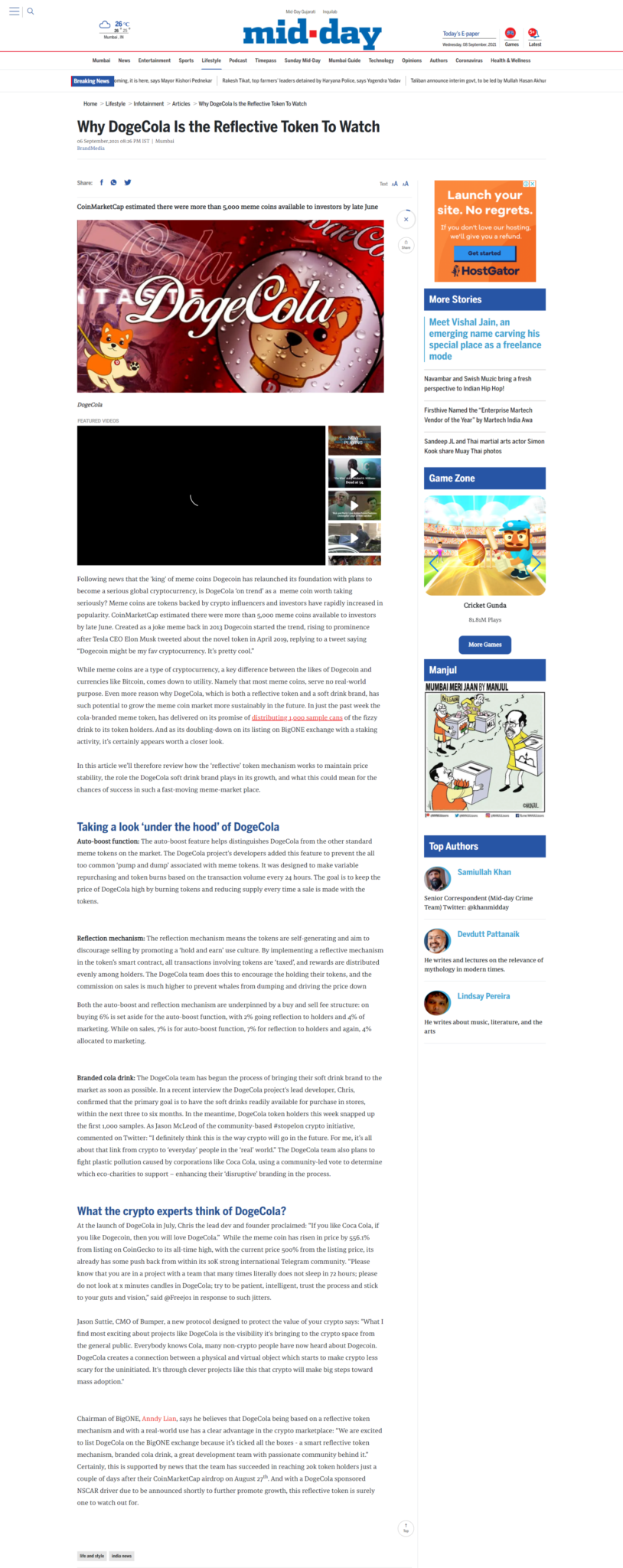

Source: https://www.mid-day.com/lifestyle/infotainment/article/why-dogecola-is-the-reflective-token-to-watch-23191206

Anndy Lian is an early blockchain adopter and experienced serial entrepreneur who is known for his work in the government sector. He is a best selling book author. The latest book is Web4: The Age of Autonomous Intelligence.

j j j

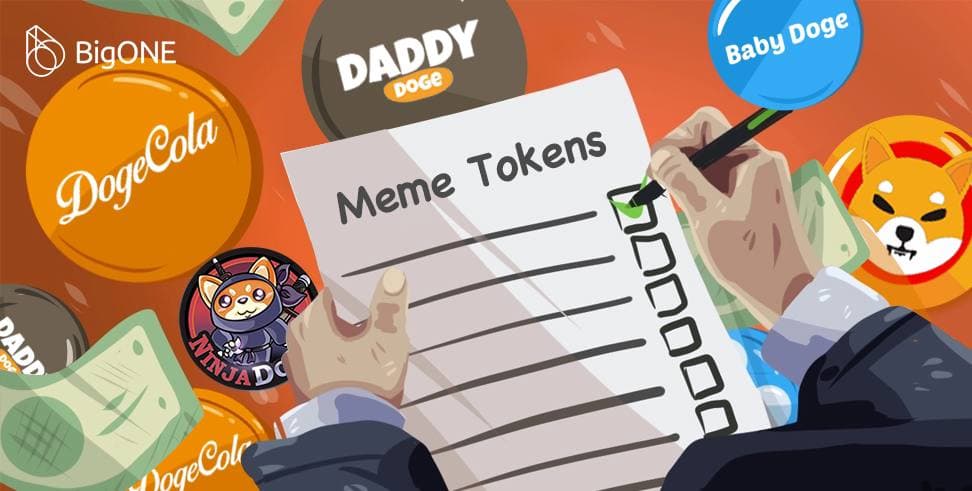
Hackernoon: Meme Tokens With Real Utility

Hackernoon: Meme Tokens With Real Utility

The cryptocurrency market can be extremely unpredictable due to its volatility rate of change, with new products and services arising from DeFi to NFTs to name but two key growth areas.

Even so, there are innovations that would be laughed off as something that could never happen even in the diverse cryptocurrency space. The unprecedented rise and rise of meme tokens in the cryptocurrency space are one such paradigm-shifting phenomenon. Meme tokens, led by DogeCoin created in 2013 as a joke version of Bitcoin, were dismissed in the cryptocurrency space as worthless tokens that were not worth holding, as they had no real utility.

However, fast forward to 2021, and meme tokens have taken over the virtual currencies space, as evidenced by the presence of the first meme token created, DogeCoin, in the top ten list of cryptocurrencies in terms of market capitalization. And when top crypto analysis company Chainalysis announced recently it would now cover Dogecoin, highlighting that on August 9, 2021, Dogecoin had its fourth-largest 30-day trading volume of all cryptocurrencies, with close to $200 billion in transfers. “Our coverage of the asset is good news for the continued global adoption of digital assets,” it concluded.

This newfound popularity of meme tokens has been heavily influenced by respected figures and celebrities such as Elon Musk, popularly referred to on social media platforms as ‘The DogeFather’ due to his constant tweeting and promoting of DogeCoin since 2019.

Another noteworthy aspect is the influencer culture, which has become a mainstay in the cryptocurrency industry. Various cryptocurrencies are being ‘shilled’ by individuals with a large social media following, and meme tokens appear to be benefiting massively from this recent wave on social media platforms.

Skeptics in the industry see meme tokens as a new “get-rich-quick” scheme with no inherent utility and advise people not to trade meme tokens. This is a widespread misconception exacerbated by the ‘rug pulls’ and ‘pump and dump’ mechanisms used by some meme token creators, which has resulted in many people losing a lot of money. This impression was no doubt exacerbated by Elon Musk’s appearance on the US comedy TV show Saturday Night Live in May when asked “what is dogecoin?”,

Musk replied, “It’s the future of currency. It’s an unstoppable financial vehicle that’s going to take over the world.” And when an SNL comic Michael Che asked, “So, it’s a hustle?”, Musk replied, “Yeah, it’s a hustle,” and laughed. Despite this Elon Musk has contacted Doge developers and is now collaborating with them to improve the platform, reduce its carbon footprint, and optimize it as a payment method. To try to correct the misconception about meme tokens, we must therefore first understand the concept of meme tokens, and then look at meme projects that have real utility and solve real problems.


What Exactly Are Meme Tokens?

As the name implies, meme tokens, meme coins, or cryptocurrencies are created around internet memes, an image, video, or text that is usually humorous and quickly shared across social media platforms. Meme coins are frequently regarded as coins with no real utility and are thus considered worthless by many. For example, Dogecoin, the first meme token created, was based on a popular Doge meme viral on social media. Typically, meme tokens have an eye-watering huge circulating supply – often in the quadrillions.

Meme tokens have recently become extremely popular, owing to the ease with which they can be created and the massive influencer culture that surrounds some of these meme projects.

Creators of some meme tokens have capitalized on celebrity social media activities such as tweets and Facebook posts. For example, in May 2021, Facebook CEO Mark Zuckerberg posted a picture of his pet goats on social media. As a result, a meme token called ‘Aqua Goat’ increased in value by 300% in less than a day based on Zuckerberg’s social media post.


Are There Meme Tokens With Real Utility?

A few days ago, I sent out a tweet asking crypto enthusiasts who follow me to tell me about meme coins that they believe have real utility. I received some very interesting feedback and took the time to investigate some of the coins mentioned to see if they truly had the utility claimed. I made some very interesting discoveries and found that contrary to popular belief there are meme coins with real utility. I’ve highlighted a few of these tokens below to emphasize the point:


Ninja Doge is a charity utility token on the Binance Smart Chain Network, with plans for a mobile game and NFT, all in one nifty ninja package! Like other Doge tokens its designed with a 5% reward to encourage ‘hodling’, and a 5% set aside for liquidity to ensure price stability, as well as a 2% burn to maintain its value. But what’s also built into the token mechanism is 1% for charity for local animal charities. As the team explained in its whitepaper, one of the key reasons for creating this token is the desire to raise funds for local animal charities: “We believe the funds donated to smaller organizations will have a bigger impact on the surrounding communities. $5000 or even $10,000 for a conglomerate animal charity may not do much, however donating to that ‘mom & pop’ local animal charity across your street will make a difference.”

What’s nice about the charity donation mechanism, as well as it is targeted specifically at local animal charities, is that the Ninja Doge community gets to vote on which charity to select at every 3,000 holders’ increment. With the winner being randomly drawn after all entries all received, and confirmation of the donation is shared to their community and social channels. Also, part of the Ninja Doge’s exciting plans for the is a mobile game, created by the same people that designed Fortnite. A portion of the revenue from the game will be used to benefit Ninja Doge holders, the team confirmed. The aim is to have the game ready for distribution to users by the end of August. Finally, there are plans for limited edition NFT’s that will have attributes that benefit the token holders, though no date has been set for their release yet.


DogeCola: Dogecola, a meme token that debuted in late July, has as the name suggests its own soft drinks brand, as well as an essential feature known as auto-boost. The DogeCola team’s plan is to have the ‘MoonTaste’ soft drink in the hands of consumers by the festive season in December. It would also be the first cryptocurrency to enter the food sector, expanding the reach of the cryptocurrency market. To help reduce plastic pollution caused by corporations like Coca-Cola, DogeCola will be launching a community-led vote, to decide which eco-charities to donate to, along with partnerships with charities worldwide.

The auto-boost function is another distinguishing feature of DogeCola. This is done to avoid the ‘pump and dump’ type mechanisms common with some meme tokens on the market. To maintain stability, DogeCola uses auto boost to repurchase and burn tokens based on transaction volume. Another noteworthy feature is the high commission on selling DogeCola tokens, which was implemented to discourage selling and encourage holders by utilizing the ‘reflection mechanism’. DogeCola is currently available on the BigONE exchange.

“It’s really exciting to be listing such a creative meme coin, and not just simply as it has real utility as a soft drink beverage, but due to its ‘reflective’ token functionality,” said BigONE Chairman Anndy Lian. “We kicked off with an outreach program to bring in more users, as we want as many people as possible in our global community to enjoy becoming a token buyer with DogeCola!” he added.


BabyCake: BabyCake is the first CAKE reflection token launched about 3 weeks ago. The concept is simple, hold their native token and get a reward in CAKE on every transaction. Their auto claiming feature gets you CAKE automatically in your wallet every 60 minutes too. Tokenomics are clear: 7% of every buy/sell is taken and redistributed to all holders in Cake. 3% of every transaction is added to their liquidity pool. An extra 1% fee is applied to all sales and the game-changing function. 5% of every transaction is allocated to marketing.

Their ambition to become mainstream can be seen in some of the recent plans that they have rolled out. In their roadmap, it is also clearly stated that they will be launching their very own BabyCake AR gaming app too. Monk, CEO of BabyCake also told his community that they should be expecting animations, toys, and their own merchandise as well.


Closing Thoughts The meme tokens industry is currently worth $38 billion and comprises just under 3% of the total crypto market cap. With the latest crop of meme tokens providing real utility and with the support of social media influencers and their engaged communities, it is not far-fetched to predict that meme tokens will be widely adopted shortly. Meme.com, for example, is a new marketplace where people can compare meme tokens and mint their own “memetic tokens”, whose worth is based on the trends or memes they represent.

Clearly, there is still a lot of work to address the remaining issues in the meme tokens industry, but I believe that as more meme tokens with real utility are created, it will only be a matter of time before these issues are resolved and the meme sector within the crypto industry grows further.


Author: Anndy Lian

Anndy Lian is a business strategist with over 15 years of experience in Asia. Anndy has worked in various industries for local, international, and publicly traded companies. His recent foray into the blockchain scene has seen him manage some of Asia’s most prominent blockchain firms. He believes that blockchain will transform traditional finance. He is currently Chairman of BigOne Exchange and Chief Digital Advisor at the Mongolian Productivity Organisation.


Source: https://hackernoon.com/anndys-opinion-meme-tokens-with-real-utility

Anndy Lian is an early blockchain adopter and experienced serial entrepreneur who is known for his work in the government sector. He is a best selling book author. The latest book is Web4: The Age of Autonomous Intelligence.

j j j

Blockchain Cannot be Developed behind Closed Doors “To change the real world, blockchain companies need to step out of blockchain world.”

Blockchain Cannot be Developed behind Closed Doors “To change the real world, blockchain companies need to step out of blockchain world.”

The blockchain industry does not lack hype, for sure. New blockchain companies seem to spruce up every single day. Initial Coin Offerings (ICOs) raised more money in the first three months of 2018 than the whole of 2017, according to data collected by CoinDesk.

Source from: https://www.coindesk.com/6-3-billion-2018-ico-funding-already-outpaced-2017/

However, blockchain is still a distance away from mass adoption. The technology remains in a nascent stageand has not impacted people around the world yet, which has led many to question whether the world can really be transformed by blockchain.

Linfinity CEO Anndy Lian believes that in order to speed up the tapping of blockchain’s potential, blockchain companies need to proactively try to merge their technologies with traditional businesses and industries, especially those that are less digitalised at the moment.

He said, “The appearance of blockchain provided traditional industries with unlimited heights of imagination. However, there are many problems that blockchain needs to overcome first.

“It cannot work behind closed doors, as its first-priority role should be a technological service that is integrated with traditional industries. In this process, blockchain technology can continually be upgraded.”

A wider audience Integrating blockchain with traditional businesses and industries will, most importantly, let it reach a wider audience.

The value of the blockchain market is estimated to be USD 550 million this year. While the size of the industry is rapidly increasing, it is hardly comparable to already established industries.

For example, Linfinity aims to provide blockchain-based solutions for the supply chain to make the supply chain industry more transparent and secure. The global supply chain management market size is worth around USD 14 billion now, making it 25 times as large as the entire blockchain market.

Hence, when Linfinity integrates blockchain into supply chain management, it opens up blockchain to a whole new paradigm of possibilities and business use-cases. By combining blockchain effectively with pre-existing technologies to help traditional businesses, it brings blockchain directly to the masses, rather than having blockchain stay within specific circles.

The blockchain process of transacting and storing information on a decentralised, distributed ledger yields many benefits for enterprise application data. That makes supply chain management a good use case — a consortium of stakeholders in a supply chain can own, operate and enforce rules for their own shared blockchain.

Combine with other technologies

Blockchain itself should be used sparingly, where it is needed. The ample cryptography which blockchains employ also make them slow. That provides another reason to reconsider off-chain processing and storage alternatives.

In order to maximise its effectiveness and applicability to enterprise scenarios, it needs to be used together with other pre-existing great technologies.

Lian said, “Making blockchain more widespread requires a process. Simply relying on the technology itself is unproductive.”

“Linfinity combines blockchain with Artificial Intelligence and the Internet of Things (IoT). We also focus on the demands of businesses and consumers, so we can speed up the commercialisation of blockchain.”

Besides, having data from the supply chain recorded onto blockchain, Linfinity plans to use other technologies, such as Artificial Intelligence, to conduct real time analysis and to magnify the value of supply chain data.

It will then be able to provide innovative value-add services such as smart energy monitoring, smart sales monitoring, and predictive maintenance.

For blockchain world to expand its reach to the wider world, blockchain companies need to proactively step out. Having access to wider markets and amplifying blockchain’s effectiveness aside, that is the only way blockchain can truly enhance the world.

Anndy Lian is an early blockchain adopter and experienced serial entrepreneur who is known for his work in the government sector. He is a best selling book author. The latest book is Web4: The Age of Autonomous Intelligence.

j j j