Anndy Lian advocates using BNB for animal shelter support

Anndy Lian advocates using BNB for animal shelter support

Anndy Lian has announced a donation to a private animal shelter in Xian, China. This contribution is facilitated using BNB, underscoring his support for the cryptocurrency.

Lian expressed gratitude towards the team at Blockcastcc, Redecentralise, Jenny Zheng, AnndyFund, and a collaborator, Noel, for their efforts. Additionally, he acknowledged a typographical error in a prior post, encouraging others to join in using BNB.


Lian’s recent philanthropic gesture highlights not only the growing influence of cryptocurrency in charitable giving but also mirrors trends seen during periods of heightened market uncertainty. Earlier, similar shifts in crypto user behavior were evident when MEXC faced frozen withdrawals and declining trading volumes, prompting a reevaluation of digital asset reliability. Additionally, as underlying market liquidity remains a decisive factor for both trading and philanthropy, Lian’s perspective on the approaching liquidity crisis offers further context to this latest donation, underscoring the interconnected nature of crypto markets and broader economic developments.


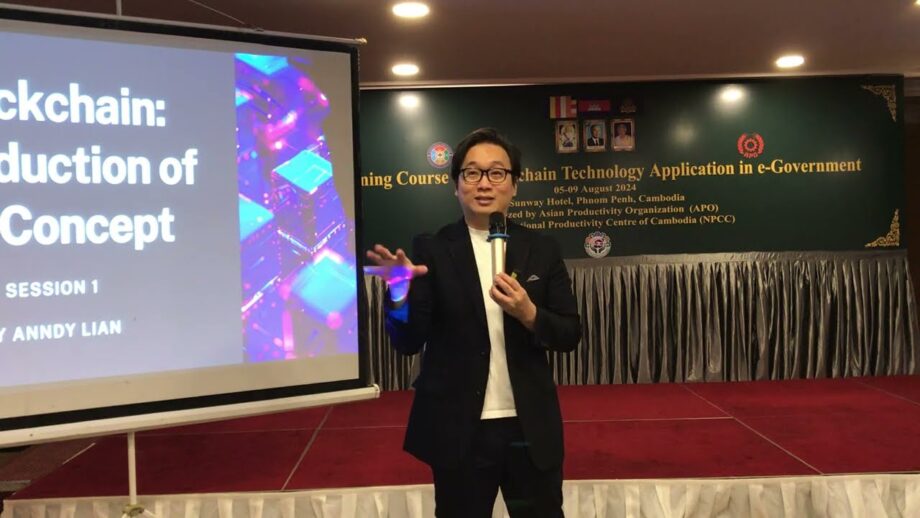
Anndy Lian is an early blockchain adopter and experienced serial entrepreneur who is known for his work in the government sector. He is a best selling book author- “NFT: From Zero to Hero” and “Blockchain Revolution 2030”.

Currently, he is appointed as the Chief Digital Advisor at Mongolia Productivity Organization, championing national digitization. Prior to his current appointments, he was the Chairman of BigONE Exchange, a global top 30 ranked crypto spot exchange and was also the Advisory Board Member for Hyundai DAC, the blockchain arm of South Korea’s largest car manufacturer Hyundai Motor Group. Lian played a pivotal role as the Blockchain Advisor for Asian Productivity Organisation (APO), an intergovernmental organization committed to improving productivity in the Asia-Pacific region.

An avid supporter of incubating start-ups, Anndy has also been a private investor for the past eight years. With a growth investment mindset, Anndy strategically demonstrates this in the companies he chooses to be involved with. He believes that what he is doing through blockchain technology currently will revolutionise and redefine traditional businesses. He also believes that the blockchain industry has to be “redecentralised”.
j j j

Crypto’s perfect storm: Broken support, hawkish Fed, and Nasdaq lockstep

Crypto’s perfect storm: Broken support, hawkish Fed, and Nasdaq lockstep

The confluence of macro uncertainty, technical breakdowns, and sector-specific stressors has created a volatile environment that tests the resilience of risk assets across the board. This turbulence lies behind Bitcoin’s breach of the US$100,000 level, a psychological and structural support that, once broken, triggered a cascade of leveraged liquidations totaling US$1.3 billion.

This event did not occur in isolation. Instead, it amplified and was amplified by broader financial dynamics, especially the tightening correlation between crypto and equities, particularly the Nasdaq-100, which reached an unusually high 0.95 over the past 24 hours. These developments, layered atop structural pressures in Bitcoin mining and shifting monetary policy expectations, signal more than just a routine correction. They reflect deeper questions about crypto’s role in a risk-on/risk-off world and the sustainability of its recent rally.

The breakdown below US$100,000 marks a pivotal moment for Bitcoin’s price trajectory. This level had served not only as a price anchor but also as a signal of institutional confidence and market maturity. Its breach suggests that sentiment has soured rapidly, possibly due to a combination of overextended positioning and macro headwinds.

The data underscores this fragility. Open interest in Bitcoin derivatives rose 4.21 per cent immediately before the drop, indicating a dense concentration of long positions that were suddenly exposed when the market turned. In leveraged markets, such crowded trades can magnify price moves exponentially, as margin calls force further selling into a thin market. The resulting feedback loop accelerated the decline and pushed many positions underwater. Now, all eyes are on the 200-day exponential moving average around US$95,000. Should Bitcoin stabilise above this level, it could signal that the worst of the liquidation cascade has passed. But a failure to hold would likely invite another wave of forced deleveraging, especially if broader risk sentiment continues to deteriorate.

Compounding this technical vulnerability is the reassertion of crypto’s tie to equity markets, particularly to the Nasdaq. The 0.95 correlation with the Nasdaq-100 over 24 hours, its highest since June 2025, confirms that institutional participants continue to treat crypto as a risk-on proxy rather than a distinct asset class. This linkage became especially pronounced as technology shares sold off sharply, with the Nasdaq dropping 2.29 per cent amid concerns over AI-related earnings and the fading likelihood of near-term Federal Reserve rate cuts.

According to the CME FedWatch Tool, the probability of a rate cut by January 2026 has collapsed to just 20 per cent, down from 49 per cent a week earlier. This shift reflects increasingly hawkish commentary from Fed officials, who appear reluctant to ease policy despite the recent government shutdown and market volatility. For crypto markets, this means less near-term tailwind from monetary policy and more sensitivity to equity market swings. As long as institutional capital flows remain dictated by macro liquidity expectations, crypto will struggle to decouple from the broader risk narrative.

Adding another layer of pressure is the growing distress in the Bitcoin mining sector. Bitfarms’ announcement that it plans to exit mining by 2027 after reporting a US$46 million quarterly loss highlights the mounting economic challenges facing miners. The company cited unsustainable energy costs and declining profitability, conditions exacerbated by a 41 per cent drop in industry-wide mining revenue since October. Historically, miners have been consistent sellers of Bitcoin, liquidating approximately 1,000 BTC per day to cover operational expenses. As margins compress, this selling pressure could intensify, especially if more miners follow Bitfarms’ strategic pivot toward AI infrastructure. While such transitions may make business sense in the long run, they erode near-term confidence in Bitcoin’s network fundamentals. A sustained decline in network hashrate would be a red flag, signaling that more miners are capitulating under financial stress. This dynamic not only increases selling pressure but also raises concerns about network security and decentralization if smaller operators are forced offline.

The macro backdrop adds further complexity. Although the US government has resumed operations after a 43-day shutdown, the resolution offers little clarity on fiscal sustainability or the path of monetary policy. Markets initially welcomed the end of the impasse, but this relief was short-lived as investors refocused on the Fed’s tightening stance. The modest rise in Treasury yields, 10-year yields climbing to 4.11 per cent and two-year yields to 3.59 per cent, reflects both the removal of shutdown-related uncertainty and a reassessment of rate cut probabilities. Meanwhile, gold declined 1.1 per cent to US$4,151.86 per ounce, suggesting that safe-haven demand weakened as the immediate fiscal crisis abated. The dollar also dipped slightly, closing at 99.16, but this move appears more technical than fundamental. Crucially, Friday’s upcoming US Producer Price Index (PPI) data will serve as a litmus test for inflation expectations. Should the data come in hotter than anticipated, it could further delay rate cut hopes and extend the selloff across risk assets, including crypto.

Within this environment, sentiment has plunged into Extreme Fear, as reflected by a Fear & Greed Index reading of 22. Historically, such extremes have often marked contrarian buying opportunities, especially in crypto markets where panic selling tends to overshoot fundamentals. However, the current context may be different. Unlike previous fear-driven corrections, today’s selloff emerges against a backdrop of structural shifts, a re-tethering to equity markets, miner distress, and a less accommodative macro regime. These factors suggest that the usual buy the dip narrative may not apply, at least not immediately. For long-term believers in Bitcoin’s value proposition, the current pullback could represent a strategic entry point, but only if one assumes that the macro environment will eventually ease and that mining sector stress is transitory. Short-term traders, on the other hand, must contend with the very real possibility of further downside if equities continue to lead the move or if miner selling accelerates.

In conclusion, this market wrap captures more than a routine correction. It reflects a convergence of technical, macro, and sector-specific pressures that challenge crypto’s independence as an asset class. Bitcoin’s fall below US$100,000, its tight correlation with the Nasdaq, and the exodus from mining all point to a moment of reckoning. The path forward hinges on whether crypto can reassert its unique narrative, decouple from equities, absorb miner sell pressure, and regain institutional confidence in a higher-for-longer rate environment.

Until then, volatility will remain elevated, and the market will stay at the mercy of macro crosscurrents and technical thresholds. Traders and investors alike must navigate this terrain with caution, recognising that the current fear may be justified, but also that in crypto, fear often plants the seeds of the next bull run.


Source: https://e27.co/cryptos-perfect-storm-broken-support-hawkish-fed-and-nasdaq-lockstep-20251114/


Anndy Lian is an early blockchain adopter and experienced serial entrepreneur who is known for his work in the government sector. He is a best selling book author- “NFT: From Zero to Hero” and “Blockchain Revolution 2030”.

Currently, he is appointed as the Chief Digital Advisor at Mongolia Productivity Organization, championing national digitization. Prior to his current appointments, he was the Chairman of BigONE Exchange, a global top 30 ranked crypto spot exchange and was also the Advisory Board Member for Hyundai DAC, the blockchain arm of South Korea’s largest car manufacturer Hyundai Motor Group. Lian played a pivotal role as the Blockchain Advisor for Asian Productivity Organisation (APO), an intergovernmental organization committed to improving productivity in the Asia-Pacific region.

An avid supporter of incubating start-ups, Anndy has also been a private investor for the past eight years. With a growth investment mindset, Anndy strategically demonstrates this in the companies he chooses to be involved with. He believes that what he is doing through blockchain technology currently will revolutionise and redefine traditional businesses. He also believes that the blockchain industry has to be “redecentralised”.

j j j

South Korean presidential candidates support legalization of Bitcoin ETFs

South Korean presidential candidates support legalization of Bitcoin ETFs

South Korea may be poised to follow Hong Kong’s lead in legalizing spot Bitcoin exchange-traded funds (ETFs), as top presidential candidates signal support for institutional crypto adoption.

However, analysts remain cautious about the timeline for actual policy implementation, reports Cointelegraph.

On May 14, CryptoQuant CEO Ki Young Ju wrote that “all three major South Korean presidential candidates support Bitcoin ETFs and institutional investment,” underscoring a rare consensus on crypto reform. At present, South Korea bans institutional access to crypto ETFs, meaning retail investors account for 100% of local market volume.

Democratic Party renews crypto-friendly platform

Democratic Party leader Lee Jae-myung recently pledged to legalize spot crypto ETFs, reduce transaction fees, and foster a safer investment environment — particularly for younger generations. The promises echo similar initiatives from the party’s 2024 campaign, which stalled amid legislative gridlock.

Lee’s comments reflect growing interest in aligning South Korea with global crypto finance trends, including developments in the U.S., where spot Bitcoin ETFs have drawn tens of billions in institutional inflows since their approval earlier this year.

Experts warn of political inertia and structural hurdles

Despite political momentum, blockchain adviser Anndy Lian warned against assuming quick progress. “The pledges are promising, but history tempers optimism,” Lian told Cointelegraph, referencing past failures by the ruling People Power Party to follow through on ETF reform prior to President Yoon’s impeachment.

He noted that South Korea’s Financial Services Commission has shown signs of “regulatory openness,” but cautioned that structural factors — including lingering concerns about volatility, oversight, and international compliance — could delay execution.

Hong Kong’s own spot Bitcoin and Ether ETF launches on April 30, while symbolically important, saw lackluster trading volume relative to their U.S. counterparts — a reminder that legal approval doesn’t always translate to immediate market traction.

Whether South Korea will break the cycle of political promises without follow-through remains to be seen, but the growing chorus of support suggests the next administration may finally act on long-delayed crypto legislation.

Recently we wrote that ​the U.S. Securities and Exchange Commission (SEC) has postponed its decision on Grayscale’s proposed spot Solana (SOL) ETF, pushing the review deadline to October 2025.


Source: https://tradersunion.com/news/cryptocurrency-news/show/262159-south-korean-presidential-candidates/

Anndy Lian is an early blockchain adopter and experienced serial entrepreneur who is known for his work in the government sector. He is a best selling book author- “NFT: From Zero to Hero” and “Blockchain Revolution 2030”.

Currently, he is appointed as the Chief Digital Advisor at Mongolia Productivity Organization, championing national digitization. Prior to his current appointments, he was the Chairman of BigONE Exchange, a global top 30 ranked crypto spot exchange and was also the Advisory Board Member for Hyundai DAC, the blockchain arm of South Korea’s largest car manufacturer Hyundai Motor Group. Lian played a pivotal role as the Blockchain Advisor for Asian Productivity Organisation (APO), an intergovernmental organization committed to improving productivity in the Asia-Pacific region.

An avid supporter of incubating start-ups, Anndy has also been a private investor for the past eight years. With a growth investment mindset, Anndy strategically demonstrates this in the companies he chooses to be involved with. He believes that what he is doing through blockchain technology currently will revolutionise and redefine traditional businesses. He also believes that the blockchain industry has to be “redecentralised”.

j j j