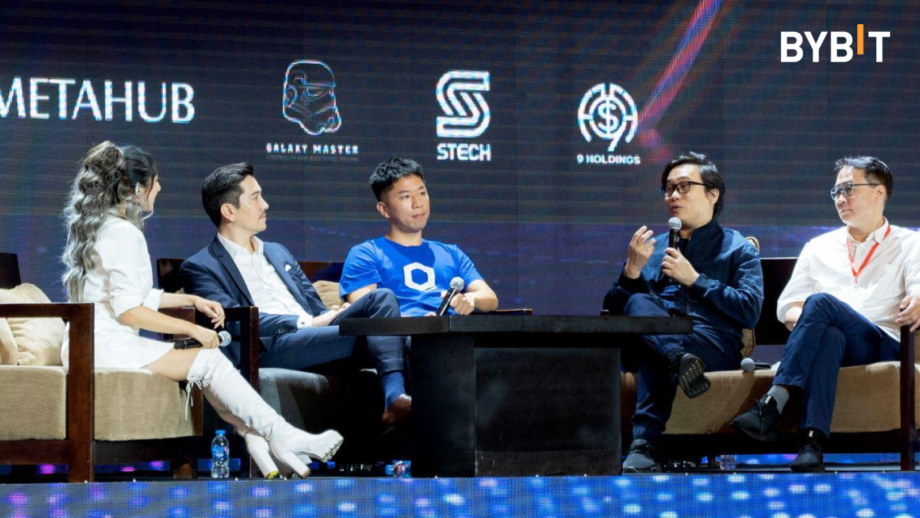
Bybit Talks — The Convergence of Web3, Blockchain, and AI

Bybit Talks — The Convergence of Web3, Blockchain, and AI

Introduction


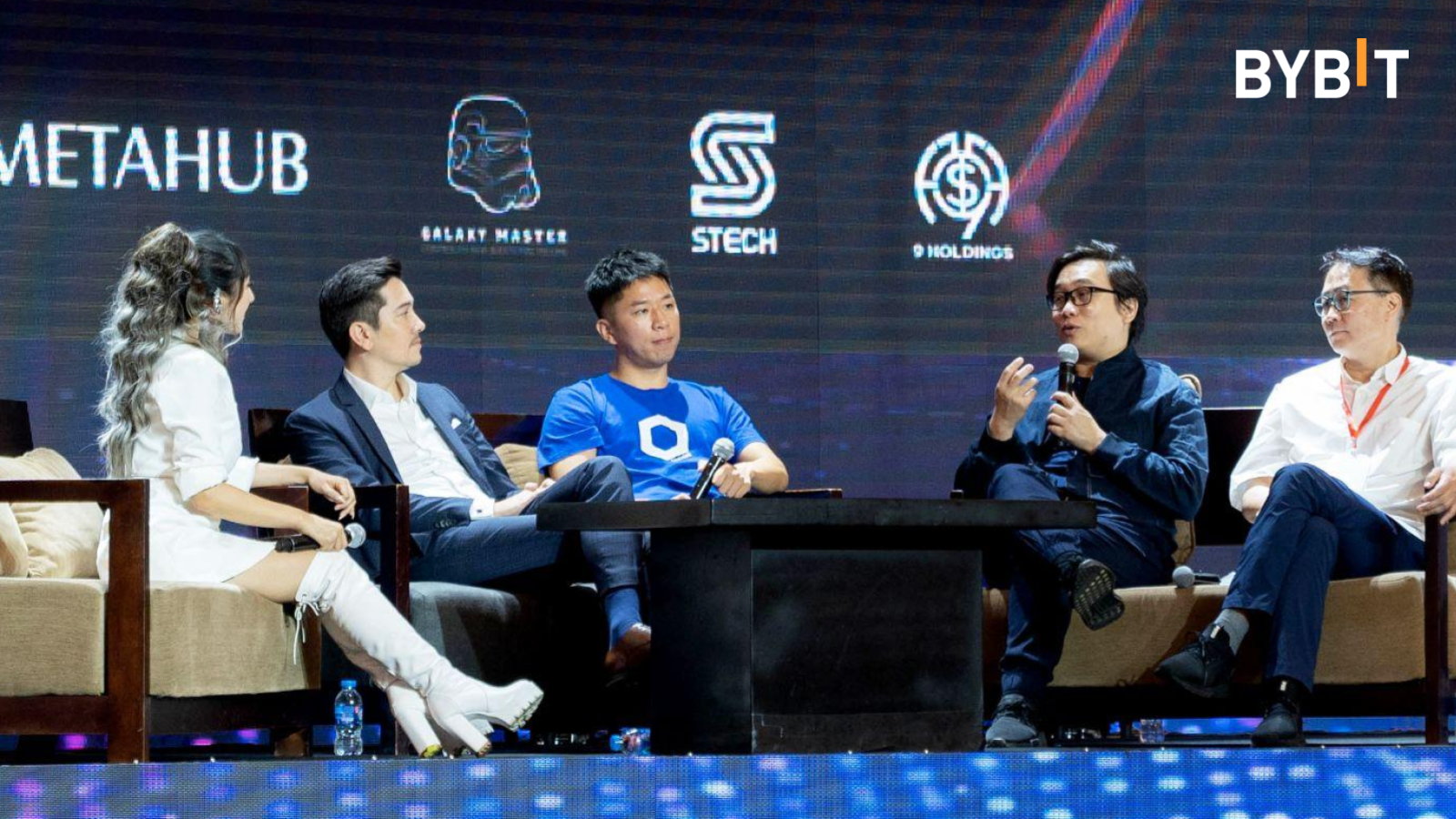
At the Brand Launchpad Event held on 29th May 2023 at Ho Chi Minh, Vietnam, Anndy Lian, advisor of Bybit, discussed the growth of the Web3 industry and its relationship with AI. Lian highlighted how Web3 empowers creators and communities in making informed business choices. He emphasized the convergence of Web3, blockchain, and AI, addressing concerns and emphasizing the benefits of understanding and leveraging AI’s capabilities. Lian also mentioned the advantages of using AI in crypto trading practices.


The Empowering Potential of Web3


Lian emphasized that what we should all focus on is that ” Web3 is for the creators.”. He explains how Web3 “ushers in a fresh type of economy that empowers users and communities to make more informed and advantageous business choices.”


The convergence of Web3, blockchain, and AI, according to Lian, is transforming multiple industries and driving innovation across the board. He further discussed the relationship between these technologies, highlighting their potential to collaborate and create innovative solutions. Blockchain, as Lian explained, plays a crucial role as the verification and security layer. By establishing a decentralized and tamper-proof system, blockchain ensures data integrity and transparency, instilling trust among participants and the AI layer.

AI’s Impact and Potential


Addressing concerns about AI’s impact, Lian reassured the audience that there’s no need for undue worry. Instead, he encouraged understanding and taking control of AI’s capabilities. Lian emphasized that AI can yield positive outcomes if properly harnessed and leveraged. Understanding AI and its potential empowers individuals to make the most of this transformative technology.


By harnessing data analysis and pattern recognition, AI-powered crypto trading systems can generate improved results. These systems process vast amounts of historical and real-time data from diverse sources, including price charts, market indicators, news articles, and social media sentiment. Through this analysis, AI algorithms can identify patterns and trends that may elude human traders, facilitating more informed decision-making. Anndy concluded his take on the advantages of utilizing AI in trading practices by linking it all back to how AI can ultimately aid crypto exchanges.


In conclusion, the panel discussion at the 29th 2023 Brand Launchpad Event brought attention to the immense potential of Web3, blockchain, and AI. These technologies hold the promise of unlocking unprecedented opportunities for creators, businesses, and individuals in a decentralized and data-driven world. As they continue to advance and intersect, understanding and embracing these transformative technologies will be crucial in navigating the ever-evolving landscape of the digital economy. By staying informed and proactive, we can fully harness their power and pave the way for a prosperous future.


Anndy Lian is an early blockchain adopter and experienced serial entrepreneur who is known for his work in the government sector. He is a best selling book author- “NFT: From Zero to Hero” and “Blockchain Revolution 2030”.

Currently, he is appointed as the Chief Digital Advisor at Mongolia Productivity Organization, championing national digitization. Prior to his current appointments, he was the Chairman of BigONE Exchange, a global top 30 ranked crypto spot exchange and was also the Advisory Board Member for Hyundai DAC, the blockchain arm of South Korea’s largest car manufacturer Hyundai Motor Group. Lian played a pivotal role as the Blockchain Advisor for Asian Productivity Organisation (APO), an intergovernmental organization committed to improving productivity in the Asia-Pacific region.

An avid supporter of incubating start-ups, Anndy has also been a private investor for the past eight years. With a growth investment mindset, Anndy strategically demonstrates this in the companies he chooses to be involved with. He believes that what he is doing through blockchain technology currently will revolutionise and redefine traditional businesses. He also believes that the blockchain industry has to be “redecentralised”.

j j j

India Leads G20 Talks On Crypto Regulation & SOP

India Leads G20 Talks On Crypto Regulation & SOP

India’s Finance Minister, Nirmala Sitharaman, has stated that the Indian government is engaging in “detailed discussions” with other G20 members regarding the development of a standard operating procedure (SOP) for regulating cryptocurrencies. The current unregulated environment for cryptocurrencies in the country and across the globe, has prompted India to seek a collaborative effort, on the sideline of the G20 Summit, to develop a comprehensive framework. Sitharaman stressed the need for a globally coordinated approach to regulating cryptocurrencies during a recent meeting with the International Monetary Fund Managing Director Kristalina Georgieva.

The Group of Twenty (G20) comprises 19 countries and the European Union, representing around 85% of the global GDP, over 75% of the global trade, and about two-thirds of the world population. Sitharaman has affirmed that the government is working together with other G20 members to develop a “coherent, comprehensive approach” that will regulate cryptocurrency mining and transactions.

In India, the cryptocurrency trade currently attracts a 30% tax and a 1% tax deducted at source (TDS). While the country has still not prepared a regulatory framework for cryptocurrencies, the government introduced new crypto tax penalties, including jail time for nonpayment of crypto TDS. Meanwhile, India’s central bank, the Reserve Bank of India (RBI), has continued to recommend a complete ban on crypto assets, including bitcoin and ether. RBI Governor Shaktikanta Das has warned that cryptocurrencies pose a risk to the country’s financial system and will cause the next financial crisis if they are not banned. The government’s stance on cryptocurrencies has been challenged by the Indian crypto industry, which has been advocating for regulatory clarity and a favorable operating environment.

Sitharaman’s call for a coordinated approach to regulating cryptocurrencies is a significant development that highlights the need for international collaboration to develop comprehensive regulatory frameworks for digital assets. The outcome of the discussions within the G20 will be closely watched by industry stakeholders and governments around the world as they could provide a model for regulating cryptocurrencies in other countries.

Uniform Regulations For Cryptocurrencies May not Work

In my humble opinion, I do not have any objections in forming regulatory frameworks to protect users. The idea of having uniform regulations throughout G20 countries is the issue I have. There are several reasons why uniform regulations for cryptocurrencies may not work.

Firstly, the global cryptocurrency market is highly fragmented, with different countries and regions having different regulatory frameworks and approaches to cryptocurrencies. Therefore, imposing a uniform set of regulations across all these jurisdictions may not be practical or feasible.

Secondly, cryptocurrencies themselves are highly diverse and complex, with different types of cryptocurrencies serving different purposes and having different features. For example, some cryptocurrencies are designed to be used as a medium of exchange, while others are intended to be used as a store of value. Furthermore, cryptocurrencies can be structured in different ways, such as security tokens or utility tokens, and can be traded on different types of platforms. Therefore, any attempt to impose uniform regulations may not take into account the nuances and specificities of different types of cryptocurrencies.

Thirdly, there may be differences in the priorities and interests of different countries and regions when it comes to regulating cryptocurrencies. For example, some countries may prioritize consumer protection, while others may prioritize financial stability. Therefore, it may be difficult to reach a consensus on uniform regulations that satisfy the interests and concerns of all countries and regions.

Finally, even if uniform regulations are agreed upon, enforcing them may be a challenge. Cryptocurrencies are highly decentralized, and transactions can be carried out anonymously and without the involvement of traditional financial institutions. Therefore, enforcing regulations may require sophisticated technology and a high degree of international cooperation and coordination.

Regulated By A Patchwork of Different Regulations Across Different Countries

It’s true that traditional finance, or “tradfi,” has not achieved uniform regulation globally, and this may be an indication that achieving uniform regulations for the cryptocurrency industry may also be difficult.

“Traditional finance is regulated by a patchwork of different rules and regulations across different countries and regions, and achieving global harmonization has been a long-standing goal of regulators and industry participants. However, despite years of effort, there are still significant differences in the regulatory frameworks across jurisdictions, and achieving uniformity is a complex and ongoing process.

Given the challenges of achieving uniform regulation in traditional finance, it’s possible that the cryptocurrency industry may also face similar difficulties in achieving global harmonization. However, it’s important to note that the cryptocurrency industry is still in its early stages, and there is still a significant amount of uncertainty and ambiguity around the regulatory frameworks that will ultimately be put in place.

Ultimately, the goal of achieving uniform regulations in any industry is to promote transparency, consistency, and stability. While it may be difficult to achieve this goal, it is an important one to strive for, as it can help build trust and confidence in the industry, promote innovation, and protect consumers.”


Source: https://www.3-verse.io/3versetv/blog/india-leads-g20-talks-on-crypto-regulation-sop/BA-20230218141140026-226059

Anndy Lian is an early blockchain adopter and experienced serial entrepreneur who is known for his work in the government sector. He is a best selling book author- “NFT: From Zero to Hero” and “Blockchain Revolution 2030”.

Currently, he is appointed as the Chief Digital Advisor at Mongolia Productivity Organization, championing national digitization. Prior to his current appointments, he was the Chairman of BigONE Exchange, a global top 30 ranked crypto spot exchange and was also the Advisory Board Member for Hyundai DAC, the blockchain arm of South Korea’s largest car manufacturer Hyundai Motor Group. Lian played a pivotal role as the Blockchain Advisor for Asian Productivity Organisation (APO), an intergovernmental organization committed to improving productivity in the Asia-Pacific region.

An avid supporter of incubating start-ups, Anndy has also been a private investor for the past eight years. With a growth investment mindset, Anndy strategically demonstrates this in the companies he chooses to be involved with. He believes that what he is doing through blockchain technology currently will revolutionise and redefine traditional businesses. He also believes that the blockchain industry has to be “redecentralised”.

j j j

Anndy Lian, Book Author NFT: From Zero to Hero Spoke at ApeX Dex Talks Episode 9

Anndy Lian, Book Author NFT: From Zero to Hero Spoke at ApeX Dex Talks Episode 9

Anndy Lian spoke at ApeX Dex Talks Episode 9 on 9 November 2022. ApeX DeX Talks is a weekly fireside chat happening every Wednesday on ApeX Protocol’s official Twitter. The host used this segment to have real conversations on real decentralization with leading voices in the web3 space.

Anndy Lian is a Thought Leader, Investor & Best-Selling Author. His latest book titled NFT: From Zero to Hero is also well-accepted by the NFT community.

At the talk, the host and Anndy touched on the following:

– Let’s begin with an Introduction of yourself, and tell us more about your background in the crypto space. How long have you been active in crypto and what have your experiences been like so far?

– Sounds like you have been through a lot in this space. So Anndy, can you dive into the basics of NFTs and what is it usually used for in web3 at the moment?

– What other kinds of use cases do you think the technology of NFTs would be able to help with the real world? Do you think NFTs could eventually replace the traditional paper certificates of ownership like real estates, wills and legal documents?

– Could you share with us what are your thoughts on the future of NFTs and its relevance to the real world. When do you think mass adoption of NFTs would become a mainstream thing?

– We have seen a common occurrence in the NFT space where bots and snipers are constantly manipulating prices of NFT launches. Do you think that industry experts should be coming up with preventive measures to curb such actions or that this is actually healthy for the space?

– Do you think that NFTs have a chance in the eSports scene or any other gaming sectors? How do you think NFTs will be integrated and which projects are most likely to welcome NFTs to their ecosystem?

– Let’s talk about DEXes and why is it an indispensable part of DeFi:
We have all seen the recent saga between Binance and FTX, where FTX has announced that they are facing liquidity issues and their users may not be able to withdraw all their funds. What is your opinion on this and how could this have been avoided?

– What is your take on Decentralized exchanges? What do you think are some of the advantages offered by DEXes as opposed to their centralized counterparts?

– What are your thoughts on the ApeX Protocol?I know you have tried the product already, maybe you can share your thoughts with our listeners.

– Another question I would like to ask you that concerns AperX, as you know on ApeX Pro, the SBT ApeSoul will be used to establish a trader’s trading performance and reputation in a social trading model, erasing the need for manual verification via a centralized entity. Traders have full control over the creation of their ApeSouls.

ApeSouls are linked to a trader’s trading profile (DID — Digital Identity), which includes data such as trading volume, number of trades, open interest, ranking, profits and more. With this, ApeX Pro traders can make their foray into Web 3.0 social trading, where Principal Traders can be determined automatically on the protocol via the data locked on a trader’s unique ApeSoul.

What are your thoughts on using SBTs in social trading?

Anndy ended the talk by asking all to be cautious in the current crypto environment. “Always do your own research.”

Find out more about Dex Talks at Twitter @OfficialApexDex.

Anndy Lian is an early blockchain adopter and experienced serial entrepreneur who is known for his work in the government sector. He is a best selling book author- “NFT: From Zero to Hero” and “Blockchain Revolution 2030”.

Currently, he is appointed as the Chief Digital Advisor at Mongolia Productivity Organization, championing national digitization. Prior to his current appointments, he was the Chairman of BigONE Exchange, a global top 30 ranked crypto spot exchange and was also the Advisory Board Member for Hyundai DAC, the blockchain arm of South Korea’s largest car manufacturer Hyundai Motor Group. Lian played a pivotal role as the Blockchain Advisor for Asian Productivity Organisation (APO), an intergovernmental organization committed to improving productivity in the Asia-Pacific region.

An avid supporter of incubating start-ups, Anndy has also been a private investor for the past eight years. With a growth investment mindset, Anndy strategically demonstrates this in the companies he chooses to be involved with. He believes that what he is doing through blockchain technology currently will revolutionise and redefine traditional businesses. He also believes that the blockchain industry has to be “redecentralised”.

j j j