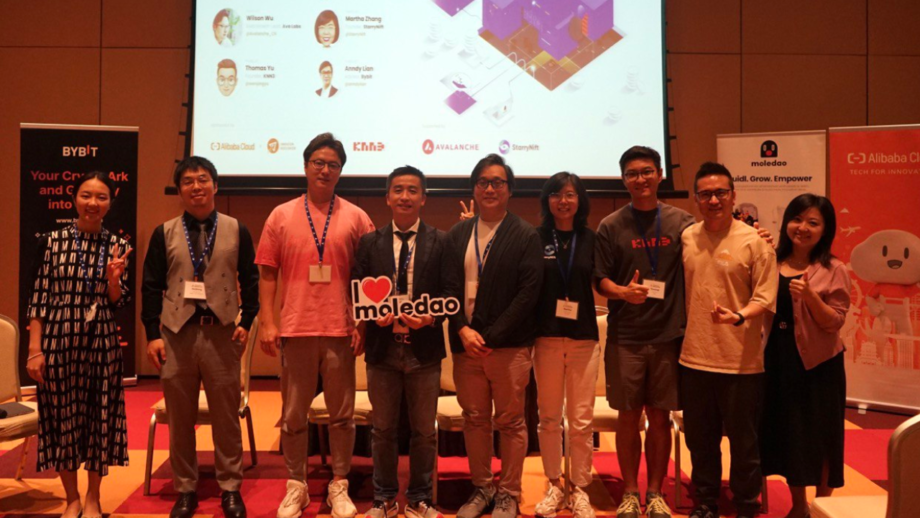
AAAI 2023 Inaugural Summer Symposium: Financial Innovation in the Age of Web3

AAAI 2023 Inaugural Summer Symposium: Financial Innovation in the Age of Web3

In the dynamic world of technology, two key elements have emerged as driving forces of transformation: Web3 and Artificial Intelligence (AI). Web3, the decentralized web, and AI, the power of smart machines, have the potential to reshape the landscape of financial innovation. AAAI 2023 Inaugural Summer Symposium explores the opportunities and challenges presented by these cutting-edge technologies in the financial sector. The panel titled “Financial Innovation in the Age of Web3” is moderated by Prof. Feida Zhu (SMU) and with the panel of experts: Haidong Chen (Alibaba Cloud Intelligence), Wilson Wu (Ava Labs), Martha Zhang (StarryNift), Thomas Yu (KNN3) and Anndy Lian (Bybit).

Web3: Beyond Web2

Feida started the panel by setting the tone “The biggest change we have right now is the removal of the intermediary with web3 and decentralized finance happening.”

Web3 represents a paradigm shift from the traditional centralized Web2. It eliminates intermediaries, empowering users with direct control over their assets and data. The transition to Web3 allows for seamless and efficient peer-to-peer transactions, enhancing financial services. Notable developments in this domain include decentralized finance (DeFi), which offers exciting prospects for lending and growing assets without intermediaries.

The interoperability of Web3 opens the door to groundbreaking collaborations across various applications, resulting in a more integrated and user-centric experience. From social graphs to gamified experiences, the potential for value generation and asset utilization is vast. Web3 is not confined to crypto enthusiasts; even traditional financial institutions are incorporating elements of Web3 into their systems, bridging the gap between the two worlds.

Haidong raised a good point “The challenge is achieving mass adoption and integrating traditional financial systems with Web3.”. Mass adoption of Web3 remains a challenge. The convergence of Web2 and Web3, along with existing regulatory systems, calls for careful navigation. Striking a balance between old and new money while ensuring cybersecurity in a world where automated machine-generated content poses risks requires thoughtful consideration.

AI: The Game-Changer

The rise of AI has been nothing short of transformative. Its efficiency and automation capabilities have reshaped industries across the board. In the context of financial innovation, AI offers significant security and content generation opportunities. Machine learning algorithms can efficiently analyze vast amounts of data, enabling improved risk management and compliance.
Wilson added: “The challenge is to ensure security, compliance, and risk management in a world where machine-generated content and cyber attacks are prevalent.” For instance, AI-driven content generation could lead to abundant valuable information. On the flip side, it raises concerns about potential misinformation and its impact on cybersecurity. With AI-generated attacks becoming a real possibility, safeguarding against cyber threats becomes more critical.

Anndy agreed and expanded on the point “AI and Web3 can work hand-in-hand to revolutionize financial services. AI-powered language models can simplify programming on blockchain platforms like Web3, enhancing app development and security. By combining the strengths of both technologies, financial services can be streamlined and made more accessible.”

Navigating the Future

The fusion of Web3 and AI promises a bright future for financial innovation. Embracing decentralization, enhancing security measures, and ensuring seamless interoperability is key to harnessing the full potential of Web3. Meanwhile, leveraging AI’s efficiency while being cautious about potential pitfalls will drive better financial solutions.

In conclusion, the convergence of Web3 and AI holds immense promise for reshaping financial services in the age of innovation. As these technologies continue to evolve, financial institutions, businesses, and individuals must adapt to a new era of possibilities. By embracing these advancements thoughtfully and responsibly, we can unlock a future filled with endless opportunities for growth and prosperity.

The panel was held on 18 July 2023. Hosted by Singapore Management University (SMU) and co-hosted by Moledao.

Socials:

Facebook: http://www.facebook.com/anndylian
Twitter: http://www.twitter.com/anndylian
Instagram: http://www.instagram.com/liananndy
LinkedIn: https://www.linkedin.com/in/anndylian/
Homepage: http://www.anndy.com
YouTube: https://www.youtube.com/@AnndyLian

Anndy Lian is an early blockchain adopter and experienced serial entrepreneur who is known for his work in the government sector. He is a best selling book author- “NFT: From Zero to Hero” and “Blockchain Revolution 2030”.

Currently, he is appointed as the Chief Digital Advisor at Mongolia Productivity Organization, championing national digitization. Prior to his current appointments, he was the Chairman of BigONE Exchange, a global top 30 ranked crypto spot exchange and was also the Advisory Board Member for Hyundai DAC, the blockchain arm of South Korea’s largest car manufacturer Hyundai Motor Group. Lian played a pivotal role as the Blockchain Advisor for Asian Productivity Organisation (APO), an intergovernmental organization committed to improving productivity in the Asia-Pacific region.

An avid supporter of incubating start-ups, Anndy has also been a private investor for the past eight years. With a growth investment mindset, Anndy strategically demonstrates this in the companies he chooses to be involved with. He believes that what he is doing through blockchain technology currently will revolutionise and redefine traditional businesses. He also believes that the blockchain industry has to be “redecentralised”.
j j j

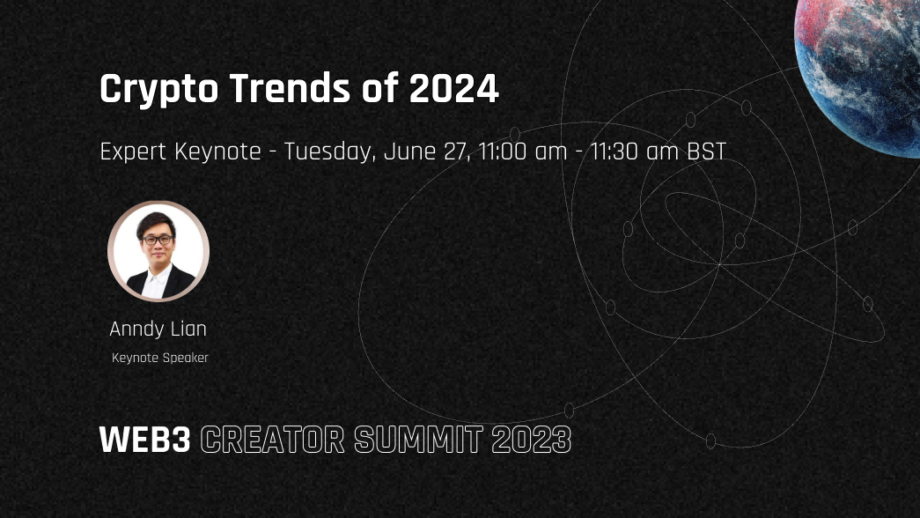
Web3 Creator Summit Expert Keynote: Crypto Trends of 2024 by Anndy Lian

Web3 Creator Summit Expert Keynote: Crypto Trends of 2024 by Anndy Lian

As we look into the future of the crypto industry, it’s essential to anticipate the trends and developments that will shape the landscape in 2024. I discussed the transformative power of artificial intelligence (AI), the significance of Central Bank Digital Currency (CBDC), the advancement of the crypto travel rule, and the shift towards decentralized governance, among other topics. Let’s explore these predictions further:

Artificial Intelligence: Transforming Everyday Life

I believe that AI will continue to disrupt various sectors and seamlessly integrate into our daily lives. Its impact is expected to be profound, reshaping industries and revolutionizing the way we interact and conduct business.

CBDC: A Game-Changer for the Crypto Industry

I place great emphasis on the significance of Central Bank Digital Currency (CBDC) as a pivotal element in tracking, tracing, and taxing financial transactions. The introduction of CBDCs holds the potential to drive the widespread adoption of digital assets and revolutionize the crypto industry as a whole. The enhanced transparency and accountability provided by CBDCs have the capacity to reshape our perception of and engagement with cryptocurrencies.

Crypto Travel Rule: Advancing Traceability and Taxation

The imminent advancement of the crypto travel rule aims to elevate traceability and taxation within the crypto space. By implementing stricter regulations, authorities can ensure that transactions are closely monitored, leading to a more secure and transparent ecosystem for all participants.

Layer 2: The Growing Influence of Bitcoin and Ethereum

I highlight the continued growth of Bitcoin and Ethereum, the two leading cryptocurrencies. Additionally, the rise of BRC20 tokens and the development of zero-knowledge proofs (ZK) are expected to contribute to the expansion of Layer 2 solutions. These advancements promise to enhance scalability, security, and efficiency within blockchain networks, fostering an environment conducive to widespread adoption.

Next Level NFT: Adoption and Brand Recognition

Non-Fungible Tokens (NFTs) have experienced increased adoption, thanks to the support and endorsement of major brands. Although the sales volume of NFTs has not seen significant growth, their relevance and influence continue to expand. NFTs provide unique digital assets that hold intrinsic value and can be securely traded on blockchain platforms, revolutionizing the concept of ownership and collectibles.

Web4: A Decentralized and Autonomous Web

The emergence of Web4 signifies a paradigm shift towards a more decentralized and autonomous web. Internet natives are actively participating in building decentralized narratives and fostering a more inclusive online environment. This transition aims to empower individuals and ensure that digital spaces remain democratic and accessible to all, free from the control of centralized entities.

Security Tokens: Advancing Crypto’s Potential

Security tokens play a vital role in unlocking the full potential of the crypto market. By tokenizing traditional financial assets such as stocks and bonds, the adoption of security tokens has the potential to revolutionize traditional markets and attract a broader investor base to the world of crypto. This democratization of access to financial assets promises to reshape the investment landscape.

Commodity Trading with Crypto: Expanding Possibilities

The integration of cryptocurrencies into commodity trading markets opens up exciting new possibilities for investors. From oil to gold, crypto enables individuals to seamlessly trade popular commodities, providing greater flexibility and choice while reducing traditional barriers to entry.

Mainstream Adoption: Defi and Financial Institutions

Decentralized finance (Defi) is gaining traction among mainstream financial companies. Banks, their clients, and family offices are increasingly allocating a significant portion of their assets to crypto. This mainstream acceptance further solidifies the legitimacy and potential of Defi as an integral part of the financial ecosystem, encouraging wider adoption and collaboration.

In conclusion, these predictions offer valuable insights into the future of various industries. Embracing the disruptions brought about by artificial intelligence, CBDCs, decentralized governance, and other emerging trends will be essential for individuals and businesses to thrive in an ever-changing world. By leveraging these transformative forces, we can unlock new opportunities, reshape traditional models, and shape a future that is both innovative and inclusive.


Anndy Lian is an early blockchain adopter and experienced serial entrepreneur who is known for his work in the government sector. He is a best selling book author- “NFT: From Zero to Hero” and “Blockchain Revolution 2030”.

Currently, he is appointed as the Chief Digital Advisor at Mongolia Productivity Organization, championing national digitization. Prior to his current appointments, he was the Chairman of BigONE Exchange, a global top 30 ranked crypto spot exchange and was also the Advisory Board Member for Hyundai DAC, the blockchain arm of South Korea’s largest car manufacturer Hyundai Motor Group. Lian played a pivotal role as the Blockchain Advisor for Asian Productivity Organisation (APO), an intergovernmental organization committed to improving productivity in the Asia-Pacific region.

An avid supporter of incubating start-ups, Anndy has also been a private investor for the past eight years. With a growth investment mindset, Anndy strategically demonstrates this in the companies he chooses to be involved with. He believes that what he is doing through blockchain technology currently will revolutionise and redefine traditional businesses. He also believes that the blockchain industry has to be “redecentralised”.

j j j

The Future of NFT’s @ Web3 Creator Summit 2023 Wishu

The Future of NFT’s @ Web3 Creator Summit 2023 Wishu

The highly anticipated Web3 Creator Summit 2023 is set to delve into the future of Non-Fungible Tokens (NFTs), showcasing the groundbreaking potential and emerging trends in the NFT space. The summit, which brings together influential voices and key players in the blockchain and digital art industries, will serve as a platform for in-depth discussions, inspiring presentations, and engaging panels on the evolution of NFTs and their impact on the Web3 ecosystem.

With NFTs gaining significant traction in recent years, the Web3 Creator Summit 2023 aims to shed light on their transformative power and explore the possibilities they present for creators, collectors, and enthusiasts alike. The event will feature renowned speakers, including leading artists, technologists, entrepreneurs, and thought leaders, who will share their insights, experiences, and visions for the future of NFTs.

The panel covers the topic – The Future of NFT’s. Jenny Zheng, BD Lead; Bybit NFT; Karen Shidlo, CMO, Fiat24; Hugo Gong, Lecturer, Westminister Business School, and Anndy Lian, Intergovernmental Blockchain Advisor shared their views on the future of NFT. Carmac Rowe, an NFT Enthusiast, is the moderator.

The future of Non-Fungible Tokens (NFTs) holds immense potential and offers numerous intriguing possibilities. NFTs have garnered significant attention in recent years, and their impact on various industries is poised to continue expanding. Let’s explore some key aspects that shape the future of NFTs.

Expanded Adoption: While NFTs have primarily been associated with digital art, their applications are diversifying rapidly. In the future, we can anticipate NFTs being utilized across domains such as music, movies, virtual real estate, fashion, sports, and even physical assets like property deeds or collectibles. This broader adoption will unlock fresh opportunities for creators, artists, and investors, fueling innovation and growth.

Enhanced Interactivity: NFTs possess the potential to revolutionize the way people engage with digital content. By linking additional benefits or experiences to NFT ownership, artists and creators can offer exclusive access to events, virtual meet-and-greets, or personalized content. This heightened interactivity and engagement can elevate the value and desirability of NFTs, fostering deeper connections between creators and their audiences.

Governance and Royalties: Smart contracts associated with NFTs can be programmed to automatically distribute royalties to creators whenever the NFTs are sold or traded. This unique feature ensures that artists receive ongoing compensation for their work, even in secondary market transactions. Moreover, NFTs can incorporate governance features, enabling token holders to actively participate in decision-making processes related to associated projects or communities, fostering transparency and inclusivity.

Sustainability and Environmental Concerns: NFTs have faced criticism regarding their environmental impact, primarily due to the energy consumption of blockchain networks like Ethereum. However, ongoing efforts are underway to address these concerns by adopting more energy-efficient consensus algorithms or exploring alternative blockchain platforms. The future of NFTs will likely witness an increased emphasis on sustainability and the integration of environmentally friendly practices to minimize their ecological footprint.

Evolving Standards and Interoperability: Currently, different blockchain networks have their own NFT standards, such as ERC-721 and ERC-1155 on Ethereum. In the future, we might witness the development of interoperable standards that enable seamless transferability of NFTs across different blockchains. This interoperability can significantly enhance liquidity and extend the reach of NFTs, fostering a more interconnected ecosystem.

It is important to note that the future of NFTs is still evolving, and the technology is subject to rapid changes and advancements. As with any emerging field, there are inherent risks and challenges to navigate. However, the unique properties of NFTs, such as their ability to authenticate and prove ownership, as well as their potential to create new economic models, make them an intriguing concept with significant potential in the years to come. By responsibly harnessing this potential, we can unlock a future where NFTs empower creators, reshape ownership paradigms, and revolutionize industries worldwide.

Anndy Lian is an early blockchain adopter and experienced serial entrepreneur who is known for his work in the government sector. He is a best selling book author- “NFT: From Zero to Hero” and “Blockchain Revolution 2030”.

Currently, he is appointed as the Chief Digital Advisor at Mongolia Productivity Organization, championing national digitization. Prior to his current appointments, he was the Chairman of BigONE Exchange, a global top 30 ranked crypto spot exchange and was also the Advisory Board Member for Hyundai DAC, the blockchain arm of South Korea’s largest car manufacturer Hyundai Motor Group. Lian played a pivotal role as the Blockchain Advisor for Asian Productivity Organisation (APO), an intergovernmental organization committed to improving productivity in the Asia-Pacific region.

An avid supporter of incubating start-ups, Anndy has also been a private investor for the past eight years. With a growth investment mindset, Anndy strategically demonstrates this in the companies he chooses to be involved with. He believes that what he is doing through blockchain technology currently will revolutionise and redefine traditional businesses. He also believes that the blockchain industry has to be “redecentralised”.

j j j