Web4: Is the Crypto Space Moving on from Web3 Already?

Web4: Is the Crypto Space Moving on from Web3 Already?

Web4?! What on earth is Web4? Weren’t we just on the cusp of Web3 adoption? People are finally warming to the idea of Bitcoin (BTC)Ethereum (ETH), and blockchain technology. Yet, some theorists in the cryptocurrency industry have already fixed their gaze on the next shiny horizon.

The internet moves fast. Decentralized technologies and the crypto industry move even faster, so it makes sense that ‘the next generation of the internet’ is already being speculated about.

Web4 AI and Brain-Computer Interfaces promise to change how we use the internet forever, but what does that actually mean?

The Evolution of the Internet

The internet has evolved dramatically since its inception, from a simple, static network of chunky, hyperlinked web pages to a dynamic, interactive, and increasingly decentralized platform.

Distinct phases have marked this evolution, each bringing its own set of innovations and challenges.

Web1: A Read-Only Internet
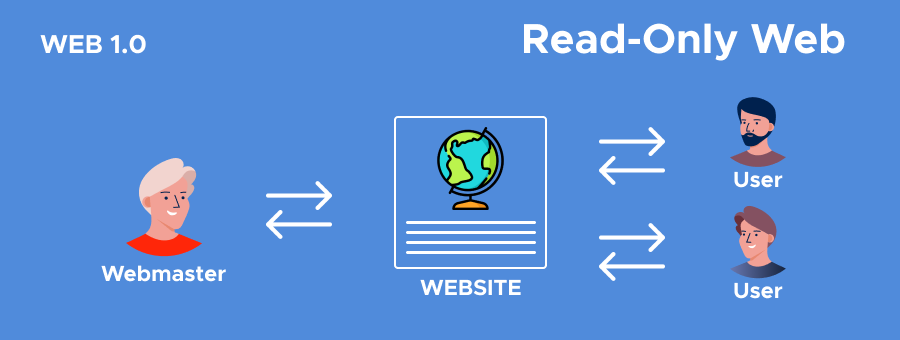
Web 1 Read-Only Diagram
Source: BidsCube

It seems strange to call it Web 1.0 now, but the original World Wide Web was exactly that. Also known as the “read-only web,” it was the first iteration of the Internet. Invented by Tim Berners-Lee, it was a static network of hyperlinked web pages where users could only consume information.

The lack of interactive elements and user control was due to the technological limitations of the time, including the absence of read/write functionalities and cloud systems.

Early detractors laughed at the idea of the World Wide Web. On an American talk show in 1995, David Letterman teased Bill Gates, ‘What about this Internet thing?’ and made jokes implying that existing inventions like radio and tape recorders made it redundant.

Web2: A Read/Write Internet
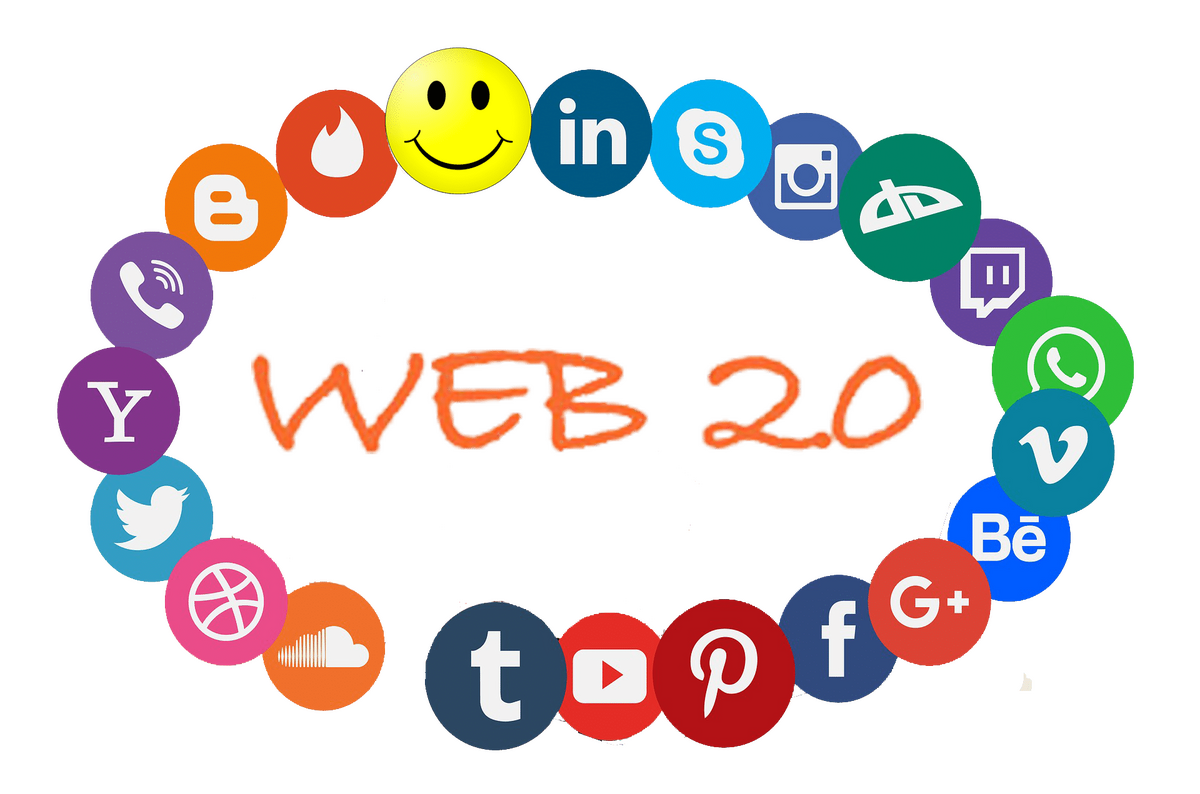
Circular dial of Web 2 app logos.
Source: DigitalBE

Web 2.0 marked a significant shift in the internet’s evolution, transforming it into a dynamic, interactive platform. It’s the most cherished and beloved internet we are familiar with today.

The advent of cloud computing characterized this era, improved read/write capabilities, content creation, and the explosion of social media platforms. Everyone, not just computer ‘nerds’, could now contribute to and expand the internet, creating content and sharing their ideas.

If Web 1.0 was like a book that people could read, Web 2.0 was more like a book with blank pages that people could fill. Web2 brought everything from blogs and community forums to online shopping, mobile apps, and remote startups.

Web2 gave birth to thousands of new use cases and business models, like online advertising. But the parabolic growth of Web 2.0 was something of a double-edged sword. It raised concerns about data privacy and ownership, as users’ personal data was often controlled by centralized entities, like Meta and Twitter.

Web3: A Read/Write/Own Internet
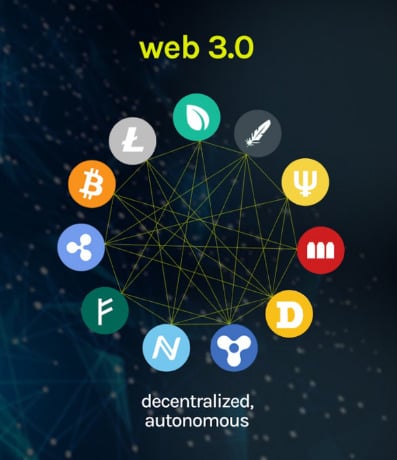
Web 3 app logos in a circle.
Source: Clubic

This brings us to where we are now, the Web3 revolution. Also called the semantic web, cryptocurrency enthusiasts consider Web3 an improved internet where new technologies like blockchain, cryptocurrency, and NFTs give users greater control over their assets, data, and identity online.

Decentralization is the key driving force of the Web3 movement. Instead of vast portions of the internet being controlled and owned by centralized entities and exploitative intermediaries, ownership is distributed among everyday users like you and me.

Through blockchain technology, cryptocurrency, and smart contracts, Web3 gave birth to decentralized finance (DeFi). DeFi is a central pillar of the Web3 world, giving everyone on the planet permissionless, trustless access to financial tools and services they were previously excluded from.

Internet users are no longer required to share their data with centralized entities or use them to transfer funds over the Internet. Instead, peer-to-peer networks, like Bitcoin and Ripple (XRP), give people full control and self-custody of their assets.

Where do we go from here?

Web4: The Symbiotic Web

Web 4.0 is the proposed next phase of the internet’s evolution. It’s envisioned as a more connected, intelligent, and personalized version of the Internet that draws on emerging technology like artificial intelligence.

Often referred to as ‘The Symbiotic Web’, Web4 promises to intertwine our lives and the internet more deeply than ever before.

What exactly does that mean?

What Is Web4?
Web4 -human finger connects with robotic finger.
Source: Medium

Before diving into what we can expect from Web4, I need to clarify: Web4 is a purely theoretical concept that is fuelled entirely by speculation. The roadmap for what Web4 looks like is unclear, with theorists sparking off radical ideas.

Web4’s proponents present the next evolutionary stage of the internet as a decentralized web that fully incorporates new technologies to deliver an unprecedented internet user experience.

Artificial Intelligence

Web4 AI is expected to play a significant role in the next generation of the internet, enabling more dynamic and adaptable machine learning ecosystems that can learn from data and improve over time.

Like a giant universal ChatGPT, Web4 AI could lead to more personalized and efficient online experiences.

Brain-Computer Interfaces

If you thought Apple’s new VR/AR headset was impressive, Brain-Computer Interfaces (BCI) is the next step up. BCIs allow humans to interact with computers using their thoughts by measuring brain activity and translating it into commands that computers can understand.

While undoubtedly a fascinating piece of technology, it all sounds rather dystopic. Just because we might be able to connect our brains to the Internet directly doesn’t mean we should. Even on top of all the ethical questions it raises, BCI connections seem like a massive security and health risk waiting to happen.

Metaverse

A virtual space portraying Metaverse.
Source: MuddyColours

As we know, the Metaverse is a virtual reality space where users can engage in immersive experiences and interact with a vast array of digital content. If you ever saw Spielberg’s 2018 film ‘Ready Player One,’ you probably have a pretty good idea of what the Metaverse looks like.

Web4 seeks to expand the Metaverse, offering new avenues for social interaction, entertainment, and economic opportunities through blockchain-powered virtual assets.

Sound familiar? That’s because it is. All these features are already possible in the Web 3 world. This brings me nicely to my next point.

Is Web4 Really Any Different from Web3?

Apart from Brain-Computer Interfaces, everything Web4 theorists speculate about already exists within the Web3 world. Web3 aims to create a decentralized internet of permissionless, trustless applications, giving users self-custody and complete control over their digital assets.

Based on the information circulating the internet, Web4 has the same goals. One of the leading proponents of Web4, Anndy Lian, argues that “Web4 is more decentralized than Web3.”

He supports this claim, asserting:

“Web4 also aims to create decentralized applications (dApps) that run on decentralized infrastructure, which eliminates the need for intermediaries and centralized organizations to control and manage the applications.”
ralized infrastructure, which eliminates the need for intermediaries and centralized organizations to control and manage the applications.”

Maybe I’ve missed something, but replace Web4 with Web3, and you have the same sentence and the same idea.

At the same time, maybe I’m behaving just like David Letterman in 1995. It’s absolutely possible that while Web3 laid the foundation for decentralized applications and user ownership of data, Web4 will take it a step further by integrating advanced technologies to enhance the user experience.

Perhaps Web4 envisions a future where the boundaries between physical and digital realities blur, offering unprecedented possibilities that we cannot yet fathom.

Web4 Pros and Cons

Like any technological advancement, Web4 has its own advantages and challenges. Let’s objectively recap Web4’s pros and cons.

Pros

  • Enhanced user experiences – Web4 promises immersive and personalized experiences, leveraging AI and the Metaverse to create dynamic and interactive digital environments.
  • Improved efficiency – AI-powered automation in Web 4.0 could boost productivity, speed up time to market, and lower costs, giving businesses a competitive edge and better customer service.
  • Expanded possibilities for cryptocurrencies – Web4’s advancements offer new opportunities for cryptocurrency integration, fostering innovation in areas like DeFi.

Cons

  • Scalability –  As the number of devices and people connected to the internet grows, it will become increasingly challenging to keep up with the demand.
  • Security – As Web4 incorporates advanced technologies, ensuring personal data privacy and cybersecurity becomes more challenging, demanding robust security measures.
  • Ethical implications – AI and BCIs raise important ethical questions regarding privacy, consent, and the potential misuse of personal information. Responsible development and regulation are vital.

On the Flipside

  • While discussions turn towards Web4 and whatever that might mean for the future of the internet, Twitter creator and Bitcoin Maxi Jack Dorsey is already one step ahead. Dorsey is crafting Web5, an even more decentralized internet built on the Bitcoin blockchain.

Why This Matters

People are always looking for the next big thing in the crypto market. Web3 is well-established. We know what it is, and have tangible applications and use cases that we can take advantage of daily.

On the other hand, Web4 still asks more questions than it answers. It’s still unclear what Web4 will actually look like and how it differs from Web3.

FAQs

What is Web4?

Web4 is the proposed next generation of the internet, which promises an improved user experience through emerging technologies like artificial intelligence.

Is there a Web4 now?

At this point Web4 is purely speculative, with no concrete examples of its applications or use cases.

Does Web3 have a future?

If you believe in cryptocurrency, decentralization, and the right self-custody of assets, then Web3 definitely has a future for you.

Is Web3 just crypto?

Parts of the Web3 world use crypto to transfer funds on peer-to-peer networks. However, the scope of Web3 is much larger than crypto alone and includes ownership and control of your data online.


Source: https://dailycoin.com/what-is-web-4/

Anndy Lian is an early blockchain adopter and experienced serial entrepreneur who is known for his work in the government sector. He is a best selling book author- “NFT: From Zero to Hero” and “Blockchain Revolution 2030”.

Currently, he is appointed as the Chief Digital Advisor at Mongolia Productivity Organization, championing national digitization. Prior to his current appointments, he was the Chairman of BigONE Exchange, a global top 30 ranked crypto spot exchange and was also the Advisory Board Member for Hyundai DAC, the blockchain arm of South Korea’s largest car manufacturer Hyundai Motor Group. Lian played a pivotal role as the Blockchain Advisor for Asian Productivity Organisation (APO), an intergovernmental organization committed to improving productivity in the Asia-Pacific region.

An avid supporter of incubating start-ups, Anndy has also been a private investor for the past eight years. With a growth investment mindset, Anndy strategically demonstrates this in the companies he chooses to be involved with. He believes that what he is doing through blockchain technology currently will revolutionise and redefine traditional businesses. He also believes that the blockchain industry has to be “redecentralised”.

j j j

Web3 Industry & AI Rapid Growth: Unleashing Innovation and Potential

Web3 Industry & AI Rapid Growth: Unleashing Innovation and Potential

Over the past years, we have been privileged to witness an extraordinary surge in the growth and development of both the Web3 industry and the field of Artificial Intelligence (AI). This convergence has sparked a wave of innovative technologies that are revolutionizing various sectors and unlocking limitless possibilities.

An exciting event, the Brand Launchpad Event, organized by Openlive and Metahub, took place from 28-29 May 2023 wants to discuss more about the topic. Esteemed panellists, including Tienee Huynh, Founder of Tinker Academy, Thanh Dao, Founder of Jung Von Matt, Jake Zheng, Growth Evangelist of Chainklink, Anndy Lian, Advisor of Bybit, and Tony Tong, Chairman of HKBA, were present to share their valuable insights. Together, they delved into the remarkable progress observed in the Web3 industry and the accelerated growth of AI, shedding light on their profound impact on society and the immense potential they hold for the future.

Unleashing the Power of Web3:

The emergence of Web3 signifies a significant departure from the conventional centralized web towards a decentralized and more user-centric ecosystem. By leveraging blockchain technology as its foundation, Web3 empowers individuals with greater control over their digital assets, enhanced privacy and security, and the ability to engage in peer-to-peer interactions without intermediaries. This decentralized architecture fosters trust, transparency, and immutability, making it an ideal framework for a wide range of applications. Anndy Lian emphasized that what we should all focus on is that “Web3 is for the creators.”. He explains how Web3 “ushers in a fresh type of economy that empowers users and communities to make more informed and advantageous business choices.”

Web3 has unleashed its transformative potential across diverse industries. In the realm of finance, decentralized finance (DeFi) has emerged as a prominent use case, offering decentralized lending, borrowing, and trading options. This decentralized approach disrupts traditional financial systems, granting individuals access to a more inclusive and efficient financial landscape.

Jake Zheng mentioned earning from using their own work and data in the Web3 era. Web3 has revolutionized the realm of digital content and entertainment. Non-Fungible Tokens (NFTs) have gained immense popularity, empowering artists, musicians, and creators to tokenize their work and directly sell it to consumers. This not only benefits artists by providing new revenue streams, but also ensures traceability and provenance of digital assets.

The Expanding Horizon of AI and Web3

Concurrently, the field of Artificial Intelligence has been experiencing rapid advancements, fundamentally transforming the way we live and work. AI encompasses a broad spectrum of technologies, including machine learning, natural language processing, computer vision, and robotics. These technologies have facilitated automation, enhanced decision-making processes, and enabled personalized experiences across various industries. Tony Tong explained that we should not be afraid of AI and should find ways to learn more about it.

The convergence of Web3 and AI has unleashed a new wave of possibilities. Web3’s decentralized nature provides an ideal environment for AI systems, ensuring data privacy, security, and transparency. On the other hand, AI augments the capabilities of Web3 by providing intelligent decision-making algorithms and automation. Together, they create a powerful synergy that has the potential to redefine industries and drive innovation.

Future Implications:

As the Web3 industry and AI continue to flourish, their implications for the future are profound. The integration of Web3 and AI technologies can revolutionize various sectors, including finance, healthcare, supply chain, and governance. Decentralized AI systems can ensure data privacy while empowering individuals with personalized experiences and decision-making capabilities. This symbiotic relationship has the potential to democratize access to services, increase efficiency, and foster greater trust in systems.

The rapid growth of the Web3 industry and AI has ushered in a new era of technological advancement. The decentralized nature of Web3, combined with the transformative power of AI, has created an ecosystem teeming with innovation and boundless possibilities. Embracing this convergence can lead to groundbreaking solutions, improved efficiencies, and a more inclusive digital landscape. The future holds immense potential, and it is crucial to support and nurture this growth by fostering collaboration and exploration of these emerging technologies.


Source: https://www.benzinga.com/23/06/32762791/web3-industry-ai-rapid-growth-unleashing-innovation-and-potential

Anndy Lian is an early blockchain adopter and experienced serial entrepreneur who is known for his work in the government sector. He is a best selling book author- “NFT: From Zero to Hero” and “Blockchain Revolution 2030”.

Currently, he is appointed as the Chief Digital Advisor at Mongolia Productivity Organization, championing national digitization. Prior to his current appointments, he was the Chairman of BigONE Exchange, a global top 30 ranked crypto spot exchange and was also the Advisory Board Member for Hyundai DAC, the blockchain arm of South Korea’s largest car manufacturer Hyundai Motor Group. Lian played a pivotal role as the Blockchain Advisor for Asian Productivity Organisation (APO), an intergovernmental organization committed to improving productivity in the Asia-Pacific region.

An avid supporter of incubating start-ups, Anndy has also been a private investor for the past eight years. With a growth investment mindset, Anndy strategically demonstrates this in the companies he chooses to be involved with. He believes that what he is doing through blockchain technology currently will revolutionise and redefine traditional businesses. He also believes that the blockchain industry has to be “redecentralised”.

j j j

Unleashing the power of Web4.0: An intelligent and decentralised web ecosystem

Unleashing the power of Web4.0: An intelligent and decentralised web ecosystem

The internet has transformed the way we live, work, and connect with each other. From the early days of the World Wide Web to the rise of social media and e-commerce, the internet has become an integral part of our daily lives. However, it is clear that the current internet infrastructure has its limitations, including issues related to centralization, data privacy, and lack of intelligence. Enter Web4, a new vision for an intelligent and decentralized web that addresses these challenges and unlocks a world of new possibilities.

Understanding Web4:

Web4 represents a paradigm shift in how we envision and interact with the internet. It builds upon the principles of Web3 (decentralization) and integrates advanced technologies such as artificial intelligence (AI), blockchain, and the Internet of Things (IoT) to create a more intelligent and decentralized web ecosystem. Web4 aims to empower individuals, enhance privacy, and foster innovation while leveraging the potential of AI to provide personalized and context-aware experiences.

Key Features of Web4:

Decentralization: Web4 embraces the core tenets of Web3, ensuring that power and control are distributed across a network of interconnected nodes. By moving away from centralized entities and adopting decentralized architectures such as blockchain, Web4 reduces the risk of single points of failure, censorship, and data breaches. This decentralized approach fosters trust, transparency, and resilience in the web infrastructure.

Artificial Intelligence: AI is at the heart of Web4, enabling intelligent automation, data analysis, and decision-making. Through machine learning, natural language processing, and computer vision, Web4 systems can understand and interpret user data, preferences, and behavior. This allows for personalized recommendations, intelligent assistants, and context-aware applications that adapt to individual needs and provide a more intuitive and efficient user experience.

Enhanced Privacy and Security: Web4 prioritizes user privacy and data security. It leverages cryptographic techniques and decentralized identity systems to empower individuals with greater control over their personal information. With Web4, users can choose how their data is shared and accessed, reducing the risks associated with centralized data storage and surveillance. This focus on privacy strengthens user trust and encourages widespread adoption.

Interoperability and Open Standards: Web4 promotes interoperability and open standards, allowing different applications and platforms to seamlessly communicate and share data. By embracing common protocols and APIs, Web4 enables the creation of a vibrant ecosystem where innovative solutions can easily integrate and collaborate. This fosters competition, diversity, and rapid technological advancements, benefitting users and driving innovation forward.

Democratization of Innovation: Web4 empowers individuals and small businesses by reducing barriers to entry and enabling participation in the digital economy. Through decentralized platforms and smart contracts, Web4 enables peer-to-peer transactions, crowdfunding, and new funding models such as initial coin offerings (ICOs) and decentralized finance (DeFi). This democratization of innovation ensures that the benefits of the web are accessible to all, irrespective of geographical location or financial resources.

Potential Applications:

Web4’s intelligent, decentralized nature opens up a wide range of potential applications across various sectors:

Governance and Democracy: Web4 can facilitate transparent and decentralized governance models, enabling citizen participation, voting systems, and smart contracts that automate governance processes. This can lead to more accountable and inclusive decision-making at local, national, and global levels.

Supply Chain and Logistics: Web4 can revolutionize supply chain management by providing real-time tracking, transparency, and traceability. By leveraging blockchain and IoT technologies, Web4 enables secure and efficient supply chain operations, reducing fraud, improving product authenticity, and optimizing logistics processes.

Healthcare and Telemedicine: Web4 can transform healthcare by enabling secure and interoperable health records, personalized medicine, and telemedicine services. AI-powered diagnostics, remote monitoring, and decentralized data sharing can improve patient outcomes, facilitate research, and enhance collaboration among healthcare providers.

Smart Cities and Sustainability: Web4 can contribute to the development of smart cities that optimize resource usage, enhance energy efficiency, and improve urban planning. Through intelligent sensor networks and data analytics, Web4 can enable real-time monitoring, predictive maintenance, and sustainable infrastructure management.

Conclusion:

Web4 represents a bold vision for the future of the internet, one that embraces decentralization, artificial intelligence, and user empowerment. By combining these elements, Web4 has the potential to revolutionize various industries, enhance privacy and security, and democratize access to innovation. However, realizing the full potential of Web4 requires collaboration, standardization, and ethical considerations to ensure that the benefits are accessible to all while safeguarding user rights and societal values. As we embark on this new era of the web, let us envision and build a future that empowers individuals, fosters innovation, and creates a more inclusive and intelligent digital world.


Source: https://www.financialexpress.com/business/blockchain-unleashing-the-power-of-web4-0-an-intelligent-and-decentralised-web-ecosystem-3111477/


Anndy Lian is an early blockchain adopter and experienced serial entrepreneur who is known for his work in the government sector. He is a best selling book author- “NFT: From Zero to Hero” and “Blockchain Revolution 2030”.

Currently, he is appointed as the Chief Digital Advisor at Mongolia Productivity Organization, championing national digitization. Prior to his current appointments, he was the Chairman of BigONE Exchange, a global top 30 ranked crypto spot exchange and was also the Advisory Board Member for Hyundai DAC, the blockchain arm of South Korea’s largest car manufacturer Hyundai Motor Group. Lian played a pivotal role as the Blockchain Advisor for Asian Productivity Organisation (APO), an intergovernmental organization committed to improving productivity in the Asia-Pacific region.

An avid supporter of incubating start-ups, Anndy has also been a private investor for the past eight years. With a growth investment mindset, Anndy strategically demonstrates this in the companies he chooses to be involved with. He believes that what he is doing through blockchain technology currently will revolutionise and redefine traditional businesses. He also believes that the blockchain industry has to be “redecentralised”.
j j j