Hong Kong isn’t the loophole Chinese crypto firms think it is

Hong Kong isn’t the loophole Chinese crypto firms think it is

China’s crypto ban has been in place since 2021, but that hasn’t stopped companies from chasing what they believe are ways to reenter.

Hyped-up stablecoin announcements in Hong Kong and overseas listings that hint at digital assets are just some of the ways companies are testing boundaries. Each time, Beijing responds with fresh warnings — a stark reminder that China’s crypto U-turn isn’t around the corner.
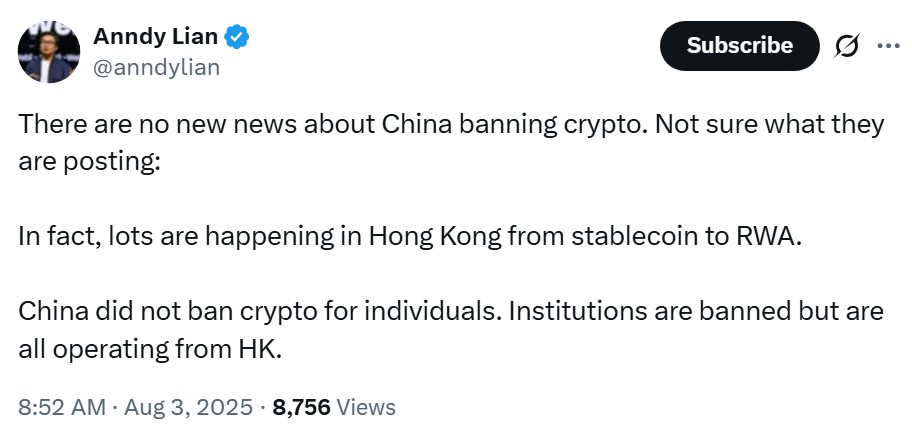
Crypto industry watcher observes RWA and stablecoin activity rising in Hong Kong
Hong Kong’s RWA and stablecoin activity picked up as new licensing rules took effect. (Anndy Lian)

The latest warning reportedly came from the China Securities Regulatory Commission, which advised companies to pause real-world asset ventures in Hong Kong. It followed a state-owned company scrubbing announcements about tokenizing bonds and other enterprises revealing RWA projects, piling on recent warnings against stablecoins after Hong Kong introduced its licensing framework.

To understand why these illusions of loopholes keep appearing — and why they collapse — Magazine spoke with Joshua Chu, co-chair of the Hong Kong Web3 association.

This conversation has been edited for clarity and length.

Magazine: Crypto has been banned for years in China, so why do regulators keep issuing fresh warnings?

China crypto ban reversal rumor
Countless social media accounts predicted Beijing would reverse its crypto ban, but it hasn’t moved so far. (DeFiMadara)

Chu: The challenge is that many new lawyers in Hong Kong moving into Web3 don’t have much experience with cross-border issues. That’s created fragmentation and a lot of confusion. Some journalists and lawyers even claimed there was a 180-degree reversal on crypto policy. China doesn’t do 180-degree turns in policy. The only U-turn in recent memory was the rollback of COVID-19 mandates.

The crypto ban from 2021 is a good example: Speculative assets are not meant for the retail sector. The People’s Republic of China is still a communist country, and if an unsophisticated investor loses money gambling on crypto, in the government’s view, that’s losing money for the state. That’s why the only entities we’ve seen handling crypto assets are the government or state-owned enterprises.

Magazine: How do you explain this cycle where Chinese firms repeatedly attempt to enter a trendy crypto venture through Hong Kong, only for mainland regulators to push back?

Chu: The issue is how they’re doing it. Even big companies with money can act in a less-than-sophisticated way. There’s a difference between state-owned enterprises and private institutions. The government is comfortable with blockchain infrastructure and foreign direct investment. What it won’t tolerate is speculation because speculation equals bubbles.

That’s why regulators crack down on projects designed to hype markets or pull value from retail investors. It’s the same logic behind China’s real estate policy: Buying to live in is fine, but speculation isn’t. You can think of it as a parental style of governance: Just as parents wouldn’t let children gamble with family savings, the state won’t let retail investors gamble away wealth in crypto.

Crypto Is Alive and Well, Though Skeptics Say It’s ‘Not Money’

At the end of the day, companies see profit potential, which is why they want in. But regulators will only support ventures that are sophisticated, compliant and responsible. That’s also why Hong Kong can hold itself out as one of the world’s top three financial hubs — its reputation depends on keeping the system clean, and the same principle applies to virtual assets.
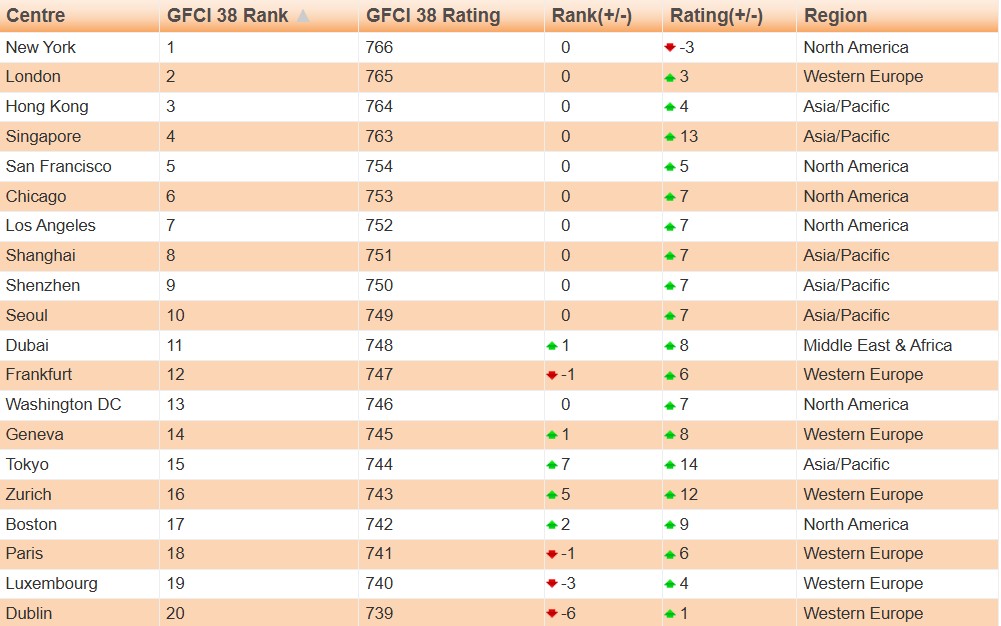
New York tops Long Finance's 2025 Global Financial Centres Index, followed by London, then Hong Kong
Hong Kong aims to strengthen its financial center rating through cryptocurrencies. (Long Finance)

Magazine: Isn’t the real problem that Chinese firms are hunting for loopholes and Hong Kong lawyers aren’t equipped to stop them?

Chu: Unfortunately, that happens a lot. If your whole business is founded on loopholes, you’re already on shaky ground. Regulators don’t create loopholes for you to exploit; they expect you to build something sustainable and compliant.

But because of the 2021 crypto ban, you have an entire market that’s been shut out. Human psychology kicks in, and people think: “Maybe this is my way back in.” That’s why you see companies making loud announcements before they’ve even filed an application. Take the stablecoin regime: Some firms were hyping plans to apply for licenses just to pump their stock price. Naturally, regulators step in.
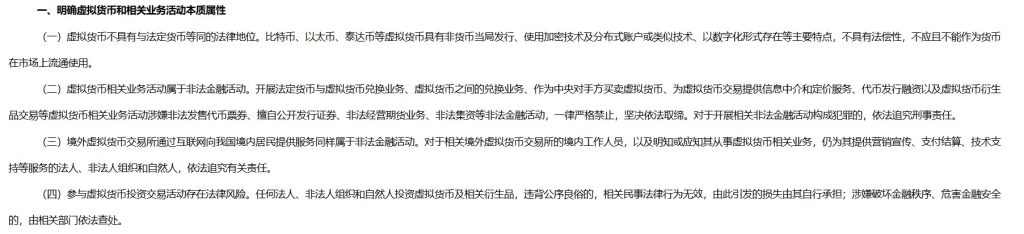
A screenshot of China's crypto ban statement in mandarin
China’s 2021 crypto ban defines crypto-related businesses as illegal financial activities. (China State Administration of Foreign Exchange)

We’ve seen this pattern before. When initial coin offerings were being sold as a cheaper alternative to initial public offerings, companies said you didn’t need a prospectus or compliance. But there’s a reason those safeguards exist: to protect investors. So, when players start cutting corners and shouting about it, it draws scrutiny. And that’s when clampdowns happen.

Magazine: When Chinese firms listed in Hong Kong or the US gain crypto exposure, is this regulatory arbitrage?

Chu: When a Chinese company lists on Nasdaq, it’s absorbing foreign investment, which triggers a different response than if it were raising funds domestically. The real question is how they structure these RWA or tokenization projects.

If they’re putting Chinese corporate data on a public blockchain, that creates cross-border data transfer issues. Remember, even listed companies have run into problems with US auditors because of China’s strict rules on what information can leave the country. Blockchain raises those concerns all over again.

There’s also the financial side. Many of these treasury strategies look risky, especially when driven by institutional FOMO at the peak of a bull cycle. Without strong internal risk controls, volatility can overwhelm the market cap of these firms. That’s exactly the kind of contagion risk regulators want to avoid.

If that happens, the scrutiny won’t just come from Beijing; it will come from the SEC as well.


Source: https://cointelegraph.com/magazine/hong-kong-isnt-loophole-chinese-crypto-firms-think/

j j j

Bullish on chips, bearish on congress: The strange calm behind Wall Street’s record run

Bullish on chips, bearish on congress: The strange calm behind Wall Street’s record run

The US stock market’s ascent on Thursday reflects a confluence of technological optimism, political uncertainty, and shifting macroeconomic signals that together paint a complex but compelling picture of current investor sentiment. All three major indices, the Nasdaq Composite, the S&P 500, and the Dow Jones Industrial Average, closed at new record highs, with gains of 0.4 per cent, 0.1 per cent, and 0.2 per cent respectively.

This continued rally builds on the momentum from the previous session, when the S&P 500 crossed the 6,700 threshold for the first time in its history. The driving force behind this sustained upward movement remains the artificial intelligence trade, which has reinvigorated investor enthusiasm across the semiconductor and broader tech sectors. Nvidia, the undisputed leader in AI chips, reached another all-time high, while peers like AMD and South Korea’s SK Hynix also posted notable gains.

But the real spark this week came not from hardware manufacturers but from OpenAI, whose private valuation reportedly surged to US$500 billion following an internal employee share sale. This development effectively dethroned Elon Musk’s SpaceX as the world’s most valuable private company and injected fresh confidence into the AI narrative, even as sceptics warn of a potential bubble.

What makes this rally particularly striking is its resilience in the face of significant political turbulence. A partial US government shutdown is now underway, with no clear resolution in sight before the weekend. Former President Donald Trump, who remains a dominant figure in Republican politics, has escalated his rhetoric, threatening to fire thousands of federal workers and cancel billions in federal funding directed to states that lean Democratic.

He also announced a Thursday meeting with Office of Management and Budget Director Russ Vought to identify which so-called “Democrat Agencies” should face budget cuts. Despite this volatility in Washington, financial markets have shown remarkable indifference, a testament to how deeply investor focus has shifted toward technological disruption and away from short-term fiscal standoffs. That said, the shutdown is not without consequences.

The Bureau of Labour Statistics has almost certainly delayed the release of the September jobs report, originally scheduled for Friday. This data blackout deprives the Federal Reserve of a key input as it prepares for its October policy meeting, where labour market conditions will weigh heavily on the decision to hold or cut interest rates. In the absence of official economic indicators, traders are turning to alternative signals, including movements in Bitcoin and institutional flows into digital assets.

Speaking of Bitcoin, the cryptocurrency posted a 1.92 per cent gain over the past 24 hours, extending its seven-day advance of 10.14 per cent and 30-day climb of 8.56 per cent. This sustained bullish trend stems from three interlocking catalysts: growing speculation around sovereign Bitcoin reserves, strong inflows into US spot Bitcoin ETFs, and favourable technical indicators supported by shifting macro expectations.

The idea of nation-states holding Bitcoin as a reserve asset is no longer confined to outliers like El Salvador. On October 2, Swedish lawmakers formally proposed the creation of a national Bitcoin reserve, while in the US, Representative Nick Begich introduced legislation calling for a “Strategic Bitcoin Reserve.” Though these proposals remain in early stages, their mere existence signals a gradual normalisation of Bitcoin as a potential store of value at the sovereign level.

If even a fraction of these ideas materialise, say, a US acquisition of 1 million BTC, representing roughly 4.76 per cent of the total supply, the market impact would be profound. At current prices, such a purchase would cost approximately US$120 billion and significantly tighten available liquidity. Even smaller-scale adoption, such as the Czech Republic’s rumoured consideration of allocating five per cent of its foreign exchange reserves to Bitcoin, reinforces the “digital gold” thesis that underpins long-term institutional interest.

Parallel to these geopolitical developments, institutional demand through regulated financial products continues to accelerate. On October 1 alone, US spot Bitcoin ETFs recorded US$430 million in net inflows, reversing a prior week of outflows. This surge coincided with heightened anxiety over the government shutdown, suggesting that some investors view Bitcoin as a hedge against political and fiscal instability. BlackRock’s IBIT ETF now holds US$77 billion worth of Bitcoin, underscoring the scale of institutional participation.

With total assets under management in spot Bitcoin ETFs approaching US$153 billion, the buying pressure from these vehicles has become a structural feature of the market. Unlike retail traders who may react emotionally to news cycles, ETF-driven demand tends to be more consistent and less price-sensitive, creating a floor beneath Bitcoin’s valuation. Corporate treasuries are also contributing to this trend.

Japanese firm Metaplanet recently added 5,268 BTC to its balance sheet in a US$615 million purchase, joining a growing list of companies treating Bitcoin as a strategic reserve asset. This dual wave of sovereign and corporate accumulation, though still nascent, is reshaping Bitcoin’s supply dynamics in ways that favour long-term price appreciation.

From a technical standpoint, Bitcoin’s price action supports this optimistic outlook. The asset reclaimed key support levels and broke above the 50 per cent Fibonacci retracement at US$112,591, stabilising around the US$113,877 pivot. The Relative Strength Index sits at 62.97, firmly in bullish territory but not yet overbought, suggesting room for further upside before encountering resistance near US$121,421, which corresponds to the 127.2 per cent Fibonacci extension.

Traders interpret consolidation above US$117,000 as a sign of underlying strength, particularly when paired with improving macro conditions. Indeed, weaker-than-expected US labour data released on October 2 has increased the probability of a Federal Reserve rate cut in the near term, with markets now pricing in a 78 per cent chance.

Lower interest rates typically benefit risk assets by reducing the opportunity cost of holding non-yielding investments like Bitcoin. Caution remains warranted, however. A Sharpe-like ratio of 0.18 indicates that while returns are positive, the risk-adjusted payoff is modest, pointing to a market that is optimistic but not euphoric.

In sum, the current market environment reflects a delicate balance between technological exuberance and political fragility. US equities continue to scale new heights, propelled by AI-driven narratives and record-setting valuations for private tech giants like OpenAI.

At the same time, Bitcoin is carving out a parallel rally, fuelled by institutional adoption, sovereign curiosity, and technical momentum. Both markets are operating in a data vacuum created by the government shutdown, forcing investors to rely on alternative signals and forward-looking indicators.

The Federal Reserve’s next move will be pivotal, and while the odds favour a dovish pivot, any surprise hawkish stance could disrupt the current equilibrium. For now, however, the prevailing mood is one of cautious confidence, a belief that innovation, whether in artificial intelligence or digital money, will ultimately outweigh the noise from Washington.

As we approach the Fed’s October 30 decision and monitor legislative developments in both the US Congress and Sweden’s Riksdag, the intersection of technology, policy, and finance will remain the central axis around which markets revolve.


Source: https://e27.co/bullish-on-chips-bearish-on-congress-the-strange-calm-behind-wall-streets-record-run-20251003/


Binance Square:

#Bouncebit ($BB) – BounceBit is a BTC restaking chain with an innovative CeDeFi framework.

#WalletConnect ($WCT)- WalletConnect is an open-source protocol that enables secure and seamless connections between cryptocurrency wallets and decentralized applications (dApps) across multiple blockchains.

#Dolomite ($DOLO)-  Dolomite is the only lending and borrowing platform that can support over 1,000 unique assets.

#PythNetwork ($PYTH)- Pyth Network is a decentralized first-party financial oracle delivering real-time market data on-chain in a secure, transparent manner without third-party middlemen (nodes).

#Mitosis ($MITO)- Mitosis introduces a protocol that transforms DeFi liquidity positions into programmable components while solving fundamental market inefficiencies.

#Somnia ($SOMI) – Somnia is an EVM-compatible L1 blockchain with a focus on mass consumer applications such as games and entertainment products.

#OpenLedger ($OPEN)- OpenLedger is the AI Blockchain, unlocking liquidity to monetize data, models, and agents. OpenLedger is designed from the ground up for AI participation.

#Plume ($PLUME)- Plume is a modular Layer 2 blockchain network developed to support real-world asset finance (RWAfi).

#Boundless ($ZKC)- Boundless is a zero-knowledge proving infrastructure designed to provide scalable proof generation for blockchains, applications, and rollups.

#Holoworld AI ($HOLO)- Holoworld AI focuses on addressing major gaps in today’s digital landscape, where creators often lack scalable AI-native tools,

j j j

Record gold, falling yields, and rising Bitcoin: The interwoven narrative of modern risk assets

Record gold, falling yields, and rising Bitcoin: The interwoven narrative of modern risk assets

Despite weaker-than-expected private payroll data and the onset of a US federal government shutdown, risk appetite remained surprisingly resilient. This resilience is not born of complacency but rather of a recalibration in expectations around monetary policy, particularly the growing conviction that the Federal Reserve may soon pivot toward rate cuts.

The ADP National Employment Report showed a decline of 32,000 private-sector jobs in September, following a revised 3,000 decrease in August, standing in stark contrast to the median Bloomberg survey forecast of a 51,000 gain. This miss reinforced market bets that the labour market is cooling, thereby increasing the likelihood of a dovish shift from the Fed later this month.

The immediate market reaction was telling: US Treasury yields fell, with the 10-year yield dropping 5.2 basis points to close at 4.098 per cent, while the US Dollar Index edged down 0.07 per cent to 97.7. Simultaneously, gold surged to a record high of US$3,865.70 per ounce, a classic safe-haven move that also signals growing confidence in lower-for-longer rate expectations.

Equity markets responded with cautious optimism. Wall Street closed higher on Wednesday, with the Dow Jones gaining 0.09 per cent, the S&P 500 up 0.3 per cent, and the Nasdaq climbing 0.4 per cent. The healthcare sector provided strong support, suggesting investors are rotating into defensive yet growth-oriented segments amid macro crosscurrents.

Asian equities followed suit, mainly ending higher and continuing their upward trajectory in early Thursday trading, led by gains in semiconductor and broader technology stocks. US equity index futures pointed to further upside at the open, underscoring a broader narrative: markets are pricing in a soft landing scenario, where economic data deteriorates just enough to prompt Fed accommodation without triggering a full-blown recession.

This nuanced outlook has created fertile ground for alternative assets, particularly cryptocurrencies, which have begun to reassert their role not just as speculative instruments but as potential macro hedges.

The crypto market rose 3.91 per cent over the past 24 hours, extending a seven-day gain of 4.11 per cent. This sustained rally is not driven by retail FOMO alone but by structural developments that signal deeper institutional entrenchment and regulatory progress.

Three key catalysts stand out: the launch of institutional-grade Bitcoin options, regulatory maturation in Asia, particularly Hong Kong, and a surge in decentralised finance (DeFi) liquidity through major platform integrations. Each of these factors contributes to a more robust and credible ecosystem, one that increasingly appeals to traditional finance participants seeking exposure to digital assets without compromising on risk management or compliance.

The debut of Bitcoin options on Bullish Exchange on October 8 marks a significant milestone in the institutionalisation of crypto. Backed by heavyweight players such as BlackRock, Galaxy, Cumberland, and Wintermute, this offering arrives at a time when open interest in crypto derivatives has already reached a yearly high of US$1.24 trillion, up 30 per cent month-over-month.

Weekly inflows into Bitcoin ETFs reached US$571 million, further validating demand from regulated investment vehicles. Options markets deepen liquidity, enable sophisticated hedging strategies, and reduce volatility over time by allowing large players to manage risk without selling spot holdings.

The immediate market response was telling: perpetual funding rates surged 207 per cent within 24 hours, indicating a sharp increase in leveraged long positioning. This suggests that institutional participants are not just passively investing but actively expressing bullish macro views through derivatives. If trading volume on the new options platform proves robust, it could cement Bitcoin’s status as a legitimate macro hedge akin to gold but with asymmetric upside potential in a low-rate environment.

Parallel to this institutional build-out, Asia is emerging as a critical regulatory laboratory for crypto adoption. Hong Kong’s Monetary Authority (HKMA) has received 36 applications for stablecoin licenses, with submissions coming from established banks and major tech firms.

This signals a shift from regulatory ambiguity to structured oversight, a prerequisite for large-scale institutional capital deployment. Stablecoins serve as the on-ramp and off-ramp for digital asset ecosystems, and their formal regulation removes a major friction point for traditional finance integration.

In South Korea, SK Planet’s adoption of Moca Network’s decentralised identity system triggered a 60 per cent rally in ZEN, illustrating how real-world utility can drive value in privacy-focused protocols. Crucially, crypto-equity correlations remain elevated at +0.76 against the Nasdaq, meaning that positive sentiment in tech equities continues to spill over into digital assets. As Asian regulators provide clearer guardrails, they reduce the jurisdictional risk that has long deterred pension funds, asset managers, and corporate treasuries from entering the space.

Meanwhile, DeFi is experiencing a quiet but significant expansion in accessibility. Coinbase’s integration of 1inch’s Swap API now grants its users access to millions of tokens across decentralised exchanges. This move contributed to a 17.92 per cent spike in spot trading volumes, though derivatives still dominate 84 per cent of total crypto volume.

The integration lowers the barrier to entry for retail investors seeking exposure to emerging narratives such as privacy coins like Zcash, which jumped 60 per cent. However, the Altcoin Season Index dipped 3.23 per cent, suggesting that while capital is exploring beyond Bitcoin and Ethereum, it has not yet committed to a broad-based rotation.

This hesitation may reflect lingering caution or simply the time lag between infrastructure development and narrative adoption. Either way, the trend points toward a more interconnected and liquid DeFi landscape, where centralised platforms act as bridges to decentralised liquidity.

Taken together, these developments paint a picture of a maturing asset class. The current rally is not a speculative bubble but a reflection of tangible progress on multiple fronts: institutional infrastructure, regulatory clarity, and technological interoperability. The confluence of Bullish Exchange’s options launch, Hong Kong’s stablecoin licensing momentum, and Coinbase’s DeFi integration represents a trifecta of credibility-building measures.

These are the foundations upon which a sustainable, long-term bull market can be built, not on hype, but on infrastructure. The path forward will not be linear, and leverage remains a double-edged sword, but the structural tailwinds are stronger than they have ever been. Traders must remain vigilant.

Open interest has risen 14 per cent in a single day, indicating that leverage is building rapidly. In a market still sensitive to macro surprises, a sudden shift in sentiment, perhaps triggered by stronger-than-expected US jobs data, could spark a short squeeze or a wave of liquidations.

The upcoming US nonfarm payrolls report, though potentially delayed due to the government shutdown, remains a critical inflection point. fA weak print would likely reinvigorate rate-cut expectations, further boosting risk assets and strengthening the correlation between crypto and traditional markets. Conversely, a resilient labor market could force a reassessment of the dovish narrative, testing the durability of this rally.

In essence, the crypto market is at a crossroads. It is no longer solely driven by retail enthusiasm or macro liquidity cycles. Instead, it is being reshaped by institutional architecture, regulatory milestones, and real-world utility. As such, the current price action should be viewed not as a fleeting surge but as the market pricing in a new phase of digital asset evolution.


Source: https://e27.co/record-gold-falling-yields-and-rising-bitcoin-the-interwoven-narrative-of-modern-risk-assets-20251002/

Binance Square:

#Bouncebit ($BB) – BounceBit is a BTC restaking chain with an innovative CeDeFi framework.

#WalletConnect ($WCT)- WalletConnect is an open-source protocol that enables secure and seamless connections between cryptocurrency wallets and decentralized applications (dApps) across multiple blockchains.

#Dolomite ($DOLO)-  Dolomite is the only lending and borrowing platform that can support over 1,000 unique assets.
#PythNetwork ($PYTH)- Pyth Network is a decentralized first-party financial oracle delivering real-time market data on-chain in a secure, transparent manner without third-party middlemen (nodes).
#Mitosis ($MITO)- Mitosis introduces a protocol that transforms DeFi liquidity positions into programmable components while solving fundamental market inefficiencies.
#Somnia ($SOMI) – Somnia is an EVM-compatible L1 blockchain with a focus on mass consumer applications such as games and entertainment products.
#OpenLedger ($OPEN)- OpenLedger is the AI Blockchain, unlocking liquidity to monetize data, models, and agents. OpenLedger is designed from the ground up for AI participation.
#Plume ($PLUME)- Plume is a modular Layer 2 blockchain network developed to support real-world asset finance (RWAfi).
#Boundless ($ZKC)- Boundless is a zero-knowledge proving infrastructure designed to provide scalable proof generation for blockchains, applications, and rollups.
#Holoworld AI ($HOLO)- Holoworld AI focuses on addressing major gaps in today’s digital landscape, where creators often lack scalable AI-native tools,
j j j