TUSD Stablecoin Reserve ‘Misuse’ Exposes Proof-Of-Reserve Flaw

TUSD Stablecoin Reserve ‘Misuse’ Exposes Proof-Of-Reserve Flaw

The U.S. Securities and Exchanges Commission (SEC) has charged stablecoin issuers TrueCoin LLC and TrustToken with defrauding cryptocurrency investors and making misleading statements regarding the TrueUSD (TUSD) stablecoin reserves.

SEC’s investigation alleged that, by September 2024, 99% of the reserves backing TUSD were invested in an “illiquid” commodity investment fund.

TrueCoin and TrustToken neither admitted nor denied the allegations and agreed to settle the charges.

The revelation served as a stark reminder about the lack of transparency about stablecoin reserves and questioned the effectiveness of stablecoin collateral verification methods such as proof-of-reserve.

Proof-of-Reserve Reports “Falsely Assured” TUSD users, says SEC

On its official website, TUSD claims to be a “trustworthy” stablecoin that makes daily audit reports available to anyone to monitor its reserves using Chainlink‘s proof-of-reserve technology.

However, according to the SEC, since 2020, TUSD reserves have been invested in an offshore commodity fund with exposure to trade finance, structured trade, export and import finance, supply chain financing, and project financing.

“Potential purchasers were falsely assured by these reports that the TUSD reserves exceeded the TUSD outstanding.

“It was undisclosed in the holdings reports that a significant portion of the TUSD reserves were invested in the risky Commodity Fund, which the attestation reports were valuing at cost without considering any adjustments,” said the SEC in the court filing.

Proof-of-Reserve Technology for Stablecoin Reserves

Techopedia asked Anndy Lian, an intergovernmental blockchain expert and author of Blockchain Revolution 2030for his views on the matter, to which he said:

“This situation underscores the potential for misrepresentation and the limitations of existing proof of reserve mechanisms.”

The biggest weakness of stablecoin proof-of-reserves seems to lie in the quality of the off-chain data provided by the third party to oracles like Chainlink.

Stablecoin reserves are typically held in cash, and short-term U.S. treasuries cannot be tracked on-chain. Chainlink’s proof-of-reserve technology is completely dependent on the quality of data provided by third parties.

Lian added:

“While on-chain attestations can verify the presence of reserves at a given moment, they may not account for off-chain activities or the quality and liquidity of the assets backing the stablecoin. The TUSD case illustrates how reserves can be mismanaged or misrepresented, even with real-time attestations in place,”

In the case of TUSD, a Hong Kong-based accounting firm named Moore Hong Kong is responsible for providing blockchain oracles with daily attestation services and stablecoin reserve balance data.

Disclaimers on Moore Hong Kong-owned VeriNumus’ website do not alleviate doubts on whether proof-of-reserves technology can be trusted to verify stablecoin reserves.

“The Balance Data is sourced entirely from third parties, and neither Moore Hong Kong nor any Chainlink service provider has knowledge of its accuracy,” stated the disclaimer.

Techopedia reached out to Chainlink Labs for a comment. At the time of writing, there had been no response.

Do All Stablecoins Use Chainlink’s Proof-of-Reserve Technology?

Not all stablecoins use Chainlink’s proof-of-reserve technology to showcase their reserve balances.

Tether (USDT), the largest stablecoin by market cap, publishes quarterly reserve reports audited by BDO Italia, a third-party accounting firm.

USDT has courted its fair share of controversy and legal action over the years. In October 2021, the Commodity Futures Trading Commission (CFTC) fined Tether $41 million for misleading customers that it had sufficient U.S. dollar reserves to back every circulating USDT stablecoin.

Rival USDC – which brands itself as a regulatory-first and compliant stablecoin – provides monthly stablecoin reserve reports. USDC reserve reports are audited by Deloitte & Touche LLP.

At the time of writing, over 87% of USDC reserves were held in an SEC-registered government money market fund called the Circle Reserve Fund, managed by BlackRock. The rest was held in cash in banks.

Rating agency S&P Global rated USDC’s ability to maintain its peg to the U.S. dollar as “strong.” The agency rated USDT as “constrained” and TUSD as “weak.”

“We have no information on the nature of the assets in the reserve or the creditworthiness of institutions holding these assets,” said S&P Global on TUSD.

Techopedia’s View: Proof-of-Reserve is Not Foolproof

The lack of trustlessness when sourcing off-chain data is the Achilles heel of proof-of-reserve technology.

Oracles have to rely on the trustworthiness of the third parties providing off-chain data and auditing reserve reports. This need for trust requires the end consumer to review the quality of the data feed.

Proof-of-reserve technology works well when tracking the on-chain reserve balances of centralized crypto exchanges, but depending on it to track off-chain stablecoin reserves seems like a leap of faith.

In the future, stablecoin issuers could include tokenized cash, U.S. treasury bills, and notes issued by regulated issuers in their reserves. Such on-chain assets can be accurately tracked by proof-of-reserve solutions.

The Bottom Line: Stablecoin Regulation is Inevitable

On September 24, 2024, the SEC took the chance to advocate for crypto regulations following the charge on TUSD issuer TrueCoin LLC.

“This case is a prime example of why registration matters, as investors in these products continue to be deprived of the key information needed to make fully informed decisions,” said Jorge G. Tenreiro, acting chief of SEC’s Crypto Assets & Cyber Unit.

In June 2023, the European Union passed a comprehensive crypto regulatory framework called the Markets in Crypto Assets Regulation (MiCA).

The U.S. looks to follow suit, having introduced crypto bills such as the Lummis-Gillibrand Payment Stablecoin Act and Financial Innovation and Technology for the 21st Century Act (FIT21) in 2024.


Source: https://www.techopedia.com/news/tusd-stablecoin-reserve-misuse-exposes-proof-of-reserve-flaw
j j j

Telegram’s policy shift raises privacy concerns

Telegram’s policy shift raises privacy concerns

The Telegram messaging app recently made a significant update to its privacy policy, which has raised privacy concerns among its users.

Telegram will start sharing user data with relevant authorities in response to valid legal requests.

The messaging app will share the IP addresses and phone numbers of users who violate the app’s rules, Telegram CEO Pavel Durov announced on Sept. 23.

The policy update raises concerns for privacy-preserving technologies, considering that it contradicts Telegram’s foundational principles, according to Anndy Lian, author and intergovernmental blockchain expert.

Lian told Cointelegraph:

“[This] highlights the ongoing tension between regulatory compliance and the protection of user data […] The concern is that such compliance could set a precedent, encouraging other privacy-focused services to follow suit, thereby eroding the privacy standards that users have come to expect.”

The new policy represents a significant change in Telegram’s user guidelines following concerns raised about the potential misuse of the platform for illegal activities. The policy shift occurred on Aug. 24, a month after Durov was arrested in France.

Telegram policy update should discourage criminal activity: Durov

While Telegram’s new policy update could raise privacy concerns for the messenger app’s users, it mainly aims to curb criminal activity on the platform.

As part of Durov’s efforts to make Telegram safer, the app implemented artificial intelligence algorithms and human moderators to remove all the “problematic content” from Telegram Search.

The new policy shift aims to make Telegram Search safer for users and deter criminal activity, wrote Durov:

“These measures should discourage criminals. Telegram Search is meant for finding friends and discovering news, not for promoting illegal goods. We won’t let bad actors jeopardize the integrity of our platform for almost a billion users.”

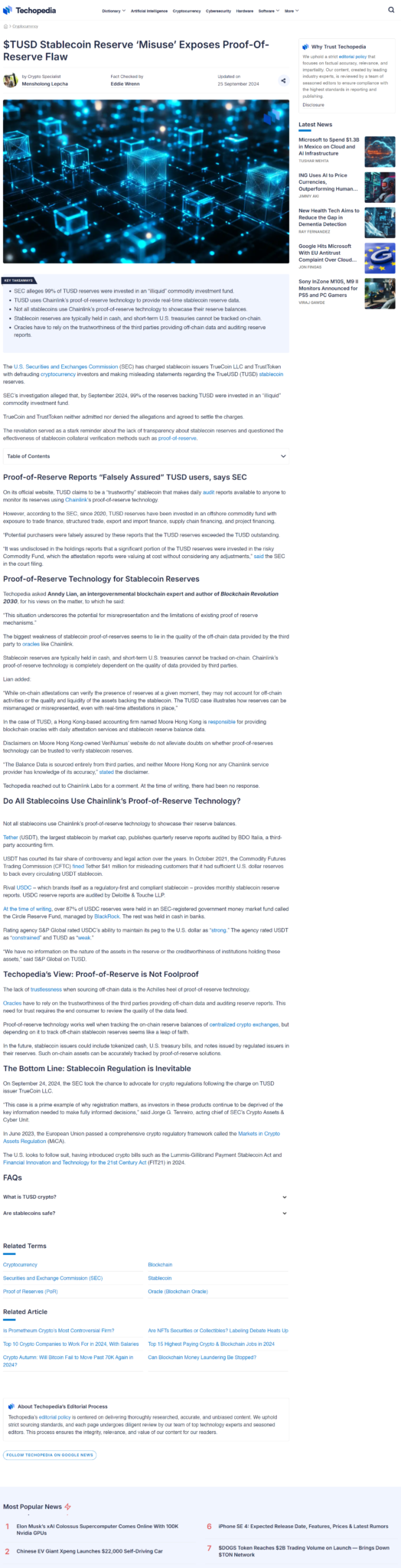
Telegram is the world’s fourth most popular online messenger app, with over 900 million monthly active users as of April 2024, according to Statista.

Related: China still controls 55% of Bitcoin hashrate despite crypto ban

Meta and WhatsApp are already sharing user data with authorities

While Telegram’s policy shift may come as a surprise, it is not unprecedented among the world’s top online messaging apps.

WhatsApp, currently the largest messenger app by users, is widely known for sharing user data with law enforcement, according to the application’s privacy policy, which states:

“Based on the circumstances, we may disclose information to law enforcement in response to an emergency disclosure request where we have a good faith reason to believe that the matter involves imminent risk of serious physical injury.”

These policies are similar to Meta’s Messenger, which also complies with requests from authorities.

Since July 2013, Meta has complied with over 301,000 requests from authorities, providing user data for over 77% of the total 528,000 legal requests received, according to Meta’s policy page.


Source: https://cointelegraph.com/news/telegram-policy-shift-privacy-concerns


j j j

DeCC Day Token 2049 Singapore – Use Cases With Commercial Application

DeCC Day Token 2049 Singapore – Use Cases With Commercial Application

During the Token 2049 week in Singapore, the DeCC event hosted a panel discussion titled “Use Cases with Commercial Applications.” Moderated by Anndy Lian, a book author and governmental blockchain advisor, the panel featured prominent figures in the blockchain industry: Gavin Thomas, Co-Founder of TEN Protocol; Josh Wyant, Founder of Novapolis; Cal, Lead Developer at SquidGrow and SilentSwap; and Juan Mari, CEO of Blok Assets. The discussion delved into the practical applications of blockchain technology, focusing on privacy, regulatory challenges, and the potential for blockchain to revolutionize various industries.

The panel began with introductions, setting the stage for a deep dive into the commercial applications of blockchain. Juan Mari introduced Blok Assets, a firm based in Puerto Rico that builds legal structures within the SEC and FCA frameworks to tokenize assets. Gavin Thomas highlighted TEN Protocol’s work on an encrypted layer 2 for Ethereum, while Josh Wyant described Novapolis as a decentralized cloud platform with a community-centric approach. Cal, representing SilentSwap, explained their focus on privacy swaps powered by the Secret Network, enabling asset exchanges across multiple EVM chains.

The discussion quickly turned to privacy, a critical aspect of blockchain technology. The panelists shared various case studies illustrating the importance of privacy in commercial applications. Gavin Thomas cited the Italian banking system’s use of an enterprise-grade blockchain, which incorporates privacy into its design. He emphasized the potential benefits of moving to public blockchains with confidential computing, which could reduce vendor lock-in and foster competition, ultimately benefiting consumers.

Cal shared insights from SilentSwap’s journey, initially targeting consumer users but later attracting business clients who also required privacy. He highlighted the need for privacy in business transactions, where competitors should not have access to each other’s financial details. This need for privacy extends to various scenarios, such as venture capitalists being copy-traded or competitive traders being front-run by rivals. SilentSwap is now developing a business-to-business SDK to address these privacy concerns.

Juan Mari pointed out the lack of protocols for transfer agents in the tokenization of real-world assets. He stressed the need for a transfer agent with robust data privacy layers, especially when dealing with regulatory bodies like the SEC and FCA. The absence of such a solution presents a significant opportunity for innovation in the blockchain space.

The conversation then shifted to the role of confidential computing in governance and regulatory compliance. The panelists discussed how confidential computing could enable secure voting and other governance applications while maintaining privacy. They acknowledged the challenges governments face in balancing privacy with regulatory requirements, such as anti-money laundering (AML) and know-your-customer (KYC) processes. The panelists emphasized the importance of educating regulators about the benefits of blockchain technology and the potential for confidential computing to enhance security and privacy.

Anndy Lian raised the issue of privacy in the context of meme projects, questioning its importance in such communities. The panelists agreed that privacy remains crucial, even in meme projects, as it allows developers and traders to maintain anonymity and protect their identities. They shared anecdotes of individuals who have faced challenges due to a lack of privacy, underscoring the need for solutions that enable users to control their data and identities.

The panel also addressed the challenges of promoting and educating users about blockchain technology. They noted that many blockchain projects struggle to communicate their value propositions effectively, often using complex terminology that alienates potential users. The panelists suggested simplifying the user experience and abstracting away the complexity of blockchain to drive adoption. They emphasized the need for a “killer app” that showcases the benefits of blockchain without requiring users to understand the underlying technology.

In discussing the future of blockchain, the panelists expressed optimism about its potential to transform industries such as trade finance. They highlighted the inefficiencies in traditional trade finance processes, which involve extensive paperwork and reliance on third parties. Blockchain technology, with its ability to facilitate secure and transparent transactions, could streamline these processes and reduce friction. The panelists envisioned a future where blockchain underpins global trade finance, enabling more efficient and secure transactions.

The panel concluded with a discussion on emerging use cases for decentralized applications (dApps) that offer significant value for commercial adoption. They identified trade finance, real-world asset tokenization, and privacy-preserving advertising as areas ripe for innovation. The panelists also highlighted the potential for confidential computing to extend beyond web 3.0, enabling web 2.0 applications to incorporate privacy-preserving features.

Overall, the panel discussion at DeCC provided valuable insights into the commercial applications of blockchain technology. The panelists highlighted the importance of privacy, the challenges of regulatory compliance, and the potential for blockchain to revolutionize industries. As blockchain technology continues to evolve, it holds the promise of transforming how businesses operate, offering new opportunities for innovation and growth.

j j j