
Decoding the diverse regulatory journeys in Southeast Asia

Decoding the diverse regulatory journeys in Southeast Asia

Insights

Which Southeast Asian country is considered one of the most crypto-friendly jurisdictions, and what regulatory framework governs crypto activities in that country?

Anndy Lian considers Singapore to be as one of the most crypto-friendly jurisdictions. The Payment Services Act, effective since January 2020, regulates crypto service providers as licensed payment institutions, ensuring compliance with anti-money laundering (AML) and consumer protection rules.

What are the main regulatory challenges and opportunities posed by the diverse crypto landscape in Southeast Asia?

Anndy Lian mentioned that the lack of uniformity in crypto regulations across Southeast Asian countries creates challenges such as regulatory uncertainty and inconsistency. However, it also presents opportunities for regulatory arbitrage, where the crypto industry seeks favorable regulatory environments for their activities.

In terms of crypto regulations, how does Indonesia differ from other Southeast Asian countries, and what has been the government's stance on crypto use?

Indonesia has a more restrictive and uncertain regulatory environment. While the government has banned the use of crypto as a means of payment, it has also recognized crypto as a tradable commodity on futures exchanges, authorizing exchanges like the Indonesia Commodity and Derivatives Exchange (ICDX) and the Jakarta Futures Exchange (JFX) to offer crypto futures contracts.

What potential trends are anticipated in Southeast Asia's crypto landscape in 2024, especially in countries like Indonesia and Vietnam?

Anndy Lian anticipated trends in 2024 include the evolution of regulatory frameworks, increased institutional engagement, the rise of Central Bank Digital Currencies (CBDCs), continued growth in DeFi and NFTs, discussions on interoperability and cross-border collaboration, educational initiatives, technological advancements, and market consolidation and maturation. These trends provide a framework for potential developments in the Southeast Asian crypto space.


Southeast Asia (SEA), a region with a population of nearly 700 million and a fast-growing digital economy, has become a hotbed for crypto innovation and adoption in recent years. However, the regulatory landscape for crypto in the region is diverse and dynamic, with different countries adopting different approaches and policies.

In this article, we will examine the current state of crypto regulations in Southeast Asia, the challenges and opportunities they pose for the crypto industry and users, and regulatory trends anticipated to gain momentum in 2024 in the region.

The state of crypto regulations in SEA

More than 600 crypto or blockchain companies are now headquartered in SEA, and the region has seen almost $1 billion in funding for crypto, blockchain and web3 startups in 2023 to date. The report also shows that crypto adoption rates in SEA averaged 3.56% in 2021, but Singapore stood out with nearly 10% of its population owning crypto, ahead of the U.S. at 8.3%.

However, the regulatory environment for crypto in SEA is not uniform or stable. Different countries have different levels of openness and maturity in regulating crypto, and some have changed their policies over time. Here is a brief overview of the crypto regulations in some of the major Southeast Asian countries:

  • Singapore: Singapore is widely regarded as one of the most crypto-friendly jurisdictions in the world, with a clear and comprehensive regulatory framework for crypto activities. The Payment Services Act, which came into effect in January 2020, regulates crypto service providers as licensed payment institutions, and requires them to comply with anti-money laundering (AML), counter-terrorism financing (CTF), and consumer protection rules. The Monetary Authority of Singapore (MAS) also oversees the offering and trading of crypto assets that are deemed as securities or derivatives under the Securities and Futures Act. Singapore has also introduced tax guidelines and sandbox schemes for crypto businesses and investors, and has fostered a vibrant crypto ecosystem with the support of industry associations, research institutes, and innovation hubs.
  • Thailand: Thailand is another country that has adopted a proactive and progressive approach to crypto regulation, with the aim of promoting innovation and protecting investors. The Thai Securities and Exchange Commission (SEC) is the main regulator of crypto activities in the country, and has issued licenses for crypto exchanges, brokers, dealers, and fund managers since 2018/19. The SEC also regulates the issuance and trading of digital tokens that are classified as securities or investment contracts under the Digital Asset Businesses Decree. The SEC has also issued guidelines and rules for initial coin offerings (ICOs), security token offerings (STOs), decentralised finance (DeFi), non-fungible tokens (NFTs), and stablecoins, and has collaborated with other regulators and stakeholders to develop the crypto industry and market.
  • Malaysia: Malaysia has a similar regulatory framework to Thailand, with the Securities Commission (SC) as the main regulator of crypto activities in the country. The SC requires crypto service providers to obtain licenses as recognised market operators, and regulates the offering and trading of digital tokens that are considered as securities or investment contracts under the Capital Markets and Services Act. The SC has also issued guidelines and rules for ICOs, STOs, DeFi, NFTs, and stablecoins, and has established a regulatory sandbox for crypto innovation. The SC works closely with the Central Bank of Malaysia (BNM) to ensure the stability and integrity of the crypto market and the financial system.
  • Indonesia: Indonesia has a more restrictive and uncertain regulatory environment for crypto, with the government and the regulators sending mixed signals to the crypto industry and users. The BNM has banned the use of crypto as a means of payment and has warned the public of the risks and legal consequences of using crypto. However, the BNM has also acknowledged that crypto is a commodity that can be traded on futures exchanges, and has authorised the Indonesia Commodity and Derivatives Exchange (ICDX) and the Jakarta Futures Exchange (JFX) to offer crypto futures contracts since 2019. The Indonesian Trade Ministry has also issued regulations for crypto asset trading, and requires crypto service providers to register with the Commodity Futures Trading Regulatory Agency (Bappebti) and comply with AML, CTF, and consumer protection rules.
  • Philippines: The Philippines has a more balanced and pragmatic regulatory approach to crypto, with the government and the regulators recognising the potential and challenges of crypto. The Bangko Sentral ng Pilipinas (BSP) regulates crypto service providers as remittance and transfer companies, and requires them to obtain licenses and comply with AML, CTF, and consumer protection rules. The BSP has also issued guidelines for the issuance and exchange of digital tokens that are considered as securities or investment contracts under the Securities Regulation Code. The BSP collaborates with the Securities and Exchange Commission (SEC) and the Cagayan Economic Zone Authority (CEZA) to oversee and develop the crypto industry and market.
  • Vietnam: Vietnam has a more hostile and ambiguous regulatory stance on crypto, with the government and the regulators banning and discouraging the use and trading of crypto. The State Bank of Vietnam (SBV) has prohibited the use of crypto as a means of payment since 2017, and has declared that crypto is not a legal tender or a recognised asset in the country . The SBV has also warned the public of the risks and legal consequences of using and trading crypto, and has instructed financial institutions and service providers to refrain from engaging in crypto activities. However, the SBV has also indicated that it is studying and researching the possibility of issuing a central bank digital currency (CBDC) in the future.

The challenges and opportunities of crypto regulations in SEA

The diverse and dynamic regulatory landscape for crypto in SEA poses both challenges and opportunities for the crypto industry and users in the region. Some of the main challenges and opportunities are:

  • Regulatory uncertainty and inconsistency: The lack of clarity and coherence in crypto regulations across different countries and jurisdictions in SEA creates confusion and uncertainty for the crypto industry and users, and hinders the cross-border integration and interoperability of crypto services and products.
  • Regulatory arbitrage and competition: The variation and disparity in crypto regulations across different countries and jurisdictions in SEA also creates opportunities and incentives for the crypto industry and users to seek and exploit the most favorable and advantageous regulatory environments for their crypto activities.
  • Regulatory collaboration and coordination: The complexity and diversity of crypto regulations in SEA also requires and encourages the collaboration and coordination among different regulators and stakeholders within and across different countries and jurisdictions in the region.

8 regulatory trends in SEA in 2024

Predicting trends for 2024 in SEA’s crypto landscape involves several considerations based on the existing regulatory environment, market trends, and technological advancements. Here are potential trends to look out for:

  1. Evolution of Regulatory Frameworks: Expect continued evolution and refinement of crypto regulations in SEA. Some countries might amend or introduce new legislation to provide more clarity and structure, aiming to balance innovation with investor protection and financial stability. Watch for updates on licensing requirements, compliance standards, and tax guidelines, especially in countries like Indonesia and Vietnam, which have shown mixed signals and could undergo significant regulatory changes.
  2. Increased Institutional Engagement: Anticipate greater involvement from institutional investors and traditional financial institutions in the Southeast Asian crypto space. As regulatory clarity improves and crypto markets mature, institutions might explore avenues for investment and integration of digital assets into their portfolios or services.
  3. Rise of CBDCs: Several Southeast Asian countries, including Indonesia and Vietnam, have shown interest in exploring CBDCs. Keep an eye on potential pilot projects or announcements regarding the development and implementation of digital versions of national currencies, which could impact the broader crypto ecosystem in the region.
  4. DeFi and NFTs: Continued growth and innovation within the DeFi and NFT sectors are expected. Countries like Thailand and the Philippines have shown interest in regulating and fostering these segments. Look for initiatives promoting responsible DeFi practices and guidelines for NFT markets, possibly indicating a more structured approach by regulatory bodies.
  5. Interoperability and Cross-Border Collaboration: With varying regulations across Southeast Asian countries, expect discussions on interoperability and cross-border collaboration to gain momentum. Efforts to harmonise certain aspects of regulations or establish frameworks for smoother cross-border crypto transactions might begin to surface.
  6. Education and Awareness Campaigns: Governments and regulatory bodies may intensify efforts to educate the public about the risks and benefits of crypto. Initiatives aimed at increasing financial literacy and awareness about safe crypto practices could emerge, especially in countries where regulatory stances are less clear.
  7. Technological Advancements and Innovation: Keep an eye on technological advancements, such as Layer 2 scaling solutions, privacy enhancements, and sustainable blockchain developments. SEA might witness increased adoption of eco-friendly crypto solutions and technologies focused on scalability and user privacy.
  8. Market Consolidation and Maturation: The crypto market in SEA may undergo consolidation as stronger regulations prompt weaker or non-compliant entities to exit. This could lead to a more mature and stable market environment, attracting serious players and fostering investor trust.

These trends are speculative and subject to changes influenced by geopolitical factors, technological breakthroughs, global market trends, and regulatory shifts. In my humble opinion, they provide a framework for potential developments in the Southeast Asian crypto space in 2024.

Conclusion

SEA is a good crypto breeding ground, with a large and growing crypto market and industry, and a diverse and dynamic regulatory landscape. While Singapore leads with a robust and transparent regulatory framework, others like Indonesia and Vietnam grapple with uncertainty, fostering a complex environment for industry players and users.

Navigating this intricate regulatory landscape requires a proactive stance from crypto stakeholders. Compliance with evolving regulations, obtaining requisite licenses, and aligning with diverse jurisdictional standards are crucial. Simultaneously, refraining from unlawful activities and staying updated with accurate information become paramount. Collaborative efforts among regulators and stakeholders across borders could streamline regulations and foster a more coherent environment for the burgeoning crypto industry.

Looking ahead to 2024, several potential trends loom on the horizon, including regulatory evolution, increased institutional engagement, the rise of CBDCs, emphasis on DeFi and NFTs, interoperability discussions, educational initiatives, technological advancements, and market maturation. These anticipated trends offer a roadmap for potential developments. Their realisation depends on multifaceted factors such as global market dynamics, technological progressions, geopolitical shifts, and regulatory reforms. Despite uncertainties, these projections serve as guiding principles for stakeholders navigating the complex terrain of SEA’s crypto journey in the upcoming years.

 

Source: https://ciosea.economictimes.indiatimes.com/blog/a-tale-of-two-technologies-the-intricacies-of-data-and-ai/106511920

j j j

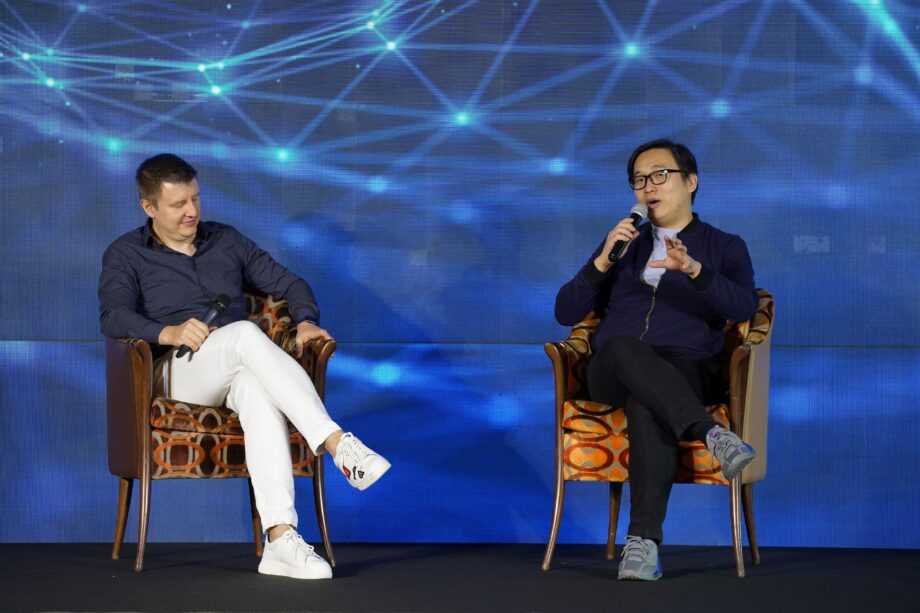
Fireside chat with Anndy Lian at World Tokenization Summit, Dubai

Fireside chat with Anndy Lian at World Tokenization Summit, Dubai

Insights

What is the background of Anndy Lian, the guest speaker in the fireside chat on real-world tokenization?

Anndy Lian, based in Singapore, entered the crypto world in 2013 and became fully immersed in blockchain by 2017. He serves as an intergovernmental blockchain expert, book author, and has advised various governments.

How does Anndy Lian view the state of real-world tokenization, and what changes has he observed since discussing the concept in 2017-2018?

Anndy Lian acknowledges the significant traction real-world tokenization has gained. Initially met with skepticism, governments and companies now embrace the idea, recognizing its straightforwardness. The technology for asset tokenization is deemed ready, with big banks and governments leading the wave.

What are the key challenges highlighted by Anndy Lian regarding the revenue model behind some real-world asset (RWA) projects?

Anndy Lian questions the sustainability and revenue generation of RWA projects, especially those tokenizing assets like mid-level properties. He emphasizes the liquidity problem associated with certain asset tokenization.

According to Anndy Lian, what is the future outlook for stablecoins and carbon credit tokenization, and how do governments perceive stablecoins?

Lian sees stablecoins as here to stay, with more governments likely to embrace them within a certain framework. He views carbon credit tokenization as a valid use case, citing the intriguing traceability of the credit itself.

In Anndy Lian's perspective, what impact could tokenization have on the financial industry if adopted on a large scale, and what does he envision for the future of transactions?

Lian believes tokenization, if widely adopted, could revolutionize the financial industry, making transactions more efficient, faster, and cheaper. He envisions the potential for 24/7 clearance and money transfers, leading to a more effective financial system.


In the ever-evolving world of blockchain and cryptocurrencies, the concept of real-world tokenization has been gaining significant traction. To delve deeper into this topic, we recently had the pleasure of hosting a fireside chat with Anndy Lian, an intergovernmental blockchain expert and book author.

The discussion was led by Faraj, the Chief Commercial Officer of Venom Foundation, a layer one chain out of Abu Dhabi focusing on stable coins and real-world asset organization globally. Faraj is also the founder of a large community of crypto executives, boasting around 2,000 members.

The guest speaker, Anndy Lian, is based in Singapore but often travels around the globe. He embarked on his journey in the crypto world in 2013 when he bought his first Bitcoin. By 2017, he had fully immersed himself in the blockchain space and has never left since. Lian advises different governments. At one point, he served as a blockchain advisor to an intergovernmental group.

The State of Real-World Tokenization
When asked about his views on real-world tokenization, Lian acknowledged the obvious traction the concept has gained over the years. He recalled how governments were skeptical when he first started discussing the idea around 2017-2018. However, the narrative has since changed. Today, governments and companies are more open to the idea, recognizing the straightforwardness of real-world asset (RWA) tokenization.

Lian believes that the technology for tokenizing assets is 100% ready. He sees big banks and governments pushing the RWA wave, indicating a promising future for the concept. However, he also highlighted a key issue: the revenue model behind some of these RWA projects. He questioned how these companies would sustain themselves and make money, especially given the liquidity problem associated with tokenizing certain assets like mid-level properties.

The Future of Stable Coins and Carbon Credit Tokenization
Discussing the future of stablecoins and carbon credit tokenization, Lian expressed that most government bodies he interacts with recognize that stablecoins are here to stay. He sees a future where more governments will embrace stable coins within a certain framework, which could lead to the acceleration of Central Bank Digital Currencies (CBDCs).

As for carbon credit tokenization, Lian sees it as a valid use case. He has interacted with several carbon credit exchanges and believes that the traceability of the credit itself would be very interesting.

The Impact of Tokenization on the Financial Industry
If tokenization is taken seriously and adopted on a large scale, Lian believes it could have a long-lasting impact on the financial industry. He envisions a future where transactions become more effective, with money moving from point A to B in a much faster and cheaper manner. He also sees the potential for 24/7 clearance and money transfers, leading to a more effective financial system.

The Next Driver of Mass Adoption
When asked about the next driver of mass adoption, Lian expressed his hope for more people to start talking about how they can spend their crypto. He believes that the next “wow” moment would be seeing more adoption, leading to a larger community and driving crypto to the next level.

Conclusion
The fireside chat with Anndy Lian provided valuable insights into the world of real-world tokenization, stablecoins, and carbon credit tokenization. As the blockchain and crypto space continues to evolve, these discussions play a crucial role in shaping the future of the industry. As Lian aptly put it, the key is to read, learn, and explore for oneself, rather than relying solely on influencers or hype.

World Tokenization Summit was held on 21st of November 2023 at Melia Desert Palm, Al Awir Road, Warsan 2, Dubai, United Arab Emirates.

j j j

Crypto and Web 3 Predictions in 2024 (Part 1)

Crypto and Web 3 Predictions in 2024 (Part 1)

Insights

What are some of the trends that will shape the future of crypto and Web3 in 2024?

Anndy Lian highlighted the trends shaping the future of crypto and Web3 in 2024 include significant improvements in user experience, the evolution of a modular technology stack, integration of AI and blockchain, and the emphasis on user-centric design.

How will the modular technology stack impact the user experience in crypto and Web3 in 2024?

Anndy Lian suggested that the modular technology stack in crypto and Web3 allows for easy integration and interoperability, enhancing flexibility, scalability, and compatibility among different solutions. Users can access multiple blockchains and protocols through a single wallet, reducing complexity and friction.

What role does AI play in improving the user experience of crypto and Web3 applications in 2024?

Anndy Lian mentioned that AI enhances the user experience by offering personalization, recommendation, automation, and optimization. AI-powered assistants, tools, and platforms simplify interactions with crypto and Web3 applications through natural language, voice, or chat, making it more accessible to users.

How will the play to earn model transform into a play and earn model in 2024, and what technologies will drive this transformation?

Anndy Lian shared that the play to earn model will transform into a play and earn model in 2024, powered by Web3 technology. This transformation empowers players to become creators, curators, or governors of games through decentralized platforms like DAOs. The incorporation of AI technology also contributes to the creation of generative content, enriching gameplay, diversity, and creativity.

How can user-centric design positively impact the adoption of crypto and Web3 technologies in 2024?

User-centric design, focusing on tailoring products and services to user needs, enhances the usability, accessibility, and desirability of crypto and Web3 technologies. Platforms like Audius exemplify user-centric design, allowing users to engage with crypto and Web3 functionalities without the need for in-depth technical knowledge.

AI and Blockchain Convergence to Reshape Crypto and Web3 in 2024

  • This article covers the first part of crypto and Web 3 predictions in 2024.
  • The integration of AI and blockchain technology is expected to enhance the Web 3 user experience.

The year 2023 has been a remarkable one for the crypto and Web3 space, with many innovations, challenges, and opportunities emerging. The adoption of decentralized technologies has grown exponentially, reaching new heights of user engagement, value creation, and social impact.

As we enter 2024, what are some of the trends that will shape the future of crypto and Web3? Here are some of my predictions and thoughts as we delve into the first part of our crypto and Web 3 predictions for 2024. It is based on the current state of the industry, the latest developments, and the potential scenarios.

New UX User Experience

One of the main barriers to mass adoption of crypto and Web3 is the user experience (UX), which is often complex, confusing, and intimidating for newcomers. Users have to deal with unfamiliar concepts such as wallets, keys, addresses, gas fees, transactions, smart contracts, and more. They also have to navigate through multiple platforms, protocols, and applications, each with its own interface, functionality, and terminology.

This creates a steep learning curve and a high cognitive load for users, who may feel overwhelmed and frustrated by the process. However, in 2024, I predict that we will see a significant improvement in the UX of crypto and Web3, thanks to several factors:

  • Modular technology stack: The crypto and Web3 space is evolving into a modular technology stack, where different layers and components can be easily integrated and interoperated. This allows for more flexibility, scalability, and compatibility among different solutions and reduces the friction and complexity for users. For example, users can access multiple blockchains, protocols, and applications through a single wallet, such as MetaMask, without having to switch between different accounts, networks, or devices.
  • Users can also leverage cross-chain bridges, such as Polygon, to transfer assets and data across different blockchains, such as Ethereum or Solana, without having to deal with multiple transactions, fees, or conversions. Users can also use aggregators, such as Zapper, to manage their portfolios, track their performance, and access various decentralized finance (DeFi) opportunities, such as lending, borrowing, swapping, staking, or farming, without having to visit multiple websites, apps, or platforms.
  • AI + blockchain: Another factor that will enhance the UX of crypto and Web3 is the integration of artificial intelligence (AI) and blockchain. AI can provide various benefits for users, such as personalization, recommendation, automation, and optimization. For example, users can use AI-powered assistants, such as GPT-4, to interact with crypto and Web3 applications through natural language, voice, or chat without having to learn complex commands, codes, or interfaces.
  • Users can also use AI-powered tools, such as [Rebalance] or [Yearn], to automatically allocate, rebalance, and optimize their crypto portfolios based on their preferences, goals, and risk profiles without having to manually monitor, analyze, or execute their strategies. Users can also use AI-powered platforms, such as OpenAI Codex, to create, deploy, and manage their own crypto and Web3 applications, such as smart contracts, decentralized autonomous organizations (DAOs), or non-fungible tokens (NFTs), without having to write, test, or audit any code.
  • User-centric design: The third factor that will improve the UX of crypto and Web3 is the user-centric design, which is the process of designing products and services that are tailored to the needs, wants, and behaviors of the users, rather than the features, functions, or technologies of the products and services. User-centric design involves various methods, such as user research, user testing, user feedback, user personas, user journeys, user stories, and user interfaces, to understand, empathize, and satisfy the users. User-centric design is essential for crypto and Web3, as it can help to reduce the gap between the users and the technology, and increase the usability, accessibility, and desirability of the products and services.
  • For example, users can use user-centric platforms, such as Audius, to discover, create, and share music or art, using crypto and Web3 technologies, such as tokens, royalties, or governance, without having to know the technical details or implications of these technologies.

Play to Earn Becomes Play and Earn

Another trend that will dominate the crypto and Web3 space in 2024 is the play to earn model, which is the concept of earning crypto rewards by playing games. Play to earn games are powered by blockchain technology, which enables the creation of digital assets, such as NFTs, that can represent in-game items, characters, or lands, and can be owned, traded, or monetized by the players. Play to earn games also leverage smart contracts, which enable the creation of decentralized economies, such as tokens, that can reward the players for their participation, contribution, or achievement in the games.

Play to earn games are attractive for players, as they can provide fun, entertainment, and social interaction, as well as income, empowerment, and ownership. However, in 2024, I predict that we will see a transformation of the play to earn model, into a play and earn model, which is the concept of earning crypto rewards by playing and creating games. Play and earn games are powered by Web3 technology, which enables the creation of decentralized platforms, such as DAOs, that can empower the players to become creators, curators, or governors of the games.

Play and earn games also leverage AI technology, which enables the creation of generative content, such as stories, worlds, or characters, that can enrich the gameplay, diversity, and creativity of the games. Play and earn games are attractive for players, as they can provide not only fun, entertainment, and social interaction but also expression, innovation, and collaboration.

Personally, I do believe the bigger players like Axie Infinity and Sandbox will make big changes and moves in 2024. In the second part of this article, we will look at the role of AI in developing games.

Source: https://www.financemagnates.com/cryptocurrency/ai-and-blockchain-convergence-to-reshape-crypto-and-web3-in-2024/

j j j
