
After Terra, Luna crashes, regulators count cost of crypto

After Terra, Luna crashes, regulators count cost of crypto

Spectacular collapse of stablecoin puts focus on regulatory frameworks in South Korea and Singapore.

Taipei, Taiwan – As the crypto winter deepened this month, one wealth-destroying event – the collapse of the TerraUSD (UST) and Luna coins – has brought the human cost of unstable cryptocurrency projects to the surface.

UST, a so-called “algorithmic stablecoin,” plummeted over the last week as it lost its peg against the US dollar and sent its sistercoin Luna crashing to zero, erasing about $45bn. The crash wiped out the savings of untold numbers of investors overnight.

“I felt my heart sink watching Luna go into that downward spiral,” Hank Kennedy, a factory worker in Chicago, told Al Jazeera. “It (the crash) has had a huge impact on my life.

“Now I’m behind on all my bills, and I’ve lost $40,000, which was everything I had in my savings,” Kennedy added. “I was actually thinking that I would be able to make enough money to pay my home off, but instead, I’ve lost everything.”

The incident epitomises regulators’ nightmare scenario of crypto projects going wrong and prompted US Treasury Secretary Janet Yellen to call for regulation of stablecoins – whose selling point is their supposed stability due to being pegged to another currency or commodity – by year’s end. Former lawyers at the Securities and Exchange Commission (SEC) say the agency is probably already investigating the case.

In Asia, regulators may also have impetus to act.

Do Kwon, the creator of the cryptos, is a South Korean national, while Terraform Labs and the Luna Foundation Guard, the organisations that support the digital coins, are both registered in Singapore.

South Korean authorities launched an “emergency investigation” into the case this week. Investors in Singapore have filed police reports, although authorities have yet to make any move.

Kwon wrote on Twitter last week that he was “heartbroken” about the pain his invention had brought investors and that neither he nor the companies associated with the project had sold UST or Luna to profit from the crash. The statements came after the founder earlier that day proposed a “revival plan” to restart the network and distribute ownership of the project via one billion new tokens issued to holders of the collapsed currency. Kwon and the Luna Foundation Guard did not respond to requests for comment before publication.

The crash comes amid a rethink of the city state’s regulatory approach to digital assets as it tries to position itself as a responsible crypto hub. Singapore’s response could set a precedent as the social and economic costs of poorly managed projects come into sharper focus.

Singapore
Singapore is trying to position itself as a responsible crypto hub [File: Ore Huiying/Bloomberg]

“The government of Singapore is not going to be impressed that a firm registered in its country, with no real material ties to the city-state, has caused such damage to investors around the world,” Sam Reynolds, a Taipei-based crypto analyst at CoinDesk, told Al Jazeera.

“This is likely to lead to a further tightening of rules surrounding crypto firms registered in Singapore for jurisdictional preference yet conducting business primarily abroad,” he added.

Singapore’s parliament had already passed a law last month to increase oversight of firms like Luna that are domestically registered crypto companies but mainly operate abroad.

Under its Payments Services Act 2019, entities that offer payment instruments, such as algorithmic stablecoins, require a Digital Payment Token Services (DPTS) licence. Though Singapore has only issued a DPTS licence to a handful of firms, it has granted many more companies temporary exemptions from the law.

Yet when billions went up in smoke up this month, Kwon’s organizations had neither a DPTS licence nor an official exemption, according to Singapore’s Financial Institutions Directory.

Its failure to register is the first of three interrelated factors that lay compelling grounds for legal intervention by the city-state, according to Anndy Lian, a Singaporean crypto thought leader and author of Blockchain Revolution 2030.

“The second (factor) is this was a stablecoin,” Lian said, noting that since it was advertised as having parity with the US dollar and boasted 20 percent yields, it appealed to investors looking to stake their savings over time. This differentiates it from other cryptocurrencies whose price floats freely and are conducive to speculative trading.

“That means many retail investors got hurt on the pretext they had bought into the project because it is a stablecoin,” said Lian.

“From a Singaporean perspective, if you are a retail investor and you feel that you have been a victim of fraud, and have lost a certain amount of dollars on paper even though you held your investment and did not sell … that is a possible lawsuit Singaporeans can pursue or the government can pursue,” he said.

Cooperation with foreign regulators

The third reason is Kwon’s planned “fork” – the closing of the original network and launching a substitute – which has been put forth to revive the currency. Lian said such a move would  “dilute all the shareholders” and redistribute the tokens in a way that is likely to be highly inequitable.

“I think the Singaporean government will surely take some action after the fork is attempted,” he said.

South Korea’s Financial Supervisory Service (FSS) said this week that increased cooperation with foreign authorities is needed to regulate crypto after the Luna crash.

Lian believes Singapore may coordinate with foreign regulators on the case, too.

“Because this is a global event, there might be a common interest for the US and Singapore to work together on this case,” he said.

Lian said any action should not set the wrong precedent by insulating crypto investors from all losses.

“It would be misleading if investors believed they can claim losses from all altcoins. This was different since this was a stablecoin. We need to make that demarcation very clear,” he said.

“I think more regulatory clarity would need to be established before crypto-specific cooperation with countries could happen,” Reynolds said, referring to the continuing lawsuit between Terraform Labs and the SEC that seeks to establish if the financial watchdog has jurisdiction over the project.

Even if the company were found liable, it is unclear whether it has the assets to repay investors.

“The question would be, what assets would Terraform Labs and the Luna Foundation Guard have to repay investors?” Reynolds said.

“The Luna Foundation Guard, with its current balance sheet, could only pay out pennies on the dollar. And aside from those balances, it is unlikely that Terraform Labs has material assets sufficient to pay out any claims against it in a meaningful way,” he added.

“Before this happens, we would also need a determination if the collapse happened because of fraud, negligence, a coordinated attack, or market rejection of the platform. Right now, that’s not clear.”
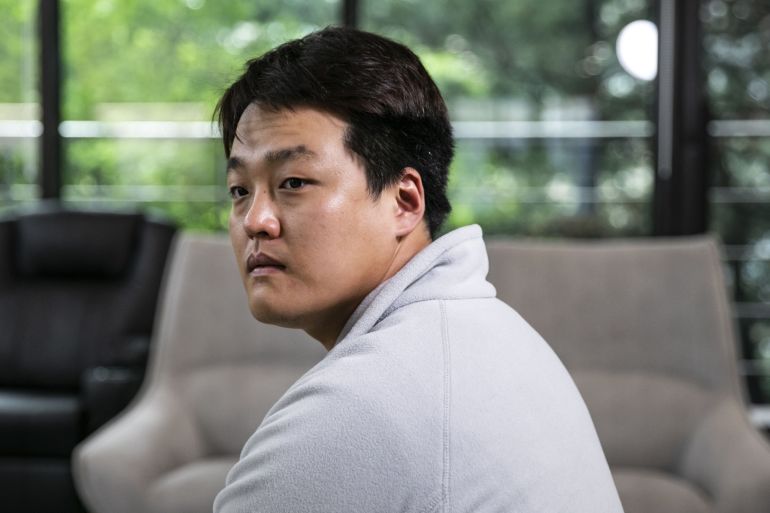
Do Kwon
Terraform Labs founder Do Kwon is a South Korean national who registered his company in Singapore [File: Woohae Cho/Bloomberg]

Lian said regulators will look for a strong expression of shared grievances to justify moving forward with a case in Singapore.

In recent days, an online community in South Korea named “Victims of Terra-Luna coin” has been formed for this purpose.

Kennedy, the US worker who lost his funds, said he would readily join a class action lawsuit against Kwon.

“(This is) the reason why people like me try to talk with him on Twitter every day … to get some type of answers,” he said.

As regulators mull over their next move, the saga has offered industry players a moment of pause to reflect on what constitutes good governance and sound investing.

“It will take time to get the trust back,” Lian said, adding the case has spooked institutional investors in Singapore.

“I think we need to rethink what decentralisation means. What will happen next with Luna will not be based on any consensus formed among its community.”

Reynolds said investors should do their research and ensure they have diversified their assets.

“On paper, algorithmic stablecoins were a good idea but the industry is coming dangerously close to a ‘2008 moment’ as a result of one project’s outsized ambition,” he said. “The VCs that backed Terra need to have a serious think about how we got to this moment.”

SOURCE: AL JAZEERA
j j j

Interview with JETGALA- NFT (Art): A Primer

Interview with JETGALA- NFT (Art): A Primer

Crypto entrepreneur Anndy Lian weighs in on the phenomenal growth of NFTs, and its implications on art creators, vendors and buyers, and the creation of art itself

By Victor Chen, Photos courtesy of Anndy Lian/BigONE Exchange


Posted on 19 May 2022.

In 2020, Christie’s sale of the digital artwork, Everydays – The First 5000 Days by Beeple, for US$69.3 million captured the attention of the public, artists and creators, remarks Anndy Lian, Chairman of BigONE Exchange, provider of a trading platform for various cryptocurrencies.

The NFT trend further intensified with the sale of Larva Labs’s Cryptopunks for US$17 million – and has not waned since, he continues. “Those sales are well known and talked about, but what remains somewhat obscure is how the blockchain-based NFT technology provides a transparent record of price, ownership and authenticity, all of which are well suited to the needs of creators, sellers and buyers in the art market,” Lian remarks.

An NFT is a digital representation of an artwork that is registered or ‘minted’ in a digital database called a blockchain. Among the biggest changes that it is anticipated to bring are the transparency in the ownership and exchange, and the importance of digital art.

“Certainly, for the needs of any growing two-sided marketplace to continue thriving NFTs offer distinctly powerful advantages: for creators, it provides an open network with the opportunity to express one’s creativity and prove ownership, and for collectors, it’s a readily accessible way to own and express their taste in a digitally native world.”

As with investing in cryptocurrency, it’s important, especially when buying an NFT artwork, to ensure it is safe and profitable. This requires doing proper research into the artwork, and setting up an account in a well-known marketplace safely and securely, advises Lian. “It’s important for people to realise that in the NFT world security is one’s own responsibility,” he cautions. “There’s no call center to sort it out for you when things go pear-shaped.”

Safety includes simple but important steps such as using a password manager to create and store one’s passwords for registering with NFT sites like OpenSea or LooksRare, Lian advises. Both marketplaces offer helpful guides to installing and connecting a wallet to the platform, buying an NFT artwork at a fixed price or in an NFT auction, and selling them when the time comes, which includes creating a sale listing to accepting an offer, Lian says. They also provide information on how artists can go about creating their first NFT artwork. “Remember that NFTs do not provide ownership of the underlying digital asset. So, make sure you also have a contract to prove your ownership of the asset itself, in case it is required.

“Ultimately, however, it’s down to participants and collectors to find artists with enduring creative value, not just to make a quick buck on. These will be the most profitable as long-term investments, like investing long-term in cryptocurrency you know will only grow in value such as Bitcoin.”

Lian asserts that understanding what the numbers mean is crucial in assessing the NFT marketplace. “For example, in August last year, OpenSea exceeded $1 billion in gross market volume year-to-date for the first time. By late 2021, it had grown so much that it processed $3.2 billion in volume in the month of December alone. Meanwhile, data shows that OpenSea currently has around 1.75 million users.

“But what’s special about growing this marketplace, supported by the decentralised blockchain technology, is the way it also allows participants to learn about the space from a modest purchase, and the qualitative benefit of being able to connect directly with artists and creators.”

This educates buyers and collectors from these conversations, which builds sustainable value in artist’s work at a human and a market level, Lian reasons. “And with global brands like Nike buying NFT startup RTFKT Studios last year, positioning it as a brand leveraging cutting-edge innovation to create a ’next generation’ collectibles culture, the wider market for creative NFTs is only going to grow further. Indeed, Nike’s virtual sneakers will help deliver an immersive experience in the metaverse—another huge growth area for artist’s NFTs as well as forward thinking brands.”

Tracking Lian

Founded in 2017 and registered in the Netherlands, BigONE operates in Russia, Brazil, Vietnam, Seychelles, Singapore, Japan, and Indonesia, providing marketing, investment, and blockchain technology R&D.

As Chairman, Lian runs the group’s crypto online channels, from Twitter to Reddit, providing insights on such topics as the metaverse, NFTs, and the latest crypto regulation in Singapore as an incentive to get their users involved. For example, BigONE empowers and encourages women to participate in the blockchain space.

Lian also heads the communication for BigONE products, including liquidity mining, and spearheads partnership with select new projects that seek the listing of their token on the BigONE exchange.

Bringing over 15 years of experience in Asia working in various industries for local, international, and publicly traded companies, Lian is concurrently the chief digital advisor at the Mongolian Productivity Organisation and a blockchain investment partner at Passion Venture Capital.

Previously, he served as the blockchain advisor for Asian Productivity Organisation (APO), an intergovernmental organisation and advisory board member to Hyundai DAC, the blockchain arm of South Korea’s Hyundai Motor Group.


SET UP YOUR NFT by Anndy Lian

NFTs are used to acquire an artwork. To do this, a buyer (or a seller) must purchase a well-recognised cryptocurrency, say, Ethereum (ETH for short). An Ethereum is similar to a Bitcoin; however, unlike a Bitcoin, it is designed to support several applications making it the cryptocurrency of choice for acquiring NFTs.

To buy an Ethereum, two things must be set up: a crypto exchange account and a Metamask browser wallet where the Ethereum bought from a crypto exchange will be eventually transferred. The Metamask wallet is what is used in transacting in the NFT marketplace, such as OpenSea, to buy or sell an NFT artwork. Currently, the most popular Metamask browser extension is in the Chrome browser.

Once the Metamask extension has been set up, its address is released to the buyer and the Ethereum is transferred to that wallet address. With the complicated part of the setting up an account out of the way, transactions are fairly easy.

Explore Before Acquiring

A good way to start acquiring NFT artwork is by exploring the market. This is similar to visiting galleries to ascertain what are available for acquisition. Popular marketplaces, such as Opensea, offer many different NFT artworks for sale. Using the access provided in the Metamask wallet, a sale transaction can then proceed. When buying an NFT artwork, both the cost of the NFT as well as the transaction, also known as the ‘gas fee’, are to be paid.

In some cases, especially for NFT artwork that are priced lower, the gas fee can be greater higher, so it’s good to be aware of that from the outset. Once an NFT artwork is bought, it can be sold for a higher price, less 2.5 per cent that goes to OpenSea and a creator royalty that goes to the original creator.

This where NFT artworks contain what’s known as a smart contract, an automated blockchain-based process that gives the artist a percentage of any future sale of the token.

Do Your Homework

To assess whether an NFT artwork is worth buying, a few checks must be made. Firstly, for any given NFT artwork, the selling history must be reviewed. Are people are buying or selling the NFT? If not, and you buy an NFT then you could be stuck with an item that’s hard to sell.

Another good indicator in OpenSea is to look at the overall collection and see how much is being sold, in other words what the volume is.  In other words, you want a NFT that has had many buys and sells, that’s what is termed ‘Liquid’ so you can easily sell it if you wish to cash in your investment.

Connected to that you want to see if the NFT over its history has been rising in price. Plus, its worth checking the ‘floor price’ to see the lowest cost of NFTs in a collection, so if you need to sell you can more easily sell if you have a NFT nearer the floor price. Finally, it’s worth Googling the collection’s community, to see how well supported they are in channels such as Discord and Twitter to judge the demand for the NFTs from a creator/artist.


Original Source: https://www.jetgala.com/nft-art-a-primer/

j j j

Benzinga- People Hesitant To Buy Crypto Due to Lack of Knowledge: Study

Benzinga- People Hesitant To Buy Crypto Due to Lack of Knowledge: Study

Additional Comments by Anndy Lian:

Skeptics often argue that bitcoin was created out of thin air. Yet every Bitcoin is mined by solving complex cryptographic hash puzzles to verify blocks of transactions that are updated on the decentralized blockchain ledger. Skeptics can be reduced if you know what you are doing, there is a lack in the education of cryptocurrency in the space right now or should I say lack of proper knowledge sharing. People who are conducting masterclasses on how to use DEXes (Decentralized Exchanges) may not have traded on a DEX before. They do not understand how slippage works and so forth and where to import their contracts. If education is done well, the barrier of entry would be easier.

Many users that I know rely on hear-say information from the grapevine or they solely depend on mainstream papers. It is not good enough. They should look at reading online expert opinion articles and blogs where real users share their experiences. This would help them think wider and allow them to make sound decisions on what to do next.

Be the changemaker, don’t be the problem. Crypto changes minds, empower you to think beyond what you have learnt in textbook.


People Hesitant To Buy Crypto Due to Lack of Knowledge: Study

With over 100 million people globally using cryptocurrencies in 2021, the digital dollar has become a widely accepted way of saving and spending.

A new study, however, points out that the majority of those who have not invested in cryptos are either due to a lack of knowledge, massive fluctuations, or a perception that the digital currencies are a scam.

A study conducted by Coupon Follow also found out that Gen Z says further government regulations and crypto law enforcement is most likely to convince them to buy crypto and one in five people who have never bought crypto have downloaded a crypto exchange app at some point.

Coupon Follow surveyed 1,172 respondents over the age of 18 via SurveyMonkey and respondents were limited to those in the United States who had not yet bought or invested in cryptocurrency.

Gen Z, millennials, Gen X, and baby boomers were all included in the survey, with sample sizes ranging from 172 to 333 for each generation.

Hesitation due to lack of understanding

When respondents were asked about their aversion toward purchasing cryptocurrency, 42% said it was because they didn’t understand its value. Meanwhile, 39% were put off by the massive fluctuations in value that have plagued certain cryptocurrencies.

The third most common reason for hesitation was a concern that cryptos as a whole seemed like a scam. This sentiment was most common among baby boomers, 44% of whom selected it as their primary cause for pause.

Surprisingly, 18% of crypto skeptics have downloaded crypto exchange apps onto their phones but never ended up investing in any coins. The biggest reason for this sort of course reversal was a lack of knowledge about how to use the app or the currencies.

Interest Piqued?

Crypto investment interest seems to have taken a hit in 2022, with 61% of respondents saying they’re not at all likely to buy in this year. Only 6% of respondents who didn’t currently own crypto said they would be very or extremely likely to do so in the near future.

Looking forward to learning

The study results point out that interest in learning more about cryptocurrency is not dead. 6 out of 10 people were at least somewhat willing to learn more about cryptocurrency, even if they weren’t ready to spend money on it.

Experts say educating the masses is the need of the hour and relying on hear-say or sole dependence on the media is not good enough.

Anndy Lian, Thought Leader and Chief Digital Advisor to Mongolian Productivity Organization says people should look at reading online expert opinion articles and blogs where real users share their experiences.”

“This would help them think wider and allow them to make sound decisions on what to do next. Be the changemaker, don’t be the problem. Crypto changes minds and empowers you to think beyond what you have learned in the textbook,” Lian says.

Raj Kapoor, chief Advisor at Acryptoverse, a crypto blockchain and advisory firm, says for years crypto has seemed like the fleeting tech trend most people could safely ignore, however, its power – both economic and cultural – has become too big to overlook.

“The elephant is in the room. Can we kick it out? I don’t think so, so let us learn to dance with the elephant now,” he adds.

Original Source: https://www.benzinga.com/22/05/27286330/people-hesitant-to-buy-crypto-due-to-lack-of-knowledge-study


j j j