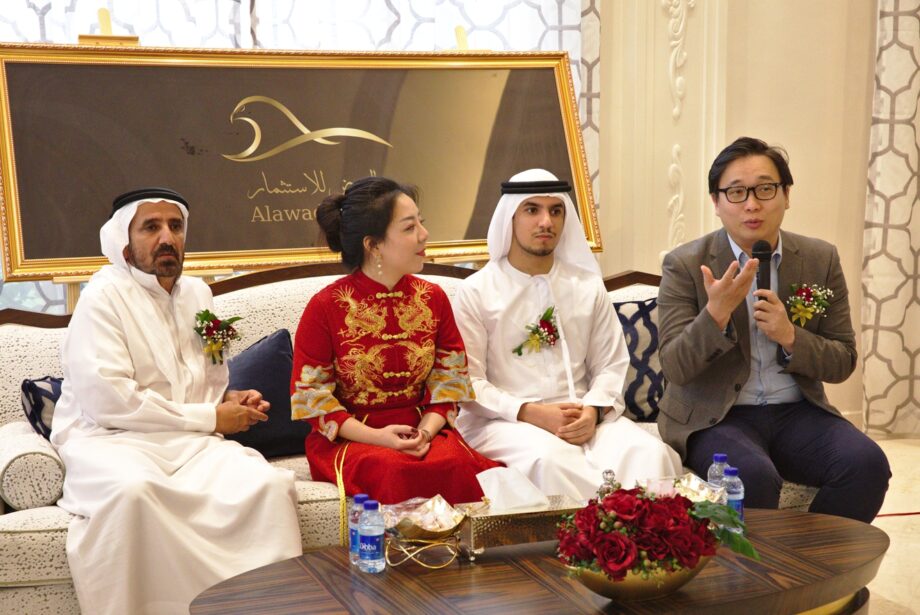
Anndy Lian spoke at launch of Alawad Fund “Dubai’s Drive To Be a Global Hub for Crypto Innovation Show Results”

Anndy Lian spoke at launch of Alawad Fund “Dubai’s Drive To Be a Global Hub for Crypto Innovation Show Results”

As regulation hots up in the US following the Executive Order, and with the prospect of new UK government plans to regulate the cryptocurrency market in the coming weeks, it’s clear that countries can no longer sit on the sidelines of the crypto industry. The potential shift in power spurred on by innovation in blockchain and related technologies means playing safe for jurisdictions is no longer an option. The UAE is well positioned to be a regional hub for the crypto industry, with a regulatory structure in place and with more than 350 blockchain companies operating there. UAE also took advantage of the pandemic to attract business with aggressive vaccination while largely keeping its borders open, while retaining business through low taxes and a light touch regulatory mindset – a perfect environment for attracting crypto entrepreneurs in the last two years.

Indeed, some call Dubai the fastest growing hub in the world right now for crypto technology, reflected in the fact that Binance has now set up offices in Dubai. It’s also benefiting from business relationships with the booming Israeli crypto sector based in Tel Aviv, according to a report in the Wall Street Journal following recent peace accords. In addition, it’s reported that the Abu Dhabi-headquartered fund Mubadala, one of the largest sovereign wealth funds with over $243bn AUM, is investing in the blockchain sector. Mubadala’s CEO Khaldoon Al Mubarak told CNBC in December that he was not a skeptic but saw it as real. But he did admit the regulatory format was not there totally, but it needed to be in place in order for the asset class to transition into something new. “We are looking at the ecosystem around crypto and we are investing in that system.”

This global momentum to embrace crypto and blockchain was addressed by the Chairman of BigONE Anndy Lian recently, in a speech to His Highness Awadh Mohamed Al Sh Mogrin Sultan, a top-ranking diplomat, and Honourable Chairman of the Alawad Fund. Lian said he saw similarities with the innovative and supportive crypto environment in Singapore: “I’ve actually seen the same trend in Dubai, I’ve met some good projects that are very serious about what they do, whether it’s looking at web3 or decentralized storage, or DeFi.”

Elaborating on two key trends starting with DeFi Lian said the integration of traditional finance products into DeFi such as bonds meant this was a sustainable sector for a country such as Dubai. He said the second significant trend was the crypto mining business with a very good uptake of new miners. “There are many new investors going into crypto mining, and when I say big investors, we’re talking about at the very least tens of billions of dollars going into the mining space. If you look at the longer term, it is a very lucrative investment.”

Lian remarked that as a partner & LP to several funds, with an AUM (assets under management) of around $500 million and having invested in crypto startups since 2018, he was looking forward to talking to people and brands about working together on the investment front in Dubai. “I want everybody to work together. You know, we should work together, be open, and welcome, good partners; this is the same philosophy that you do as well; this is the place where we will start to build a new story,” added Lian.

Earlier in March His Highness Sheikh Mohammed bin Rashid Al Maktoum, Vice-President and Prime Minister of the UAE and Ruler of Dubai, approved the first ever law on regulating virtual assets. “Today we are participating in designing the future of virtual assets globally.” Sheikh Mohammed stressed that Dubai possesses all the capabilities to be a key global center in the field of virtual assets, supported with the new legislative environment. “Dubai will provide the most advanced virtual asset ecosystem in terms of organization, governance and security. Approving the virtual asset law and establishing the Dubai Virtual Asset Regulatory Authority is a vital step that establishes the UAE’s position in this sector… a step that aims to help the sector to grow and protect investors,” he confirmed.

The Chainalysis ‘2021 Geography of Cryptocurrency Report’ published in October 2021, found plenty of potential for growth in the Middle East in general and specifically the UAE. The Middle East as a whole is the second-smallest cryptocurrency economy studied by Chainalysis, having received $271.7 billion worth of cryptocurrency between July 2020 and June 2021 (6.6% of global activity). “While that total is low compared to other regions, it represents nearly a 1500% increase over the Middle East’s total activity the previous year, making it one of the fastest-growing markets in the world,” the report’s authors said.

Reflecting the success in promoting crypto businesses in Dubai, it was reported on March 28 that cryptocurrency exchange business Bybit has received in-principle approval to conduct a full spectrum of virtual assets business in Dubai, the firm announced with the UAE Ministry of Economy at the World Government Summit 2022. Bybit also confirmed that it plans to set up its global HQ in Dubai, under the Emirate’s “test-adapt-scale” virtual assets market model.

Anndy Lian is an early blockchain adopter and experienced serial entrepreneur who is known for his work in the government sector. He is a best selling book author- “NFT: From Zero to Hero” and “Blockchain Revolution 2030”.

Currently, he is appointed as the Chief Digital Advisor at Mongolia Productivity Organization, championing national digitization. Prior to his current appointments, he was the Chairman of BigONE Exchange, a global top 30 ranked crypto spot exchange and was also the Advisory Board Member for Hyundai DAC, the blockchain arm of South Korea’s largest car manufacturer Hyundai Motor Group. Lian played a pivotal role as the Blockchain Advisor for Asian Productivity Organisation (APO), an intergovernmental organization committed to improving productivity in the Asia-Pacific region.

An avid supporter of incubating start-ups, Anndy has also been a private investor for the past eight years. With a growth investment mindset, Anndy strategically demonstrates this in the companies he chooses to be involved with. He believes that what he is doing through blockchain technology currently will revolutionise and redefine traditional businesses. He also believes that the blockchain industry has to be “redecentralised”.

j j j

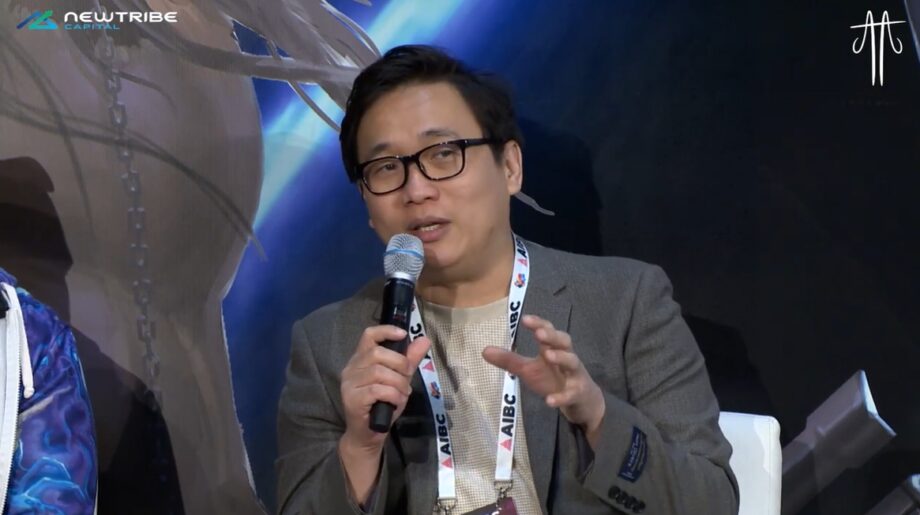
Crypto Expo Dubai 2022: Keynote Speech by Anndy Lian

Crypto Expo Dubai 2022: Keynote Speech by Anndy Lian

Crypto Expo Dubai is the event for Investors and Crypto Industry leaders to network and Explore more business opportunities in the Crypto Space. Meet the right Crypto Companies to Invest and Trade.

Kishu Inu Foundation decided to present and official launch its “K Project” at this event in Dubai.

Anndy Lian, is the Council Member of the Kishu Inu Foundation. He is also an early investor to the token. He joined as a Council Member in February 2022 as he wants to continue doing good with the foundation by donating and helping the less fortunate. The foundation has helped people from Brazil to Philippines, and it is still expanding its footprint.

Anndy is the Chairman of BigONE Exchange. An exchange that has been around since 2017 and is currently ranked top 40 globally. He is also the Chief Digital Advisor at Mongolia Productivity Organisation. Lian is also an investor, book author and philanthropist.

Kishu Inu ($KISHU) is a community-focused, decentralized cryptocurrency with instant rewards thanks to active users! The launch of Project K aka Kishu Kingdom is moving Kishu into the play to earn gaming space. The game is developed by Mainleaf. Mainleaf is specialized in games development since 2010. They have a diverse team with almost 50 members, covering all game development areas such as programming, art, and management. The game becomes the gateway and connector to the current Kishu Inu ecosystem.

Anndy Lian is an early blockchain adopter and experienced serial entrepreneur who is known for his work in the government sector. He is a best selling book author- “NFT: From Zero to Hero” and “Blockchain Revolution 2030”.

Currently, he is appointed as the Chief Digital Advisor at Mongolia Productivity Organization, championing national digitization. Prior to his current appointments, he was the Chairman of BigONE Exchange, a global top 30 ranked crypto spot exchange and was also the Advisory Board Member for Hyundai DAC, the blockchain arm of South Korea’s largest car manufacturer Hyundai Motor Group. Lian played a pivotal role as the Blockchain Advisor for Asian Productivity Organisation (APO), an intergovernmental organization committed to improving productivity in the Asia-Pacific region.

An avid supporter of incubating start-ups, Anndy has also been a private investor for the past eight years. With a growth investment mindset, Anndy strategically demonstrates this in the companies he chooses to be involved with. He believes that what he is doing through blockchain technology currently will revolutionise and redefine traditional businesses. He also believes that the blockchain industry has to be “redecentralised”.

j j j

Anndy Lian Speaks at Tradeup Conference: Gamefi- The Future of Crypto

Anndy Lian Speaks at Tradeup Conference: Gamefi- The Future of Crypto

As you are new to cryptocurrency trading you will have already come across and invested in the likes of Bitcoin and Ether, and started to research on alternatives such as Litecoin, which is regarded as an improved version of Bitcoin.

You’ve no doubt also decided on a sound crypto investment plan, with sufficient financial reserves to deal with losses, and set up an account with a reputable secure exchange such as BigONE to manage your trading activities.

And now having reviewed all the various options you are keen to find out what the next big thing in crypto is, which is exactly what I’m here to talk about. So, without further introduction, let’s take a deep dive into the world of meme coins, the metaverse, DeFi and an emerging exciting sector in gaming called play-as-you-earn, also known as GameFi.

But to start by setting the context, so you are the most equipped traders coming into this booming sector of crypto investment, let’s look at the rise of meme coins, created originally as a joke about crypto which have taken a life of their own as their popularity has soared and new meme coins have emerged with real world use cases since the launch of DogeCoin in 2013.

Trading tokens in the metaverse?

It’s also not hard to see meme coins use in related sectors such as music and particularly gaming, as a cross-proprietary platform currency to enable the vision of the ‘multiverse’ or more commonly known as the metaverse.

In a recent report UK-based blockchain VC Outlier Ventures sees the need to have a crypto decentralized core, with its own payment system as key to building the metaverse.

But to take a step back and explain the metaverse a little, and why it’s worth understanding from a crypto traders’ perspective. First, a definition of metaverse. In layman’s terms, a metaverse is a virtual world that exists alongside the real world. The popularity of the metaverse concept is taking serious shape in recent years, with tech titans such as Facebook, Google, Microsoft, Samsung, and Sony joining forces to form the XR Association, which is aimed at bringing this concept of an ‘experiential reality to life.

So back to the role of crypto, or the lack of it to date, in the metaverse.
Despite the frictionless use of crypto, with low fees and decentralized P2P structures, the reality is that the commercial first movers in the metaverse space from gaming have their own proprietary currencies.

What makes DeFi so attractive to the metaverse community is that it can be automated, without any centralized intervention. It also means that DeFi has long term attractions, allowing game developers and players to invest time and money knowing the underlying blockchain platform won’t change without crypto community consensus.

Cryptocurrencies have already been successfully integrated recently into virtual worlds created by companies such as Decentraland and Sandbox. For example, users in Decentraland can purchase virtual real estate such as theme parks and monetize them using cryptocurrencies. While drinks giant Coca Cola plans to launch its own NFTs on the platform, including a ‘wearable’ jacket for avatars in the Decentraland metaverse.

NFTs
As newcomers to the world of crypto trading you may not have heard of the metaverse before, but you probably heard of NFTs and the headline grabbing rise in value of these unique digital assets.

Non-fungible tokens are referred to as NFTs. According to my understanding of economics, the term fungible relates to anything that can be exchanged for something of equal value.

Most investors know that the nonfungible token (NFT) sector has been on fire since July, and as the likes of CryptoPunks (which got even more coverage when bought recently by VISA), Mutant Ape Yacht Club and pet EtherRock NFTs fetched six- and seven-figure sums, while top NFT marketplace OpenSea surpassed $4 billion in total sales.

While the frenzy has been impressive, it’s also true that many new projects have launched across a variety of blockchain networks, and the recent decline in transaction volumes could be a signal that investors are looking to move to different pastures.

The DAO, or Decentralized Autonomous Organization, is the final piece of the jigsaw that is key to the creation of a metaverse that is open, rather than one run and controlled by the Facebooks of this world. What’s interesting about this novel form of organisation, without a central leadership or the usual management structure used for companies or other entities, is that it’s giving birth to a new way to make money called play to earn or GameFi.

In a close fit with the vision of an open metaverse, play to earn crypto games are built on the fundamental need for a place that is available to everyone and owned by no one in particular.

An amalgam of gaming and decentralized finance (DeFi), ‘GameFi’ refers to the intersection between blockchain-based gaming and decentralized financial instruments in all their guises: yield farming, lending/borrowing, algorithmic stablecoins, token minting instruments, etc.

GameFi essentially means that people are playing a game to profit with real money with payment in the form of cryptocurrencies. Some players play games and earn crypto simply because they enjoy it, and the monetary rewards simply come as a bonus. While there are other players who play to earn crypto games as their main source of income.

In some play to earn crypto games, players can start playing a game for free without paying for it. While in other cases players will need to pay to play i.e., they will need to pay for the character they want to use in game, or perhaps they may want to pay for specific items they want to use in game.

The key idea is that players play games to earn crypto, and their earning potential will increase or decrease depending on the amount of time a player is willing to spend playing the games. Likewise, as a player’s skill improves so will her/his potential profits increase. With play to earn crypto games the more you play and the better you get at the game the great financial rewards you can earn.

Concluding remarks

The Motley Fool cautious analysis of MOBOX could be seen to apply to the wider set of GameFi tokens that have rocketed in value in the last few months. While there are signs the NFT market may be cooling off, and investor attention turning to DeFi in general and GameFi in particular, it’s also right to be cautious. “With Yield Guild Games (YGG) token sale netting $12.5 million in 30 seconds, [it] shows that market participants will not hesitate to switch from one hot toy to another, no different to yield farming craze earlier in the year,” Denis Vinokourov, head of research at Synergia Capital, told CoinDesk, adding that the market is still too “nascent” to make any conclusions.

A more optimistic take is that the GameFi ecosystem has started to grow and mature thanks to a plethora of unique play-to-earn models that have seen revenue generation incorporated into gameplays. Also impressive is the amount of finance being devoted to developing the infrastructure required to take GameFi to the next level. Taking an ambitious view, with consequences for trading opportunities for the future, and not just in the short term, this arguably means global adoption that rivals traditional gaming economies.

Certainly, as the metaverse becomes more and more a reality GameFi will play an important part, helping users to access a market to trade gaming assets across their favourite platforms, in turn helping grow future inter-connected play-to-earn ecosystems. Understanding this GameFi growth trend early on will enable you to better spot trading opportunities today, as well as see opportunities for the future.

Anndy Lian is an early blockchain adopter and experienced serial entrepreneur who is known for his work in the government sector. He is a best selling book author- “NFT: From Zero to Hero” and “Blockchain Revolution 2030”.

Currently, he is appointed as the Chief Digital Advisor at Mongolia Productivity Organization, championing national digitization. Prior to his current appointments, he was the Chairman of BigONE Exchange, a global top 30 ranked crypto spot exchange and was also the Advisory Board Member for Hyundai DAC, the blockchain arm of South Korea’s largest car manufacturer Hyundai Motor Group. Lian played a pivotal role as the Blockchain Advisor for Asian Productivity Organisation (APO), an intergovernmental organization committed to improving productivity in the Asia-Pacific region.

An avid supporter of incubating start-ups, Anndy has also been a private investor for the past eight years. With a growth investment mindset, Anndy strategically demonstrates this in the companies he chooses to be involved with. He believes that what he is doing through blockchain technology currently will revolutionise and redefine traditional businesses. He also believes that the blockchain industry has to be “redecentralised”.

j j j